



Heptelidic acid
Based on 1 publication(s) in Google Scholar
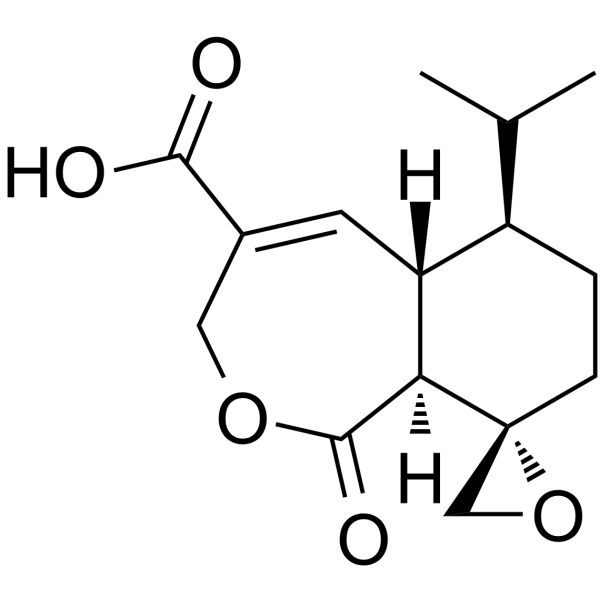
Heptelidic acid (Koningic acid) is a sesquiterpene antibiotic. Heptelidic acid inhibits Etoposide-induced apoptosis via downregulation of caspases. Koningic acid (KA) is a specific GAPDH inhibitor with an IC50of 90 μM.
For research use only. We do not sell to patients.
- Purity : 97.5%
- CAS No.: 57710-57-3
- Formula: C15H20O5
- Molecular Weight:280.32
-
Storage:Powder -20°C, 3 years ; In solvent -80°C, 6 months , -20°C, 1 month

To place orders, for customer services and technical support, please contact: MedChemExpress USA
Tel: 609-228-6898 E-mail: [email protected] [email protected]


-
 Biological Activity
-
Chemical Information
-
Solvent & Solubility
- Protocols
- Purity & Documentation
- References
-
 Help & FAQs


-

HY-P2149
Concanavalin APlant Lectin -

HY-P2149A
Concanavalin A (agarose)Protein Purification -
HY-N8920
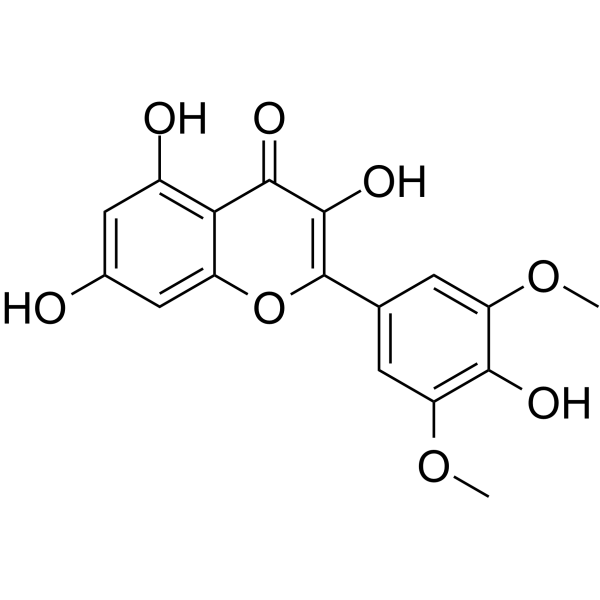
SyringetinOsteoblast Differentiation Stimulator -
HY-16658
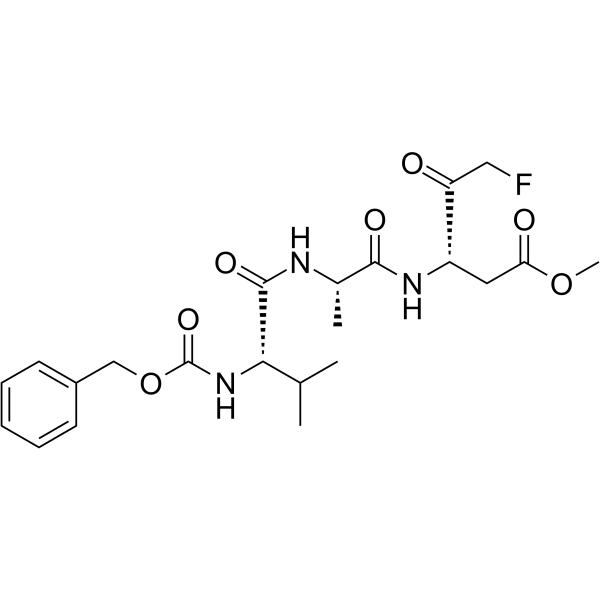
Z-VAD(OMe)-FMKPan-caspase Inhibitor -
HY-13205
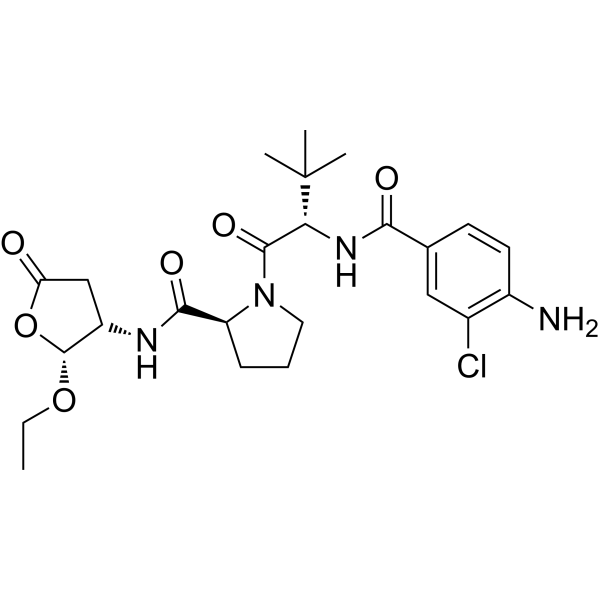
BelnacasanCaspase-1 Inhibitor -
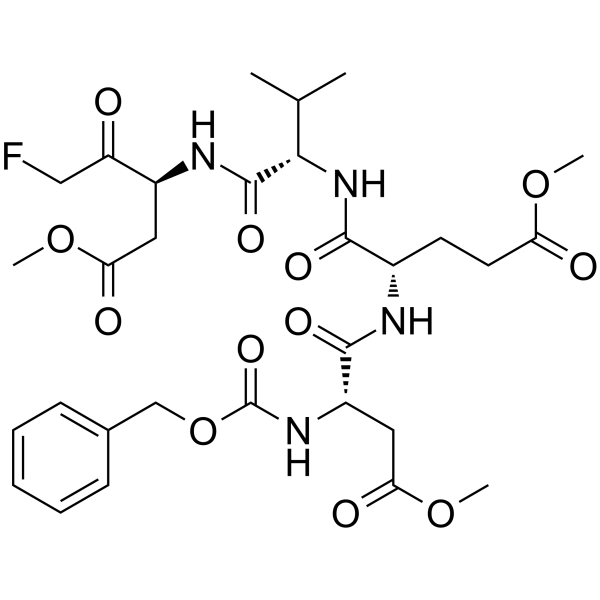
HY-12466
Z-DEVD-FMKCaspase-3 Inhibitor -
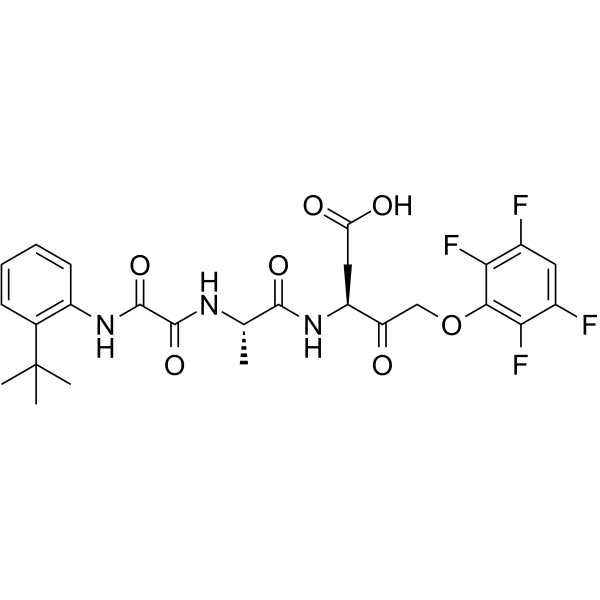
HY-10396
Emricasanpan-Caspase Inhibitor -
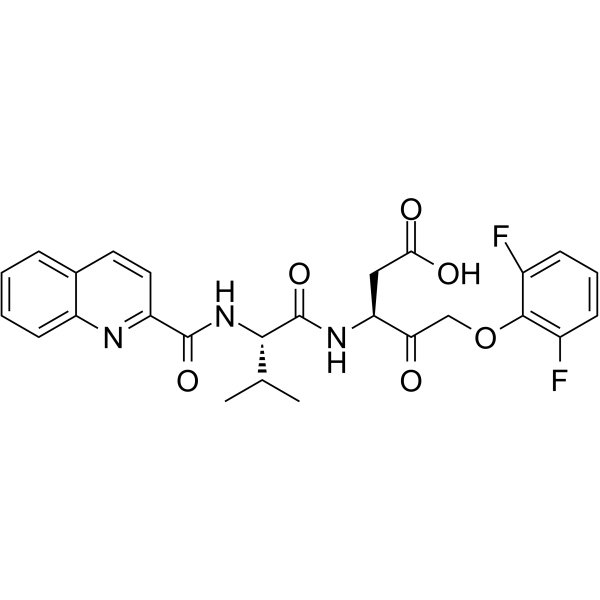
HY-12305
Q-VD-OPhPan-caspase Inhibitor -
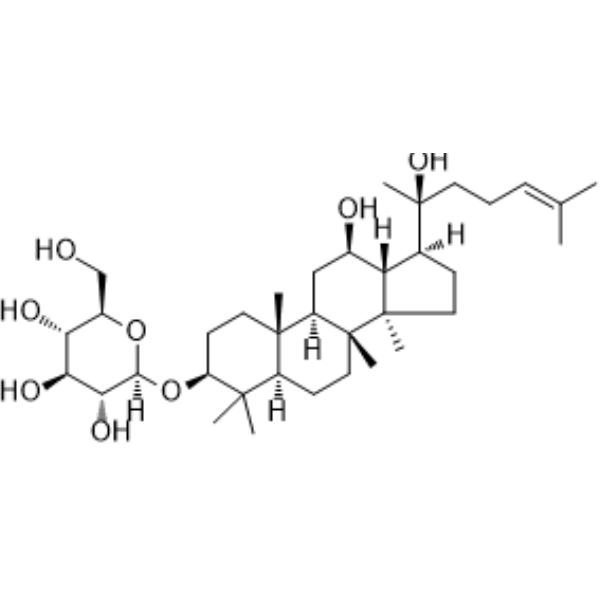
HY-N0605
Ginsenoside Rh2Caspase Activator -
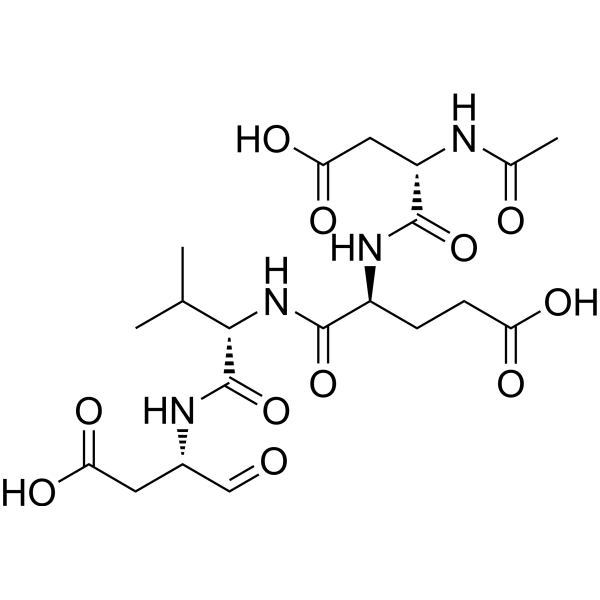
HY-P1001
Ac-DEVD-CHOCaspase-3 Inhibitor -
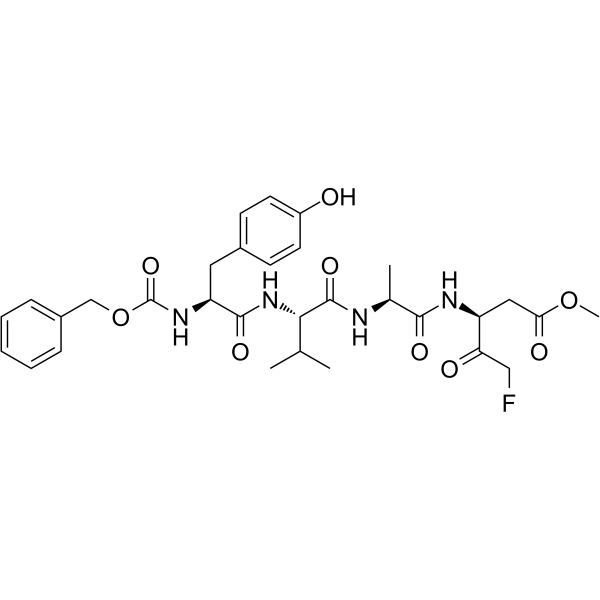
HY-P1009
Z-YVAD-FMKCaspase 1/4 Inhibitor -
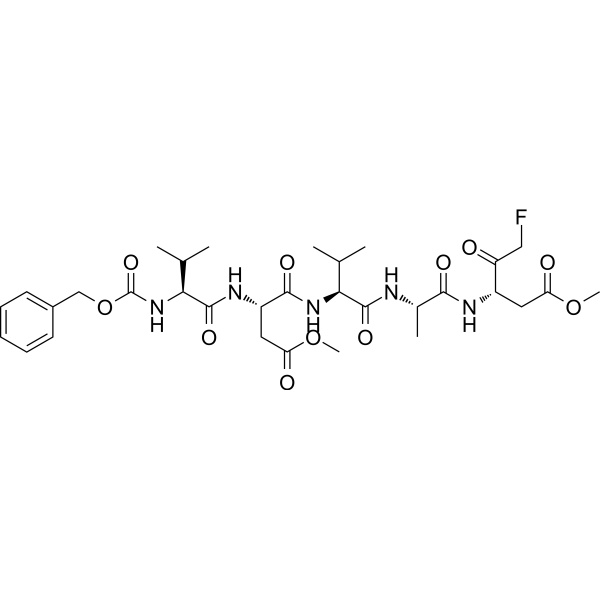
HY-P1008
Z-VDVAD-FMKCaspase-2 Inhibitor
Publications Citing Use of MedChemExpress (MCE) Heptelidic acid
MoreAll Caspase Isoforms
More

Biological Activity
Description
IC50 & Target
[2]|
Caspase-3 |
Cellular Effect
|
Cell Line

|
Type | Value | Description | References |
|---|---|---|---|---|
| A-375 | IC50 |
1.26 μM
Compound: 1, KA, heptelidic acid
|
Antiproliferative activity against human A375 cells assessed as inhibition of cell proliferation incubated for 24 hrs by conventional ATP quantification method
Antiproliferative activity against human A375 cells assessed as inhibition of cell proliferation incubated for 24 hrs by conventional ATP quantification method
|
[PMID: 25937235] |
| A-375 | IC50 |
1.34 μM
Compound: 1, KA, heptelidic acid
|
Antiproliferative activity against human A375 cells assessed as inhibition of cell proliferation incubated for 72 hrs by conventional ATP quantification method
Antiproliferative activity against human A375 cells assessed as inhibition of cell proliferation incubated for 72 hrs by conventional ATP quantification method
|
[PMID: 25937235] |
| BXPC-3 | IC50 |
0.76 μM
Compound: 1, KA, heptelidic acid
|
Antiproliferative activity against human BxPC3 cells assessed as inhibition of cell proliferation incubated for 72 hrs by conventional ATP quantification method
Antiproliferative activity against human BxPC3 cells assessed as inhibition of cell proliferation incubated for 72 hrs by conventional ATP quantification method
|
[PMID: 25937235] |
| COLO 205 | IC50 |
0.63 μM
Compound: 1, KA, heptelidic acid
|
Antiproliferative activity against human COLO205 cells assessed as inhibition of cell proliferation incubated for 72 hrs by conventional ATP quantification method
Antiproliferative activity against human COLO205 cells assessed as inhibition of cell proliferation incubated for 72 hrs by conventional ATP quantification method
|
[PMID: 25937235] |
| DU-145 | IC50 |
0.89 μM
Compound: 1, KA, heptelidic acid
|
Antiproliferative activity against human DU145 cells assessed as inhibition of cell proliferation incubated for 72 hrs by conventional ATP quantification method
Antiproliferative activity against human DU145 cells assessed as inhibition of cell proliferation incubated for 72 hrs by conventional ATP quantification method
|
[PMID: 25937235] |
| HL-60 | IC50 |
0.76 μM
Compound: 1, KA, heptelidic acid
|
Antiproliferative activity against human HL60 cells assessed as inhibition of cell proliferation incubated for 72 hrs by conventional ATP quantification method
Antiproliferative activity against human HL60 cells assessed as inhibition of cell proliferation incubated for 72 hrs by conventional ATP quantification method
|
[PMID: 25937235] |
| HOP-62 | IC50 |
0.51 μM
Compound: 1, KA, heptelidic acid
|
Antiproliferative activity against human HOP62 cells assessed as inhibition of cell proliferation incubated for 72 hrs by conventional ATP quantification method
Antiproliferative activity against human HOP62 cells assessed as inhibition of cell proliferation incubated for 72 hrs by conventional ATP quantification method
|
[PMID: 25937235] |
| KG-1 | IC50 |
0.4 μM
Compound: 1, KA, heptelidic acid
|
Antiproliferative activity against human KG1 cells assessed as inhibition of cell proliferation incubated for 72 hrs by conventional ATP quantification method
Antiproliferative activity against human KG1 cells assessed as inhibition of cell proliferation incubated for 72 hrs by conventional ATP quantification method
|
[PMID: 25937235] |
| KM12 | IC50 |
0.41 μM
Compound: 1, KA, heptelidic acid
|
Antiproliferative activity against human KM12 cells assessed as inhibition of cell proliferation incubated for 72 hrs by conventional ATP quantification method
Antiproliferative activity against human KM12 cells assessed as inhibition of cell proliferation incubated for 72 hrs by conventional ATP quantification method
|
[PMID: 25937235] |
| MDA-MB-231 | IC50 |
0.45 μM
Compound: 1, KA, heptelidic acid
|
Antiproliferative activity against human MDA-MB-231 cells assessed as inhibition of cell proliferation incubated for 72 hrs by conventional ATP quantification method
Antiproliferative activity against human MDA-MB-231 cells assessed as inhibition of cell proliferation incubated for 72 hrs by conventional ATP quantification method
|
[PMID: 25937235] |
| NAMALVA | IC50 |
0.302 μM
Compound: 1, KA, heptelidic acid
|
Antiproliferative activity against human NAMALWA cells assessed as inhibition of cell proliferation incubated for 72 hrs by conventional ATP quantification method
Antiproliferative activity against human NAMALWA cells assessed as inhibition of cell proliferation incubated for 72 hrs by conventional ATP quantification method
|
[PMID: 25937235] |
| NCI-H460 | IC50 |
0.49 μM
Compound: 1, KA, heptelidic acid
|
Antiproliferative activity against human NCI-H460 cells assessed as inhibition of cell proliferation incubated for 72 hrs by conventional ATP quantification method
Antiproliferative activity against human NCI-H460 cells assessed as inhibition of cell proliferation incubated for 72 hrs by conventional ATP quantification method
|
[PMID: 25937235] |
| OVCAR-3 | IC50 |
0.69 μM
Compound: 1, KA, heptelidic acid
|
Antiproliferative activity against human OVCAR3 cells assessed as inhibition of cell proliferation incubated for 72 hrs by conventional ATP quantification method
Antiproliferative activity against human OVCAR3 cells assessed as inhibition of cell proliferation incubated for 72 hrs by conventional ATP quantification method
|
[PMID: 25937235] |
| SK-OV-3 | IC50 |
0.34 μM
Compound: 1, KA, heptelidic acid
|
Antiproliferative activity against human SKOV3 cells assessed as inhibition of cell proliferation incubated for 72 hrs by conventional ATP quantification method
Antiproliferative activity against human SKOV3 cells assessed as inhibition of cell proliferation incubated for 72 hrs by conventional ATP quantification method
|
[PMID: 25937235] |
| T47D | IC50 |
0.21 μM
Compound: 1, KA, heptelidic acid
|
Antiproliferative activity against human T47D cells assessed as inhibition of cell proliferation incubated for 72 hrs by conventional ATP quantification method
Antiproliferative activity against human T47D cells assessed as inhibition of cell proliferation incubated for 72 hrs by conventional ATP quantification method
|
[PMID: 25937235] |
| TK-10 | IC50 |
0.66 μM
Compound: 1, KA, heptelidic acid
|
Antiproliferative activity against human TK10 cells assessed as inhibition of cell proliferation incubated for 72 hrs by conventional ATP quantification method
Antiproliferative activity against human TK10 cells assessed as inhibition of cell proliferation incubated for 72 hrs by conventional ATP quantification method
|
[PMID: 25937235] |
| WM 266-4 | IC50 |
0.509 μM
Compound: 1, KA, heptelidic acid
|
Antiproliferative activity against human WM266.4 cells assessed as inhibition of cell proliferation incubated for 72 hrs by conventional ATP quantification method
Antiproliferative activity against human WM266.4 cells assessed as inhibition of cell proliferation incubated for 72 hrs by conventional ATP quantification method
|
[PMID: 25937235] |
In Vitro
Heptelidic acid is a sesquiterpene antibiotic, found in the culture filtrate of three different strains of fungi isolated from soil samples. Heptelidic acid produces organisms, fermentation, isolation and characterization[1].
Heptelidic acid inhibits Etoposide-induced apoptosis in human leukemia U937 cells[2].Heptelidic acid inhibits caspase- 3 induction in U937 cells with an IC50 value of 40 μM after 8 h of Etoposide treatment[2].
Heptelidic acid (Koningic acid; KA), a natural product obtained from the Trichoderma fungus, can directly bind to the active site of human GAPDH. The expression of T. koningii KAr-GAPDH successfully rescued cell viability in human cells treated with Heptelidic acid. HEK293T cells expressing T. koningii KAr-GAPDH exhibited complete cell viability after treatment with 0-200 μM Heptelidic acid with the IC50=5 μM[3].
MedChemExpress (MCE) has not independently confirmed the accuracy of these methods. They are for reference only.
-
Cell Line:HEK293T cells expressing KAr-GAPDH or EV (top left)
-
Concentration:0.1, 1, 10, 100, 1000 μM
-
Incubation Time:24 hours
-
Result:IC50=5 μM.
In Vivo
MedChemExpress (MCE) has not independently confirmed the accuracy of these methods. They are for reference only.
-
Animal Model:6-week old female Foxn1nu mice bearing BT-474 tumor[3]
-
Dosage:1, 2.5, 5, and 10 mg/kg
-
Administration:Daily intraperitoneal (IP) injections, 24 hours
-
Result:1 mg/kg was determined to be the maximum tolerated dose (MTD) based upon behavioral monitoring and adverse events at higher doses (hemolysis, hematuria, and anemia).


Chemical Information
-
CAS No. 57710-57-3
-
Appearance Solid
-
Molecular Weight 280.32
-
Formula C15H20O5
-
Color Colorless to off-white
-
SMILES
O=C(C1=C[C@@]2([H])[C@]([C@@]3(OC3)CC[C@@H]2C(C)C)([H])C(OC1)=O)O
-
Synonyms
Koningic acid
-
Shipping
Room temperature in continental US; may vary elsewhere.
-
Storage
Powder -20°C 3 years In solvent -80°C 6 months -20°C 1 month


Publications (1)
-
Journal Impact Factor
-
Most Recent
-
MedComm (2020)
Dimethyl fumarate alleviate hepatic ischemia-reperfusion injury through suppressing cGAS-STING signaling. [Abstract]2025 Jan 28;6(2):e70077. PMID: 39877286


Solvent & Solubility
In Vitro:
DMSO : ≥ 30 mg/mL (107.02 mM; Hygroscopic DMSO has a significant impact on the solubility of product, please use newly opened DMSO)
* "≥" means soluble, but saturation unknown.
Please refer to the solubility information to select the appropriate solvent. Once prepared, please aliquot and store the solution to prevent product inactivation from repeated freeze-thaw cycles.
Storage method and period of stock solution: -80°C, 6 months; -20°C, 1 month. When stored at -80°C, please use it within 6 months. When stored at -20°C, please use it within 1 month.
Please refer to the solubility information to select the appropriate solvent. Once prepared, please aliquot and store the solution to prevent product inactivation from repeated freeze-thaw cycles.
Storage method and period of stock solution: -80°C, 6 months; -20°C, 1 month. When stored at -80°C, please use it within 6 months. When stored at -20°C, please use it within 1 month.
Concentration (start) × Volume (start) = Concentration (final) × Volume (final)


Purity & Documentation
-
Data Sheet (285 KB)
-
SDS (394 KB)
- English - EN (394 KB)
- Français - FR (394 KB)
- Deutsch - DE (394 KB)
- Norwegian - NO (394 KB)
- Español - ES (394 KB)
- Swedish - SV (394 KB)
- Italian - IT (394 KB)
- Korean - KR (394 KB)
- Portuguese - PT (394 KB)
-
Handling Instructions (2659 KB)
References
[1]. Y Itoh, et al. A new sesquiterpene antibiotic, heptelidic acid producing organisms, fermentation, isolation and characterization. J Antibiot (Tokyo). 1980 May;33(5):468-73. [Content Brief]
[2]. Jin Hee Kim, et al. Heptelidic acid, a sesquiterpene lactone, inhibits Etoposide-induced apoptosis in human leukemia U937 cells. J Microbiol Biotechnol. 2009 Aug;19(8):787-91. [Content Brief]
[3]. Maria V Liberti, et al. A Predictive Model for Selective Targeting of the Warburg Effect through GAPDH Inhibition with a Natural Product. Cell Metab. 2017 Oct 3;26(4):648-659.e8. [Content Brief]


Complete Stock Solution Preparation Table
Please refer to the solubility information to select the appropriate solvent. Once prepared, please aliquot and store the solution to prevent product inactivation from repeated freeze-thaw cycles.
Storage method and period of stock solution: -80°C, 6 months; -20°C, 1 month. When stored at -80°C, please use it within 6 months. When stored at -20°C, please use it within 1 month.
| Optional Solvent | Concentration Solvent Mass | 1 mg | 5 mg | 10 mg | 25 mg |
|---|---|---|---|---|---|
| DMSO | 1 mM | 3.5674 mL | 17.8368 mL | 35.6735 mL | 89.1838 mL |
| 5 mM | 0.7135 mL | 3.5674 mL | 7.1347 mL | 17.8368 mL | |
| 10 mM | 0.3567 mL | 1.7837 mL | 3.5674 mL | 8.9184 mL | |
| 15 mM | 0.2378 mL | 1.1891 mL | 2.3782 mL | 5.9456 mL | |
| 20 mM | 0.1784 mL | 0.8918 mL | 1.7837 mL | 4.4592 mL | |
| 25 mM | 0.1427 mL | 0.7135 mL | 1.4269 mL | 3.5674 mL | |
| 30 mM | 0.1189 mL | 0.5946 mL | 1.1891 mL | 2.9728 mL | |
| 40 mM | 0.0892 mL | 0.4459 mL | 0.8918 mL | 2.2296 mL | |
| 50 mM | 0.0713 mL | 0.3567 mL | 0.7135 mL | 1.7837 mL | |
| 60 mM | 0.0595 mL | 0.2973 mL | 0.5946 mL | 1.4864 mL | |
| 80 mM | 0.0446 mL | 0.2230 mL | 0.4459 mL | 1.1148 mL | |
| 100 mM | 0.0357 mL | 0.1784 mL | 0.3567 mL | 0.8918 mL |


Heptelidic acid Related Classifications
HY-120838 Related Classifications
 Powered by Bioz