1. Search Result
Search Result
Results for "

GABAB

" in MedChemExpress (MCE) Product Catalog:

81

Inhibitors & Agonists

1

Screening Libraries

1

Fluorescent Dye

1

Peptides

3

Natural
Products

7

Isotope-Labeled Compounds

2

Antibodies

1

Click Chemistry

Cat. No. Product Name Target Research Areas Chemical Structure
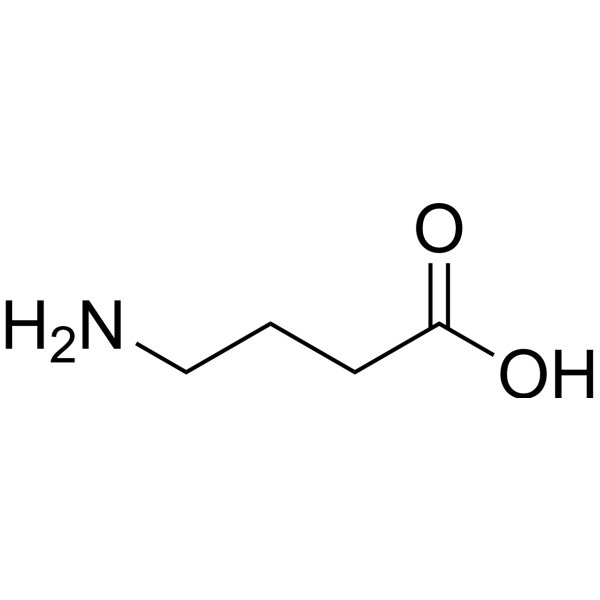
  • HY-N0067
    γ-Aminobutyric acid
    5 Publications Verification

    4-Aminobutyric acid

    Environmental Pollutants Endogenous Metabolite GABA Receptor Neurological Disease Metabolic Disease
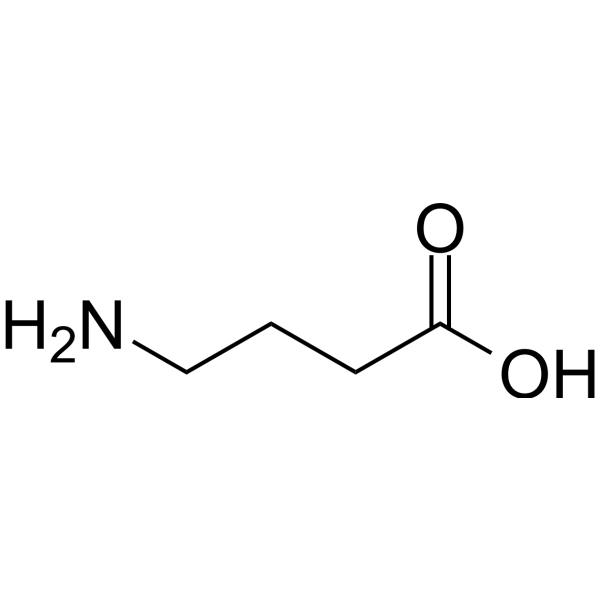
    γ-Aminobutyric acid (4-Aminobutyric acid) is a major inhibitory neurotransmitter in the adult mammalian brain, binding to the ionotropic GABA receptors (GABAA receptors) and metabotropic receptors (GABAB receptors. γ-Aminobutyric acid shows calming effect by blocking specific signals of central nervous system .
    γ-Aminobutyric acid
  • HY-B0007
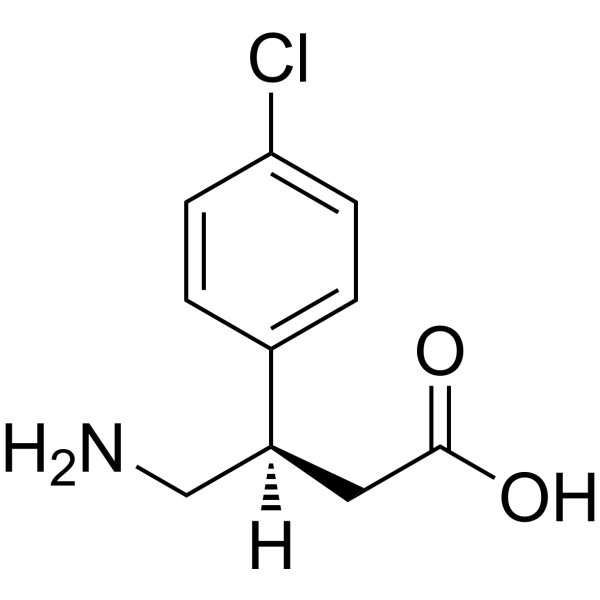
    Baclofen
    Maximum Cited Publications
    12 Publications Verification

    GABA Receptor Neurological Disease
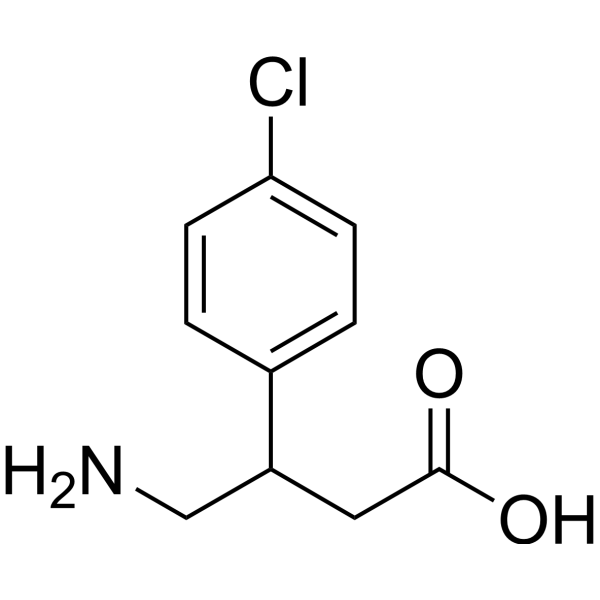
    Baclofen, a lipophilic derivative of γ-aminobutyric acid (GABA), is an orally active, selective metabotropic GABAB receptor (GABABR) agonist with blood-brain barrier permeability. Baclofen mimics the action of GABA and produces slow presynaptic inhibition through the GABAB receptor. Baclofen has high blood brain barrier penetrance. Baclofen has the potential for muscle spasticity research .
    Baclofen
  • HY-17354
    (R)-Baclofen
    2 Publications Verification

    Arbaclofen; STX209

    GABA Receptor Neurological Disease Cancer
    (R)-Baclofen (Arbaclofen) is a selective GABAB receptor agonist .
    (R)-Baclofen
  • HY-100813
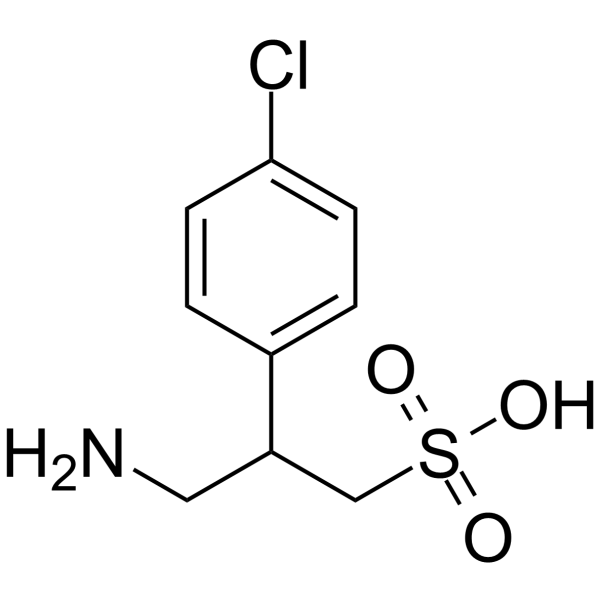
    Saclofen
    5 Publications Verification

    GABA Receptor Neurological Disease Inflammation/Immunology
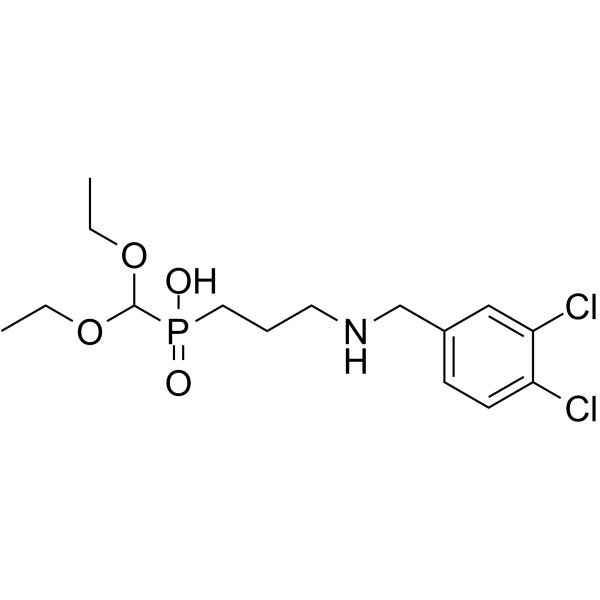
    Saclofen is an orally active and a competitive GABAB receptor antagonist with an IC50 of 7.8 μM. Saclofen has weak antagonistic effects on GABAB1b and GABAB2 heterodimeric recombinant receptors. Saclofen inhibits the binding of Baclofen (HY-B0007) to rat cerebellar membranes and blocks Baclofen-induced circadian phase shifts, and exhibits anti-inflammatory and analgesic effects in rats .
    Saclofen
  • HY-N0067S
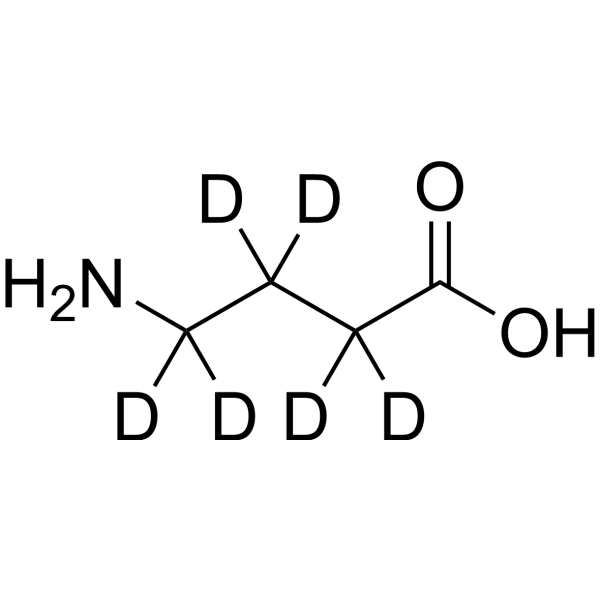
    γ-Aminobutyric acid-d6
    2 Publications Verification

    4-Aminobutyric acid-d6

    GABA Receptor Endogenous Metabolite Neurological Disease
    γ-Aminobutyric acid-d6 is the deuterium labeled γ-Aminobutyric acid. γ-Aminobutyric acid (4-Aminobutyric acid) is a major inhibitory neurotransmitter in the adult mammalian brain , binding to the ionotropic GABA receptors (GABAA receptors) and metabotropic receptors (GABAB receptors) .
    γ-Aminobutyric acid-d6
  • HY-103530
    CGP35348
    2 Publications Verification

    GABA Receptor Neurological Disease
    CGP 35348 is a selective, brain penetrant, centrally active GABAB receptor antagonist with an EC50 of 34 μM. CGP 35348 shows affinity for the GABAB receptor only . CGP 35348 has a potential to improve neuromuscular coordination and spatial learning in albino mouse following neonatal brain damage .
    CGP35348
  • HY-103531
    CGP52432
    5+ Cited Publications

    GABA Receptor Neurological Disease
    CGP52432 is a GABAB receptor antagonist, with an IC50 of 85 nM.
    CGP52432
  • HY-B0007C
    Baclofen hydrochloride
    Maximum Cited Publications
    12 Publications Verification

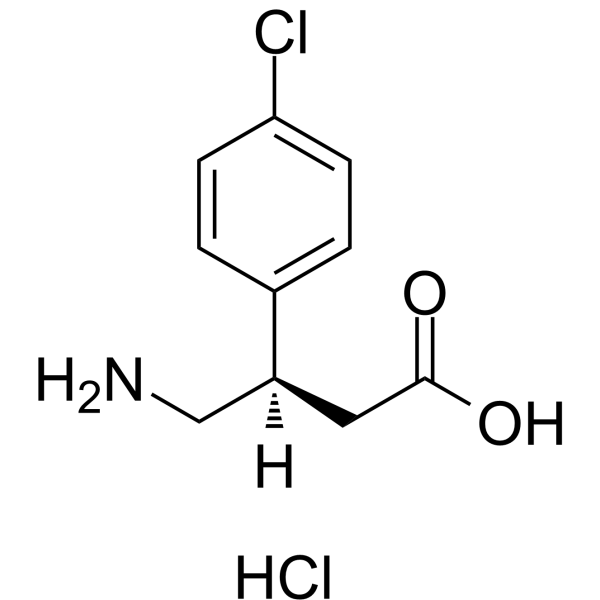
    GABA Receptor Neurological Disease
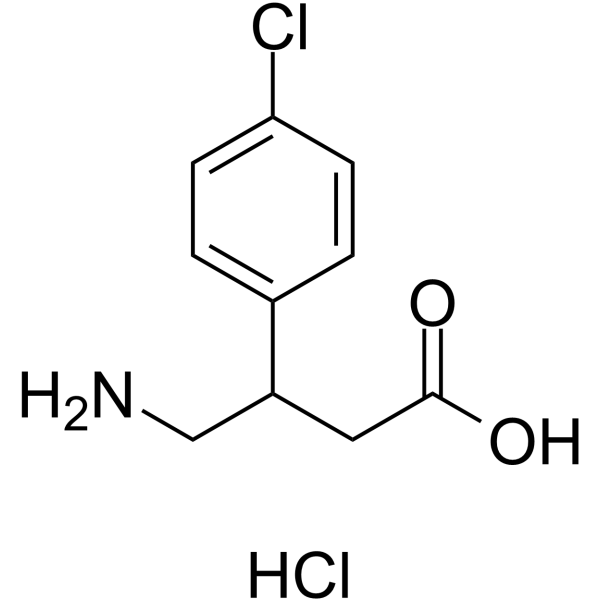
    Baclofen hydrochloride, a lipophilic derivative of γ-aminobutyric acid (GABA), is an orally active, selective metabotropic GABAB receptor (GABABR) agonist. Baclofen hydrochloride mimics the action of GABA and produces slow presynaptic inhibition through the GABAB receptor. Baclofen hydrochloride has high blood brain barrier penetrance. Baclofen hydrochloride has the potential for muscle spasticity research .
    Baclofen hydrochloride
  • HY-N0067R
    γ-Aminobutyric acid (Standard)
    5 Publications Verification

    4-Aminobutyric acid (Standard)

    Endogenous Metabolite GABA Receptor Reference Standards Neurological Disease
    γ-Aminobutyric acid (Standard) is the analytical standard of γ-Aminobutyric acid. This product is intended for research and analytical applications. γ-Aminobutyric acid (4-Aminobutyric acid) is a major inhibitory neurotransmitter in the adult mammalian brain, binding to the ionotropic GABA receptors (GABAA receptors) and metabotropic receptors (GABAB receptors. γ-Aminobutyric acid shows calming effect by blocking specific signals of central nervous system .
    γ-Aminobutyric acid (Standard)
  • HY-103516
    CGP55845 hydrochloride
    1 Publications Verification

    GABA Receptor Neurological Disease
    CGP55845 hydrochloride is a potent and selective GABAB receptor antagonist with an IC50 of 6 nM. CGP55845 hydrochloride can be used for neurological research .
    CGP55845 hydrochloride
  • HY-108403

    β-Phenyl-GABA; 4-Amino-3-phenylbutanoic acid

    GABA Receptor Neurological Disease
    Phenibut (β-Phenyl-GABA) is a GABA-B agonist . Phenibut acts as a GABA-mimetic, primarily at GABAB receptors. Phenibut has anxiolytic and nootropic (cognition enhancing) effects .
    Phenibut
  • HY-W041333

    β-Phenyl-GABA hydrochloride; 4-Amino-3-phenylbutanoic acid hydrochloride; 4-Amino-3-phenylbutyric acid hydrochloride

    GABA Receptor Neurological Disease
    Phenibut (β-Phenyl-GABA) hydrochloride is an orally active GABA-B agonist . Phenibut hydrochloride acts as a GABA-mimetic, primarily at GABAB?receptors. Phenibut hydrochloride has anxiolytic and nootropic (cognition enhancing) effects .
    Phenibut hydrochloride
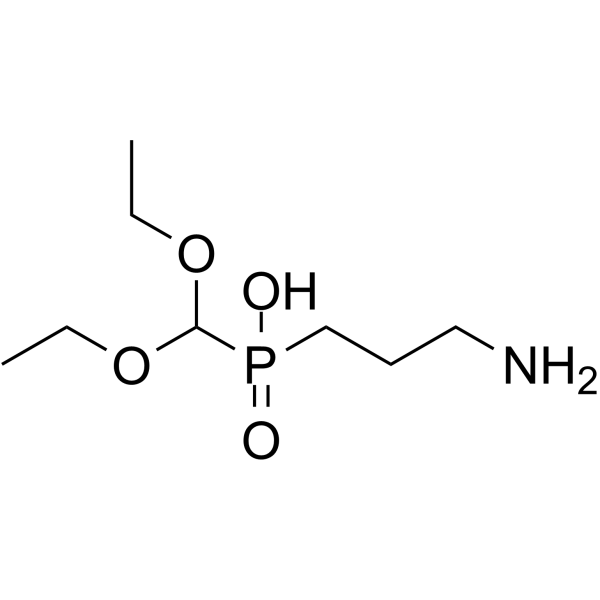
  • HY-121599
    CGP 36742
    1 Publications Verification

    SGS-742

    GABA Receptor Neurological Disease
    CGP 36742 (SGS-742) is an orally active and selective antagonist of GABAB receptor (IC50 = 36 µM). CGP 36742 is a brain-penetrant compound and improves cognitive performances. CGP 36742 can be used for depression study .
    CGP 36742
  • HY-118301

    GABA Receptor 5-HT Receptor Neurological Disease
    ADX71441 is an orally active, blood-brain barrier penetrant positive allosteric modulator of GABAB receptor. ADX71441 potentiates the activity of endogenous GABA at GABAB receptor, with an EC50 of 96 nM. ADX71441 functionally inhibits adenosine transporters and 5-HT2B receptor. ADX71441 produces anxiolytic-like, analgesic, muscle relaxant, hypothermic and overactive bladder inhibitory effects, reduces acute locomotor activity levels, decreases voluntary intake of alcohol and saccharin, attenuates stress-induced neuronal activation, and exhibits anti-hyperalgesic activity .
    ADX71441
  • HY-101378
    CGP 54626 hydrochloride
    2 Publications Verification

    GABA Receptor Neurological Disease
    CGP 54626 (hydrochloride) is a selective antagonist of GABAB receptor with an IC50 value of 4 nM. CGP 54626 (hydrochloride) can be used to investigate the role of GABAB receptors in neurological signaling .
    CGP 54626 hydrochloride
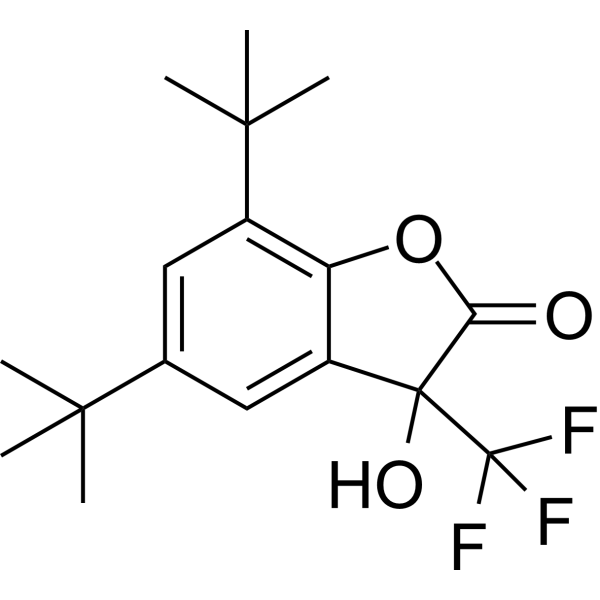
  • HY-103519

    GABA Receptor Neurological Disease
    rac-BHFF is a potent and orally active allosteric enhancer of GABAB receptor .
    rac-BHFF
  • HY-100798

    GABA Receptor Neurological Disease
    Phaclofen is a selective GABAB receptor antagonist. Phaclofen is a peripheral and central baclofen antagonist. Phaclofen maybe a potential compound in determining the physiological significance of central and peripheral bicuculline-insensitive receptors with which GABA and (-)-baclofen interact .
    Phaclofen
  • HY-100812

    GABA Receptor Neurological Disease Endocrinology
    2-Hydroxysaclofen is a potent γ-amino-butyric-acid-B (GABAB) receptor antagonist. 2-Hydroxysaclofen can abolish nicotine-induced hypolocomotor effects and increases the antinociceptive effects. 2-Hydroxysaclofen can stimulate luteinizing hormone (LH) secretion in female rats .
    2-Hydroxysaclofen
  • HY-D2426

    Fluorescent Dye Transferrin Receptor Cardiovascular Disease
    Cy3-Transferrin is a fluorescent labeling reagent that combines Cy3 (HY-D0822) fluorescent dye and Transferrin (HY-P3267). The Cy3 fluorophore is commonly used in applications such as immunolabeling, nucleic acid labeling, fluorescence microscopy, and flow cytometry. Cy3 has an emission maximum around 562-570 nm. Transferrin, a blood-plasma glycoprotein, is a target ligand for transferrin receptor. Transferrin can bind to and mediate the transport of iron .
    Cy3-Transferrin
  • HY-10061B

    AZD-3355 hydrochloride

    GABA Receptor Metabolic Disease
    Lesogaberan (AZD-3355) hydrochloride is a potent and selective GABAB receptor agonist with an EC50 of 8.6 nM for human recombinant GABAB receptor. The affinity (Kis) of Lesogaberan hydrochloride for rat GABAB and GABAA receptors, as measured by displacement of [ 3H]GABA binding in brain membranes: 5.1 nM and 1.4 μM, respectively. Lesogaberan hydrochloride inhibits transient lower esophageal sphincter relaxation through a peripheral mode of action .
    Lesogaberan hydrochloride
  • HY-103668A

    GABA Receptor Neurological Disease
    SSD114 hydrochloride is a novel GABAB receptor positive allosteric modulator.
    SSD114 hydrochloride
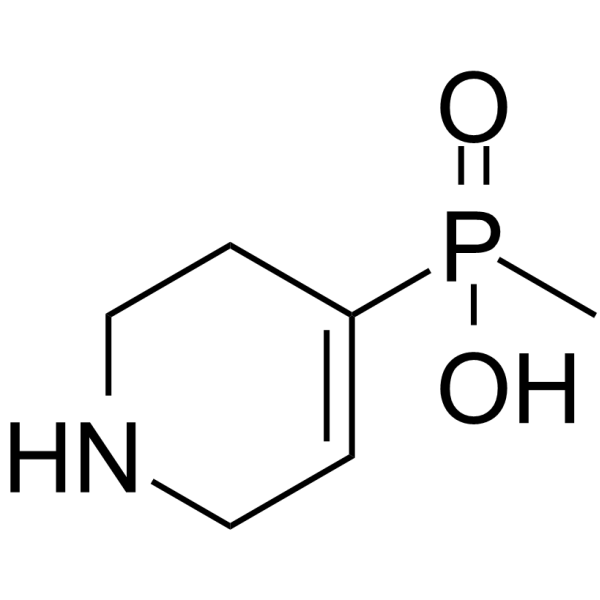
  • HY-103503

    GABA Receptor Neurological Disease
    CGP13501 is a positive allosteric modulator of GABAB receptor. CGP13501 is a structural analogue of propofol .
    CGP13501
  • HY-12783A

    GABA Receptor Neurological Disease
    SCH 50911 is a selective, orally active, blood-brain barrier permeable GABA-B receptor (GABA-B Receptor) antagonist with an IC50 of 1.1 μM in rats. SCH 50911 blocks baclofen-induced antitussive effects, regulates neuronal firing and GABA release. SCH 50911 promotes spontaneous seizures during withdrawal in ethanol-dependent rats, alters reward-related neurotransmission, and reduces or suppresses lever responding and self-administration behaviors of alcohol and sucrose in rats. SCH 50911 is applicable to research related to ethanol withdrawal syndrome, absence epilepsy and alcohol use disorder .
    SCH 50911
  • HY-101359

    GABA Receptor Neurological Disease
    TPMPA, a hybrid of isoguvacine and 3-APMPA, is the first selective antagonist for a GABAC receptor (KB = 2.1 μM), but not to interact with GABAA (KB = 320 μM) or GABAB receptors (EC50 = 500 μM). TPMPA has the potential for the research of suppressing orientation selectivity in ganglion cells .
    TPMPA
  • HY-N0067S3

    4-Aminobutyric acid-13C4

    Isotope-Labeled Compounds GABA Receptor Endogenous Metabolite Neurological Disease
    γ-Aminobutyric acid- 13C4 is the 13C-labeled γ-Aminobutyric acid. γ-Aminobutyric acid (4-Aminobutyric acid) is a major inhibitory neurotransmitter in the adult mammalian brain , binding to the ionotropic GABA receptors (GABAA receptors) and metabotropic receptors (GABAB receptors) .
    γ-Aminobutyric acid-13C4
  • HY-103475

    GABA Receptor Neurological Disease
    GS39783 is a positive allosteric modulator (PAM) of GABABR. Positive modulation of the GABABR can be used for the research of Nicotine addiction .
    GS39783
  • HY-N0067S1

    4-Aminobutyric acid-d2

    Isotope-Labeled Compounds GABA Receptor Endogenous Metabolite Neurological Disease
    γ-Aminobutyric acid-d2 is the deuterium labeled γ-Aminobutyric acid. γ-Aminobutyric acid (4-Aminobutyric acid) is a major inhibitory neurotransmitter in the adult mammalian brain[1][2], binding to the ionotropic GABA receptors (GABAA receptors) and metabotropic receptors (GABAB receptors)[2].
    γ-Aminobutyric acid-d2
  • HY-129636

    (E)-GABAB receptor antagonist 1

    GABA Receptor ERK Neurological Disease
    CLH304a (compound 14) is a specific and noncompetitive GABAB receptor negative allosteric modulator (NAM). CLH304a decreases GABA-induced IP3 production with an IC50 of 37.9 μM. CLH304a has no effect on other GPCR Class C members such as mGluR1, mGluR2, and mGluR5. CLH304a acts on the heptahelical domain of GB2 subunits and non-competitively inhibits the effect of agonists with inverse agonist properties. CLH304a inhibits Baclofen (HY-B0007)-induced ERK1/2 phosphorylation in HEK293 cells overexpressing GABAB receptor .
    CLH304a
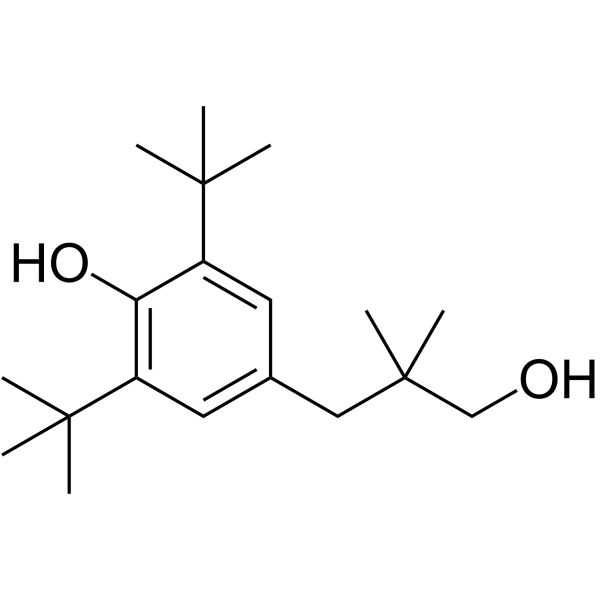
  • HY-103502
    CGP7930
    1 Publications Verification

    GABA Receptor Neurological Disease
    CGP7930 (3-(3’,5’-Di-tert-butyl-4’-hydroxy) phenyl-2, 2-dimethylpropanol) is a positive metabotropic GABAB receptor allosteric modulator. CGP7930 enhances the inhibitory effect of l-baclofen on the oscillatory activity of cultured cortical neurons .
    CGP7930
  • HY-W005749

    (-)-γ-Amino-β-hydroxybutyric acid; (R)-GABOB; (-)-β-Hydroxy-GABA

    GABA Receptor Neurological Disease
    (R)-4-Amino-3-hydroxybutyric acid ((R)-GABOB) is a 4-aminobutyric acids (GABAB) agonist. (R)-4-Amino-3-hydroxybutyric acid is promising for research of nervous disorders .
    (R)-4-Amino-3-hydroxybutyric acid
  • HY-17354A
    (R)-Baclofen hydrochloride
    2 Publications Verification

    Arbaclofen hydrochloride; STX 209 hydrochloride

    GABA Receptor Neurological Disease
    (R)-Baclofen hydrochloride (Arbaclofen hydrochloride) is a selective GABAB receptor agonist .
    (R)-Baclofen hydrochloride
  • HY-W105694

    (3-Aminopropyl)phosphonic acid

    GABA Receptor Neurological Disease
    3-Aminopropylphosphonic acid ((3-Aminopropyl)phosphonic acid) is a phosphonic acid analogue of GABA and a GABAB receptor agonist .
    3-Aminopropylphosphonic acid
  • HY-10061

    AZD-3355

    GABA Receptor Metabolic Disease
    Lesogaberan (AZD-3355) is a potent and selective GABAB receptor agonist with an EC50 of 8.6 nM for human recombinant GABAB receptors. The affinity (Kis) of Lesogaberan for rat GABAB and GABAA receptors, as measured by displacement of [ 3H]GABA binding in brain membranes: 5.1 nM and 1.4 μM, respectively. Lesogaberan inhibits transient lower esophageal sphincter relaxation through a peripheral mode of action .
    Lesogaberan
  • HY-115763

    3-APPA; CGP 27492; CGA 147823

    GABA Receptor Neurological Disease
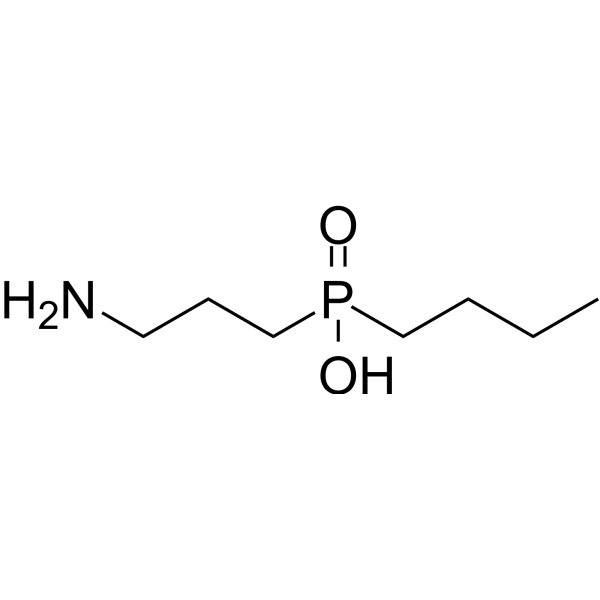
    3-Aminopropylphosphinic acid (3-APPA) is a phosphonic analog of GABA. 3-Aminopropylphosphinic acid is a potent, selective GABAB receptor agonist .
    3-Aminopropylphosphinic acid
  • HY-160105

    GABA Receptor Neurological Disease
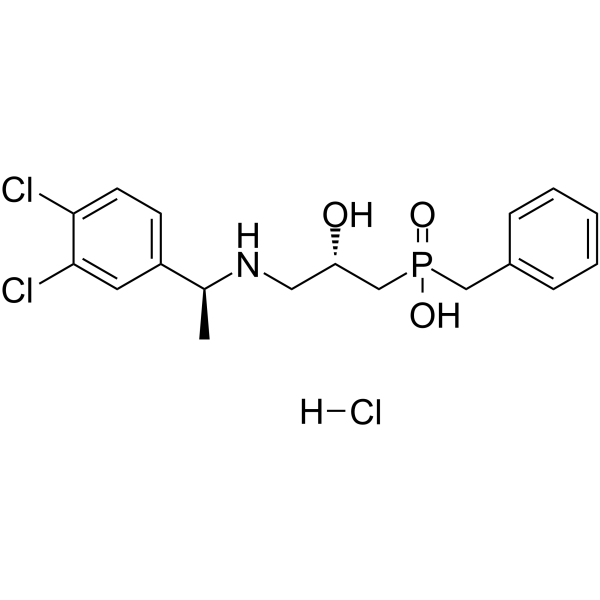
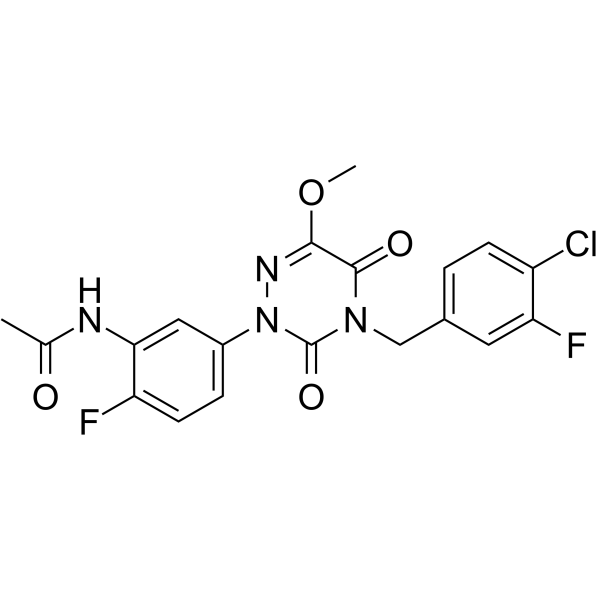
    GABAB receptor antagonist 3 (example 3) is a antagonist of GABAB receptor .
    GABAB receptor antagonist 3
  • HY-174147

    GABA Receptor Neurological Disease
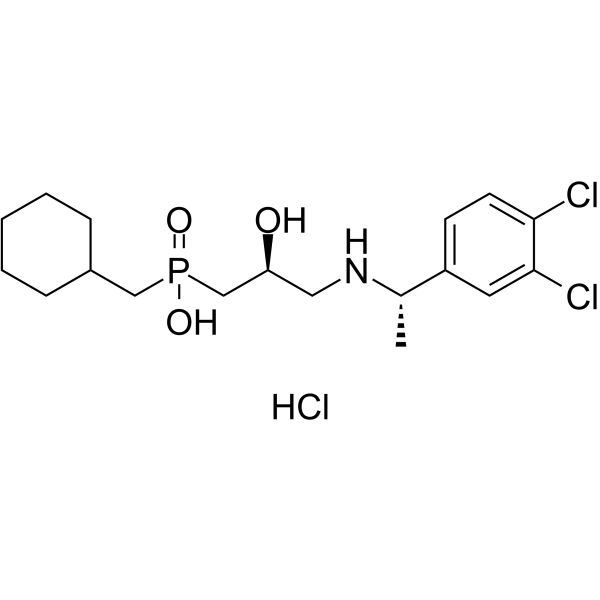
    GABAB receptor antagonist 4 (Compound 28) is a GABAB receptor antagonist. GABAB receptor antagonist 4 can inhibit GABA-induced G protein activation. GABAB receptor antagonist 4 competitively binds to the orthosteric site of GABAB receptor. GABAB receptor antagonist 4 can be used to study GABAB receptor-related neurological diseases .
    GABAB receptor antagonist 4
  • HY-B0007A

    GABA Receptor Neurological Disease
    (S)-Baclofen hydrochloride is a GABAB receptor agonist that crosses the blood-brain barrier and is orally active, with IC50 values ​​of 1.77 μM for GABAB and 1564 μM for GABAA. (S)-Baclofen hydrochloride can be used in research on muscle disorders such as spasticity .
    (S)-Baclofen hydrochloride
  • HY-168977

    RL-007; FSV7-007

    GABA Receptor Neurological Disease
    Inidascamine is the modulator for cholinergic, glutamatergic, and GABAB receptor, and can be used for researchs of schizophrenia .
    Inidascamine
  • HY-14735

    XP 19986

    GABA Receptor Neurological Disease
    Arbaclofen placarbil is a novel transported proagent of the active R-isomer of baclofen. Baclofen is a racemic GABAB receptor agonist
    Arbaclofen placarbil
  • HY-137204

    GABA Receptor Neurological Disease
    COR659 is a potent and effective GABAB positive allosteric modulator (PAM). COR659 suppresses alcohol and chocolate self-administration in rats .
    COR659
  • HY-100915

    CGP 35024

    GABA Receptor Neurological Disease
    SKF 97541 (CGP 35024) is a potent and selective GABAB agonist that can induce hyperpotential. SKF 97541 has antiepileptic activity .
    SKF 97541
  • HY-B0007S2

    GABA Receptor Isotope-Labeled Compounds Neurological Disease
    Baclofen-d5 hydrochloride is deuterated labeled Baclofen (HY-B0007). Baclofen, a lipophilic derivative of γ-aminobutyric acid (GABA), is an orally active, selective metabotropic GABAB receptor (GABABR) agonist. Baclofen mimics the action of GABA and produces slow presynaptic inhibition through the GABAB receptor. Baclofen has high blood brain barrier penetrance. Baclofen has the potential for muscle spasticity research .
    Baclofen-d5 hydrochloride
  • HY-B0007R

    Reference Standards GABA Receptor Neurological Disease
    Baclofen (Standard) is the analytical standard of Baclofen. This product is intended for research and analytical applications. Baclofen, a lipophilic derivative of γ-aminobutyric acid (GABA), is an orally active, selective metabotropic GABAB receptor (GABABR) agonist. Baclofen mimics the action of GABA and produces slow presynaptic inhibition through the GABAB receptor. Baclofen has high blood brain barrier penetrance. Baclofen has the potential for muscle spasticity research .
    Baclofen (Standard)
  • HY-103532

    GABA Receptor Neurological Disease
    CGP 46381 is an orally active GABAB receptor antagonist with IC50 of 4.9 μM. CGP 46381 blocks the neuronal depression induced by iontophoretically applied baclofen (HY-B0007) .
    CGP46381
  • HY-103518

    GABA Receptor Neurological Disease
    CGP36216 is a selective antagonist at GABA presynaptic receptor. CGP36216 binds to GABAB receptor with a Ki value of 0.3 μM. CGP36216 hydrochloride can be used for research of anxiety and trauma-related disorders .
    CGP36216
  • HY-P10898

    nAChR Calcium Channel GABA Receptor Neurological Disease
    GeX-2 is a truncated analogue of αO-conotoxin. GeX-2 activates GABAB receptor. GeX-2 inhibits α9α10 nAChR and CaV2.2 channels. GeX-2 alleviates pain in the rat model of chronic constriction injury .
    GeX-2
  • HY-129636A

    GABAB receptor antagonist 1

    GABA Receptor ERK Neurological Disease
    (E/Z)-CLH304a (GABAB receptor antagonist 1) is a mixture of (E)-CLH304a and (Z)-CLH304a. (E)-CLH304a (CLH304a; HY-129636) is a specific and noncompetitive GABAB receptor negative allosteric modulator (NAM). CLH304a inhibits Baclofen (HY-B0007)-induced ERK1/2 phosphorylation in HEK293 cells overexpressing GABAB receptors .
    (E/Z)-CLH304a
  • HY-123301

    GABA Receptor Others
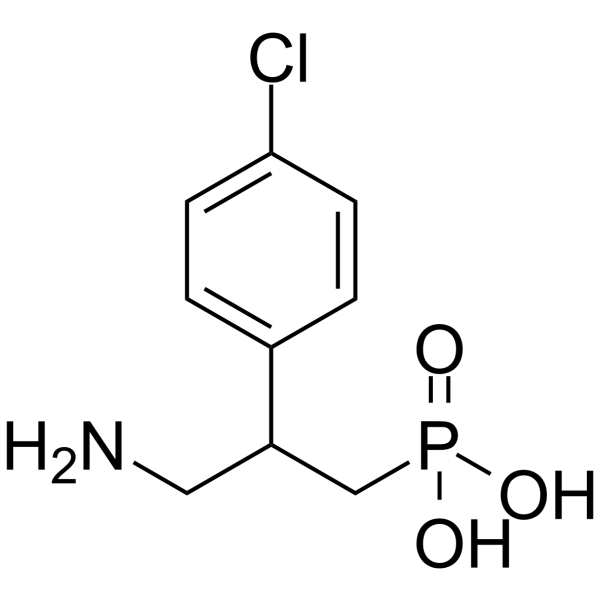
    GABAB receptor antagonist 2 is a GABAB receptor/b> antagonist .
    GABAB receptor antagonist 2
  • HY-174152

    GABA Receptor Neurological Disease
    GABAB receptor antagonist 5 (Compound 23) is a competitive GABAB receptor antagonist. GABAB receptor antagonist 5 is promising for research of neuropsychiatric diseases, such as epilepsy, depression, and addiction .
    GABAB receptor antagonist 5
  • HY-10061A

    AZD-3355 napadisylate

    GABA Receptor Metabolic Disease
    Lesogaberan (AZD-3355) napadisylate is a potent and selective GABAB receptor agonist with an EC50 of 8.6 nM for human recombinant GABAB receptors. The affinity (Kis) of Lesogaberan napadisylate for rat GABAB and GABAA receptors, as measured by displacement of [ 3H]GABA binding in brain membranes: 5.1 nM and 1.4 μM, respectively. Lesogaberan napadisylate inhibits transient lower esophageal sphincter relaxation through a peripheral mode of action .
    Lesogaberan napadisylate

Inquiry Online

Your information is safe with us. * Required Fields.

Salutation


Country or Region *

Applicant Name *


Organization Name *

Department *


Email Address *


Product Name *

Cat. No.


Requested quantity *

Phone Number *


Remarks

Inquiry Online

Inquiry Information

Product Name:
Cat. No.:
Quantity:
MCE Japan Authorized Agent:

