



Search Result
Results for "
HNSCC
" in MedChemExpress (MCE) Product Catalog:
1
Biochemical Assay Reagents
1
Isotope-Labeled Compounds
| Cat. No. |
Product Name |
Target |
Research Areas |
Chemical Structure |
-
- HY-P1607
-
-
-
- HY-136173
-
|
TNO155
|
SHP2
Phosphatase
|
Cancer
|
|
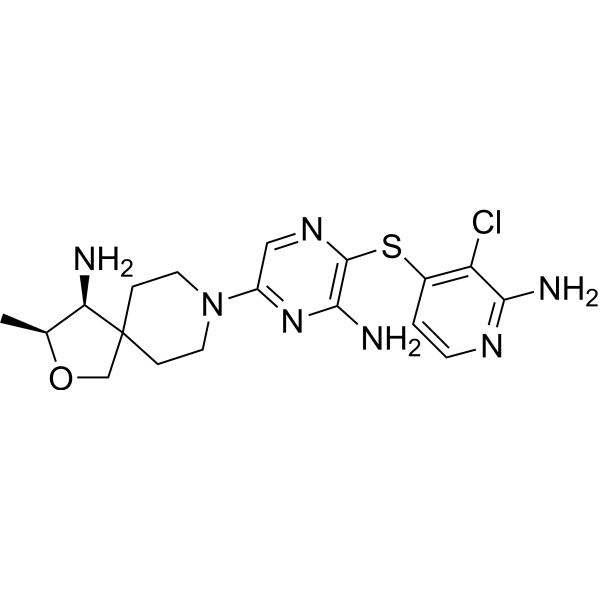
Batoprotafib (TNO155) is a potent selective and orally active allosteric inhibitor of wild-type SHP2 (IC50=0.011 µM). Batoprotafib has the potential for the study of RTK-dependent malignancies, especially advanced solid tumors .
|
-
-
- HY-P99406
-
|
MCLA 158
|
EGFR
|
Cancer
|
|
Petosemtamab (MCLA 158) is an anti- EGFR (Kd: 0.22 nM) and anti-LGR5 (Kd: 0.86 nM) monoclonal antibody (mAb). Petosemtamab leads to EGFR signaling blockade and receptor degradation in LGR5+ cancer cells. Petosemtamab can be used in the research of solid tumors, such as head and neck squamous cell carcinoma (HNSCC), metastatic colorectal cancer (CRC) .
|
-
-
- HY-177439
-
|
|
Antibody-Drug Conjugates (ADCs)
PD-1/PD-L1
|
Cancer
|
|
HLX43 is an antibody-drug conjugate (ADC) targeting PD-L1. HLX43 consists of a human monoclonal antibody anti-PD-L1 antibody Opucolimab (HY-P99785) with the drug-linker conjugate being DL-01 (HY-155870A). HLX43 exerts superior anticancer efficacy with safety profile in vivo. HLX43 can be used for non-small cell lung cancer (NSCLC), head and neck squamous cell carcinoma (HNSCC), esophageal squamous cell carcinoma (ESCC), melanoma (MEL), ovarian cancer (Ovc) research .
|
-
-
- HY-19896
-
COTI-2
4 Publications Verification
|
MDM-2/p53
Apoptosis
|
Cancer
|
|
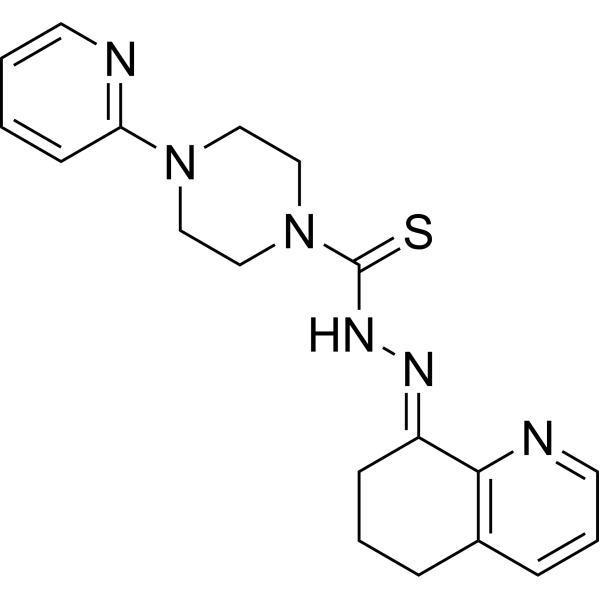
COTI-2, an anti-cancer agent with low toxicity, is an orally available third generation activator of p53 mutant forms. COTI-2 acts both by reactivating mutant p53 and inhibiting the PI3K/AKT/mTOR pathway. COTI-2 induces apoptosis in multiple human tumor cell lines. COTI-2 exhibits antitumor activity in HNSCC through p53-dependent and -independent mechanisms. COTI-2 converts mutant p53 to wild-type conformation .
|
-
-
- HY-171124
-
|
AZD9592
|
Antibody-Drug Conjugates (ADCs)
EGFR
c-Met/HGFR
Topoisomerase
DNA/RNA Synthesis
|
Cancer
|
|
Tilatamig samrotecan (AZD9592) is an anti-EGFR/c-MET antibody-drug conjugate (ADC). Tilatamig samrotecan consists of an anti-EGFR/c-MET antibody with the drug-linker conjugate being AZ14170133 (HY-145399) (a topoisomerase I (TOP1i) inhibitor payload). Tilatamig samrotecan induces multiple DNA damage response pathway markers (like ATM, ATR, γH2AX). Tilatamig samrotecan selectively binds to EGFR and c-MET, delivering the cytotoxic payload. Tilatamig samrotecan exerts anti-tumor activity in vivo. Tilatamig samrotecan can be used for non-small cell lung cancer (NSCLC) and head and neck squamous cell carcinoma (HNSCC) research .
|
-
-
- HY-149913
-
|
|
Orphan Nuclear Receptor
|
Cancer
|
|
NR2F1 agonist 1, a nuclear receptor NR2F1 agonist, specifically activates dormancy programs in malignant cells. NR2F1 agonist 1 up-regulates NR2F1 and downstream target genes that regulate dormancy. NR2F1 agonist 1 induces neural crest-like and growth suppression in head and neck squamous cell carcinoma (HNSCC) via NR2F1 activation. NR2F1 agonist 1 inhibits tumor growth in a mouse primary tumor model .
|
-
-
- HY-13241A
-
Ralimetinib
Maximum Cited Publications
15 Publications Verification
LY2228820
|
p38 MAPK
Autophagy
|
Cancer
|
|
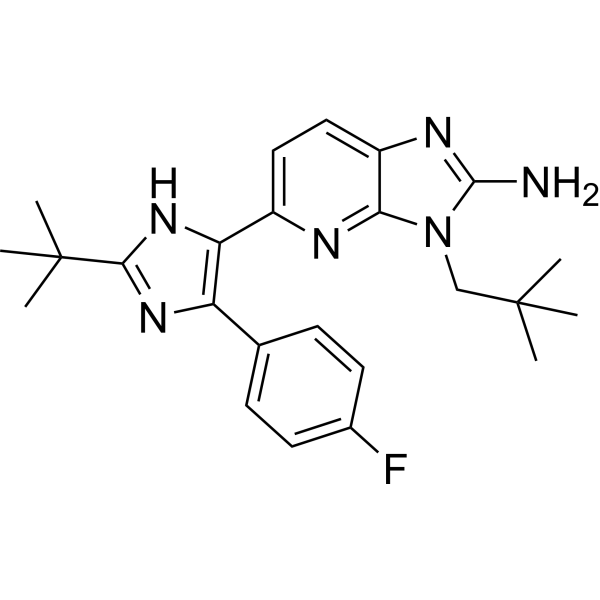
Ralimetinib is an ATP-competitive p38α and p38β MAPK inhibitor with an IC50 of 5.3 nmol/L against human p38α and an IC50 of 3.2 nmol/L against human p38β. Ralimetinib slows tumor growth in preclinical in vivo cancer models, exhibits oral bioavailability in mice, and achieves sustained target inhibition for 4 to 8 h. Ralimetinib is applicable for research on melanoma, non-small cell lung cancer, ovarian cancer, glioma, multiple myeloma, breast cancer, renal cancer, and head and neck squamous cell carcinoma .
|
-
-
- HY-P99032
-
|
IPH2201
|
Checkpoint Kinase (Chk)
IFNAR
|
Inflammation/Immunology
Cancer
|
|
Monalizumab (IPH2201) is an immune checkpoint inhibitor targeting Natural Killer Group 2A (NKG2A). Monalizumab, a humanized anti-NKG2A blocking mAb, increases IFN-γ production, thereby promoting NK cell effector functions. Monalizumab can be used for the research of head and neck squamous cell carcinoma (HNSCC) .
|
-
-
- HY-15673
-
KP372-1
3 Publications Verification
|
Quinone Reductase
Akt
Reactive Oxygen Species (ROS)
Apoptosis
|
Cancer
|
|
KP372-1 is an Akt inhibitor that inhibits proliferation and induces apoptosis and anoikis. KP372-1 is also an NQO1 redox cycling agent that causes DNA damage (including DNA breakage) by generating ROS. KP372-1 can be used in cancer research (such as head and neck squamous cell carcinoma (HNSCC) and pancreatic cancer) .
|
-
-
- HY-B1433
-
-
-
- HY-110077
-
API-1
1 Publications Verification
|
Akt
Apoptosis
Caspase
PARP
|
Cancer
|
|
API-1 is a potent selective Akt/PKB inhibitor that reduces the level of phosphorylated Akt (IC50 = 0.8 μM). API-1 binds to the PH domain and inhibits Akt membrane translocation. API-1 induces c-FLIP degradation. API-1 reduces cell proliferation and induces apoptosis. API-1 decreases tumor growth in mouse xenograft model .
|
-
-
- HY-P99785
-
|
HLX20; HLX43 antibody
|
PD-1/PD-L1
ADC Antibody
|
Cancer
|
|
Opucolimab (HLX20) is an engineered anti-PD-L1 humanised IgG1 antibody. Opucolimab, when conjugated with camptothecin toxoid, yields the PD-L1-targeting ADC, HLX43 (HY-177439). HLX43 can be used for non-small cell lung cancer (NSCLC), head and neck squamous cell carcinoma (HNSCC), esophageal squamous cell carcinoma (ESCC), melanoma (MEL), ovarian cancer (Ovc) research .
|
-
-
- HY-P99406A
-
|
|
EGFR
|
Cancer
|
|
Petosemtamab (FUT8-KO) is an anti-EGFR and anti-LGR5 monoclonal antibody expressed in CHO cells with the fucosyltransferase 8 gene (FUT8) knocked out. Fucosyl loss enhances the ADCC effect of the antibody. Petosemtamab (FUT8-KO) leads to EGFR signaling blockade and receptor degradation in LGR5+ cancer cells. Petosemtamab (FUT8-KO) can be used for research on solid tumors such as head and neck squamous cell carcinoma (HNSCC) and metastatic colorectal cancer (CRC) .
|
-
-
- HY-P99196
-
|
|
c-Met/HGFR
|
Cancer
|
|
Ficlatuzumab is a monoclonal antibody (McAb) targeting human hepatocyte growth factor (HGF). Ficlatuzumab blocks the activation of the HGF/c-Met signaling pathway, and inhibits c-Met receptor-mediated cancer cell proliferation, migration, and invasion .
|
-
-
- HY-P99141
-
|
|
LAG-3
|
Inflammation/Immunology
Cancer
|
|
Anti-Mouse LAG-3 Antibody (C9B7W) is an anti-mouse LAG-3 IgG1 monoclonal antibody. Anti-Mouse LAG-3 Antibody (C9B7W) can enhance CD4 + T cell function and exert anti-tumor effects without blocking the interaction between LAG-3 and MHCII. Anti-Mouse LAG-3 Antibody (C9B7W) can be used for research on cancer such as head and neck squamous cell carcinoma (HNSCC) .
|
-
-
- HY-117548
-
UNC1062
2 Publications Verification
|
TAM Receptor
Apoptosis
p38 MAPK
ERK
PI3K
Akt
JAK
STAT
|
Cardiovascular Disease
Cancer
|
|
UNC1062 is a highly selective tyrosine kinase (MERTK) inhibitor with an IC50 of 1.1 nM (Morrison Ki = 0.33 nM). UNC1062 exhibits good selectivity for the TAM family (TYRO3 IC50 = 60 nM, AXL IC50 = 85 nM). UNC1062 exhibits significant anti-proliferative effects and induces apoptosis in various cancer models (such as melanoma, gastric cancer, and acute myeloid leukemia). UNC1062 inhibits multiple pathways, including MAPK/ERK, PI3K/AKT and JAK/STAT and affects the motility of head and neck squamous cell carcinoma (HNSCC) cells through the RhoA signaling pathway. UNC1062 inhibits macrophage efferocytosis, and it suitable for research on atherosclerosis .
|
-
-
- HY-P990947
-
|
AZD9592 Antibody
|
ADC Antibody
EGFR
|
Cancer
|
|
Tilatamig (AZD9592 Antibody) is a human antibody of the Ig (G1-κ_G1-λ2) subtype that targets EGFR/MET. Tilatamig conjugates with the Top1 inhibitor AZ14170133 (HY-145399) to form the antibody-drug conjugate (ADC) Tilatamig samrotecan (HY-171124) (AZD9592). Tilatamig accurately targets NSCLC models including EGFR-mutant, EGFR-wildtype, and EGFR tyrosine kinase inhibitor-treated ones, and its activity correlates with high expression of EGFR, c-MET and SLFN11. Tilatamig is available for in vivo anti-tumor studies in patient-derived xenograft models of non-small cell lung cancer (NSCLC) and head and neck squamous cell carcinoma (HNSCC) .
|
-
-
- HY-P99685
-
|
IMGN-289; J2898A-SMCC-DM1
|
EGFR
Antibody-Drug Conjugates (ADCs)
|
Cancer
|
|
Laprituximab emtansine (IMGN-289) is an immunotoxin targeting HER1. Laprituximab emtansine is an EGFR antibody-drug conjugate (ADC) consisting of the J2898A antibody, DM1 (anti-microtubule agent) and the SMCC thioether linker. Laprituximab emtansine can be used for cancer research .
|
-
-
- HY-175164
-
|
|
Apoptosis
c-Myc
|
Cancer
|
|
SVC112 is a translation elongation inhibitor that prevents the cyclic dissociation of EF2 from the ribosome, thereby inhibiting the elongation step of translation. SVC112 shows activity in growth inhibition among cancer cell lines of various origins (acute myeloid leukemia (AML), multiple myeloma (Myeloma), colorectal cancer (CRC), and head and neck squamous cell carcinoma (HNSCC)). SVC112 preferentially impedes ribosomal processing of mRNAs, and decreaseds CSC-related proteins including Myc and Sox2. SVC112 induces apoptosis in hematologic cancer cell lines, while phosphorylation of c-Myc correlates with sensitivity to SVC112 in colorectal cancer cell lines. SVC112 inactivates HNSCC stem cells in vitro and prevents the regrowth of HNSCC tumor xenografts in mice. SVC112 can be used for the study of HNSCC .
|
-
-
- HY-W004121
-
|
|
Drug Intermediate
|
Cancer
|
|
4-Biphenylsulfonyl chloride is a synthetic intermediate that participates in the sulfonamide formation reaction to synthesize antiproliferative compounds. The derivatives of 4-Biphenylsulfonyl chloride inhibit human head and neck squamous cell carcinoma (HNSCC) cells by increasing PTEN expression and inhibiting the PI3K/Akt/mTOR pathway. 4-Biphenylsulfonyl chloride can be used in the development of anticancer drugs for HNSCC .
|
-
-
- HY-134545
-
|
NALA
|
Reactive Oxygen Species (ROS)
|
Cancer
|
|
N-Arachidonoyl-L-alanine is an endocannabinoid analog with anti-cancer effects. N- Arachidonoyl-L-alanine kills HNSCC cells through 5-LO-mediated ROS productio .
|
-
-
- HY-B1433R
-
|
S 9780 (Standard)
|
Angiotensin-converting Enzyme (ACE)
Reference Standards
|
Cardiovascular Disease
|
|
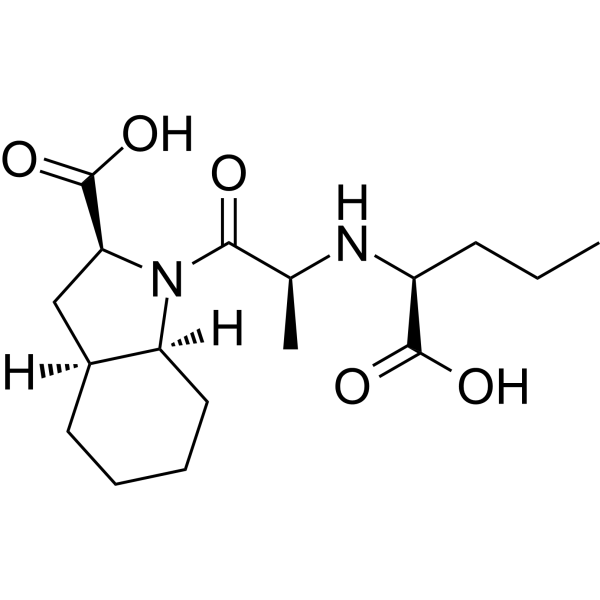
Perindoprilat (Standard) is the analytical standard of Perindoprilat. This product is intended for research and analytical applications. Perindoprilat (S 9780) is an angiotensin-converting enzyme (ACE) inhibitor with the IC50 value ranging from 1.5 to 3.2 nM. Perindoprilat can be used in hypertension research .
|
-
-
- HY-P991240
-
|
KTN-3379
|
EGFR
|
Cancer
|
|
CDX-3379 is a humanized monoclonal antibody inhibitor targeting ErbB3. CDX-3379 binds to ErbB3, blocking the dimerization of ErbB3 with other receptors, thereby inhibiting the phosphorylation of ErbB3. CDX-3379 can inhibit the growth and proliferation of tumor cells. CDX-3379 is promising for research of tumors expressing ErbB3 and NRG1, such as HNSCC .
|
-
-
- HY-P990276
-
|
|
Transmembrane Glycoprotein
|
Infection
Inflammation/Immunology
Cancer
|
|
Anti-Mouse CD317/BST2 Antibody (927) is a rat-derived IgG2b κ type antibody inhibitor, targeting to mouse CD317/BST2. Anti-Mouse CD317/BST2 Antibody (927) can deplete plasmacytoid dendritic cells (pDC). Anti-Mouse CD317/BST2 Antibody (927) can be used for the researches of cancer, infection, inflammation and immunology, such as head and neck squamous cell carcinoma (HNSCC), murine cytomegalovirus (MCMV) infection and asthma .
|
-
-
- HY-144614
-
|
|
DYRK
Apoptosis
|
Neurological Disease
Cancer
|
|
JH-XVII-10 is a potent, selective and orally active DYRK1A and DYRK1B inhibitor with IC50s of 3 nM and 5 nM for DYRK1A and DYRK1B, respectively. JH-XVII-10 shows antitumor efficacy in neck squamous cell carcinoma (HNSCC) cell lines .
|
-
-
- HY-144617
-
|
|
DYRK
|
Cancer
|
|
JH-XIV-68-3 is a selective macrocyclic inhibitor of DYRK1A/B. JH-XIV-68-3 displays selectivity for DYRK1A and close family member DYRK1B in biochemical and cellular assays. JH-XIV-68-3 demonstrates antitumor efficacy in head and neck squamous cell carcinoma (HNSCC) cell lines .
|
-
-
- HY-120412
-
|
|
EGFR
Apoptosis
|
Cancer
|
|
SKLB188 is an orally active and potent epidermal growth factor receptor (EGFR) inhibitor (IC50=5 nM). SKLB188 suppresses MEK/Erk and Akt/mTOR signaling pathways to inhibit head and neck squamous cell carcinoma (HNSCC) proliferation and induce caspase-dependent apoptosis. SKLB188 is promising for research of EGFR-overexpressing solid tumors .
|
-
-
- HY-170595
-
|
|
PROTACs
MDM-2/p53
c-Myc
MAP3K
|
Cancer
|
|
PROTAC LZK degrader 1 (Compound 21A) is a PROTAC that targets the degradation of LZK (Leucine Zipper Kinase, encoded by MAP3K13). PROTAC LZK degrader 1 (10 μM) promotes the degradation of LZK and inhibits the expression of p53 and c-MYC, leading to reduced viability of global head and neck squamous cell carcinoma (HNSCC) cell lines. PROTAC LZK degrader 1 can be used in cancer research. PROTAC LZK degrader 1 consists of an E3 ligase ligand (blue part, HY-112078), a target protein ligand (red part, HY-170596), and a linker (black part, HY-W019543)[1].
|
-
-
- HY-19909A
-
|
|
EGFR
|
Cancer
|
|
NRC-2694-A is an orally effective EGFR tyrosine kinase inhibitor. NRC-2694-A can be used in the study of malignant squamous cell carcinoma (HNSCC) .
|
-
-
- HY-W278582
-
|
|
Topoisomerase
Apoptosis
|
Cancer
|
|
Topoisomerase II inhibitor 14 is a potent topoisomerase II inhibtor. Topoisomerase II inhibitor 14 induces apoptosis and arrests cell cycle at S phase and G2-M phases. Topoisomerase II inhibitor 14 exhibits antioxidant effect and decreases the level of GSH, MDA, and NO. Topoisomerase II inhibitor 14 can be used for the study of neck squamous cell carcinoma (HNSCC) .
|
-
-
- HY-170843
-
|
|
Apoptosis
|
Cancer
|
|
Antitumor agent-198 (Compound A3) exhibits cytotoxicity in head and neck squamous cell carcinoma (HNSCC) cells, that inhibits the proliferation of CAL27, HN6, HN30, SCC9 and SCC25 with IC50 of 4 nM-77 nM. Antitumor agent-198 inhibits the HNSCC cell migration, arrests the cell cycle, and induces apoptosis .
|
-
-
- HY-B1433S
-
-
-
- HY-105031
-
|
|
Biochemical Assay Reagents
|
Cancer
|
|
Nerbacadol is significantly positively correlated with high expression of HOXB-AS4 and drug resistance in head and neck squamous cell carcinoma. Nerbacadol can be used in relevant research on head and neck squamous cell carcinoma .
|
-
-
- HY-N16719
-
|
|
Kallikrein
ERK
Cadherin
β-catenin
|
Cancer
|
|
Picrasidine J is a selective inhibitor targeting the KLK-10 protease and the ERK signaling pathway. Picrasidine J inhibits epithelial-mesenchymal transition (EMT) by upregulating E-Cadherin and ZO-1 and downregulating β-catenin and Snail, while simultaneously reducing KLK-10 expression and inhibiting ERK phosphorylation, thereby exhibiting significant anti-migratory and anti-invasive activity. Picrasidine J can inhibit the metastasis of head and neck squamous cell carcinoma (HNSCC) and is primarily used in anti-metastasis research for head and neck tumors .
|
-
-
- HY-126453
-
|
|
COX
|
Cancer
|
|
VU0487836 is a selective cyclooxygenase-1 (COX-1) inhibitor with an IC50 of 0.36 μM against ovine-derived COX-1. VU0487836 serves as a prototype for the development of radiological imaging agents targeting COX-1 for ovarian cancer. VU0487836 is applicable to relevant research on ovarian cancer .
|
-
| Cat. No. |
Product Name |
Type |
-
- HY-W004121
-
|
|
Biochemical Assay Reagents
|
|
4-Biphenylsulfonyl chloride is a synthetic intermediate that participates in the sulfonamide formation reaction to synthesize antiproliferative compounds. The derivatives of 4-Biphenylsulfonyl chloride inhibit human head and neck squamous cell carcinoma (HNSCC) cells by increasing PTEN expression and inhibiting the PI3K/Akt/mTOR pathway. 4-Biphenylsulfonyl chloride can be used in the development of anticancer drugs for HNSCC .
|
| Cat. No. |
Product Name |
Target |
Research Area |
-
- HY-P1607
-
-
- HY-134545
-
|
NALA
|
Reactive Oxygen Species (ROS)
|
Cancer
|
|
N-Arachidonoyl-L-alanine is an endocannabinoid analog with anti-cancer effects. N- Arachidonoyl-L-alanine kills HNSCC cells through 5-LO-mediated ROS productio .
|
-
- HY-P4092
-
|
|
Peptides
|
Cancer
|
|
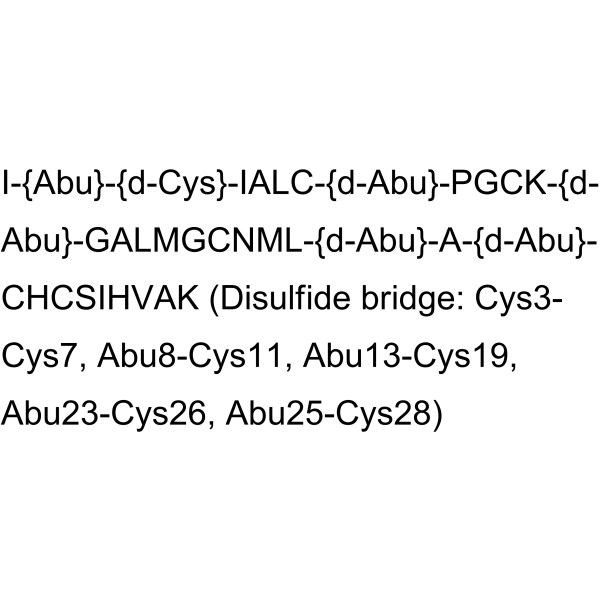
HN-1 is a 12-mer peptide with specific activity to head and neck squamous cell cancer (HNSCC) cells. HN-1, as a tumor-specific peptide, is capable of penetrating tumor tissues. HN-1 is capable of translocating agents across cell membranes .
|
| Cat. No. |
Product Name |
Target |
Research Area |
Image |
-
- HY-P99406
-
|
MCLA 158
|
EGFR
|
Cancer
|
|
Petosemtamab (MCLA 158) is an anti- EGFR (Kd: 0.22 nM) and anti-LGR5 (Kd: 0.86 nM) monoclonal antibody (mAb). Petosemtamab leads to EGFR signaling blockade and receptor degradation in LGR5+ cancer cells. Petosemtamab can be used in the research of solid tumors, such as head and neck squamous cell carcinoma (HNSCC), metastatic colorectal cancer (CRC) .
|
-
(5)
-
- HY-P99032
-
|
IPH2201
|
Checkpoint Kinase (Chk)
IFNAR
|
Inflammation/Immunology
Cancer
|
|
Monalizumab (IPH2201) is an immune checkpoint inhibitor targeting Natural Killer Group 2A (NKG2A). Monalizumab, a humanized anti-NKG2A blocking mAb, increases IFN-γ production, thereby promoting NK cell effector functions. Monalizumab can be used for the research of head and neck squamous cell carcinoma (HNSCC) .
|
-
(5)
-
- HY-P99785
-
|
HLX20; HLX43 antibody
|
PD-1/PD-L1
ADC Antibody
|
Cancer
|
|
Opucolimab (HLX20) is an engineered anti-PD-L1 humanised IgG1 antibody. Opucolimab, when conjugated with camptothecin toxoid, yields the PD-L1-targeting ADC, HLX43 (HY-177439). HLX43 can be used for non-small cell lung cancer (NSCLC), head and neck squamous cell carcinoma (HNSCC), esophageal squamous cell carcinoma (ESCC), melanoma (MEL), ovarian cancer (Ovc) research .
|
-
(5)
-
- HY-P99406A
-
|
|
EGFR
|
Cancer
|
|
Petosemtamab (FUT8-KO) is an anti-EGFR and anti-LGR5 monoclonal antibody expressed in CHO cells with the fucosyltransferase 8 gene (FUT8) knocked out. Fucosyl loss enhances the ADCC effect of the antibody. Petosemtamab (FUT8-KO) leads to EGFR signaling blockade and receptor degradation in LGR5+ cancer cells. Petosemtamab (FUT8-KO) can be used for research on solid tumors such as head and neck squamous cell carcinoma (HNSCC) and metastatic colorectal cancer (CRC) .
|
-
(5)
-
- HY-P99196
-
|
|
c-Met/HGFR
|
Cancer
|
|
Ficlatuzumab is a monoclonal antibody (McAb) targeting human hepatocyte growth factor (HGF). Ficlatuzumab blocks the activation of the HGF/c-Met signaling pathway, and inhibits c-Met receptor-mediated cancer cell proliferation, migration, and invasion .
|
-
(5)
-
- HY-P99141
-
|
|
LAG-3
|
Inflammation/Immunology
Cancer
|
|
Anti-Mouse LAG-3 Antibody (C9B7W) is an anti-mouse LAG-3 IgG1 monoclonal antibody. Anti-Mouse LAG-3 Antibody (C9B7W) can enhance CD4 + T cell function and exert anti-tumor effects without blocking the interaction between LAG-3 and MHCII. Anti-Mouse LAG-3 Antibody (C9B7W) can be used for research on cancer such as head and neck squamous cell carcinoma (HNSCC) .
|
-
(5)
-
- HY-P990947
-
|
AZD9592 Antibody
|
ADC Antibody
EGFR
|
Cancer
|
|
Tilatamig (AZD9592 Antibody) is a human antibody of the Ig (G1-κ_G1-λ2) subtype that targets EGFR/MET. Tilatamig conjugates with the Top1 inhibitor AZ14170133 (HY-145399) to form the antibody-drug conjugate (ADC) Tilatamig samrotecan (HY-171124) (AZD9592). Tilatamig accurately targets NSCLC models including EGFR-mutant, EGFR-wildtype, and EGFR tyrosine kinase inhibitor-treated ones, and its activity correlates with high expression of EGFR, c-MET and SLFN11. Tilatamig is available for in vivo anti-tumor studies in patient-derived xenograft models of non-small cell lung cancer (NSCLC) and head and neck squamous cell carcinoma (HNSCC) .
|
-
(5)
-
- HY-P99685
-
|
IMGN-289; J2898A-SMCC-DM1
|
EGFR
Antibody-Drug Conjugates (ADCs)
|
Cancer
|
|
Laprituximab emtansine (IMGN-289) is an immunotoxin targeting HER1. Laprituximab emtansine is an EGFR antibody-drug conjugate (ADC) consisting of the J2898A antibody, DM1 (anti-microtubule agent) and the SMCC thioether linker. Laprituximab emtansine can be used for cancer research .
|
-
(5)
-
- HY-P991240
-
|
KTN-3379
|
EGFR
|
Cancer
|
|
CDX-3379 is a humanized monoclonal antibody inhibitor targeting ErbB3. CDX-3379 binds to ErbB3, blocking the dimerization of ErbB3 with other receptors, thereby inhibiting the phosphorylation of ErbB3. CDX-3379 can inhibit the growth and proliferation of tumor cells. CDX-3379 is promising for research of tumors expressing ErbB3 and NRG1, such as HNSCC .
|
-
(5)
-
- HY-P990276
-
|
|
Transmembrane Glycoprotein
|
Infection
Inflammation/Immunology
Cancer
|
|
Anti-Mouse CD317/BST2 Antibody (927) is a rat-derived IgG2b κ type antibody inhibitor, targeting to mouse CD317/BST2. Anti-Mouse CD317/BST2 Antibody (927) can deplete plasmacytoid dendritic cells (pDC). Anti-Mouse CD317/BST2 Antibody (927) can be used for the researches of cancer, infection, inflammation and immunology, such as head and neck squamous cell carcinoma (HNSCC), murine cytomegalovirus (MCMV) infection and asthma .
|
-
(5)
| Cat. No. |
Product Name |
Category |
Target |
Chemical Structure |
| Cat. No. |
Product Name |
Chemical Structure |
-
- HY-B1433S
-
|
|
|
Perindoprilat-d3 disodium is deuterated labeled Perindoprilat (HY-B1433). Perindoprilat (S 9780) is an angiotensin-converting enzyme (ACE) inhibitor with the IC50 value ranging from 1.5 to 3.2 nM. Perindoprilat can be used in hypertension research .
|
-
Your information is safe with us. * Required Fields.
Inquiry Information
- Product Name:
- Cat. No.:
- Quantity:
- MCE Japan Authorized Agent:

