

Search Result
Results for "
Hexadecyl
" in MedChemExpress (MCE) Product Catalog:
20
Biochemical Assay Reagents
8
Isotope-Labeled Compounds
| Cat. No. |
Nombre del producto |
Target |
Áreas de investigación |
Chemical Structure |
-
- HY-13685
-
|
HePC; Hexadecyl phosphocholine
|
Akt
HIV
Parasite
|
Infection
Cancer
|
|
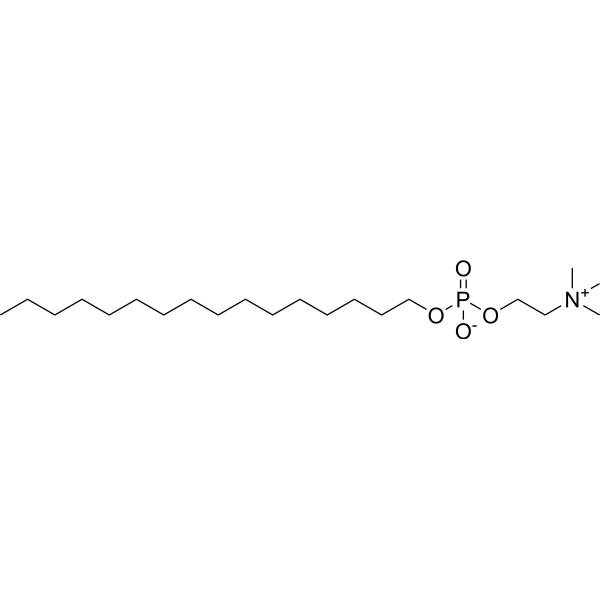
Miltefosine is a broad spectrum antimicrobial, anti-leishmanial, phospholipid agent acting by inhibiting the PI3K/Akt activity . Miltefosine is an inhibitor of CTP-phosphocholine cytidyltransferase (CCT) .
|
-
-
- HY-141570
-
|
|
Phospholipase
|
Others
|
|
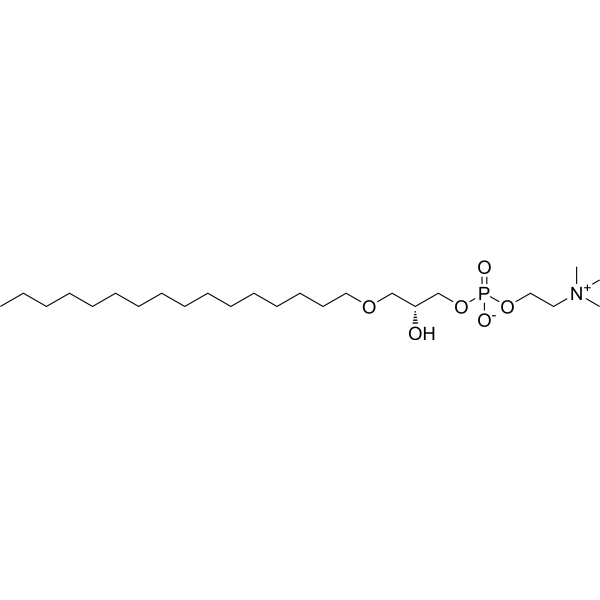
Lyso-PAF C-16 is a precursor and metabolite of 1-O-hexadecyl-2-acetyl-sn-glycero-3-phosphocholine (PAF C-16). Lyso-PAF C-16 is a substrate for either PAF C-16 formation by the remodeling pathway or selective acylation with arachidonic acid by a CoA-independent transacylase .
|
-
-
- HY-W011309A
-
|
(S)-1-O-HDG; (S)-HXDG
|
PPAR
|
Others
|
|
1-O-Hexadecyl-sn-glycerol [(S)-HXDG] is an alkyl glycerol monoether derived from T. aurantia .
|
-
-
- HY-W010807
-
|
|
Environmental Pollutants
Biochemical Assay Reagents
|
Others
|
|
Hexadecyl palmitate is an organic compound commonly used in the cosmetic industry as an emollient, thickener and skin conditioning agent. Cetyl palmitate is derived from a mixture of cetyl alcohol (a fatty alcohol) and palmitic acid (a saturated fatty acid). It is often used in skin care products such as moisturizers, lotions, and creams to improve their texture and Helps them glide smoothly on the skin. In addition to its use in cosmetics, cetyl palmitate is used in other industries including pharmaceuticals, food additives and lubricants. Overall, it's considered safe for use in personal care products, but like any other ingredient, it may cause irritation or an allergic reaction in some people.
|
-
-
- HY-W337335
-
|
1-P-GPA sodium salt
|
Liposome
|
Metabolic Disease
Inflammation/Immunology
|
|
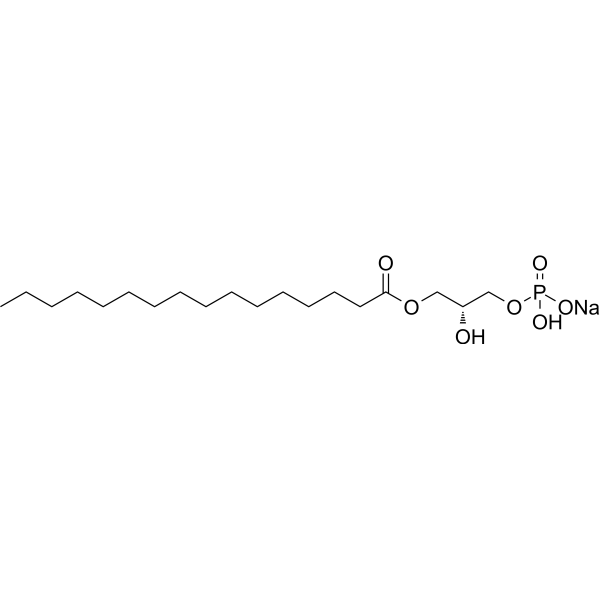
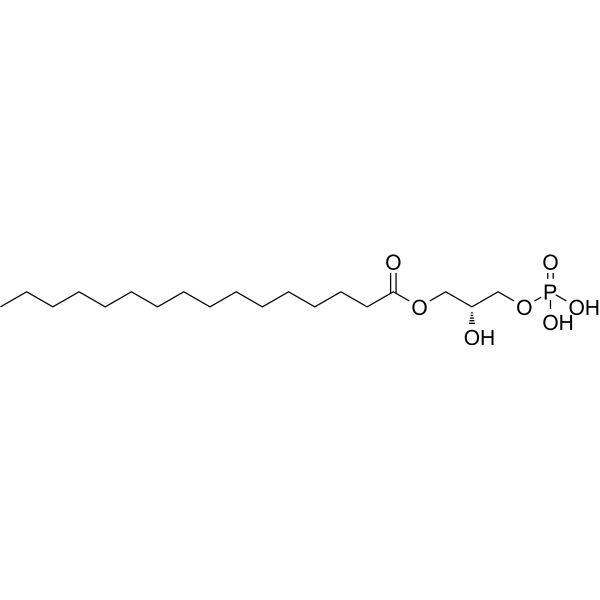
Palmitoyl-sn-glycerol 3-phosphate (1-P-GPA) sodium salt is a type of phospholipid and a precursor of lipid membranes. 1-Palmitoyl-sn-glycerol 3-phosphate sodium salt can be incorporated into POPC liposomes, resulting in significant changes in membrane curvature. 1-Palmitoyl-sn-glycerol 3-phosphate sodium salt can induce platelet aggregation, but its activity is 30 times lower than that of 1-hexadecyl-sn-glyceryl-3-phosphate .
|
-
-
- HY-W284558
-
-
-
- HY-E70277
-
|
|
ATGL
|
Metabolic Disease
|
|
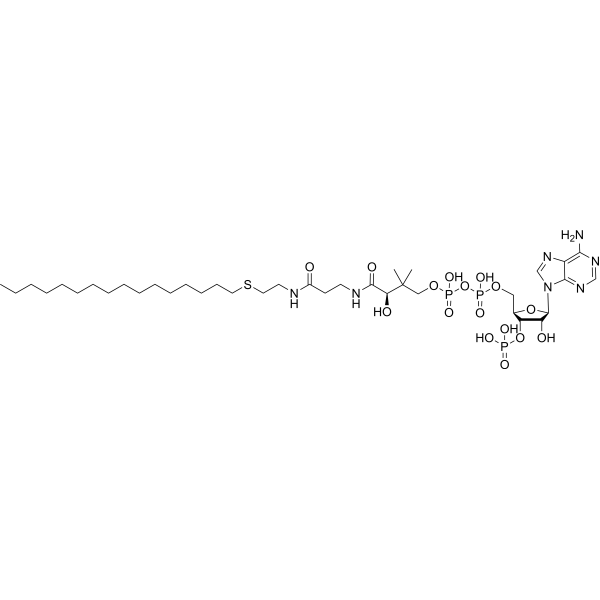
Hexadecyl-CoA is a thioether analog of acyl-CoA that can inhibit adipose triglyceride lipase (ATGL) .
|
-
-
- HY-W127460
-
|
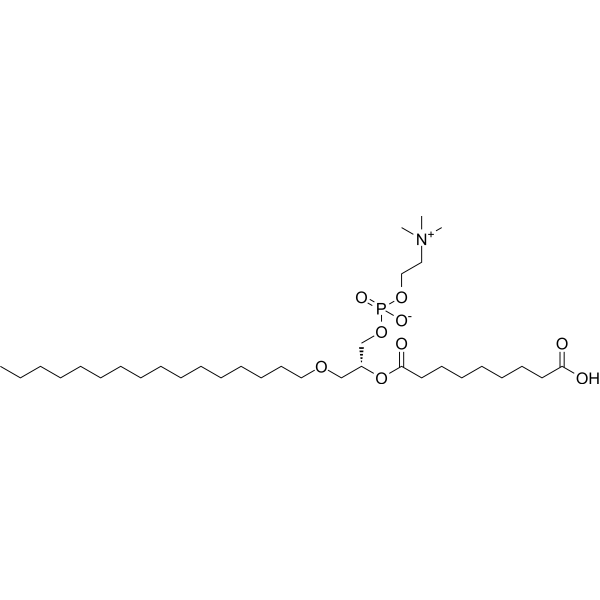
1-Hexadecyl-2-azelaoyl-sn-glycero-3-phosphocholine
|
Biochemical Assay Reagents
|
Others
|
|
1-hexadecyl-2-azelaoyl-sn-glycero-3-phosphocholine is a biochemical reagent that can be used as a biological material or organic compound for life science related research.
|
-
-
- HY-131652
-
|
16:0 Diether PC
|
Liposome
|
Metabolic Disease
|
|
1,2-Di-O-hexadecyl-sn-glycero-3-phosphocholine (16:0 Diether PC) is a synthetic ether-linked phospholipid containing hexadecyl groups at the sn-1 and sn-2 positions. It is commonly used in the generation of liposomes and artificial membranes to study membrane dynamics.
|
-
-
- HY-W020795
-
|
|
Biochemical Assay Reagents
|
Others
|
|
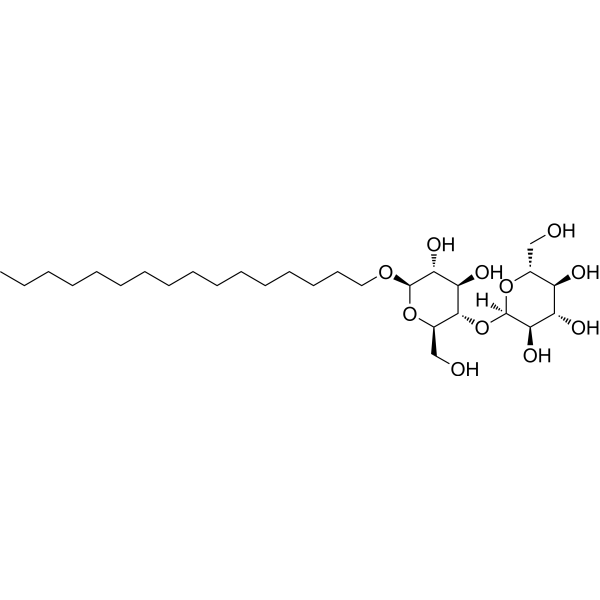
Hexadecyl β-D-maltoside is the anomer of Hexadecyl α-d-maltoside. Hexadecyl β-D-maltoside is different from Hexadecyl α-d-maltoside, showing non-Newtonian behavior, including thixotropic behavior, shear-thinning, and viscoelastic behavior .
|
-
-
- HY-W127502
-
|
1-Hexadecyl LPA; 1-Palmityl LPA; LPA O-16:0
|
Biochemical Assay Reagents
|
Others
|
|
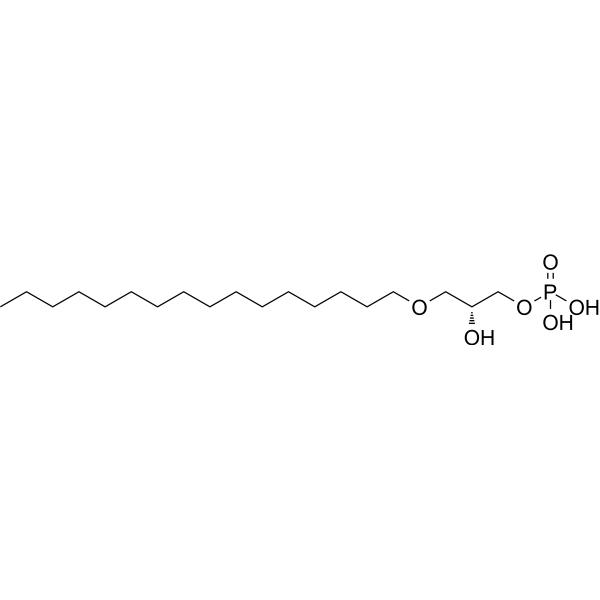
1-Hexadecyl lysophosphatidic acid is an ether analog of lysophosphatidic acid (LPA) containing a hexadecyl group in the sn-1 position. LPA binds to five different G protein-coupled receptors and mediates a variety of biological responses, including cell proliferation, smooth muscle contraction, platelet aggregation, neurite contraction, and cell motility.
|
-
-
- HY-126967A
-
|
1-P-GPA
|
Liposome
|
Cardiovascular Disease
|
|
1-Palmitoyl-sn-glycerol 3-phosphate (1-P-GPA) is a phospholipid and lipid membrane precursor. 1-Palmitoyl-sn-glycerol 3-phosphate integrates into POPC liposomes, causing significant changes in membrane curvature. 1-Palmitoyl-sn-glycerol 3-phosphate induces platelet aggregation, but its activity is 30-fold lower than that of 1-hexadecyl-sn-glyceryl-3-phosphate .
|
-
-
- HY-W127328
-
|
|
Biochemical Assay Reagents
|
Others
|
|
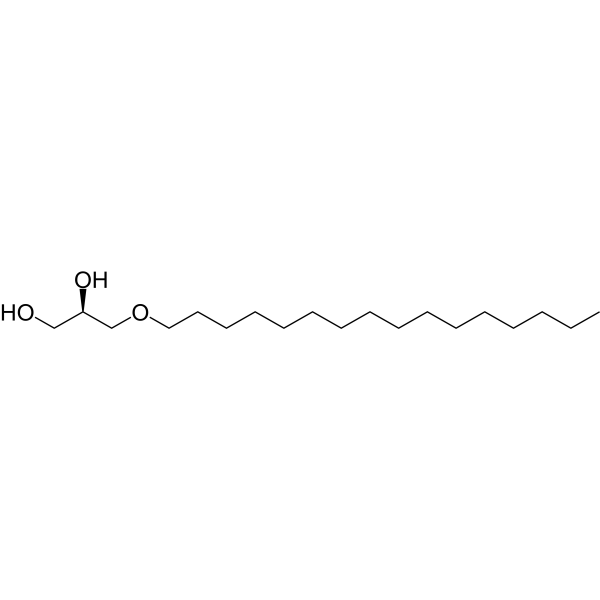
3-O-Hexadecyl-sn-glycerol is a biochemical reagent that can be used as a biological material or organic compound for life science related research.
|
-
-
- HY-154620
-
|
|
Nucleoside Antimetabolite/Analog
|
Cancer
|
|
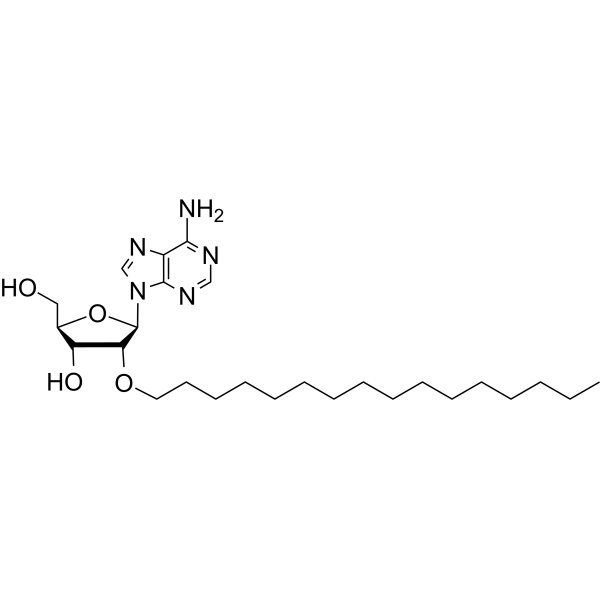
2′-O-Hexadecyl-adenosine is a purine nucleoside analog. Purine nucleoside analogs have broad antitumor activity targeting indolent lymphoid malignancies. Anticancer mechanisms in this process rely on inhibition of DNA synthesis, induction of apoptosis, etc .
|
-
-
- HY-108987
-
|
|
Biochemical Assay Reagents
|
Others
|
|
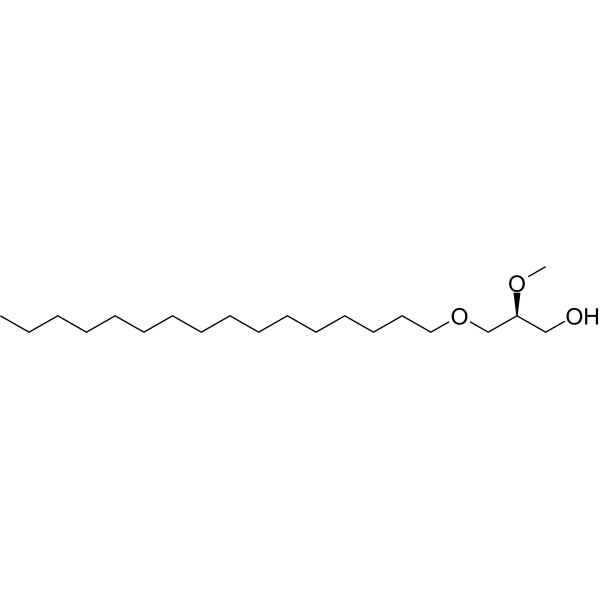
1-O-hexadecyl-2-O-methyl-sn-glycerol (PMG) is a biochemical reagent that can be used as a biological material or organic compound for life science related research.
|
-
-
- HY-W923483
-
|
1-O-Hexadecyl-2-oleoyl-sn-glycero-3-phosphocholine
|
Platelet-activating Factor Receptor (PAFR)
Endogenous Metabolite
|
Cardiovascular Disease
|
|
C16-18:1 PC (1-O-Hexadecyl-2-oleoyl-sn-glycero-3-phosphocholine), also known as 1-O-hexadecyl-2-oleoyl-sn-glycero-3-phosphocholine (HOPC), is a member of the platelet-activating factor (PAF) family of glycerophospholipids and serves as a pro-inflammatory lipid mediator with diverse biological and pharmacological effects; it features a mono-ether structure with an oleoyl chain (18:1) ester-linked at the sn-2 position and a hexadecyl chain (16:0) ether-linked at the sn-1 position.
|
-
-
- HY-W127369
-
|
PC(O-16:0/22:6(4Z,7Z,10Z,13Z,16Z,19Z))
|
Endogenous Metabolite
|
Metabolic Disease
|
|
1-O-Hexadecyl-2-O-docosahexaenoyl-sn-glycero-3-phosphorylcholine is an endogenous metabolite present in Urine that can be used for the research of Obesity .
|
-
-
- HY-13685R
-
|
HePC (Standard); Hexadecyl phosphocholine (Standard)
|
Akt
HIV
Parasite
Reference Standards
|
Infection
Cancer
|
|
Miltefosine (Standard) is the analytical standard of Miltefosine. This product is intended for research and analytical applications. Miltefosine is a broad spectrum antimicrobial, anti-leishmanial, phospholipid agent acting by inhibiting the PI3K/Akt activity . Miltefosine is an inhibitor of CTP-phosphocholine cytidyltransferase (CCT) .
|
-
-
- HY-165856
-
-
-
- HY-175084
-
|
1-Hexadecyl LPA sodium; 1-Palmityl LPA sodium; LPA O-16:0 sodium
|
LPL Receptor
|
Metabolic Disease
|
|
1-Hexadecyl lysophosphatidic acid (1-Hexadecyl LPA) sodium, an ether analog of lysophosphatidic acid (LPA), is a LPA receptor activator .
|
-
-
- HY-W284558S
-
-
-
- HY-W010807S
-
-
-
- HY-W835767
-
-
-
- HY-166311
-
-
-
- HY-W548692
-
-
-
- HY-W010807R
-
|
|
Biochemical Assay Reagents
Reference Standards
|
Others
|
|
Hexadecyl palmitate (Standard) is the analytical standard of Hexadecyl palmitate. This product is intended for research and analytical applications. Hexadecyl palmitate is an organic compound commonly used in the cosmetic industry as an emollient, thickener and skin conditioning agent. Cetyl palmitate is derived from a mixture of cetyl alcohol (a fatty alcohol) and palmitic acid (a saturated fatty acid). It is often used in skin care products such as moisturizers, lotions, and creams to improve their texture and Helps them glide smoothly on the skin. In addition to its use in cosmetics, cetyl palmitate is used in other industries including pharmaceuticals, food additives and lubricants. Overall, it's considered safe for use in personal care products, but like any other ingredient, it may cause irritation or an allergic reaction in some people.
|
-
-
- HY-W748626
-
-
-
- HY-134080
-
|
1-O-Hexadecyl-2-O-methyl-rac-glycerol
|
Biochemical Assay Reagents
|
Others
|
|
1-O-Hexadecyl-2-O-methylglycerol is a biochemical reagent that can be used as a biological material or organic compound for life science related research.
|
-
-
- HY-157679
-
-
-
- HY-167906S
-
-
-
- HY-W019868
-
|
|
mTOR
|
Others
|
|
1-O-Hexadecyl-2-O-acetyl-sn-glycerol is an alkyl acylglycerol that may activate the amino acid transport activity of the A-system and stimulate the absorption of methylaminoisobutyric acid (MeAIB). MeAIB inhibits mTOR phosphorylation, which may affect intestinal amino acid absorption and signal transduction .
|
-
-
- HY-134225
-
-
-
- HY-W127540
-
|
Hexadecyl acetate
|
Environmental Pollutants
Biochemical Assay Reagents
|
Others
|
|
Palmityl acetate is an ester compound with a waxy odor commonly used as a lubricant or emollient in various cosmetic and personal care products. In addition, it can be used as a plasticizer or stabilizer in the production of plastics and resins. Its unique chemical properties make it an important ingredient in a variety of commercial products, including perfumes, lotions and hair care products.
|
-
-
- HY-W008625S1
-
-
-
- HY-13685S1
-
|
HePC-d4; Hexadecyl phosphocholine-d4
|
Isotope-Labeled Compounds
Akt
Parasite
HIV
|
Infection
Cancer
|
|
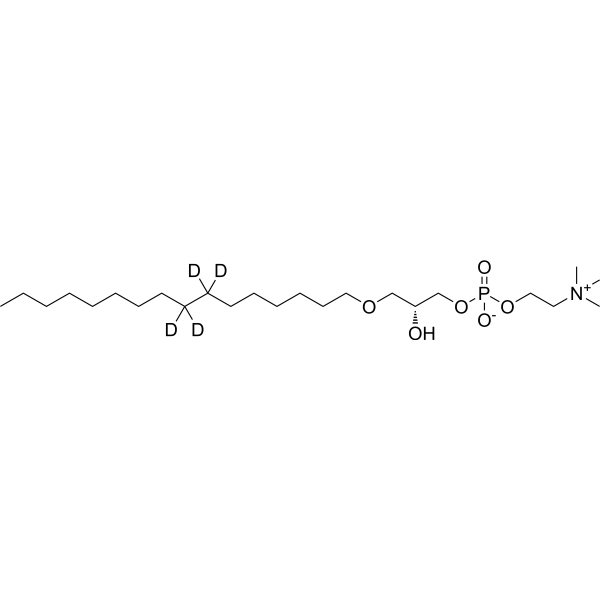
Miltefosine-d4 (HePC-d4) is deuterium labeled Miltefosine. Miltefosine is a broad spectrum antimicrobial, anti-leishmanial, phospholipid agent acting by inhibiting the PI3K/Akt activity . Miltefosine is an inhibitor of CTP-phosphocholine cytidyltransferase (CCT) .
|
-
-
- HY-165473
-
|
|
Calcium Channel
|
Cancer
|
|
Hexadecylphosphoserine is a phospholipid molecule that contains a long-chain alkyl (hexadecyl) and a phosphoserine group, giving it a high affinity for the cell membrane. Hexadecylphosphoserine can exert antitumor activity by modulating [Ca ++]i and its related signaling pathways, making it useful for research in the field of breast cancer .
|
-
-
- HY-165473A
-
|
|
Calcium Channel
|
Cancer
|
|
Hexadecylphosphoserine TFA is a phospholipid molecule that contains a long-chain alkyl (hexadecyl) and a phosphoserine group, giving it a high affinity for the cell membrane. Hexadecylphosphoserine TFA can exert antitumor activity by modulating [Ca ++]i and its related signaling pathways, making it useful for research in the field of breast cancer .
|
-
-
- HY-132190
-
|
1-O-Hexa-decyl-2-acetyl-sn-glycero-3-phospho(N,N,N-trimethyl)-hexanolamine
|
Platelet-activating Factor Receptor (PAFR)
|
Cardiovascular Disease
|
|
Hexanolamino PAF C-16 (1-O-hexadecyl-2-acetyl-sn-glycero-3-phospho (N,N,N trimethyl) hexanolamine) is a Platelet-activating Factor Receptor (PAFR) Modulator with partial agonist activity. Hexanolamino PAF C-16 induces platelet aggregation and macrophage production but fails to increase [Ca2+]i in platelets, suggesting that PAF receptors may interact with PAF receptors through Ca 2+-dependent and -independent pathways. Related to platelet aggregation .
|
-
-
- HY-N17076
-
-
-
- HY-172510
-
|
|
Biochemical Assay Reagents
|
Others
|
|
N-Hexadecyl-pSar25 is a polysarcosine (pSar) derivative featuring a hexadecyl head group and a 25-mer polysarcosine tail. Sarcosine is an amino acid derivated that is being developed as an alternative to PEG for in vivo applications due to its biodegradability and highly reduced antigenicity. pSar-lipid derivatives such as this may be applied in the development of lipid nanoparticles.
|
-
-
- HY-W111468S
-
-
-
- HY-W723927
-
-
-
- HY-W127609
-
|
|
Biochemical Assay Reagents
|
Others
|
|
1-O-Hexadecyl-2-palmitoyl-rac-glycero-3-phosphocholine is a biochemical reagent that can be used as a biological material or organic compound for life science related research.
|
-
-
- HY-W482407
-
|
(S)-2,3-Bis(Hexadecyloxy)propan-1-ol
|
Biochemical Assay Reagents
|
Metabolic Disease
|
|
1,2-O-Dihexadecyl-sn-glycerol ((S)-2,3-Bis(hexadecyloxy)propan-1-ol) is a saturated dialkyl glyceryl ether with hexadecyl groups at the sn-1 and sn-2 positions that mimics the structure of diacylglycerol.
|
-
-
- HY-183134A
-
|
|
Biochemical Assay Reagents
|
Others
|
|
C16-PEG3400-NHS is a conjugate composed of hexadecyl (C16, i.e., palmitoyl), a PEG chain, and an active ester (NHS). C16-PEG3400-NHS combines the membrane compatibility of lipids with glucose as an active site for sugar recognition or subsequent conjugation reactions, making it suitable for research in biomaterial construction and drug delivery.
|
-
-
- HY-183134B
-
|
|
Biochemical Assay Reagents
|
Others
|
|
C16-PEG5000-NHS is a conjugate composed of hexadecyl (C16, i.e., palmitoyl), a PEG chain, and an active ester (NHS). C16-PEG5000-NHS combines the membrane compatibility of lipids with glucose as an active site for sugar recognition or subsequent conjugation reactions, making it suitable for research in biomaterial construction and drug delivery.
|
-
-
- HY-183134
-
|
|
Biochemical Assay Reagents
|
Others
|
|
C16-PEG2000-NHS is a conjugate composed of hexadecyl (C16, i.e., palmitoyl), a PEG chain, and an active ester (NHS). C16-PEG2000-NHS combines the membrane compatibility of lipids with glucose as an active site for sugar recognition or subsequent conjugation reactions, making it suitable for research in biomaterial construction and drug delivery.
|
-
-
- HY-183135
-
|
|
Biochemical Assay Reagents
|
Others
|
|
C16-PEG2000-Mal is a conjugate composed of a hexadecyl (C16 aliphatic chain), a PEG chain, and maleimide (Mal). C16-PEG2000-Mal combines the membrane compatibility of lipids with the specific Michael addition reaction with thiol-containing (-SH) biomolecules (such as peptides, antibodies, and aptamers), making it suitable for research in biomaterial construction and drug delivery.
|
-
-
- HY-183135A
-
|
|
Biochemical Assay Reagents
|
Others
|
|
C16-PEG3400-Mal is a conjugate composed of a hexadecyl (C16 aliphatic chain), a PEG chain, and maleimide (Mal). C16-PEG3400-Mal combines the membrane compatibility of lipids with the specific Michael addition reaction with thiol-containing (-SH) biomolecules (such as peptides, antibodies, and aptamers), making it suitable for research in biomaterial construction and drug delivery.
|
-
-
- HY-183135B
-
|
|
Biochemical Assay Reagents
|
Others
|
|
C16-PEG5000-Mal is a conjugate composed of a hexadecyl (C16 aliphatic chain), a PEG chain, and maleimide (Mal). C16-PEG5000-Mal combines the membrane compatibility of lipids with the specific Michael addition reaction with thiol-containing (-SH) biomolecules (such as peptides, antibodies, and aptamers), making it suitable for research in biomaterial construction and drug delivery.
|
-
- HY-183133B
-
|
|
Biochemical Assay Reagents
|
Others
|
|
C16-PEG5000-COOH is a conjugate composed of a hexadecyl (C16 aliphatic chain), a PEG chain, and a carboxyl group (-COOH). C16-PEG5000-COOH combines the membrane compatibility of lipids with the carboxyl group, which can form amide bonds with primary amines via EDC/NHS activation, making it suitable for research in biomaterial construction and drug delivery.
|
-
- HY-183133
-
|
|
Biochemical Assay Reagents
|
Others
|
|
C16-PEG2000-COOH is a conjugate composed of a hexadecyl (C16 aliphatic chain), a PEG chain, and a carboxyl group (-COOH). C16-PEG2000-COOH combines the membrane compatibility of lipids with the carboxyl group, which can form amide bonds with primary amines via EDC/NHS activation, making it suitable for research in biomaterial construction and drug delivery.
|
-
- HY-183133A
-
|
|
Biochemical Assay Reagents
|
Others
|
|
C16-PEG3400-COOH is a conjugate composed of a hexadecyl (C16 aliphatic chain), a PEG chain, and a carboxyl group (-COOH). C16-PEG3400-COOH combines the membrane compatibility of lipids with the carboxyl group, which can form amide bonds with primary amines via EDC/NHS activation, making it suitable for research in biomaterial construction and drug delivery.
|
-
| Cat. No. |
Nombre del producto |
Type |
-
- HY-W010807
-
|
|
Biochemical Assay Reagents
|
|
Hexadecyl palmitate is an organic compound commonly used in the cosmetic industry as an emollient, thickener and skin conditioning agent. Cetyl palmitate is derived from a mixture of cetyl alcohol (a fatty alcohol) and palmitic acid (a saturated fatty acid). It is often used in skin care products such as moisturizers, lotions, and creams to improve their texture and Helps them glide smoothly on the skin. In addition to its use in cosmetics, cetyl palmitate is used in other industries including pharmaceuticals, food additives and lubricants. Overall, it's considered safe for use in personal care products, but like any other ingredient, it may cause irritation or an allergic reaction in some people.
|
-
- HY-W284558
-
-
- HY-W127460
-
|
1-Hexadecyl-2-azelaoyl-sn-glycero-3-phosphocholine
|
Biochemical Assay Reagents
|
|
1-hexadecyl-2-azelaoyl-sn-glycero-3-phosphocholine is a biochemical reagent that can be used as a biological material or organic compound for life science related research.
|
-
- HY-W020795
-
|
|
Biochemical Assay Reagents
|
|
Hexadecyl β-D-maltoside is the anomer of Hexadecyl α-d-maltoside. Hexadecyl β-D-maltoside is different from Hexadecyl α-d-maltoside, showing non-Newtonian behavior, including thixotropic behavior, shear-thinning, and viscoelastic behavior .
|
-
- HY-W127502
-
|
1-Hexadecyl LPA; 1-Palmityl LPA; LPA O-16:0
|
Biochemical Assay Reagents
|
|
1-Hexadecyl lysophosphatidic acid is an ether analog of lysophosphatidic acid (LPA) containing a hexadecyl group in the sn-1 position. LPA binds to five different G protein-coupled receptors and mediates a variety of biological responses, including cell proliferation, smooth muscle contraction, platelet aggregation, neurite contraction, and cell motility.
|
-
- HY-W127328
-
|
|
Biochemical Assay Reagents
|
|
3-O-Hexadecyl-sn-glycerol is a biochemical reagent that can be used as a biological material or organic compound for life science related research.
|
-
- HY-108987
-
|
|
Biochemical Assay Reagents
|
|
1-O-hexadecyl-2-O-methyl-sn-glycerol (PMG) is a biochemical reagent that can be used as a biological material or organic compound for life science related research.
|
-
- HY-W010807R
-
|
|
Biochemical Assay Reagents
|
|
Hexadecyl palmitate (Standard) is the analytical standard of Hexadecyl palmitate. This product is intended for research and analytical applications. Hexadecyl palmitate is an organic compound commonly used in the cosmetic industry as an emollient, thickener and skin conditioning agent. Cetyl palmitate is derived from a mixture of cetyl alcohol (a fatty alcohol) and palmitic acid (a saturated fatty acid). It is often used in skin care products such as moisturizers, lotions, and creams to improve their texture and Helps them glide smoothly on the skin. In addition to its use in cosmetics, cetyl palmitate is used in other industries including pharmaceuticals, food additives and lubricants. Overall, it's considered safe for use in personal care products, but like any other ingredient, it may cause irritation or an allergic reaction in some people.
|
-
- HY-134080
-
|
1-O-Hexadecyl-2-O-methyl-rac-glycerol
|
Biochemical Assay Reagents
|
|
1-O-Hexadecyl-2-O-methylglycerol is a biochemical reagent that can be used as a biological material or organic compound for life science related research.
|
-
- HY-W127540
-
|
Hexadecyl acetate
|
Biochemical Assay Reagents
|
|
Palmityl acetate is an ester compound with a waxy odor commonly used as a lubricant or emollient in various cosmetic and personal care products. In addition, it can be used as a plasticizer or stabilizer in the production of plastics and resins. Its unique chemical properties make it an important ingredient in a variety of commercial products, including perfumes, lotions and hair care products.
|
-
- HY-W127609
-
|
|
Biochemical Assay Reagents
|
|
1-O-Hexadecyl-2-palmitoyl-rac-glycero-3-phosphocholine is a biochemical reagent that can be used as a biological material or organic compound for life science related research.
|
-
- HY-183134A
-
|
|
Biochemical Assay Reagents
|
|
C16-PEG3400-NHS is a conjugate composed of hexadecyl (C16, i.e., palmitoyl), a PEG chain, and an active ester (NHS). C16-PEG3400-NHS combines the membrane compatibility of lipids with glucose as an active site for sugar recognition or subsequent conjugation reactions, making it suitable for research in biomaterial construction and drug delivery.
|
-
- HY-183134B
-
|
|
Biochemical Assay Reagents
|
|
C16-PEG5000-NHS is a conjugate composed of hexadecyl (C16, i.e., palmitoyl), a PEG chain, and an active ester (NHS). C16-PEG5000-NHS combines the membrane compatibility of lipids with glucose as an active site for sugar recognition or subsequent conjugation reactions, making it suitable for research in biomaterial construction and drug delivery.
|
-
- HY-183134
-
|
|
Biochemical Assay Reagents
|
|
C16-PEG2000-NHS is a conjugate composed of hexadecyl (C16, i.e., palmitoyl), a PEG chain, and an active ester (NHS). C16-PEG2000-NHS combines the membrane compatibility of lipids with glucose as an active site for sugar recognition or subsequent conjugation reactions, making it suitable for research in biomaterial construction and drug delivery.
|
-
- HY-183135
-
|
|
Biochemical Assay Reagents
|
|
C16-PEG2000-Mal is a conjugate composed of a hexadecyl (C16 aliphatic chain), a PEG chain, and maleimide (Mal). C16-PEG2000-Mal combines the membrane compatibility of lipids with the specific Michael addition reaction with thiol-containing (-SH) biomolecules (such as peptides, antibodies, and aptamers), making it suitable for research in biomaterial construction and drug delivery.
|
-
- HY-183135A
-
|
|
Biochemical Assay Reagents
|
|
C16-PEG3400-Mal is a conjugate composed of a hexadecyl (C16 aliphatic chain), a PEG chain, and maleimide (Mal). C16-PEG3400-Mal combines the membrane compatibility of lipids with the specific Michael addition reaction with thiol-containing (-SH) biomolecules (such as peptides, antibodies, and aptamers), making it suitable for research in biomaterial construction and drug delivery.
|
-
- HY-183135B
-
|
|
Biochemical Assay Reagents
|
|
C16-PEG5000-Mal is a conjugate composed of a hexadecyl (C16 aliphatic chain), a PEG chain, and maleimide (Mal). C16-PEG5000-Mal combines the membrane compatibility of lipids with the specific Michael addition reaction with thiol-containing (-SH) biomolecules (such as peptides, antibodies, and aptamers), making it suitable for research in biomaterial construction and drug delivery.
|
-
- HY-183133B
-
|
|
Biochemical Assay Reagents
|
|
C16-PEG5000-COOH is a conjugate composed of a hexadecyl (C16 aliphatic chain), a PEG chain, and a carboxyl group (-COOH). C16-PEG5000-COOH combines the membrane compatibility of lipids with the carboxyl group, which can form amide bonds with primary amines via EDC/NHS activation, making it suitable for research in biomaterial construction and drug delivery.
|
-
- HY-183133
-
|
|
Biochemical Assay Reagents
|
|
C16-PEG2000-COOH is a conjugate composed of a hexadecyl (C16 aliphatic chain), a PEG chain, and a carboxyl group (-COOH). C16-PEG2000-COOH combines the membrane compatibility of lipids with the carboxyl group, which can form amide bonds with primary amines via EDC/NHS activation, making it suitable for research in biomaterial construction and drug delivery.
|
-
- HY-183133A
-
|
|
Biochemical Assay Reagents
|
|
C16-PEG3400-COOH is a conjugate composed of a hexadecyl (C16 aliphatic chain), a PEG chain, and a carboxyl group (-COOH). C16-PEG3400-COOH combines the membrane compatibility of lipids with the carboxyl group, which can form amide bonds with primary amines via EDC/NHS activation, making it suitable for research in biomaterial construction and drug delivery.
|
| Cat. No. |
Nombre del producto |
Category |
Target |
Chemical Structure |
| Cat. No. |
Nombre del producto |
Chemical Structure |
-
- HY-W284558S
-
|
|
|
Sodium hexadecyl sulfate-d33 is the deuterium labeled Sodium hexadecyl sulfate .
|
-
-
- HY-W010807S
-
|
|
|
Hexadecyl palmitate-d3 is the deuterium labeled Hexadecyl palmitate.
|
-
-
- HY-W748626
-
|
|
|
Acetic acid, 2-bromo-, hexadecyl ester- 13C2 is the 13C-labeled Acetic acid, 2-bromo-, hexadecyl ester (HY-W856683).
|
-
-
- HY-167906S
-
|
|
|
Hexadecyl 2-((4-Nitrophenyl)thio)acetate- 13C2 is the 13C-labeled Lunamarine (HY-167906). Lunamarine is a inhibitor of PDE5 with BBB permeability. Lunamarine can be used in the reseach of Pulmonary Arterial Hypertension (PAH) and Erectile Dysfunction (ED) .
|
-
-
- HY-W008625S1
-
|
|
|
1-Bromohexadecane-d33 is the deuterium labeled 1-Bromohexadecane .
|
-
-
- HY-13685S1
-
|
|
|
Miltefosine-d4 (HePC-d4) is deuterium labeled Miltefosine. Miltefosine is a broad spectrum antimicrobial, anti-leishmanial, phospholipid agent acting by inhibiting the PI3K/Akt activity . Miltefosine is an inhibitor of CTP-phosphocholine cytidyltransferase (CCT) .
|
-
-
- HY-W111468S
-
|
|
|
1-Iodohexadecane-d4 (Hexadecyl Iodide-d4) is the deuterium labeled 1-Iodohexadecane.
|
-
-
- HY-W723927
-
|
|
|
1-Bromohexadecane-d4 (n-Hexadecyl bromide-d4) is the deuterium labeled 1-Bromohexadecane.
|
-
| Cat. No. |
Nombre del producto |
|
Classification |
-
- HY-13685
-
|
HePC; Hexadecyl phosphocholine
|
|
Phospholipids
|
|
Miltefosine is a broad spectrum antimicrobial, anti-leishmanial, phospholipid agent acting by inhibiting the PI3K/Akt activity . Miltefosine is an inhibitor of CTP-phosphocholine cytidyltransferase (CCT) .
|
-
- HY-141570
-
|
|
|
Phospholipids
|
|
Lyso-PAF C-16 is a precursor and metabolite of 1-O-hexadecyl-2-acetyl-sn-glycero-3-phosphocholine (PAF C-16). Lyso-PAF C-16 is a substrate for either PAF C-16 formation by the remodeling pathway or selective acylation with arachidonic acid by a CoA-independent transacylase .
|
-
- HY-W010807
-
|
|
|
Emulsifiers
|
|
Hexadecyl palmitate is an organic compound commonly used in the cosmetic industry as an emollient, thickener and skin conditioning agent. Cetyl palmitate is derived from a mixture of cetyl alcohol (a fatty alcohol) and palmitic acid (a saturated fatty acid). It is often used in skin care products such as moisturizers, lotions, and creams to improve their texture and Helps them glide smoothly on the skin. In addition to its use in cosmetics, cetyl palmitate is used in other industries including pharmaceuticals, food additives and lubricants. Overall, it's considered safe for use in personal care products, but like any other ingredient, it may cause irritation or an allergic reaction in some people.
|
-
- HY-131652
-
|
16:0 Diether PC
|
|
Phospholipids
|
|
1,2-Di-O-hexadecyl-sn-glycero-3-phosphocholine (16:0 Diether PC) is a synthetic ether-linked phospholipid containing hexadecyl groups at the sn-1 and sn-2 positions. It is commonly used in the generation of liposomes and artificial membranes to study membrane dynamics.
|
-
- HY-154620
-
|
|
|
Nucleoside Analogs
Adenosine
|
|
2′-O-Hexadecyl-adenosine is a purine nucleoside analog. Purine nucleoside analogs have broad antitumor activity targeting indolent lymphoid malignancies. Anticancer mechanisms in this process rely on inhibition of DNA synthesis, induction of apoptosis, etc .
|
-
- HY-157679
-
|
|
|
Phospholipids
|
|
1-O-Hexadecyl-2-eicosapentaenoyl-SN-glycero-3-phosphocholine is a phospholipid present in blood plasma and blood cells .
|
-
- HY-134225
-
|
16:0e/20:4-GPC
|
|
Phospholipids
|
|
1-O-Hexadecyl-2-arachidonoyl-sn-glycero-3-PC (16:0e/20:4-GPC) is an alkylether-glycerophosphocholine (GPC) .
|
Your information is safe with us. * Required Fields.
Inquiry Information
- Nombre del producto:
- Cat. No.:
- Cantidad:
- MCE Japan Authorized Agent:

