


1. Search Result
Search Result
Results for "

Hypoglycemic effect

" in MedChemExpress (MCE) Product Catalog:

16

Inhibitors & Agonists

2

Peptides

2

Natural
Products

Cat. No. Product Name Target Research Areas Chemical Structure
  • HY-P4860
    Adropin (34-76) (human, mouse, rat)
    1 Publications Verification

    Akt Gli JNK PKA Metabolic Disease
    Adropin (34-76) is a secretory domain of Adropin. Adropin (34-76) can inhibit cAMP level and glucose production in hepatocytes, and has a hypoglycemic effect. Adropin (34-76) plays an antifibrotic role by inhibiting the GLI1 signaling pathway .
    Adropin (34-76) (human, mouse, rat)
  • HY-B1429
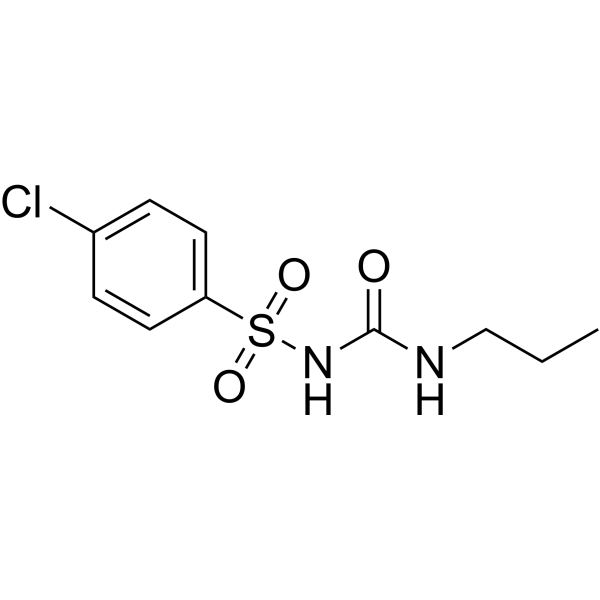
    Chlorpropamide
    4 Publications Verification

    Na+/K+ ATPase Metabolic Disease Endocrinology
    Chlorpropamide is an oral hypoglycemic agent that can influence acetaldehyde metabolism in mice and has a potentiating effect on antidiuretic hormone .
    Chlorpropamide
  • HY-108767

    B28Asp; B28-Asp-insulin; INA-X 14; Insulin X 14

    Insulin Receptor Drug Derivative Metabolic Disease
    Insulin aspart (B28Asp) is a rapid-acting h-Insulin (HY-P0035) analog. Insulin aspart induces a faster hypoglycemic effect. Insulin aspart can be used in diabetes-related research .
    Insulin aspart
  • HY-N0500

    Glycosidase Autophagy Metabolic Disease Endocrinology
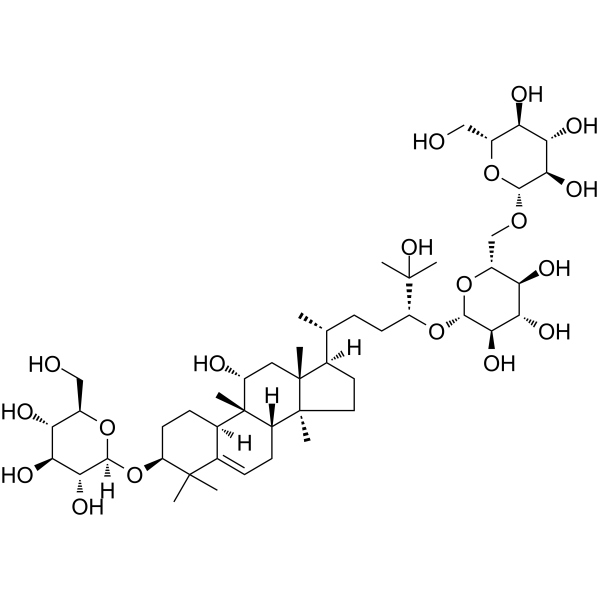
    Mogroside III is a triterpenoid glycoside. Mogroside III exhibits maltase inhibitory effect with an IC50 value of 1.6 mM. Mogroside III enhances oocyte developmental potential by promoting autophagy in cumulus cells. Mogroside III, as the active ingredient of the low-polarity glycoside component (L-SGgly), L-SGgly can increase serum GLP-1 levels, improve insulin resistance, and reduce IL-6 levels, and has hypoglycemic, lipid-regulating and anti-inflammatory effects. Mogroside III can be used for the studies of type 2 diabetes mellitus (T2DM) and assisted reproductive technology .
    Mogroside III
  • HY-N7377

    Glycosidase Metabolic Disease
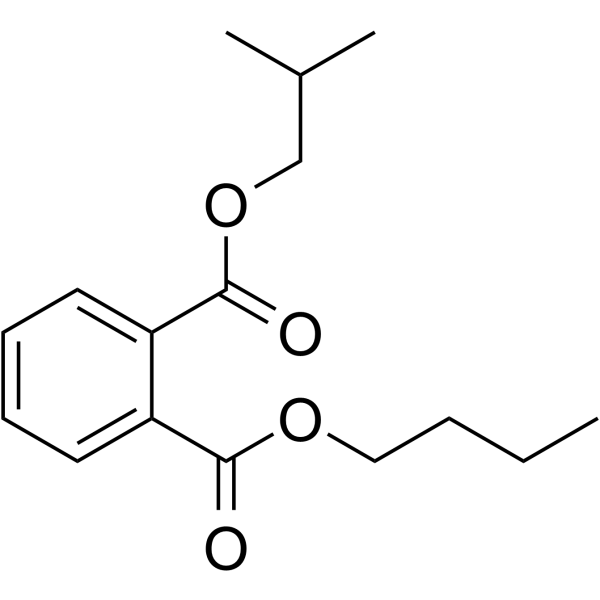
    Butyl isobutyl phthalate is isolated from the rhizoid of Laminaria japonica. Butyl isobutyl phthalate is a non-competitive α-glucosidase inhibitor with an IC50 value of 38 μM. Butyl isobutyl phthalate shows a hypoglycemic effect and has the potential for diabetes treatment .
    Butyl isobutyl phthalate
  • HY-172811

    GCGR Metabolic Disease
    DA-302168S is an orally active and selective agonist targeting the GLP-1R, with EC50 value of 1.32 nM. DA-302168S stimulates insulin secretion and shows hypoglycemic effects. DA-302168S decreases food intake. DA-302168S mainly activates GLP-1R of monkeys and humans, and exhibits little excitatory effect on GLP-1R of rats, mice, and dogs. DA-302168S can be used for type 2 diabetes and obesity study .
    DA-302168S
  • HY-162136

    Free Fatty Acid Receptor Metabolic Disease
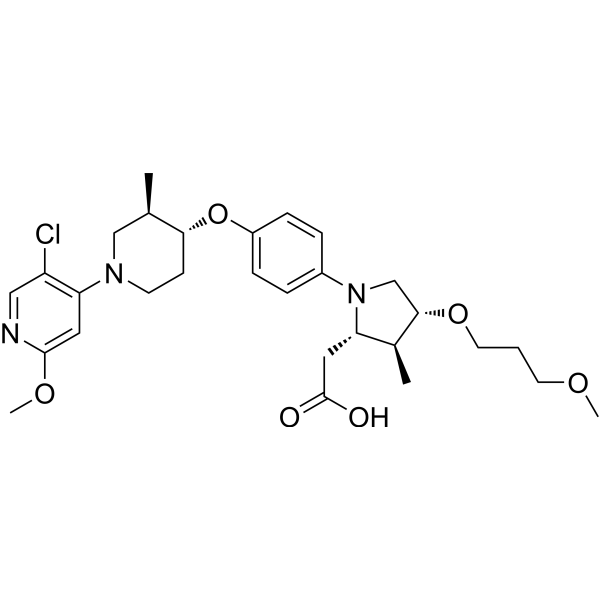
    GPR40 agonist 7 (Compound 1) is an orally active G protein-coupled receptor 40 (GPR40) agonist. GPR40 agonist 7 can significantly increase insulin and GLP-1 secretion, and has a hypoglycemic effect in vivo with an ED50 of 0.58 mg/kg
    GPR40 agonist 7
  • HY-150723

    Glycosidase Metabolic Disease
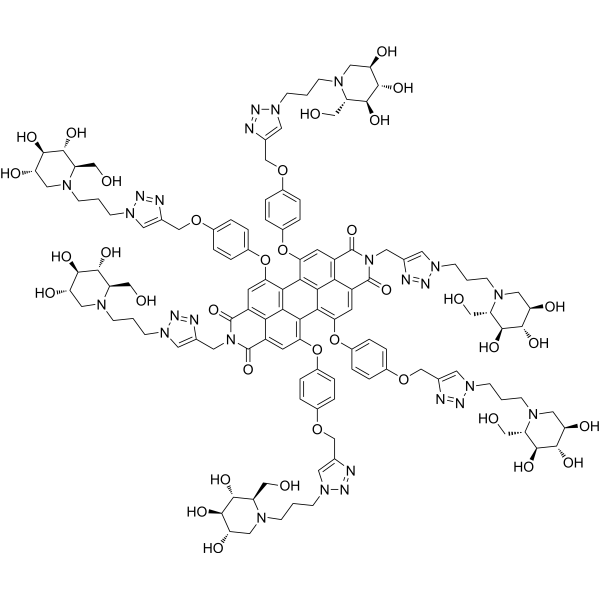
    PBI-6DNJ is an orally active and potent multivalent glycosidase inhibitor. PBI-6DNJ exhibits good inhibition activity against α-glucosidase from mice, with a Ki of 0.14 μM. PBI-6DNJ exhibits good hypoglycemic activity. PBI-6DNJ can be used for type 2 diabetes research .
    PBI-6DNJ
  • HY-144718

    Phosphatase Metabolic Disease
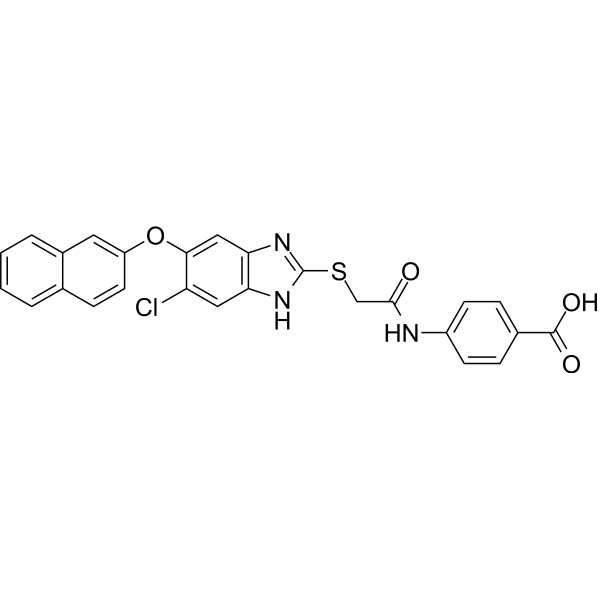
    PTP1B-IN-17 (Compound 45), a potential selective benzimidazole derivative, acts as a protein tyrosine phosphatase 1B (PTP1B) inhibitor with a Ki of 30.2 μM. PTP1B-IN-17 can be used for the research of type 2 diabetes.
    PTP1B-IN-17
  • HY-144713

    Phosphatase Metabolic Disease
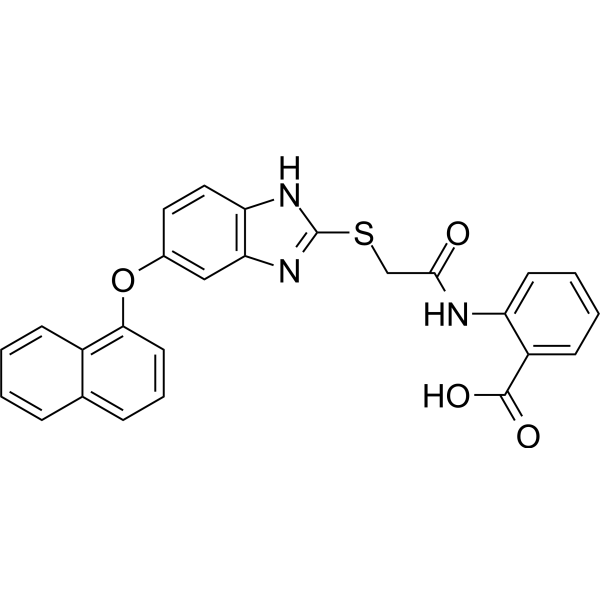
    PTP1B-IN-16 (Compound 46), a potential selective benzimidazole derivative, acts as a protein tyrosine phosphatase 1B (PTP1B) inhibitor with a Ki of 12.6 μM. PTP1B-IN-16 can be used for the research of type 2 diabetes.
    PTP1B-IN-16
  • HY-144716

    Phosphatase Metabolic Disease
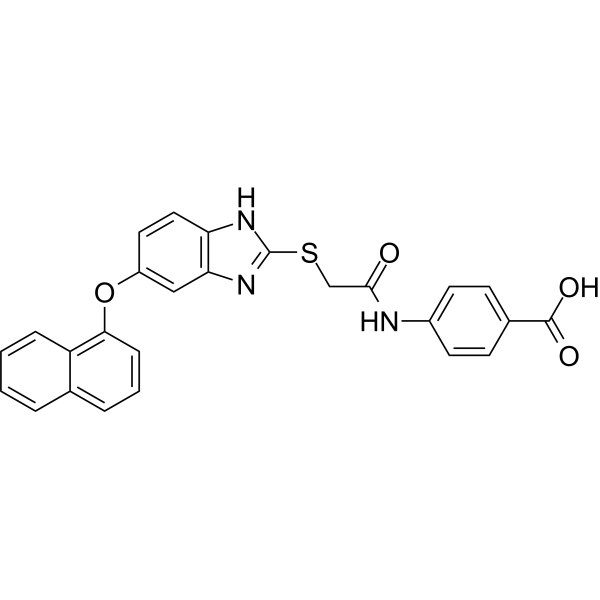
    PTP1B-IN-19 (Compound 43), a potential selective benzimidazole derivative, acts as a protein tyrosine phosphatase 1B (PTP1B) inhibitor with a Ki of 23.3 μM. PTP1B-IN-19 can be used for the research of type 2 diabetes.
    PTP1B-IN-19
  • HY-180784

    Drug Derivative Dipeptidyl Peptidase SGLT GLUT Metabolic Disease
    Hypoglycemic agent 4 (Compound 5b) is a tetrahydroacridine derivative with orally active hypoglycemic activity. Hypoglycemic agent 4 has a good binding affinity for the key diabetic targets: DPP-IV, SGLT1, and GLUT2. Hypoglycemic agent 4 can inhibit glucose diffusion. Hypoglycemic agent 4 can reduce fasting blood sugar in Streptozotocin (HY-13753)-induced diabetic rats and its effect is comparable to Gliclazide (HY-B0753). Hypoglycemic agent 4 can be used for research of type 2 diabetes .
    Hypoglycemic agent 4
  • HY-W207669

    Insulin Receptor Metabolic Disease
    Centpiperalone is an orally active hypoglycemic agent. Centpiperalone mainly achieves its hypoglycemic effect by promoting the release of insulin by pancreatic β cells. Centpiperalone can effectively lower blood sugar levels in both normal and diabetic animals. Centpiperalone can be used in research on diabetes .
    Centpiperalone
  • HY-182280

    Insulin Receptor Metabolic Disease
    BDM71230 is an orally active inducer of insulin-degrading enzyme (IDE), with an EC50 of 1.9 μM against human IDE. BDM71230 binds to the interface of IDE dimers and enhances the catalytic activity of IDE via steric effects. BDM71230 can potentiate the hydrolytic effect of IDE on insulin and slightly attenuate the hypoglycemic effect of insulin. BDM71230 serves as a pharmacological tool for investigating IDE function and is applicable to studies related to glucose intolerance .
    BDM71230
  • HY-183205

    Somatostatin Receptor Metabolic Disease
    SSTR5 antagonist 7 (Compound 3p) is an orally active SSTR5 antagonist, with an IC50 of 6.2 nM against hSSTR5 and an IC50 of 25 nM against mouse-derived SSTR5. SSTR5 antagonist 7 exerts a sustained hypoglycemic effect. SSTR5 antagonist 7 can be used for the research of diabetes .
    SSTR5 antagonist 7
  • HY-180845

    G protein-coupled Bile Acid Receptor 1 Metabolic Disease
    TGR5 agonist 9 is a highly selective and orally active TGR5 allosteric agonist with EC₅₀ values for hTGR5 and mTGR5 of 0.48 and 0.49 μM, respectively. TGR5 agonist 9 can recruit β-arrestin 1 (EC₅₀ = 78.8 μM) and β-arrestin 2 (EC₅₀ = 12.3 μM), and has a higher efficacy in cAMP accumulation (EC₅₀ = 0.48 μM). TGR5 agonist 9 exhibits a significant hypoglycemic effect in the ICR mouse model. TGR5 agonist 9 can be used for research on diabetes .
    TGR5 agonist 9

Inquiry Online

Your information is safe with us. * Required Fields.

Salutation


Country or Region *

Applicant Name *


Organization Name *

Department *


Email Address *


Product Name *

Cat. No.


Requested quantity *

Phone Number *


Remarks

Inquiry Online

Inquiry Information

Product Name:
Cat. No.:
Quantity:
MCE Japan Authorized Agent:

