1. Search Result
Search Result
Results for "

IL-2 release

" in MedChemExpress (MCE) Product Catalog:

26

Inhibitors & Agonists

6

Inhibitory Antibodies

3

Isotope-Labeled Compounds

Cat. No. Product Name Target Research Areas Chemical Structure
  • HY-A0003
    Lenalidomide
    Maximum Cited Publications
    59 Publications Verification

    CC-5013

    Ligands for E3 Ligase Molecular Glues Apoptosis Inflammation/Immunology Cancer
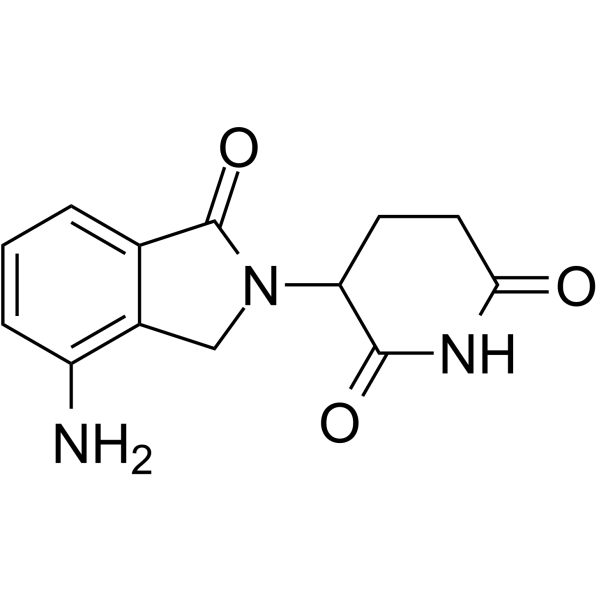
    Lenalidomide (CC-5013), a derivative of Thalidomide, acts as molecular glue. Lenalidomide is an orally active immunomodulator. Lenalidomide (CC-5013) is a ligand of ubiquitin E3 ligase cereblon (CRBN), and it causes selective ubiquitination and degradation of two lymphoid transcription factors, IKZF1 and IKZF3, by the CRBN-CRL4 ubiquitin ligase. Lenalidomide (CC-5013) specifically inhibits growth of mature B-cell lymphomas, including multiple myeloma, and induces IL-2 release from T cells .
    Lenalidomide
  • HY-P991028

    AZD0486; TNB-486

    CD3 CD19 Interleukin Related TNF Receptor IFNAR Cancer
    Surovatamig (AZD0486; TNB-486) is a fully human anti-CD19/CD3 IgG4 bispecific antibody. Surovatamig triggers T cell activation, releases cytotoxic granules, and induces T cell-dependent cellular cytotoxicity and tumor cell lysis. Surovatamig can reduces release of pro-inflammatory cytokines including IL-2, IFNγ, TNF. Surovatamig can be used for the research of cancer, such as B cell non-Hodgkin lymphoma .
    Surovatamig
  • HY-126404

    Environmental Pollutants Interleukin Related Angiotensin-converting Enzyme (ACE) Cardiovascular Disease
    Casein hydrolysate is an orally effective, multi-functional mixture of bioactive peptides, a hydrolysis product of casein (HY-125865), containing ACE inhibitors and immunomodulatory target regulators, among others. Casein hydrolysate releases short-chain bioactive peptides through enzymatic hydrolysis of casein, increasing cellular glutathione and catalase levels, enhancing ConA-induced IL-2 production, and exhibiting metal ion chelation, free radical scavenging, antibacterial, and mineral absorption-promoting effects. Casein hydrolysate lowers blood pressure by inhibiting angiotensin-converting enzyme (ACE) and reducing bradykinin degradation .
    Casein hydrolysate
  • HY-A0003B
    Lenalidomide hemihydrate
    Maximum Cited Publications
    59 Publications Verification

    CC-5013 hemihydrate

    Ligands for E3 Ligase Molecular Glues Apoptosis Cancer
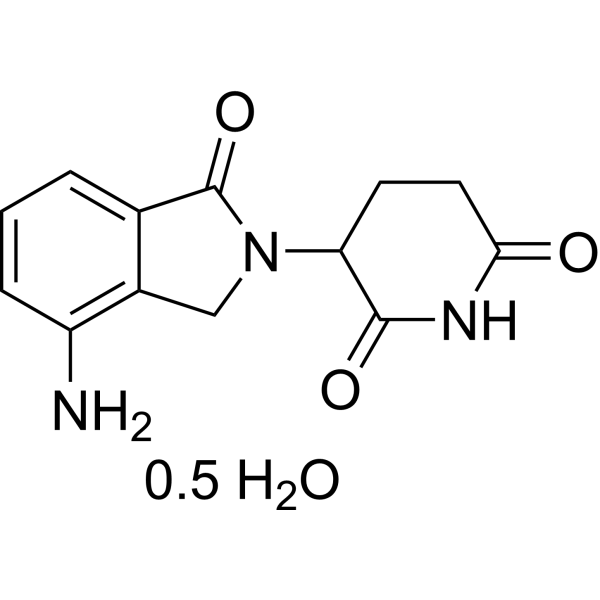
    Lenalidomide hemihydrate (CC-5013 hemihydrate), a derivative of Thalidomide, acts as molecular glue. Lenalidomide hemihydrate is an orally active immunomodulator. Lenalidomide hemihydrate (CC-5013 hemihydrate) is a ligand of ubiquitin E3 ligase cereblon (CRBN), and it causes selective ubiquitination and degradation of two lymphoid transcription factors, IKZF1 and IKZF3, by the CRBN-CRL4 ubiquitin ligase. Lenalidomide hemihydrate (CC-5013 hemihydrate) specifically inhibits growth of mature B-cell lymphomas, including multiple myeloma, and induces IL-2 release from T cells .
    Lenalidomide hemihydrate
  • HY-126328

    PKC Interleukin Related Inflammation/Immunology
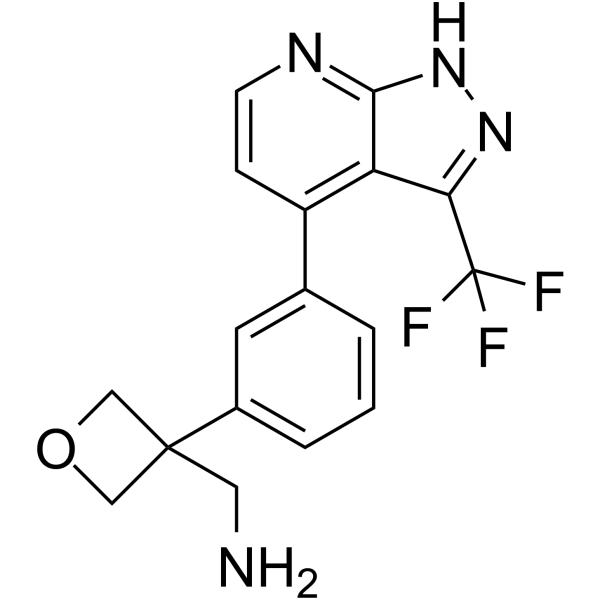
    PKC-theta inhibitor 1 is an orally active and selective ATP-competitive inhibitor of Protein Kinase Cθ (PKCθ), with a Ki value of 6 nM. PKC-theta inhibitor 1 inhibits T-cell-mediated inflammatory responses by suppressing the release of proinflammatory cytokines (IL-2 IC50 = 0.21 μM in anti-CD3/CD28-stimulated PBMCs; IL-17 IC50 = 1 μM in CD3/CD28-stimulated Th17 cells) PKC-theta inhibitor 1 significantly reduces symptoms in mice with ongoing experimental autoimmune encephalomyelitis (EAE). PKC-theta inhibitor 1 can be used for the study of T-cell-mediated inflammatory diseases such as multiple sclerosis .
    PKC-theta inhibitor 1
  • HY-A0003R

    CC-5013 (Standard)

    Reference Standards Ligands for E3 Ligase Molecular Glues Apoptosis Inflammation/Immunology Cancer
    Lenalidomide (Standard) is the analytical standard of Lenalidomide. This product is intended for research and analytical applications. Lenalidomide (CC-5013), a derivative of Thalidomide, acts as molecular glue. Lenalidomide is an orally active immunomodulator. Lenalidomide (CC-5013) is a ligand of ubiquitin E3 ligase cereblon (CRBN), and it causes selective ubiquitination and degradation of two lymphoid transcription factors, IKZF1 and IKZF3, by the CRBN-CRL4 ubiquitin ligase. Lenalidomide (CC-5013) specifically inhibits growth of mature B-cell lymphomas, including multiple myeloma, and induces IL-2 release from T cells .
    Lenalidomide (Standard)
  • HY-P991208

    human Flt3L; hFlt3L

    FLT3 Interleukin Related CCR Inflammation/Immunology
    Flt-3L-Ig (hum/hum) (hFlt3L) is a Flt3 ligand. Flt-3L-Ig (hum/hum) enhances the release of inflammatory cytokines from myeloid cells and dendritic cells in BRGSF-CBC mice induced by OKT3. Flt-3L-Ig (hum/hum) increases the release of IL-2, CCL2 and CXCL10 in an OKT3-dependent manner. Flt-3L-Ig (hum/hum) can be used in studies related to cytokine release syndrome. Flt-3L-Ig (hum/hum) can be used in studies related to psoriasis-like skin inflammation .
    Flt-3L-Ig (hum/hum)
  • HY-178062

    DGK Interleukin Related Cancer
    DGKα-IN-10 is an orally active and potent DGKα inhibitor with an IC50 of 0.27 nM. DGKα-IN-10 can induce IL-2 release and T cells proliferation. DGKα-IN-10 can be used for the research of cancer, such as colon cancer .
    DGKα-IN-10
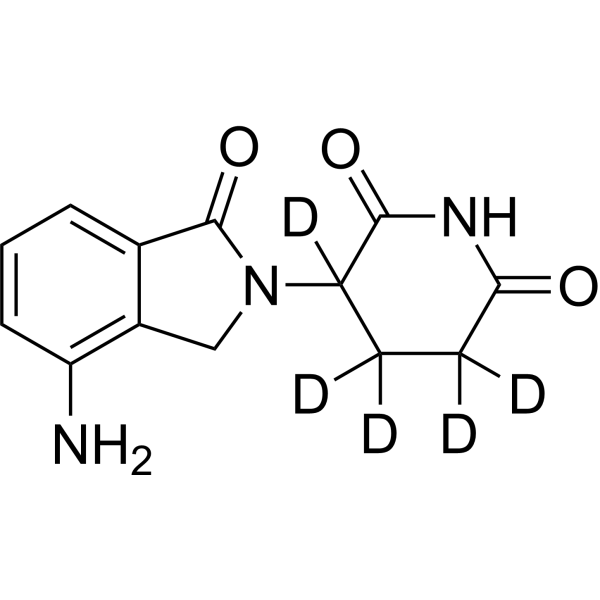
  • HY-A0003S

    CC-5013-d5

    Isotope-Labeled Compounds Ligands for E3 Ligase Molecular Glues Apoptosis Inflammation/Immunology Cancer
    Lenalidomide-d5 is deuterium labeled Lenalidomide. Lenalidomide (CC-5013), a derivative of Thalidomide, acts as molecular glue. Lenalidomide is an orally active immunomodulator. Lenalidomide (CC-5013) is a ligand of ubiquitin E3 ligase cereblon (CRBN), and it causes selective ubiquitination and degradation of two lymphoid transcription factors, IKZF1 and IKZF3, by the CRBN-CRL4 ubiquitin ligase. Lenalidomide (CC-5013) specifically inhibits growth of mature B-cell lymphomas, including multiple myeloma, and induces IL-2 release from T cells .
    Lenalidomide-d5
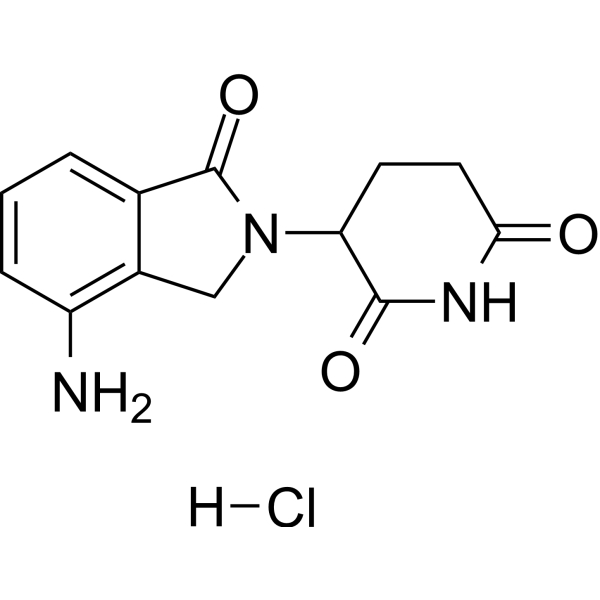
  • HY-A0003A

    CC-5013 hydrochloride

    Ligands for E3 Ligase Molecular Glues Inflammation/Immunology Cancer
    Lenalidomide hydrochloride (CC-5013 hydrochloride), a derivative of Thalidomide, acts as molecular glue. Lenalidomide hydrochloride is an orally active immunomodulator. Lenalidomide hydrochloride (CC-5013 hydrochloride) is a ligand of ubiquitin E3 ligase cereblon (CRBN), and it causes selective ubiquitination and degradation of two lymphoid transcription factors, IKZF1 and IKZF3, by the CRBN-CRL4 ubiquitin ligase. Lenalidomide hydrochloride (CC-5013 hydrochloride) specifically inhibits growth of mature B-cell lymphomas, including multiple myeloma, and induces IL-2 release from T cells .
    Lenalidomide hydrochloride
  • HY-P991634

    CD73 TNF Receptor Interleukin Related IFNAR Inflammation/Immunology Cancer
    IBI-325 is a humanized monoclonal antibody inhibitor targeting CD73. IBI-325 completely inhibits CD73 enzymatic activity without hook effect. IBI-325 reverses Adenosine monophosphate (HY-A0181)-mediated immune suppression and significantly inhibits T cell proliferation and cytokines (IL-2, IFN-γ and TNF-α) release. IBI-325 has potent antitumor activities in hPBMC-reconstituted mice model and hCD73 knock-in mice model. IBI-325 can be used for cancer immunotherapy research .
    IBI-325
  • HY-A0003BR

    CC-5013 hemihydrate (Standard)

    Ligands for E3 Ligase Molecular Glues Apoptosis Reference Standards Cancer
    Lenalidomide (hemihydrate) (Standard) is the analytical standard of Lenalidomide (hemihydrate). This product is intended for research and analytical applications. Lenalidomide hemihydrate (CC-5013 hemihydrate), a derivative of Thalidomide, acts as molecular glue. Lenalidomide hemihydrate is an orally active immunomodulator. Lenalidomide hemihydrate (CC-5013 hemihydrate) is a ligand of ubiquitin E3 ligase cereblon (CRBN), and it causes selective ubiquitination and degradation of two lymphoid transcription factors, IKZF1 and IKZF3, by the CRBN-CRL4 ubiquitin ligase. Lenalidomide hemihydrate (CC-5013 hemihydrate) specifically inhibits growth of mature B-cell lymphomas, including multiple myeloma, and induces IL-2 release from T cells .
    Lenalidomide hemihydrate (Standard)
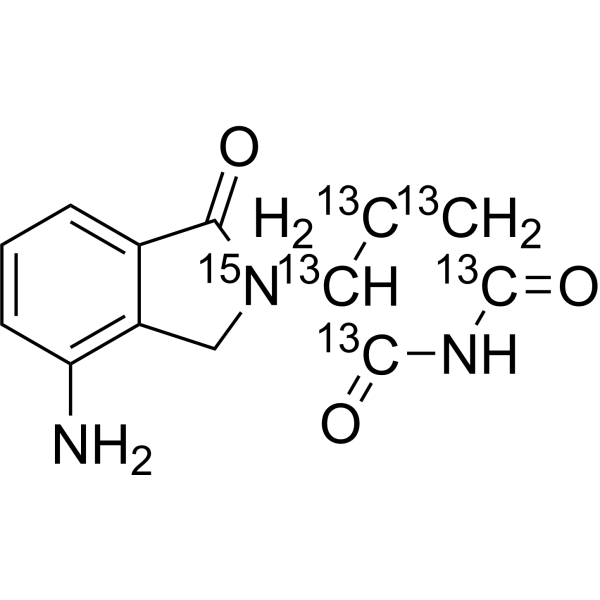
  • HY-A0003S2

    CC-5013-13C5,15N

    Ligands for E3 Ligase Apoptosis Molecular Glues Isotope-Labeled Compounds Inflammation/Immunology Cancer
    Lenalidomide- 13C5, 15N is 15N and 13C labeled Lenalidomide (HY-A0003). Lenalidomide (CC-5013), a derivative of Thalidomide, acts as molecular glue. Lenalidomide is an orally active immunomodulator. Lenalidomide (CC-5013) is a ligand of ubiquitin E3 ligase cereblon (CRBN), and it causes selective ubiquitination and degradation of two lymphoid transcription factors, IKZF1 and IKZF3, by the CRBN-CRL4 ubiquitin ligase. Lenalidomide (CC-5013) specifically inhibits growth of mature B-cell lymphomas, including multiple myeloma, and induces IL-2 release from T cells .
    Lenalidomide-13C5,15N
  • HY-124665

    TNF Receptor Interleukin Related Infection Metabolic Disease Inflammation/Immunology
    LMP-420 is a selective tumor necrosis factor-α (TNF-α) inhibitor. LMP-420 reduces the release of pro-inflammatory cytokines (e.g., IL-1β, IL-2), inducing the expression of anti-inflammatory cytokine IL-10 and anti-apoptotic molecules SOCS-1 and Mn-SOD. LMP-420 also downregulates chemokines (e.g., IP-10, MCP-1) to reduce immune cell infiltration. LMP-420 is promising for research of type 1 diabetes mellitus, inflammatory diseases (e.g., colitis), and HIV-Mycobacterium tuberculosis coinfection .
    LMP-420
  • HY-163496

    MAP4K Cancer
    HPK1-IN-45 (Compound 3) is a HPK1 inhibitor, with an IC50 of 0.3 nM. HPK1-IN-45 inhibits SLP-76 phosphorylation (IC50 = 57.52 nM) and IL-2 release (IC50 = 38 nM). HPK1-IN-45 can be used for the research of cancer .
    HPK1-IN-45
  • HY-A0003S3

    CC-5013-d4

    Isotope-Labeled Compounds Apoptosis Molecular Glues Ligands for E3 Ligase Inflammation/Immunology Cancer
    Lenalidomide-d4 (CC-5013-d4) is deuterium labeled Lenalidomide. Lenalidomide (CC-5013), a derivative of Thalidomide, acts as molecular glue. Lenalidomide is an orally active immunomodulator. Lenalidomide (CC-5013) is a ligand of ubiquitin E3 ligase cereblon (CRBN), and it causes selective ubiquitination and degradation of two lymphoid transcription factors, IKZF1 and IKZF3, by the CRBN-CRL4 ubiquitin ligase. Lenalidomide (CC-5013) specifically inhibits growth of mature B-cell lymphomas, including multiple myeloma, and induces IL-2 release from T cells .
    Lenalidomide-d4
  • HY-175195

    Adenosine Receptor Interleukin Related IFNAR Cytochrome P450 Inflammation/Immunology Cancer
    Adenosine receptor antagonist 6 is an orally active and selective A2A adenosine receptor (A2AAR) antagonist, with a Ki of 19.18 nM. Adenosine receptor antagonist 6 inhibits 5’-N-ethylcarboxamide adenosine (NECA) (HY-103173)-mediated cAMP production (IC50 = 0.089 μM) and immunosuppression, while promoting IL-2 and IFN-γ secretion. Adenosine receptor antagonist 6 abolishes the immunosuppressive effects of adenosine on T-cell activation and cytokine release. Adenosine receptor antagonist 6 inhibits tumor growth in a CT26/MC38 xenograft model. Adenosine receptor antagonist 6 can be used for the study of colon cancer .
    Adenosine receptor antagonist 6
  • HY-P990716

    AZD7789

    PD-1/PD-L1 Tim3 Inflammation/Immunology
    Sabestomig (AZD7789) is a monovalent bispecific antibody targeting PD-1 and TIM-3. Sabestomig binds to PD-1 and an epitope in the TIM-3 IgV domain outside the phosphatidylserine-binding cleft, thereby precisely regulating immune responses. Sabestomig promotes IL-2 production, efferocytosis and cross-presentation of tumor antigens, and enhances the release of anti-tumor T cell cytokines, cytotoxicity, and secretion of IFN-γ. Sabestomig inhibits the growth of solid tumors, prolongs the duration of tumor suppression, and significantly enhances anti-tumor responses following anti-PD-1 therapy. Sabestomig has been used in studies related to non-small cell lung cancer and classical Hodgkin lymphoma .
    Sabestomig
  • HY-175547

    PROTACs MAP4K ERK Interleukin Related IFNAR Inflammation/Immunology Cancer
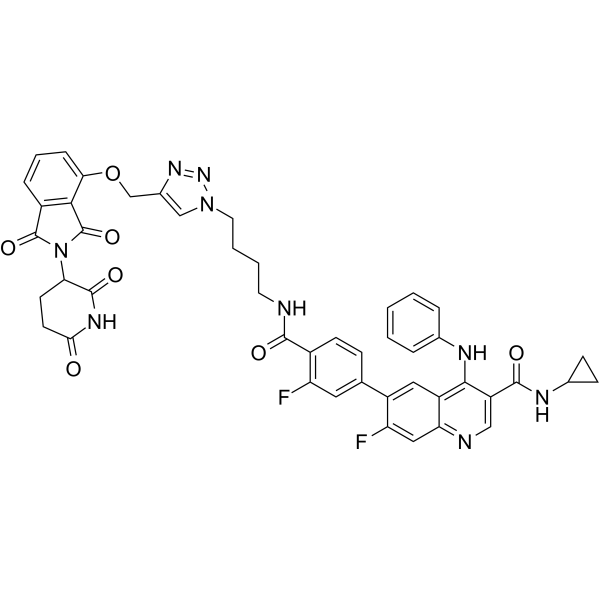
    PROTAC HPK1 Degrader-5 is a potent and orally active HPK1 PROTAC degrader (DC50 = 5.0 nM; Dmax ≥ 99%). PROTAC HPK1 Degrader-5 significantly inhibits SLP76 phosphorylation and enhanced ERK pathway activation through degrading HPK1, thereby stimulating IL-2 and IFN-γ release. PROTAC HPK1 Degrader-5 exhibits the ability to overcome the immunosuppressive effects imposed by PGE2, NECA or TGF-β. PROTAC HPK1 Degrader-5 alone efficaciously inhibits tumor growth in an MC38 syngeneic mouse model. PROTAC HPK1 Degrader-5 can be used for the study of tumor (such as colorectal cancer) immunotherapy (Pink: Target protein ligand (HY-175549); Blue: E3 ligand (HY-W023573); Black: Linker; E3 ligand + Linker (HY-175551)) .
    PROTAC HPK1 Degrader-5
  • HY-180608

    Interleukin Related IFNAR Inflammation/Immunology
    TCR-IN-1 (Compound A-33) is a TCR inhibitor. TCR-IN-1 blocks cytokine (IL-2, TNFα, IFNγ, IL-17A) release .
    TCR-IN-1
  • HY-180609

    MHC Interleukin Related CD3 IFNAR Inflammation/Immunology
    TCR-IN-2 (Compound A-68) is a TCR inhibitor. TCR-IN-2 inhibits the release of IFNγ and IL-2. TCR-IN-2 inhibits the time-dependent phosphorylation of CD3ζ. TCR-IN-2 inhibits TCR-mediated T cell activation, both in response to anti-CD3 antibodies and in response to human cells with unmatched HLA .
    TCR-IN-2
  • HY-182238

    MAP4K Interleukin Related Cancer
    HPK1-IN-69 is an orally active HPK1 inhibitor with an IC50 of 1.7 nM. HPK1-IN-69 inhibits the HPK1-mediated TCR signaling pathway, reduces the phosphorylation level of SLP76, and promotes the release of IL-2. HPK1-IN-69 exhibits in vivo anti-tumor activity in mouse models. HPK1-IN-69 can be used for the research of colorectal cancer and MC38 syngeneic tumors .
    HPK1-IN-69
  • HY-179575

    E1/E2/E3 Enzyme Interleukin Related Inflammation/Immunology Cancer
    Cbl-b-IN-29 is an orally active CBL-B inhibitor. Cbl-b-IN-29 binds to the CBL-B active pocket. Cbl-b-IN-29 induces Jurkat cell release IL-2 with an EC50 of 159 nM, effectively inhibiting the function of immune E3 ubiquitin ligase. Cbl-b-IN-29 demonstrates robust anti-tumor efficacy in vivo with good tolerability and no observed adverse reactions. Cbl-b-IN-29 can be used for cancer immunotherapy, colorectal cancer and immune-oncology combination research .
    Cbl-b-IN-29
  • HY-P992370

    Interleukin Related IFNAR Cancer
    HPN601 is a protease-activated EpCAM-targeting T-cell engager that binds EpCAM competitively and induces T-cell mediated tumor cell killing. HPN601 binds to EpCAM, CD3e and albumin; albumin binding extends its half-life, while masking groups keep the molecule inert outside the tumor microenvironment. HPN601 significantly reduces the release levels of IFN-γ, IL-2, IL-6 and IL-10. HPN601 can be used in research related to cancers such as breast cancer and gastric cancer .
    HPN601
  • HY-P991999

    FGFR IFNAR Interleukin Related Cancer
    OM-RCA-01 is an anti-FGFR1 monoclonal antibody with a Kd of 1.59 nM for human FGFR1. OM-RCA-01 inhibits the phosphorylation of FGFR1, blocks FGF-mediated signaling pathways, and suppresses the proliferation of downstream tumor cells. OM-RCA-01 delays tumor growth in lung cancer and renal cancer xenograft models expressing FGFR1. When combined with Nivolumab, OM-RCA-01 enhances the release of IFN-γ and IL-2. OM-RCA-01 is applicable for the research of lung cancer and renal cell carcinoma .
    OM-RCA-01
  • HY-19009B

    CCR Metabolic Disease Inflammation/Immunology Cancer
    Propagermanium is an orally active and selective CCR2 inhibitor. Propagermanium enhances IFN-γ, IL-2, 2',5'-oligoadenylate synthetase, and unspecified cytokine production, and induces mature cytolytic NK cell subsets. Propagermanium reduces HBe antigen and HBV DNA polymerase levels, promotes HBV clearance and lowers serum ALT. Propagermanium downregulates STAT1, inhibits pro-inflammatory microglia polarization, pro-inflammatory cytokine release, and monocyte/macrophage infiltration. Propagermanium can be used for the research of chronic hepatitis B, atherosclerosis, breast cancer, non-alcoholic steatohepatitis, insulin resistance, refractory gastric cancer, multiple myeloma, type 2 diabetes .
    Propagermanium

Inquiry Online

Your information is safe with us. * Required Fields.

Salutation


Country or Region *

Applicant Name *


Organization Name *

Department *


Email Address *


Product Name *

Cat. No.


Requested quantity *

Phone Number *


Remarks

Inquiry Online

Inquiry Information

Product Name:
Cat. No.:
Quantity:
MCE Japan Authorized Agent:

