263 Results for "

Jak1

" in MedChemExpress (MCE) Product Catalog:
Products (263)

263 Results for "Jak1" in MCE Product Catalog:

274
274 Publications Verification
Cat. No.: HY-50856
CAS No.: 941678-49-5
Synonyms: INCB18424
Research Areas:  

Cancer

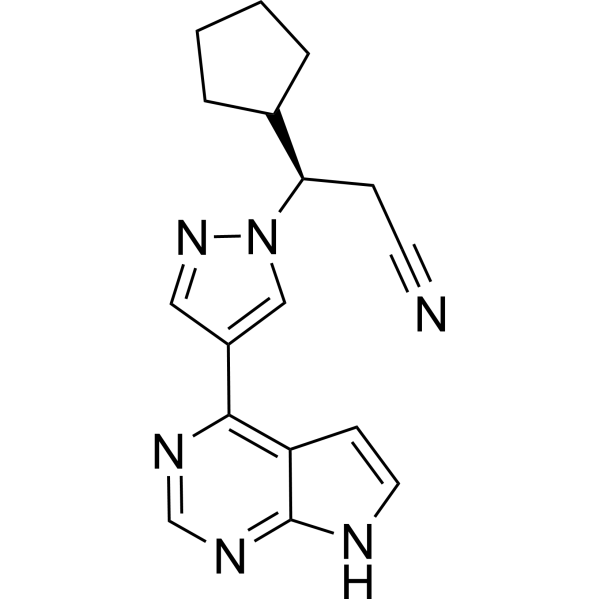
Ruxolitinib (INCB18424) is an orally active and selective JAK1/2 inhibitor with IC50s of 3.3 nM and 2.8 nM in cell-free assays, and has 130-fold selectivity for JAK1/2 over JAK3 [1]. Ruxolitinib induces autophagy and kills tumor cells through toxic mitophagy .
loading...
    loading...
274
274 Publications Verification
Cat. No.: HY-50858
CAS No.: 1092939-17-7
Synonyms: INCB018424 phosphate
Target:  

JAK Autophagy Mitophagy

Research Areas:  

Cancer

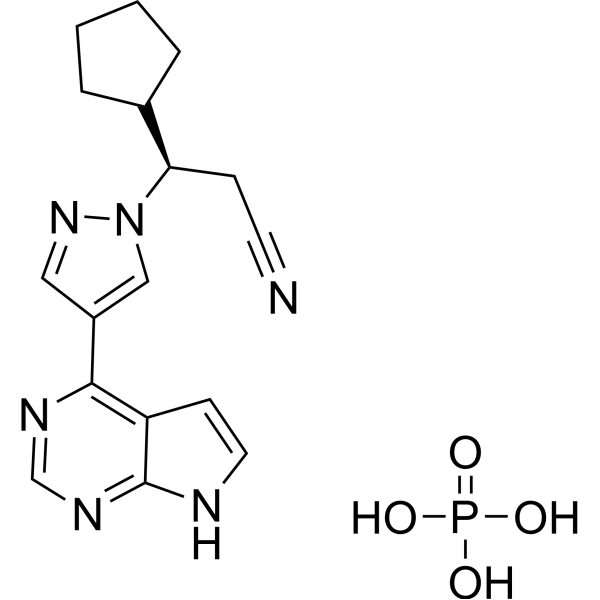
Ruxolitinib phosphate (INCB018424 phosphate) is a potent JAK1/2 inhibitor with IC50s of 3.3 nM/2.8 nM, respectively, showing more than 130-fold selectivity over JAK3.
loading...
    loading...
80
80 Cited Publications
Cat. No.: HY-15315A
CAS No.: 1187595-84-1
Purity:  99.97%
Synonyms: LY3009104 phosphate; INCB028050 phosphate
Target:  

JAK

Research Areas:  

Inflammation/Immunology

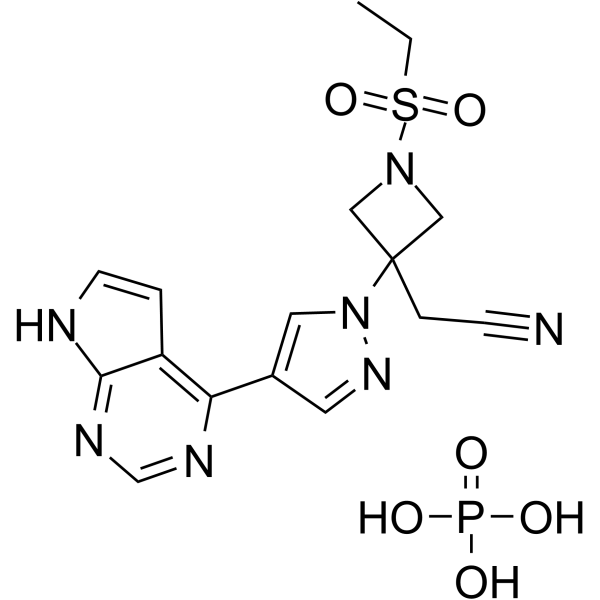
Baricitinib phosphate (LY3009104 phosphate; INCB028050 phosphate) is a selective orally bioavailable JAK1/JAK2 inhibitor with IC50 of 5.9 nM and 5.7 nM, respectively.
loading...
    loading...
80
80 Cited Publications
Cat. No.: HY-15315
CAS No.: 1187594-09-7
Purity:  99.93%
Synonyms: LY3009104; INCB028050
Target:  

JAK

Research Areas:  

Inflammation/Immunology

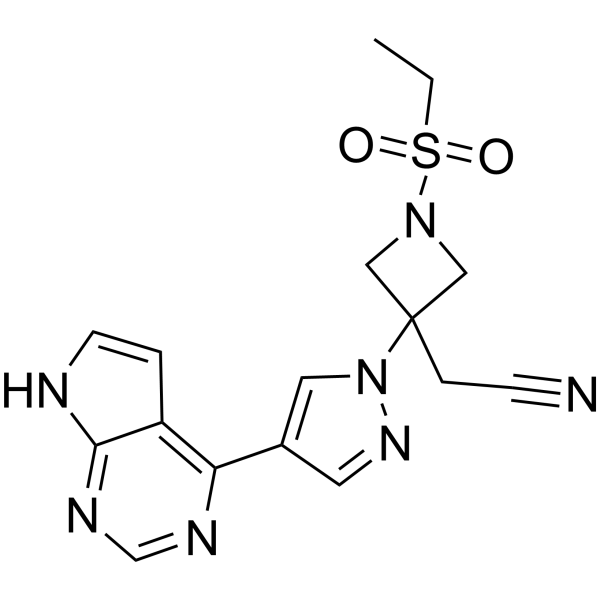
Baricitinib (LY3009104; INCB028050) is a selective and orally bioavailable JAK1 and JAK2 inhibitor with IC50s of 5.9 nM and 5.7 nM, respectively.
loading...
    loading...
54
54 Cited Publications
Cat. No.: HY-10409
CAS No.: 936091-26-8
Purity:  99.83%
Synonyms: TG-101348; SAR 302503
Target:  

JAK Apoptosis

Research Areas:  

Cancer

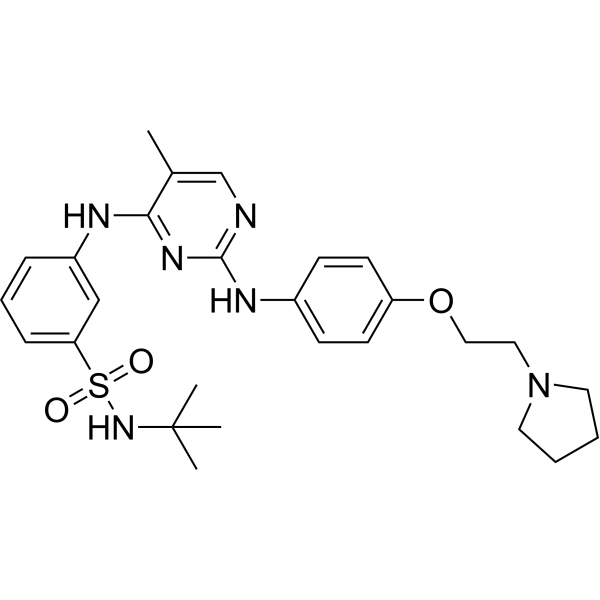
Fedratinib (TG-101348) is a potent, selective, ATP-competitive and orally active JAK2 inhibitor with IC50s of 3 nM for both JAK2 and JAK2V617F kinase. Fedratinib shows 35- and 334-fold selectivity over JAK1 and JAK3, respectively. Fedratinib induces cancer cell apoptosis and has the potential for myeloproliferative disorders research [1] .
loading...
    loading...
54
54 Cited Publications
Cat. No.: HY-10409A
CAS No.: 1374744-69-0
Purity:  99.92%
Synonyms: TG-101348 hydrochloride hydrate; SAR 302503 hydrochloride hydrate
Target:  

JAK Apoptosis

Research Areas:  

Cancer

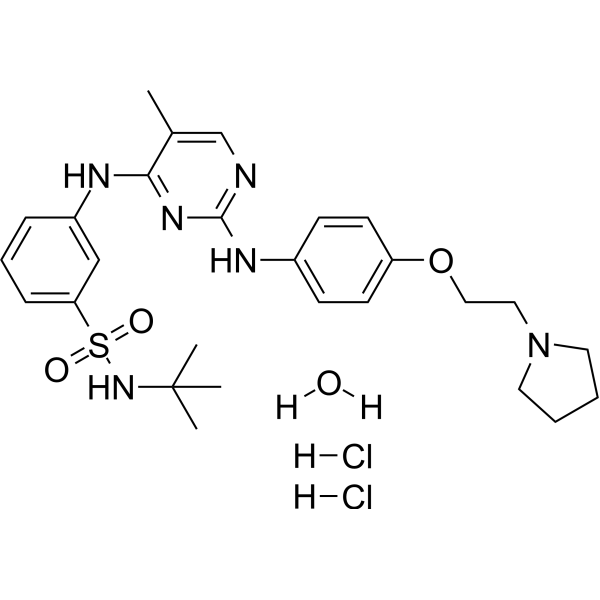
Fedratinib hydrochloride hydrate (TG-101348 hydrochloride hydrate) is a potent, selective, ATP-competitive and orally active JAK2 inhibitor with IC50s of 3 nM for both JAK2 and JAK2V617F kinase. Fedratinib hydrochloride hydrate shows 35- and 334-fold selectivity over JAK1 and JAK3, respectively. Fedratinib hydrochloride hydrate induces cancer cell apoptosis and has the potential for myeloproliferative disorders research [1] .
loading...
    loading...
41
41 Cited Publications
Cat. No.: HY-15312
CAS No.: 857064-38-1
Purity:  99.77%
Target:  

STAT JAK Apoptosis

Research Areas:  

Cancer

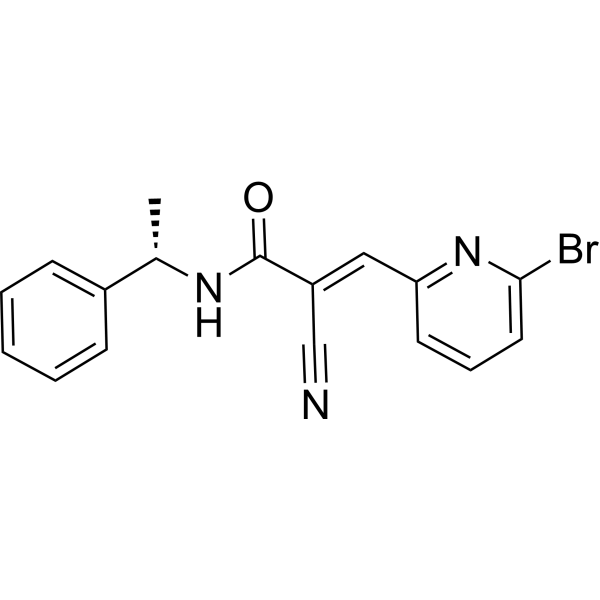
WP1066 is an inhibitor of JAK2 and STAT3, and also shows effect on STAT5 and ERK1/2, without affecting JAK1 and JAK3. WP1066 can cross the blood-brain barrier[1][2][3][4].
loading...
    loading...
29
29 Cited Publications
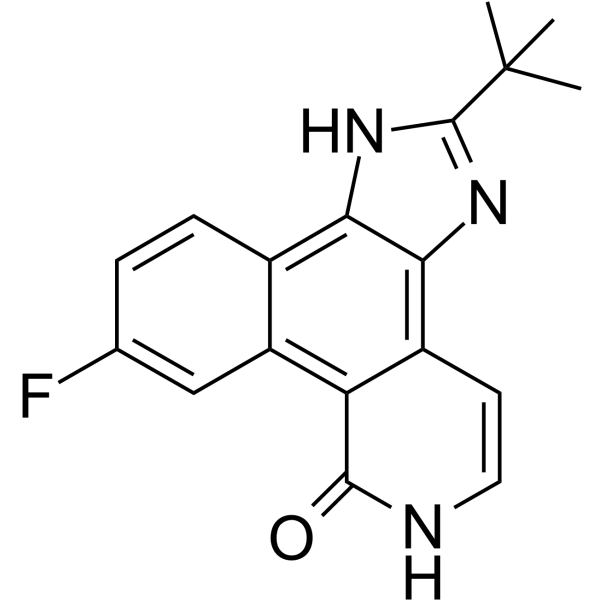
Cat. No.: HY-W063968
CAS No.: 691868-88-9
Synonyms: CDM-3008; RO4948191
Target:  

IFNAR JAK STAT HCV HBV

Research Areas:  

Infection

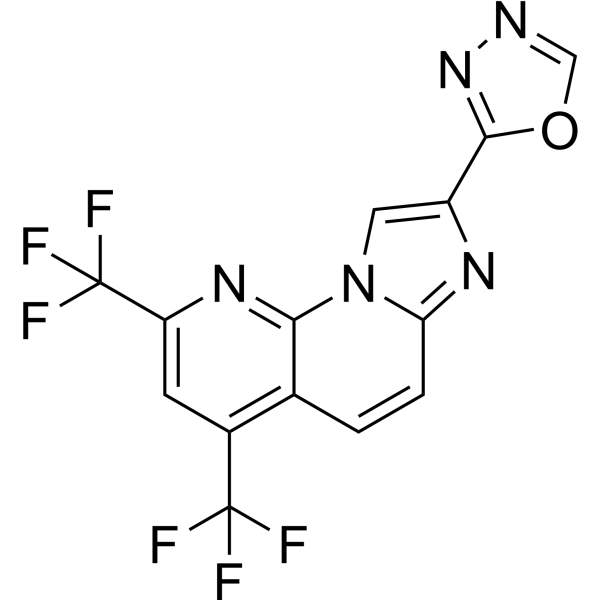
RO8191 (CDM-3008), an imidazonaphthyridine compound, is an orally active and potent interferon (IFN) receptor agonist. RO8191 directly binds to IFNα/β receptor 2 (IFNAR2) and activates IFN-stimulated genes (ISGs) expression and JAK/STAT phosphorylation. RO8191 shows antiviral activity against both HCV and EMCV with an IC50 of 200 nM for HCV replicon [1]. RO8191 is a cccDNA modulator (CDM) through interferon-like activity and has anti-HBV activity .
loading...
    loading...
28
28 Cited Publications
Cat. No.: HY-18300
CAS No.: 1206161-97-8
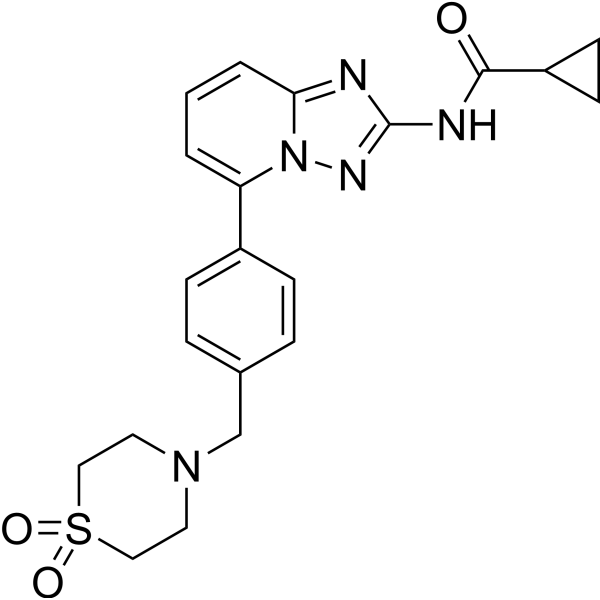
Synonyms: GLPG0634
Target:  

JAK HIV

Research Areas:  

Cancer

Filgotinib (GLPG0634) is a selective, orally available JAK1 inhibitor with anti-inflammatory and antiviral activities. Filgotinib can effectively inhibit the activities of JAK1, JAK2, JAK3 and TYK2 with IC50 values of 10 nM, 28 nM, 810 nM and 116 nM, respectively. Filgotinib also inhibits HIV-1 driven gene transcription and reduces proliferation of HIV-1 infected cells. Filgotinib can be used in the study of rheumatoid arthritis and inflammatory bowel disease [1] .
loading...
    loading...
28
28 Cited Publications
Cat. No.: HY-18300A
CAS No.: 1802998-75-9
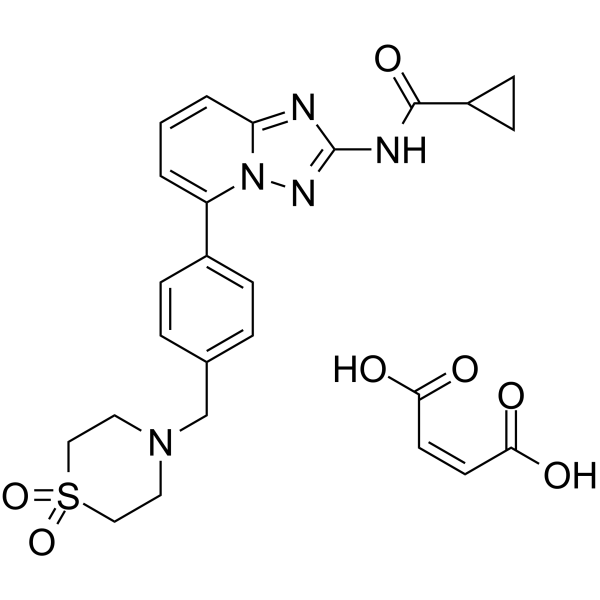
Synonyms: GLPG0634 maleate
Target:  

JAK HIV

Research Areas:  

Inflammation/Immunology

Filgotinib maleate (GLPG0634 maleate) is a selective, orally available JAK1 inhibitor with anti-inflammatory and antiviral activities. Filgotinib maleate can effectively inhibit the activities of JAK1, JAK2, JAK3 and TYK2 with IC50 values ​​of 10 nM, 28 nM, 810 nM and 116 nM, respectively. Filgotinib maleate also inhibits HIV-1 driven gene transcription and reduces proliferation of HIV-1 infected cells. Filgotinib maleate can be used in the study of rheumatoid arthritis and inflammatory bowel disease [1] .
loading...
    loading...
27
27 Cited Publications
Cat. No.: HY-19569
CAS No.: 1310726-60-3
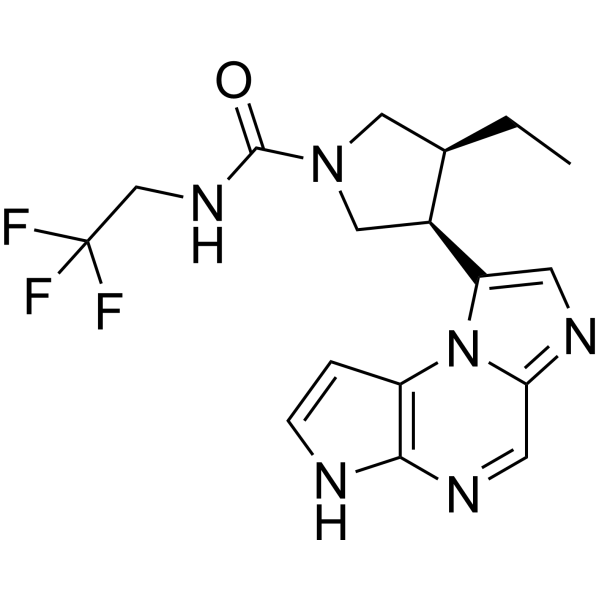
Synonyms: ABT-494
Target:  

JAK

Upadacitinib (ABT-494) is a potent, orally active and selective Janus kinase 1 (JAK1) inhibitor (IC50=43 nM). Upadacitinib (ABT-494) displays approximately 74 fold selective for JAK1 over JAK2 (200 nM) in cellular assays dependent on specific, relevant cytokines. Upadacitinib (ABT-494) can be used for several autoimmune disorders research [1] .
loading...
    loading...
23
23 Cited Publications
Cat. No.: HY-16997
CAS No.: 1334298-90-6
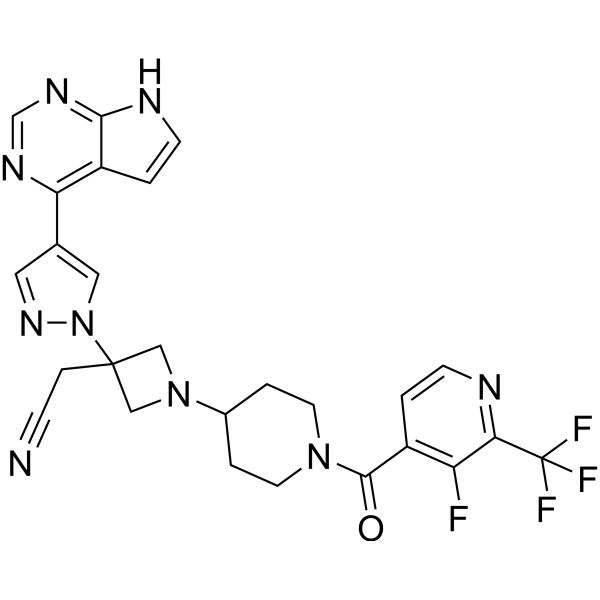
Synonyms: INCB039110
Target:  

JAK STAT

Research Areas:  

Inflammation/Immunology Cancer

Itacitinib (INCB039110) is an orally active selective inhibitor of JAK1 with an IC50 value of 2 nM for human JAK1. Itacitinib inhibits IFN-γ-mediated phosphorylation of STAT1 and downstream pro-inflammatory signaling pathways. Itacitinib reduces the frequency and number of splenic neutrophils in mouse models, downregulates the levels of pro-inflammatory cytokines and chemokines, and inhibits pro-inflammatory gene expression pathways. Itacitinib improves survival rate and clinical scores in mouse models of hemophagocytic lymphohistiocytosis (HLH), and also suppresses metastasis in NSCLC models with high Rab1A expression. Itacitinib can be used for research on hemophagocytic lymphohistiocytosis and non-small cell lung cancer [1] .
loading...
    loading...
23
23 Cited Publications
Cat. No.: HY-16997A
CAS No.: 1334302-63-4
Synonyms: INCB039110 adipate
Target:  

JAK STAT

Research Areas:  

Inflammation/Immunology Cancer

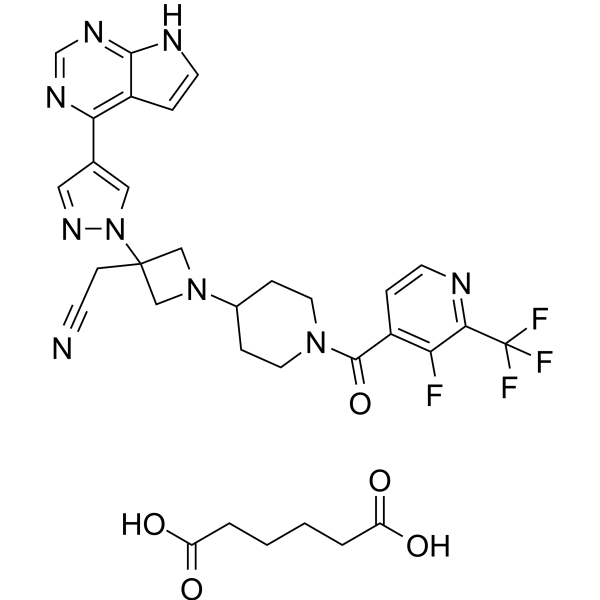
Itacitinib adipate (INCB039110 adipate) is an orally active JAK1-selective inhibitor. Itacitinib adipate inhibits IFN-γ-mediated phosphorylation of STAT1 and downstream pro-inflammatory signaling pathways. Itacitinib adipate reduces the frequency and number of splenic neutrophils in mouse models, downregulates the levels of pro-inflammatory cytokines and chemokines, and inhibits pro-inflammatory gene expression pathways. Itacitinib adipate improves survival rate and clinical scores in mouse models of hemophagocytic lymphohistiocytosis (HLH), and also suppresses metastasis in NSCLC models with high Rab1A expression. Itacitinib adipate can be used for research on hemophagocytic lymphohistiocytosis and non-small cell lung cancer [1] .
loading...
    loading...
21
21 Cited Publications
Cat. No.: HY-10193
CAS No.: 935666-88-9
Purity:  99.91%
Target:  

JAK

Research Areas:  

Cancer

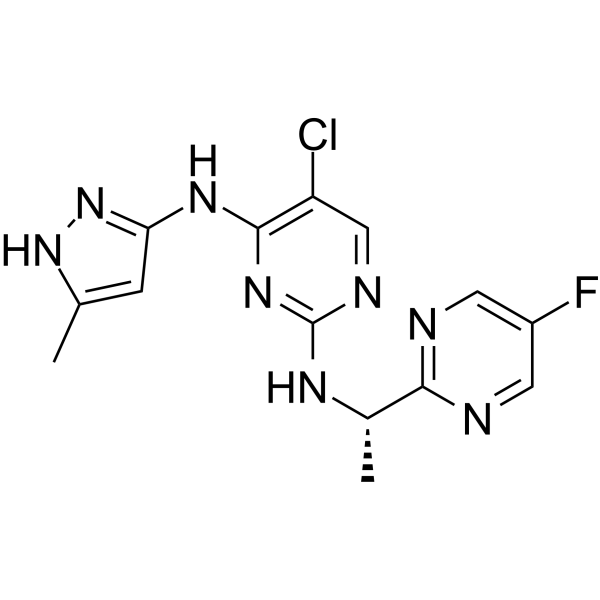
AZD-1480 is an ATP-competitive inhibitor of JAK1 and JAK2 with IC50s of 1.3 nM and <0.4 nM, respectively [1].
loading...
    loading...
18
18 Cited Publications
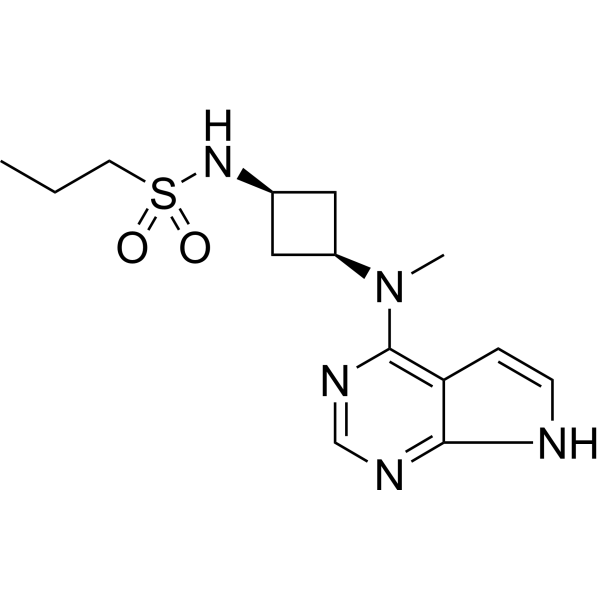
Cat. No.: HY-10961
CAS No.: 1056634-68-4
Purity:  99.37%
Synonyms: CYT387
Target:  

JAK Autophagy Apoptosis

Research Areas:  

Cancer

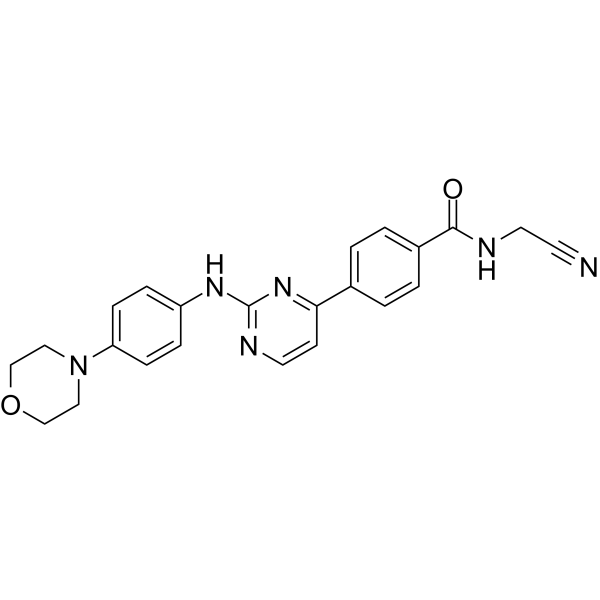
Momelotinib (CYT387) is an ATP-competitive inhibitor of JAK1/JAK2 with IC50a of 11 nM and 18 nM,respectively. CYT387 shows much less activity against JAK3.
loading...
    loading...
18
18 Cited Publications
Cat. No.: HY-10962
CAS No.: 1056636-06-6
Purity:  98.06%
Synonyms: CYT387 sulfate salt
Target:  

JAK Autophagy Apoptosis

Research Areas:  

Cancer

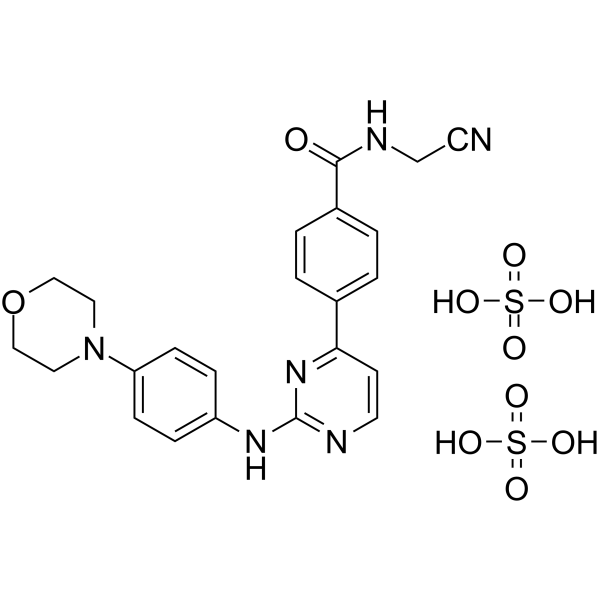
Momelotinib sulfate (CYT387 sulfate salt) is an ATP-competitive inhibitor of JAK1/JAK2 with IC50 of 11 nM/18 nM, 10-fold selectivity versus JAK3 (IC50=155 nM).
loading...
    loading...
12
12 Cited Publications
Cat. No.: HY-14435
CAS No.: 457081-03-7
Purity:  98.20%
Target:  

JAK

Research Areas:  

Cancer

Pyridone 6 is a pan-JAK inhibitor, which potently inhibits the JAK kinase family, with IC50s of 1 nM for JAK2 and TYK2, 5 nM for JAK3, and 15 nM for JAK1, while displaying significantly weaker affinities (130 nM to >10 mM) for other protein tyrosine kinases.
loading...
    loading...
11
11 Cited Publications
Cat. No.: HY-107429
CAS No.: 1622902-68-4
Purity:  99.26%
Synonyms: PF-04965842
Target:  

JAK

Research Areas:  

Inflammation/Immunology

Abrocitinib (PF-04965842) is a potent, orally active and selective JAK1 inhibitor, with IC50s of 29 and 803 nM for JAK1 and JAK2, respectively. Abrocitinib (PF-04965842) exhibits less active effect on TYK2 (IC50, 1.253 μM), and inhibits phosphorylation of STAT1, STAT3 and STAT5 after stimulation. Effective in autoimmune disease [1].
loading...
    loading...
11
11 Cited Publications
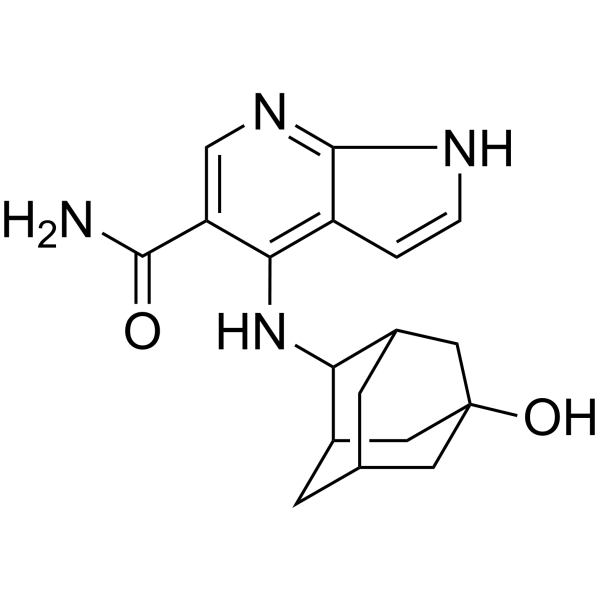
Cat. No.: HY-19568
CAS No.: 944118-01-8
Synonyms: ASP015K; JNJ-54781532
Target:  

JAK

Research Areas:  

Inflammation/Immunology

Peficitinib (ASP015K) is an orally active JAK inhibitor, with IC50s of 3.9, 5.0, 0.7 and 4.8 nM for JAK1, JAK2, JAK3 and Tyk2, respectively [1].
loading...
    loading...
9
9 Cited Publications
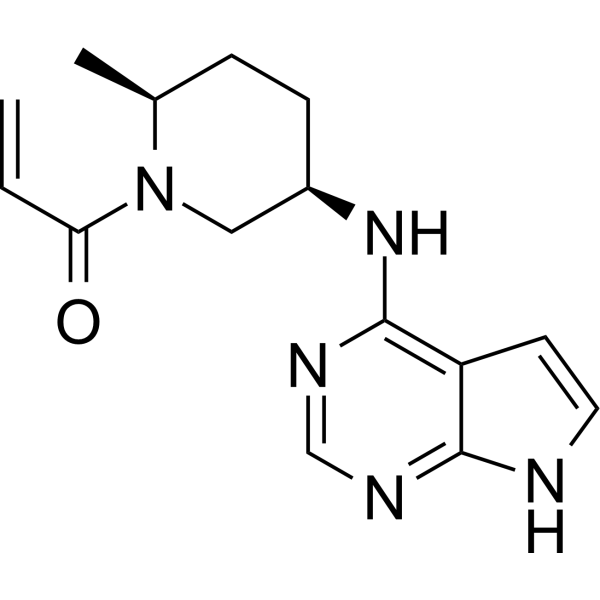
Cat. No.: HY-100754
CAS No.: 1792180-81-4
Purity:  99.43%
Synonyms: PF-06651600
Research Areas:  

Inflammation/Immunology

Ritlecitinib (PF-06651600) is a highly selective, orally active, irreversible covalent JAK3 inhibitor (IC50=33 nM) without inhibitory activity towards JAK1, JAK2, and TYK2 (IC50 >10 μ M). Ritlecitinib rapidly inactivates the JAK3 kinase, and blocks signaling and downstream STAT phosphorylation mediated by common gamma chain cytokines such as IL-2 and IL-15. Ritlecitinib can inhibit Th1/Th17 cell differentiation and function, and effectively suppress preclinical animal models such as alopecia areata, adjuvant-induced arthritis (AIA), and experimental autoimmune encephalomyelitis (EAE) [1] .
loading...
    loading...

