1. Search Result
Search Result
Results for "

Kidney fibrosis model

" in MedChemExpress (MCE) Product Catalog:

15

Inhibitors & Agonists

4

Peptides

1

Natural
Products

Targets Recommended:
Cat. No. Product Name Target Research Areas Chemical Structure
  • HY-N5074

    Apoptosis Inflammation/Immunology Cancer
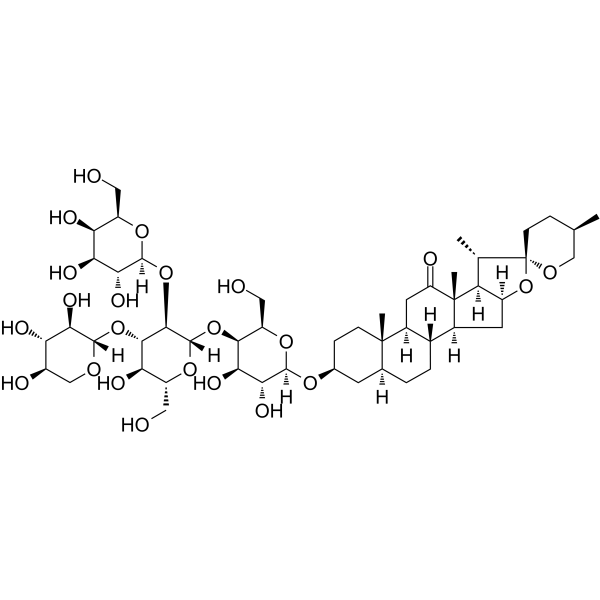
    Terrestrosin D is an orally active apoptosis inducer. Terrestrosin D induces cell cycle arrest at the G1 and S phases, reduces mitochondrial membrane potential, and inhibits the growth of cancer cells and endothelial cells. Terrestrosin D is studied in castration-resistant prostate cancer and pulmonary fibrosis .
    Terrestrosin D
  • HY-109106A

    SK-1403; AJT240; PLS240

    CaSR Endocrinology
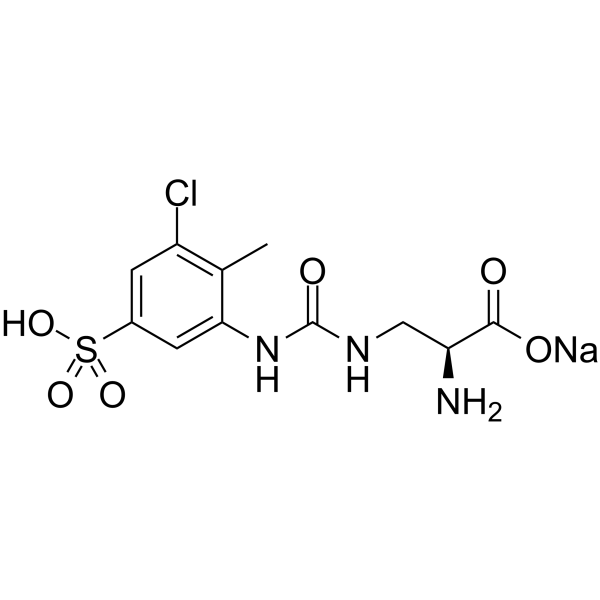
    Upacicalcet sodium is a non-peptide calcimimetic that acts as a CaSR agonist (EC50 = 10.8 nM). Upacicalcet sodium reduces serum intact parathyroid hormone (iPTH) and serum Ca 2+ levels, reducing hypocalcemia and gastrointestinal complications. Upacicalcet sodium sodium improves vascular calcification and bone disorders in the Adenine (HY-B0152)-induced secondary hyperparathyroidism (SHPT) rat model. Upacicalcet sodium sodium inhibits cortical pore formation and reduces bone fibrosis in rats with chronic kidney disease (CKD). Upacicalcet sodium is useful for studying SHPT .
    Upacicalcet sodium
  • HY-156430

    MMP Cancer
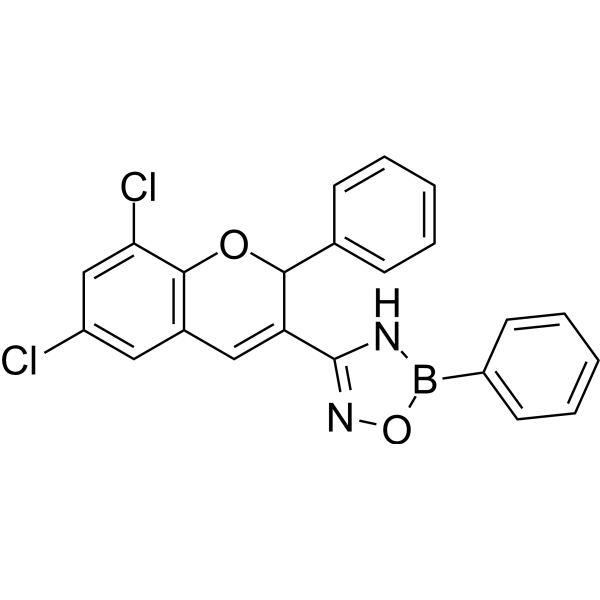
    MMP-7-IN-3 is a potent and selective inhibitor of MMP-7. MMP-7-IN-3 suppresses kidney fibrosis progression in a mouse model with unilateral ureteral obstruction .
    MMP-7-IN-3
  • HY-155657

    Src Inflammation/Immunology
    BT424 is a specific HCK inhibitor. BT424 can regulate macrophage activation and autophagy in vitro. BT424 ameliorates inflammation and kidney fibrosis in UUO model .
    BT424
  • HY-120268A

    SphK Inflammation/Immunology
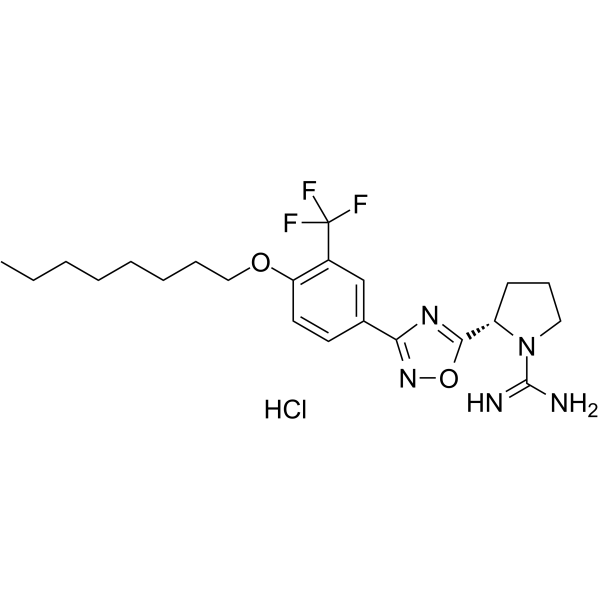
    SLM6031434 hydrochloride is the hydrochloride salt form of SLM6031434 (HY-120268). SLM6031434 is a highly selective sphingosine kinase 2 (SphK2) inhibitor with an IC50 value of 0.4 μM for SphK2. SLM6031434 exerts anti-fibrotic effects by increasing sphingosine accumulation and Smad7 expression. SLM6031434 demonstrates effective anti-fibrotic efficacy in a unilateral ureteral obstruction (UUO)-induced tubulointerstitial fibrosis mouse model. SLM6031434 can be used for the study of proteinuric kidney diseases or chronic kidney disease (CKD) .
    SLM6031434 hydrochloride
  • HY-179041

    PGE synthase Prostaglandin Receptor MDM-2/p53 Amino acid Transporter Glutathione Peroxidase Ferroptosis Metabolic Disease Endocrinology
    SZ0232 is a selective mPGES-2 inhibitor. SZ0232 binds to the active site of mPGES-2 via hydrogen bonds and π-π stacking, reduces the production of prostaglandin E2 (PGE2) and blocks the PGE2-EP3 pathway. SZ0232 regulates Ferroptosis by activating the heme-dependent p53/SLC7A11/GPX4 axis, inhibits lipid peroxidation, and protects renal tubules. SZ0232 enhances glucose-stimulated insulin secretion, inhibits β-cell senescence, and improves glucose homeostasis. SZ0232 reduces renal lipid accumulation, alleviates fibrosis, and ameliorates renal dysfunction in diabetic mice. SZ0232 inhibits renal cyst growth in polycystic kidney disease models. SZ0232 exhibits an insulinotropic effect that strengthens with the increase of animal age. SZ0232 can be used in studies related to type 2 diabetes, acute kidney injury, diabetic kidney disease, and autosomal dominant polycystic kidney disease .
    SZ0232
  • HY-171804

    FP-020

    MMP Inflammation/Immunology
    Linvemastat (Compound FC-4) is an orally active MMP-12 inhibitor (IC50: < 10  nM) with high selectivity of MMP-1, -2, -3, -7, -9, -10 and -14. Linvemastat significantly attenuates lung fibrosis in Bleomycin (HY-108345) induced unilateral lung fibrosis mice model and potently reduces kidney damage, interstitial inflammation or fibrosis in kidney fibrosis model of unilateral ureteral occlusion. Linvemastat can be used for inflammatory diseases research, such as idiopathie pulmonary fibrosis (IPF), inflammatory bowel disease (IBD) and asthma .
    Linvemastat
  • HY-P11354

    TGF-β Receptor Apoptosis Interleukin Related Integrin Cadherin Inflammation/Immunology
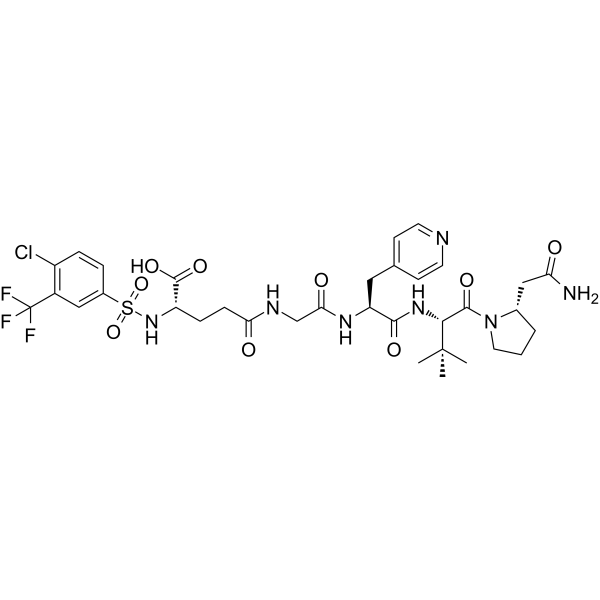
    THR-123 is an orally active ALK3 peptide agonist. THR-123 has a relatively weak binding to ALK2, but does not bind to ALK6. THR-123 suppresses inflammation, apoptosis and the epithelial-to-mesenchymal transition program and reverses established fibrosis in five mouse models of acute and chronic renal injury. THR-123 can be used for the study of kidney fibrosis .
    THR-123
  • HY-P11354A

    TGF-β Receptor Apoptosis Interleukin Related Integrin Cadherin Inflammation/Immunology
    THR-123 TFA is an orally active ALK3 peptide agonist. THR-123 TFA has a relatively weak binding to ALK2, but does not bind to ALK6. THR-123 TFA suppresses inflammation, Apoptosis and the epithelial-to-mesenchymal transition program and reverses established fibrosis in five mouse models of acute and chronic renal injury. THR-123 TFA can be used for the study of kidney fibrosis .
    THR-123 TFA
  • HY-120268

    SphK Inflammation/Immunology
    SLM6031434 is a highly selective sphingosine kinase 2 (SphK2) inhibitor with an IC50 value of 0.4 μM for SphK2. SLM6031434 exerts anti-fibrotic effects by increasing sphingosine accumulation and Smad7 expression. SLM6031434 demonstrates effective anti-fibrotic efficacy in a unilateral ureteral obstruction (UUO)-induced tubulointerstitial fibrosis mouse model. SLM6031434 can be used for the study of proteinuric kidney diseases or chronic kidney disease (CKD) .
    SLM6031434
  • HY-P11297

    Angiotensin-converting Enzyme (ACE) Cardiovascular Disease
    AC-SDKP-NH2 is a substrate peptide of Angiotensin converting enzyme (ACE). AC-SDKP-NH2 has anti-inflammatory and anti-fibrotic activities. AC-SDKP-NH2 directly acts on tissues and prevents or reverses them from excessive fibrosis, but fails to reduce blood pressure and left ventricular hypertrophy (LVH). AC-SDKP-NH2 attenuates inflammation and cell differentiation, proliferation and migration, therefore reducing fibrosis in the heart, vessels and kidneys in mice model. AC-SDKP-NH2 can be used for cardiovascular diseases such as hypertension research .
    AC-SDKP-NH2
  • HY-109106

    SK-1403 free acid; AJT240 free acid; PLS240 free acid

    CaSR Endocrinology
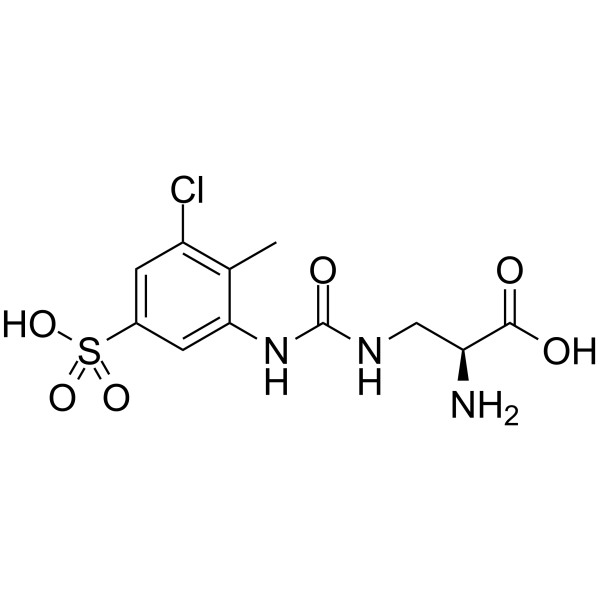
    Upacicalcet is a non-peptide calcimimetic that acts as a CaSR agonist (EC50 = 10.8 nM). Upacicalcet reduces serum intact parathyroid hormone (iPTH) and serum Ca2+ levels, reducing hypocalcemia and gastrointestinal complications. Upacicalcet improves vascular calcification and bone disorders in the Adenine (HY-B0152)-induced secondary hyperparathyroidism (SHPT) rat model. Upacicalcet inhibits cortical pore formation and reduces bone fibrosis in rats with chronic kidney disease (CKD). Upacicalcet is useful for studying SHPT .
    Upacicalcet
  • HY-163121

    Glycosyltransferase TGF-β Receptor FAK Galectin Collagen Endocrinology Cancer
    PST3.1a is an orally active and brain-penetrant N-acetylglucosamine glycosyltransferase (MGAT5) inhibitor with a human IC50 of 2 µM. PST3.1a inhibits TGFβR and FAK signaling pathway activity. PST3.1a alters β1,6-GlcNAc N-glycans and microtubule/microfilament integrity, increases OLIG2 expression, and inhibits proliferation, migration, invasiveness, and clonogenic capacities of glioblastoma initiating cells. PST3.1a reduces invasive and proliferative capacity of glioblastoma initiating cells in orthotopic graft models, increases overall survival of orthotopic graft model mice. PST3.1a blunts MGAT5 overexpression, decreases renal fibrosis via collagen 1, collagen 4, and galectin 3 downregulation in a rat chronic kidney disease model. PST3.1a can be used for the research of glioblastoma multiforme and chronic kidney disease .
    PST3.1a
  • HY-109106B

    (Rac)-SK-1403 free acid; (Rac)-AJT240 free acid; (Rac)-PLS240 free acid

    CaSR Endocrinology
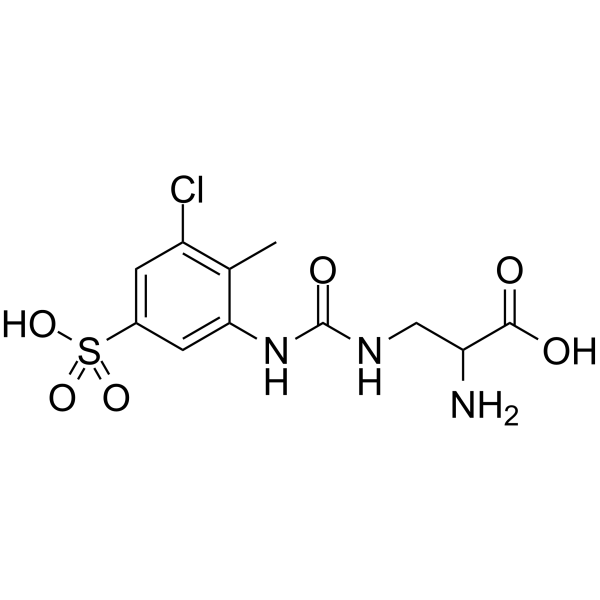
    (Rac)-Upacicalcet is the racemate of Upacicalcet (HY-109106). Upacicalcet is a non-peptide calcimimetic that acts as a CaSR agonist (EC50 = 10.8 nM). Upacicalcet reduces serum intact parathyroid hormone (iPTH) and serum Ca2+ levels, reducing hypocalcemia and gastrointestinal complications. Upacicalcet improves vascular calcification and bone disorders in the Adenine (HY-B0152)-induced secondary hyperparathyroidism (SHPT) rat model. Upacicalcet inhibits cortical pore formation and reduces bone fibrosis in rats with chronic kidney disease (CKD). Upacicalcet is useful for studying SHPT .
    (Rac)-Upacicalcet
  • HY-180556

    mTOR PI3K Inflammation/Immunology
    PI3K/mTOR-IN-20 is a selective dual PI3K/mTOR inhibitor. PI3K/mTOR-IN-20 demonstrates nanomolar antiproliferative effects with IC50s of 0.380 and 0.090 μM for MRC-5 and Mlg2908 cells. PI3K/mTOR-IN-20 reduces Ashcroft scores, hydroxyproline content, collagen deposition, and downregulates fibrosis-related proteins, while restoring lung architecture in a Bleomycin-induced pulmonary fibrosis model. PI3K/mTOR-IN-20 shows a favorable safety profile with steady weight recovery and no distinct liver or kidney toxicity. PI3K/mTOR-IN-20 can be used for fetal lung fibroblasts research .
    PI3K/mTOR-IN-20

Inquiry Online

Your information is safe with us. * Required Fields.

Salutation


Country or Region *

Applicant Name *


Organization Name *

Department *


Email Address *


Product Name *

Cat. No.


Requested quantity *

Phone Number *


Remarks

Inquiry Online

Inquiry Information

Product Name:
Cat. No.:
Quantity:
MCE Japan Authorized Agent:

