1. Search Result
Search Result
Results for "

L-type Ca2 current

" in MedChemExpress (MCE) Product Catalog:

16

Inhibitors & Agonists

4

Natural
Products

2

Isotope-Labeled Compounds

Cat. No. Product Name Target Research Areas Chemical Structure
  • HY-15553A
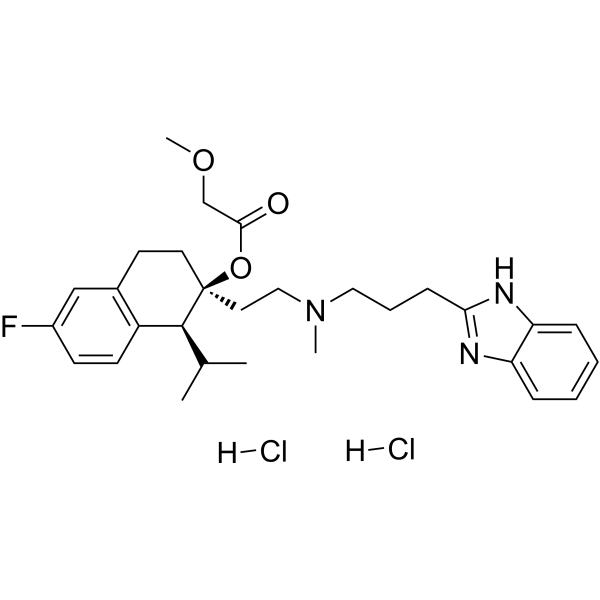
    Mibefradil dihydrochloride
    Maximum Cited Publications
    14 Publications Verification

    Ro 40-5967 dihydrochloride

    Calcium Channel Cardiovascular Disease Cancer
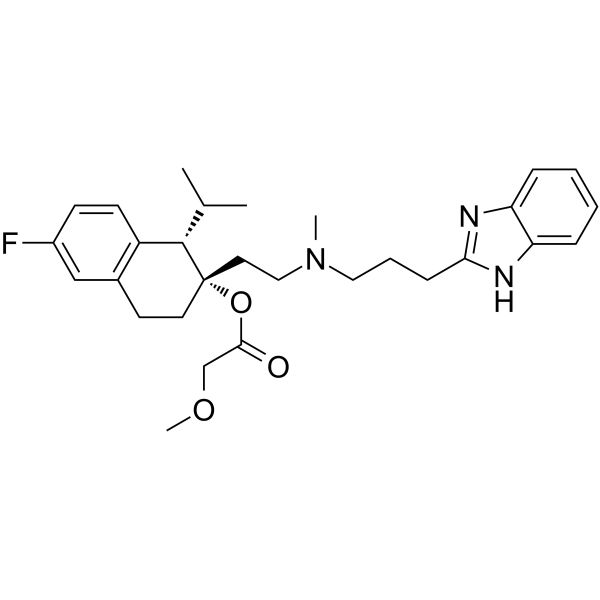
    Mibefradil dihydrochloride (Ro 40-5967 dihydrochloride) is a calcium channel blocker with moderate selectivity for T-type Ca 2+ channels (IC50s of 2.7 μM and 18.6 μM for T-type and L-type currents, respectively) .
    Mibefradil dihydrochloride
  • HY-15124
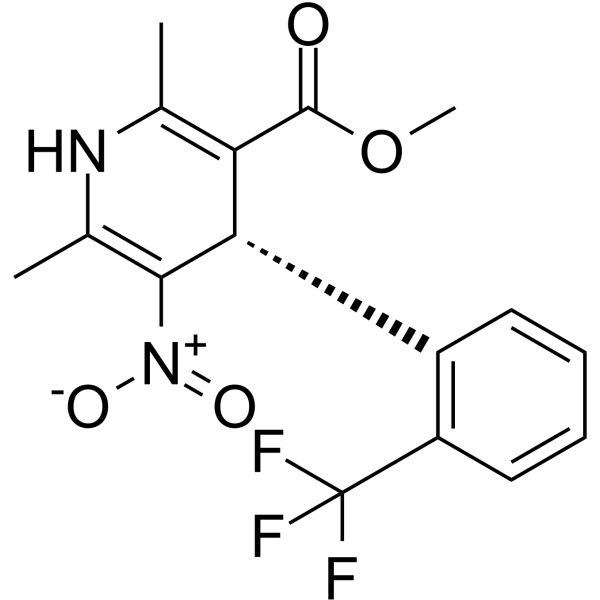
    (S)-(-)-Bay-K-8644
    5+ Cited Publications

    Calcium Channel Cardiovascular Disease
    (S)-(-)-Bay-K-8644 is an agonist of L-type Ca 2+ channel. (S)-(-)-Bay-K-8644 activates Ba 2+ currents (IBa) (EC50=32 nM).
    (S)-(-)-Bay-K-8644
  • HY-N0252
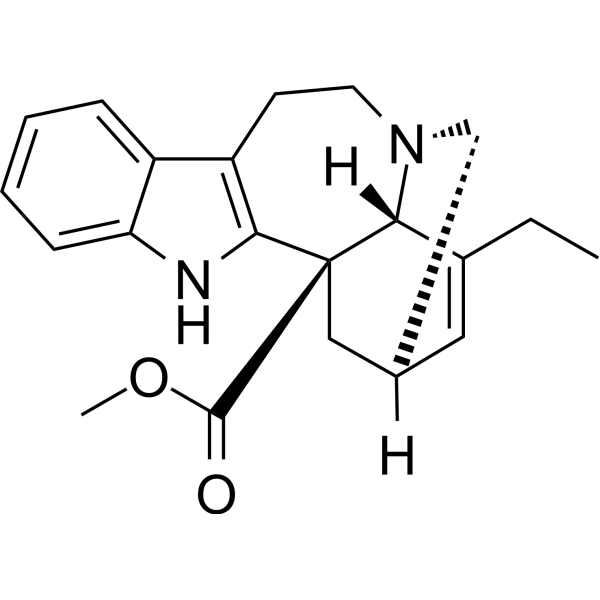
    Catharanthine
    3 Publications Verification

    (+)-3,4-Didehydrocoronaridine

    Calcium Channel Cardiovascular Disease Neurological Disease Cancer
    Catharanthine ((+)-3,4-Didehydrocoronaridine), a constituent of anticancer vinca alkaloids, inhibits voltage-operated L-type Ca 2+ channel (VOCC). Catharanthine has IC50s of 220 μM and 8 μM for VOCC currents in cardiomyocytes and vascular smooth muscle cells (VSMCs), respectively. Catharanthine lowers blood pressure (BP), heart rate (HR). Catharanthine has anti-cancer activity .
    Catharanthine
  • HY-B0549A

    Rec-7-0040; DW61

    Calcium Channel Adenosine Receptor mAChR Dopamine Receptor Adrenergic Receptor Cardiovascular Disease Infection Neurological Disease Cancer
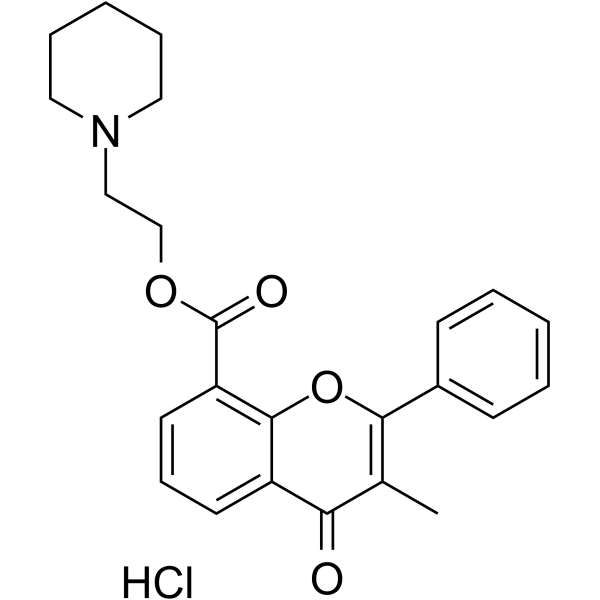
    Flavoxate hydrochloride (Rec-7-0040; DW61) is an orally active L-type Ca 2+ channel inhibitor and antispasmodic. Flavoxate hydrochloride inhibits cyclic adenosine monophosphate production by blocking voltage-dependent inward Ba 2+ currents, regulating the brainstem micturition center, and stimulating G protein-coupled receptors. Consequently, Flavoxate hydrochloride induces relaxation of bladder smooth muscle and inhibits isovolumetric rhythmic contractions. Flavoxate hydrochloride effectively increases bladder capacity and alleviates symptoms of urgent urination frequency and pollakiuria caused by overactive bladder. Flavoxate hydrochloride can be used in research on overactive bladder and related voiding dysfunctions .
    Flavoxate hydrochloride
  • HY-15553

    Ro 40-5967

    Calcium Channel Cardiovascular Disease Cancer
    Mibefradil (Ro 40-5967) is a calcium channel blocker with moderate selectivity for T-type Ca 2+ channels displaying IC50s of 2.7 μM and 18.6 μM for T-type and L-type currents, respectively .
    Mibefradil
  • HY-108592

    Potassium Channel Cardiovascular Disease Neurological Disease
    UCL 2077 is a potassium channel and slow afterhyperpolarization (sAHP) inhibitor. UCL 2077 selectively blocks sAHP channels without affecting L-type Ca 2+ currents. UCL 2077 blocks KCNQ1- and KCNQ2-containing K + channels, decreases erg current amplitude, increases erg deactivation rate. UCL 2077 can be used for the research of hippocampus-dependent memory retrieval deficit and cardiac arrhythmias .
    UCL 2077
  • HY-N0252A
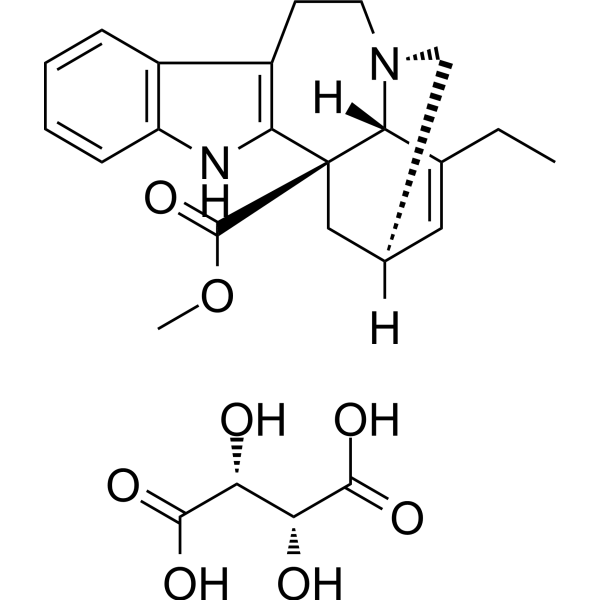
    Catharanthine Tartrate
    3 Publications Verification

    (+)-3,4-Didehydrocoronaridine Tartrate

    Calcium Channel Cardiovascular Disease Neurological Disease Cancer
    Catharanthine ((+)-3,4-Didehydrocoronaridine) Tartrate, a constituent of anticancer vinca alkaloids, inhibits voltage-operated L-type Ca 2+ channel (VOCC). Catharanthine Tartrate has IC50s of 220 μM and 8 μM for VOCC currents in cardiomyocytes and vascular smooth muscle cells (VSMCs), respectively. Catharanthine Tartrate lowers blood pressure (BP), heart rate (HR). Catharanthine Tartrate has anti-cancer activity .
    Catharanthine Tartrate
  • HY-B0549

    Rec-7-0040 free base; DW61 free base

    mAChR Calcium Channel Adrenergic Receptor Adenosine Receptor Dopamine Receptor Neurological Disease
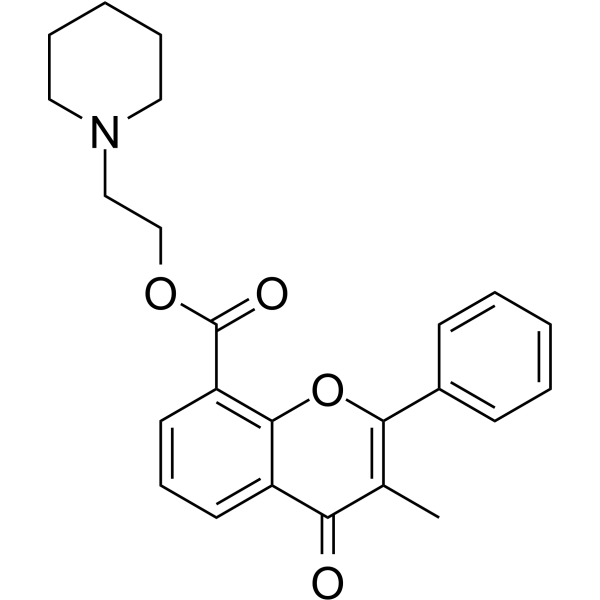
    Flavoxate (Rec-7-0040 free base; DW61 free base) is an orally active L-type Ca 2+ channel inhibitor and antispasmodic. Flavoxate inhibits cyclic adenosine monophosphate production by blocking voltage-dependent inward Ba 2+ currents, regulating the brainstem micturition center, and stimulating G protein-coupled receptors. Consequently, Flavoxate induces relaxation of bladder smooth muscle and inhibits isovolumetric rhythmic contractions. Flavoxate effectively increases bladder capacity and alleviates symptoms of urgent urination frequency and pollakiuria caused by overactive bladder. Flavoxate can be used in research on overactive bladder and related voiding dysfunctions .
    Flavoxate
  • HY-B0549AR

    Rec-7-0040 (Standard); DW61 (Standard)

    Reference Standards mAChR Calcium Channel Adrenergic Receptor Adenosine Receptor Dopamine Receptor Neurological Disease
    Flavoxate (hydrochloride) (Standard) is the analytical standard of Flavoxate (hydrochloride). This product is intended for research and analytical applications. Flavoxate hydrochloride (Rec-7-0040; DW61) is an orally active L-type Ca 2+ channel inhibitor and antispasmodic. Flavoxate hydrochloride inhibits cyclic adenosine monophosphate production by blocking voltage-dependent inward Ba 2+ currents, regulating the brainstem micturition center, and stimulating G protein-coupled receptors. Consequently, Flavoxate hydrochloride induces relaxation of bladder smooth muscle and inhibits isovolumetric rhythmic contractions. Flavoxate hydrochloride effectively increases bladder capacity and alleviates symptoms of urgent urination frequency and pollakiuria caused by overactive bladder. Flavoxate hydrochloride can be used in research on overactive bladder and related voiding dysfunctions .
    Flavoxate hydrochloride (Standard)
  • HY-116540A

    7DMB-Forskolin

    Adenylate Cyclase Cardiovascular Disease
    L 858051 (7DMB-Forskolin) dihydrochloride, an analog of Forskolin (HY-15371), is an adenylyl cyclase stimulator. L 858051 dihydrochloride directly activates adenylyl cyclase to increase intracellular, cellular, and ciliary cAMP levels. L 858051 dihydrochloride activates recombinant cyclic nucleotide-gated (E583M CNGA2) channels to induce a non-selective, Mg 2+-sensitive current in adult rat ventricular myocytes. L 858051 dihydrochloride maximally stimulates L-type Ca 2+ current in adult rat ventricular myocytes. L 858051 dihydrochloride increases total PDE3 and PDE4 activities in adult rat ventricular myocytes, with effects insensitive to PKA inhibition. L 858051 dihydrochloride serves as a tool to elevate intracellular cAMP for studying subsarcolemmal cAMP dynamics and compartmentation in adult rat ventricular myocytes .
    L 858051 dihydrochloride
  • HY-116500A

    Calcium Channel Cardiovascular Disease
    AH-1058 is a newly synthesized antiarrhythmic agent that exhibits significant antiarrhythmic activity by delaying premature ventricular complexes and ventricular fibrillation in experimental arrhythmia models. AH-1058 effectively inhibits both ventricular tachycardia and ventricular fibrillation in the reperfusion-induced arrhythmia model in rats. AH-1058 demonstrates potent calcium channel-blocking effects, suppressing L-type Ca2+ currents in isolated cardiomyocytes.
    AH-1058
  • HY-N0252R

    (+)-3,4-Didehydrocoronaridine (Standard)

    Reference Standards Calcium Channel Cardiovascular Disease Neurological Disease Cancer
    Catharanthine (Standard) is the analytical standard of Catharanthine. This product is intended for research and analytical applications. Catharanthine ((+)-3,4-Didehydrocoronaridine), a constituent of anticancer vinca alkaloids, inhibits voltage-operated L-type Ca2+ channel (VOCC). Catharanthine has IC50s of 220 μM and 8 μM for VOCC currents in cardiomyocytes and vascular smooth muscle cells (VSMCs), respectively. Catharanthine lowers blood pressure (BP), heart rate (HR). Catharanthine has anti-cancer activity .
    Catharanthine (Standard)
  • HY-N0252B

    (+)-3,4-Didehydrocoronaridine Sulfate

    Calcium Channel Cardiovascular Disease Neurological Disease Cancer
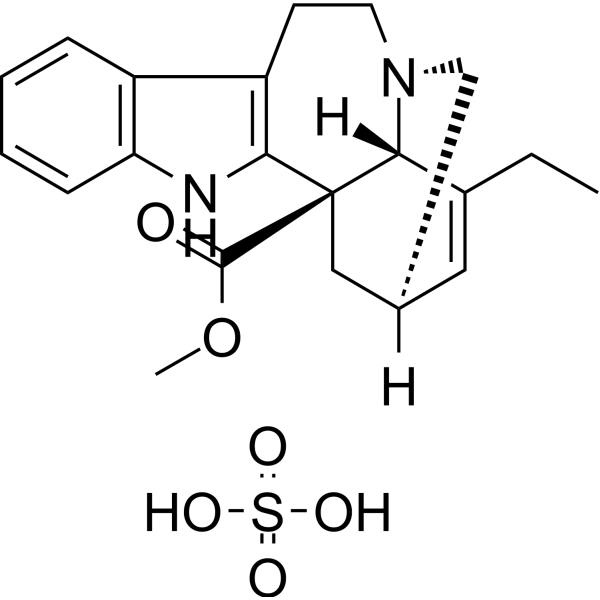
    Catharanthine ((+)-3,4-Didehydrocoronaridine) Sulfate, a constituent of anticancer vinca alkaloids, inhibits voltage-operated L-type Ca 2+ channel (VOCC). Catharanthine Sulfate has IC50s of 220 μM and 8 μM for VOCC currents in cardiomyocytes and vascular smooth muscle cells (VSMCs), respectively. Catharanthine Sulfate lowers blood pressure (BP), heart rate (HR). Catharanthine Sulfate has anti-cancer activity .
    Catharanthine Sulfate
  • HY-116540

    7DMB-Forskolin free base

    Adenylate Cyclase Cardiovascular Disease
    L 858051 (7DMB-Forskolin free base), an analog of Forskolin (HY-15371), is an adenylyl cyclase stimulator. L 858051 directly activates adenylyl cyclase to increase intracellular, cellular, and ciliary cAMP levels. L 858051 activates recombinant cyclic nucleotide-gated (E583M CNGA2) channels to induce a non-selective, Mg 2+-sensitive current in adult rat ventricular myocytes. L 858051 maximally stimulates L-type Ca 2+ current in adult rat ventricular myocytes. L 858051 increases total PDE3 and PDE4 activities in adult rat ventricular myocytes, with effects insensitive to PKA inhibition. L 858051 serves as a tool to elevate intracellular cAMP for studying subsarcolemmal cAMP dynamics and compartmentation in adult rat ventricular myocytes .
    L 858051
  • HY-B0549S

    Isotope-Labeled Compounds mAChR Calcium Channel Adrenergic Receptor Adenosine Receptor Dopamine Receptor Others
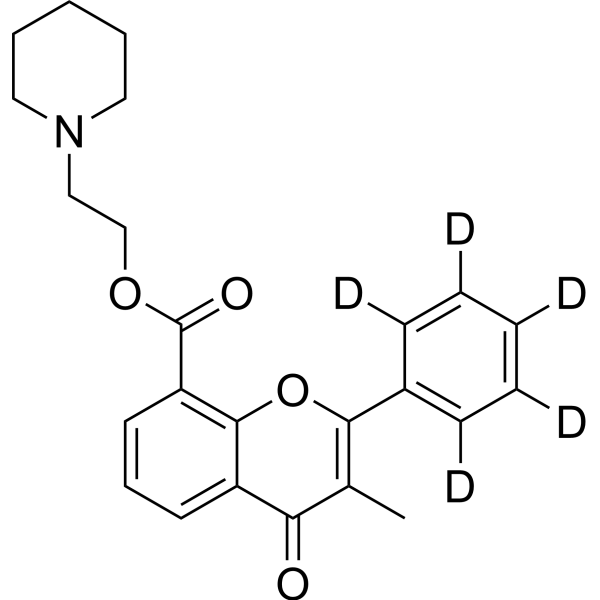
    Flavoxate-d5 is deuterium labeled Flavoxate. Flavoxate hydrochloride (Rec-7-0040; DW61) is an orally active L-type Ca 2+ channel inhibitor and antispasmodic. Flavoxate hydrochloride inhibits cyclic adenosine monophosphate production by blocking voltage-dependent inward Ba 2+ currents, regulating the brainstem micturition center, and stimulating G protein-coupled receptors. Consequently, Flavoxate hydrochloride induces relaxation of bladder smooth muscle and inhibits isovolumetric rhythmic contractions. Flavoxate hydrochloride effectively increases bladder capacity and alleviates symptoms of urgent urination frequency and pollakiuria caused by overactive bladder. Flavoxate hydrochloride can be used in research on overactive bladder and related voiding dysfunctions .
    Flavoxate-d5
  • HY-B0549AS

    Isotope-Labeled Compounds mAChR Calcium Channel Adrenergic Receptor Adenosine Receptor Dopamine Receptor Neurological Disease
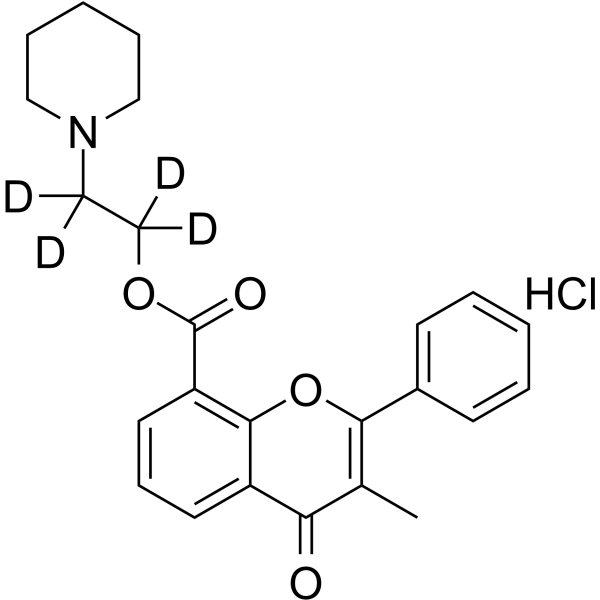
    Flavoxate-d4 hydrochloride (Rec-7-0040-d4) is the deuterium labeled Flavoxate hydrochloride. Flavoxate hydrochloride (Rec-7-0040; DW61) is an orally active L-type Ca 2+ channel inhibitor and antispasmodic. Flavoxate hydrochloride inhibits cyclic adenosine monophosphate production by blocking voltage-dependent inward Ba 2+ currents, regulating the brainstem micturition center, and stimulating G protein-coupled receptors. Consequently, Flavoxate hydrochloride induces relaxation of bladder smooth muscle and inhibits isovolumetric rhythmic contractions. Flavoxate hydrochloride effectively increases bladder capacity and alleviates symptoms of urgent urination frequency and pollakiuria caused by overactive bladder. Flavoxate hydrochloride can be used in research on overactive bladder and related voiding dysfunctions .
    Flavoxate-d4 hydrochloride

Inquiry Online

Your information is safe with us. * Required Fields.

Salutation


Country or Region *

Applicant Name *


Organization Name *

Department *


Email Address *


Product Name *

Cat. No.


Requested quantity *

Phone Number *


Remarks

Inquiry Online

Inquiry Information

Product Name:
Cat. No.:
Quantity:
MCE Japan Authorized Agent:

