Search Result
Results for "
LH release
" in MedChemExpress (MCE) Product Catalog:
3
Isotope-Labeled Compounds
| Cat. No. |
Product Name |
Target |
Research Areas |
Chemical Structure |
-
- HY-P1628
-
|
|
GnRH Receptor
|
Metabolic Disease
|
|
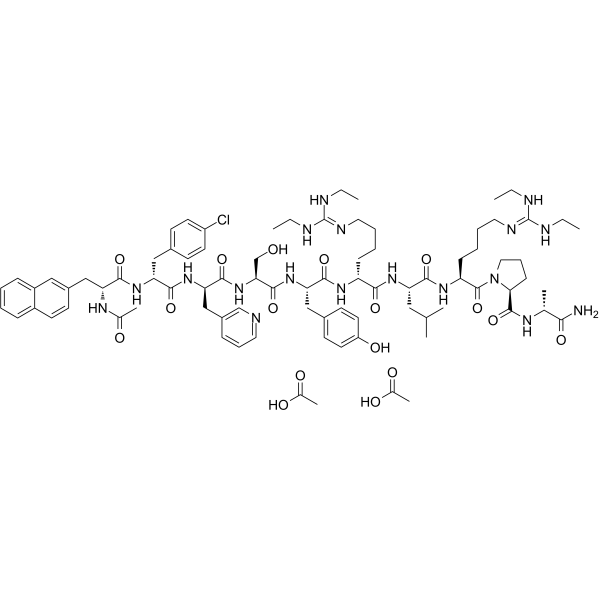
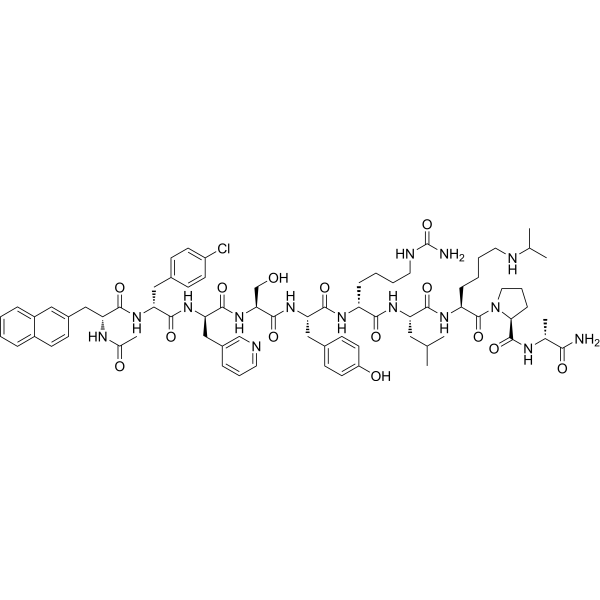
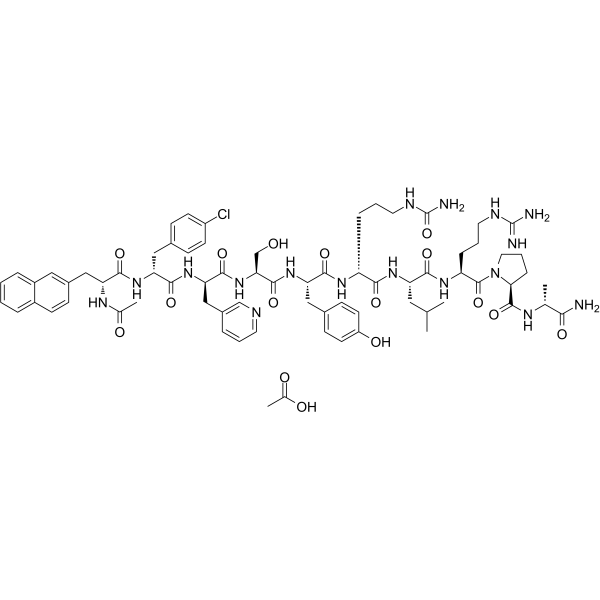
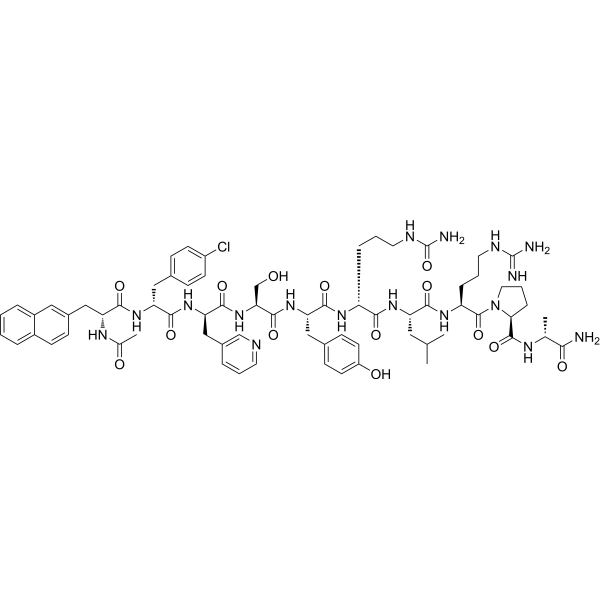
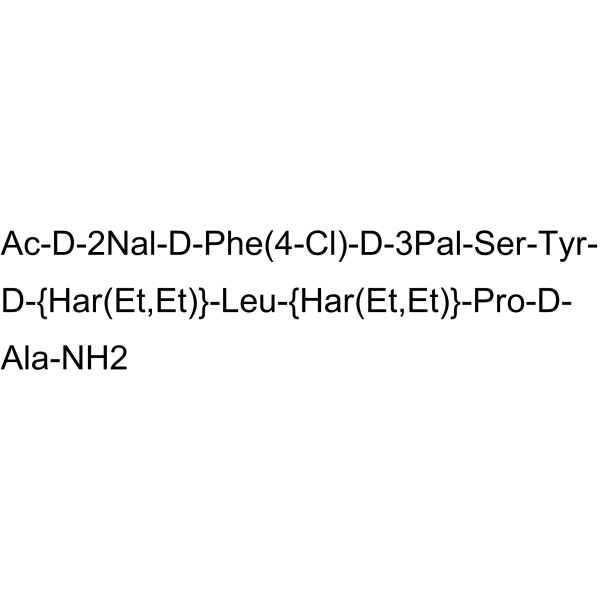
Ganirelix is a competitive and selective gonadotropin releasing hormone (GnRH) antagonist. Ganirelix prevents endogenous GnRH from inducing luteinising hormone (LH) and follicle stimulating hormone relea .
|
-
-
- HY-P3668
-
-
-
- HY-P0243
-
|
Salmon GnRH; Salmon gonadotropin-releasing hormone; sGnRH
|
GnRH Receptor
|
Metabolic Disease
|
|
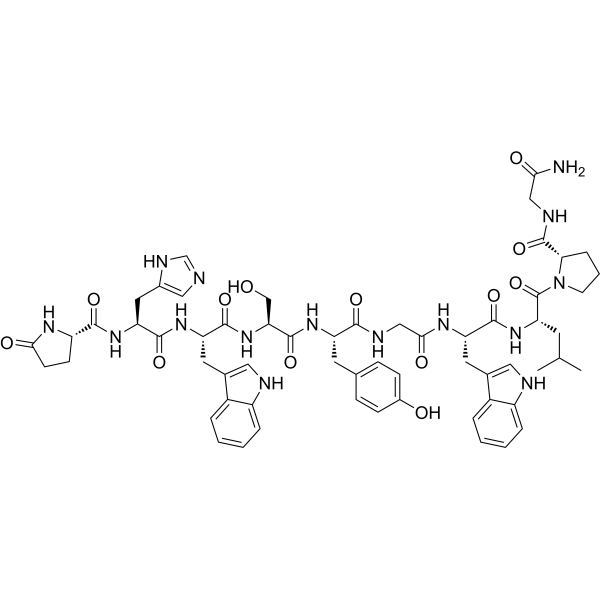
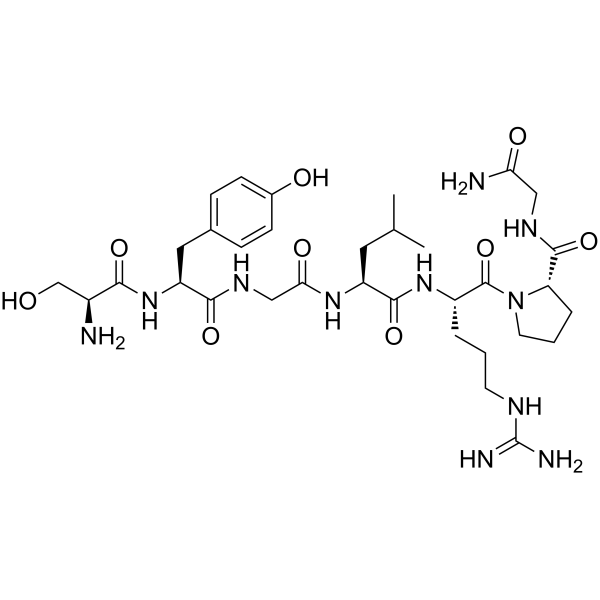
Luteinizing Hormone Releasing Hormone (LH-RH), salmon (Salmon GnRH) is the hypophysiotropic decapeptide synthesized in the hypothalamus that plays a crucial role in the control of reproductive functions.
|
-
-
- HY-109532
-
|
Ganirest
|
GnRH Receptor
|
Metabolic Disease
|
|
Ganirelix acetate (Ganirest) is a competitive and selective gonadotropin-releasing hormone (GnRH) antagonist. Ganirelix acetate blocks endogenous GnRH-induced release of luteinizing hormone (LH) and follicle-stimulating hormone. Ganirelix acetate antagonizes Prostaglandin E2 (HY-101952)-induced detrusor overactivity and enhances Carbachol (HY-B1208)-induced detrusor contraction. Ganirelix acetate is applicable to research related to female infertility and detrusor overactivity .
|
-
-
- HY-U00051
-
|
|
Histamine Receptor
Dopamine Receptor
|
Neurological Disease
|
|
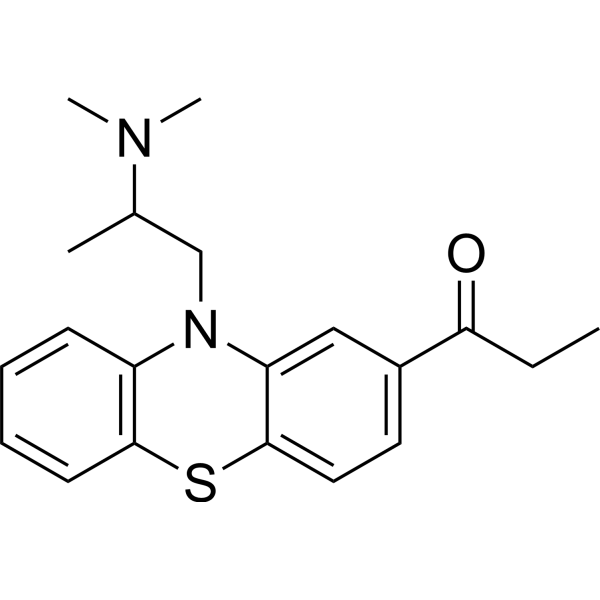
Propiomazine is an orally active antihistamine agent. Propiomazine is a potent prolactin (PRL) release stimulant, whose effect depends on the antagonism of the dopaminergic system and can inhibit the secretion of luteinizing hormone (LH). Propiomazine is mainly used for anesthesia assistance, mental disorders and anxiety-induced sedation, and can also be used in research related to insomnia .
|
-
-
- HY-P3668A
-
|
|
GnRH Receptor
|
Endocrinology
Cancer
|
|
[D-Lys6]-LH-RH TFA is a Luteinizing-hormone-releasing hormone (LHRH) analogue. [D-Lys6]-LH-RH TFA acts as a GnRH receptor agonist .
|
-
-
- HY-P3069
-
|
|
Neurokinin Receptor
|
Neurological Disease
Endocrinology
|
|
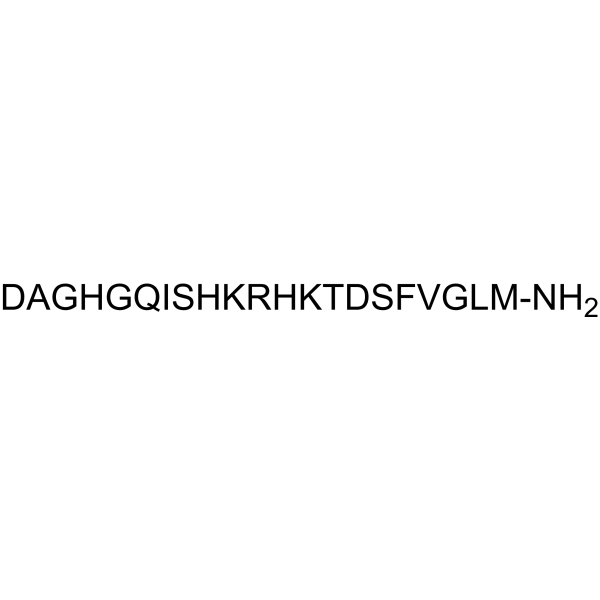
γ-Neuropeptide (rabbit) can be isolated from rabbit intestine. γ-Neuropeptide is an endogenous neurokinin peptide that acts as a neurokinin 2 (NK2) receptor agonist. γ-Neuropeptide mediates hypothalamic-pituitary-adrenal (HPA) axis, as well as reproductive hormone release .
|
-
-
- HY-P3605
-
|
GAP (25-53), human
|
GnRH Receptor
|
Endocrinology
|
|
GnRH Associated Peptide (GAP) (25-53), human is the human gonadotropin-releasing hormone-associated peptide (GAP) 25-53 fragment (hGAP-25-53), can be used as immunogen to generate antiseras including MC-1, MC-2, and MC-3. GAP is joined to the luteinizing hormone-releasing hormone (LH-RH) sequence by a 3 amino acid processing site .
|
-
-
- HY-P3675
-
|
|
GnRH Receptor
|
Endocrinology
|
|
LH-RH (4-10) is a heptapeptide, one of major degradation products of luteinising-hormone releasing hormone (LHRH) via pituitary and hypothalamus. LH-RH (4-10) produced in macrophages and type II pneumocytes .
|
-
-
- HY-P3674
-
|
|
GnRH Receptor
|
Endocrinology
|
|
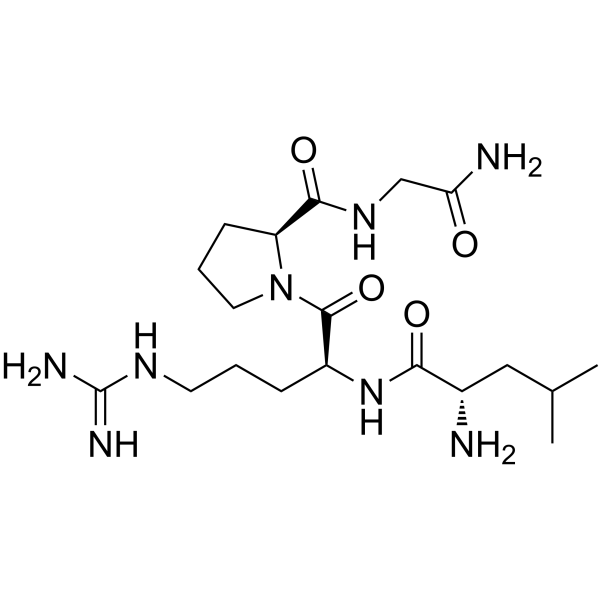
LH-RH (7-10) is a tetrapeptide, one of major degradation products of luteinising-hormone releasing hormone (LHRH) via pituitary and hypothalamus. LH-RH (7-10) produced in macrophages, type I-like and type II pneumocytes .
|
-
-
- HY-P3666
-
-
-
- HY-P3975
-
|
pGlu-His-Pro-Gly-NH2
|
GnRH Receptor
|
Endocrinology
|
|
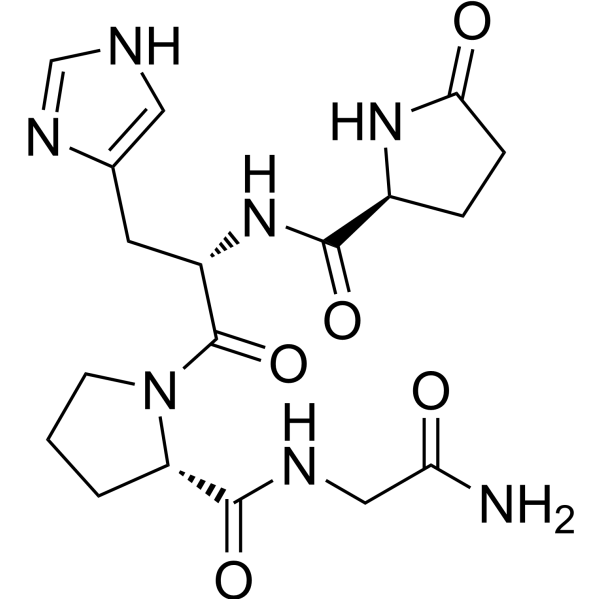
Glp-His-Pro-Gly-NH2 (pGlu-His-Pro-Gly-NH2) is a peptide containing 4 amino acids. Glp-His-Pro-Gly-NH2 stimulates gonadotrophin, luteinizing hormone (LH) and follicle stimulating hormone (FSH) release .
|
-
-
- HY-12096
-
|
|
GnRH Receptor
|
Endocrinology
|
|
WAY-207024 is an orally active gonadotropin releasing hormone receptor (GnRH-R) antagonist (human GnRH: IC50 of 12 nM, rat GnRH: IC50 of 71 nM). WAY-207024 inhibits rat LH release with an IC50 of 350 nM. WAY-207024 lowers rat plasma leuteinizing hormone (LH) levels after oral administration .
|
-
-
- HY-P3084
-
|
hF-GRP
|
GnRH Receptor
|
Endocrinology
|
|
Human follicular gonadotropin releasing peptide (hF-GRP) is a hormone peptide. Human follicular gonadotropin releasing peptide can stimulate pituitary luteinizing hormone (LH) and follicle-stimulating hormone (FSH) secretion in vitro .
|
-
-
- HY-P1905
-
|
|
GnRH Receptor
|
Endocrinology
|
|
[Gln8]-C517 (LH-RH), chicken is an avian hypothalamic peptide, which stimulates release of gonadotropins from anterior pituitary, thus regulating reproductive functions.
|
-
-
- HY-105173
-
|
EP 24332
|
GnRH Receptor
Histamine Receptor
|
Endocrinology
Cancer
|
|
Teverelix (EP 24332) is a GnRH antagonist. Teverelix binds competitively and reversibly to GnRH receptors, thereby suppressing the release of LH and FSH. Teverelix can be used in the research of prostatic hyperplasia, endometriosis, and prostate cancer .
|
-
-
- HY-120767
-
|
KLH-2109 choline; OBE-2109 choline
|
GnRH Receptor
|
Inflammation/Immunology
Cancer
|
|
Linzagolix choline (KLH-2109 choline) is a non-peptide gonadotropin-releasing hormone (GnRH) antagonist with oral activity. Linzagolix choline inhibits the release of endogenous gonadotropins such as luteinizing hormone LH and follicle-stimulating hormone FSH by binding to the GnRH receptor within the pituitary gland. This inhibition results in a reduction in the production of sex hormones such as estrogen and progesterone, which in turn affects the course of sex hormone-dependent diseases. Linzagolix choline can be used in the study of sex hormone-dependent diseases such as endometriosis and uterine fibroids .
|
-
-
- HY-P3663
-
|
|
GnRH Receptor
|
Others
|
|
[Lys8] LH-RH is a analogue of LH-RH. [Lys8] LH-RH stimulates LH and FSH release .
|
-
-
- HY-P3604
-
|
|
Androgen Receptor
|
Endocrinology
|
|
LH-RH II (chicken) is one of the two forms of luteinizing hormone-releasing hormone (LHRH) the hypothalamus of the domestic hen, which are structural variants of mammalian LHRH. LH-RH II (chicken) enhances gonadotrophin release in the domestic chicken .
|
-
-
- HY-P3672
-
|
|
GnRH Receptor
|
Endocrinology
|
|
[D-Ala6]-LH-RH is a Luteinizing-hormone-releasing hormone (LHRH) analogue. [D-Ala6]-LH-RH acts as a GnRH receptor agonist .
|
-
-
- HY-12096A
-
|
|
GnRH Receptor
|
Cardiovascular Disease
|
|
WAY-207024 dihydrochloride is an orally active gonadotropin releasing hormone receptor (GnRH-R) antagonist (human GnRH: IC50 of 12 nM, rat GnRH: IC50 of 71 nM). WAY-207024 dihydrochloride inhibits rat LH release with an IC50 of 350 nM. WAY-207024 dihydrochloride lowers rat plasma leuteinizing hormone (LH) levels after oral administration .
|
-
-
- HY-P2110
-
|
|
GnRH Receptor
|
Endocrinology
|
|
RS-18286 is a potent luteinizing-hormone (LH)-releasing hormone (LHRH) antagonist. RS-18286 blocks the pituitary LHRH receptor and suppresses pituitary luteinizing-hormone (LH) secretion and reduce serum concentrations of gonadal steroids .
|
-
-
- HY-125611
-
|
|
GnRH Receptor
|
Endocrinology
|
|
Fluorogestone acetate is a progesterone compound. Fluorogestone acetate inhibits ovulation and synchronizes the estrous cycle in cattle by inhibiting the release of luteinizing hormone (LH) from the pituitary gland .
|
-
-
- HY-P3673
-
|
|
GnRH Receptor
|
Endocrinology
|
|
Lamprey LH-RH I is a gonadotropin-releasing hormone, elevates plasma steroid levels and stimulates ovulation in the lamprey without biological activity in other animal models .
|
-
-
- HY-P3606
-
|
GAP (1-24), human
|
GnRH Receptor
|
Endocrinology
|
|
GnRH Associated Peptide (GAP) (1-24), human is the human gonadotropin-releasing hormone-associated peptide (GAP) 1-24 fragment (hGAP-1-24). GAP is joined to the luteinizing hormone-releasing hormone (LH-RH) sequence by a 3 amino acid processing site .
|
-
-
- HY-P4689
-
|
|
Estrogen Receptor/ERR
|
Metabolic Disease
|
|
Prolactin-Releasing Peptide (1-31) (rat) is a UHR-1/GRP10 receptor ligand. Prolactin-Releasing Peptide (1-31) (rat) reduces fasting-induced food intake, increases plasma levels of LH, FSH, and testosterone in rats .
|
-
-
- HY-P3671
-
|
|
GnRH Receptor
|
Endocrinology
|
|
[D-Glp1,D-Phe2,D-Trp3,6]-LH-RH is a Luteinizing-hormone-releasing hormone (LHRH) analogue. [D-Glp1,D-Phe2,D-Trp3,6]-LH-RH acts as a GnRH receptor antagonist .
|
-
-
- HY-P2357
-
|
|
GnRH Receptor
|
Metabolic Disease
|
|
MI-1544 is a powerful GnRH antagonist. MI-1544 induces inhibitory effects on the pituitary LH release and on gonads. MI-1544 can be used for the research of antifertility effect .
|
-
-
- HY-P4564
-
|
|
GnRH Receptor
|
Endocrinology
|
|
(D-Ser(tBu)6,D-Leu7,Azagly10)-LHRH is an analogue of luteinizing hormone-releasing hormone (LHRH). LHRH plays a central role in the control of reproduction by stimulating the release of pituitary luteinizing hormone (LH) and follicle-stimulating hormone (FSH) .
|
-
-
- HY-P4568
-
|
|
GnRH Receptor
|
Endocrinology
|
|
(D-Ser4,D-Ser(tBu)6,Azagly10)-LHRH is an analogue of luteinizing hormone-releasing hormone (LHRH). LHRH plays a central role in the control of reproduction by stimulating the release of pituitary luteinizing hormone (LH) and follicle-stimulating hormone (FSH) .
|
-
-
- HY-P4577
-
|
|
GnRH Receptor
|
Endocrinology
|
|
(D-Tyr5,D-Ser(tBu)6,Azagly10)-LHRH is an analogue of luteinizing hormone-releasing hormone (LHRH). LHRH plays a central role in the control of reproduction by stimulating the release of pituitary luteinizing hormone (LH) and follicle-stimulating hormone (FSH) .
|
-
-
- HY-U00051A
-
|
|
Histamine Receptor
|
Neurological Disease
|
|
Propiomazine hydrochloride is an orally active antihistamine agent. Propiomazine hydrochloride is a potent prolactin (PRL) release stimulant, whose effect depends on the antagonism of the dopaminergic system and can inhibit the secretion of luteinizing hormone (LH). Propiomazine hydrochloride is mainly used for anesthesia assistance, mental disorders and anxiety-induced sedation, and can also be used in research related to insomnia .
|
-
-
- HY-U00051AS1
-
|
|
Isotope-Labeled Compounds
|
Neurological Disease
|
|
(R)-Propiomazine-d6 hydrochloride is deuterium labeled Propiomazine hydrochloride. Propiomazine hydrochloride is an orally active antihistamine agent. Propiomazine hydrochloride is a potent prolactin (PRL) release stimulant, whose effect depends on the antagonism of the dopaminergic system and can inhibit the secretion of luteinizing hormone (LH). Propiomazine hydrochloride is mainly used for anesthesia assistance, mental disorders and anxiety-induced sedation, and can also be used in research related to insomnia.
|
-
-
- HY-U00051AS
-
|
|
Isotope-Labeled Compounds
Histamine Receptor
|
Neurological Disease
|
|
Propiomazine-d6 hydrochloride is deuterium labeled Propiomazine hydrochloride. Propiomazine hydrochloride is an orally active antihistamine agent. Propiomazine hydrochloride is a potent prolactin (PRL) release stimulant, whose effect depends on the antagonism of the dopaminergic system and can inhibit the secretion of luteinizing hormone (LH). Propiomazine hydrochloride is mainly used for anesthesia assistance, mental disorders and anxiety-induced sedation, and can also be used in research related to insomnia.
|
-
-
- HY-U00051AS2
-
|
|
Isotope-Labeled Compounds
|
Neurological Disease
|
|
(S)-Propiomazine-d6 hydrochloride is deuterium labeled Propiomazine hydrochloride. Propiomazine hydrochloride is an orally active antihistamine agent. Propiomazine hydrochloride is a potent prolactin (PRL) release stimulant, whose effect depends on the antagonism of the dopaminergic system and can inhibit the secretion of luteinizing hormone (LH). Propiomazine hydrochloride is mainly used for anesthesia assistance, mental disorders and anxiety-induced sedation, and can also be used in research related to insomnia.
|
-
-
- HY-107850A
-
|
Allopregnanediol
|
GnRH Receptor
|
Endocrinology
|
|
5α-Pregnane-3α,20α-diol (Allopregnanediol) is a derivative of progesterone and is one of the various steroids secreted by the ovaries of rats. 5α-Pregnane-3α,20α-diol can significantly stimulate the release of luteinizing hormone (LH) in castrated rats that have been pre-treated with estrogen, while simultaneously inhibiting the secretion of follicle-stimulating hormone (FSH) .
|
-
-
- HY-U00051B
-
|
|
Histamine Receptor
Dopamine Receptor
|
Neurological Disease
|
|
Propiomazine maleate is an orally active antihistamine agent. Propiomazine maleate is a potent prolactin (PRL) release stimulant, whose effect depends on the antagonism of the dopaminergic system and can inhibit the secretion of luteinizing hormone (LH). Propiomazine maleate is mainly used for anesthesia assistance, mental disorders and anxiety-induced sedation, and can also be used in research related to insomnia .
|
-
| Cat. No. |
Product Name |
Target |
Research Area |
-
- HY-P1628
-
|
|
GnRH Receptor
|
Metabolic Disease
|
|
Ganirelix is a competitive and selective gonadotropin releasing hormone (GnRH) antagonist. Ganirelix prevents endogenous GnRH from inducing luteinising hormone (LH) and follicle stimulating hormone relea .
|
-
- HY-P3668
-
-
- HY-P0243
-
|
Salmon GnRH; Salmon gonadotropin-releasing hormone; sGnRH
|
GnRH Receptor
|
Metabolic Disease
|
|
Luteinizing Hormone Releasing Hormone (LH-RH), salmon (Salmon GnRH) is the hypophysiotropic decapeptide synthesized in the hypothalamus that plays a crucial role in the control of reproductive functions.
|
-
- HY-P3668A
-
|
|
GnRH Receptor
|
Endocrinology
Cancer
|
|
[D-Lys6]-LH-RH TFA is a Luteinizing-hormone-releasing hormone (LHRH) analogue. [D-Lys6]-LH-RH TFA acts as a GnRH receptor agonist .
|
-
- HY-P3069
-
|
|
Neurokinin Receptor
|
Neurological Disease
Endocrinology
|
|
γ-Neuropeptide (rabbit) can be isolated from rabbit intestine. γ-Neuropeptide is an endogenous neurokinin peptide that acts as a neurokinin 2 (NK2) receptor agonist. γ-Neuropeptide mediates hypothalamic-pituitary-adrenal (HPA) axis, as well as reproductive hormone release .
|
-
- HY-P3605
-
|
GAP (25-53), human
|
GnRH Receptor
|
Endocrinology
|
|
GnRH Associated Peptide (GAP) (25-53), human is the human gonadotropin-releasing hormone-associated peptide (GAP) 25-53 fragment (hGAP-25-53), can be used as immunogen to generate antiseras including MC-1, MC-2, and MC-3. GAP is joined to the luteinizing hormone-releasing hormone (LH-RH) sequence by a 3 amino acid processing site .
|
-
- HY-P3675
-
|
|
GnRH Receptor
|
Endocrinology
|
|
LH-RH (4-10) is a heptapeptide, one of major degradation products of luteinising-hormone releasing hormone (LHRH) via pituitary and hypothalamus. LH-RH (4-10) produced in macrophages and type II pneumocytes .
|
-
- HY-P3674
-
|
|
GnRH Receptor
|
Endocrinology
|
|
LH-RH (7-10) is a tetrapeptide, one of major degradation products of luteinising-hormone releasing hormone (LHRH) via pituitary and hypothalamus. LH-RH (7-10) produced in macrophages, type I-like and type II pneumocytes .
|
-
- HY-P3666
-
-
- HY-P3975
-
|
pGlu-His-Pro-Gly-NH2
|
GnRH Receptor
|
Endocrinology
|
|
Glp-His-Pro-Gly-NH2 (pGlu-His-Pro-Gly-NH2) is a peptide containing 4 amino acids. Glp-His-Pro-Gly-NH2 stimulates gonadotrophin, luteinizing hormone (LH) and follicle stimulating hormone (FSH) release .
|
-
- HY-P3084
-
|
hF-GRP
|
GnRH Receptor
|
Endocrinology
|
|
Human follicular gonadotropin releasing peptide (hF-GRP) is a hormone peptide. Human follicular gonadotropin releasing peptide can stimulate pituitary luteinizing hormone (LH) and follicle-stimulating hormone (FSH) secretion in vitro .
|
-
- HY-P1905
-
|
|
GnRH Receptor
|
Endocrinology
|
|
[Gln8]-C517 (LH-RH), chicken is an avian hypothalamic peptide, which stimulates release of gonadotropins from anterior pituitary, thus regulating reproductive functions.
|
-
- HY-105173
-
|
EP 24332
|
GnRH Receptor
Histamine Receptor
|
Endocrinology
Cancer
|
|
Teverelix (EP 24332) is a GnRH antagonist. Teverelix binds competitively and reversibly to GnRH receptors, thereby suppressing the release of LH and FSH. Teverelix can be used in the research of prostatic hyperplasia, endometriosis, and prostate cancer .
|
-
- HY-P3663
-
|
|
GnRH Receptor
|
Others
|
|
[Lys8] LH-RH is a analogue of LH-RH. [Lys8] LH-RH stimulates LH and FSH release .
|
-
- HY-P3604
-
|
|
Androgen Receptor
|
Endocrinology
|
|
LH-RH II (chicken) is one of the two forms of luteinizing hormone-releasing hormone (LHRH) the hypothalamus of the domestic hen, which are structural variants of mammalian LHRH. LH-RH II (chicken) enhances gonadotrophin release in the domestic chicken .
|
-
- HY-P3672
-
|
|
GnRH Receptor
|
Endocrinology
|
|
[D-Ala6]-LH-RH is a Luteinizing-hormone-releasing hormone (LHRH) analogue. [D-Ala6]-LH-RH acts as a GnRH receptor agonist .
|
-
- HY-P2110
-
|
|
GnRH Receptor
|
Endocrinology
|
|
RS-18286 is a potent luteinizing-hormone (LH)-releasing hormone (LHRH) antagonist. RS-18286 blocks the pituitary LHRH receptor and suppresses pituitary luteinizing-hormone (LH) secretion and reduce serum concentrations of gonadal steroids .
|
-
- HY-P3673
-
|
|
GnRH Receptor
|
Endocrinology
|
|
Lamprey LH-RH I is a gonadotropin-releasing hormone, elevates plasma steroid levels and stimulates ovulation in the lamprey without biological activity in other animal models .
|
-
- HY-P3606
-
|
GAP (1-24), human
|
GnRH Receptor
|
Endocrinology
|
|
GnRH Associated Peptide (GAP) (1-24), human is the human gonadotropin-releasing hormone-associated peptide (GAP) 1-24 fragment (hGAP-1-24). GAP is joined to the luteinizing hormone-releasing hormone (LH-RH) sequence by a 3 amino acid processing site .
|
-
- HY-P4689
-
|
|
Estrogen Receptor/ERR
|
Metabolic Disease
|
|
Prolactin-Releasing Peptide (1-31) (rat) is a UHR-1/GRP10 receptor ligand. Prolactin-Releasing Peptide (1-31) (rat) reduces fasting-induced food intake, increases plasma levels of LH, FSH, and testosterone in rats .
|
-
- HY-P3671
-
|
|
GnRH Receptor
|
Endocrinology
|
|
[D-Glp1,D-Phe2,D-Trp3,6]-LH-RH is a Luteinizing-hormone-releasing hormone (LHRH) analogue. [D-Glp1,D-Phe2,D-Trp3,6]-LH-RH acts as a GnRH receptor antagonist .
|
-
- HY-P2357
-
|
|
GnRH Receptor
|
Metabolic Disease
|
|
MI-1544 is a powerful GnRH antagonist. MI-1544 induces inhibitory effects on the pituitary LH release and on gonads. MI-1544 can be used for the research of antifertility effect .
|
-
- HY-P4564
-
|
|
GnRH Receptor
|
Endocrinology
|
|
(D-Ser(tBu)6,D-Leu7,Azagly10)-LHRH is an analogue of luteinizing hormone-releasing hormone (LHRH). LHRH plays a central role in the control of reproduction by stimulating the release of pituitary luteinizing hormone (LH) and follicle-stimulating hormone (FSH) .
|
-
- HY-P4568
-
|
|
GnRH Receptor
|
Endocrinology
|
|
(D-Ser4,D-Ser(tBu)6,Azagly10)-LHRH is an analogue of luteinizing hormone-releasing hormone (LHRH). LHRH plays a central role in the control of reproduction by stimulating the release of pituitary luteinizing hormone (LH) and follicle-stimulating hormone (FSH) .
|
-
- HY-P4577
-
|
|
GnRH Receptor
|
Endocrinology
|
|
(D-Tyr5,D-Ser(tBu)6,Azagly10)-LHRH is an analogue of luteinizing hormone-releasing hormone (LHRH). LHRH plays a central role in the control of reproduction by stimulating the release of pituitary luteinizing hormone (LH) and follicle-stimulating hormone (FSH) .
|
| Cat. No. |
Product Name |
Chemical Structure |
-
- HY-U00051AS1
-
|
|
|
(R)-Propiomazine-d6 hydrochloride is deuterium labeled Propiomazine hydrochloride. Propiomazine hydrochloride is an orally active antihistamine agent. Propiomazine hydrochloride is a potent prolactin (PRL) release stimulant, whose effect depends on the antagonism of the dopaminergic system and can inhibit the secretion of luteinizing hormone (LH). Propiomazine hydrochloride is mainly used for anesthesia assistance, mental disorders and anxiety-induced sedation, and can also be used in research related to insomnia.
|
-
-
- HY-U00051AS
-
|
|
|
Propiomazine-d6 hydrochloride is deuterium labeled Propiomazine hydrochloride. Propiomazine hydrochloride is an orally active antihistamine agent. Propiomazine hydrochloride is a potent prolactin (PRL) release stimulant, whose effect depends on the antagonism of the dopaminergic system and can inhibit the secretion of luteinizing hormone (LH). Propiomazine hydrochloride is mainly used for anesthesia assistance, mental disorders and anxiety-induced sedation, and can also be used in research related to insomnia.
|
-
-
- HY-U00051AS2
-
|
|
|
(S)-Propiomazine-d6 hydrochloride is deuterium labeled Propiomazine hydrochloride. Propiomazine hydrochloride is an orally active antihistamine agent. Propiomazine hydrochloride is a potent prolactin (PRL) release stimulant, whose effect depends on the antagonism of the dopaminergic system and can inhibit the secretion of luteinizing hormone (LH). Propiomazine hydrochloride is mainly used for anesthesia assistance, mental disorders and anxiety-induced sedation, and can also be used in research related to insomnia.
|
-
Your information is safe with us. * Required Fields.
Inquiry Information
- Product Name:
- Cat. No.:
- Quantity:
- MCE Japan Authorized Agent: