



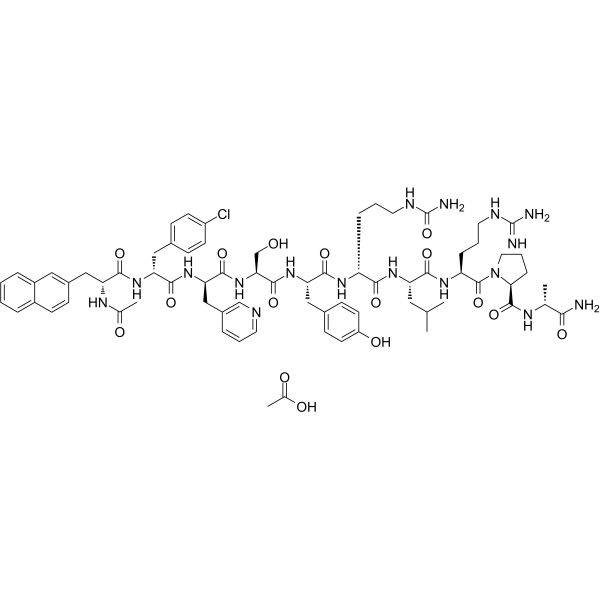
Cetrorelix acetate
Based on 2 publication(s) in Google Scholar
Cetrorelix (SB-75) acetate is a competitive gonadotropin-releasing hormone receptor (GnRHR) antagonist with a Kd of 0.19 nM. Cetrorelix acetate inhibits the secretion of luteinizing hormone (LH) and follicle-stimulating hormone (FSH), thereby suppressing the secretion of downstream sex steroids. Cetrorelix acetate prevents ovulation, induces reversible reproductive shutdown and azoospermia, reduces ovarian fibrosis, improves superovulation outcomes, and inhibits chemotherapy-induced mitochondria-dependent apoptosis. Cetrorelix acetate is applicable for fertility assistance research.
For research use only. We do not sell to patients.
- Purity : 99.98%
- CAS No.: 145672-81-7
- Formula: C72H96ClN17O16
- Molecular Weight:1491.09
-
Storage:
Sealed storage, away from moisture and light.
Powder -80°C, 2 years , -20°C, 1 year* In solvent : -80°C, 6 months; -20°C, 1 month (sealed storage, away from moisture and light)

To place orders, for customer services and technical support, please contact: MedChemExpress USA
Tel: 609-228-6898 E-mail: [email protected] [email protected]


-
 Biological Activity
-
Chemical Information
-
Solvent & Solubility
- Protocols
- Purity & Documentation
- References
-
 Help & FAQs


-
HY-16168A
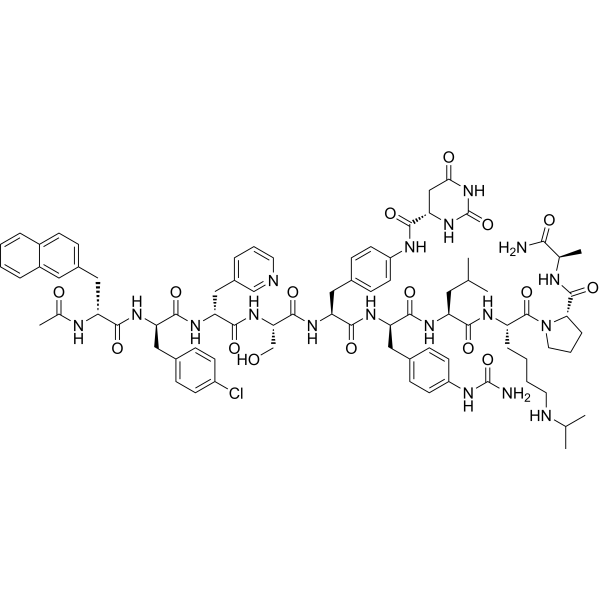
DegarelixGnRHR Antagonist -
HY-14789
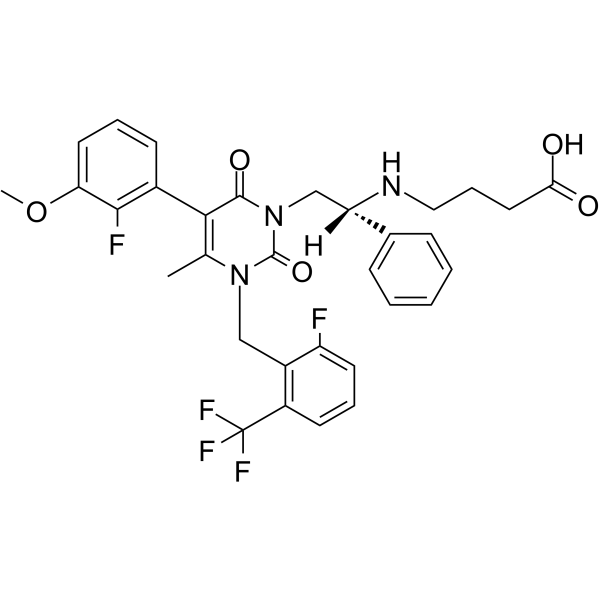
(R)-ElagolixGnRH Receptor Antagonist -
HY-16474
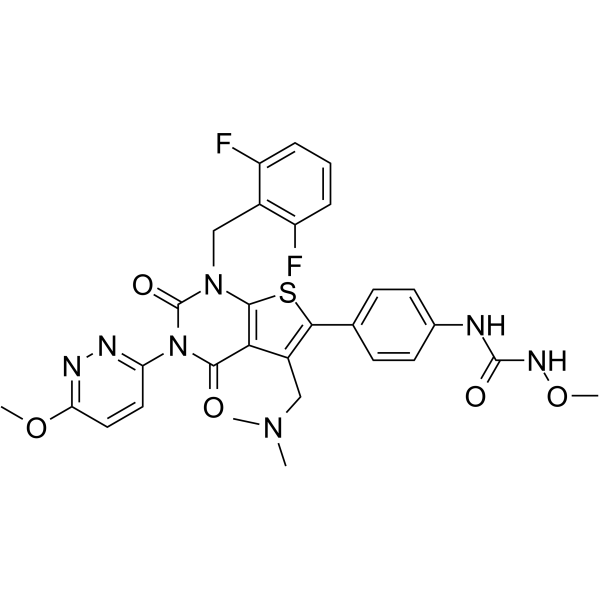
RelugolixGnRH Antagonist -
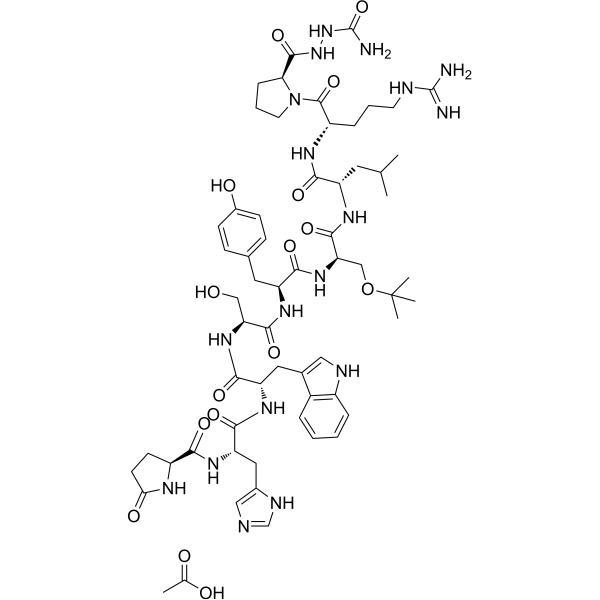
HY-13673A
Goserelin acetateGnRH Agonist -
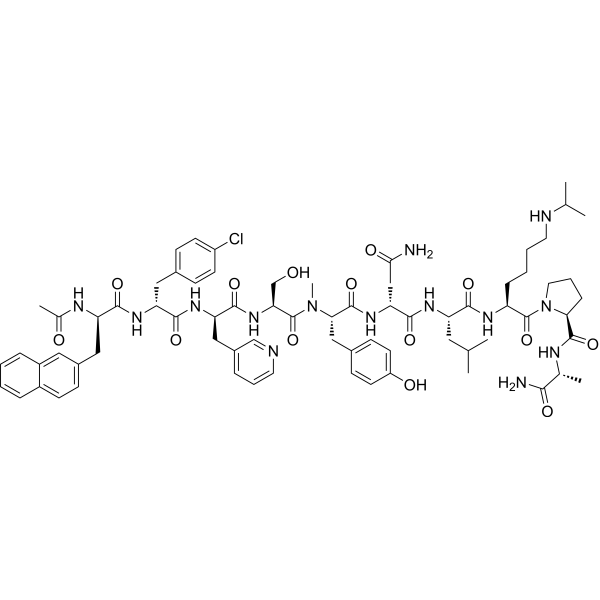
HY-13534
AbarelixGnRH Antagonist -
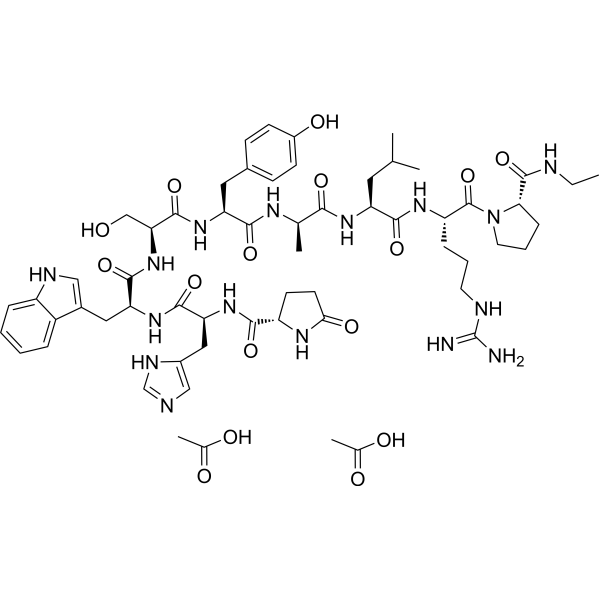
HY-17405
Alarelin AcetateGnRH Receptor Agonist -
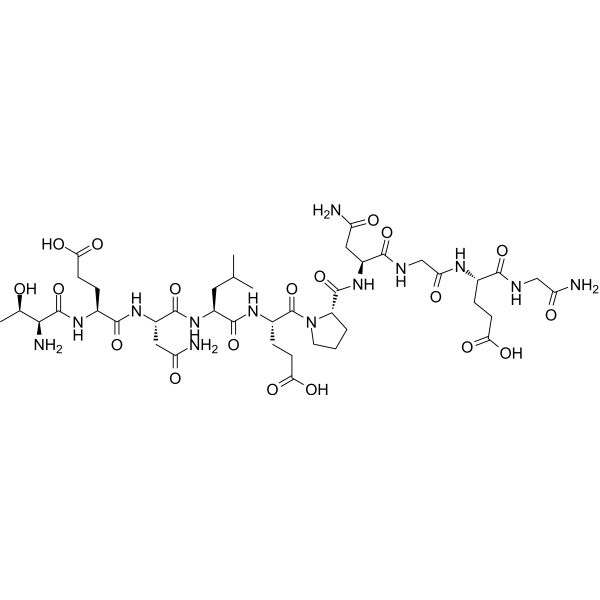
HY-P4190
Fsh receptor-binding inhibitor fragment(bi-10)FSH Antagonist -
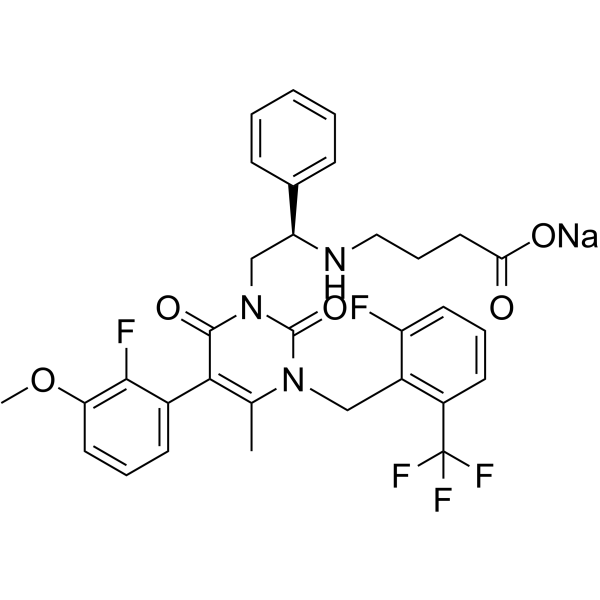
HY-14369
Elagolix sodiumGnRH Receptor Antagonist -
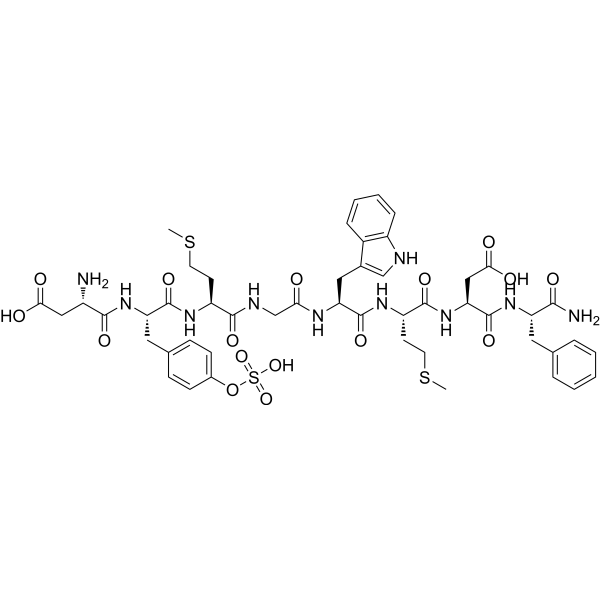
HY-P0093
SincalideAmino Acid Polypeptide Hormone Analogue -
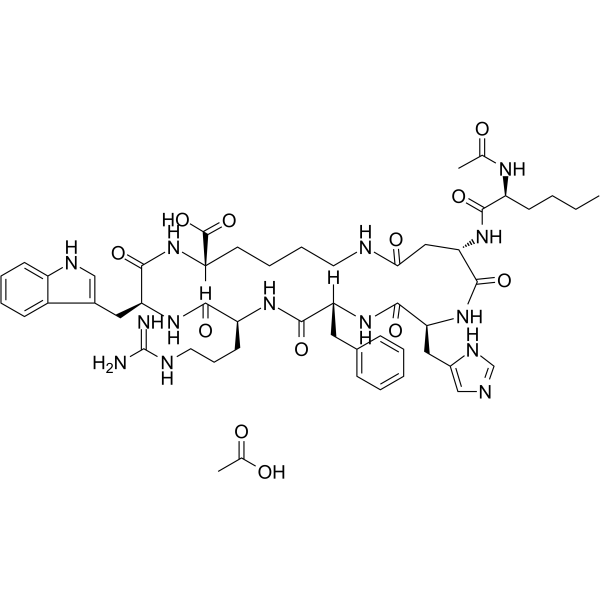
HY-18678A
Bremelanotide AcetateMelanocortin Receptor Agonist -

HY-14789R
(R)-Elagolix (Standard)GnRH Receptor Antagonist -
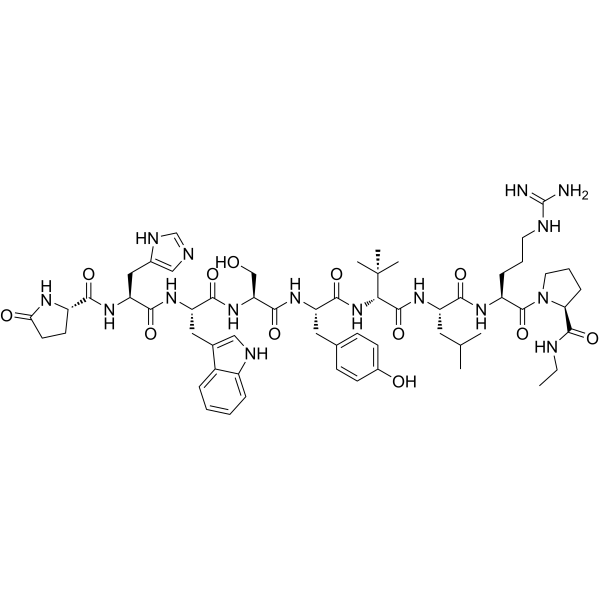
HY-P0051
LecirelinGnRH Analogue
Publications Citing Use of MedChemExpress (MCE) Cetrorelix acetate
More

Biological Activity
Description
In Vitro
Cetrorelix does not inhibit EGF-stimulated proliferation of human granulosa cells at pharmacologically relevant concentrations, with inhibitory effects only seen at ~100-fold higher concentrations[3].
MedChemExpress (MCE) has not independently confirmed the accuracy of these methods. They are for reference only.
In Vivo
Cetrorelix (5 μg/day; i.p.; daily; 20 days) alone has no detectable effect on ovarian granulosa cell apoptosis, hormone levels, or mitochondrial function in healthy female Sprague-Dawley rats[1].
Cetrorelix (~10 μg/kg; s.c.; single dose) immediately suppresses plasma LH by >80% in male castrated rats, with full recovery within 24 hours[3].
Cetrorelix (250-1250 μg/kg; s.c.; single dose) immediately suppresses LH in male castrated cynomolgus monkeys, with suppression lasting for at least 96 hours[3].
MedChemExpress (MCE) has not independently confirmed the accuracy of these methods. They are for reference only.
-
Animal Model:Sprague-Dawley (female, 250 g)[1]
-
Dosage:5 μg/day (pretreatment); 5 μg/day + 20 mg/kg/day (combined with alkylating antineoplastic agent)
-
Administration:i.p.; daily; 10 days (pretreatment); i.p.; daily; 10 days (combined)
-
Result:Reduced granulosa cell apoptotic index from 13.6% to 3.1%.
Restored serum estradiol levels from ~80 pg/mL to ~160 pg/mL.
Preserved normal granulosa cell ultrastructure including intact mitochondria.
Reversed alkylating antineoplastic agent-induced mitochondrial depolarization, resulting in a green fluorescence intensity of 15.36, red fluorescence intensity of 23.16, and a red/green ratio of 1.51.
Inhibited alkylating antineoplastic agent-induced cytochrome c release from mitochondria to cytoplasm.
Suppressed alkylating antineoplastic agent-induced increases in Bax-positive cells from 90% to 25%, caspase-3-positive cells from 85% to 30%, and cytochrome c-positive cells from 80% to 30%.
Restored alkylating antineoplastic agent-reduced Bcl-2-positive cells from 40% to 70%.
-
Animal Model:Sprague-Dawley (female, 250 g)[1]
-
Dosage:5 μg/day
-
Administration:i.p.; daily; 20 days
-
Result:Did not alter granulosa cell apoptotic index (2.8%, similar to control's 2.5%).
Did not change serum estradiol or progesterone levels.
Did not affect granulosa cell ultrastructure, mitochondrial membrane potential, cytochrome c distribution between mitochondria and cytoplasm, or expression levels of Bax, Bcl-2, caspase-3, or cytochrome c.
-
Animal Model:C57BL/6J (female, 52 weeks old, aged)[2]
-
Dosage:5 µg/kg (3 doses over 1 week); 5 µg/kg (7 doses over 1 week)
-
Administration:i.p.; once every 3 days (3 doses over 1 week); daily (7 doses over 1 week)
-
Result:Increased mean total oocyte count to 13.2 (3-dose group) and 11.4 (7-dose group), with normal oocyte counts increased to 9.8 (74.2% normal rate) and 8.7 (76.3% normal rate), respectively, compared to controls (P<0.05).
Achieved fertilization rates of 96.9% (3-dose group) and 88.5% (7-dose group), with birth rates of 58.3% and 51.8%, respectively, comparable to control values.
Reduced ovarian fibrosis, with phalloidin-positive area percentage decreased compared to untreated aged controls (P<0.05).
Showed no significant difference in ovary weight compared to control aged mice.
-
Animal Model:Male castrated rats[3]
-
Dosage:2.5 μg/rat (~10 μg/kg)
-
Administration:s.c.; single dose
-
Result:Suppressed plasma LH concentrations immediately, reaching a nadir at 4 hours with an >80% fall in LH concentrations.
Returned serum LH to normal levels within 24 hours.
-
Animal Model:Male castrated cynomolgus monkeys (*Macaca fascicularis*)[3]
-
Dosage:250 μg/kg; 625 μg/kg; 1250 μg/kg
-
Administration:s.c.; single dose
-
Result:Suppressed LH concentrations immediately across all doses, reaching a nadir at ~12 hours post-injection.
Maintained LH concentrations suppressed for at least 96 hours.
Showed no LH rebound within the 96-hour interval at any dose.
- Fibrosis/Collagen Morphometry
- Reproductive and Developmental Toxicity Study
- Collagen: Sirius Red Staining
- Detection of Apoptosis
- TUNEL staining for apoptotic DNA fragmentation
- Annexin V plus membrane-impermeant dye apoptosis staining
- Research Protocol for Endocrine Diseases
- Connective Tissue: Masson's Trichrome/Collagen Trichrome Staining
- Apoptosis Solutions


Chemical Information
-
CAS No. 145672-81-7
-
Appearance Solid
-
Molecular Weight 1491.09
-
Formula C72H96ClN17O16
-
Color White to off-white
-
Synonyms
SB-75 acetate
-
Sequence
N-acetyl-{2-Naph-Ala}-{Cl-Phe}-{3Py-Ala}-Ser-Tyr-{Cit}-Leu-Arg-Pro-Ala-NH2
-
Sequence Shortening
Ac-{2-Naph-Ala}-{Cl-Phe}-{3Py-Ala}-SY-{Cit}-LRPA-NH2
-
Shipping
Room temperature in continental US; may vary elsewhere.
-
Storage
Sealed storage, away from moisture and light
Powder -80°C 2 years -20°C 1 year * In solvent : -80°C, 6 months; -20°C, 1 month (sealed storage, away from moisture and light)


Publications (2)
-
Journal Impact Factor
-
Most Recent
-
Commun Biol
Diurnal testosterone oscillations gate drug delivery via phase separation of ZO-1 at the blood-testis barrier in mice. [Abstract]2026 Jun 1. PMID: 42219451 -
Gen Comp Endocrinol
Neuromodulatory effects of GnRH on the caudal neurosecretory Dahlgren cells in female olive flounder. [Abstract]2021 Jun 1:307:113754. PMID: 33711313


Solvent & Solubility
In Vitro:
DMSO : 50 mg/mL (33.53 mM; Need ultrasonic; Hygroscopic DMSO has a significant impact on the solubility of product, please use newly opened DMSO)
H2O : 2 mg/mL (1.34 mM; Need ultrasonic)
Please refer to the solubility information to select the appropriate solvent. Once prepared, please aliquot and store the solution to prevent product inactivation from repeated freeze-thaw cycles.
Storage method and period of stock solution: -80°C, 6 months; -20°C, 1 month (sealed storage, away from moisture and light). When stored at -80°C, please use it within 6 months. When stored at -20°C, please use it within 1 month.
* Note: If you choose water as the stock solution, please dilute it to the working solution, then filter and sterilize it with a 0.22 μm filter before use.
Please refer to the solubility information to select the appropriate solvent. Once prepared, please aliquot and store the solution to prevent product inactivation from repeated freeze-thaw cycles.
Storage method and period of stock solution: -80°C, 6 months; -20°C, 1 month (sealed storage, away from moisture and light). When stored at -80°C, please use it within 6 months. When stored at -20°C, please use it within 1 month.
* Note: If you choose water as the stock solution, please dilute it to the working solution, then filter and sterilize it with a 0.22 μm filter before use.
Concentration (start) × Volume (start) = Concentration (final) × Volume (final)


Purity & Documentation
-
Data Sheet (294 KB)
-
SDS (419 KB)
- English - EN (419 KB)
- Français - FR (419 KB)
- Deutsch - DE (419 KB)
- Norwegian - NO (419 KB)
- Español - ES (419 KB)
- Swedish - SV (419 KB)
- Italian - IT (419 KB)
- Korean - KR (419 KB)
- Portuguese - PT (419 KB)
-
Handling Instructions (2659 KB)
References
[1]. Zhao XJ, et al. GnRH antagonist cetrorelix inhibits mitochondria-dependent apoptosis triggered by chemotherapy in granulosa cells of rats. Gynecologic oncology. 2010 Jul;118(1):69-75. [Content Brief]
[2]. Kanda A, et al. Effect of Cetrorelix administration on ovarian stimulation in aged mice. Experimental animals. 2021 Feb 06;70(1):31-36. [Content Brief]
[3]. Reissmann T, et al. The LHRH antagonist cetrorelix: a review. Human reproduction update. 2000;6(4):322-31. [Content Brief]


Complete Stock Solution Preparation Table
Please refer to the solubility information to select the appropriate solvent. Once prepared, please aliquot and store the solution to prevent product inactivation from repeated freeze-thaw cycles.
Storage method and period of stock solution: -80°C, 6 months; -20°C, 1 month (sealed storage, away from moisture and light). When stored at -80°C, please use it within 6 months. When stored at -20°C, please use it within 1 month.
| Optional Solvent | Concentration Solvent Mass | 1 mg | 5 mg | 10 mg | 25 mg |
|---|---|---|---|---|---|
| H2O / DMSO | 1 mM | 0.6707 mL | 3.3533 mL | 6.7065 mL | 16.7663 mL |
| DMSO | 5 mM | 0.1341 mL | 0.6707 mL | 1.3413 mL | 3.3533 mL |
| 10 mM | 0.0671 mL | 0.3353 mL | 0.6707 mL | 1.6766 mL | |
| 15 mM | 0.0447 mL | 0.2236 mL | 0.4471 mL | 1.1178 mL | |
| 20 mM | 0.0335 mL | 0.1677 mL | 0.3353 mL | 0.8383 mL | |
| 25 mM | 0.0268 mL | 0.1341 mL | 0.2683 mL | 0.6707 mL | |
| 30 mM | 0.0224 mL | 0.1118 mL | 0.2236 mL | 0.5589 mL |
* Note: If you choose water as the stock solution, please dilute it to the working solution, then filter and sterilize it with a 0.22 μm filter before use.


Cetrorelix acetate Related Classifications
HY-P0009A Related Classifications
 Powered by Bioz
Keywords