11 Results for "

Leguminous plant

" in MedChemExpress (MCE) Product Catalog:
Products (11)

11 Results for "Leguminous plant" in MCE Product Catalog:

6
6 Cited Publications
Cat. No.: HY-N1373
CAS No.: 6882-68-4
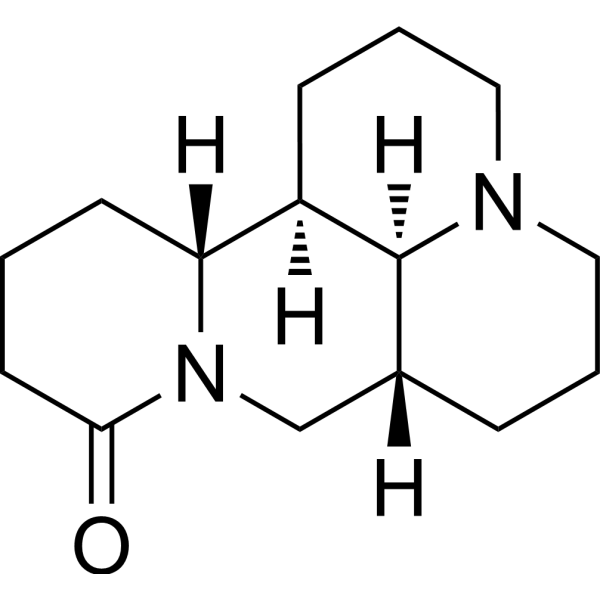
Sophoridine is a quinolizidine alkaloid isolated from Leguminous plant Sophora flavescens. Sophoridine induces apoptosis. Sophoridine has the potential to be a novel, potent and selective antitumor agent candidate for pancreatic cancer with well-tolerated toxicity .
loading...
    loading...
Cat. No.: HY-129476
CAS No.: 496-93-5
Purity:  ≥95.0%
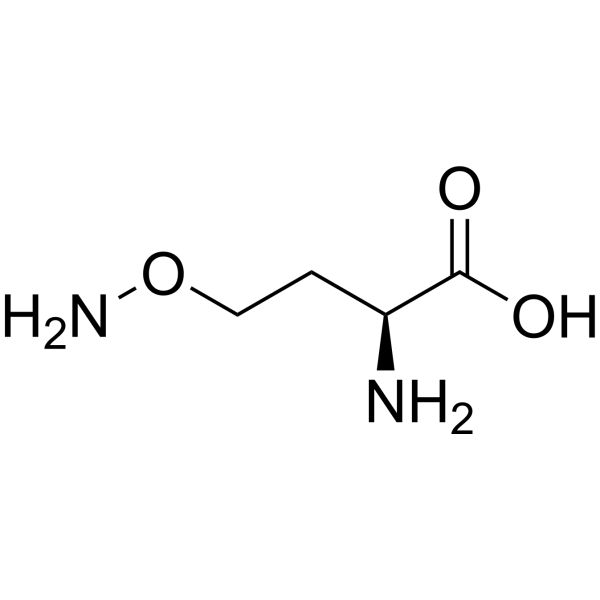
L-Canaline is a nonprotein amino acid stored in many leguminous plants. L-Canaline is a cytotoxic metabolite catalyzed by L-canavanine and its arginase. L-Canaline is a potent and irreversible inhibitor of ornithine aminotransferase. L-Canaline inhibits the growth of the malaria parasite Plasmodium falciparum with an IC50 of 297 nM. L-Canaline has anticancer and antiproliferative effects .
loading...
    loading...
Cat. No.: HY-N16331
CAS No.: 68513-95-1
Soybean flour is a defatted and slowly available protein nutrient. Soybean flour can be isolated from the leguminous plant soybean. Soybean flour has antioxidant activity and stabilizes lipids in formulated foods. Soybean flour can be used for food production such as gluten-free bread research .
loading...
    loading...
Cat. No.: HY-N1373A
CAS No.: 83148-91-8
Synonyms: (+)-Sophoridine
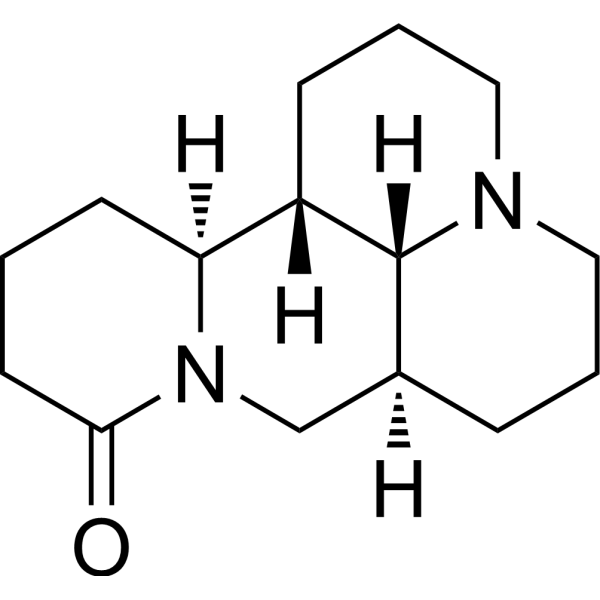
d-Sophoridine ((+)-Sophoridine) is the dextro isoform of Sophoridine (HY-N1373), which is a quinolizidine alkaloid isolated from Leguminous plant Sophora flavescens. Sophoridine induces apoptosis. Sophoridine has the potential to be a novel, potent and selective antitumor agent candidate for pancreatic cancer with well-tolerated toxicity .
loading...
    loading...
Cat. No.: HY-N10645
CAS No.: 148031-68-9
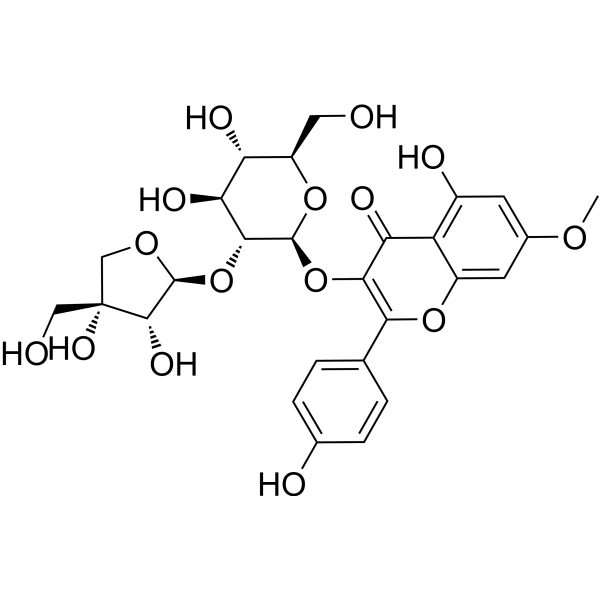
Rhamnocitrin 3-O-β-D-apiofuranosyl(1→2)-β-D-glucopyranoside is a flavonol O-glycoside, isolated from Astragali semen of leguminous plants .
loading...
    loading...
Cat. No.: HY-N15662
CAS No.: 479-12-9
Coumestan is a secondary metabolite found in leguminous plants and can be used as drug intermediate Coumestan can be used to synthesize various coumarin compounds such as Coumestrol (HY-N2335), Glytabastan B, and Coumestan Pks13 inhibitor. Coumestans can be used for the study of anti-cancer, anti-inflammatory, anti-oxidative, antibacterial, neuroprotective and organ protective .
loading...
    loading...
Cat. No.: HY-N12998
CAS No.: 245724-10-1
Torachrysone tetraglucoside is a phenolic glycoside , and can be isolated from the leguminous plant cassia .
loading...
    loading...
Cat. No.: HY-165611
CAS No.: 7635-60-1
Target:  

Fungal

Research Areas:  

Others

(+)-Lupinine is an alkaloid derived from leguminous plants (such as those of the Lupinus genus) and can be used to synthesize glycyrrhetinamide salts with fungicidal activity .
loading...
    loading...
Cat. No.: HY-N9949
CAS No.: 24915-04-6
Synonyms: Lupinidine
Sparteine (Lupinidine) is an alkaloid compound derived from leguminous plants and can act as a ganglionic blocker. Sparteine competitively inhibits the activity of the neuronal nicotinic acetylcholine receptor (nACh receptor) .
loading...
    loading...
Cat. No.: HY-N1373R
CAS No.: 6882-68-4
Sophoridine (Standard) is the analytical standard of Sophoridine. This product is intended for research and analytical applications. Sophoridine is a quinolizidine alkaloid isolated from Leguminous plant Sophora flavescens. Sophoridine induces apoptosis. Sophoridine has the potential to be a novel, potent and selective antitumor agent candidate for pancreatic cancer with well-tolerated toxicity .
loading...
    loading...
Cat. No.: HY-121139
CAS No.: 756-09-2
Synonyms: 2,2,3,3-Tetrafluoropropionic acid; 3H-Tetrafluoropropionic acid
Target:  

Herbicide

Research Areas:  

Others

Flupropanate (2,2,3,3-Tetrafluoropropionic acid; 3H-Tetrafluoropropionic acid) is a soil-active selective herbicide and plant growth inhibitor that acts by inhibiting radicle growth and lipid biosynthesis in sensitive plants. Flupropanate exhibits high-efficiency control of Stipa weeds (such as Nassella neesiana and N. trichotoma) in pastures, and reduces the coverage of the invasive species Eragrostis curvula. Meanwhile, Flupropanate is sensitive to gramineous plants like ryegrass, but shows good selective tolerance to plantain, chicory and some leguminous plants. Studies show that in the protected area with Mediterranean climate in southwestern Australia, Flupropanate produces no significant non-target effects on native plant communities, functional groups or the endangered species Grevillea curviloba, indicating high ecological safety .
loading...
    loading...
  • 1

