1. Search Result
Search Result
Results for "

M2 marker

" in MedChemExpress (MCE) Product Catalog:

11

Inhibitors & Agonists

1

Peptides

2

Natural
Products

Cat. No. Product Name Target Research Areas Chemical Structure
  • HY-B1076
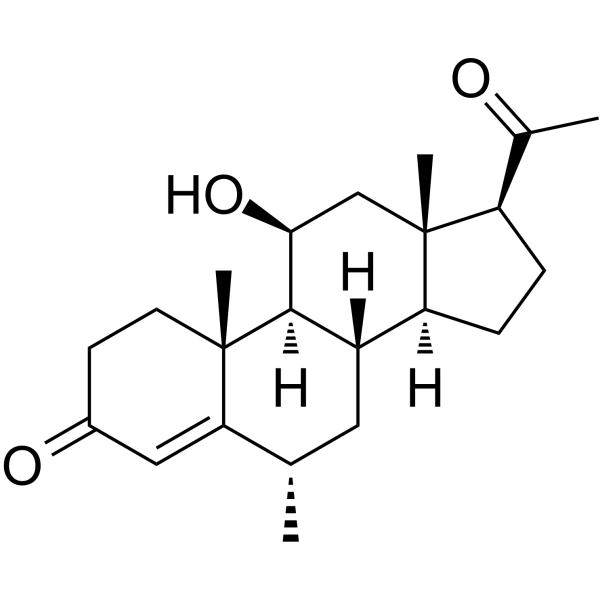
    Medrysone
    1 Publications Verification

    HMS; 6α-Methyl-11β-hydroxyprogesterone

    VEGFR CCR STAT Neurological Disease
    Medrysone (HMS; 6α-Methyl-11β-hydroxyprogesterone) is a STAT6 modulator and M2 macrophage polarization inducer. Medrysone enhances IL-4-triggered STAT6 activation, upregulates the expression of M2 markers, and promotes the secretion of VEGF and CCL2. Medrysone also enhances the pro-migratory activity of M2-like macrophages toward endothelial cells. By regulating macrophage polarization and related repair pathways, Medrysone significantly promotes corneal wound repair in a rat mechanical injury model. Medrysone can be used for research related to corneal injury .
    Medrysone
  • HY-N0430

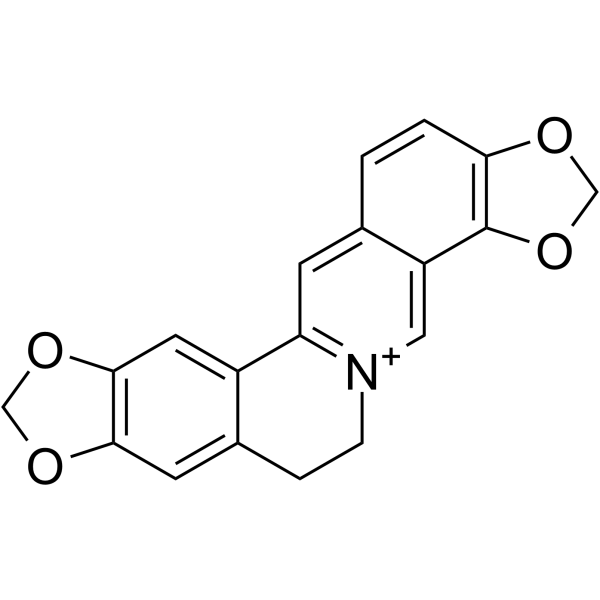
    Coptisin

    Indoleamine 2,3-Dioxygenase (IDO) NF-κB p38 MAPK PI3K Akt Apoptosis Reactive Oxygen Species (ROS) Mitochondrial Metabolism DNA/RNA Synthesis ROCK LDLR Cardiovascular Disease Neurological Disease Metabolic Disease Inflammation/Immunology Cancer
    Coptisine is an orally active and brain-penetrant alkaloid found in Coptis chinensis. Coptisine is a reversible, uncompetitive IDO inhibitor with a Ki of 5.8 μM and an IC50 of 6.3 μM. Coptisine suppresses neuroinflammation, reduces Aβ plaque burden and shows neuroprotective activity. Coptisine shows anti-inflammation activity by blocking NF-κB, MAPK, and PI3K/Akt activation. Coptisine inhibits cancer cells proliferation, induces DNA damage, G2/M phase cell cycle arrest, apoptosis, ROS production and mitochondrial dysfunction. Coptisine inhibits Rho/ROCK pathway activation, reduces arrhythmia, limits cardiac injury marker release, reduces infarct size, and preserves cardiac function in rat myocardial ischemia/reperfusion models. Coptisine downregulates HMGCR and upregulates LDLR and CYP7A1 to modulate cholesterol metabolism, reduces abnormal serum lipid levels, and promotes fecal bile acid excretion. Coptisine can be used for the research of cancer, hypercholesterolemia, Alzheimer’s disease, inflammatory disorders and cardiovascular disease .
    Coptisine
  • HY-N0430A
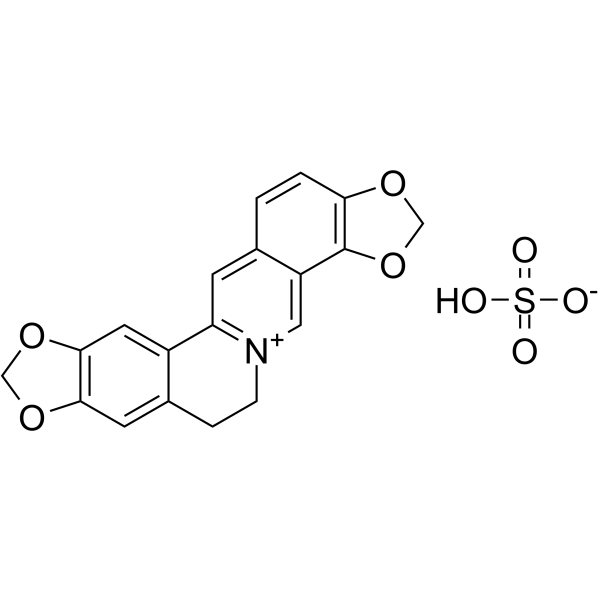
    Coptisine Sulfate
    5 Publications Verification

    Indoleamine 2,3-Dioxygenase (IDO) NF-κB p38 MAPK PI3K Akt Apoptosis Reactive Oxygen Species (ROS) Mitochondrial Metabolism DNA/RNA Synthesis ROCK LDLR Cardiovascular Disease Neurological Disease Metabolic Disease Inflammation/Immunology Cancer
    Coptisine Sulfate is an orally active and brain-penetrant alkaloid found in Coptis chinensis. Coptisine Sulfate is a reversible, uncompetitive IDO inhibitor with a Ki of 5.8 μM and an IC50 of 6.3 μM. Coptisine Sulfate suppresses neuroinflammation, reduces Aβ plaque burden and shows neuroprotective activity. Coptisine Sulfate shows anti-inflammation activity by blocking NF-κB, MAPK, and PI3K/Akt activation. Coptisine Sulfate inhibits cancer cells proliferation, induces DNA damage, G2/M phase cell cycle arrest, apoptosis, ROS production and mitochondrial dysfunction. Coptisine Sulfate inhibits Rho/ROCK pathway activation, reduces arrhythmia, limits cardiac injury marker release, reduces infarct size, and preserves cardiac function in rat myocardial ischemia/reperfusion models. Coptisine Sulfate downregulates HMGCR and upregulates LDLR and CYP7A1 to modulate cholesterol metabolism, reduces abnormal serum lipid levels, and promotes fecal bile acid excretion. Coptisine Sulfate be used for the research of cancer, hypercholesterolemia, Alzheimer’s disease, inflammatory disorders and cardiovascular disease .
    Coptisine Sulfate
  • HY-118762

    Cathepsin Cancer
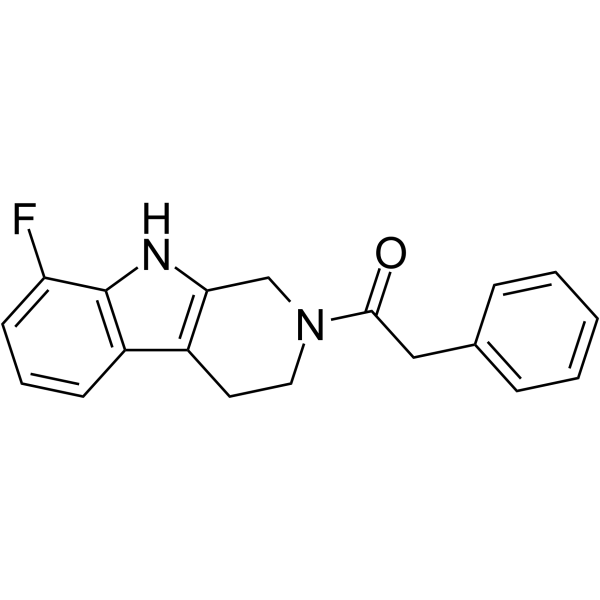
    KGP94 is a selective inhibitor of cathepsin L with an IC50 of 189 nM . KGP94 inhibits migration and invasion of metastatic carcinoma and shows low cytotoxicity (GI50=26.9 µM) against various human cell lines .
    KGP94
  • HY-P11107

    Apoptosis TNF Receptor Inflammation/Immunology Cancer
    RP-832c is a synthetic analogue of host defense peptides (HDP), targeting the mannose receptor CD206 on the surface of M2 polarized macrophages (Kd = 3.5 μM). RP-832c binding to CD206 induces a significant conformational change in the receptor, activating signaling pathways that lead to rapid apoptosis and repolarization of CD206-positive M2 macrophages to an M1 phenotype. RP-832c treatment significantly reduces CD206 gene expression in M2 macrophages while transiently increasing expression of TNF-α, a marker for M1 macrophages. RP-832c is used for the studies of T-cell lymphoma (CTCL) and idiopathic pulmonary fibrosis (IPF) .
    RP-832c
  • HY-178945

    Opioid Receptor Interleukin Related TNF Receptor Sigma Receptor Neurological Disease Inflammation/Immunology
    KOR agonist 7 (Compound 29) is a highly selective κ-opioid receptor (KOR) agonist with a Ki of 138 nM. KOR agonist 7 shows no activity at μ- and δ-opioid receptors or σ1 receptor, and exhibits extremely low affinity for σ2 receptor (Ki = 2.8 μM). KOR agonist 7 significantly reduces the secretion of pro-inflammatory cytokines such as IL-6, TNF-α, and IFN-γ, while increasing the production of the anti-inflammatory cytokine IL-10. KOR agonist 7 downregulates the expression of the pro-inflammatory M1 macrophage marker CD80 and upregulates the anti-inflammatory M2 macrophage marker CD163. KOR agonist 7 holds potential for applications in analgesia and immune modulation .
    KOR agonist 7
  • HY-B1076R

    HMS (Standard); 6α-Methyl-11β-hydroxyprogesterone (Standard)

    Reference Standards STAT VEGFR CCR Inflammation/Immunology
    Medrysone (Standard) is the analytical standard of Medrysone. This product is intended for research and analytical applications. Medrysone (HMS; 6α-Methyl-11β-hydroxyprogesterone) is a STAT6 modulator and M2 macrophage polarization inducer. Medrysone enhances IL-4-triggered STAT6 activation, upregulates the expression of M2 markers, and promotes the secretion of VEGF and CCL2. Medrysone also enhances the pro-migratory activity of M2-like macrophages toward endothelial cells. By regulating macrophage polarization and related repair pathways, Medrysone significantly promotes corneal wound repair in a rat mechanical injury model. Medrysone can be used for research related to corneal injury .
    Medrysone (Standard)
  • HY-143660

    Microtubule/Tubulin Apoptosis Cancer
    LG308 is a novel synthetic compound with antimicrotubule activity. LG308 induces mitotic phase arrest and inhibits G2/M progression significantly which is associated with the upregulation of cyclin B1 and mitotic marker MPM-2 and the dephosphorylation of cdc2. LG308 also induces apoptosis and cell death. LG308 significantly suppresses tumor growth. LG308 with antimitotic activity has the potential for the research of prostate cancer .
    LG308
  • HY-179049

    EGFR Microtubule/Tubulin Akt ERK Autophagy Atg8/LC3 p62 Ferroptosis Reactive Oxygen Species (ROS) Cancer
    EGFR/tubulin-IN-1 (Compound 26) is a dual-target inhibitor of EGFR and tubulin. EGFR/tubulin-IN-1 significantly reduces the levels of p-EGFR, p-AKT, and p-ERK in cells, disrupting the microtubule structure of the cells. EGFR/tubulin-IN-1 significantly inhibits the proliferation of H1975 cells and significantly blocks the cells in the G2/M phase. EGFR/tubulin-IN-1 induces the expression of autophagy markers LC3B-II and Beclin-1, while down-regulating the expression of p62. EGFR/tubulin-IN-1 induces ferroptosis, with increased ROS content and depletion of glutathione (GSH). EGFR/tubulin-IN-1 inhibits epithelial-mesenchymal transition (EMT) and tumor metastasis. EGFR/tubulin-IN-1 has a significant tumor-suppressing effect in the H1975 transplanted tumor nude mouse model. EGFR/tubulin-IN-1 can be used for the study of non-small cell lung cancer .
    EGFR/tubulin-IN-1
  • HY-181729

    PROTACs Epigenetic Reader Domain Apoptosis c-Myc CDK PARP Cancer
    PROTAC BET Degrader-15 is a BET PROTAC degrader with DC50 values of <0.10 nM, <0.01 nM, and <0.01 nM against BRD2, BRD3, and BRD4, respectively. PROTAC BET Degrader-15 induces significant G2/M phase cell cycle arrest and triggers apoptosis. PROTAC BET Degrader-15 causes marked downregulation of c-Myc, accompanied by upregulation of the cell cycle inhibitory protein p21, downregulation of CDK6, and an increase in the apoptosis marker cleaved PARP. PROTAC BET Degrader-15 is applicable to the research of hematologic malignancies and lung cancer .
    PROTAC BET Degrader-15
  • HY-181076

    PI3K CDK Apoptosis Cancer
    FOXM1-IN-3 is a potent FOXM1 inhibitor. FOXM1-IN-3 downregulates FOXM1 expression at protein and mRNA levels, suppressing downstream effectors CCNB1 and CDC25. FOXM1-IN-3 induces G2/M cell cycle arrest and apoptosis in colorectal cancer cells. FOXM1-IN-3 inhibits colony formation and cell migration in colorectal cancer cells. FOXM1-IN-3 targets the cancer stem cell phenotype in colorectal cancer cells, reducing cancer stem cell marker expression. FOXM1-IN-3 reduces tumor growth in a zebrafish xenograft model. FOXM1-IN-3 can be used for the research of colorectal cancer .
    FOXM1-IN-3

Inquiry Online

Your information is safe with us. * Required Fields.

Salutation


Country or Region *

Applicant Name *


Organization Name *

Department *


Email Address *


Product Name *

Cat. No.


Requested quantity *

Phone Number *


Remarks

Inquiry Online

Inquiry Information

Product Name:
Cat. No.:
Quantity:
MCE Japan Authorized Agent:

