



2668-66-8
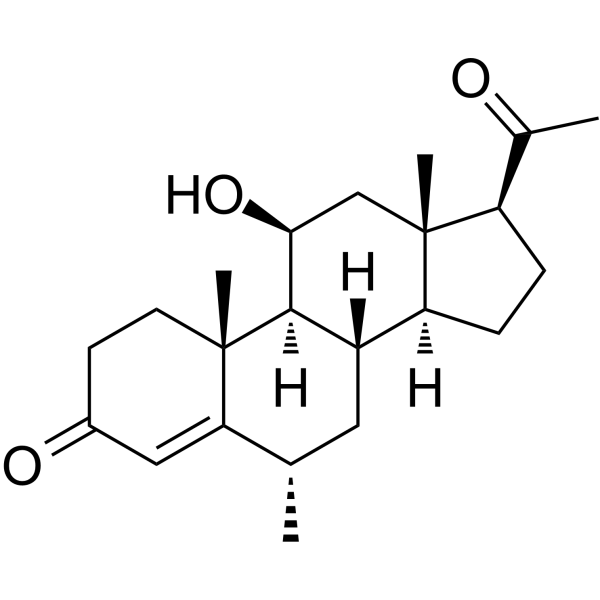
Chemical Structure
Medrysone
Synonym(s): HMS; 6α-Methyl-11β-hydroxyprogesterone
- CAS. Nr.: 2668-66-8
- Formula:C22H32O3
- Molecular Weight:344.49
IUPAC Name: (6S,8S,9S,10R,11S,13S,14S,17S)-17-acetyl-11-hydroxy-6,10,13-trimethyl-1,2,6,7,8,9,10,11,12,13,14,15,16,17-tetradecahydro-3H-cyclopenta[a]phenanthren-3-one
InChIKey: GZENKSODFLBBHQ-ILSZZQPISA-N
SMILES: CC([C@H]1CC[C@@]2([H])[C@]3([H])C[C@H](C)C4=CC(CC[C@]4(C)[C@@]3([H])[C@@H](O)C[C@]12C)=O)=O
Biological Activity: Medrysone (HMS) is a glucocorticoid receptor modulator and a STAT6 pathway enhancer. Medrysone enhances cytokine-induced STAT6 phosphorylation, which is required for M2-type macrophage polarization, and promotes VEGF and CCL2 secretion, vascular endothelial cell migration, and corneal injury repair. Medrysone can be used in research on corneal injury and elevated intraocular pressure[1][2][3][4].
| Art. -Nr. | Produktname | Reinheit | Beschreibung | Pricing | |||||||||||||||||||
|---|---|---|---|---|---|---|---|---|---|---|---|---|---|---|---|---|---|---|---|---|---|---|---|
|
|
Medrysone | 99.79% | Medrysone (HMS) is a glucocorticoid receptor modulator and a STAT6 pathway enhancer. Medrysone enhances cytokine-induced STAT6 phosphorylation, which is required for M2-type macrophage polarization, and promotes VEGF and CCL2 secretion, vascular endothelial cell migration, and corneal injury repair. Medrysone can be used in research on corneal injury and elevated intraocular pressure. | ||||||||||||||||||||
|
loading...
/
|
|||||||||||||||||||||||
|
|
Medrysone (Standard) | ≥98% | Medrysone (Standard) (HMS (Standard); 6α-Methyl-11β-hydroxyprogesterone (Standard)) is the analytical standard of Medrysone (HY-B1076). This product is intended for research and analytical applications. Medrysone (HMS) is a glucocorticoid receptor modulator and a STAT6 pathway enhancer. Medrysone enhances cytokine-induced STAT6 phosphorylation, which is required for M2-type macrophage polarization, and promotes VEGF and CCL2 secretion, vascular endothelial cell migration, and corneal injury repair. Medrysone can be used in research on corneal injury and elevated intraocular pressure. | ||||||||||||||||||||
|
loading...
/
|
|||||||||||||||||||||||
-
Similarity Score 0.83
 HY-N2337R11beta-Hydroxyprogesterone (Standard)
-
Similarity Score 0.83
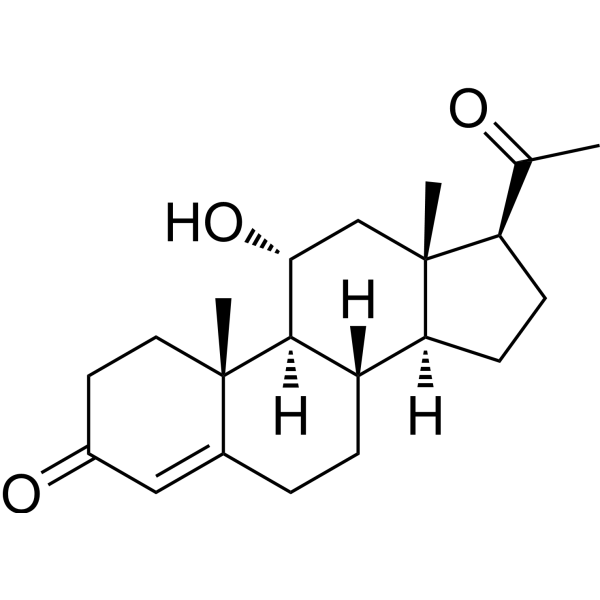 HY-W01124311alpha-Hydroxyprogesterone
-
Similarity Score 0.75
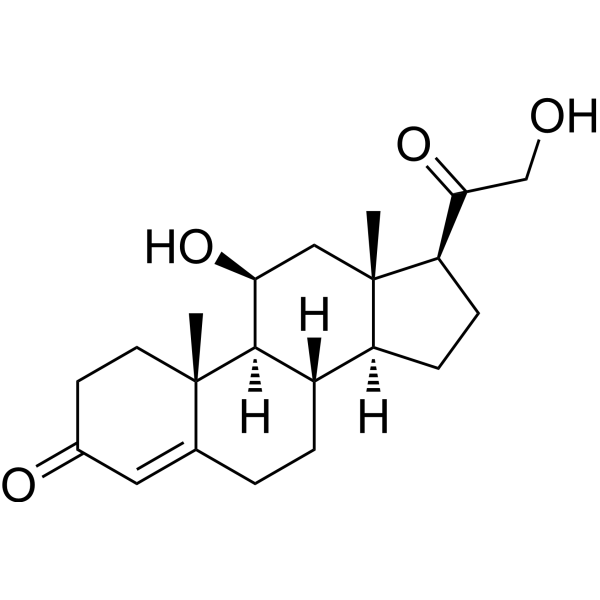 HY-B1618Corticosterone
-
Similarity Score 0.73
 HY-W741664Methylprednisolone impurity 5
-
Similarity Score 0.71
 HY-Z8280Methylprednisolone impurity 4
-
Similarity Score 0.71
 HY-N1708412β-Hydroxyprogesterone
-
Similarity Score 0.70
 HY-Z9066Methylprednisolone acetate impurity 4
-
Similarity Score 0.70
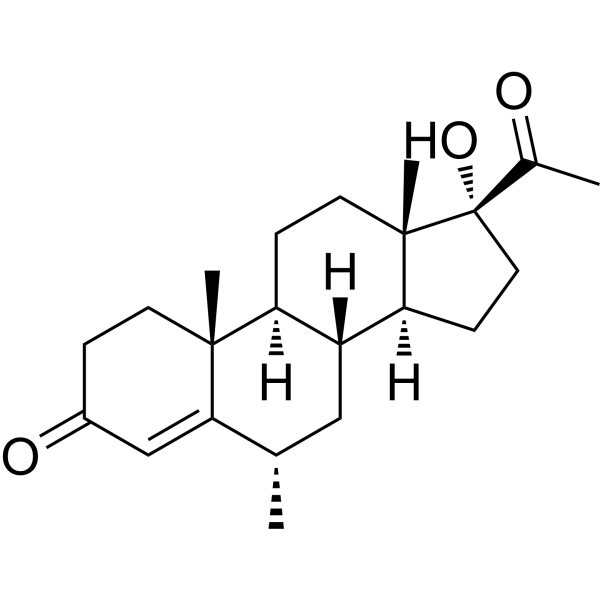 HY-B0648RMedroxyprogesterone (Standard)
-
Similarity Score 0.69
 HY-13165416α-Hydroxy progesterone
-

Explore the MedChemAI to find more analogs


References
- [1]. Zhu Y, et al. Medrysone promotes corneal injury repair by promoting M2-like polarization of macrophages. BMC Ophthalmol. 2023 Dec 11;23(1):503. [Content Brief]
- [2]. Brey DM, et al. High-throughput screening of a small molecule library for promoters and inhibitors of mesenchymal stem cell osteogenic differentiation. Biotechnology and bioengineering. 2011 Jan;108(1):163-74. [Content Brief]
- [3]. Porcu G, et al. Clobetasol and Halcinonide Act as Smoothened Agonists to Promote Myelin Gene Expression and RxRγ Receptor Activation. PLoS One. 2015 Dec 10;10(12):e0144550. [Content Brief]
- [4]. Southren AL, et al. Nuclear translocation of the cytoplasmic glucocorticoid receptor in the iris-ciliary body and adjacent corneoscleral tissue of the rabbit following topical administration of various glucocorticoids. A rapid screening method for glucocorticoid activity. Invest Ophthalmol Vis Sci. 1983 Feb;24(2):147-52. [Content Brief]



