
1. Search Result
Search Result
Pathways Recommended: Stem Cell/Wnt Cell Cycle/DNA Damage
Results for "

MOLM13 cell

" in MedChemExpress (MCE) Product Catalog:

54

Inhibitors & Agonists

2

Oligonucleotides

Cat. No. Product Name Target Research Areas Chemical Structure
  • HY-12461

    PI3K EGFR GABA Receptor FLT3 IKK Neurological Disease Metabolic Disease Inflammation/Immunology
    WS6 is an IkB kinase and EBP1 inhibitor, with IC50 values of 0.24 nM, 0.21 nM, and 40.48 nM in MV4-11, MOLM13, and K562 cells, respectively. WS6 promotes the proliferation of alpha and beta cells in the pancreas, has antioxidant and anti-inflammatory activities, and can alleviate depression like behavior in rats [1][2][4].
    WS6
  • HY-15650
    SGC0946
    10+ Cited Publications

    Histone Methyltransferase Cancer
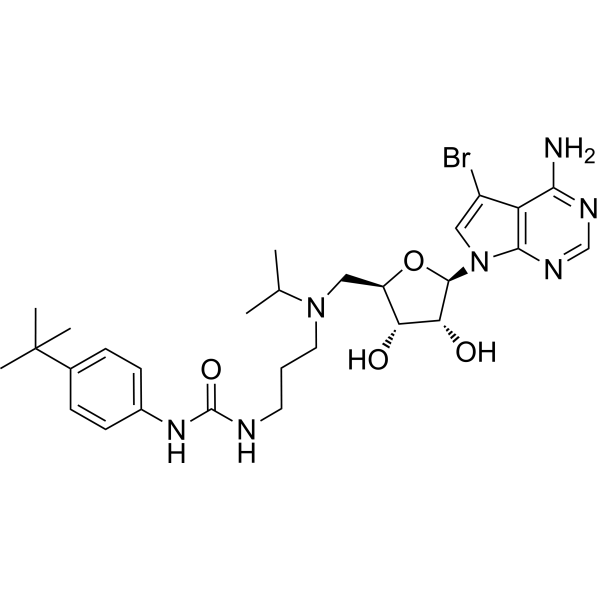
    SGC0946 is a selective DOT1L inhibitor with an IC50 value of 0.3 nM. By inhibiting DOT1L, SGC0946 can induce G1 phase arrest, suppress cell self-renewal and metastatic potential, and induce cell differentiation in cancer cells. SGC0946 can be used in the research of tumors such as leukemia and breast cancer, and also serves as a probe to further investigate the cellular mechanisms of DOT1L in normal and diseased cells .
    SGC0946
  • HY-172581

    FLT3 Apoptosis Ras p38 MAPK PI3K Akt JAK STAT Cancer
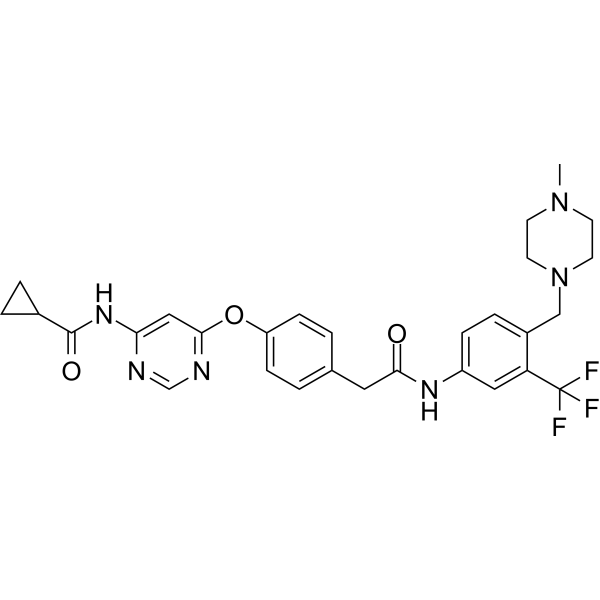
    Clifutinib is an orally active and selective internal tandem duplication mutation of FMS-like tyrosine kinase 3 (FLT3-ITD) inhibitor with an IC50 value of 15.1 nM. Clifutinib exerts strong antiproliferative effects on FLT3-ITD acute myeloid leukemia (AML) cell lines (MV-4-11: IC50 = 1.5 nM; MOLM-13: IC50 = 1.4 nM). Clifutinib inhibits the activity of FLT3-ITD kinase and blocks the downstream RAS/MAPK, PI3K/AKT, and JAK/STAT5 signaling pathways of FLT3. Clifutinib induces apoptosis of acute myeloid leukemia (AML) cells with FLT3-ITD mutations. Clifutinib demonstrates significant antitumor efficacy in mice bearing MV-4-11 or MOLM-13 xenografts. Clifutinib is promising for research of relapsed/refractory FLT3-ITD-positive acute myeloid leukemia .
    Clifutinib
  • HY-156794

    DSP-5336

    Epigenetic Reader Domain FLT3 Cancer
    Enzomenib (DSP-5336) is an orally active Menin inhibitor (IC50=1.4 nM, Kd=6.0 nM). Enzomenib disrupts the interaction between Menin and KMT2A/MLL fusion proteins, specifically inhibits the expression of leukemia driver genes such as HOX/MEIS1, and upregulates ITGAM. Enzomenib effectively induces cell differentiation, inhibits tumor cell proliferation, and suppresses primitive cell colony formation. Enzomenib reduces disease burden and prolongs survival, but causes adverse reactions including differentiation syndrome and QTc interval prolongation. Enzomenib is used for research on relapsed/refractory acute myeloid leukemia, acute lymphoblastic leukemia, and other hematologic malignancies with mixed lineage leukemia (MLL) rearrangements or NPM1 mutations .
    Enzomenib
  • HY-161615

    PROTACs ATM/ATR Apoptosis Inflammation/Immunology Cancer
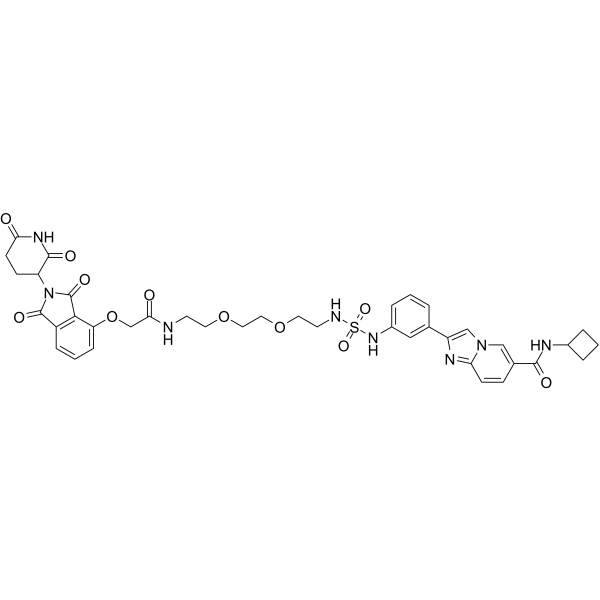
    PROTAC ATR degrader-2 is a selective ATR PROTAC degrader. PROTAC ATR degrader-2 degrades ATR in acute myeloid leukemia (AML) cells MV-4-11 and MOLM-13, with DC50 values of 22.9 nM and 34.5 nM, respectively. PROTAC ATR degrader-2 has an IC50 of 29.6 nM against ATR, and its IC50 values against ATM and PI3K are both greater than 2000 nM. PROTAC ATR degrader-2 induces apoptosis, DNA damage, and upregulates p53 expression. PROTAC ATR degrader-2 inhibits cancer cell proliferation through the kinase-independent function of ATR protein. PROTAC ATR degrader-2 is applicable to research related to acute myeloid leukemia .
    PROTAC ATR degrader-2
  • HY-145729

    AZD9150

    STAT Apoptosis Cancer
    Danvatirsen (AZD9150) is an antisense oligonucleotide targeting STAT3. Danvatirsen reduces the viability and promotes apoptosis of leukemia cell lines. Danvatirsen inhibits the expression of endogenous STAT3 and its downstream target genes, and reduces the proliferation and tumorigenicity of neuroblastoma and lymphoma cells. Danvatirsen inhibited tumor growth in mouse models of neuroblastoma, lymphoma, and non-small cell lung cancer. Danvatirsen achieves STAT3 mRNA and protein depletion in a mouse model of epidermoid carcinoma. Danvatirsen can be used in research related to lymphoma, myelodysplastic syndrome, acute myeloid leukemia, neuroblastoma and non-small cell lung cancer .
    Danvatirsen
  • HY-168936

    PROTACs Epigenetic Reader Domain Apoptosis Cancer
    DP-15 is the degrader for GSPT1 and BRD4 with DC50s of 5.25 nM and 0.48 nM. DP-15 exhibits anti-proliferative activity of AML cells and NHL cells with an IC50 of nanomolar levels, arrests the cell cycle at G1 phase, and induces apoptosis in MOLM13. DP-15 exhibits anti-leukemia activity in MOLM-13 xenograft mouse models . (Pink: ligand for target protein JQ-1 carboxylic acid (HY-78695); Black: linker (HY-W262798); Blue: ligand for E3 ligase Cereblon Thalidomide-5-OH (HY-23095))
    DP-15
  • HY-175783

    Apoptosis Cancer
    MM927 is a potent NVL inhibitor, with an IC50 of 0.053 μM. MM927 blocks 60S ribosomal subunit biogenesis in the nucleolus. MM927 induces half-mer polysomes, cell cycle arrest at G1/S and G2/M and apoptosis in cells. MM927 demonstrates antitumor efficacy in MOLM-13 AML and HCT116 CRC xenograft models. MM927 can be used for the study of cancers such as acute myeloid leukemia (AML) and colorectal cancer (CRC) .
    MM927
  • HY-174873

    PROTACs METTL3 Apoptosis Bcl-2 Family Cancer
    AF151 is a METTL3 PROTAC degrader with the DC50 of 0.43 μM in MOLM-13 cells. AF151 inhibits cell growth by significantly degrading METTL3 protein and reducing m6A levels. AF151 can induce cell apoptosis and reduce the level of Bcl-2 protein. AF151 can be used for research on cancer such as acute myeloid leukemia (AML). (Pink: METTL3 Ligand (HY-174874); Blue: VHL Ligand (HY-125845); Black: Linker; VHL Ligand+Linker (HY-174875)) .
    AF151
  • HY-145940

    BRD3727

    Casein Kinase Cancer
    BAY-204 (BRD3727) is a potent, ATP-competitive, and selective CSNK1α inhibitor (IC50 = 2 nM at 10 μM ATP; 12 nM at 1 mM ATP). BAY-204 can be used for the study of acute myeloid leukemia (AML) .
    BAY-204
  • HY-156641

    Apoptosis Cancer
    Sontigidomide (Compound 5) is an antineoplastic compound. Sontigidomide inhibits MOLM-13 cell proliferation more than 80% at 1 μM (3 days) .
    Sontigidomide
  • HY-173084

    Phosphatase MDM-2/p53 Cancer
    BRD6257 is an orally active inhibitor for protein phosphatase, Mg2+/Mn2+ dependent 1D PPM1D with an IC50 of 5 nM. BRD6257 activates p53 signaling pathway with an EC50 of 51 nM, increases the p21 expression, inhibits the proliferation of cancer cell MOLM13 (IC50=2.8 μM). BRD6257 exhibits good metabolic stability in human and rat liver microsomes .
    BRD6257
  • HY-179094

    PROTACs IRAK NF-κB Enolase Inflammation/Immunology Cancer
    PSP-0119 is a highly efficient and effective PROTAC degrader targeting IRAK4 (IC50 = 2.83 nM). PSP-0119 can inhibit IRAK4 kinase activity, NF-κβ activity, and IL-1β-induced IRAK4 phosphorylation. PSP-0119 degrades IRAK4 in FLT3-mutant AML cell lines, sparing FLT3-wild-type AML cells, FLT3-wild-type samples, and normal bone marrow. PSP-0119 downregulates alpha-enolase (eNOS) of MOLM-13 cells. PSP-0119 can be used for the study of Acute Myeloid Leukemia (AML) .
    PSP-0119
  • HY-145729A

    AZD9150 sodium

    STAT Apoptosis Cancer
    Danvatirsen sodium (AZD9150 sodium) is an antisense oligonucleotide targeting STAT3. Danvatirsen sodium reduces the viability and promotes apoptosis of leukemia cell lines. Danvatirsen sodium inhibits the expression of endogenous STAT3 and its downstream target genes, and reduces the proliferation and tumorigenicity of neuroblastoma and lymphoma cells. Danvatirsen sodium inhibited tumor growth in mouse models of neuroblastoma, lymphoma, and non-small cell lung cancer. Danvatirsen sodium achieves STAT3 mRNA and protein depletion in a mouse model of epidermoid carcinoma. Danvatirsen sodium can be used in research related to lymphoma, myelodysplastic syndrome, acute myeloid leukemia, neuroblastoma and non-small cell lung cancer .
    Danvatirsen sodium
  • HY-162930

    PROTACs METTL3 Cancer
    PROTAC METTL3 degrader 1 is a VHL-based PROTAC METTL3 degrader (DC50: 220 nM in MOLM-13 cells). PROTAC METTL3 degrader 1 inhibits METTL3/14 complex with an IC50 value of 341 nM. PROTAC METTL3 degrader 1 can be used for the research of acute myeloid leukemia and gastric cancer .
    PROTAC METTL3 degrader 1
  • HY-101520A

    Histone Methyltransferase Cancer
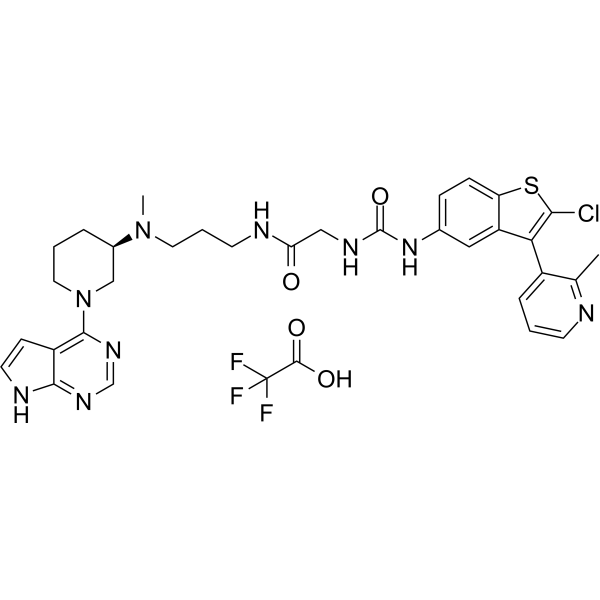
    Dot1L-IN-1 TFA is a highly potent and selective Dot1L inhibitor with a Ki of 2 pM and an IC50 of <0.1 nM. Dot1L-IN-1 TFA potently suppresses H3K79 dimethylation (IC50=3 nM), as well as the activity of the HoxA9 promoter (IC50=17 nM) in HeLa and Molm-13 cells, respectively .
    Dot1L-IN-1 TFA
  • HY-115446A

    Cereblon ligand 1 hydrochloride; E3 ligase Ligand-Linker Conjugates 32 hydrochloride

    E3 Ligase Ligand-Linker Conjugates Cancer
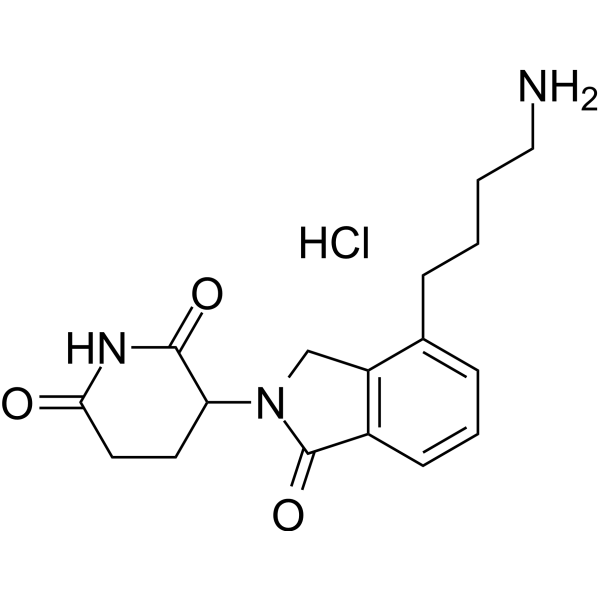
    Lenalidomide-C4-NH2 hydrochloride is the Lenalidomide-based Cereblon ligand used in the recruitment of CRBN protein. Lenalidomide-C4-NH2 hydrochloride can be connected to the ligand for protein by a linker to form PROTAC (Compound 24), which has IC50s of 0.98 nM and 13.7 nM in inhibition of RS4;11 and MOLM-13 acute leukemia cell lines growth, respectively .
    Lenalidomide-C4-NH2 hydrochloride
  • HY-175594

    DNA Methyltransferase Cancer
    DNMT2-IN-2 is a selective DNA methyltransferase 2 (DNMT2) inhibitor with a KD value of 3.04 μM. DNMT2-IN-2 targets to a cryptic allosteric binding site of DNMT2. DNMT2-IN-2 reduces m5C levels in MOLM-13 tRNA and synergizes with Doxorubicin (HY-15142A) to impair cell viability. DNMT2-IN-2 can be used for cancer research, such as cervical cancer and leukemia .
    DNMT2-IN-2
  • HY-142696A

    CDK Pim Apoptosis Cancer
    CDK6/PIM1-IN-1 (Compound 51) hydrochloride is an orally active and potent dual CDK6/PIM1 inhibitor with IC50 values of 39 and 88 nM, respectively. CDK6/PIM1-IN-1 hydrochloride inhibits CDK4 (IC50=3.6 nM). CDK6/PIM1-IN-1 hydrochloride significantly inhibits acute myeloid leukemia (AML) cell proliferation, arrest cell cycle at the G1 phase, and promote cell apoptosis. CDK6/PIM1-IN-1 exhibits potent anti-AML activity .
    CDK6/PIM1-IN-1 hydrochloride
  • HY-171334

    PROTACs PIN1 Cancer
    PROTAC PIN1 degrader-2 (1) is a PROTAC-based PIN1 degrader (Pink: PIN1 ligand HY-171442, Blue: cereblon ligand Thalidomide (HY-14658), Black: linker HY-W014883). PROTAC PIN1 degrader-2 (1) possesses anti-cancer activity, with IC50 values of 2248 nM (MV-4-11 cells), 3984 nM (MOLM-13), 3925 nM (HL-60), 3925 nM (HL-60), 3925 nM (HL-60), 3925 nM (HL-60) and 3925 nM (HL-60) respectively .
    (Rac)-P1D-34
  • HY-178446

    METTL3 c-Myc Bcl-2 Family Cancer
    METTL3-IN-11 is an excellent, selective METTL3 inhibitor (IC50 = 45.31 nM). METTL3-IN-11 exhibits high selectivity towards METTL3 compared to DNMT1, EZH1, MLL1, and PRMT1. METTL3-IN-11 reduces the m6A level of total RNA in MOLM-13 and SKOV3 cells, induces cell apoptosis, and inhibits cell migration. METTL3-IN-11 can reduce the expression of m6A downstream target genes (c-MYC and BCL2). METTL3-IN-11 can be used for the study of ovarian cancer and acute myeloid leukemia .
    METTL3-IN-11
  • HY-142696

    CDK Pim Apoptosis Cancer
    CDK6/PIM1-IN-1 is a potent and balanced dual CDK6/PIM1 inhibitor with IC50 values of 39 and 88 nM, respectively. CDK6/PIM1-IN-1 inhibits CDK4 (IC50=3.6 nM). CDK6/PIM1-IN-1 significantly inhibits acute myeloid leukemia (AML) cell proliferation, arrest cell cycle at the G1 phase, and promote cell apoptosis. CDK6/PIM1-IN-1 exhibits potent anti-AML activity .
    CDK6/PIM1-IN-1
  • HY-169086

    PROTACs Cancer
    KL-465 is a MAGE-A3 PROTAC degrader that degrades MAGE-A3 in HeLa cells with a DC50 of 2 μM. KL-465 inhibits the proliferation of MAGE-A3-positive cancer cells. KL-465 can be used for the research of MAGE-A3-related cancers .
    KL-465
  • HY-174827

    Mitochondrial Metabolism Reactive Oxygen Species (ROS) Apoptosis Cancer
    POLRMT-IN-2 is a potent POLRMT inhibitor. POLRMT-IN-2 exhibits strong antiproliferative activity in MOLM-13 cells, with an IC50 of 1.01 μM. POLRMT-IN-2 disrupts mitochondrial function and induces apoptosis in MOLM-13cells. POLRMT-IN-2 can be used for the study of acute myeloid leukemia(AML) .
    POLRMT-IN-2
  • HY-168263

    Histone Methyltransferase Apoptosis Cancer
    PRMT5-IN-45 (compound 36) is a potent and selective PRMT5 inhibitor with an IC50 of 3 nM. PRMT5-IN-45 potently reduces the level of symmetric dimethylarginines (sDMA) and inhibits the proliferation of MOLM-13 cell lines by inducing apoptosis and cell cycle arrest .
    PRMT5-IN-45
  • HY-143238

    Histone Demethylase Cancer
    FY-56 is a highly potent and selective LSD1/KDM1A inhibitor (IC50=42 nM) and exhibits high selectivity over MAO-A/B. FY-56 induces differentiation of MOLM-13 and MV4-11 cell and has the potential for AML research .
    FY-56
  • HY-101520

    Histone Methyltransferase Cancer
    Dot1L-IN-1 is a highly potent and selective Dot1L inhibitor with a Ki of 2 pM and an IC50 of <0.1 nM. Dot1L-IN-1 potently suppresses H3K79 dimethylation (IC50=3 nM), as well as the activity of the HoxA9 promoter (IC50=17 nM) in HeLa and Molm-13 cells, respectively .
    Dot1L-IN-1
  • HY-174911

    FLT3 Apoptosis Cancer
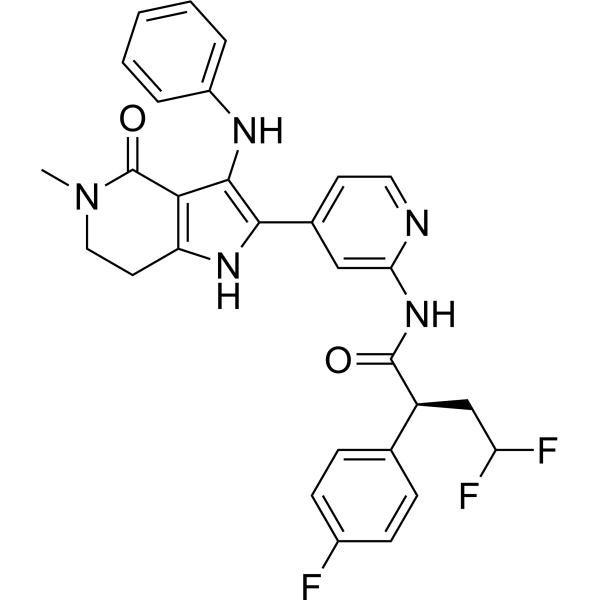
    FLT3-IN-33 (Compound 7r) is a FLT3 inhibitor with an IC50 of 7.82  nM. FLT3-IN-33 has superior anticancer activities against acute myeloid leukemia (AML) cells, such as MV4-11 and MOLM-13 cells. FLT3-IN-33 significantly induces cell apoptosis and inhibits phosphorylation of FLT3 pathways. FLT3-IN-33 can be used for AML and other cancers research .
    FLT3-IN-33
  • HY-115906

    FLT3 MNK Apoptosis Cancer
    K783-0308 is a potent and selective dual inhibitor of FLT3 and MNK2 with IC50 values of 680 and 406 nM, respectively. K783-0308 inhibits the growth of MOLM-13 (IC50=10.5 µM) and MV-4-11 (IC50=10.4 µM) cells. K783-0308 promotes acute myeloid leukemia (AML) cell apoptosis and cell cycle arrests in the G0/G1 phase .
    K783-0308
  • HY-172217

    DNA Methyltransferase Apoptosis Cancer
    DNMT1-IN-5 (Compound 55) is the inhibitor for DNMT that inhibits DNMT1 and DNMT3A with IC50 of 2.42 μM and 14.4 μM. DNMT1-IN-5 exhibits antiproliferative activity in a variety of cancer cell lines (IC50s for TMD-8, DOHH2, MOLM-13, THP-1, RPIM-8226 and HCT116 are 0.19-2.37 μM), arrests the cell cycle at G2/M phase, and induces apoptosis in TMD-8 and DOHH2 cells. DNMT1-IN-5 exhibits antitumor efficacy in TMD-8 xenograft mouse models .
    DNMT1-IN-5
  • HY-170576

    FLT3 STAT Apoptosis Cancer
    FLT3-IN-28 (Compound 12y) is an orally active FLT3 inhibitor with antitumor activity. FLT3-IN-28 selectively inhibits cancer cells harboring the FLT3 internal tandem duplication (ITD) mutation, with IC50 values of 85, 290, 130, 65, and 220 nM for BaF3-FLT3-ITD, BaF3-TEL-VEGFR2, MV4-11, MOLM-13, and MOLM-14 cell lines respectively (MV4-11 and MOLM-13/14 are acute myeloid leukemia (AML) cell lines carrying the FLT3-ITD mutation). Additionally, FLT3-IN-28 can downregulate the phosphorylation levels of FLT3 and STAT5 in MOLM-13 cells and induce cell cycle arrest and Apoptosis. FLT3-IN-28 has an oral bioavailability of 19.2% in SD rats and can prolong survival in a dose-dependent manner in NSG mice xenografted with MOLM-13 cells. FLT3-IN-28 holds promise for research in cancer fields related to FLT3-ITD .
    FLT3-IN-28
  • HY-155770

    FLT3 Cancer
    FLT3-IN-20 (compound 34f) is a potent FLT3 inhibitor with IC50 values of 1 and 4 nM for FLT3-D835Y and FLT3-ITD, respectively. FLT3-IN-20 has anti-proliferation efficacy in FLT3-ITD-positive AML cell lines MV4-11 and MOLM-13 (7 and 9 nM, respectively) and the MOLM-13 variant (4 nM) with the FLT3-ITD-D835Y mutation. FLT3-IN-20 can be used in research of cancer .
    FLT3-IN-20
  • HY-170558

    FLT3 Apoptosis Cancer
    FW-1 is a type I inhibitor for FLT3 with IC50 of ca. 1 μM. FW-1 exhibits cytotoxicity in FLT3 mutated AML cell. FW-1 arrests the cell cycle at G0/G1 phase, and induces apoptosis in cell MV4-11 and MOLM-13 .
    FW-1
  • HY-173141

    mTOR Cancer
    mTOR inhibitor-26 (Compound HPT-11) is an inhibitor of mTOR with an IC50 of 0.7 nM. It effectively inhibits the proliferation of AML cell lines Molm-13 and MV-4-11. mTOR inhibitor-26 exhibits antitumor activity and favorable metabolic stability, making it a promising candidate for cancer research .
    mTOR inhibitor-26
  • HY-162230

    Apoptosis Histone Methyltransferase Cancer
    PRMT5-IN-33 (compound A8) is a selective, SAM-competitve PRMT5 inhibitors with IC50 of 10.9 nM. PRMT5-IN-33 induces apoptosis and inhibits proliferation of cells Z-138 and MOLM-13. PRMT5-IN-33 exhibits an antitumor activity .
    PRMT5-IN-33
  • HY-162293

    CDK Cancer
    CDK8-IN-14 (compound 12) inhibits CDK8 with an IC50 value of 39.2 nM and has anti-AML cell proliferation activity (molm-13 GC50 = 0.02±0.01μM, MV4-11 GC50 = 0.03±0.01μM) .
    CDK8-IN-14
  • HY-162906

    HDAC FLT3 Cancer
    FLT3/HDAC-IN-2 is (compound 25h) a FLT3/HDAC dual inhibitor. FLT3/HDAC-IN-2 has antiproliferative activity against MOLM-13 cells. FLT3/HDAC-IN-2 can be used in acute myeloid leukemia research .
    FLT3/HDAC-IN-2
  • HY-121081

    CDK Cancer
    BAY-958 is a potent PTEFb/CDK9 inhibitor with high selectivity demonstrated, particularly within the CDK family. BAY-958 shows strong antiproliferative activity against cancer cell lines such as HeLa and MOLM-13. BAY-958 exhibits good metabolic stability. BAY-958 effectively inhibits tumor growth in mouse xenograft models without significant toxicity .
    BAY-958
  • HY-121081A

    BAY-958 hydrochloride

    CDK Cancer
    BAY-1112054 (BAY-958) hydrochloride is a potent PTEFb/CDK9 inhibitor with high selectivity demonstrated, particularly within the CDK family. BAY-1112054 hydrochloride shows strong antiproliferative activity against cancer cell lines such as HeLa and MOLM-13. BAY-1112054 hydrochloride exhibits good metabolic stability. BAY-1112054 hydrochloride effectively inhibits tumor growth in mouse xenograft models without significant toxicity .
    BAY-1112054 hydrochloride
  • HY-161324

    Microtubule/Tubulin Cancer
    Tubulin degrader 1 (Compound 5i) is a BML284 (HY-19987) derivative that is an orally active colchicine-site noncovalent tubulin degradation agent with IC50 values ranging from 0.02 to 0.05 μM against the five tumor cell lines (Hela, HCT116, MCF-7, K562 and Molm-13). Tubulin degrader 1 has antiproliferative activity that effectively suppressed tumor growth .
    Tubulin degrader 1
  • HY-172873

    HDAC Caspase Apoptosis Cancer
    HDSI-18 is an orally active HDAC6 selective inhibitor (IC50: 1.6 nM). HDSI-18 is cytotoxic to K562, MV4-11, MOLM-13, THP-1, and Jurkat cells (IC50: 0.48, 0.58, 0.91, 1.79, and 4.31 μM, respectively). HDSI-18 activates Caspase-3, induces mitochondrial depolarization and apoptosis, and has antitumor activity .
    HDSI-18
  • HY-168741

    FLT3 Cancer
    FLT3-ITD-IN-2 (Compound A1) is an inhibitor for FLT3-ITD kinase with an IC50 of 2.12 nM. FLT3-ITD-IN-2 inhibits the proliferation of FLT3-dependent human AML cell line MOLM-13 with an IC50 of 25.65 nM. FLT3-ITD-IN-2 exhibits antitumor efficacy against acute myeloid leukemia .
    FLT3-ITD-IN-2
  • HY-147716

    CDK Cancer
    CDK8-IN-6 (compound 9) is a potent cyclin-dependent kinase 8 (CDK8) inhibitor with an Kd of 13 nM. CDK8-IN-6 shows cytotoxicity for MOLM-13, OCI-AML3, MV4-11, NRK and H9c2 cells with IC50s of 11.2, 7.5, 8.6, 20.5, 12.5-25 µM, respectively. CDK8-IN-6 has the potential for the research of AML-cancer .
    CDK8-IN-6
  • HY-147717

    CDK Cancer
    CDK8-IN-7 (compound 12) is a potent and selective cyclin-dependent kinase 8 (CDK8) inhibitor with an Kd of 3.5 nM. CDK8-IN-7 shows cytotoxicity for MOLM-13, OCI-AML3, MV4-11, NRK and H9c2 cells with IC50s of 5.9, 4.8, 5.4, 16.2, 12.5-25 µM, respectively. CDK8-IN-7 has the potential for the research of AML-cancer .
    CDK8-IN-7
  • HY-175473

    FLT3 Apoptosis Cancer
    HI042 is a FMS-like Tyrosine Kinase 3 (FLT3) inhibitor. HI042 shows IC50 values of 0.62 μM for MOLM-13, 0.33 μM for MV4-11, and 0.89 μM for OCI-AML3 cells. HI042 selectively reduces the viability of FLT3-internal tandem duplication (FLT3-|TD) mutations-positive cell lines, induces apoptosis, disrupts cell cycle progression, and diminishes the clonogenic potential. HI042 can be used for the research of acute myeloid leukemia (AML) .
    HI042
  • HY-173481

    CDK Cancer
    CDK9-IN-37 (Compound 24) is a CDK9 inhibitor (EC50: 5.5 nM) with weak inhibition on other CDK isoforms, showing high selectivity. CDK9-IN-37 has significant antiproliferative activity against acute myeloid leukemia MOLM-13 cells (IC50: 0.034 μM). CDK9-IN-37 inhibits the CDK9 signaling pathway, reduces the phosphorylation level of RNAP II CTD (Ser2), downregulates the anti-apoptotic protein McI-1, induces cell apoptosis, and arrests the cell cycle at the G2/M phase. CDK9-IN-37 can be used in the study of acute myeloid leukemia (AML) .
    CDK9-IN-37
  • HY-149522

    Bcl-2 Family Apoptosis Cancer
    BCL6-IN-10 (Compound WK499) is a BCL6 inhibitor. BCL6-IN-10 interrupts the binding of BCL6 to SMRT protein. BCL6-IN-10 induces cell apoptosis, cell cycle arrest and DNA damage. BCL6-IN-10 inhibits AML cell proliferation (IC50s: 0.91, 1.63, 1.026, 7.42, 0.87, 0.85μM for OCl-AML3, THP1, MOLM13, HL60, KG1, NB4 cell respectively) .
    WK499
  • HY-172399

    Fat Mass and Obesity-associated Protein (FTO) Apoptosis Cancer
    FTO-IN-14 (Compound F97) is the inhibitor for the RNA demethylase Fat mass and obesity-associated protein FTO with IC50 of 0.45 μM. FTO-IN-14 regulates the protein expression of ASB2, RARA and MYC. FTO-IN-14 exhibits antiproliferative activity in AML cancer cells (IC50 for MOLM13, NB4, HEL, OCI-AML3, MV4-11 and MONOMAC6 is 0.7-5.5 μM), induces apoptosis in NB4 cell. FTO-IN-14 exhibits antitumor activity in mouse NB4 xenograft models .
    FTO-IN-14
  • HY-178020

    FLT3 ERK Akt Apoptosis Cancer
    FLT3-IN-34 is a FLT3 inhibitor, with an IC50 value of 1.4 nM. FLT3-IN-34 blocks the phosphorylation of FLT3 and its downstream signaling molecules AKT and ERK1/2. FLT3-IN-34 induces concentration-dependent G0/G1 phase arrest and mild apoptosis in FLT3-ITD-positive MV4-11 cells. FLT3-IN-34 shows potent anti-proliferative activity against FLT3-ITD-positive MV4-11 cells (IC50 = 14.95 nM) and MOLM-13 (IC50 = 18.5 nM). FLT3-IN-34 can be used for the study of FLT3-positive acute myeloid leukemia (AML) .
    FLT3-IN-34
  • HY-112417

    PDGFR FLT3 Apoptosis Akt PERK Bcl-2 Family Cardiovascular Disease Cancer
    Ki11502 is a multi-targeted receptor tyrosine kinase (RTK) inhibitor that selectively inhibits the activity of PDGF β/α receptors with IC50 values less than 10 nM. Ki11502 selectively inhibits PDGF β receptor phosphorylation, proliferation, and proteoglycan synthesis in human vascular smooth muscle cells. Ki11502 can induce Apoptosis) and exhibits profound antiproliferative effects on select subsets of leukemia, including those with Imatinib (HY-15463) resistant mutations. Ki11502 is highly suitable for studying the role of PDGF in vascular diseases, particularly the role of proteoglycans in atherosclerosis .
    Ki11502

Inquiry Online

Your information is safe with us. * Required Fields.

Salutation


Country or Region *

Applicant Name *


Organization Name *

Department *


Email Address *


Product Name *

Cat. No.


Requested quantity *

Phone Number *


Remarks

Inquiry Online

Inquiry Information

Product Name:
Cat. No.:
Quantity:
MCE Japan Authorized Agent:

