1. Search Result
Search Result
Results for "

Major depression

" in MedChemExpress (MCE) Product Catalog:

29

Inhibitors & Agonists

1

Screening Libraries

4

Natural
Products

3

Isotope-Labeled Compounds

Targets Recommended:
Cat. No. Product Name Target Research Areas Chemical Structure
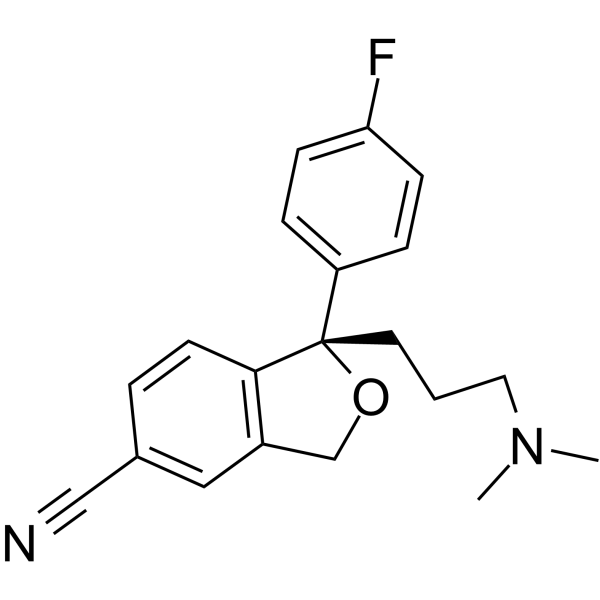
  • HY-14258
    Escitalopram
    10+ Cited Publications

    (S)-Citalopram; (S)-(+)-Citalopram

    Serotonin Transporter Neurological Disease
    Escitalopram ((S)-Citalopram), the S-enantiomer of racemic Citalopram, is a selective serotonin reuptake inhibitor (SSRI) with a Ki of 0.89 nM. Escitalopram has ∼30 fold higher binding affinity than its R(-)-enantiomer and shows selectivity over both dopamine transporter (DAT) and norepinephrine transporter (NET). Escitalopram is an antidepressant for the research of major depression .
    Escitalopram
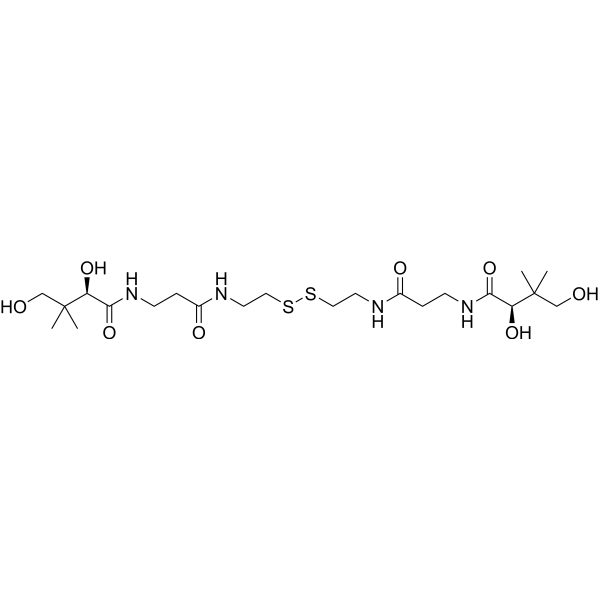
  • HY-B1028
    Pantethine
    5 Publications Verification

    D-Pantethine; LBF disulfide

    Endogenous Metabolite SARS-CoV Cardiovascular Disease Neurological Disease Inflammation/Immunology Endocrinology Cancer
    Pantethine is an orally active lipid-lowering agent. Pantethine has anti-tumor, anti-inflammatory and anti-SARS-COV virus activities. Pantethine is also a neuroprotective agent. Pantethine can be used in the study of Alzheimer's disease, Parkinson's disease, major depression, systemic sclerosis and pantothenate kinase-related neurodegeneration .
    Pantethine
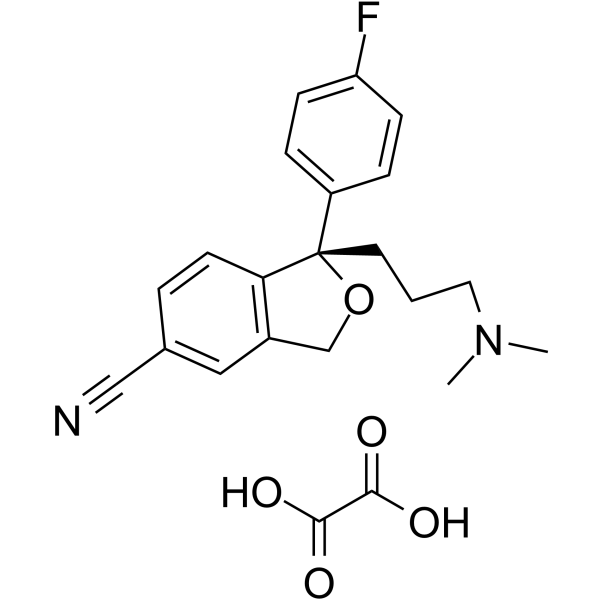
  • HY-14258A
    Escitalopram oxalate
    Maximum Cited Publications
    11 Publications Verification

    (S)-Citalopram oxalate; (S)-(+)-Citalopram oxalate

    Serotonin Transporter Neurological Disease Cancer
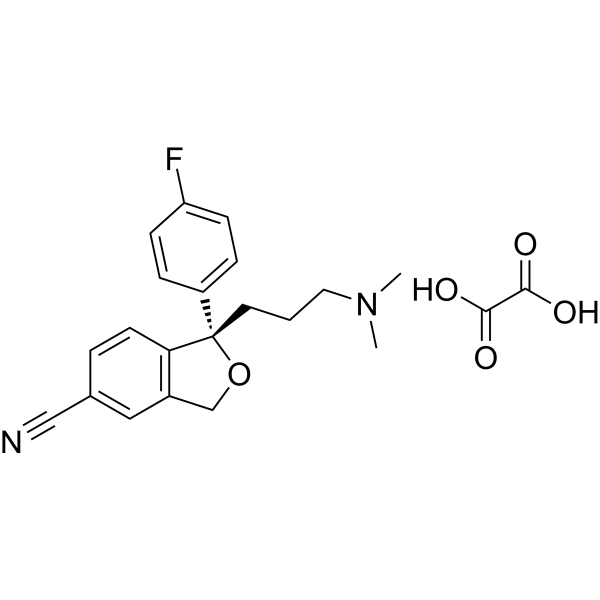
    Escitalopram ((S)-Citalopram) oxalate, the S-enantiomer of racemic Citalopram, is a selective serotonin reuptake inhibitor (SSRI) with a Ki of 0.89 nM. Escitalopram oxalate has ∼30 fold higher binding affinity than its R(-)-enantiomer and shows selectivity over both dopamine transporter (DAT) and norepinephrine transporter (NET). Escitalopram oxalate is an antidepressant for the research of major depression .
    Escitalopram oxalate
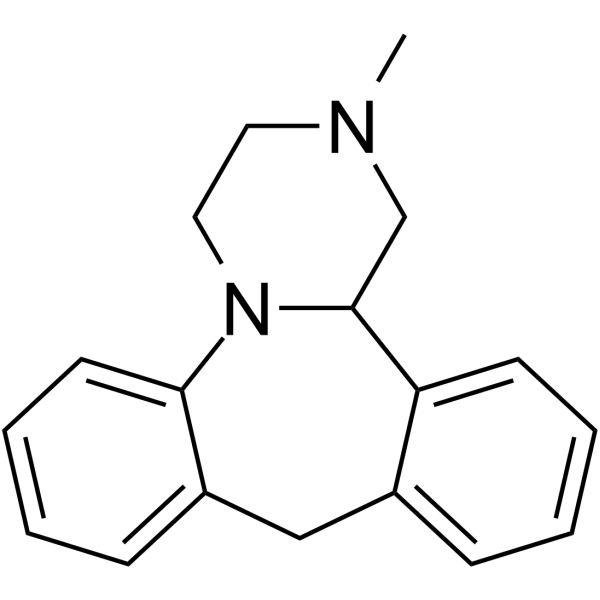
  • HY-B0188
    Mianserin
    1 Publications Verification

    Mianserine

    Histamine Receptor Opioid Receptor ERK p38 MAPK Neurological Disease
    Mianserin (Mianserine) is an orally active H1 receptor antagonist. Mianserin can activate κ-opioid receptor and octopamine receptor. Mianserin increases ERK1/2 and CREB phosphorylation, and antagonizes full κ-opioid agonist and Dynorphin A (HY-P1333)-induced MAPK phosphorylation. Mianserin modulates social and exploratory behaviour, raises electroconvulsive thresholds. Mianserin can be used for the research of neurological disease, such as depression and epilepsy .
    Mianserin
  • HY-19907

    BMS-820836

    Dopamine Transporter Monoamine Transporter Serotonin Transporter Neurological Disease
    Liafensine (BMS-820836) is an orally active, blood-brain barrier-permeable monoamine reuptake inhibitor, with an IC50 of 5.67 nM against DAT, 1.08 nM against SERT, and 7.99 nM against NET. Liafensine binds to DAT to block dopamine reuptake. Liafensine binds to SERT to block serotonin reuptake. Liafensine binds to NET to block norepinephrine reuptake. Liafensine can be used in studies related to depression .
    Liafensine
  • HY-110023

    Serotonin Transporter Neurological Disease
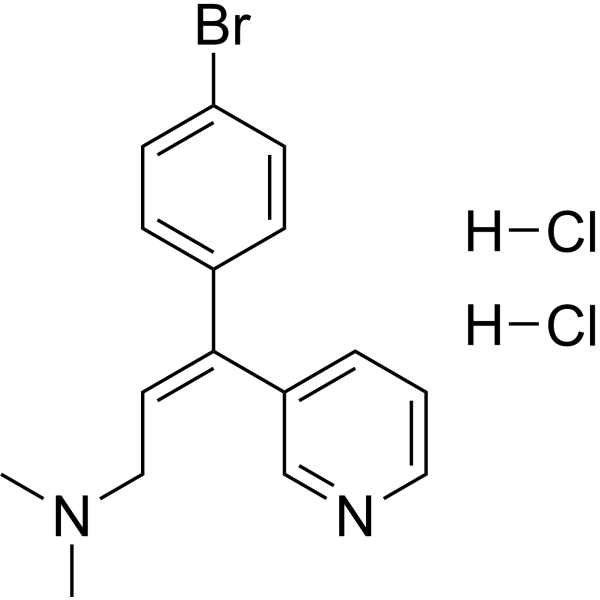
    Zimelidine dihydrochloride is an orally active selective serotonin reuptake inhibitor. Zimelidine dihydrochloride competitively inhibits central 5-HT uptake and desensitizes 5-HT autoreceptors in dorsal raphe nucleus. Zimelidine dihydrochloride time-dependently modulates 5-HT neuronal firing and hippocampal CA3 responses. Zimelidine dihydrochloride strengthens central serotonergic neurotransmission and produces related behavioral changes. Zimelidine dihydrochloride exerts anxiolytic, analgesic, feeding-suppressive and tolerance-attenuating effects. Zimelidine dihydrochloride is used for the study of depressive disorders and analgesic tolerance .
    Zimelidine dihydrochloride
  • HY-100046

    Desmethyldoxepin hydrochloride

    Drug Metabolite Neurological Disease
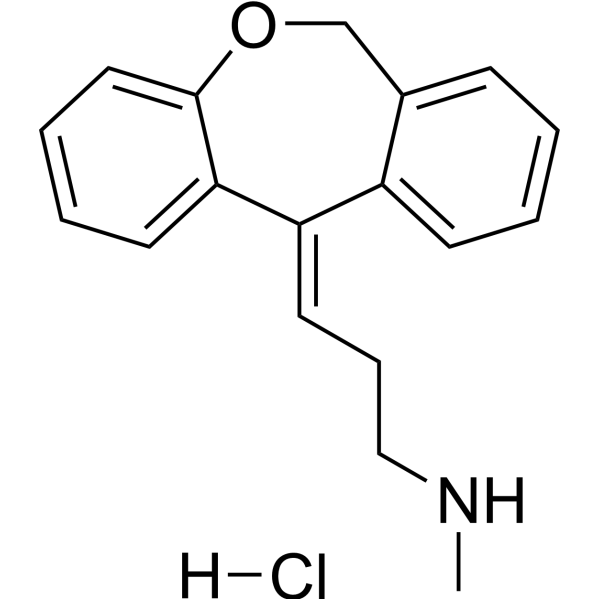
    Nordoxepin hydrochloride is the major metabolite of Doxepin. Doxepin is a tricyclic antidepressant that is widely prescribed for the research of mild depression .
    Nordoxepin hydrochloride
  • HY-14258AR

    (S)-Citalopram oxalate (Standard); (S)-(+)-Citalopram oxalate (Standard)

    Reference Standards Serotonin Transporter Neurological Disease Cancer
    Escitalopram (oxalate) (Standard) is the analytical standard of Escitalopram (oxalate). This product is intended for research and analytical applications. Escitalopram ((S)-Citalopram) oxalate, the S-enantiomer of racemic Citalopram, is a selective serotonin reuptake inhibitor (SSRI) with a Ki of 0.89 nM. Escitalopram oxalate has ∼30 fold higher binding affinity than its R(-)-enantiomer and shows selectivity over both dopamine transporter (DAT) and norepinephrine transporter (NET). Escitalopram oxalate is an antidepressant for the research of major depression .
    Escitalopram oxalate (Standard)
  • HY-100454

    Dopamine Receptor Neurological Disease
    CGP 25454A is a selective presynaptic dopamine autoreceptor antagonist which induces the increase of dopamine and acetyl choline. CGP 25454A can be used for major depression research .
    CGP 25454A
  • HY-W039283

    MCHR1 (GPR24) Neurological Disease Cancer
    MCH-1 antagonist 2 (l-BROMO-2,4-DIFLUORO-5-NITROBEN-ZENE) is a melanin concentrating hormone-1 (MCH1) receptor-selective 4-aryl piperidine. MCH-1 antagonist 2 can be used for the research of depression, anxiety, obesity, urge incontinence, urinary incontinence, major depression, bipolar disorder, agoraphobia, specific phobia, social phobia, obsessive-compulsive disorder, post-traumatic stress disorder, acute stress disorder, urinary frequency, urinary urgency, nocturia, enuresis, bulimia, bulimia nervosa, anorexia nervosa, major depressive disorder, dysthymic disorder, bipolar 1 and 2 disorders, schizoaffective disorder, cognitive disorders with depressed mood, personality disorders, insomnia, hypersomnia, narcolepsy, circadian rhythm sleep disorder, nightmare disorder, sleep terror disorder, sleepwalking disorder, panic disorder, social anxiety disorder, generalized anxiety disorder, overactive bladder .
    MCH-1 antagonist 2
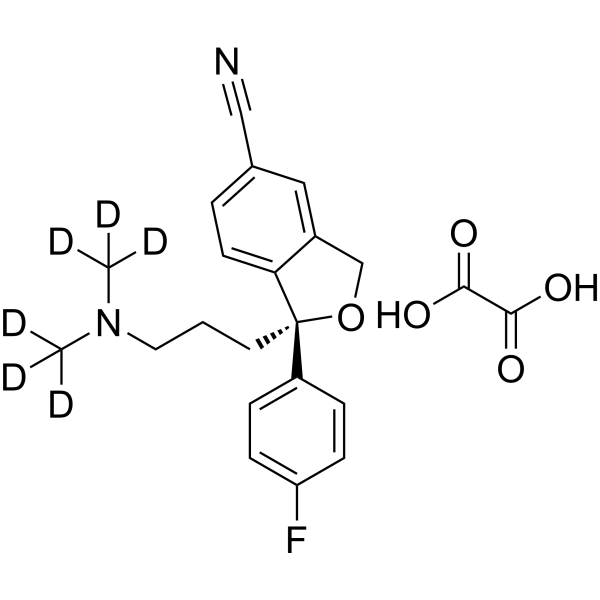
  • HY-14258AS

    Serotonin Transporter Neurological Disease
    Escitalopram-d6 (oxalate) is the deuterium labeled Escitalopram oxalate. Escitalopram ((S)-Citalopram) oxalate, the S-enantiomer of racemic Citalopram, is a selective serotonin reuptake inhibitor (SSRI) with a Ki of 0.89 nM. Escitalopram oxalate has ~30 fold higher binding affinity than its R(-)-enantiomer and shows selectivity over both dopamine transporter (DAT) and norepinephrine transporter (NET). Escitalopram oxalate is an antidepressant for the research of major depression .
    Escitalopram-d6 oxalate
  • HY-B1028R

    D-Pantethine (Standard); LBF disulfide (Standard)

    Reference Standards Endogenous Metabolite SARS-CoV Cardiovascular Disease Neurological Disease Inflammation/Immunology Endocrinology Cancer
    Pantethine (Standard) is the analytical standard of Pantethine. This product is intended for research and analytical applications. Pantethine is an orally active lipid-lowering agent. Pantethine has anti-tumor, anti-inflammatory and anti-SARS-COV virus activities. Pantethine is also a neuroprotective agent. Pantethine can be used in the study of Alzheimer's disease, Parkinson's disease, major depression, systemic sclerosis and pantothenate kinase-related neurodegeneration .
    Pantethine (Standard)
  • HY-174395

    Keap1-Nrf2 Interleukin Related Heme Oxygenase (HO) Neurological Disease
    CD-10 is an orally active and BBB-penatrable Keap1-Nrf2 protein-protein interaction (PPI) inhibitor. CD-10 binds to Keap1 with a KD value of 193 nM. CD-10 exhibits potent anti-oxidative and anti-inflammatory effects through Keap1-Nrf2 pathway activation, evidenced by reduced levels of MDA, IL-4, IL-10 and increased expression of HO-1. CD-10 effectively alleviated anxiety and depressive behaviors and restored serum neurotransmitter levels by promoting Nrf2 nuclear translocation in the chronic unpredictable mild stress (CUMS) mouse model. CD-10 can be used for the study of depression.
    CD-10
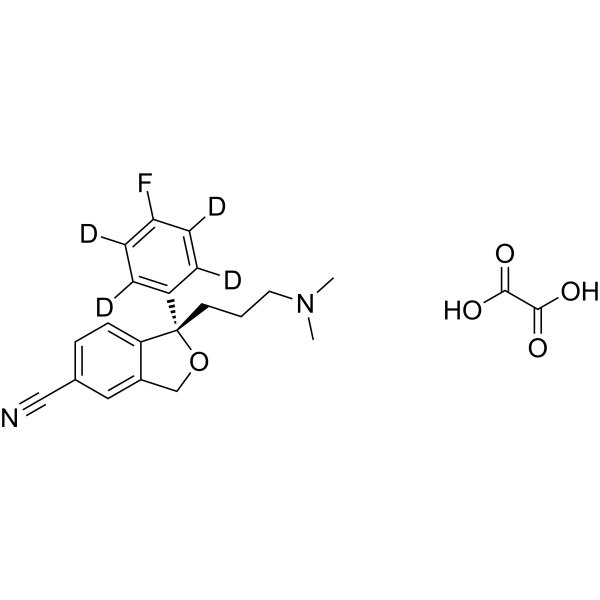
  • HY-14258AS1

    (S)-Citalopram-d4 oxalate; (S)-(+)-Citalopram-d4 oxalate

    Isotope-Labeled Compounds Serotonin Transporter Neurological Disease
    Escitalopram-d4 (oxalate) is deuterium labeled Escitalopram (oxalate). Escitalopram ((S)-Citalopram) oxalate, the S-enantiomer of racemic Citalopram, is a selective serotonin reuptake inhibitor (SSRI) with a Ki of 0.89 nM. Escitalopram oxalate has ~30 fold higher binding affinity than its R(-)-enantiomer and shows selectivity over both dopamine transporter (DAT) and norepinephrine transporter (NET). Escitalopram oxalate is an antidepressant for the research of major depression .
    Escitalopram-d4 oxalate
  • HY-W052508R

    N-Desalkylquetiapine (Standard)

    5-HT Receptor Reference Standards Neurological Disease
    Norquetiapine is an antidepressant and neuroprotective agent and is the active metabolic component of Quetiapine (HY-14544). Norquetiapine is also a partial 5-HT1A receptor agonist, and a presynaptic α2, 5-HT2C and 5-HT7 b> Receptor antagonist. Norquetiapine can also selectively inhibit norepinephrine transporter (NET), inhibit norepinephrine reuptake, and has potential inhibitory effects on bipolar depression, major depressive disorder, and generalized anxiety disorder. Norquetiapine demonstrated in vivo activity in forced swimming in mice and learned helplessness tests in rats .
    Norquetiapine (Standard)
  • HY-179063

    5-HT Receptor Dopamine Receptor Serotonin Transporter Neurological Disease
    5-HT2A receptor agonist-13 (Compound 28c) is a partial agonist of the 5-HT2A receptor, with an EC50 value of 416.9 nM and a Ki value of 113.9 nM. 5-HT2A receptor agonist-13 exhibits very weak agonistic activity towards the 5-HT2B receptor (EC50 = 120.2 nM), D2 receptor (Ki = 1298 nM), and has no activity towards the 5-HT2C receptor. 5-HT2A receptor agonist-13 exhibits weak inhibitory activity on the serotonin transporter (SERT) (EC50 = 977.2 nM). 5-HT2A receptor agonist-13 has antidepressant activity in mouse models and does not induce hallucinogenic behavior. 5-HT2A receptor agonist-13 can be used for the study of major depressive disorder (MDD) and treatment-resistant depression (TRD) .
    5-HT2A receptor agonist-13
  • HY-168508

    HDAC Neurological Disease
    PB200 is an HDAC6 inhibitor with an IC50 value of 1.97 nM. PB200 demonstrates significant antidepressant effects by restoring abnormal HDAC6 expression levels and alleviating neuroinflammation .
    PB200
  • HY-118615

    Opioid Receptor Neurological Disease
    LY2048978 is a non-selective opioid receptor antagonist with Ki of 0.287, 0.471 and 1.05 nM for human mu, kappa and delta opioid receptors in vitro, respectively. LY2048978 can be used in the research of major depressive disorder and alcohol use disorder .
    LY2048978
  • HY-100046R

    Desmethyldoxepin hydrochloride (Standard)

    Reference Standards Drug Metabolite Neurological Disease
    Nordoxepin (hydrochloride) (Standard) is the analytical standard of Nordoxepin (hydrochloride). This product is intended for research and analytical applications. Nordoxepin hydrochloride is the major metabolite of Doxepin. Doxepin is a tricyclic antidepressant that is widely prescribed for the research of mild depression .
    Nordoxepin hydrochloride (Standard)
  • HY-131479A

    Drug Metabolite Neurological Disease
    Threo-dihydrobupropion is a major metabolite of Bupropion, formed via oxidation and reduction exhibit pharmacological activity. Bupropion, a dual dopamine-norepinephrine uptake inhibitor and a nicotine receptor antagonist, is widely used in the management of depression and as a smoking cessation aid .
    Threo-dihydrobupropion
  • HY-B0602B

    O-Desmethylvenlafaxine fumarate

    5-HT Receptor Adrenergic Receptor Drug Metabolite Neurological Disease
    Desvenlafaxine (O-Desmethylvenlafaxine) fumarate is a selective serotonin and norepinephrine reuptake inhibitor. Desvenlafaxine (O-Desmethylvenlafaxine) fumarate is the major metabolite of the antidepressant venlafaxine. Desvenlafaxine (O-Desmethylvenlafaxine) fumarate has the potential for the research of depression and related disorders and diseases (extracted from patent WO2009049354A1) .
    Desvenlafaxine fumarate
  • HY-B0602C

    O-Desmethylvenlafaxine hydrochloride

    5-HT Receptor Adrenergic Receptor Drug Metabolite Neurological Disease
    Desvenlafaxine (O-Desmethylvenlafaxine) hydrochloride is a selective serotonin and norepinephrine reuptake inhibitor. Desvenlafaxine (O-Desmethylvenlafaxine) hydrochloride is the major metabolite of the antidepressant venlafaxine. Desvenlafaxine (O-Desmethylvenlafaxine) hydrochloride has the potential for the research of depression and related disorders and diseases (extracted from patent WO2009049354A1) .
    Desvenlafaxine hydrochloride
  • HY-14258R

    (S)-Citalopram (Standard); (S)-(+)-Citalopram (Standard)

    Serotonin Transporter Reference Standards Neurological Disease Cancer
    Escitalopram (Standard) is the analytical standard of Escitalopram. This product is intended for research and analytical applications. Escitalopram ((S)-Citalopram), the S-enantiomer of racemic Citalopram, is a selective serotonin reuptake inhibitor (SSRI) with a Ki of 0.89 nM. Escitalopram has ~30 fold higher binding affinity than its R(-)-enantiomer and shows selectivity over both dopamine transporter (DAT) and norepinephrine transporter (NET). Escitalopram is an antidepressant for the research of major depression .
    Escitalopram (Standard)
  • HY-B1028S

    D-Pantethine-15N2; LBF disulfide-15N2

    Isotope-Labeled Compounds Neurological Disease Metabolic Disease Inflammation/Immunology Endocrinology Cancer
    Pantethine- 15N2 is the 15N2 labeled Pantethine. Pantethine is an orally active lipid-lowering agent. Pantethine has anti-tumor, anti-inflammatory and anti-SARS-COV virus activities. Pantethine is also a neuroprotective agent. Pantethine can be used in the study of Alzheimer's disease, Parkinson's disease, major depression, systemic sclerosis and pantothenate kinase-related neurodegeneration .
    Pantethine-15N2
  • HY-148115

    LPL Receptor Inflammation/Immunology
    S1p receptor agonist 2 (compound 1) is an agonist of S1P5 receptor, exhibits selectivity over the S1P1 and/or S1P3 receptors. S1p receptor agonist 2 can be used for endogenous SIP signaling system research, and alleviating or preventing CNS disorders research, such as neurodegenerative disorders .
    S1p receptor agonist 2
  • HY-120618

    BMS-180492

    Drug Derivative Neurological Disease
    Triazoledione (BMS-180492) is a phenylpiperazine compound and the major metabolite of Nefazodone (HY-119209). Triazoledione is used in the research of depression .
    Triazoledione
  • HY-182511

    GABA Receptor Neurological Disease
    IUN-00433 (Compound 36) is a selective positive allosteric modulator of α4β1δ-type GABAA receptors, with an EC50 of 0.060 μM. IUN-00433 is applicable to research related to neurological disorders .
    IUN-00433
  • HY-185359

    HDAC Others
    HDAC6-IN-78 (Example 48) is a selective HDAC6 inhibitor with an IC50 of 24 nM. HDAC6-IN-78 shows no activity against other HDAC isoforms .
    HDAC6-IN-78
  • HY-114515

    RG7090 sulfate; RO4917523 sulfate

    mGluR Neurological Disease
    Basimglurant (RG7090; RO4917523) sulfate is a selective, orally active, blood-brain barrier permeable negative allosteric modulator of metabotropic glutamate receptor 5 (mGluR5), with a Ki of 1.4 nM (against [ 3H]-ABP688 (HY-110141)) and 35.6 nM (against [ 3H]-MPEP (HY-14609A)). Basimglurant sulfate inhibits mGlu5-mediated signaling pathways and receptor constitutive activity, regulates dopamine levels in the nucleus accumbens, exerts anxiolytic, antidepressant-like, analgesic and arousal-promoting effects, and alters δ-wave power during non-rapid eye movement sleep. Basimglurant sulfate can be used in research on depression, fragile X syndrome, anxiety disorders, etc .
    Basimglurant sulfate

Inquiry Online

Your information is safe with us. * Required Fields.

Salutation


Country or Region *

Applicant Name *


Organization Name *

Department *


Email Address *


Product Name *

Cat. No.


Requested quantity *

Phone Number *


Remarks

Inquiry Online

Inquiry Information

Product Name:
Cat. No.:
Quantity:
MCE Japan Authorized Agent:

