



60525-15-7
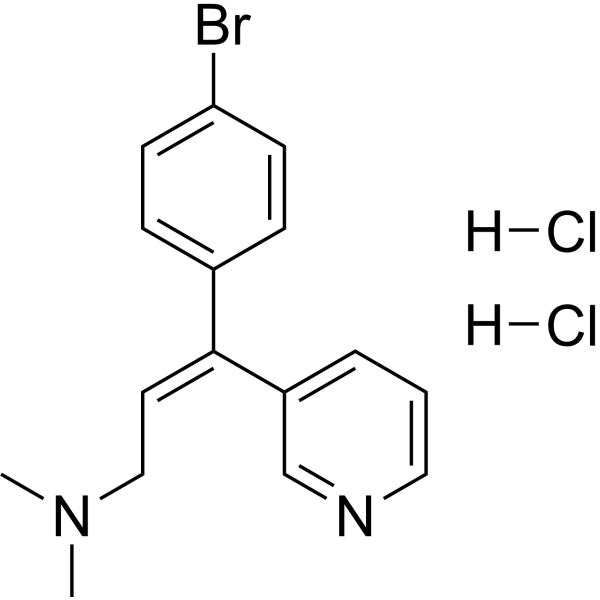
Chemical Structure
Zimelidine dihydrochloride
- CAS No.: 60525-15-7
- Formula:C16H19BrCl2N2
- Molecular Weight:390.15
IUPAC Name: (Z)-3-(4-bromophenyl)-N,N-dimethyl-3-(pyridin-3-yl)prop-2-en-1-amine dihydrochloride
InChIKey: CXGURXWCQYHDIR-ULPVBNQHSA-N
SMILES: CN(C/C=C(C1=CC=CN=C1)/C2=CC=C(C=C2)Br)C.[H]Cl.[H]Cl
Biological Activity: Zimelidine dihydrochloride is an orally active selective serotonin reuptake inhibitor. Zimelidine dihydrochloride competitively inhibits central 5-HT uptake and desensitizes 5-HT autoreceptors in dorsal raphe nucleus. Zimelidine dihydrochloride time-dependently modulates 5-HT neuronal firing and hippocampal CA3 responses. Zimelidine dihydrochloride strengthens central serotonergic neurotransmission and produces related behavioral changes. Zimelidine dihydrochloride exerts anxiolytic, analgesic, feeding-suppressive and tolerance-attenuating effects. Zimelidine dihydrochloride is used for the study of depressive disorders and analgesic tolerance[1][2][3][4].
| Cat. No. | Product Name | Purity | Description | Pricing | |||||||||||||||||||
|---|---|---|---|---|---|---|---|---|---|---|---|---|---|---|---|---|---|---|---|---|---|---|---|
|
|
Zimelidine dihydrochloride | 98.08% | Zimelidine dihydrochloride is an orally active selective serotonin reuptake inhibitor. Zimelidine dihydrochloride competitively inhibits central 5-HT uptake and desensitizes 5-HT autoreceptors in dorsal raphe nucleus. Zimelidine dihydrochloride time-dependently modulates 5-HT neuronal firing and hippocampal CA3 responses. Zimelidine dihydrochloride strengthens central serotonergic neurotransmission and produces related behavioral changes. Zimelidine dihydrochloride exerts anxiolytic, analgesic, feeding-suppressive and tolerance-attenuating effects. Zimelidine dihydrochloride is used for the study of depressive disorders and analgesic tolerance. | ||||||||||||||||||||
|
loading...
/
|
|||||||||||||||||||||||
|
|
Zimelidine dihydrochloride (Standard) | ≥98% | Zimelidine dihydrochloride (Standard) is the analytical standard of Zimelidine dihydrochloride (HY-110023). This product is intended for research and analytical applications. Zimelidine dihydrochloride is an orally active selective serotonin reuptake inhibitor. Zimelidine dihydrochloride competitively inhibits central 5-HT uptake and desensitizes 5-HT autoreceptors in dorsal raphe nucleus. Zimelidine dihydrochloride time-dependently modulates 5-HT neuronal firing and hippocampal CA3 responses. Zimelidine dihydrochloride strengthens central serotonergic neurotransmission and produces related behavioral changes. Zimelidine dihydrochloride exerts anxiolytic, analgesic, feeding-suppressive and tolerance-attenuating effects. Zimelidine dihydrochloride is used for the study of depressive disorders and analgesic tolerance. | ||||||||||||||||||||
|
loading...
/
|
|||||||||||||||||||||||
-
Similarity Score 0.97
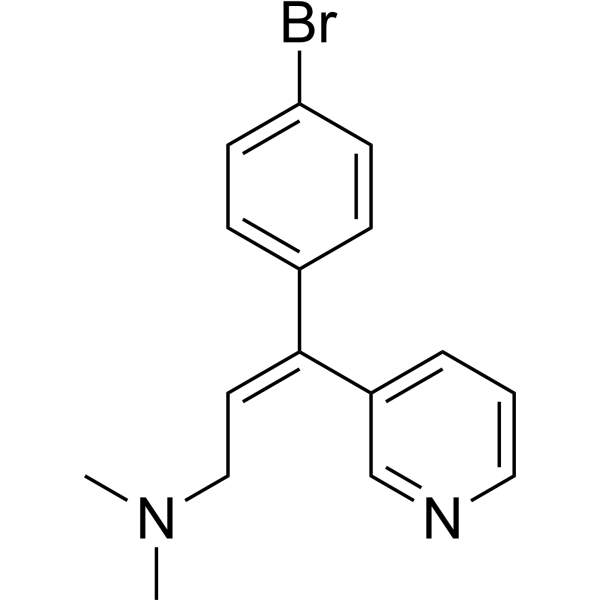 HY-118835Zimelidine
-
Similarity Score 0.85
 HY-123001Nomelidine
-
Similarity Score 0.79
 HY-118835SZimeldine-d6
-
Similarity Score 0.67
 HY-119890Isbogrel
-
Similarity Score 0.67
 HY-119890A(Z)-Isbogrel
-
Similarity Score 0.64
 HY-W742725Citalopram impurity 11
-
Similarity Score 0.63
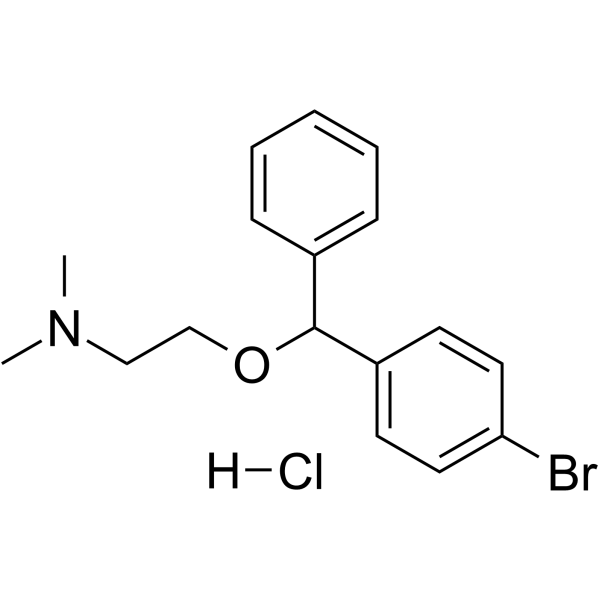 HY-B1568ABromodiphenhydramine hydrochloride
-
Similarity Score 0.62
 HY-183483OKY-1581
-
Similarity Score 0.62
 HY-402545(-)-Brompheniramine
-

Explore the MedChemAI to find more analogs


References
- [1]. Blier P, de Montigny C. Electrophysiological investigations on the effect of repeated zimelidine administration on serotonergic neurotransmission in the rat. The Journal of Neuroscience, 1983, 3(6): 1270-1278.
- [2]. Heel RC, et al. Zimelidine: a review of its pharmacological properties and therapeutic efficacy in depressive illness. Drugs. 1982;24(3):169-206. [Content Brief]
- [3]. Ozdemir E, et al. Zimelidine attenuates the development of tolerance to morphine-induced antinociception. Indian J Pharmacol. 2012;44(2):215-218. [Content Brief]
- [4]. Scopinho AA, et al. Medial amygdaloid nucleus 5-HT₂c receptors are involved in the hypophagic effect caused by zimelidine in rats. Neuropharmacology. 2012;63(2):301-309. [Content Brief]



