



24219-97-4
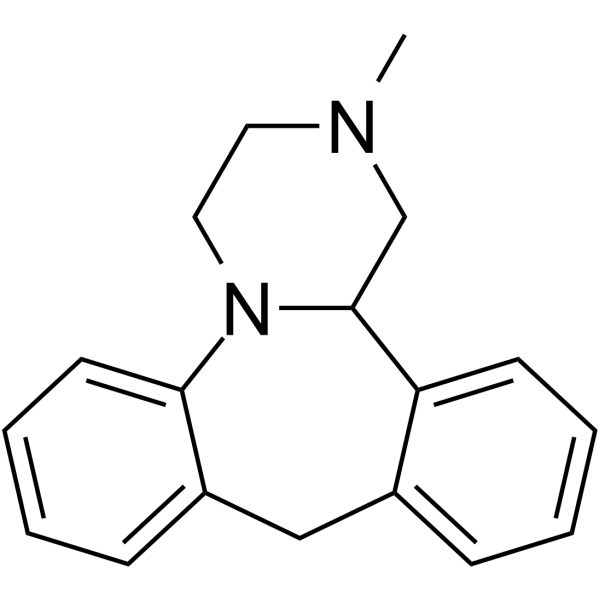
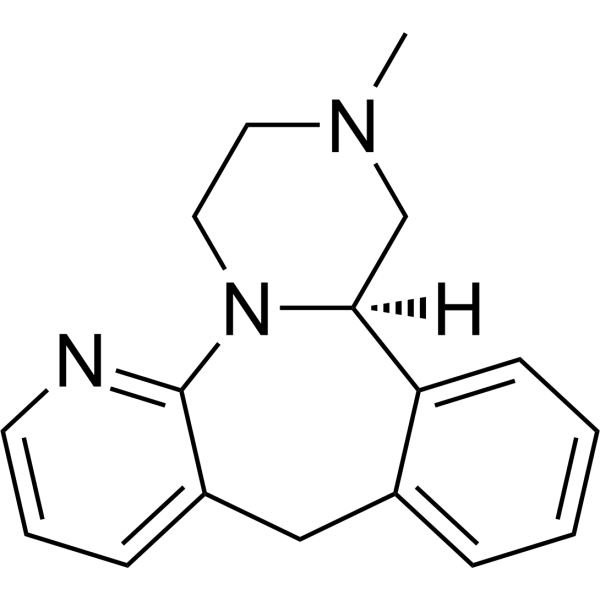
Chemical Structure
Mianserin
Synonym(s): Mianserine
- CAS No.: 24219-97-4
- Formula:C18H20N2
- Molecular Weight:264.36
IUPAC Name: 2-methyl-1,2,3,4,10,14b-hexahydrodibenzo[c,f]pyrazino[1,2-a]azepine
InChIKey: UEQUQVLFIPOEMF-UHFFFAOYSA-N
SMILES: CN(CC1)CC2N1C3=CC=CC=C3CC4=CC=CC=C24
Biological Activity: Mianserin (Mianserine) is an orally active H1 receptor antagonist. Mianserin can activate κ-opioid receptor and octopamine receptor. Mianserin increases ERK1/2 and CREB phosphorylation, and antagonizes full κ-opioid agonist and Dynorphin A (HY-P1333)-induced MAPK phosphorylation. Mianserin modulates social and exploratory behaviour, raises electroconvulsive thresholds. Mianserin can be used for the research of neurological disease, such as depression and epilepsy[1][2][3][4][5].
| Cat. No. | Product Name | Purity | Description | Pricing | |||||||||||||||||||
|---|---|---|---|---|---|---|---|---|---|---|---|---|---|---|---|---|---|---|---|---|---|---|---|
|
|
Mianserin | 99.73% | Mianserin (Mianserine) is an orally active H1 receptor antagonist. Mianserin can activate κ-opioid receptor and octopamine receptor. Mianserin increases ERK1/2 and CREB phosphorylation, and antagonizes full κ-opioid agonist and Dynorphin A (HY-P1333)-induced MAPK phosphorylation. Mianserin modulates social and exploratory behaviour, raises electroconvulsive thresholds. Mianserin can be used for the research of neurological disease, such as depression and epilepsy. | ||||||||||||||||||||
|
loading...
/
|
|||||||||||||||||||||||
|
|
Mianserin-d3 | 98.33% | Mianserin-d3 is the deuterium labeled Mianserin (HY-B0188). Mianserin (Mianserine) is an orally active H1 receptor antagonist. Mianserin can activate κ-opioid receptor and octopamine receptor. Mianserin increases ERK1/2 and CREB phosphorylation, and antagonizes full κ-opioid agonist and Dynorphin A (HY-P1333)-induced MAPK phosphorylation. Mianserin modulates social and exploratory behaviour, raises electroconvulsive thresholds. Mianserin can be used for the research of neurological disease, such as depression and epilepsy. The product specifications provided below refer solely to the active content of Mianserin-d3. |
||||||||||||||||||||
|
loading...
/
|
|||||||||||||||||||||||
-
Similarity Score 0.98
 HY-B0188ARMianserin hydrochloride (Standard)
-
Similarity Score 0.81
 HY-W702070Nor mianserin
-
Similarity Score 0.81
 HY-W7401238-Hydroxy mianserin
-
Similarity Score 0.80
 HY-W707780Nor mianserin hydrochloride
-
Similarity Score 0.80
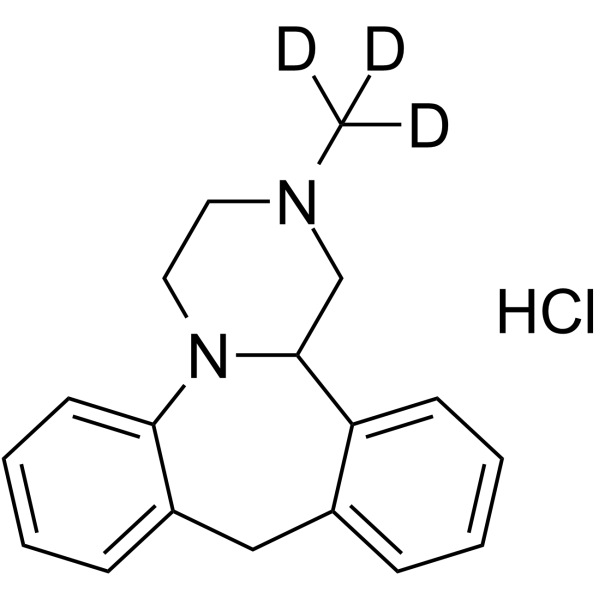 HY-B0188ASMianserin-d3 (hydrochloride)
-
Similarity Score 0.72
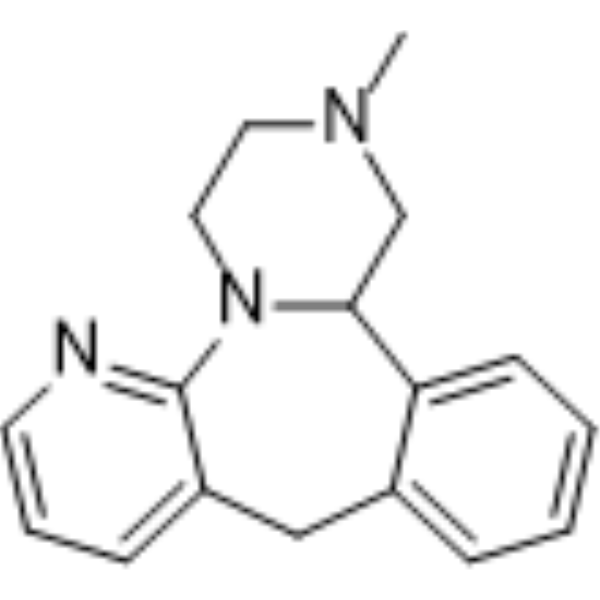 HY-B0352Mirtazapine
-
Similarity Score 0.72
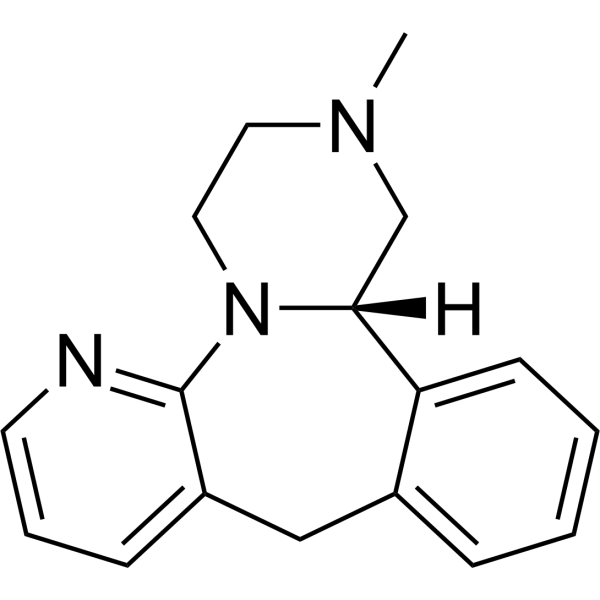 HY-B0352A(S)-Mirtazapine
-
Similarity Score 0.72
 HY-B0352B(R)-Mirtazapine
-
Similarity Score 0.70
 HY-118200BRL-41992
-

Explore the MedChemAI to find more analogs


References
- [1]. Olianas MC, et al. The atypical antidepressant mianserin exhibits agonist activity at κ-opioid receptors. Br J Pharmacol. 2012;167(6):1329-1341. [Content Brief]
- [2]. Gao B, et al. Effects of acute and chronic administration of the antidepressants, imipramine, phenelzine and mianserin, on the social behaviour of mice. Neuropharmacology. 1994;33(6):813-824. [Content Brief]
- [3]. Roeder T. High-affinity antagonists of the locust neuronal octopamine receptor. Eur J Pharmacol. 1990 Nov 27;191(2):221-4. [Content Brief]
- [4]. Borowicz KK, et al. Acute and chronic treatment with mianserin differentially affects the anticonvulsant activity of conventional antiepileptic drugs in the mouse maximal electroshock model. Psychopharmacology (Berl). 2007;195(2):167-174. [Content Brief]
- [5]. Nowak J Z, Arrang J M, Schwartz J C, et al. Interaction between mianserin, an antidepressant drug, and central H1-and H2-histamine-receptors: in vitro and in vivo studies and radioreceptor assay[J]. Neuropharmacology, 1983, 22(3): 259-266.



