21 Results for "

Metoclopramide

" in MedChemExpress (MCE) Product Catalog:
Products (21)

21 Results for "Metoclopramide" in MCE Product Catalog:

2
2 Cited Publications
Cat. No.: HY-17382
CAS No.: 364-62-5
Research Areas:  

Endocrinology

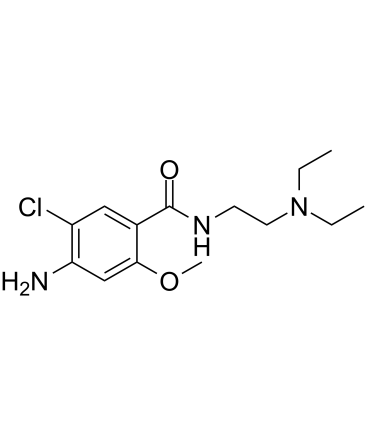
Metoclopramide is a potent antagonist of 5-HT3 and dopamine D2 receptor, with IC50s of 308 nM and 483 nM, respectively. Metoclopramide can be used for the research of nausea and vomiting, gastro-oesophageal reflux, and gastroparesis .
loading...
    loading...
2
2 Cited Publications
Cat. No.: HY-17382A
CAS No.: 54143-57-6
Research Areas:  

Endocrinology

Metoclopramide hydrochloride hydrate is a potent antagonist of 5-HT3 and dopamine D2 receptor, with IC50s of 308 nM and 483 nM, respectively. Metoclopramide hydrochloride hydrate can be used for the research of nausea and vomiting, gastro-oesophageal reflux, and gastroparesis .
loading...
    loading...
1
1 Cited Publications
Cat. No.: HY-P1103
CAS No.: 1030384-98-5
Target:  

CXCR

Research Areas:  

Cancer

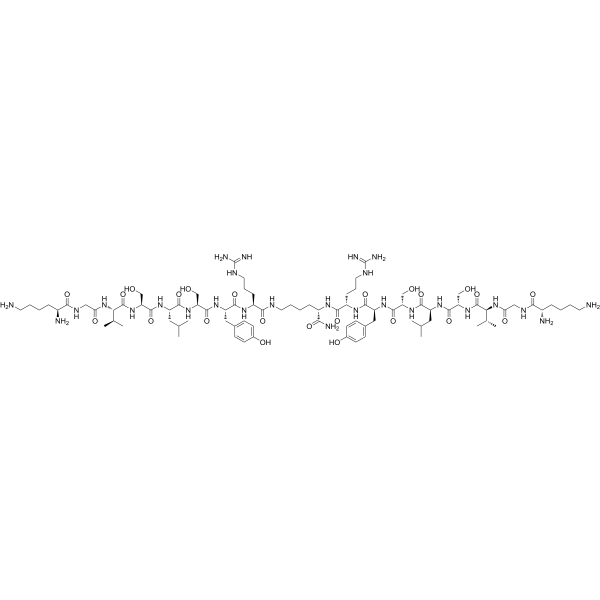
CTCE-9908 is a potent and selective CXCR4 antagonist. CTCE-9908 induces mitotic catastrophe, cytotoxicity and inhibits migration in CXCR4-expressing ovarian cancer cells .
loading...
    loading...
Cat. No.: HY-P4070
CAS No.: 1188379-43-2
Target:  

Insulin Receptor

Research Areas:  

Metabolic Disease

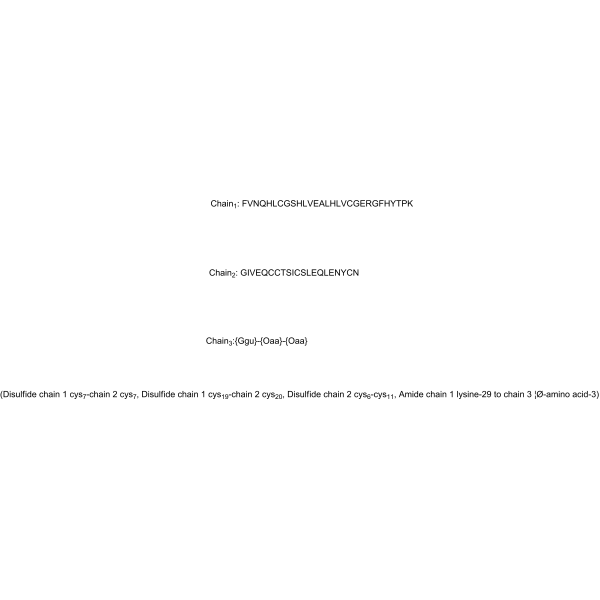
Insulin icodec is an Insulin (HY-P0035) analog that strongly but reversibly binds to albumin. Insulin icodec has long plasma half-life. Insulin icodec modulates insulin receptor activity, controls blood glucose levels, reduces HbA1c levels, and binds reversibly to human serum albumin. Insulin icodec can be used for the research of type 2 diabetes mellitus .
loading...
    loading...
Cat. No.: HY-W036175
CAS No.: 24201-13-6
Synonyms: Metoclopramide Impurity 12
Target:  

Drug Intermediate

Research Areas:  

Others

4-Acetamido-5-chloro-2-methoxybenzoic acid (Metoclopramide Impurity 12) is a drug intermediate for synthesis of various active compounds.
loading...
    loading...
Cat. No.: HY-17382B
CAS No.: 7232-21-5
Research Areas:  

Neurological Disease

Metoclopramide hydrochloride is a potent and orally active antagonist of 5-HT3 and dopamine D2 receptor, with IC50s of 308 nM and 483 nM, respectively. Metoclopramide hydrochloride can be used for the research of nausea and vomiting, gastro-oesophageal reflux, and gastroparesis .
loading...
    loading...
Cat. No.: HY-17382S
CAS No.: 1216522-89-2
Metoclopramide-d3 is deuterium labeled Metoclopramide. Metoclopramide is a potent antagonist of 5-HT3 and dopamine D2 receptor, with IC50s of 308 nM and 483 nM, respectively. Metoclopramide can be used for the research of nausea and vomiting, gastro-oesophageal reflux, and gastroparesis .
loading...
    loading...
Cat. No.: HY-17382AR
CAS No.: 54143-57-6
Metoclopramide (hydrochloride hydrate) (Standard) is the analytical standard of Metoclopramide (hydrochloride hydrate). This product is intended for research and analytical applications. Metoclopramide hydrochloride hydrate is a potent antagonist of 5-HT3 and dopamine D2 receptor, with IC50s of 308 nM and 483 nM, respectively. Metoclopramide hydrochloride hydrate can be used for the research of nausea and vomiting, gastro-oesophageal reflux, and gastroparesis .
loading...
    loading...
Cat. No.: HY-17382R
CAS No.: 364-62-5
Metoclopramide (Standard) is the analytical standard of Metoclopramide. This product is intended for research and analytical applications. Metoclopramide is a potent antagonist of 5-HT3 and dopamine D2 receptor, with IC50s of 308 nM and 483 nM, respectively. Metoclopramide can be used for the research of nausea and vomiting, gastro-oesophageal reflux, and gastroparesis .
loading...
    loading...
Cat. No.: HY-17382C
CAS No.: 2576-84-3
Target:  

Dopamine Receptor

Research Areas:  

Neurological Disease

Metoclopramide dihydrochloride acts as a dopamine D2 antagonist and is utilized for its antiemetic properties.
loading...
    loading...
Cat. No.: HY-P1103A
Target:  

CXCR

Research Areas:  

Cancer

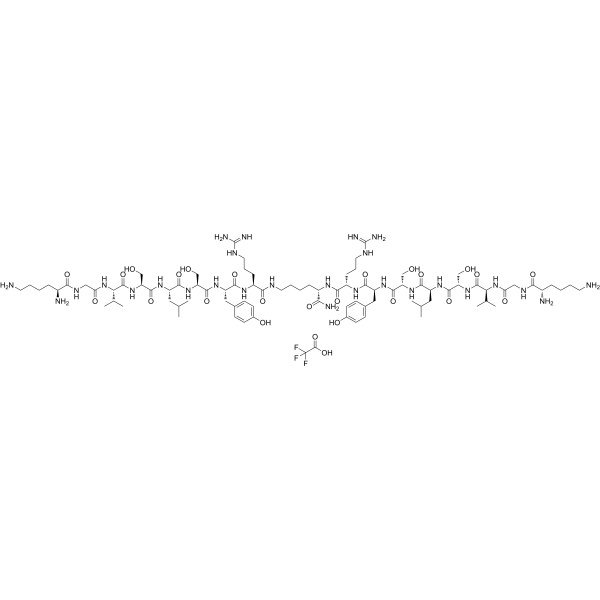
CTCE-9908 TFA is a potent and selective CXCR4 antagonist. CTCE-9908 TFA induces mitotic catastrophe, cytotoxicity and inhibits migration in CXCR4-expressing ovarian cancer cells .
loading...
    loading...
Cat. No.: HY-P11293
CAS No.: 1309855-53-5
Target:  

Melanocortin Receptor

Research Areas:  

Cancer

DOTA-GGNle-CycMSHhex is a melanocortin-1 receptor (MC1R)-targeting peptide that can be radionuclide-labeled for melanoma imaging .
loading...
    loading...
Cat. No.: HY-P4757
CAS No.: 108081-77-2
Target:  

Parasite

Research Areas:  

Others

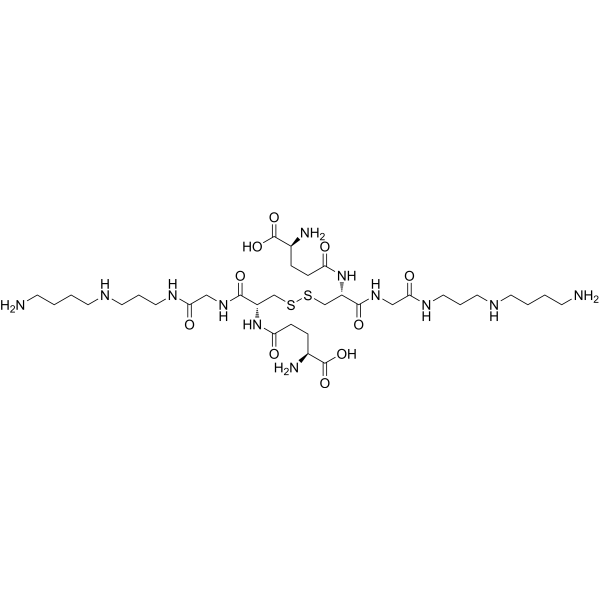
N1-Glutathionyl-spermidine disulfide is a substrate of trypanothione reductase .
loading...
    loading...
Cat. No.: HY-P1321
CAS No.: 158859-98-4
Synonyms: 1229U91; GW1229
Research Areas:  

Neurological Disease

GR231118, an analogue of the C-terminus of neuropeptide Y, is a potent , competitive and relative seletive antagonist at human neuropeptide Y Y receptor with a pKi of 10.4. GR231118 a potent agonist at the human neuropeptide Y Y4 receptor (pEC50=8.6; pKi=9.6) and a weak agonist at the human and rat neuropeptide YY2 and Y5 receptors. GR231118 also has high affinity for the mouse neuropeptide Y Y6 receptor (pKi= 8.8) .
loading...
    loading...
Cat. No.: HY-13256R
CAS No.: 183320-51-6
Synonyms: OSI-420 (Standard); CP-373420 hydrochloride (Standard)
Research Areas:  

Cancer

Metoclopramide (hydrochloride hydrate) (Standard) is the analytical standard of Metoclopramide (hydrochloride hydrate). This product is intended for research and analytical applications. Metoclopramide hydrochloride hydrate is a potent antagonist of 5-HT3 and dopamine D2 receptor, with IC50s of 308 nM and 483 nM, respectively. Metoclopramide hydrochloride hydrate can be used for the research of nausea and vomiting, gastro-oesophageal reflux, and gastroparesis .
loading...
    loading...
Cat. No.: HY-N7541R
CAS No.: 656830-24-9
Metoclopramide (Standard) is the analytical standard of Metoclopramide. This product is intended for research and analytical applications. Metoclopramide is a potent antagonist of 5-HT3 and dopamine D2 receptor, with IC50s of 308 nM and 483 nM, respectively. Metoclopramide can be used for the research of nausea and vomiting, gastro-oesophageal reflux, and gastroparesis .
loading...
    loading...
Cat. No.: HY-118499
CAS No.: 81982-32-3
Synonyms: RIV-2093
Target:  

Drug Derivative

Research Areas:  

Endocrinology

Alpiropride (RIV-2093) is a metoclopramide (HY-17382) analog that is effective in reducing the gastrointestinal side effects of cancer chemotherapy drugs. In animal studies, alpiropride showed a stronger antiemetic effect than metoclopramide .
loading...
    loading...
Cat. No.: HY-P1321A
Synonyms: 1229U91 TFA; GW1229 TFA
Research Areas:  

Neurological Disease

GR231118 TFA, an analogue of the C-terminus of neuropeptide Y, is a potent , competitive and relative seletive antagonist at human neuropeptide YY receptor with a pKi of 10.4. GR231118 a potent agonist at the human neuropeptide YY4 receptor (pEC50=8.6; pKi=9.6) and a weak agonist at the human and rat neuropeptide Y Y2 and Y5 receptors. GR231118 also has high affinity for the mouse neuropeptide YY6 receptor (pKi= 8.8) .
loading...
    loading...
Cat. No.: HY-P11480
CAS No.: 3105660-96-3
Target:  

Trk Receptor

Research Areas:  

Neurological Disease

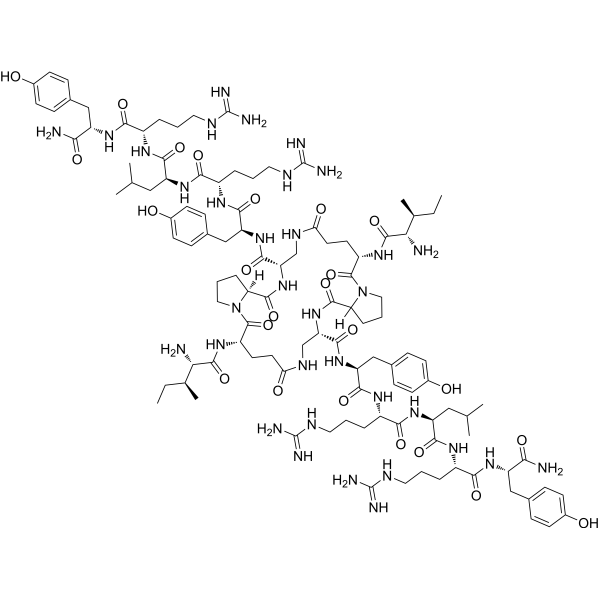
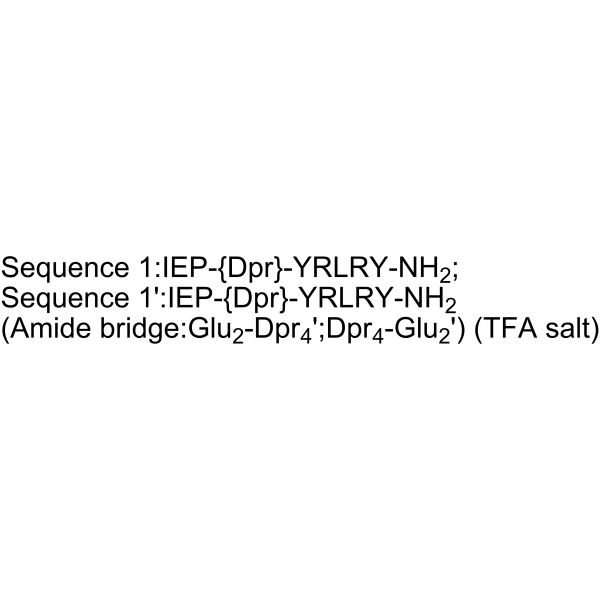
TrkA/NGF-IN-1 (Peptide 19) is an inhibitor of protein-protein interactions between TrkA and NGF (IC50: 21 nM for human TrkA in PathHunter assay). TrkA/NGF-IN-1 shows an analgesic effect in a rat incisional pain model .
loading...
    loading...
Cat. No.: HY-184755
CAS No.: 25087-26-7
Synonyms: PMAA
Research Areas:  

Others

Poly(methacrylic acid) (PMAA) is a pH/ionic strength-responsive swelling agent and polycation complexing agent. Poly(methacrylic acid) undergoes reversible swelling and size changes through carboxylic acid ionization and sodium ion charge shielding. As a weak polyacid, Poly(methacrylic acid) forms cross-linked hydrogels and hollow capsules for the entrapment and storage of macromolecules. Poly(methacrylic acid) forms electrostatic complexes with polycations to reduce capsule permeability, and high-salt conditions disrupt such complexes to enable macromolecule release .
loading...
    loading...

