



Metoclopramide
Based on 3 publication(s) in Google Scholar
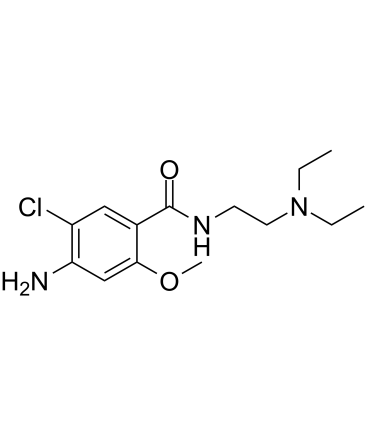
Metoclopramide is a potent antagonist of 5-HT3 and dopamine D2 receptor, with IC50s of 308 nM and 483 nM, respectively. Metoclopramide can be used for the research of nausea and vomiting, gastro-oesophageal reflux, and gastroparesis.
For research use only. We do not sell to patients.
- Purity : 99.98%
- CAS No.: 364-62-5
- Formula: C14H22ClN3O2
- Molecular Weight:299.80
-
Storage:
4°C, protect from light
* In solvent : -80°C, 6 months; -20°C, 1 month (protect from light)

To place orders, for customer services and technical support, please contact: MedChemExpress USA
Tel: 609-228-6898 E-mail: [email protected] [email protected]


-
 Biological Activity
-
Chemical Information
-
Solvent & Solubility
- Purity & Documentation
- References
-
 Help & FAQs


-
HY-13629
EtoposideTopoisomerase II Inhibitor -
HY-13764
TetrandrineCalcium Channel Inhibitor -
HY-17512
LosartanAngiotensin II Receptor Antagonist -
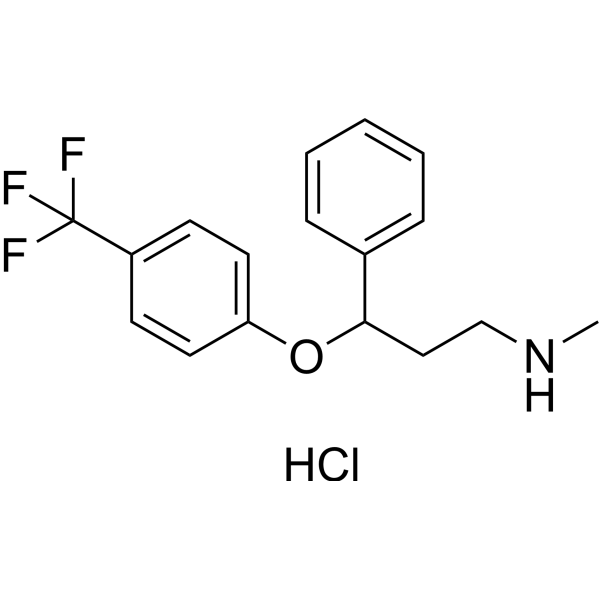
HY-B0102A
Fluoxetine hydrochloride -
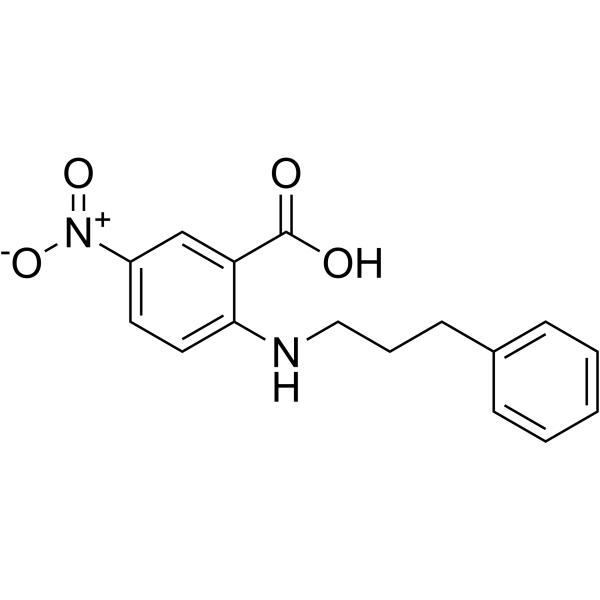
HY-101012
NPPBORCC Blocker -
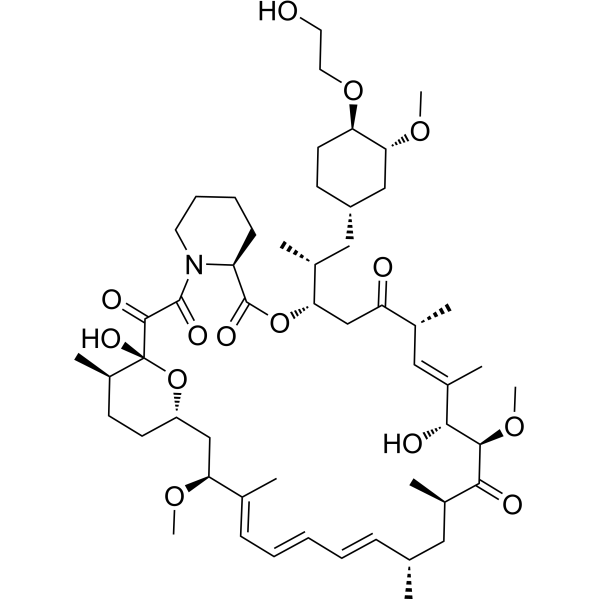
HY-10218
EverolimusmTORC Inhibitor -

HY-B1225
Promazine hydrochlorideDopamine Receptor D2 Antagonist -
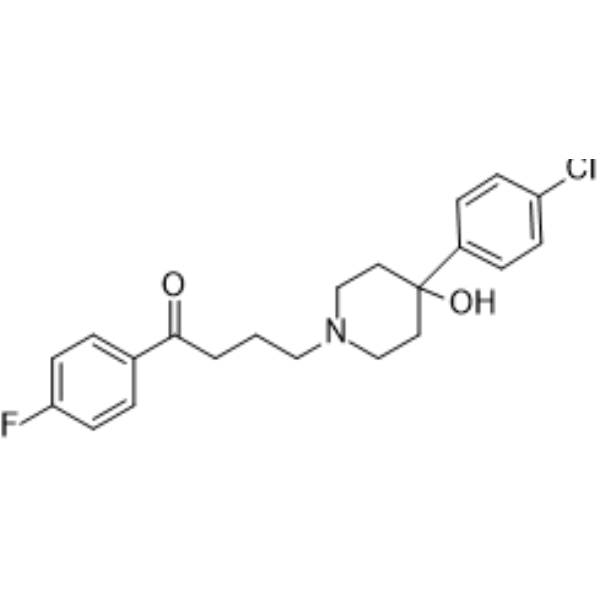
HY-14538
HaloperidolDopamine Receptor Antagonist -
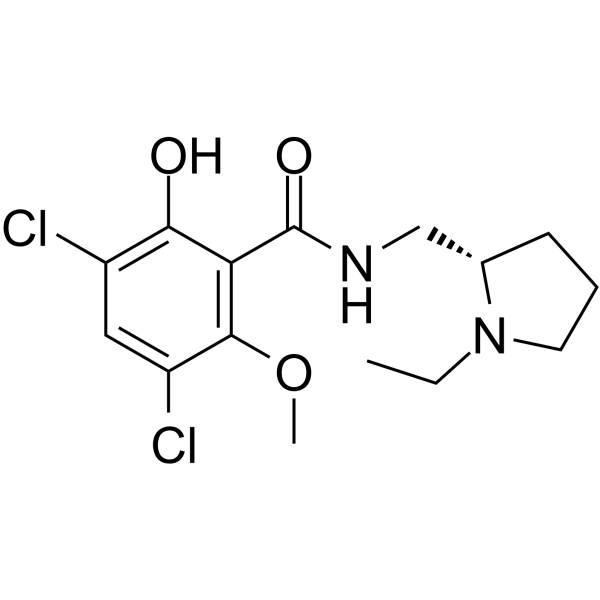
HY-103414
RacloprideDopamine D2/D3 Receptor Antagonist -
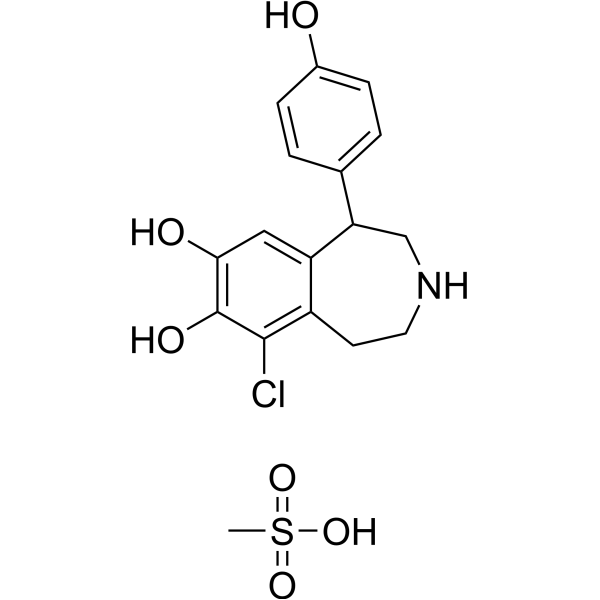
HY-B0735A
Fenoldopam mesylateDopamine DA Receptor Agonist -

HY-17382R
Metoclopramide (Standard)5-HT3/D2 Receptor Antagonist -
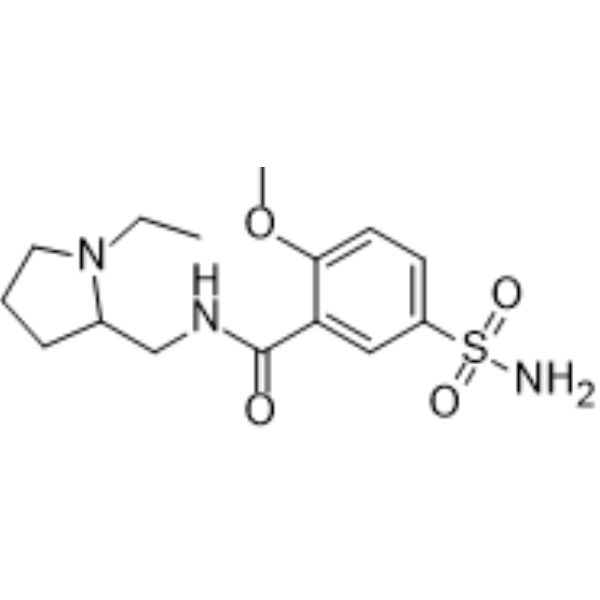
HY-B1019
SulpirideD2/D3 Receptor Antagonist
Publications Citing Use of MedChemExpress (MCE) Metoclopramide
MoreAll 5-HT Receptor Isoforms
MoreAll Dopamine Receptor Isoforms
More

Biological Activity
Description
IC50 & Target
[1]|
5-HT3 Receptor 308 nM (IC50) |
D2 Receptor 483 nM (IC50) |
Cellular Effect
|
Cell Line

|
Type | Value | Description | References |
|---|---|---|---|---|
| HEK293 | IC50 |
94.8 μM
Compound: Methoclopramide
|
Inhibition of 4-(4-(dimethylamino)styryl)-N-methylpyridinium uptake at human OCT1 expressed in HEK293 cells by confocal microscopy
Inhibition of 4-(4-(dimethylamino)styryl)-N-methylpyridinium uptake at human OCT1 expressed in HEK293 cells by confocal microscopy
|
[PMID: 18788725] |
| NHDF | IC50 |
>50 μM
Compound: 43
|
Cytotoxicity against NHDF assessed as reduction in cell viability after 72 hrs by MTT assay
Cytotoxicity against NHDF assessed as reduction in cell viability after 72 hrs by MTT assay
|
[PMID: 28671460] |
In Vitro
Metoclopramide (0.01-10 μM) stimulates aldosterone release in isolated perfused rat zona glomerulosa cells[3].
Metoclopramide results in prokinesis by four mechanisms: inhibition of presynaptic D2 receptors and stimulation of presynaptic excitatory 5-HT4 receptors, thereby allowing acetylcholine (ACh) release from intrinsic cholinergic motor neurons; inhibition of D2 postsynaptic receptors; and antagonism of the presynaptic inhibition of muscarinic receptors, leading to further augmentation of ACh release[2].
MedChemExpress (MCE) has not independently confirmed the accuracy of these methods. They are for reference only.
In Vivo
Metoclopramide (5-40 mg/kg; i.p.) induces catalepsy and antagonizes Apomorphine induced cage climbing behaviour in mice[5].
Metoclopramide (1.25-2.5 mg/kg; i.p.) induces stereotyped cage climbing behaviour in mice[5].
MedChemExpress (MCE) has not independently confirmed the accuracy of these methods. They are for reference only.
-
Animal Model:Adult, virgin female mice of the Swiss EPM-1 strain[4]
-
Dosage:6.7 µg/g
-
Administration:S.c. daily for 50 days
-
Result:Increased the number but also stimulated the metabolic activity of lactotrophs.
Clinical Trial
| NCT Number | Sponsor | Condition | Start Date |
Phase
|
|---|---|---|---|---|
| NCT01329991 | 2011-05 | PHASE1 |


Chemical Information
-
CAS No. 364-62-5
-
Appearance Solid
-
Molecular Weight 299.80
-
Formula C14H22ClN3O2
-
Color White to off-white
-
SMILES
O=C(NCCN(CC)CC)C1=CC(Cl)=C(N)C=C1OC
-
Shipping
Room temperature in continental US; may vary elsewhere.
-
Storage
4°C, protect from light
* In solvent : -80°C, 6 months; -20°C, 1 month (protect from light)


Publications (3)
-
Journal Impact Factor
-
Most Recent
-
-
ACS Omega
Computational Approaches to Identify Molecules Binding to Mycobacterium tuberculosis KasA. [Abstract]2020 Nov 15;5(46):29935-29942. PMID: 33251429 -
Eur J Drug Metab Pharmacokinet
Evaluation of an Ussing Chamber System Equipped with Rat Intestinal Tissues to Predict Intestinal Absorption and Metabolism in Humans. [Abstract]2022 Sep;47(5):639-652. PMID: 35733077


Solvent & Solubility
In Vitro:
DMSO : 110 mg/mL (366.91 mM; Need ultrasonic; Hygroscopic DMSO has a significant impact on the solubility of product, please use newly opened DMSO)
Please refer to the solubility information to select the appropriate solvent. Once prepared, please aliquot and store the solution to prevent product inactivation from repeated freeze-thaw cycles.
Storage method and period of stock solution: -80°C, 6 months; -20°C, 1 month (protect from light). When stored at -80°C, please use it within 6 months. When stored at -20°C, please use it within 1 month.
Please refer to the solubility information to select the appropriate solvent. Once prepared, please aliquot and store the solution to prevent product inactivation from repeated freeze-thaw cycles.
Storage method and period of stock solution: -80°C, 6 months; -20°C, 1 month (protect from light). When stored at -80°C, please use it within 6 months. When stored at -20°C, please use it within 1 month.
Concentration (start) × Volume (start) = Concentration (final) × Volume (final)
In Vivo:
Select the appropriate dissolution method based on your experimental animal and administration route.
- For the following dissolution methods, please ensure to first prepare a clear stock solution using an In Vitro approach and then sequentially add co-solvents:
- To ensure reliable experimental results, the clarified stock solution can be appropriately stored based on storage conditions. As for the working solution for In Vivo experiments, it is recommended to prepare freshly and use it on the same day.
- The percentages shown for the solvents indicate their volumetric ratio in the final prepared solution. If precipitation or phase separation occurs during preparation, heat and/or sonication can be used to aid dissolution.
Add each solvent one by one: 10% DMSO 40% PEG300 5% Tween-80 45% Saline
Solubility: ≥ 2.75 mg/mL (9.17 mM); Clear solution
This protocol yields a clear solution of ≥ 2.75 mg/mL (saturation unknown).
Taking 1 mL working solution as an example, add 100 μL DMSO stock solution (27.5 mg/mL) to 400 μL PEG300, and mix evenly; then add 50 μL Tween-80 and mix evenly; then add 450 μL Saline to adjust the volume to 1 mL.
Preparation of Saline: Dissolve 0.9 g sodium chloride in ddH₂O and dilute to 100 mL to obtain a clear Saline solution.
In Vivo Dissolution Calculator
Please enter the basic information of animal experiments:
-
-
-
-
Recommended: Prepare an additional quantity of animals to account for potential losses during experiments.
Please enter your animal formula composition:
-
%DMSO +
Recommended: Keep the proportion of DMSO in working solution below 2% if your animal is weak.
-
%+
-
+%Tween-80 + +
-
%Saline +
The co-solvents required include: DMSO, . All of co-solvents are available by MedChemExpress (MCE). , Tween 80. All of co-solvents are available by MedChemExpress (MCE).
Working solution concentration: 0.22 mg/mL
Method for preparing stock solution: mg drug dissolved in μL DMSO. Stock solution concentration: mg/mL. * In solvent : -80°C, 6 months; -20°C, 1 month (protect from light)
1. Take μL DMSO stock solution;
2. Add μL .
μL , mix evenly;
3. Then add μL Tween 80, mix evenly;
4. Then add μL
Please ensure that the stock solution in the first step is dissolved to a clear state, and add co-solvents in sequence. You can use ultrasonic heating (ultrasonic cleaner, recommended frequency 20-40 kHz), vortexing, etc. to assist dissolution.


Purity & Documentation
-
Data Sheet (276 KB)
-
SDS (393 KB)
- English - EN (393 KB)
- Français - FR (393 KB)
- Deutsch - DE (393 KB)
- Norwegian - NO (393 KB)
- Español - ES (393 KB)
- Swedish - SV (393 KB)
- Italian - IT (393 KB)
- Korean - KR (393 KB)
- Portuguese - PT (393 KB)
-
Handling Instructions (2659 KB)
References
[1]. Hirokawa Y, et, al. Synthesis and structure-activity relationships of 4-amino-5-chloro-N-(1,4-dialkylhexahydro-1,4-diazepin-6-yl)-2-methoxybenzamide derivatives, novel and potent serotonin 5-HT3 and dopamine D2 receptors dual antagonist. Chem Pharm Bull (Tokyo). 2002 Jul;50(7):941-59. [Content Brief]
[2]. Rao AS, et, al. Review article: metoclopramide and tardive dyskinesia. Aliment Pharmacol Ther. 2010 Jan;31(1):11-9. [Content Brief]
[3]. Edwards CR, et, al. In vivo and in vitro studies on the effect of metoclopramide on aldosterone secretion. Clin Endocrinol (Oxf). 1980 Jul;13(1):45-50. [Content Brief]
[4]. Bhosale KB, et, al. Dose-dependent response of central dopaminergic systems to metoclopramide in mice. Indian J Exp Biol. 1997 Jun;35(6):618-22. [Content Brief]
[5]. Gomes RCT, et, al. Effects of metoclopramide on the mouse anterior pituitary during the estrous cycle. Clinics (Sao Paulo). 2011;66(6):1101-4. [Content Brief]


Complete Stock Solution Preparation Table
Please refer to the solubility information to select the appropriate solvent. Once prepared, please aliquot and store the solution to prevent product inactivation from repeated freeze-thaw cycles.
Storage method and period of stock solution: -80°C, 6 months; -20°C, 1 month (protect from light). When stored at -80°C, please use it within 6 months. When stored at -20°C, please use it within 1 month.
| Optional Solvent | Concentration Solvent Mass | 1 mg | 5 mg | 10 mg | 25 mg |
|---|---|---|---|---|---|
| DMSO | 1 mM | 3.3356 mL | 16.6778 mL | 33.3556 mL | 83.3889 mL |
| 5 mM | 0.6671 mL | 3.3356 mL | 6.6711 mL | 16.6778 mL | |
| 10 mM | 0.3336 mL | 1.6678 mL | 3.3356 mL | 8.3389 mL | |
| 15 mM | 0.2224 mL | 1.1119 mL | 2.2237 mL | 5.5593 mL | |
| 20 mM | 0.1668 mL | 0.8339 mL | 1.6678 mL | 4.1694 mL | |
| 25 mM | 0.1334 mL | 0.6671 mL | 1.3342 mL | 3.3356 mL | |
| 30 mM | 0.1112 mL | 0.5559 mL | 1.1119 mL | 2.7796 mL | |
| 40 mM | 0.0834 mL | 0.4169 mL | 0.8339 mL | 2.0847 mL | |
| 50 mM | 0.0667 mL | 0.3336 mL | 0.6671 mL | 1.6678 mL | |
| 60 mM | 0.0556 mL | 0.2780 mL | 0.5559 mL | 1.3898 mL | |
| 80 mM | 0.0417 mL | 0.2085 mL | 0.4169 mL | 1.0424 mL | |
| 100 mM | 0.0334 mL | 0.1668 mL | 0.3336 mL | 0.8339 mL |


Metoclopramide Related Classifications
HY-17382 Related Classifications
 Powered by Bioz