
From 11:00 pm to 12:00 pm EST ( 8:00 pm to 9:00 pm PST ) on January 6th, the website will be under maintenance. We are sorry for the inconvenience. Please arrange your schedule properly.
Vesencumab (MNRP-1685A) is IG1 antibody against neuropilin-1(NRP-1). Vesencumab binds to NRP-1 and prevents the subsequent coupling of NRP-1 to VEGFR-2. Vesencumab has anti-angiogenic and anti-neoplastic activities. Vesencumab can be used in the research of metastatic solid tumors, including ovarian cancer [1] .
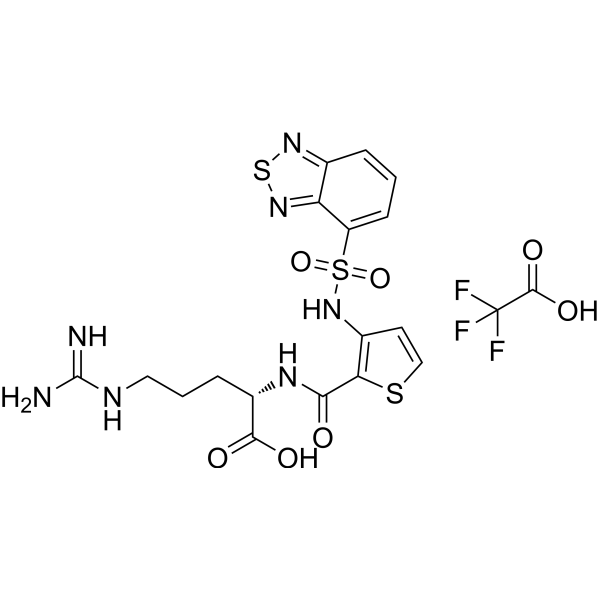
EG00229 is a neuropilin 1 (NRP1) receptor antagonist. EG00229 selectively inhibits VEGF-A binding to NRP1 b1 domain with an IC50 of 3 μM, but has no effect on VEGFA binding to VEGFR-1 and VEGFR-2 [1].
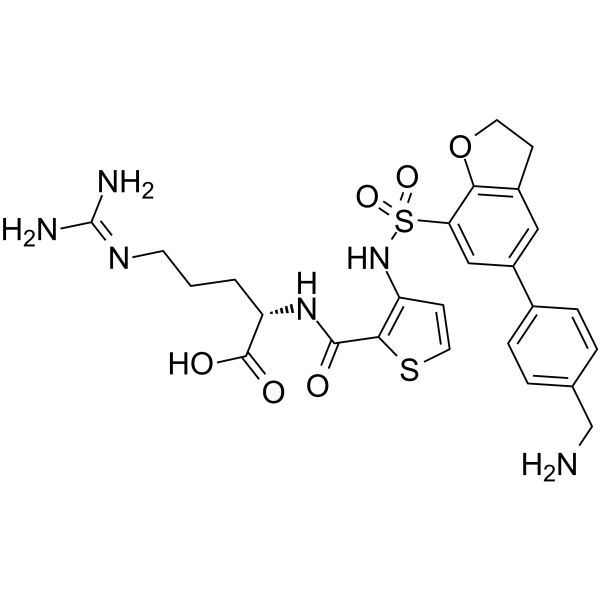
EG01377 is a potent, bioavailable and selective inhibitor of neuropilin-1(NRP1), with a Kd of 1.32 μM, and IC50s of both 609 nM for NRP1-a1 and NRP1-b1. EG01377 has antiangiogenic, antimigratory, and antitumor effects [1].
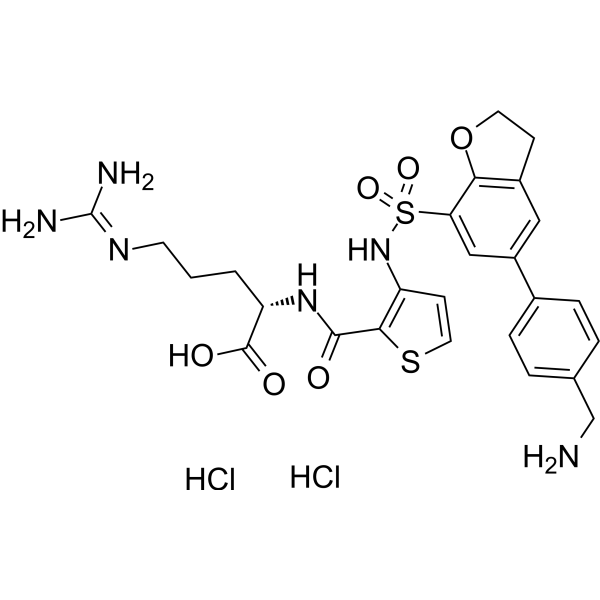
EG01377 dihydrochloride is a potent, bioavailable and selective inhibitor of neuropilin-1(NRP1), with a Kd of 1.32 μM, and IC50s of 609 nM for both NRP1-a1 and NRP1-b1. EG01377 dihydrochloride has antiangiogenic, antimigratory, and antitumor effects [1].
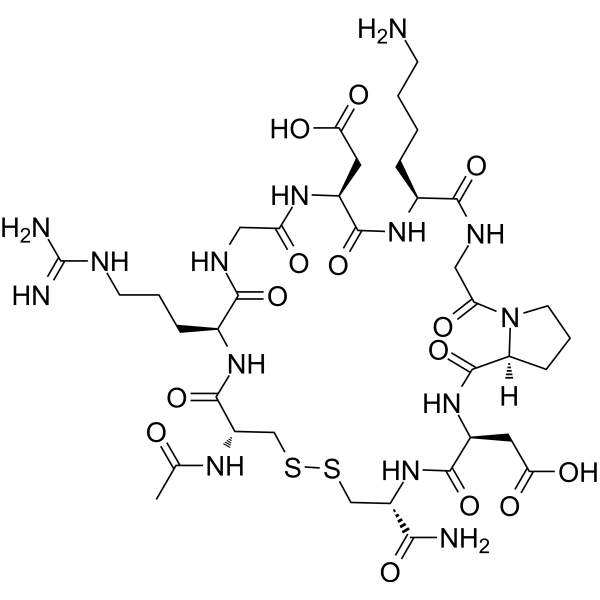
Certepetide (CEND-1) is a bifunctional cyclic peptide (a.k.a. iRGD). Certepetide is a tumor-penetrating enhancer via RGD motif interaction with alphav-integrins and via activating NRP-1, and transforms the solid tumor microenvironment into a temporary agent conduit. Certepetide accumulates in tumors, and is used in the research of pancreatic cancer and other solid tumors [1] .
tLyP-1 peptide is an NRP-1 targeting peptide with an IC50 of 4 μM, and its amino acid sequence is CGNKRTR. tLyP-1 peptide specifically binds to NRP-1 to target tumor cells [1].
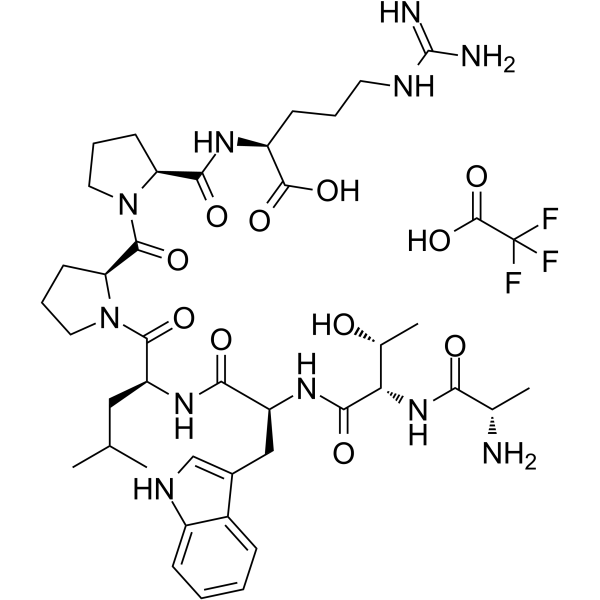
ATWLPPR Peptide TFA, a heptapeptide, acts as a selective neuropilin-1 inhibitor, inhibits VEGF165 binding to NRP-1, used in the research of angiogenesis [1]. ATWLPPR Peptide TFA has potential in reducing the early retinal damage caused by diabetes .
Nrp1 Mouse Pre-designed siRNA Set A contains three designed siRNAs for Nrp1 gene (Mouse), as well as a negative control, a positive control, and a FAM-labeled negative control.
NRP1 Human Pre-designed siRNA Set A contains three designed siRNAs for NRP1 gene (Human), as well as a negative control, a positive control, and a FAM-labeled negative control.
Tasronetide (FTX-101) is a highly selective inhibitor toward the NRP1/Plexin-A1 receptor system, and displays no significant activity on other targets. Tasronetide intercalates within the transmembrane domains of Plexin-A1 and NRP1 of oligodendrocytes, interferes with the heterodimerization of the co-receptor system, effectively disrupts the NRP1/Plexin-A1 receptor complex and mitigates the inhibitory influence of Sema3A on oligodendrocyte migration and differentiation, thereby facilitating increased myelin sheathing around axons. Tasronetide is designed to enhance the recruitment and maturation of oligodendrocyte precursors and can be used for Chronic Op c Neuropathy research [1].
A7RC is a multifunctional peptide used in tumor-targeted therapy, with Cysteine added to the C-terminal of the A7R peptide (sequence: ATWLPPR). A7R (HY-P1663) is a ligand of the NRP-1 receptor, regulating intracellular signal transduction related to tumor vascularization and tumor growth [1].
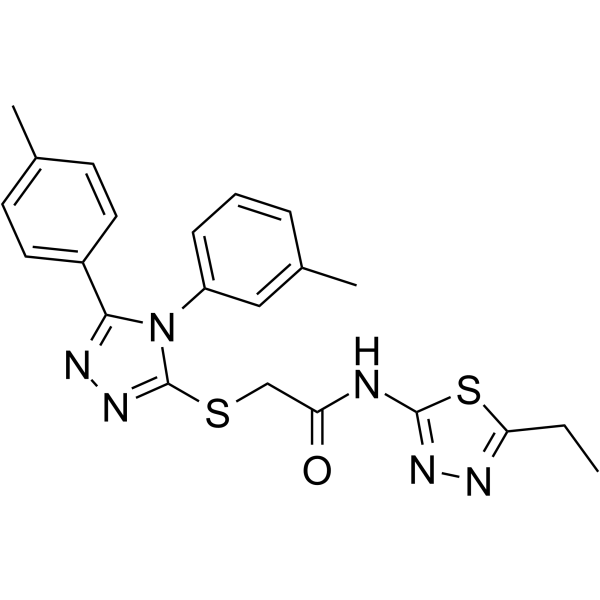
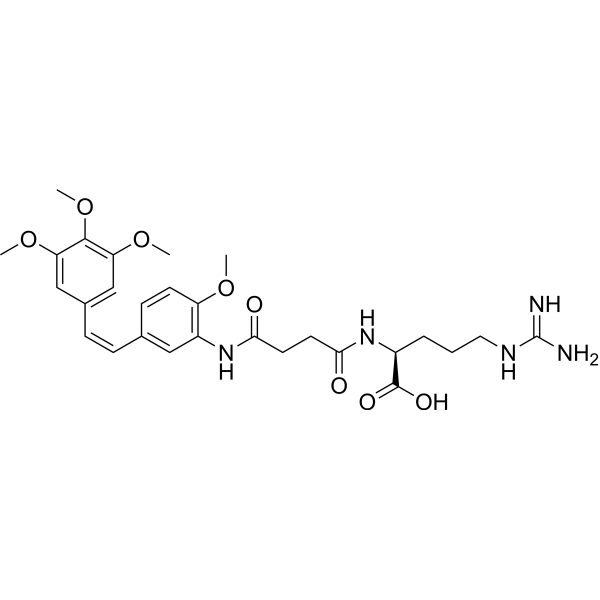
Tubulin/NRP1-IN-1 (compound TN-2) is a dual inhibitor of Tubulin and NRP1 with IC50s of 0.71 and 0.85 μM, respectively. Tubulin/NRP1-IN-1 significantly inhibits the viability of prostate tumor cell lines and induces apoptosis[1].
Nrp1 Rat Pre-designed siRNA Set A contains three designed siRNAs for Nrp1 gene (Rat), as well as a negative control, a positive control, and a FAM-labeled negative control.
Certepetide- 13C6, 15N2 (CEND-1- 13C6, 15N2) is the 13C- and 15N-labeled Certepetide (HY-P3448). Certepetide (CEND-1) is a bifunctional cyclic peptide (a.k.a. iRGD). Certepetide is a tumor-penetrating enhancer via RGD motif interaction with alphav-integrins and via activating NRP-1, and transforms the solid tumor microenvironment into a temporary agent conduit. Certepetide accumulates in tumors, and is used in the research of pancreatic cancer and other solid tumors [1] .
CK3 peptide is an NRP-1 targeting peptide with the amino acid sequence CLKADKAKC. The CK3 peptide specifically binds to NRP-1 to target breast cancer cells. Single-photon emission computed tomography (SPECT) and near-infrared fluorescence (NIRF) imaging show significant accumulation of CK3 peptide in xenograft tumors in nude mice. CK3 peptide can be used for molecular imaging studies of breast cancer.
CAY10781 (Compound 11) is an inhibitor of the neuropilin-1(NRP-1) and VEGF-A interaction. CAY10781 inhibits VEGF-A-induced phosphorylation of VEGFR2 in Catecholamine A-differentiated (CAD) cells [1]< sup>.
ASP-1948 is a human monoclonal antibody (mAb) targeting NRP1/VEGF165R/CD34. ASP-1948 reverses the suppressive effects of regulatory T cells. ASP-1948 can be used in solid tumors research [1].
EG00229 is an inhibitor for VEGF-A and NRP1 interaction with an IC50 of 8 μM. EG00229 inhibits the migration of HUVECS and the phosphorylation of VEGFR2 in endothelial cells. EG00229 exhibits cytotoxicity in cancer cell A549 [1].
EG01449 is a quinoline-based antagonist of Neuropilin-1(NRP1) with an Kd of 0.6 µM. EG01449 competitively inhibits the binding of VEGFA to NRP1 with an IC50 of 362 nM. EG01449 prevents VEGFA-induced pain by inhibiting NRP1-dependent signaling and reducing sodium currents in sensory neurons. EG01449 can be used for the research of nociceptive pain [1].
EG01449 Free acid is a quinoline-based antagonist of Neuropilin-1(NRP1) with an Kd of 0.6 µM. EG01449 Free acid competitively inhibits the binding of VEGFA to NRP1 with an IC50 of 362 nM. EG01449 Free acid prevents VEGFA-induced pain by inhibiting NRP1-dependent signaling and reducing sodium currents in sensory neurons. EG01449 Free acid can be used for the research of nociceptive pain [1].
Certepetide- 13C2, 15N (CEND-1- 13C2, 15N) is the 13C- and 15N-labeled Certepetide (HY-P3448). Certepetide (CEND-1) is a bifunctional cyclic peptide (a.k.a. iRGD). Certepetide is a tumor-penetrating enhancer via RGD motif interaction with alphav-integrins and via activating NRP-1, and transforms the solid tumor microenvironment into a temporary agent conduit. Certepetide accumulates in tumors, and is used in the research of pancreatic cancer and other solid tumors [1] .
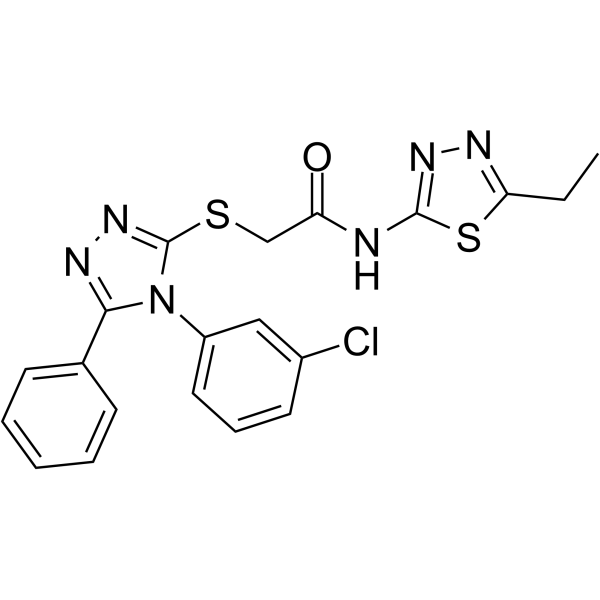
NRPa-308 is a potent and orally active Neuropilin-1(NRP-1) antagonist with an IC50 of 42 μM for inhibiting VEGF-A165binding to NRP-1. NRPa-308 blocks the specific interaction between VEGF-A165 and NRP-1. NRPa-308 effectively suppresses angiogenesis in vitro and in vivo and reduces the viability of a broad spectrum of human solid and haematological cancer cells. NRPa-308 inhibits tumor growth and prolongs median survival in a human breast cancer xenograft mouse model. NRPa-308 can be used for the research of multiple human malignancies including solid tumors and hematological cancers [1].
EG00229 trifluoroacetate (Standard) is the analytical standard of EG00229 (trifluoroacetate) (HY-10799). This product is intended for research and analytical applications. EG00229 is a neuropilin 1 (NRP1) receptor antagonist. EG00229 selectively inhibits VEGF-A binding to NRP1 b1 domain with an IC50 of 3 μM, but has no effect on VEGFA binding to VEGFR-1 and VEGFR-2 [1].
RPARPAR acetate is a CendR tumor-penetrating peptide. RPARPAR acetate directly binds to the NRP-1 and NRP-2 receptors on the surface of tumor cells, triggering cellular internalization, vascular extravasation, and penetration into tumor tissues. RPARPAR acetate serves as an efficient ligand for targeting nanocarriers to NRP-1-positive tumors. RPARPAR acetate is applicable in research on tumor targeting and drug delivery [1].
RPARPAR is a CendR tumor-penetrating peptide. RPARPAR directly binds to the NRP-1 and NRP-2 receptors on the surface of tumor cells, triggering cellular internalization, vascular extravasation, and penetration into tumor tissues. RPARPAR serves as an efficient ligand for targeting nanocarriers to NRP-1-positive tumors. RPARPAR is applicable in research on tumor targeting and drug delivery [1].
NELL1 Human Pre-designed siRNA Set A contains three designed siRNAs for NELL1 gene (Human), as well as a negative control, a positive control, and a FAM-labeled negative control.
Certepetide (CEND-1) is a bifunctional cyclic peptide (a.k.a. iRGD). Certepetide is a tumor-penetrating enhancer via RGD motif interaction with alphav-integrins and via activating NRP-1, and transforms the solid tumor microenvironment into a temporary agent conduit. Certepetide accumulates in tumors, and is used in the research of pancreatic cancer and other solid tumors [1] .
tLyP-1 peptide is an NRP-1 targeting peptide with an IC50 of 4 μM, and its amino acid sequence is CGNKRTR. tLyP-1 peptide specifically binds to NRP-1 to target tumor cells [1].
Tasronetide (FTX-101) is a highly selective inhibitor toward the NRP1/Plexin-A1 receptor system, and displays no significant activity on other targets. Tasronetide intercalates within the transmembrane domains of Plexin-A1 and NRP1 of oligodendrocytes, interferes with the heterodimerization of the co-receptor system, effectively disrupts the NRP1/Plexin-A1 receptor complex and mitigates the inhibitory influence of Sema3A on oligodendrocyte migration and differentiation, thereby facilitating increased myelin sheathing around axons. Tasronetide is designed to enhance the recruitment and maturation of oligodendrocyte precursors and can be used for Chronic Op c Neuropathy research [1].
A7RC is a multifunctional peptide used in tumor-targeted therapy, with Cysteine added to the C-terminal of the A7R peptide (sequence: ATWLPPR). A7R (HY-P1663) is a ligand of the NRP-1 receptor, regulating intracellular signal transduction related to tumor vascularization and tumor growth [1].
Certepetide- 13C6, 15N2 (CEND-1- 13C6, 15N2) is the 13C- and 15N-labeled Certepetide (HY-P3448). Certepetide (CEND-1) is a bifunctional cyclic peptide (a.k.a. iRGD). Certepetide is a tumor-penetrating enhancer via RGD motif interaction with alphav-integrins and via activating NRP-1, and transforms the solid tumor microenvironment into a temporary agent conduit. Certepetide accumulates in tumors, and is used in the research of pancreatic cancer and other solid tumors [1] .
CK3 peptide is an NRP-1 targeting peptide with the amino acid sequence CLKADKAKC. The CK3 peptide specifically binds to NRP-1 to target breast cancer cells. Single-photon emission computed tomography (SPECT) and near-infrared fluorescence (NIRF) imaging show significant accumulation of CK3 peptide in xenograft tumors in nude mice. CK3 peptide can be used for molecular imaging studies of breast cancer.
Certepetide- 13C2, 15N (CEND-1- 13C2, 15N) is the 13C- and 15N-labeled Certepetide (HY-P3448). Certepetide (CEND-1) is a bifunctional cyclic peptide (a.k.a. iRGD). Certepetide is a tumor-penetrating enhancer via RGD motif interaction with alphav-integrins and via activating NRP-1, and transforms the solid tumor microenvironment into a temporary agent conduit. Certepetide accumulates in tumors, and is used in the research of pancreatic cancer and other solid tumors [1] .
RPARPAR acetate is a CendR tumor-penetrating peptide. RPARPAR acetate directly binds to the NRP-1 and NRP-2 receptors on the surface of tumor cells, triggering cellular internalization, vascular extravasation, and penetration into tumor tissues. RPARPAR acetate serves as an efficient ligand for targeting nanocarriers to NRP-1-positive tumors. RPARPAR acetate is applicable in research on tumor targeting and drug delivery [1].
RPARPAR is a CendR tumor-penetrating peptide. RPARPAR directly binds to the NRP-1 and NRP-2 receptors on the surface of tumor cells, triggering cellular internalization, vascular extravasation, and penetration into tumor tissues. RPARPAR serves as an efficient ligand for targeting nanocarriers to NRP-1-positive tumors. RPARPAR is applicable in research on tumor targeting and drug delivery [1].
Vesencumab (MNRP-1685A) is IG1 antibody against neuropilin-1(NRP-1). Vesencumab binds to NRP-1 and prevents the subsequent coupling of NRP-1 to VEGFR-2. Vesencumab has anti-angiogenic and anti-neoplastic activities. Vesencumab can be used in the research of metastatic solid tumors, including ovarian cancer [1] .
ASP-1948 is a human monoclonal antibody (mAb) targeting NRP1/VEGF165R/CD34. ASP-1948 reverses the suppressive effects of regulatory T cells. ASP-1948 can be used in solid tumors research [1].
Neuropilin-1 protein plays an important role by binding to VEGF-165, possibly inhibiting its cellular binding and inducing apoptosis. This dual function suggests its role in regulating VEGF-mediated processes. Neuropilin-1 Protein, Human (HEK293, mFc) is the recombinant human-derived Neuropilin-1 protein, expressed by HEK293 , with C-mFc labeled tag. The total length of Neuropilin-1 Protein, Human (HEK293, mFc) is 623 a.a., with molecular weight of 110-130 kDa.
Neuropilin-1 protein plays an important role by binding to VEGF-165, possibly inhibiting its cellular binding and inducing apoptosis. This dual function suggests its role in regulating VEGF-mediated processes. Neuropilin-1 Protein, Human (HEK293, Fc) is the recombinant human-derived Neuropilin-1 protein, expressed by HEK293 , with C-hFc labeled tag.
Neuropilin-1 protein plays an important role by binding to VEGF-165, possibly inhibiting its cellular binding and inducing apoptosis. This dual function suggests its role in regulating VEGF-mediated processes. Neuropilin-1 Protein, Human (Biotinylated, HEK293, Avi-His) is the recombinant human-derived Neuropilin-1 protein, expressed by HEK293 , with C-Avi, C-6*His labeled tag.
Neuropilin-1 protein is an important receptor critical for cardiovascular system development, angiogenesis, neuronal circuit formation, and non-nervous system organogenesis.It mediates the chemical pulse activity of signaling proteins, recognizes C-terminal regular motifs on ligands, and promotes cellular internalization and vascular leakage.Neuropilin-1 Protein, Mouse (HEK293, His) is the recombinant mouse-derived Neuropilin-1 protein, expressed by HEK293 , with C-6*His labeled tag.
Neuropilin-1 Protein, a transmembrane glycoprotein, regulates axon guidance, angiogenesis, neuronal development, and immune responses. Neuropilin-1 can interacts with VEGF and semaphorins, and promote the growth, survival, and self-renewal of tumors. Neuropilin-1 also acts as an entry factor and potentiate SARS-CoV-2 and Epstein-Barr virus (EBV) infectivity. Furthermore, Neuropilin-1 acts as a co-receptor for TGF-β, and enhances TGF-β activity via the SMAD2/3 signaling pathway. Neuropilin-1 Protein, Cynomolgus (HEK293) is the recombinant cynomolgus-derived Neuropilin-1 protein, expressed by HEK293, with amino acids (LEVLFQ) at the C-terminus.
Neuropilin-1 Protein, a transmembrane glycoprotein, regulates axon guidance, angiogenesis, neuronal development, and immune responses. Neuropilin-1 can interacts with VEGF and semaphorins, and promote the growth, survival, and self-renewal of tumors. Neuropilin-1 also acts as an entry factor and potentiate SARS-CoV-2 and Epstein-Barr virus (EBV) infectivity. Furthermore, Neuropilin-1 acts as a co-receptor for TGF-β, and enhances TGF-β activity via the SMAD2/3 signaling pathway. Neuropilin-1 Protein, Cynomolgus (HEK293, His) is the recombinant cynomolgus-derived Neuropilin-1 protein, expressed by HEK293 , with C-6*His labeled tag.
Neuropilin-1 protein plays an important role by binding to VEGF-165, possibly inhibiting its cellular binding and inducing apoptosis. This dual function suggests its role in regulating VEGF-mediated processes. Neuropilin-1 Protein, Human (HEK293, His) is the recombinant human-derived Neuropilin-1 protein, expressed by HEK293 , with C-His labeled tag.
Neuropilin-1 protein is an important receptor critical for cardiovascular system development, angiogenesis, neuronal circuit formation, and non-nervous system organogenesis.It mediates the chemical pulse activity of signaling proteins, recognizes C-terminal regular motifs on ligands, and promotes cellular internalization and vascular leakage.Neuropilin-1 Protein, Mouse (HEK293, Fc) is the recombinant mouse-derived Neuropilin-1 protein, expressed by HEK293 , with C-mFc labeled tag.
Neuropilin-1 protein plays an important role by binding to VEGF-165, possibly inhibiting its cellular binding and inducing apoptosis. This dual function suggests its role in regulating VEGF-mediated processes. Neuropilin-1 Protein, Human (Biotinylated, HEK293, His-Avi, solution) is the recombinant human-derived Neuropilin-1 protein, expressed by HEK293 , with C-Avi, C-His labeled tag and V179A mutation.
Neuropilin-1 protein plays an important role by binding to VEGF-165, possibly inhibiting its cellular binding and inducing apoptosis. This dual function suggests its role in regulating VEGF-mediated processes. Neuropilin-1 Protein, Human (V179A, HEK293, Fc) is the recombinant human-derived Neuropilin-1 protein, expressed by HEK293 , with C-hFc labeled tag and V179A mutation.
Neuropilin-1 protein is a cell surface receptor that plays multiple roles in cardiovascular development, angiogenesis, and neuronal circuit formation. It mediates chemical repulsion by recognizing ligands with CendR motifs, leading to internalization and vascular leakage. Neuropilin-1 Protein, Rat (HEK293, His) is the recombinant rat-derived Neuropilin-1 protein, expressed by HEK293 , with C-6*His labeled tag and K811R, P812-G828 delet.
Certepetide- 13C6, 15N2 (CEND-1- 13C6, 15N2) is the 13C- and 15N-labeled Certepetide (HY-P3448). Certepetide (CEND-1) is a bifunctional cyclic peptide (a.k.a. iRGD). Certepetide is a tumor-penetrating enhancer via RGD motif interaction with alphav-integrins and via activating NRP-1, and transforms the solid tumor microenvironment into a temporary agent conduit. Certepetide accumulates in tumors, and is used in the research of pancreatic cancer and other solid tumors [1] .
Certepetide- 13C2, 15N (CEND-1- 13C2, 15N) is the 13C- and 15N-labeled Certepetide (HY-P3448). Certepetide (CEND-1) is a bifunctional cyclic peptide (a.k.a. iRGD). Certepetide is a tumor-penetrating enhancer via RGD motif interaction with alphav-integrins and via activating NRP-1, and transforms the solid tumor microenvironment into a temporary agent conduit. Certepetide accumulates in tumors, and is used in the research of pancreatic cancer and other solid tumors [1] .
Nrp1 Mouse Pre-designed siRNA Set A contains three designed siRNAs for Nrp1 gene (Mouse), as well as a negative control, a positive control, and a FAM-labeled negative control.
NRP1 Human Pre-designed siRNA Set A contains three designed siRNAs for NRP1 gene (Human), as well as a negative control, a positive control, and a FAM-labeled negative control.
Nrp1 Rat Pre-designed siRNA Set A contains three designed siRNAs for Nrp1 gene (Rat), as well as a negative control, a positive control, and a FAM-labeled negative control.
NELL1 Human Pre-designed siRNA Set A contains three designed siRNAs for NELL1 gene (Human), as well as a negative control, a positive control, and a FAM-labeled negative control.
Inquiry Online
Your information is safe with us. * Required Fields.
Western blot analysis of extracts from THP-1(lane 2(20μg), Jurkat (lane 3(20μg) and NIH3T3(lane 4(20μg) using FOXO1A (HY-P80132) Rabbit mAb. Proteins were transferred
to a PVDF membrane and blocked with 5% non-fat milk in TBST for 2 hour at room temperature. The primary antibody (1/1000) and Loading control antibody (Beta Actin, HY-P80438, 1/10000) was
used in 5% non-fat milk in TBST at 4°C overnight. Goat Anti-Mouse/Rabbit IgG-HRP Secondary Antibody (1/10000) was used for 1 hour at room temperature.
Western blot analysis of extracts from THP-1(lane 2(20μg), Jurkat (lane 3(20μg) and NIH3T3(lane 4(20μg) using FOXO1A (HY-P80132) Rabbit mAb. Proteins were transferred
to a PVDF membrane and blocked with 5% non-fat milk in TBST for 2 hour at room temperature. The primary antibody (1/1000) and Loading control antibody (Beta Actin, HY-P80438, 1/10000) was
used in 5% non-fat milk in TBST at 4°C overnight. Goat Anti-Mouse/Rabbit IgG-HRP Secondary Antibody (1/10000) was used for 1 hour at room temperature.
Western blot analysis of extracts from THP-1(lane 2(20μg), Jurkat (lane 3(20μg) and NIH3T3(lane 4(20μg) using FOXO1A (HY-P80132) Rabbit mAb. Proteins were transferred
to a PVDF membrane and blocked with 5% non-fat milk in TBST for 2 hour at room temperature. The primary antibody (1/1000) and Loading control antibody (Beta Actin, HY-P80438, 1/10000) was
used in 5% non-fat milk in TBST at 4°C overnight. Goat Anti-Mouse/Rabbit IgG-HRP Secondary Antibody (1/10000) was used for 1 hour at room temperature.
Western blot analysis of extracts from THP-1(lane 2(20μg), Jurkat (lane 3(20μg) and NIH3T3(lane 4(20μg) using FOXO1A (HY-P80132) Rabbit mAb. Proteins were transferred
to a PVDF membrane and blocked with 5% non-fat milk in TBST for 2 hour at room temperature. The primary antibody (1/1000) and Loading control antibody (Beta Actin, HY-P80438, 1/10000) was
MedchemExpress Validation 03
Western blot analysis of extracts from THP-1(lane 2(20μg), Jurkat (lane 3(20μg) and NIH3T3(lane 4(20μg) using FOXO1A (HY-P80132) Rabbit mAb. Proteins were transferred
MedchemExpress Validation 04
Western blot analysis of extracts from THP-1(lane 2(20μg), Jurkat (lane 3(20μg) and NIH3T3(lane 4(20μg) using FOXO1A (HY-P80132) Rabbit mAb. Proteins were transferred
to a PVDF membrane and blocked with 5% non-fat milk in TBST for 2 hour at room temperature. The primary antibody (1/1000) and Loading control antibody (Beta Actin, HY-P80438, 1/10000) was
used in 5% non-fat milk in TBST at 4°C overnight. Goat Anti-Mouse/Rabbit IgG-HRP Secondary Antibody (1/10000) was used for 1 hour at room temperature.
MedchemExpress Validation
Western blot analysis of extracts from THP-1(lane 2(20μg), Jurkat (lane 3(20μg) and NIH3T3(lane 4(20μg) using FOXO1A (HY-P80132) Rabbit mAb. Proteins were transferred
to a PVDF membrane and blocked with 5% non-fat milk in TBST for 2 hour at room temperature. The primary antibody (1/1000) and Loading control antibody (Beta Actin, HY-P80438, 1/10000) was
used in 5% non-fat milk in TBST at 4°C overnight. Goat Anti-Mouse/Rabbit IgG-HRP Secondary Antibody (1/10000) was used for 1 hour at room temperature.
Western blot analysis of extracts from THP-1(lane 2(20μg), Jurkat (lane 3(20μg) and NIH3T3(lane 4(20μg) using FOXO1A (HY-P80132) Rabbit mAb. Proteins were transferred
to a PVDF membrane and blocked with 5% non-fat milk in TBST for 2 hour at room temperature. The primary antibody (1/1000) and Loading control antibody (Beta Actin, HY-P80438, 1/10000) was
used in 5% non-fat milk in TBST at 4°C overnight. Goat Anti-Mouse/Rabbit IgG-HRP Secondary Antibody (1/10000) was used for 1 hour at room temperature.
MedchemExpress Validation
Western blot analysis of extracts from THP-1(lane 2(20μg), Jurkat (lane 3(20μg) and NIH3T3(lane 4(20μg) using FOXO1A (HY-P80132) Rabbit mAb. Proteins were transferred
to a PVDF membrane and blocked with 5% non-fat milk in TBST for 2 hour at room temperature. The primary antibody (1/1000) and Loading control antibody (Beta Actin, HY-P80438, 1/10000) was
used in 5% non-fat milk in TBST at 4°C overnight. Goat Anti-Mouse/Rabbit IgG-HRP Secondary Antibody (1/10000) was used for 1 hour at room temperature.
MedchemExpress Validation
Western blot analysis of extracts from THP-1(lane 2(20μg), Jurkat (lane 3(20μg) and NIH3T3(lane 4(20μg) using FOXO1A (HY-P80132) Rabbit mAb. Proteins were transferred
to a PVDF membrane and blocked with 5% non-fat milk in TBST for 2 hour at room temperature. The primary antibody (1/1000) and Loading control antibody (Beta Actin, HY-P80438, 1/10000) was
used in 5% non-fat milk in TBST at 4°C overnight. Goat Anti-Mouse/Rabbit IgG-HRP Secondary Antibody (1/10000) was used for 1 hour at room temperature.
MedchemExpress Validation
Western blot analysis of extracts from THP-1(lane 2(20μg), Jurkat (lane 3(20μg) and NIH3T3(lane 4(20μg) using FOXO1A (HY-P80132) Rabbit mAb. Proteins were transferred
to a PVDF membrane and blocked with 5% non-fat milk in TBST for 2 hour at room temperature. The primary antibody (1/1000) and Loading control antibody (Beta Actin, HY-P80438, 1/10000) was
used in 5% non-fat milk in TBST at 4°C overnight. Goat Anti-Mouse/Rabbit IgG-HRP Secondary Antibody (1/10000) was used for 1 hour at room temperature.
MedchemExpress Validation
Western blot analysis of extracts from THP-1(lane 2(20μg), Jurkat (lane 3(20μg) and NIH3T3(lane 4(20μg) using FOXO1A (HY-P80132) Rabbit mAb. Proteins were transferred
to a PVDF membrane and blocked with 5% non-fat milk in TBST for 2 hour at room temperature. The primary antibody (1/1000) and Loading control antibody (Beta Actin, HY-P80438, 1/10000) was
used in 5% non-fat milk in TBST at 4°C overnight. Goat Anti-Mouse/Rabbit IgG-HRP Secondary Antibody (1/10000) was used for 1 hour at room temperature.
MedchemExpress Validation
Western blot analysis of extracts from THP-1(lane 2(20μg), Jurkat (lane 3(20μg) and NIH3T3(lane 4(20μg) using FOXO1A (HY-P80132) Rabbit mAb. Proteins were transferred
to a PVDF membrane and blocked with 5% non-fat milk in TBST for 2 hour at room temperature. The primary antibody (1/1000) and Loading control antibody (Beta Actin, HY-P80438, 1/10000) was
used in 5% non-fat milk in TBST at 4°C overnight. Goat Anti-Mouse/Rabbit IgG-HRP Secondary Antibody (1/10000) was used for 1 hour at room temperature.
MedchemExpress Validation
Western blot analysis of extracts from THP-1(lane 2(20μg), Jurkat (lane 3(20μg) and NIH3T3(lane 4(20μg) using FOXO1A (HY-P80132) Rabbit mAb. Proteins were transferred
to a PVDF membrane and blocked with 5% non-fat milk in TBST for 2 hour at room temperature. The primary antibody (1/1000) and Loading control antibody (Beta Actin, HY-P80438, 1/10000) was
used in 5% non-fat milk in TBST at 4°C overnight. Goat Anti-Mouse/Rabbit IgG-HRP Secondary Antibody (1/10000) was used for 1 hour at room temperature.
MedChemExpress values your privacy and your trust is important to us. We use cookies to enhance your website experience. Some cookies are necessary to run the website.
Privacy and Cookie Policy

