18 Results for "

Nav1.6

" in MedChemExpress (MCE) Product Catalog:
Products (18)

18 Results for "Nav1.6" in MCE Product Catalog:

  • Isoforms Recommended:
4
4 Cited Publications
Cat. No.: HY-16787
CAS No.: 313254-51-2
Target:  

Sodium Channel

Research Areas:  

Cardiovascular Disease

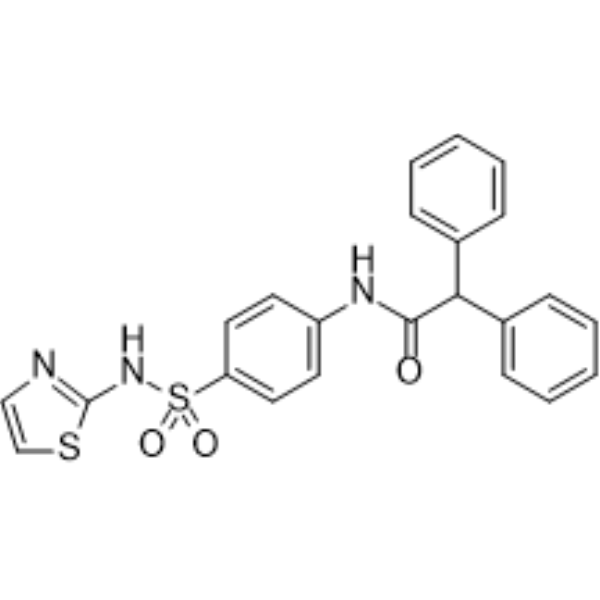
ICA-121431 is a nanomolar potent and broad-spectrum voltage-gated sodium channel (Nav) blocker, shows equipotent selectivity for human Nav1.1 and Nav1.3 subtypes with IC50 values of 13 nM and 23 nM, respectively. ICA-121431 shows less potent inhibition of Nav1.2 (IC50=240 nM) and 1,000 fold selectivity against Nav1.4, Nav1.6, and the TTX-resistant human Nav1.5 and Nav1.8 channels (IC50s >10 μM).
loading...
    loading...
3
3 Cited Publications
Cat. No.: HY-P10234A
Target:  

Sodium Channel

Research Areas:  

Neurological Disease

Poneratoxin acetate is the acetate salt form of Poneratoxin (HY-P10234). Poneratoxin acetate is the modulator for voltage-gated sodium channel (NaV, EC50 for NaV1.6 and NaV1.7 is 97 nM and 2.3 µM), that lowers the voltage threshold for activation and inhibits the inactivation of channels, enhances the excitability of neurons, and leads to the transmission of pain signals .
loading...
    loading...
1
1 Cited Publications
Cat. No.: HY-147423
CAS No.: 2154406-04-7
Purity:  99.28%
Synonyms: NBI-921352; XEN901
Target:  

Sodium Channel

Research Areas:  

Neurological Disease

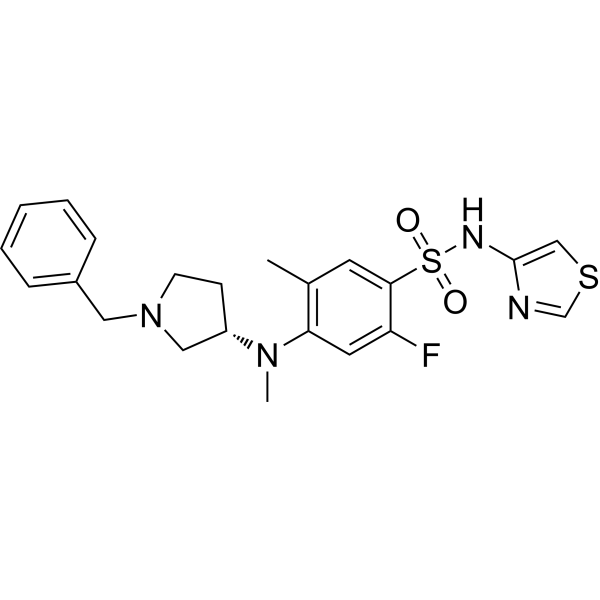
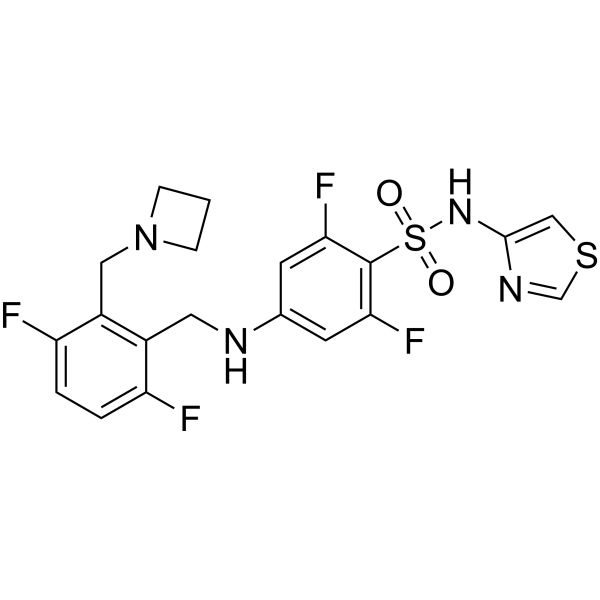
Zandatrigine (NBI-921352; XEN901) is a selective, orally active, voltage-gated sodium channel NaV1.6/SCN8A inhibitor that can penetrate the blood-brain barrier. Zandatrigine inhibits sodium influx by non-covalently binding to the VSD4 structure of NaV1.6, blocking the persistent and resuscitative currents under pathological conditions. Zandatrigine can reduce neuronal hyperexcitability and reduce epileptic seizures. Zandatrigine is 134-756-fold selective for other isoforms such as NaV1.1 and NaV1.2, and has minimal effect on NaV1.1 expressed by inhibitory interneurons. Zandatrigine can be used to study NaV1.6-mediated neuroexcitability diseases such as SCN8A-related developmental epileptic encephalopathy (SCN8A-DEE) and adult focal epilepsy .
loading...
    loading...
1
1 Cited Publications
Cat. No.: HY-128772
CAS No.: 2230144-21-3
Purity:  98.85%
Target:  

Sodium Channel

Research Areas:  

Neurological Disease

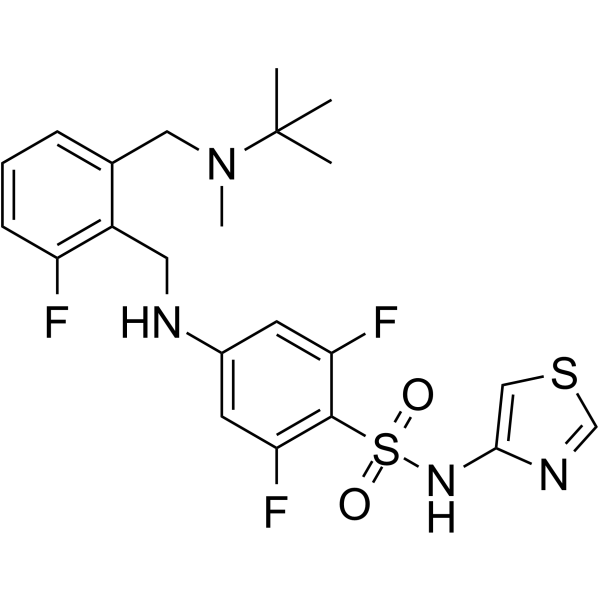
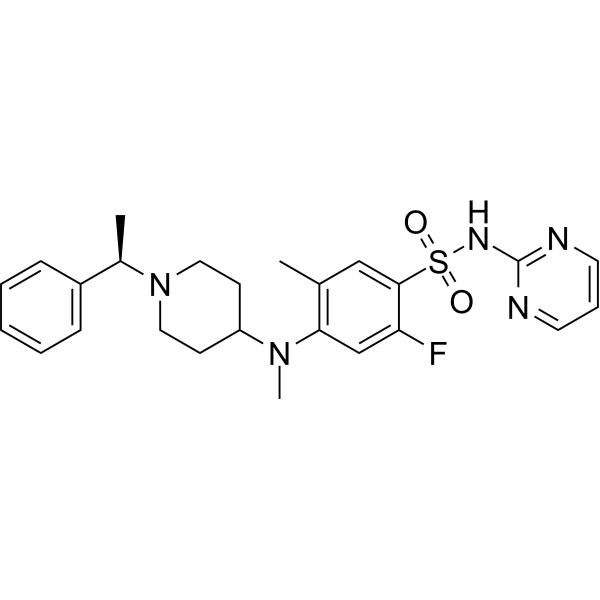
XPC-6444 is a highly potent, isoform-selective, and CNS-penetrant NaV1.6 inhibitor (IC50=41 nM for hNaV1.6). XPC-6444 also displays potent block of NaV1.2 (IC50=125 nM). XPC-6444 shows anticonvulsant activity .
loading...
    loading...
1
1 Cited Publications
Cat. No.: HY-133910
CAS No.: 849000-18-6
Purity:  98.02%
Target:  

Sodium Channel

Research Areas:  

Neurological Disease

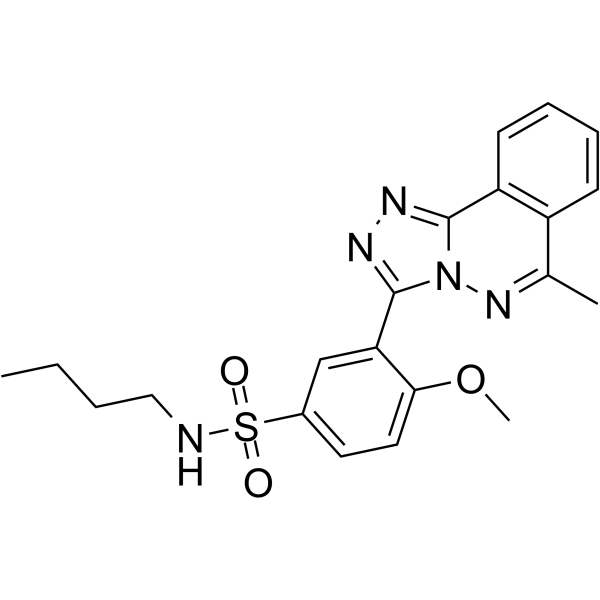
Lu AE98134, an activator of voltage-gated sodium channels, acts as a partly selective Nav1.1 channels positive modulator. Lu AE98134 also increases the activity of Nav1.2 and Nav1.5 channels but not of Nav1.4, Nav1.6 and Nav1.7 channels. Lu AE98134 can be used to analyze pathophysiological functions of the Nav1.1 channel in various central nervous system diseases, including cognitive restoring in schizophrenia, et al .
loading...
    loading...
Cat. No.: HY-157786
CAS No.: 2230145-14-7
Target:  

Sodium Channel

Research Areas:  

Neurological Disease

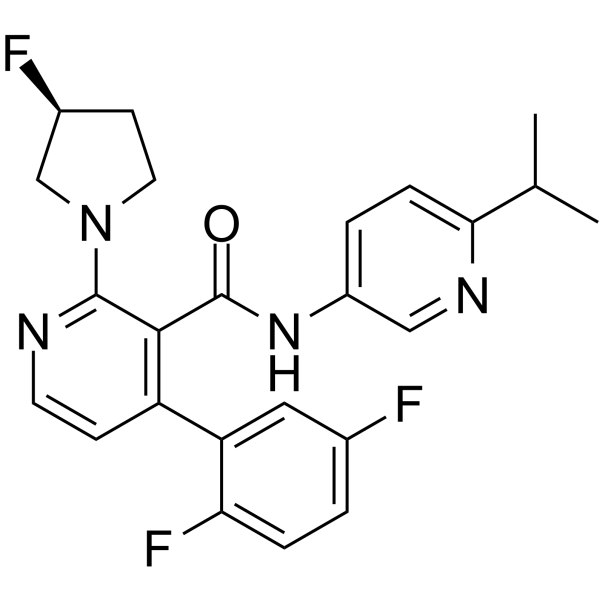
XPC-5462 is a selective NaV1.6/1.2 inhibitor, with an IC50 of 0.0103 μM against hNaV1.6, 0.0137 μM against mNaV1.6, and 0.0109 μM against hNaV1.2. XPC-5462 significantly reduces epileptiform discharges. XPC-5462 is applicable for epilepsy-related research .
loading...
    loading...
Cat. No.: HY-157784
CAS No.: 3121409-76-2
Target:  

Sodium Channel

Research Areas:  

Neurological Disease

XPC-7724 is a selective Nav1.6 channel inhibitor with a IC50 value of 0.078 μM. XPC-7724 can be used in the study of neurological diseases .
loading...
    loading...
Cat. No.: HY-P1073
CAS No.: 484598-35-8
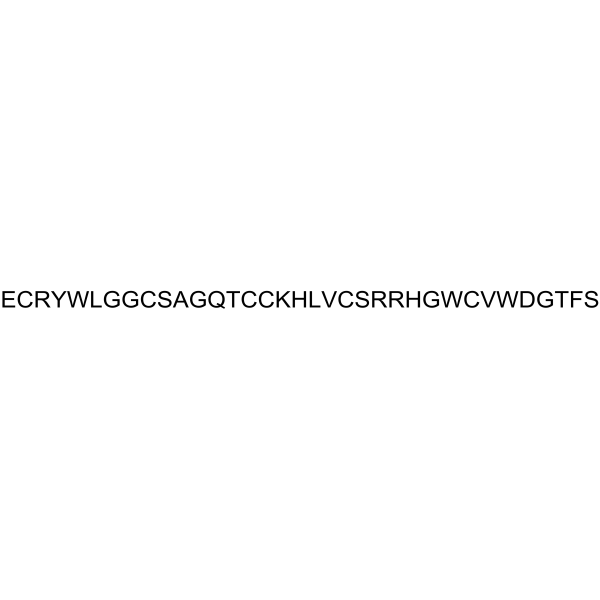
ProTx-I is a toxin derived from Thrixopelma pruriens and a peptide inhibitor targeting TTX-resistant sodium channels. ProTx-I interacts with voltage sensors of multiple domains such as NaV1.7, reduces neuronal excitability through allosteric modulation of channel gating and alteration of voltage dependence. The IC50 values of ProTx-I against human NaV1.7, NaV1.2, NaV1.6, and NaV1.5 are 95 nM, 104 nM, 21 nM, and 358 nM, respectively; ProTx-I also potently inhibits Ba 2+ currents of hCav3.1, while its inhibitory potency against hCav3.2 is approximately 160-fold lower. ProTx-I is applicable to the research of chronic pain .
loading...
    loading...
Cat. No.: HY-126429
CAS No.: 2332897-85-3
Purity:  99.89%
Target:  

Sodium Channel

Research Areas:  

Neurological Disease

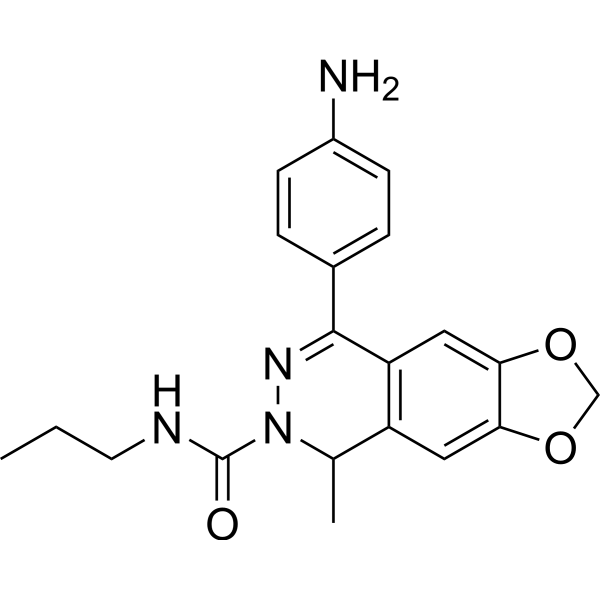
Nav1.1 activator 1 (compound 4), a highly potent Nav1.1 activator with BBB penetration, increases decay time constant τ of Nav1.1 currents at 0.03 μM along with significant selectivity against Nav1.2, Nav1.5, and Nav1.6 .
loading...
    loading...
Cat. No.: HY-18689
CAS No.: 173952-44-8
Target:  

iGluR

Research Areas:  

Neurological Disease

SYM2206 is a potent and non-competitive AMPA receptor antagonist, with an IC50 of 1.6 μM. SYM2206 blocks Nav1.6-mediated persistent currents .
loading...
    loading...
Cat. No.: HY-P5807A
Synonyms: β-Mammal toxin Cn2 TFA
Target:  

Sodium Channel

Research Areas:  

Neurological Disease

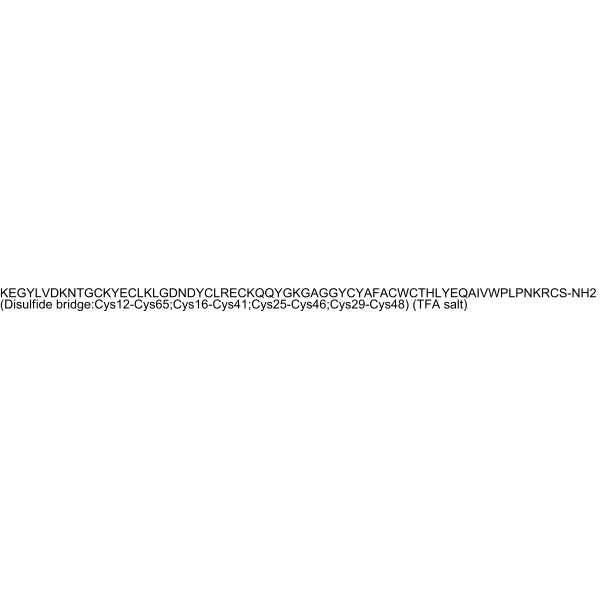
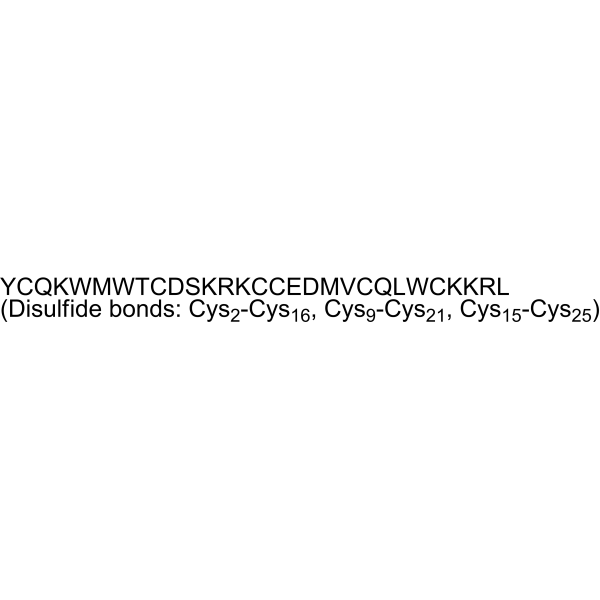
Cn2 toxin TFA (β-Mammal toxin Cn2 TFA) is a single-chain β-scorpion neurotoxic peptide that is the main toxin in scorpion venom. Cn2 toxin (TFA) specifically targets mammalian voltage-gated sodium channels (VGSC) Nav1.6 .
loading...
    loading...
Cat. No.: HY-P10234
CAS No.: 137084-94-7
Target:  

Sodium Channel

Research Areas:  

Neurological Disease

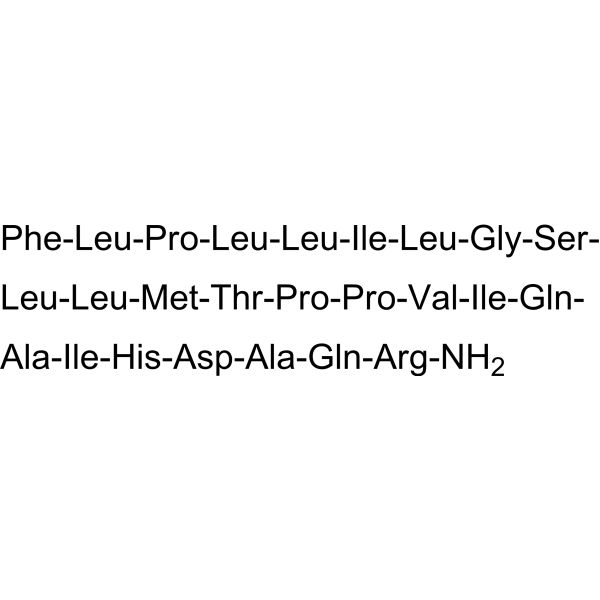
Poneratoxin is the modulator for voltage-gated sodium channel (NaV, EC50 for NaV1.6 and NaV1.7 is 97 nM and 2.3 µM), that lowers the voltage threshold for activation and inhibits the inactivation of channels, enhances the excitability of neurons, and leads to the transmission of pain signals .
loading...
    loading...
Cat. No.: HY-P5795
Research Areas:  

Neurological Disease

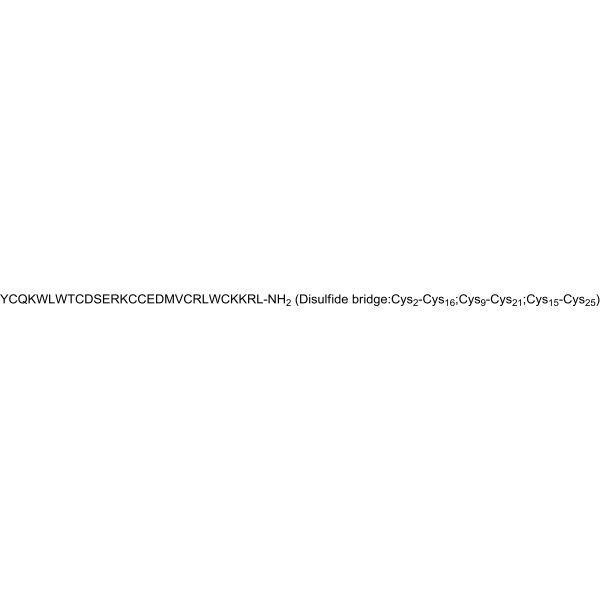
GsAF-I is a potent Nav and hERG1 channels blocker with IC50s of 0.36, 0.6, 1.28, 0.33, 1.2, 0.04 and 4.8 μM against Nav1.1, Nav1.2, Nav1.3, Nav1.4, Nav1.6, Nav1.7 and hERG1, respectively .
loading...
    loading...
Cat. No.: HY-P5164
Target:  

Sodium Channel

Research Areas:  

Neurological Disease

GrTx1 is a peptide toxin originally isolated from the venom of the spider Grammostola rosea. GrTx1 blocks sodium channel, with IC50s of 0.63 μM, 0.23 μM, 0.77 μM, 1.29 μM, 0.63 μM and 0.37 μM for Nav1.1, Nav1.2, Nav1.3, Nav1.4, Nav1.6 and Nav1.7, repectively . GrTx1 can be used for neurological disease research .
loading...
    loading...
Cat. No.: HY-P810924
Synonyms: MED, SCN8A, Sodium channel protein type 8 subunit alpha, Sodium channel protein type VIII subunit alpha, Voltage-gated sodium channel subunit alpha Nav1.6

Host:  

Rabbit

Application:  

WB, ICC/IF

Reactivity:  

Human, Mouse, Rat

loading...
    loading...
Cat. No.: HY-RS12545
Research Areas:  

Others

SCN8A Human Pre-designed siRNA Set A contains three designed siRNAs for SCN8A gene (Human), as well as a negative control, a positive control, and a FAM-labeled negative control.

loading...
    loading...
Cat. No.: HY-RS12546
Research Areas:  

Others

Scn8a Mouse Pre-designed siRNA Set A contains three designed siRNAs for Scn8a gene (Mouse), as well as a negative control, a positive control, and a FAM-labeled negative control.

loading...
    loading...
Cat. No.: HY-W040171
CAS No.: 79538-32-2
Tefluthrin is a pyrethroid insecticide. Tefluthrin prolongs the opening time of Nav1.6 sodium channels, leading to membrane depolarization and conductance block in the insect nervous system, thereby disrupting neural function .
loading...
    loading...
  • 1

