1. Search Result
Search Result
Isoforms Recommended: PDE7
Results for "

PDE7

" in MedChemExpress (MCE) Product Catalog:

32

Inhibitors & Agonists

4

Natural
Products

1

Recombinant Proteins

2

Isotope-Labeled Compounds

4

Oligonucleotides

Targets Recommended:
Cat. No. Product Name Target Research Areas Chemical Structure
  • HY-18252
    Avanafil
    1 Publications Verification

    TA1790

    Phosphodiesterase (PDE) NO Synthase Endogenous Metabolite Cardiovascular Disease Endocrinology
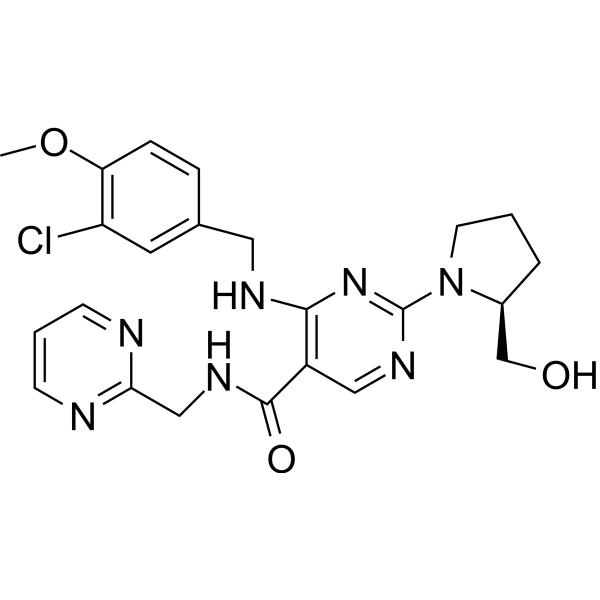
    Avanafil (TA-1790) is a potent and selective phosphodiesterase-5 (PDE-5) inhibitor with IC50 values of 5.2 nM, 630 nM, 5700 nM, 6200 nM, 12000 nM, 27000 nM, 51000 nM and 53000 nM for PDE-5, PDE-6, PDE-4, PDE-10, PDE-8, PDE-7, PDE-2 and PDE-1, respectively. Avanafil activates NO/cGMP/PKG signaling-pathway to decrease loss in BMD, bone atrophy, and oxidative stress. Avanafil inhibits cyclic guanosine monophosphate (cGMP) hydrolysis and thus increases cGMP levels. Avanafil can be used for the research of erectile dysfunction and osteoporosis .
    Avanafil
  • HY-109586
    BRL-50481
    4 Publications Verification

    Phosphodiesterase (PDE) Neurological Disease
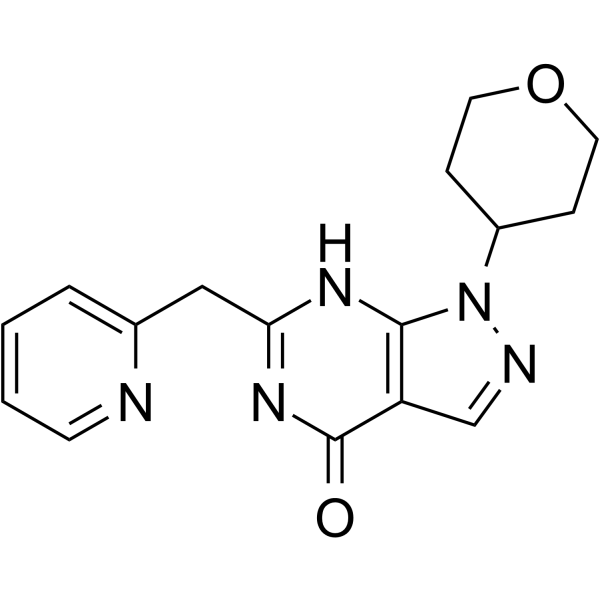
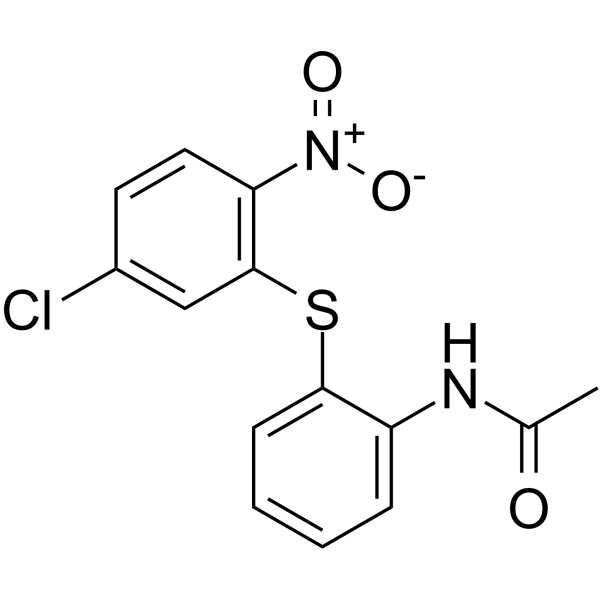
    BRL-50481 is a novel and selective inhibitor of PDE7 with IC50s of 0.15, 12.1, 62 and 490 μM for PDE7A, PDE7B, PDE4 and PDE3, respectively.
    BRL-50481
  • HY-100326

    Phosphodiesterase (PDE) Neurological Disease Inflammation/Immunology
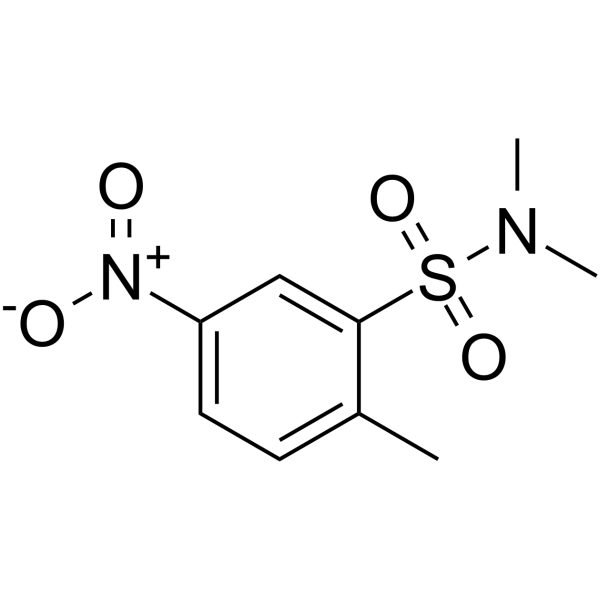
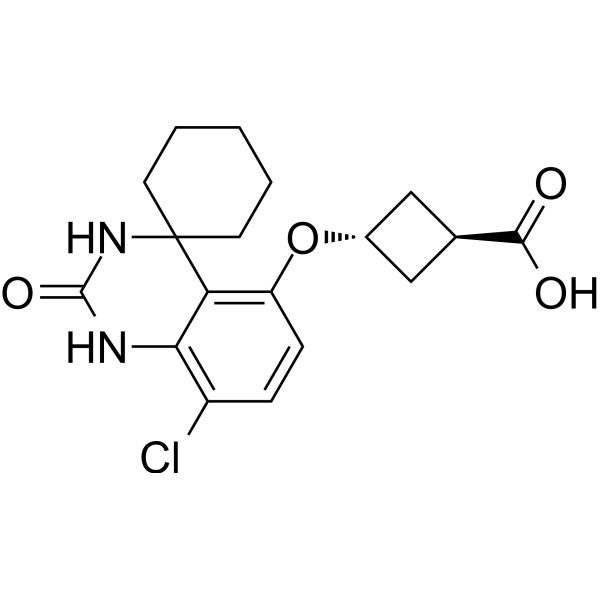
    Pde7-in-3 (example 2) is an inhibitor of the phosphodiesterase PDE7 with potential analgesic activity. PDE7-IN-3 can be used to study inflammatory, neuropathic, visceral and nociceptive pain .
    PDE7-IN-3
  • HY-128879A

    Phosphodiesterase (PDE) GSK-3 Tau Protein Cardiovascular Disease Neurological Disease Inflammation/Immunology
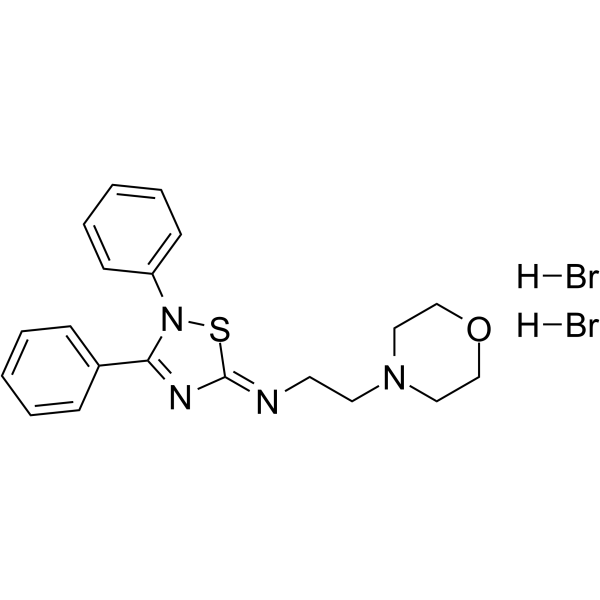
    VP3.15 dihydrobromide is a highly potent, orally bioavailable, and CNS-penetrant PDE7-GSK3 dual inhibitor, with IC50 values of 1.59 μM and 0.88 μM against PDE7 and GSK3, respectively . VP3.15 dihydrobromide elevates intracellular cAMP levels, suppresses immune responses, enhances remyelination, limits excessive tau phosphorylation, and alleviates neuroinflammation and neuronal loss. VP3.15 dihydrobromide promotes oligodendrocyte precursor cell differentiation, improves in vivo remyelination, inhibits autoimmune encephalomyelitis, and mitigates germinal matrix-intraventricular hemorrhage-related brain injury, cerebral atrophy, ventricular enlargement, and cognitive impairment. VP3.15 dihydrobromide can be used in research related to multiple sclerosis and germinal matrix-intraventricular hemorrhage .
    VP3.15 dihydrobromide
  • HY-112831
    Osoresnontrine
    1 Publications Verification

    BI-409306

    Phosphodiesterase (PDE) Neurological Disease
    Osoresnontrine (BI-409306) is a potent and selective PDE9A inhibitor, with an IC50 of 52 nM, and shows weak activity against other PDEs, such as PDE1A (IC50, 1.4 µM), PDE1C (IC50, 1.0 µM), PDE2A, PDE3A, PDE4B, PDE5A, PDE6AB, PDE7A, and PDE10A (IC50 all > 10 μM); Osoresnontrine can be used in the research of memory enhancement in CNS disorders.
    Osoresnontrine
  • HY-112555

    Phosphodiesterase (PDE) Neurological Disease
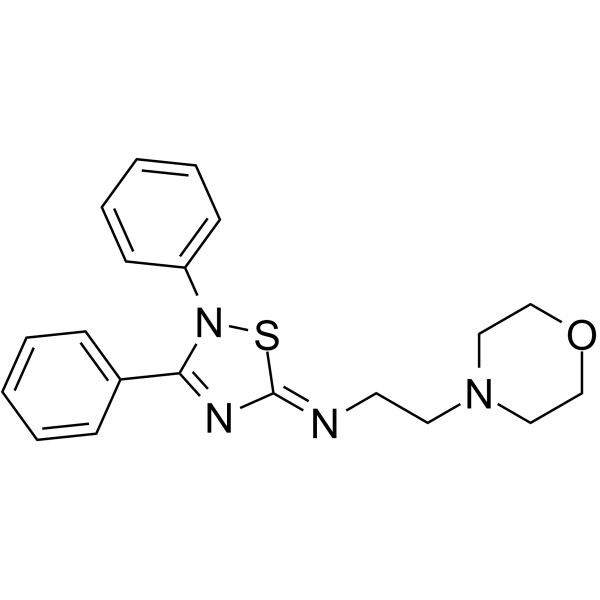
    PDE7-IN-2 (compound 2) is a potent PDE7 (phosphodiesterase 7) inhibitor with IC50 value of 2.1 µM. PDE7-IN-2 has the potential for the research of parkinson’s disease .
    PDE7-IN-2
  • HY-W074537

    Phosphodiesterase (PDE) Neurological Disease
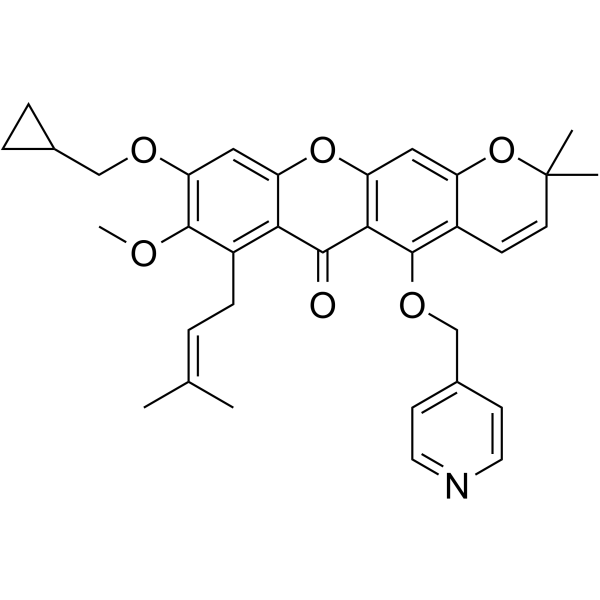
    P7-2104 is a selective CNS-penetrant PDE7A inhibitor with an IC50 of of 31 nM. P7-2104 exhibits selectivity over hERG channels and most CYP450 isoforms. P7-2104 can be used for PDE7-targeted PET neuroimaging, and for the research of neurodegenerative disorders .
    P7-2104
  • HY-114727

    Phosphodiesterase (PDE) Inflammation/Immunology
    PDE7-IN-4 is a phosphodiesterase 7 (PDE7) inhibitor with activity that increases intracellular cyclic adenosine monophosphate (cAMP) levels. PDE7-IN-4 shows potential inhibitory effects in neurotransmission and anti-inflammatory applications. PDE7-IN-4 exerts its biological activity by acting on the cAMP/cAMP response element binding protein (CREB) pathway. The development of PDE7-IN-4 aims to improve its pharmacokinetic characteristics to more effectively target neurodegenerative diseases and other inflammation-related diseases .
    PDE7-IN-4
  • HY-170788

    Phosphodiesterase (PDE) Metabolic Disease
    PDE7A-IN-1 is an orally active and selective PDE7A inhibitor with an IC50 of 0.0037 μM against PDE7A. PDE7A-IN-1 shows excellent isozyme selectivity over PDE7B. PDE7A-IN-1 elevates intracellular cAMP levels, suppresses ECR5 enhancer activity and reduces sclerostin expression. PDE7A-IN-1 significantly increases bone mineral density in rats. PDE7A-IN-1 can be used for the study of osteoporosis .
    PDE7A-IN-1
  • HY-128879

    Phosphodiesterase (PDE) GSK-3 Neurological Disease
    VP3.15 is a potent, orally bioavailable and CNS-penetrant dual phosphodiesterase (PDE)7- glycogen synthase kinase (GSK)3 inhibitor, with IC50s of 1.59 μM and 0.88 μM for PDE7 and GSK-3, respectively. VP3.15 has neuroprotective and neuroreparative activities, thus as potential combined anti-inflammatory and pro-remyelinating therapies for multiple sclerosis (MS) .
    VP3.15
  • HY-151174

    Phosphodiesterase (PDE) Inflammation/Immunology
    PDE4-IN-12 is a potent pan-PDE4 inhibitor, with IC50s of 3.5 and 15 nM for PDE4 and PDE7, respectively (SI=2.71 and 4.27, respectively). PDE4-IN-12 shows well tolerated, can be used in study of inflammatory bowel diseases (IBDs) .
    PDE4-IN-12
  • HY-124635

    Phosphodiesterase (PDE) Apoptosis Inflammation/Immunology Cancer
    BC-54 is a selective inhibitor of enzymes from the cAMP-specific PDE4 and PDE7 families. BC-54 displays potent anti-inflammatory properties and can induce cancer cells apoptosis. BC-54 can be used for the researches of cancer and inflammation, such as chronic lymphocytic leukemia .
    BC-54
  • HY-156434

    Phosphodiesterase (PDE) Neurological Disease
    PDE11A4-IN-1 (compound 23b) is a potent and selective PDE11A4 inhibitor with an IC50 of 12 nM. PDE11A4-IN-1 show high selectivity for PDE11A4 over PDE1, PDE2, PDE7, PDE8, and PDE9 .
    PDE11A4-IN-1
  • HY-146202

    Phosphodiesterase (PDE) Others
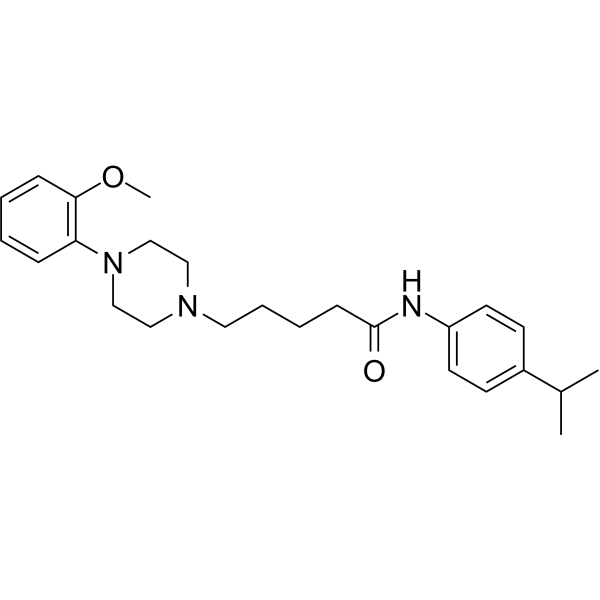
    5-HT1A/5-HT7 receptor antagonist (5-HT1A Ki = 8 nM, Kb = 0.04 nM; 5-HT7 Ki = 451 nM, Kb = 460 nM) with PDE4B/PDE7A inhibitory activity (PDE4B IC50 = 80.4 μM; PDE7A IC50 = 151.3 μM) , its antidepressant like effect is stronger than that of escitalopram as a reference agent.
    PDE4B/7A-IN-2
  • HY-146201

    Phosphodiesterase (PDE) 5-HT Receptor Neurological Disease
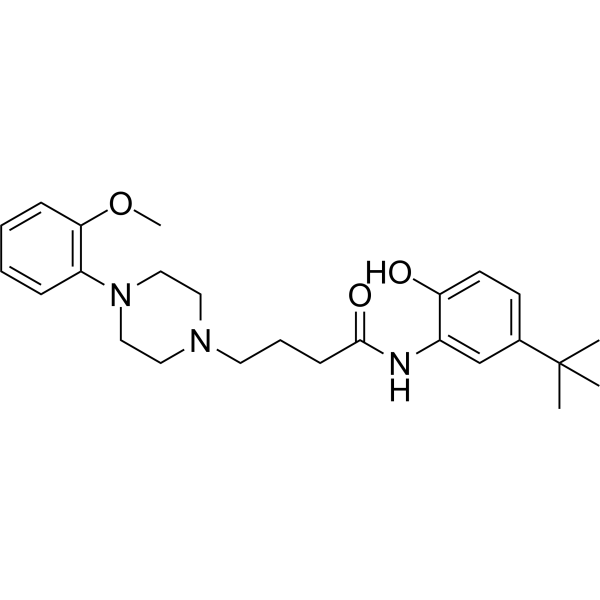
    PDE4B/7A-IN-1 is a dual PDE4B/PDE7A inhibitor. PDE4B/7A-IN-1 shows IC50 values of 69.0 μM for PDE4B and 57.0 μM for PDE7A, as well as Ki values of 539 nM for 5-HT1A and 328 nM for 5-HT7. PDE4B/7A-IN-1 shows favorable membrane permeability. PDE4B/7A-IN-1 can be used for the study of cognitive impairment and depression .
    PDE4B/7A-IN-1
  • HY-18252A

    TA1790 dibenzenesulfonate

    Phosphodiesterase (PDE) NO Synthase Endogenous Metabolite Cardiovascular Disease Endocrinology
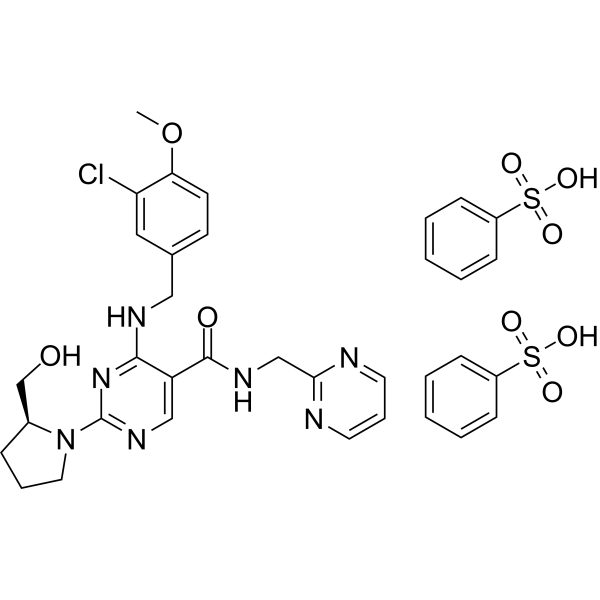
    Avanafil (TA-1790) dibenzenesulfonate is a potent and selective phosphodiesterase-5 (PDE-5) inhibitor with IC50 values of 5.2 nM, 630 nM, 5700 nM, 6200 nM, 12000 nM, 27000 nM, 51000 nM and 53000 nM for PDE-5, PDE-6, PDE-4, PDE-10, PDE-8, PDE-7, PDE-2 and PDE-1, respectively. Avanafil dibenzenesulfonate activates NO/cGMP/PKG signaling-pathway to decrease loss in BMD, bone atrophy, and oxidative stress. Avanafil dibenzenesulfonate inhibits cyclic guanosine monophosphate (cGMP) hydrolysis and thus increases cGMP levels. Avanafil dibenzenesulfonate can be used for the research of erectile dysfunction and osteoporosis .
    Avanafil dibenzenesulfonate
  • HY-112631

    Phosphodiesterase (PDE) Cardiovascular Disease
    OPC-33540 is a highly selective and competitive PDE3 inhibitor with IC50 values of 0.32 nM (PDE3A) and 1.5 nM (PDE3B). OPC-33540 exhibits IC50s against PDE1, PDE2, PDE4, PDE5, and PDE7 of 42.9, 52.3, 100.8, 2.5, and 51.3 μM, respectively. OPC-33540 significantly enhances cAMP accumulation in platelets and effectively inhibits thrombin-induced platelet aggregation. OPC-33540 can be used in antithrombotic studies .
    OPC 33540
  • HY-RS10238

    Small Interfering RNA (siRNA) Others

    PDE7A Human Pre-designed siRNA Set A contains three designed siRNAs for PDE7A gene (Human), as well as a negative control, a positive control, and a FAM-labeled negative control.

    PDE7A Human Pre-designed siRNA Set A
    PDE7A Human Pre-designed siRNA Set A
  • HY-172365

    Phosphodiesterase (PDE) Inflammation/Immunology
    P7-2302 inhibits PDE7 and PDE4B with IC50 of 0.18 nM and 77.3 nM. P7-2302 inhibits the efflux of P-gp and BCRP (breast cancer resistance protein), exhibits low uptake in rats brain. P7-2302 can be used as a PET tracer when labeled with 18F .
    P7–2302
  • HY-170435

    Phosphodiesterase (PDE) Cardiovascular Disease
    PDE5-IN-13 (Compound 14b) inhibits phosphodiesterase 5 (PDE5A) with an IC50 of 3 nM. PDE5-IN-13 is a potential candidate for PAH (pulmonary arterial hypertension) research. PDE5-IN-13 has high selectivity for targets over PDE1, PDE2, PDE3, PDE4, PDE7, PDE8, PDE9, PDE10, and PDE11. PDE5-IN-13 is orally active .
    PDE5-IN-13
  • HY-18252R

    TA1790 (Standard)

    Reference Standards Phosphodiesterase (PDE) NO Synthase Endogenous Metabolite Cardiovascular Disease Endocrinology
    Avanafil (Standard) is the analytical standard of Avanafil. This product is intended for research and analytical applications. Avanafil (TA-1790) is a potent and selective phosphodiesterase-5 (PDE-5) inhibitor with IC50 values of 5.2 nM, 630 nM, 5700 nM, 6200 nM, 12000 nM, 27000 nM, 51000 nM and 53000 nM for PDE-5, PDE-6, PDE-4, PDE-10, PDE-8, PDE-7, PDE-2 and PDE-1, respectively. Avanafil activates NO/cGMP/PKG signaling-pathway to decrease loss in BMD, bone atrophy, and oxidative stress. Avanafil inhibits cyclic guanosine monophosphate (cGMP) hydrolysis and thus increases cGMP levels. Avanafil can be used for the research of erectile dysfunction and osteoporosis .
    Avanafil (Standard)
  • HY-18252S3

    TA1790-13C5

    Isotope-Labeled Compounds Endogenous Metabolite Phosphodiesterase (PDE) NO Synthase Cardiovascular Disease Endocrinology
    Avanafil- 13C5 (TA1790- 13C5) is 13C labeled Avanafil. Avanafil (TA-1790) is a potent and selective phosphodiesterase-5 (PDE-5) inhibitor with IC50 values of 5.2 nM, 630 nM, 5700 nM, 6200 nM, 12000 nM, 27000 nM, 51000 nM and 53000 nM for PDE-5, PDE-6, PDE-4, PDE-10, PDE-8, PDE-7, PDE-2 and PDE-1, respectively. Avanafil activates NO/cGMP/PKG signaling-pathway to decrease loss in BMD, bone atrophy, and oxidative stress. Avanafil inhibits cyclic guanosine monophosphate (cGMP) hydrolysis and thus increases cGMP levels. Avanafil can be used for the research of erectile dysfunction and osteoporosis .
    Avanafil-13C5
  • HY-18252S1

    Endogenous Metabolite NO Synthase Phosphodiesterase (PDE) Isotope-Labeled Compounds Cardiovascular Disease Endocrinology
    Avanafil- 13C5, 15N,d2 is 15N and deuterated labeled Avanafil (HY-18252). Avanafil (TA-1790) is a potent and selective phosphodiesterase-5 (PDE-5) inhibitor with IC50 values of 5.2 nM, 630 nM, 5700 nM, 6200 nM, 12000 nM, 27000 nM, 51000 nM and 53000 nM for PDE-5, PDE-6, PDE-4, PDE-10, PDE-8, PDE-7, PDE-2 and PDE-1, respectively. Avanafil activates NO/cGMP/PKG signaling-pathway to decrease loss in BMD, bone atrophy, and oxidative stress. Avanafil inhibits cyclic guanosine monophosphate (cGMP) hydrolysis and thus increases cGMP levels. Avanafil can be used for the research of erectile dysfunction and osteoporosis .
    Avanafil-13C5,15N,d2
  • HY-RS10239

    Small Interfering RNA (siRNA) Others

    Pde7a Mouse Pre-designed siRNA Set A contains three designed siRNAs for Pde7a gene (Mouse), as well as a negative control, a positive control, and a FAM-labeled negative control.

    Pde7a Mouse Pre-designed siRNA Set A
    Pde7a Mouse Pre-designed siRNA Set A
  • HY-RS10240

    Small Interfering RNA (siRNA) Others

    Pde7a Rat Pre-designed siRNA Set A contains three designed siRNAs for Pde7a gene (Rat), as well as a negative control, a positive control, and a FAM-labeled negative control.

    Pde7a Rat Pre-designed siRNA Set A
    Pde7a Rat Pre-designed siRNA Set A
  • HY-RS10241

    Small Interfering RNA (siRNA) Others

    PDE7B Human Pre-designed siRNA Set A contains three designed siRNAs for PDE7B gene (Human), as well as a negative control, a positive control, and a FAM-labeled negative control.

    PDE7B Human Pre-designed siRNA Set A
    PDE7B Human Pre-designed siRNA Set A
  • HY-134937

    Phosphodiesterase (PDE) Neurological Disease Inflammation/Immunology
    BC8-15 is a PDE inhibitor with IC50 values of 0.28, 0.22, and 6.46 µM for inhibiting PDE8A, PDE4A, and PDE7A, respectively. BC8-15 can enhance steroidogenesis in mouse Leydig cells .
    BC8-15
  • HY-179550

    Drug Metabolite Phosphodiesterase (PDE) PKG Metabolic Disease
    Avanafil metabolite M4 (Compound M-4ii) is a metabolite of Avanafil (HY-18252). Avanafil is a selective Phosphodiesterase-5 (PDE-5) inhibitor with IC50s of 5.2, 630, 5700, 6200, 12000, 27000, 51000 and 53000 nM for PDE-5, PDE-6, PDE-4, PDE-10, PDE-8, PDE-7, PDE-2 and PDE-1, respectively. Avanafil activates NO/cGMP/PKG signaling-pathway to decrease loss in BMD, bone atrophy, and oxidative stress. Avanafil inhibits cGMP hydrolysis and thus increases cGMP levels. Avanafil can be used for the research of erectile dysfunction and osteoporosis .
    Avanafil metabolite M4
  • HY-113972R

    Reference Standards Others Inflammation/Immunology
    Avanafil (Standard) is the analytical standard of Avanafil. This product is intended for research and analytical applications. Avanafil (TA-1790) is a potent and selective phosphodiesterase-5 (PDE-5) inhibitor with IC50 values of 5.2 nM, 630 nM, 5700 nM, 6200 nM, 12000 nM, 27000 nM, 51000 nM and 53000 nM for PDE-5, PDE-6, PDE-4, PDE-10, PDE-8, PDE-7, PDE-2 and PDE-1, respectively. Avanafil activates NO/cGMP/PKG signaling-pathway to decrease loss in BMD, bone atrophy, and oxidative stress. Avanafil inhibits cyclic guanosine monophosphate (cGMP) hydrolysis and thus increases cGMP levels. Avanafil can be used for the research of erectile dysfunction and osteoporosis .
    Methyl mycophenolate (Standard)
  • HY-181762

    Phosphodiesterase (PDE) TRP Channel NF-κB NOD-like Receptor (NLR) Interleukin Related Inflammation/Immunology
    Multitarget AD-IN-6 (Compound 39) is a multi-target inhibitor, with an IC50 of 15.54 μM against PDE4B, 15.15 μM against PDE7A, 8.39 μM against PDE3A, and a Kd of 37.7 μM against CHIT1. Multitarget AD-IN-6 acts as a TRPA1 antagonist, reduces the level of the NLRP3 inflammasome multiprotein complex to inhibit its activation, while inhibiting PDE4B, PDE7A and CHIT1, and decreasing the phosphorylation of NF-κB. Multitarget AD-IN-6 improves the pathology of elastase-induced emphysema in mice. Multitarget AD-IN-6 is applicable for the research of chronic obstructive pulmonary disease .
    Multitarget AD-IN-6
  • HY-180803

    Phosphodiesterase (PDE) Inflammation/Immunology
    LH17, a Kaempferol (HY-14590) derivative, is a potent and selective PDE4 inhibitor (PDE4D2 IC50 = 73 nM, PDE4B2 IC50 = 190 nM). LH17 exhibits remarkable selectivity (>136-fold) against other PDE isoforms (PDE1B/2A/3A/5A/8A/9A/10A) (IC50 > 10000 nM), with the exception of PDE7A1 (IC50 = 300 nM). LH17 distinctly interacts with PDE4 M-pocket. LH17 demonstrates remarkable anti-fibrotic efficacy in both in vitro and in vivo models. LH17 can be used for idiopathic pulmonary fibrosis (IPF) research .
    LH17
  • HY-179503

    Phosphodiesterase (PDE) TRP Channel NOD-like Receptor (NLR) NF-κB TNF Receptor Interleukin Related Inflammation/Immunology
    PDE/TRPA1/CHIT1-IN-1 is a phosphodiesterases (PDEs), TRPA1, and hCHIT1 (KD of 37.7 μM) inhibitor. PDE/TRPA1/CHIT1-IN-1 is a broad-spectrum PDE inhibitor, potently targeting key isoforms including PDE4B, PDE7A, PDE3A, and PDE8A with IC50s of 15.54, 15.15, 8.39 and 16.46 μM. PDE/TRPA1/CHIT1-IN-1 suppresses NLRP3 inflammasome activation and inhibits NF-κB phosphorylation, downregulating the expression of pro-inflammatory genes (TNF-α and IL-6) in vivo. PDE/TRPA1/CHIT1-IN-1 can be used for chronic obstructive pulmonary disease (COPD) and related inflammatory lung disorders research .
    PDE/TRPA1/CHIT1-IN-1

Inquiry Online

Your information is safe with us. * Required Fields.

Salutation


Country or Region *

Applicant Name *


Organization Name *

Department *


Email Address *


Product Name *

Cat. No.


Requested quantity *

Phone Number *


Remarks

Inquiry Online

Inquiry Information

Product Name:
Cat. No.:
Quantity:
MCE Japan Authorized Agent:

