1. Search Result
Search Result
Results for "

Pilocarpine

" in MedChemExpress (MCE) Product Catalog:

17

Inhibitors & Agonists

4

Natural
Products

2

Isotope-Labeled Compounds

Cat. No. Product Name Target Research Areas Chemical Structure
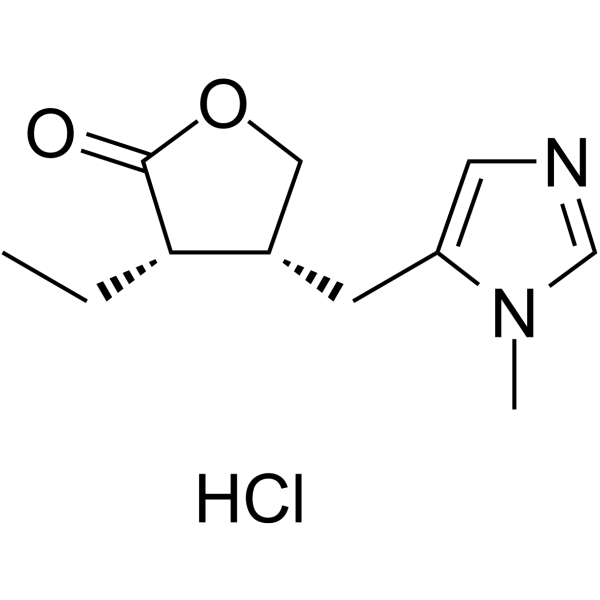
  • HY-B0726
    Pilocarpine Hydrochloride
    40+ Cited Publications

    mAChR Cardiovascular Disease Neurological Disease Cancer
    Pilocarpine Hydrochloride is a potent M3-type muscarinic acetylcholine receptor (M3 muscarinic receptor) agonist.
    Pilocarpine Hydrochloride
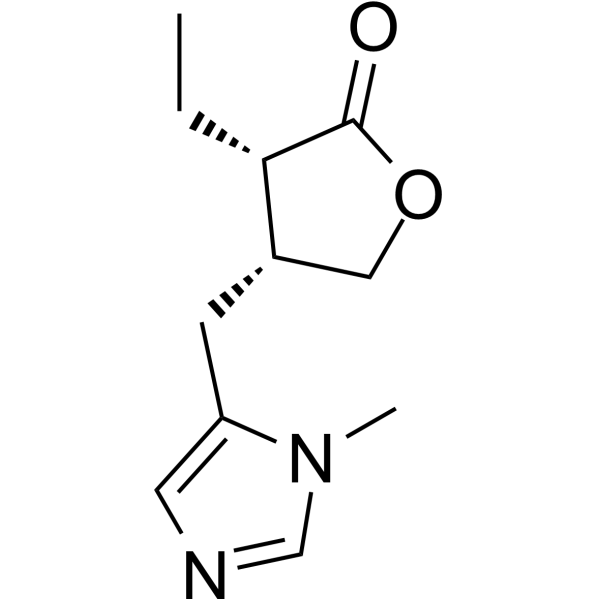
  • HY-B0726A
    Pilocarpine
    Maximum Cited Publications
    41 Publications Verification

    mAChR Neurological Disease Cancer
    Pilocarpine is a selective M3-type muscarinic acetylcholine receptor (M3 muscarinic receptor) agonist.
    Pilocarpine
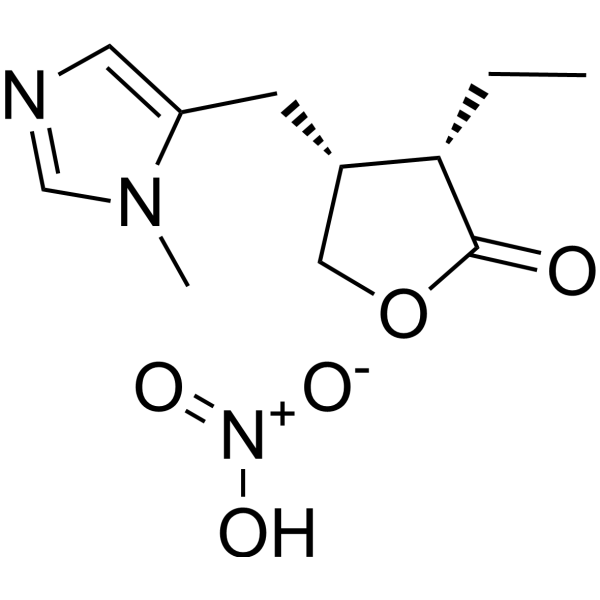
  • HY-B1006
    Pilocarpine nitrate
    40+ Cited Publications

    mAChR Neurological Disease Cancer
    Pilocarpine nitrate is a potent M3-type muscarinic acetylcholine receptor (M3 muscarinic receptor) agonist.
    Pilocarpine nitrate
  • HY-164049

    Prostaglandin Receptor Inflammation/Immunology
    TG8-260 is a second-generation EP2 antagonist developed to alleviate the pathology of central nervous system and peripheral diseases driven by inflammation. TG8-260 can reduce neuroinflammation and gliosis in the hippocampus of rats after pilocarpine-induced persistent epileptic status. Pharmacokinetic data of TG8-260 showed that its plasma half-life was 2.14 hours and its oral bioavailability was 77.3%. TG8-260 is also a potent inhibitor of CYP450 and shows antagonistic activity in inhibiting EP2 receptor-mediated inflammatory gene expression in BV2-hEP2 microglia, which is suitable for studying anti-inflammatory pathways in animal models of peripheral inflammatory diseases .
    TG8-260
  • HY-103232

    mGluR Neurological Disease
    IEM-1925 bromide is an orally active glutamate receptor antagonist, increases the latent period and decreases the duration of status epilepticus in rats in a lithium-pilocarpine model of epilepsy .
    IEM-1925 bromide
  • HY-100265

    R5046

    Drug Derivative Neurological Disease
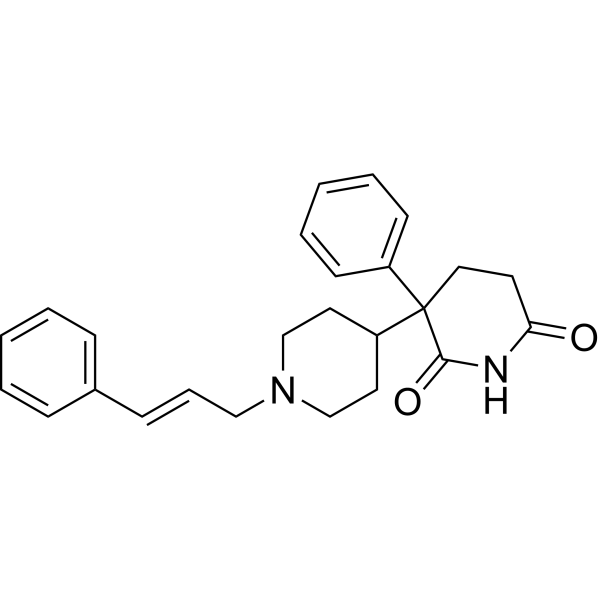
    Cinperene is an atropine-like agent which can block pilocarpine-induced lacrimation and salivation.
    Cinperene
  • HY-B0726R

    Reference Standards mAChR Neurological Disease Cancer
    Pilocarpine (Hydrochloride) (Standard) is the analytical standard of Pilocarpine (Hydrochloride). This product is intended for research and analytical applications. Pilocarpine Hydrochloride is a potent M3-type muscarinic acetylcholine receptor (M3 muscarinic receptor) agonist.
    Pilocarpine Hydrochloride (Standard)
  • HY-B0726S

    Isotope-Labeled Compounds mAChR Neurological Disease
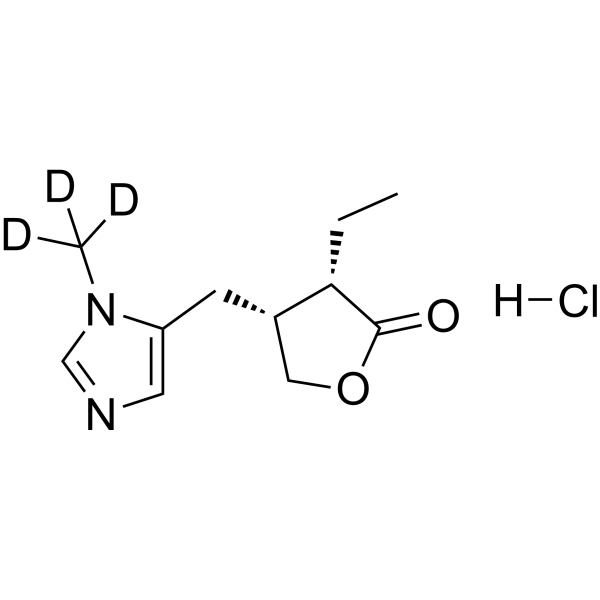
    Pilocarpine-d3 (hydrochloride) is deuterium labeled Pilocarpine (Hydrochloride). Pilocarpine Hydrochloride is a potent M3-type muscarinic acetylcholine receptor (M3 muscarinic receptor) agonist.
    Pilocarpine-d3 hydrochloride
  • HY-B0726S1

    mAChR Isotope-Labeled Compounds Neurological Disease Cancer
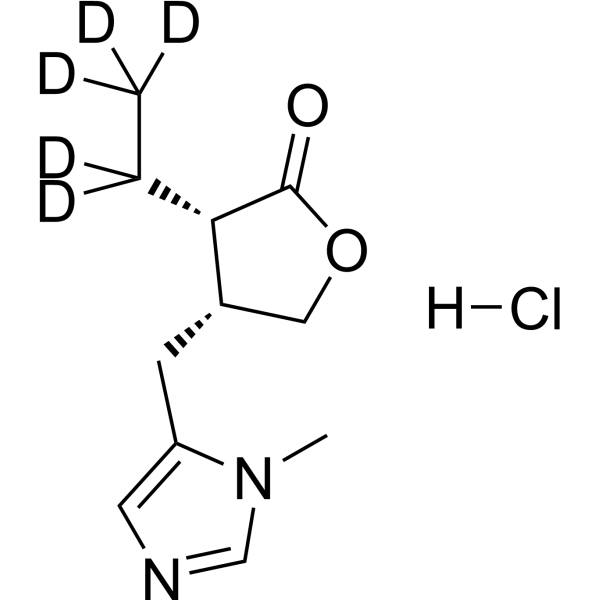
    Pilocarpine-d5 hydrochloride is deuterated labeled Pilocarpine hydrochloride (HY-B0726). Pilocarpine Hydrochloride is a potent M3-type muscarinic acetylcholine receptor (M3 muscarinic receptor) agonist.
    Pilocarpine-d5 hydrochloride
  • HY-B1006R

    Reference Standards mAChR Neurological Disease Cancer
    Pilocarpine (nitrate) (Standard) is the analytical standard of Pilocarpine (nitrate). This product is intended for research and analytical applications. Pilocarpine nitrate is a potent M3-type muscarinic acetylcholine receptor (M3 muscarinic receptor) agonist.
    Pilocarpine nitrate (Standard)
  • HY-178362

    Carbonic Anhydrase NKCC mTOR Neurological Disease
    CAII/VII-IN-1 is an orally active hCA II (KI = 12.3 nM), and hCA VII (KI = 22.6 nM) inhibitor, showing no significant activity against hCA I. CAII/VII-IN-1 shows excellent neuroprotective activity in vivo Pilocarpine (HY-B0726A)-induced seizure model. CAII/VII-IN-1 can upregulate KCC2 and inhibit mTOR, exerting neuroprotective effects. CAII/VII-IN-1 does not show any significant neurotoxic effects or alterations in liver and kidney function. CAII/VII-IN-1 can be used for the study of epilepsy .
    CAII/VII-IN-1
  • HY-149422

    Fluorescent Dye Neurological Disease
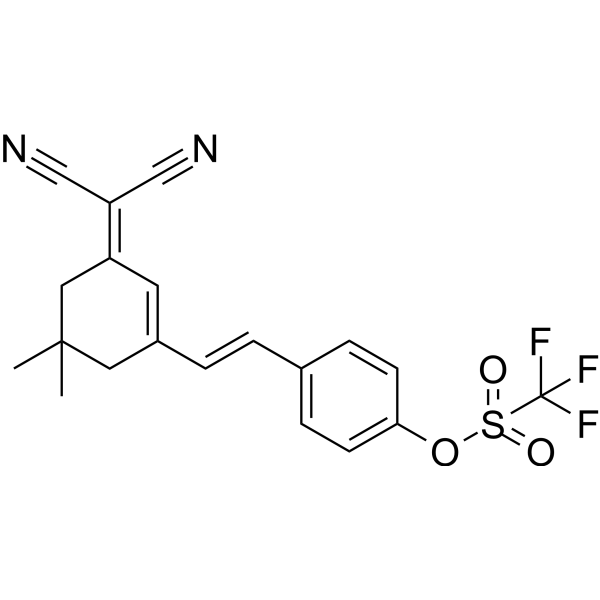
    NIR-FP is a near-infrared fluorescent probe with high sensitivity and selectivity for superoxide anion O 2-. O 2- is the main precursor of ROS, and ferroptosis-mediated epilepsy models can be dynamically tracked by detecting O 2-. Ferroptosis-mediated epilepsy models include: kainic acid (HY-N2309)-induced chronic epilepsy model, Pentylenetetrazole-induced acute epilepsy model, and pilocarpine (HY-B0726A)-induced epilepsy model .
    NIR-FP
  • HY-179142

    COX TNF Receptor Interleukin Related Neurological Disease Inflammation/Immunology
    COX-2-IN-60 is a potent, orally active, and selective COX-2 inhibitor with an IC50 of 0.06 μM. COX-2-IN-60 exhibits ~100-fold selectivity over COX-1 (IC50 = 5.93 ). COX-2-IN-60 reduces oxidative stress and neuroinflammatory cytokines, and effectively counteracts epileptogenesis. COX-2-IN-60 exhibits significant anticonvulsant effects and protects against hippocampal injury by suppressing oxidative stress (reducing MDA and NO), pro-inflammatory signaling (reducing TNF-α and IL-6), and glial activationin in the Pilocarpine (HY-B0726A)-induced seizure mouse model. COX-2-IN-60 can be used for the research on neuroinflammatory and epilepsy .
    COX-2-IN-60
  • HY-135754

    HSR-902

    mAChR Neurological Disease Inflammation/Immunology
    Tiquizium bromide is an orally active, atropine-type, nonselective muscarinic antagonist and novel spasmolytic agent. Tiquizium bromide inhibits the developments of gastric lesions and duodenal lesions. Tiquizium bromide induces the mydoriasis and inhibits the Pilocarpine (HY-B0726A)-induced salivation .
    Tiquizium bromide
  • HY-180056

    Carbonic Anhydrase NKCC mTOR Neurological Disease
    CAII-IN-12 (compound 6c) is a potent and selective carbonic anhydrase (CA) II and VII inhibitor (hCA II Ki = 47.8 nM, hCA VII Ki = 3.6 nM) with anti-epilepitic activity. CAII-IN-12 displays selectivity over hCA I (Ki = 370 nM). CAII-IN-12 exhibits potent anticonvulsant activity in both Pentylenetetrazol- and Pilocarpine (HY-B0726A)-induced seizure mouse models. CAII-IN-12 increases expression of KCC2 in the hippocampus, maintains neuronal integrity, and reduces mTOR activity. CAII-IN-12 can be used for epilepsy research .
    CAII-IN-12
  • HY-183149

    Prostaglandin Receptor Interleukin Related COX Neurological Disease
    BPN-37440 is a blood-brain barrier-permeable, selective, and orally active EP2 receptor inhibitor with an IC50 of 53-60 nM. BPN-37440 inhibits the expression of inflammatory mediators IL-1β and COX-2, with an IC50 of 21 nM for IL-1β and 42 nM for COX-2. BPN-37440 reduces microgliosis in key brain regions of mice with pilocarpine (HY-B0726A)-induced status epilepticus and reverses their working memory and recognition memory deficits. BPN-37440 can be used for research on status epilepticus .
    BPN-37440
  • HY-114833

    (Rac)-Bunolol; dl-Bunolol

    Adrenergic Receptor Cardiovascular Disease Neurological Disease
    Bunolol ((Rac)-Bunolol) is a β-adrenergic receptor blocker. Bunolol antagonizes the β-receptor agonist activity induced by Isoproterenol (HY-B0468) and Dichloroisoproterenol. Bunolol reduces the heart rate and mean blood pressure of anesthetized dogs. Bunolol decreases spontaneous motor activity and Amphetamine-induced hyperactivity in rats, potentiates Pentobarbital-induced hypnosis in mice, and protects rats from extensor tonic convulsions induced by maximal electroshock .
    Bunolol

Inquiry Online

Your information is safe with us. * Required Fields.

Salutation


Country or Region *

Applicant Name *


Organization Name *

Department *


Email Address *


Product Name *

Cat. No.


Requested quantity *

Phone Number *


Remarks

Inquiry Online

Inquiry Information

Product Name:
Cat. No.:
Quantity:
MCE Japan Authorized Agent:

