

Search Result
Results for "
Proapoptotic Peptide
" in MedChemExpress (MCE) Product Catalog:
4
Biochemical Assay Reagents
1
Isotope-Labeled Compounds
| Cat. No. |
Product Name |
Target |
Research Areas |
Chemical Structure |
-
- HY-14993
-
|
|
Protease Activated Receptor (PAR)
Apoptosis
|
Cardiovascular Disease
|
|
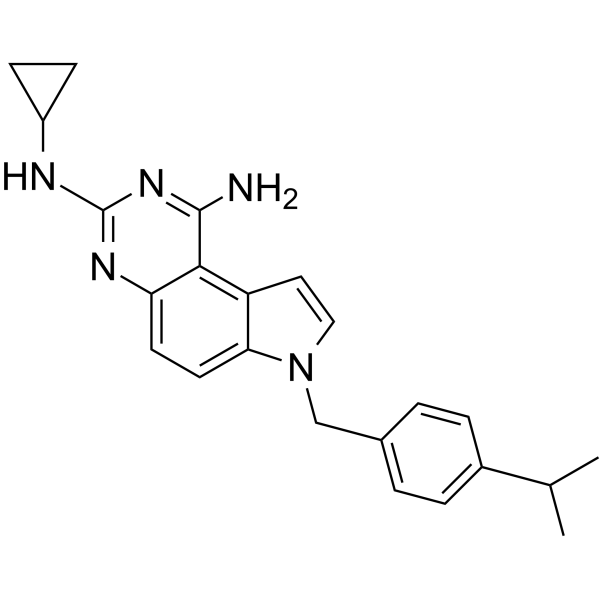
SCH79797 is a highly potent, selective nonpeptide protease activated receptor 1 (PAR1) antagonist. SCH79797 inhibits binding of a high-affinity thrombin receptor-activating peptide to PAR1 with an IC50 of 70 nM and a Ki of 35 nM. SCH79797 inhibits thrombin-induced platelet aggregation with an IC50 of 3 μM. SCH79797 has antiproliferative and pro-apoptotic effects, and limits myocardial ischemia/reperfusion injury in rat hearts. SCH79797 also potently prevents PAR1 activation in vascular smooth muscle cells, endothelial cells, and astrocytes .
|
-
-
- HY-14994
-
|
|
Protease Activated Receptor (PAR)
Apoptosis
|
Cardiovascular Disease
|
|
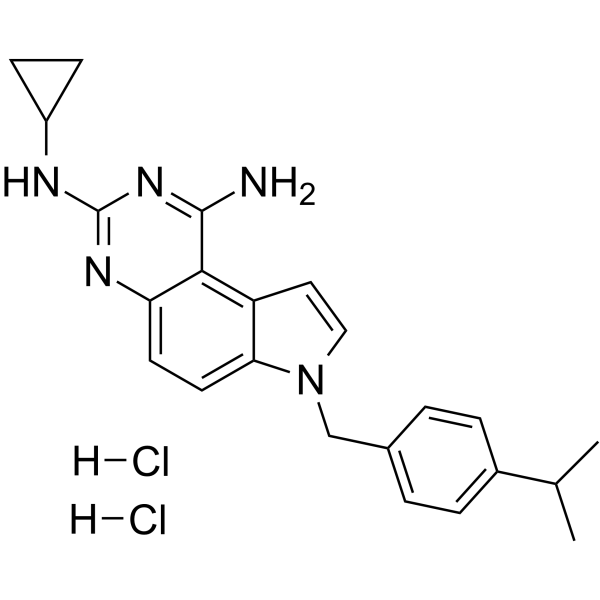
SCH79797 dihydrochloride is a highly potent, selective nonpeptide protease activated receptor 1 (PAR1) antagonist. SCH79797 dihydrochloride inhibits binding of a high-affinity thrombin receptor-activating peptide to PAR1 with an IC50 of 70 nM and a Ki of 35 nM. SCH79797 dihydrochloride inhibits thrombin-induced platelet aggregation with an IC50 of 3 μM. SCH79797 dihydrochloride has antiproliferative and pro-apoptotic effects, and limits myocardial ischemia/reperfusion injury in rat hearts. SCH79797 dihydrochloride also potently prevents PAR1 activation in vascular smooth muscle cells, endothelial cells, and astrocytes .
|
-
-
- HY-P10285
-
|
D-(KLAKLAK)2
|
Apoptosis
Mitochondrial Metabolism
Caspase
|
Cancer
|
|
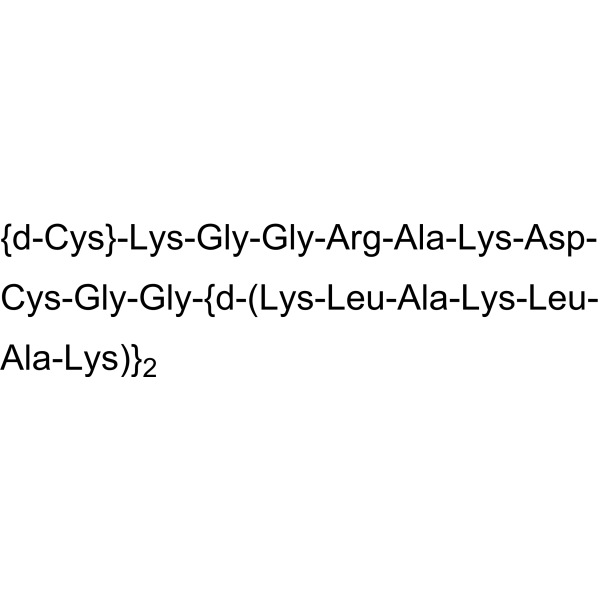
d-KLA Peptide (D-(KLAKLAK)2), KLA peptide (HY-P5345) isomer, is a pro-apoptosis peptide. d-KLA Peptide can specifically target mitochondria and induce apoptosis by destroying the mitochondrial membrane. d-KLA Peptide increases caspase 3/7 activity, exerts proapoptotic activity and enhances antitumor efficacy in mouse melanoma models .
|
-
-
- HY-P11178
-
|
|
Apoptosis
SARS-CoV
|
Infection
Metabolic Disease
Inflammation/Immunology
|
|
Corisin is a pro-apoptotic small peptide produced by Staphylococcus species. Corisin binds to serum albumin to target organs such as the lungs and kidneys, induces cellular senescence, apoptosis and epithelial-mesenchymal transition, and accelerates the progression of organ fibrosis including pulmonary fibrosis and diabetic renal fibrosis. Corisin levels are closely associated with coronavirus disease 2019 (COVID-19), diabetic chronic kidney disease (CKD), non-diabetic CKD, and idiopathic pulmonary fibrosis (IPF) .
|
-
-
- HY-P1527
-
Bim BH3
1 Publications Verification
|
Bcl-2 Family
|
Others
|
|
Bim BH3 is a biological active peptide. (This Bim peptide belongs to the pro-apoptotic Bcl-2 family of proteins.)
|
-
-
- HY-P1889
-
|
|
Bcl-2 Family
|
Inflammation/Immunology
|
|
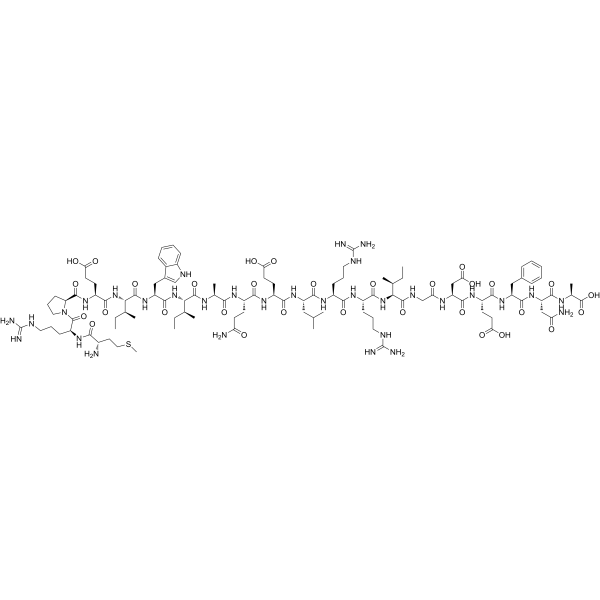
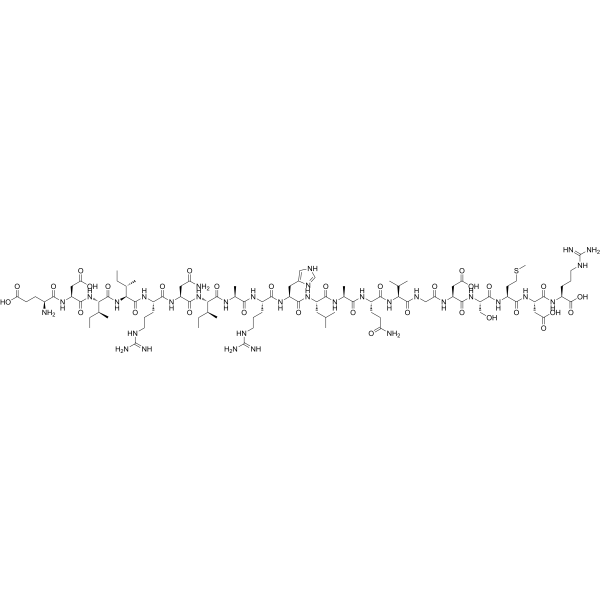
Bim BH3, Peptide IV is a 26-residue peptide from BH3-only protein Bim, which belongs to the pro-apoptotic group of the Bcl-2 family of proteins .
|
-
-
- HY-P3586
-
|
Hunter-killer Peptide ao; Prohibitin-targeting Peptide 1; prohibitin-TP01; Adipotide
|
Apoptosis
|
Cancer
|
|
HKPao (Hunter-killer peptide ao) is a biologically active peptide. HKPao (Hunter-killer peptide ao) has anti-obesity and anti-tumor pro-apoptotic activity to cause release of cytochrome c from vesicles .
|
-
-
- HY-P10370
-
|
|
Bacterial
Apoptosis
|
Infection
Cancer
|
|
d-(KLAKLAK)2, as an antibacterial and anti-tumor polypeptide, is a representative of the antimicrobial peptide group, and also has good anticancer properties. d-(KLAKLAK)2 is able to kill bacteria by damaging their cell membranes, causing cell contents to leak out. d-(KLAKLAK)2 can also inhibit tumor cell proliferation by causing mitochondrial swelling and mitochondrial membrane destruction, triggering apoptosis (programmed cell death) .
|
-
-
- HY-P4091
-
|
|
Biochemical Assay Reagents
|
Cancer
|
|
LSD is a peptide. LSD can specifically recognize the lymphatics of C8161 melanoma, but it does not bind to the lymphatics of normal tissues or tumor blood vessels. When conjugated with a proapoptotic peptide, LSD can reduce the number of tumor lymphatics. LSD can be used in the research of targeted therapy and diagnosis of tumor lymphatics .
|
-
-
- HY-P2343
-
|
|
Apoptosis
|
Cancer
|
|
BH3 hydrochloride, a BBB penetrated peptide, provoke apoptosis either by direct activation of pro-apoptotic Bax/Bak or by neutralizing anti-apoptotic Bcl-2 proteins (Bcl-2, Bcl-XL, Bcl-w, Mcl-1 and A-1) via their BH3 domian .
|
-
-
- HY-172273A
-
|
|
Liposome
|
Cancer
|
|
DSPE-PEG2000-Mal-Cys-YEQDPWGVKWWY is a PEG compound which composed of DSPE and a M2-polarized macrophages targeting peptide (M2pep, YEQDPWGVKWWY). M2pep is conjugated to a proapoptotic peptide as monovalent or multivalent ligands to concentrate the toxic effect of the peptide to M2 macrophages. DSPE-PEG2000-Mal-Cys-YEQDPWGVKWWY can be used for drug delivery .
|
-
-
- HY-P4096
-
|
|
Bacterial
|
Inflammation/Immunology
|
|
HAP-1 is a synovial-targeted transduction peptide. HAP-1 facilitates specific internalization of protein complexes into human and rabbit synovial cells. HAP-1 fused to an antimicrobial peptide, (KLAK)2, to generate a proapoptotic peptide DP2 .
|
-
-
- HY-172273
-
|
|
Liposome
|
Cancer
|
|
DSPE-PEG1000-Mal-Cys-YEQDPWGVKWWY is a PEG compound which composed of DSPE and a M2-polarized macrophages targeting peptide (M2pep, YEQDPWGVKWWY). M2pep is conjugated to a proapoptotic peptide as monovalent or multivalent ligands to concentrate the toxic effect of the peptide to M2 macrophages. DSPE-PEG1000-Mal-Cys-YEQDPWGVKWWY can be used for drug delivery .
|
-
-
- HY-P5325A
-
|
|
Bcl-2 Family
|
Others
|
|
Bid BH3 (80-99) acetate is a biological active peptide. (BID is a pro-apoptotic member of the 'BH3-only' (BOPS) subset of the BCL-2 family of proteins that constitute a critical control point in apoptosis. Bid is the first of the BOPs reported to bind and activate Bcl-2, Bax, and Bak. Bid serves as a death-inducing ligand that moves from the cytosol to the mitochondrial membrane to inactivate Bcl-2 or to activate Bax.Pyroglutamyl (pGlu) peptides may spontaneously form when either Glutamine (Q) or Glutamic acid (E) is located at the sequence N-terminus. The conversion of Q or E to pGlu is a natural occurrence and in general it is believed that the hydrophobic γ-lactam ring of pGlu may play a role in peptide stability against gastrointestinal proteases. Pyroglutamyl peptides are therefore considered a normal subset of such peptides and are included as part of the peptide purity during HPLC analysis.)
|
-
-
- HY-P5325
-
|
|
Bcl-2 Family
|
Others
|
|
Bid BH3 (80-99) is a biological active peptide. (BID is a pro-apoptotic member of the 'BH3-only' (BOPS) subset of the BCL-2 family of proteins that constitute a critical control point in apoptosis. Bid is the first of the BOPs reported to bind and activate Bcl-2, Bax, and Bak. Bid serves as a death-inducing ligand that moves from the cytosol to the mitochondrial membrane to inactivate Bcl-2 or to activate Bax.Pyroglutamyl (pGlu) peptides may spontaneously form when either Glutamine (Q) or Glutamic acid (E) is located at the sequence N-terminus. The conversion of Q or E to pGlu is a natural occurrence and in general it is believed that the hydrophobic γ-lactam ring of pGlu may play a role in peptide stability against gastrointestinal proteases. Pyroglutamyl peptides are therefore considered a normal subset of such peptides and are included as part of the peptide purity during HPLC analysis.)
|
-
-
- HY-P3707
-
|
|
Apoptosis
|
Cancer
|
|
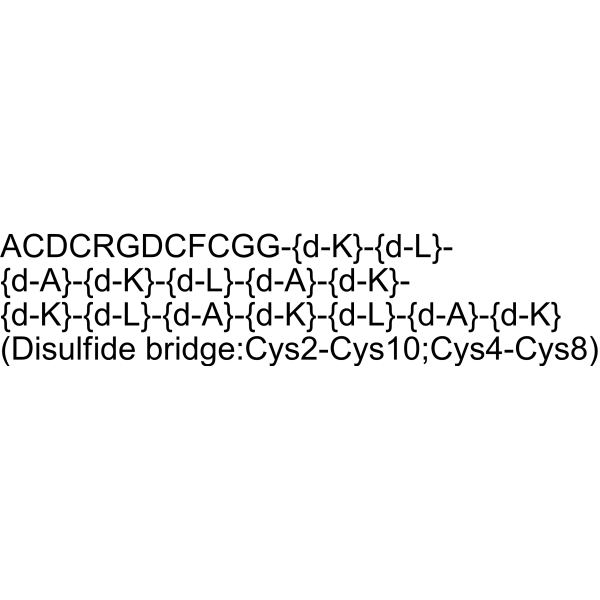
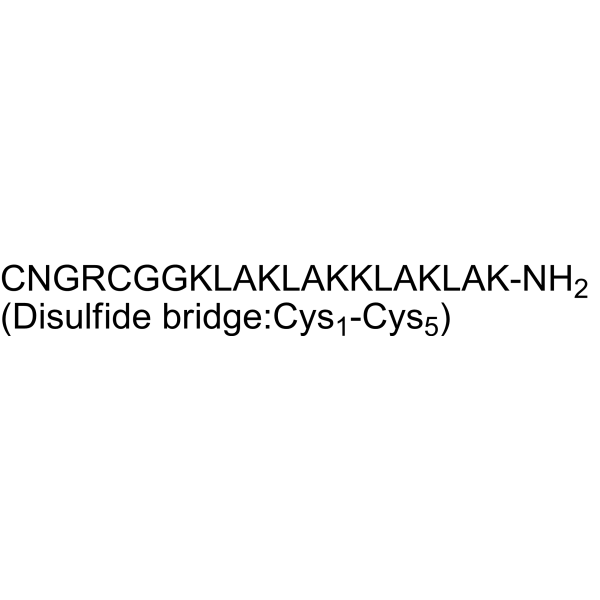
Tumor targeted pro-apoptotic peptide (CNGRC-GG-D(KLAKLAK)2) is an anti-tumor peptide. Tumor targeted pro-apoptotic peptide disrupts mitochondrial membranes and promotes apoptosis, showing anticancer activity in mice .
|
-
-
- HY-P10614
-
|
|
Apoptosis
Bcl-2 Family
|
Others
|
|
Bid BH3 peptide is a small peptide derived from Bid protein that can bind and activate the pro-apoptotic proteins Bax and Bak, leading to mitochondrial outer membrane permeabilization (MOMP) and apoptosis. Bid BH3 peptide can be used to study mitochondrial bioenergetics .
|
-
-
- HY-P10789
-
|
|
Microtubule/Tubulin
|
Cancer
|
|
The P160 peptide is a breast cancer-targeting peptide that binds to the keratin 1 (KRT1) receptor on breast cancer cells, with a Kd of approximately 1.1 μM, demonstrating significant potential for targeted drug delivery to breast cancer cells. The P160 peptide enhances the cellular uptake and anticancer activity of the pro-apoptotic antimicrobial peptide MccJ25 (microcin J25). The P160 peptide can be used in cancer research .
|
-
-
- HY-172273C
-
|
|
Liposome
|
Cancer
|
|
DSPE-PEG3400-Mal-Cys-YEQDPWGVKWWY is a PEG compound which composed of DSPE and a M2-polarized macrophages targeting peptide (M2pep, YEQDPWGVKWWY). M2pep is conjugated to a proapoptotic peptide as monovalent or multivalent ligands to concentrate the toxic effect of the peptide to M2 macrophages. DSPE-PEG3400-Mal-Cys-YEQDPWGVKWWY can be used for drug delivery .
|
-
-
- HY-P10786
-
|
|
Transmembrane Glycoprotein
|
Cancer
|
|
LinTT1 peptide is a tumor-penetrating peptide with the amino acid sequence AKRGARST. LinTT1 peptide targets peritoneal carcinoma (PC) by binding to the p32 (gC1qR) receptor. It can conjugate with iron oxide nanoworms (NWs) to form a nanocarrier. This nanocarrier is taken up by peritoneal carcinoma cells in vitro and enters the mitochondria; it also exhibits significant tumor targeting and penetration effects in mice. Moreover, LinTT1-functionalized nanocarriers, combined with the pro-apoptotic peptide [D(KLAKLAK)2], show significant tumor suppression in a mouse peritoneal tumor model. LinTT1 peptide holds promise as a delivery carrier for peritoneal cancer research .
|
-
-
- HY-14993R
-
|
|
Protease Activated Receptor (PAR)
Apoptosis
|
Cardiovascular Disease
|
|
SCH79797 (Standard) is the analytical standard of SCH79797. This product is intended for research and analytical applications. SCH79797 is a highly potent, selective nonpeptide protease activated receptor 1 (PAR1) antagonist. SCH79797 inhibits binding of a high-affinity thrombin receptor-activating peptide to PAR1 with an IC50 of 70 nM and a Ki of 35 nM. SCH79797 inhibits thrombin-induced platelet aggregation with an IC50 of 3 μM. SCH79797 has antiproliferative and pro-apoptotic effects, and limits myocardial ischemia/reperfusion injury in rat hearts. SCH79797 also potently prevents PAR1 activation in vascular smooth muscle cells, endothelial cells, and astrocytes .
|
-
-
- HY-P1889A
-
|
|
Bcl-2 Family
|
Inflammation/Immunology
|
|
Bim BH3, Peptide IV TFA is a 26-residue peptide from BH3-only protein Bim, which belongs to the pro-apoptotic group of the Bcl-2 family of proteins .
|
-
-
- HY-P10285S
-
|
D-(KLAKLAK)2-d30
|
Isotope-Labeled Compounds
Mitochondrial Metabolism
Apoptosis
Caspase
|
Cancer
|
|
d-KLA Peptide (D-(KLAKLAK)2)-d30 is the deuterium labeled d-KLA Peptide (HY-P10285). d-KLA Peptide, KLA peptide (HY-P5345) isomer, is a pro-apoptosis peptide. d-KLA Peptide can specifically target mitochondria and induce apoptosis by destroying the mitochondrial membrane. d-KLA Peptide increases caspase 3/7 activity, exerts proapoptotic activity and enhances antitumor efficacy in mouse melanoma models .
|
-
-
- HY-P4091A
-
|
|
Biochemical Assay Reagents
|
Cancer
|
|
LSD acetate is a peptide. LSD acetate can specifically recognize the lymphatics of C8161 melanoma, but it does not bind to the lymphatics of normal tissues or tumor blood vessels. When conjugated with a proapoptotic peptide, LSD acetate can reduce the number of tumor lymphatics. LSD acetate can be used in the research of targeted therapy and diagnosis of tumor lymphatics .
|
-
-
- HY-172273B
-
|
|
Liposome
|
Cancer
|
|
DSPE-PEG5000-Mal-Cys-YEQDPWGVKWWY is a PEG compound which composed of DSPE and a M2-polarized macrophages targeting peptide (M2pep, YEQDPWGVKWWY). M2pep is conjugated to a proapoptotic peptide as monovalent or multivalent ligands to concentrate the toxic effect of the peptide to M2 macrophages. DSPE-PEG5000-Mal-Cys-YEQDPWGVKWWY can be used for drug delivery .
|
-
-
- HY-P5327
-
|
|
Bcl-2 Family
|
Others
|
|
r8 Bid BH3 is a biological active peptide. (The Bid BH3 is a pro-apoptotic member of the 'BH3-only' subset of BCL-2 family proteins that constitute a critical control point in apoptosis. r8BIDBH3 is lethal to human leukemia cell lines that expresse Bcl-2. The Bcl-2 antagonists may have the potential to be efficacious in cancer therapy. Poly-D-arginine (d-isomer as denoted by rrrrrrrr) is fused to the Bid BH3 peptide to facilitate cellular uptake of the peptide.)
|
-
-
- HY-14994R
-
|
|
Protease Activated Receptor (PAR)
Apoptosis
|
Cardiovascular Disease
|
|
SCH79797 (dihydrochloride) (Standard) is the analytical standard of SCH79797 (dihydrochloride). This product is intended for research and analytical applications. SCH79797 dihydrochloride is a highly potent, selective nonpeptide protease activated receptor 1 (PAR1) antagonist. SCH79797 dihydrochloride inhibits binding of a high-affinity thrombin receptor-activating peptide to PAR1 with an IC50 of 70 nM and a Ki of 35 nM. SCH79797 dihydrochloride inhibits thrombin-induced platelet aggregation with an IC50 of 3 μM. SCH79797 dihydrochloride has antiproliferative and pro-apoptotic effects, and limits myocardial ischemia/reperfusion injury in rat hearts. SCH79797 dihydrochloride also potently prevents PAR1 activation in vascular smooth muscle cells, endothelial cells, and astrocytes .
|
-
| Cat. No. |
Product Name |
Type |
-
- HY-172273A
-
|
|
Biochemical Assay Reagents
|
|
DSPE-PEG2000-Mal-Cys-YEQDPWGVKWWY is a PEG compound which composed of DSPE and a M2-polarized macrophages targeting peptide (M2pep, YEQDPWGVKWWY). M2pep is conjugated to a proapoptotic peptide as monovalent or multivalent ligands to concentrate the toxic effect of the peptide to M2 macrophages. DSPE-PEG2000-Mal-Cys-YEQDPWGVKWWY can be used for drug delivery .
|
-
- HY-172273
-
|
|
Biochemical Assay Reagents
|
|
DSPE-PEG1000-Mal-Cys-YEQDPWGVKWWY is a PEG compound which composed of DSPE and a M2-polarized macrophages targeting peptide (M2pep, YEQDPWGVKWWY). M2pep is conjugated to a proapoptotic peptide as monovalent or multivalent ligands to concentrate the toxic effect of the peptide to M2 macrophages. DSPE-PEG1000-Mal-Cys-YEQDPWGVKWWY can be used for drug delivery .
|
-
- HY-172273C
-
|
|
Biochemical Assay Reagents
|
|
DSPE-PEG3400-Mal-Cys-YEQDPWGVKWWY is a PEG compound which composed of DSPE and a M2-polarized macrophages targeting peptide (M2pep, YEQDPWGVKWWY). M2pep is conjugated to a proapoptotic peptide as monovalent or multivalent ligands to concentrate the toxic effect of the peptide to M2 macrophages. DSPE-PEG3400-Mal-Cys-YEQDPWGVKWWY can be used for drug delivery .
|
-
- HY-172273B
-
|
|
Biochemical Assay Reagents
|
|
DSPE-PEG5000-Mal-Cys-YEQDPWGVKWWY is a PEG compound which composed of DSPE and a M2-polarized macrophages targeting peptide (M2pep, YEQDPWGVKWWY). M2pep is conjugated to a proapoptotic peptide as monovalent or multivalent ligands to concentrate the toxic effect of the peptide to M2 macrophages. DSPE-PEG5000-Mal-Cys-YEQDPWGVKWWY can be used for drug delivery .
|
| Cat. No. |
Product Name |
Target |
Research Area |
-
- HY-P10285
-
|
D-(KLAKLAK)2
|
Apoptosis
Mitochondrial Metabolism
Caspase
|
Cancer
|
|
d-KLA Peptide (D-(KLAKLAK)2), KLA peptide (HY-P5345) isomer, is a pro-apoptosis peptide. d-KLA Peptide can specifically target mitochondria and induce apoptosis by destroying the mitochondrial membrane. d-KLA Peptide increases caspase 3/7 activity, exerts proapoptotic activity and enhances antitumor efficacy in mouse melanoma models .
|
-
- HY-P11178
-
|
|
Apoptosis
SARS-CoV
|
Infection
Metabolic Disease
Inflammation/Immunology
|
|
Corisin is a pro-apoptotic small peptide produced by Staphylococcus species. Corisin binds to serum albumin to target organs such as the lungs and kidneys, induces cellular senescence, apoptosis and epithelial-mesenchymal transition, and accelerates the progression of organ fibrosis including pulmonary fibrosis and diabetic renal fibrosis. Corisin levels are closely associated with coronavirus disease 2019 (COVID-19), diabetic chronic kidney disease (CKD), non-diabetic CKD, and idiopathic pulmonary fibrosis (IPF) .
|
-
- HY-P1527
-
Bim BH3
1 Publications Verification
|
Bcl-2 Family
|
Others
|
|
Bim BH3 is a biological active peptide. (This Bim peptide belongs to the pro-apoptotic Bcl-2 family of proteins.)
|
-
- HY-P1889
-
|
|
Bcl-2 Family
|
Inflammation/Immunology
|
|
Bim BH3, Peptide IV is a 26-residue peptide from BH3-only protein Bim, which belongs to the pro-apoptotic group of the Bcl-2 family of proteins .
|
-
- HY-P3586
-
|
Hunter-killer Peptide ao; Prohibitin-targeting Peptide 1; prohibitin-TP01; Adipotide
|
Apoptosis
|
Cancer
|
|
HKPao (Hunter-killer peptide ao) is a biologically active peptide. HKPao (Hunter-killer peptide ao) has anti-obesity and anti-tumor pro-apoptotic activity to cause release of cytochrome c from vesicles .
|
-
- HY-P10370
-
|
|
Bacterial
Apoptosis
|
Infection
Cancer
|
|
d-(KLAKLAK)2, as an antibacterial and anti-tumor polypeptide, is a representative of the antimicrobial peptide group, and also has good anticancer properties. d-(KLAKLAK)2 is able to kill bacteria by damaging their cell membranes, causing cell contents to leak out. d-(KLAKLAK)2 can also inhibit tumor cell proliferation by causing mitochondrial swelling and mitochondrial membrane destruction, triggering apoptosis (programmed cell death) .
|
-
- HY-P4091
-
|
|
Biochemical Assay Reagents
|
Cancer
|
|
LSD is a peptide. LSD can specifically recognize the lymphatics of C8161 melanoma, but it does not bind to the lymphatics of normal tissues or tumor blood vessels. When conjugated with a proapoptotic peptide, LSD can reduce the number of tumor lymphatics. LSD can be used in the research of targeted therapy and diagnosis of tumor lymphatics .
|
-
- HY-P4903
-
|
|
Peptides
|
Cancer
|
|
RGD-targeted Proapoptotic Peptide is a peptide. The C-terminal RGD-4C peptide (ACDCRGDCFC) binds preferentially to integrins at sites of tumor angiogenesis.
|
-
- HY-P2343
-
|
|
Apoptosis
|
Cancer
|
|
BH3 hydrochloride, a BBB penetrated peptide, provoke apoptosis either by direct activation of pro-apoptotic Bax/Bak or by neutralizing anti-apoptotic Bcl-2 proteins (Bcl-2, Bcl-XL, Bcl-w, Mcl-1 and A-1) via their BH3 domian .
|
-
- HY-P4096
-
|
|
Bacterial
|
Inflammation/Immunology
|
|
HAP-1 is a synovial-targeted transduction peptide. HAP-1 facilitates specific internalization of protein complexes into human and rabbit synovial cells. HAP-1 fused to an antimicrobial peptide, (KLAK)2, to generate a proapoptotic peptide DP2 .
|
-
- HY-P5325A
-
|
|
Bcl-2 Family
|
Others
|
|
Bid BH3 (80-99) acetate is a biological active peptide. (BID is a pro-apoptotic member of the 'BH3-only' (BOPS) subset of the BCL-2 family of proteins that constitute a critical control point in apoptosis. Bid is the first of the BOPs reported to bind and activate Bcl-2, Bax, and Bak. Bid serves as a death-inducing ligand that moves from the cytosol to the mitochondrial membrane to inactivate Bcl-2 or to activate Bax.Pyroglutamyl (pGlu) peptides may spontaneously form when either Glutamine (Q) or Glutamic acid (E) is located at the sequence N-terminus. The conversion of Q or E to pGlu is a natural occurrence and in general it is believed that the hydrophobic γ-lactam ring of pGlu may play a role in peptide stability against gastrointestinal proteases. Pyroglutamyl peptides are therefore considered a normal subset of such peptides and are included as part of the peptide purity during HPLC analysis.)
|
-
- HY-P5325
-
|
|
Bcl-2 Family
|
Others
|
|
Bid BH3 (80-99) is a biological active peptide. (BID is a pro-apoptotic member of the 'BH3-only' (BOPS) subset of the BCL-2 family of proteins that constitute a critical control point in apoptosis. Bid is the first of the BOPs reported to bind and activate Bcl-2, Bax, and Bak. Bid serves as a death-inducing ligand that moves from the cytosol to the mitochondrial membrane to inactivate Bcl-2 or to activate Bax.Pyroglutamyl (pGlu) peptides may spontaneously form when either Glutamine (Q) or Glutamic acid (E) is located at the sequence N-terminus. The conversion of Q or E to pGlu is a natural occurrence and in general it is believed that the hydrophobic γ-lactam ring of pGlu may play a role in peptide stability against gastrointestinal proteases. Pyroglutamyl peptides are therefore considered a normal subset of such peptides and are included as part of the peptide purity during HPLC analysis.)
|
-
- HY-P3707
-
|
|
Apoptosis
|
Cancer
|
|
Tumor targeted pro-apoptotic peptide (CNGRC-GG-D(KLAKLAK)2) is an anti-tumor peptide. Tumor targeted pro-apoptotic peptide disrupts mitochondrial membranes and promotes apoptosis, showing anticancer activity in mice .
|
-
- HY-P10614
-
|
|
Apoptosis
Bcl-2 Family
|
Others
|
|
Bid BH3 peptide is a small peptide derived from Bid protein that can bind and activate the pro-apoptotic proteins Bax and Bak, leading to mitochondrial outer membrane permeabilization (MOMP) and apoptosis. Bid BH3 peptide can be used to study mitochondrial bioenergetics .
|
-
- HY-P10789
-
|
|
Microtubule/Tubulin
|
Cancer
|
|
The P160 peptide is a breast cancer-targeting peptide that binds to the keratin 1 (KRT1) receptor on breast cancer cells, with a Kd of approximately 1.1 μM, demonstrating significant potential for targeted drug delivery to breast cancer cells. The P160 peptide enhances the cellular uptake and anticancer activity of the pro-apoptotic antimicrobial peptide MccJ25 (microcin J25). The P160 peptide can be used in cancer research .
|
-
- HY-P10786
-
|
|
Transmembrane Glycoprotein
|
Cancer
|
|
LinTT1 peptide is a tumor-penetrating peptide with the amino acid sequence AKRGARST. LinTT1 peptide targets peritoneal carcinoma (PC) by binding to the p32 (gC1qR) receptor. It can conjugate with iron oxide nanoworms (NWs) to form a nanocarrier. This nanocarrier is taken up by peritoneal carcinoma cells in vitro and enters the mitochondria; it also exhibits significant tumor targeting and penetration effects in mice. Moreover, LinTT1-functionalized nanocarriers, combined with the pro-apoptotic peptide [D(KLAKLAK)2], show significant tumor suppression in a mouse peritoneal tumor model. LinTT1 peptide holds promise as a delivery carrier for peritoneal cancer research .
|
-
- HY-P1889A
-
|
|
Bcl-2 Family
|
Inflammation/Immunology
|
|
Bim BH3, Peptide IV TFA is a 26-residue peptide from BH3-only protein Bim, which belongs to the pro-apoptotic group of the Bcl-2 family of proteins .
|
-
- HY-P10285S
-
|
D-(KLAKLAK)2-d30
|
Isotope-Labeled Compounds
Mitochondrial Metabolism
Apoptosis
Caspase
|
Cancer
|
|
d-KLA Peptide (D-(KLAKLAK)2)-d30 is the deuterium labeled d-KLA Peptide (HY-P10285). d-KLA Peptide, KLA peptide (HY-P5345) isomer, is a pro-apoptosis peptide. d-KLA Peptide can specifically target mitochondria and induce apoptosis by destroying the mitochondrial membrane. d-KLA Peptide increases caspase 3/7 activity, exerts proapoptotic activity and enhances antitumor efficacy in mouse melanoma models .
|
-
- HY-P4091A
-
|
|
Biochemical Assay Reagents
|
Cancer
|
|
LSD acetate is a peptide. LSD acetate can specifically recognize the lymphatics of C8161 melanoma, but it does not bind to the lymphatics of normal tissues or tumor blood vessels. When conjugated with a proapoptotic peptide, LSD acetate can reduce the number of tumor lymphatics. LSD acetate can be used in the research of targeted therapy and diagnosis of tumor lymphatics .
|
-
- HY-P5327
-
|
|
Bcl-2 Family
|
Others
|
|
r8 Bid BH3 is a biological active peptide. (The Bid BH3 is a pro-apoptotic member of the 'BH3-only' subset of BCL-2 family proteins that constitute a critical control point in apoptosis. r8BIDBH3 is lethal to human leukemia cell lines that expresse Bcl-2. The Bcl-2 antagonists may have the potential to be efficacious in cancer therapy. Poly-D-arginine (d-isomer as denoted by rrrrrrrr) is fused to the Bid BH3 peptide to facilitate cellular uptake of the peptide.)
|
| Cat. No. |
Product Name |
Chemical Structure |
-
- HY-P10285S
-
|
|
|
d-KLA Peptide (D-(KLAKLAK)2)-d30 is the deuterium labeled d-KLA Peptide (HY-P10285). d-KLA Peptide, KLA peptide (HY-P5345) isomer, is a pro-apoptosis peptide. d-KLA Peptide can specifically target mitochondria and induce apoptosis by destroying the mitochondrial membrane. d-KLA Peptide increases caspase 3/7 activity, exerts proapoptotic activity and enhances antitumor efficacy in mouse melanoma models .
|
-
| Cat. No. |
Product Name |
|
Classification |
-
- HY-172273A
-
|
|
|
Pegylated Lipids
|
|
DSPE-PEG2000-Mal-Cys-YEQDPWGVKWWY is a PEG compound which composed of DSPE and a M2-polarized macrophages targeting peptide (M2pep, YEQDPWGVKWWY). M2pep is conjugated to a proapoptotic peptide as monovalent or multivalent ligands to concentrate the toxic effect of the peptide to M2 macrophages. DSPE-PEG2000-Mal-Cys-YEQDPWGVKWWY can be used for drug delivery .
|
-
- HY-172273
-
|
|
|
Pegylated Lipids
|
|
DSPE-PEG1000-Mal-Cys-YEQDPWGVKWWY is a PEG compound which composed of DSPE and a M2-polarized macrophages targeting peptide (M2pep, YEQDPWGVKWWY). M2pep is conjugated to a proapoptotic peptide as monovalent or multivalent ligands to concentrate the toxic effect of the peptide to M2 macrophages. DSPE-PEG1000-Mal-Cys-YEQDPWGVKWWY can be used for drug delivery .
|
-
- HY-172273C
-
|
|
|
Pegylated Lipids
|
|
DSPE-PEG3400-Mal-Cys-YEQDPWGVKWWY is a PEG compound which composed of DSPE and a M2-polarized macrophages targeting peptide (M2pep, YEQDPWGVKWWY). M2pep is conjugated to a proapoptotic peptide as monovalent or multivalent ligands to concentrate the toxic effect of the peptide to M2 macrophages. DSPE-PEG3400-Mal-Cys-YEQDPWGVKWWY can be used for drug delivery .
|
-
- HY-172273B
-
|
|
|
Pegylated Lipids
|
|
DSPE-PEG5000-Mal-Cys-YEQDPWGVKWWY is a PEG compound which composed of DSPE and a M2-polarized macrophages targeting peptide (M2pep, YEQDPWGVKWWY). M2pep is conjugated to a proapoptotic peptide as monovalent or multivalent ligands to concentrate the toxic effect of the peptide to M2 macrophages. DSPE-PEG5000-Mal-Cys-YEQDPWGVKWWY can be used for drug delivery .
|
Your information is safe with us. * Required Fields.
Inquiry Information
- Product Name:
- Cat. No.:
- Quantity:
- MCE Japan Authorized Agent:

