1. Search Result
Search Result
Results for "

Seeking

" in MedChemExpress (MCE) Product Catalog:

28

Inhibitors & Agonists

1

Peptides

2

Natural
Products

4

Isotope-Labeled Compounds

Cat. No. Product Name Target Research Areas Chemical Structure
  • HY-Y0740

    Environmental Pollutants Endogenous Metabolite Metabolic Disease
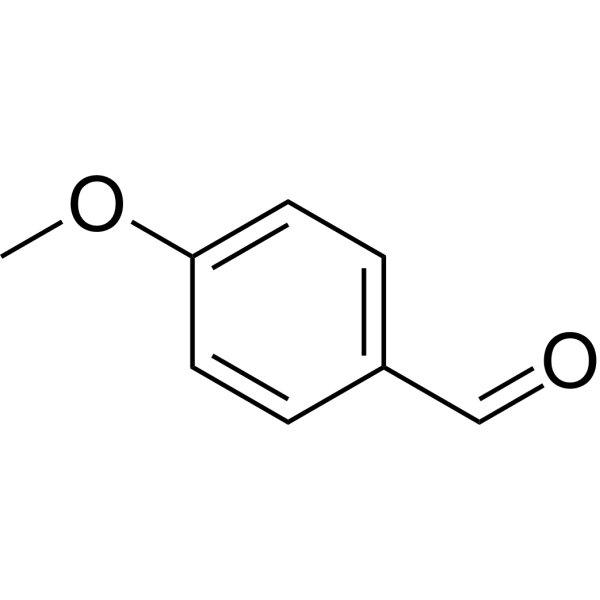
    4-Methoxybenzaldehyde (p-anisaldehyde) is a fragrant phenolic compound. 4-Methoxybenzaldehyde has been found in many plant species including horseradish, anise, star anise. 4-Methoxybenzaldehyde is a possible neurotoxicant and it has shown effects that include mortality, attractancy, and interference with host seeking .
    4-Methoxybenzaldehyde
  • HY-12443

    Casein Kinase Neurological Disease
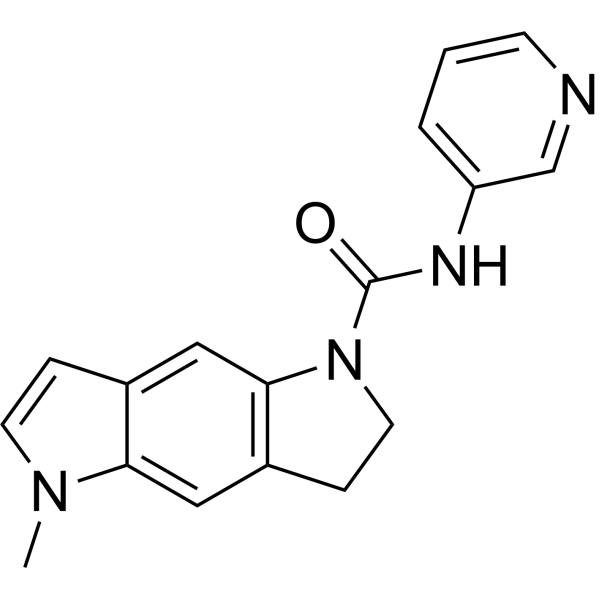
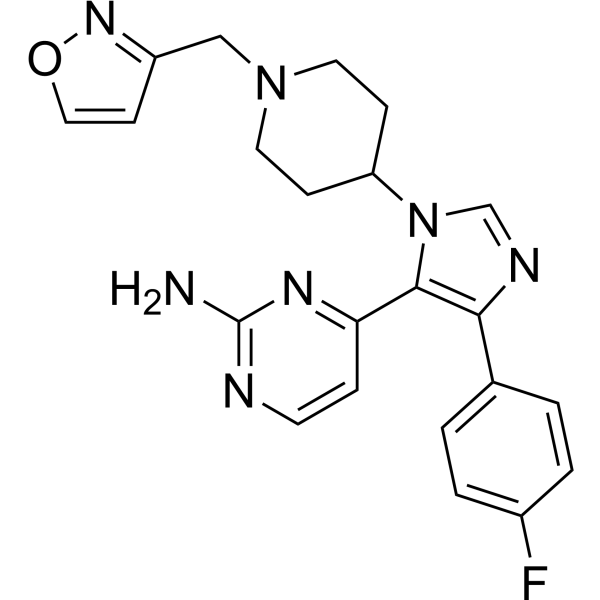
    PF-5006739 is a potent and selective inhibitor of CK1δ/ε with IC50s of 3.9 nM and 17.0 nM, respectively. PF-5006739 is a potential therapeutic agent for a range of psychiatric disorders with low nanomolar in vitro potency for CK1δ/ε and high kinome selectivity. PF-5006739 attenuats opioid agent-seeking behavior in a rodent operant reinstatement model in animals in a dose-dependent manner . PF-5006739 improves glucose tolerance in both diet-induced obesity (DIO) and genetic (ob/ob) mice models of obesity .
    PF-5006739
  • HY-B0503
    2-Thiouracil
    2 Publications Verification

    Thiouracil

    NO Synthase Endocrinology Cancer
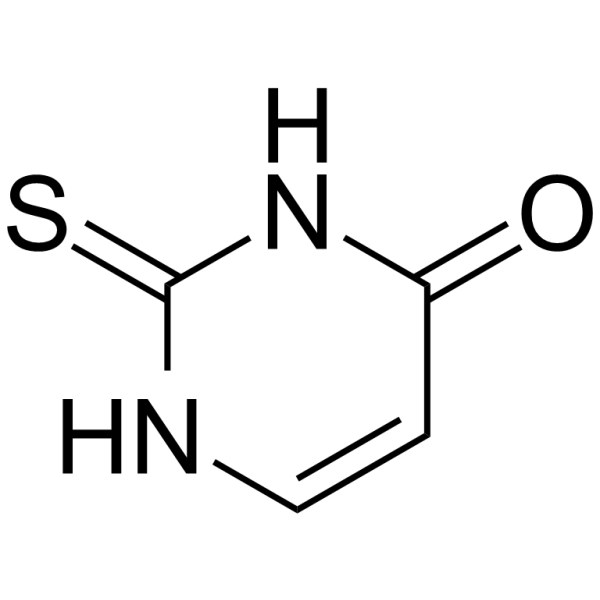
    2-Thiouracil (Thiouracil) is a selective neuronal nitric oxide synthase (nNOS) inhibitor with a Ki value of 20 μM. 2-Thiouracil antagonizes BH4-induced nNOS dimerization. 2-Thiouracil is also an antithyroid compound and a highly specific melanoma detector. 2-Thiouracil stimulates the growth of pea and corn root segments .
    2-Thiouracil
  • HY-167856

    GPR88 Neurological Disease
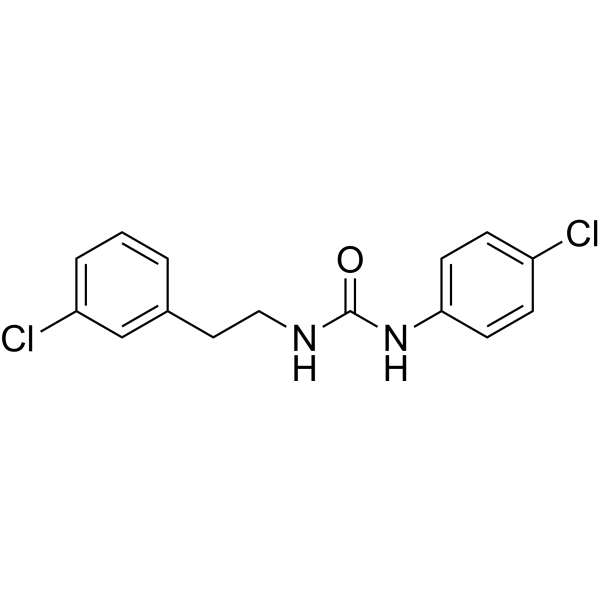
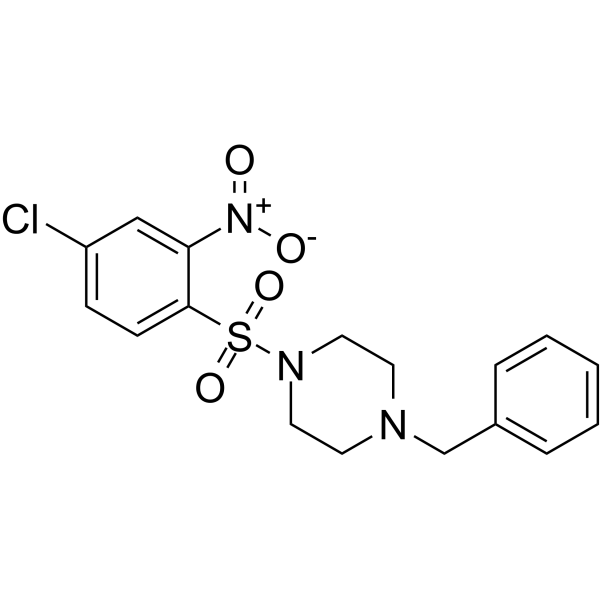
    RTI-122 is a selective, blood-brain barrier-permeable GPR88 agonist (cAMP EC50=11 nM), with EC50 values of 11.5 nM and 155 nM for human and mouse GPR88, respectively ([ 35S]GTPγS assay). By activating the GPR88 receptor to regulate the cAMP signaling pathway and G protein activity, RTI-122 significantly attenuates Binge-like drinking, reduces alcohol intake, and decreases alcohol-seeking motivation. RTI-122 blocks the reinstatement of alcohol-seeking behavior without affecting water or sucrose intake. RTI-122 exhibits metabolic stability in mice (T1/2=5.8 h) and can be used to investigate alcohol use disorder .
    RTI-122
  • HY-136832

    Serotonin Transporter Potassium Channel Arrestin Opioid Receptor Cardiovascular Disease Neurological Disease
    Noribogaine hydrochloride is an orally active, blood-brain barrier permeable SERT inhibitor (IC50=50-300 nM) and hERG channel blocker. Noribogaine hydrochloride enhances serotonergic transmission, activates the κ-opioid receptor (OPRK) G protein signaling pathway and inhibits β-arrestin recruitment. Meanwhile, Noribogaine hydrochloride blocks the μ-opioid receptor (OPRM) signaling pathway as well as ion channels associated with cardiac repolarization. Noribogaine hydrochloride induces neuritogenesis, upregulates GDNF mRNA expression, and modulates opioid tolerance. Noribogaine hydrochloride reduces alcohol-seeking behavior in experimental animals, and is widely used in studies related to depression, addiction, alcoholism, and cardiotoxicity .
    Noribogaine hydrochloride
  • HY-114452A
    LY2940094 tartrate
    1 Publications Verification

    BTRX-246040 tartrate

    Opioid Receptor Neurological Disease
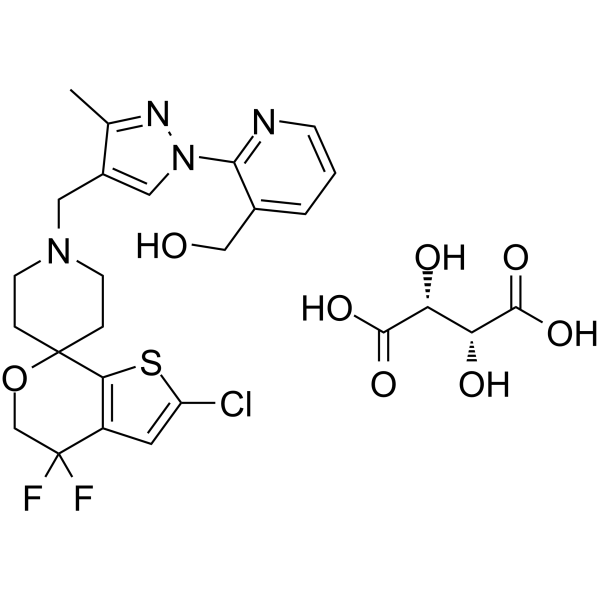
    LY2940094 (BTRX-246040) tartrate is a potent, brain penetrant, selective and orally available N/OFQ peptide (NOP) receptor antagonist with high affinity (Ki=0.105 nM) and antagonist potency (Kb=0.166 nM). LY2940094 tartrate reduces Ethanol self-administration and Ethanol seeking in animal models .
    LY2940094 tartrate
  • HY-P3801

    DiMe-C7

    Neurokinin Receptor Neurological Disease Metabolic Disease
    [Glp5,(Me)Phe8,Sar9] Substance P (5-11) (DiMe-C7) is a Substance P (HY-P0201) analogue that has approximately the same effects as Substance P (HY-P0201) on neurokinin 1 receptor (NK1R) in rat brain, but with a much longer duration of action. [Glp5,(Me)Phe8,Sar9] Substance P (5-11) selectively activates dopamine metabolism in the mesencephalon and midbrain cortex of the rat brain. [Glp5,(Me)Phe8,Sar9] Substance P (5-11) also increases motor activity and induces recovery of addictive agent-seeking behavior in rats .
    [Glp5,(Me)Phe8,Sar9] Substance P (5-11)
  • HY-132225

    5-HT Receptor Inflammation/Immunology
    SB 206553 is a 5-HT2C inverse agonist. SB 206553 can attenuate methamphetamine-seeking in rats. SB 206553 has activity for 5-HT2 receptor ligands in HEK-293 or CHO-K1 cells expressing human recombinant 5-HT2 receptors with pKi values of 5.6 nM (5-HT2A), 7.7 nM (5-HT2B) and 7.8 nM (5-HT2C), respectively. SB 206553 can be used for the research of psychostimulant abuse disorders .
    SB 206553
  • HY-172587

    Cannabinoid Receptor Neurological Disease
    CB1R Allosteric modulator 5 (compound 3) is a selective, and blood-brain barrier (BBB) permeable Cannabinoid receptor type 1 allosteric modulator with a pIC50 of 6.89. CB1R Allosteric modulator 5 attenuates both cocaine-seeking behavior specific to cue-induced reinstatement and cocaine-induced behavioral sensitization without altering locomotor activity .
    CB1R Allosteric modulator 5
  • HY-Y0740R

    Reference Standards Endogenous Metabolite Metabolic Disease
    4-Methoxybenzaldehyde (Standard) is the analytical standard of 4-Methoxybenzaldehyde. This product is intended for research and analytical applications. 4-Methoxybenzaldehyde (p-anisaldehyde) is a fragrant phenolic compound. 4-Methoxybenzaldehyde has been found in many plant species including horseradish, anise, star anise. 4-Methoxybenzaldehyde is a possible neurotoxicant and it has shown effects that include mortality, attractancy, and interference with host seeking .
    4-Methoxybenzaldehyde (Standard)
  • HY-160718

    ABT-431; DAS-431

    Dopamine Receptor Neurological Disease
    Adrogolide is an A-86929 (HY-171472) prodrug and dopamine D1 receptor agonist. Adrogolide is converted rapidly in plasma to A-86929. Adrogolide improves behavioral disability and locomotor activity scores. Adrogolide can also attenuate the ability of Cocaine to induce Cocaine-seeking behavior. Adrogolide can be used in the research of Parkinson's disease .
    Adrogolide
  • HY-W018475

    MK 462 free base

    5-HT Receptor Neurological Disease
    Rizatriptan (MK 462 free base) is an orally active 5-HT1B/5-HT1D receptor agonist, with BBB permeability. Rizatriptan exerts significant anti-migraine effects by constricting intracranial and extracranial blood vessels and inhibiting neuropeptide release. Rizatriptan exhibits species- and tissue-specific metabolic characteristics; for example, it undergoes oxidative deamination mainly by MAO-A in the liver of brown rats, so co-administration with MAO-A inhibitors is prohibited. Rizatriptan may also exacerbate nitroglycerin-induced cutaneous allodynia, prolong the duration of central sensitization, and increase anxiety-like behavior and active drug-seeking behavior in mice. Rizatriptan has been widely used in studies related to migraine and medication-overuse headache .
    Rizatriptan
  • HY-145196

    Cannabinoid Receptor Neurological Disease
    RTICBM-189 is a potent, brain-penetrant allosteric modulator of the cannabinoid type-1 (CB1) receptor with a pIC50 of 7.54 in Ca 2+ mobilization assay. RTICBM-189 has pIC50s of 5.29 and 6.25 for hCB1 and mCB1, respectively. RTICBM-189 significantly and selectively attenuates the reinstatement of the addictive agent-seeking behavior in rats .
    RTICBM-189
  • HY-159624

    GABA Receptor Neurological Disease
    KK-92A, a blood-brain barrier penetrated GABAB positive allosteric modulator (PAM), suppresses alcohol self-administration and cue-induced reinstatement of alcohol seeking in rats .
    KK-92A
  • HY-W634602

    Trace Amine-associated Receptor (TAAR) Others
    (R)-RO5263397 is a TAAR 1 agonist that demonstrates efficacy in reducing cocaine-mediated behaviors, including cocaine-induced behavioral sensitization, cue- and cocaine prime-induced reinstatement of cocaine-seeking behavior, and the expression of conditioned place preference.
    (R)-RO5263397
  • HY-124583

    Dopamine Receptor Neurological Disease
    PF-4363467, a dopamine D3/D2 receptor antagonist, attenuates opioid drug-seeking behavior without concomitant D2 side effects. PF-4363467 exhibits Ki values of 3.1 nM and 692 nM for D3R and D2R .
    PF-4363467
  • HY-B0503S

    Thiouracil-13C,15N2

    Isotope-Labeled Compounds NO Synthase Endocrinology Cancer
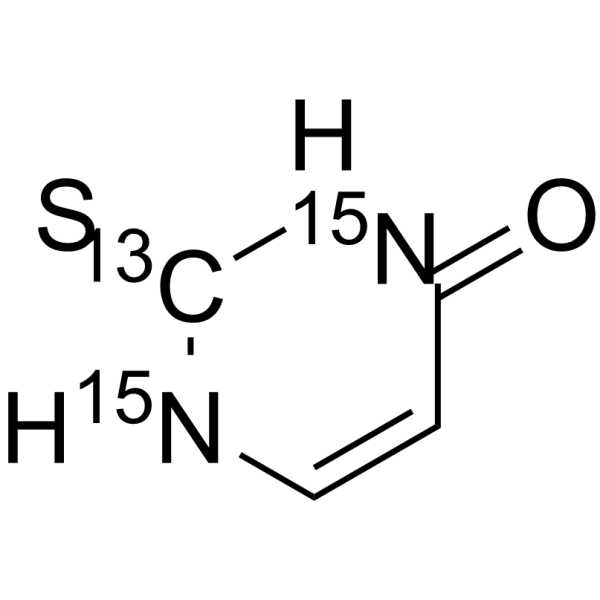
    2-Thiouracil- 13C, 15N2 is the 13C, 15N labeled 2-Thiouracil. 2-Thiouracil (Thiouracil) is an antithyroid compound. 2-Thiouracil can function as a highly specific melanoma seeker. 2-Thiouracil is a selective inhibitor of neuronal nitric oxide synthase (nNOS) with a Ki of 20 μM.
    2-Thiouracil-13C,15N2
  • HY-11056

    Dopamine Receptor Neurological Disease
    PF-04363467 is a highly preferring D3R antagonist. PF-04363467 produces dose-dependent changes in the EEG profile of freely moving rats. PF-4363467 attenuates opioid drug-seeking behavior without concomitant D2 side effects. PF-04363467 can be used for the study of addiction, cognitive and mental illness .
    PF-04363467
  • HY-Y0740S

    Endogenous Metabolite Others
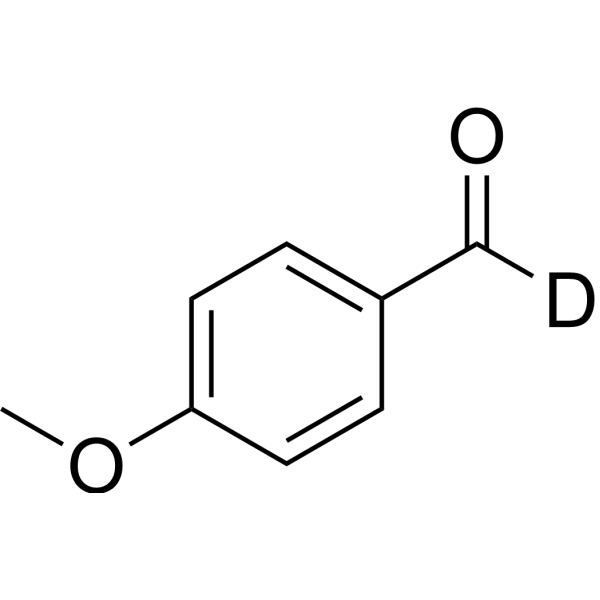
    4-Methoxybenzaldehyde-d1 is the deuterium labeled 4-Methoxybenzaldehyde . 4-Methoxybenzaldehyde is a naturally occurring fragrant phenolic compound. 4-Methoxybenzaldehyde has been found in many plant species including horseradish, anise, star anise. 4-Methoxybenzaldehyde is a possible neurotoxicant and it has shown effects that include mortality, attractancy, and interference with host seeking .
    4-Methoxybenzaldehyde-d1
  • HY-Y0740S1

    Endogenous Metabolite Others
    4-Methoxybenzaldehyde-d3 is the deuterium labeled 4-Methoxybenzaldehyde . 4-Methoxybenzaldehyde is a naturally occurring fragrant phenolic compound. 4-Methoxybenzaldehyde has been found in many plant species including horseradish, anise, star anise. 4-Methoxybenzaldehyde is a possible neurotoxicant and it has shown effects that include mortality, attractancy, and interference with host seeking .
    4-Methoxybenzaldehyde-d3
  • HY-174282

    Dopamine Transporter Neurological Disease
    RDS-04-010 is an atypical dopamine transporter (DAT) inhibitor. RDS-04-010 has the effect of inhibiting cocaine intake and seeking behavior. RDS-04-010 exerts its modulatory effect mainly by binding to the inward conformation of DAT, thereby reducing the reinforcing effect of cocaine. RDS-04-010 can be used in the study of cocaine use disorder (CUD) .
    RDS-04-010
  • HY-120144

    Opioid Receptor Neurological Disease
    SR-8993 is a highly selective nociceptin receptor agonist that can penetrate the blood-brain barrier and has the activity of reducing alcohol intake and relieving withdrawal anxiety. SR-8993 has shown mild anxiolytic effects in animal models and can effectively reverse anxiety caused by acute alcohol withdrawal. SR-8993 further reduces restricted drinking, operant responses for alcohol, and increased drinking induced by long-term intermittent exposure to alcohol. SR-8993 also reduces stress- and cue-related alcohol-seeking relapse .
    SR-8993
  • HY-171472

    Dopamine Receptor Neurological Disease
    A-86929 is a highly potent and selective dopamine D1 receptor agonist with a pKi value of 7.3. In the 6-OHDA (HY-B1081)-induced unilateral nigrostriatal lesion rat model, A-86929 significantly induces rotational behavior. It also improves motor function in the MPTP (HY-15608)-induced Parkinson's disease marmoset model. Additionally, A-86929 demonstrates potential therapeutic value in reducing cocaine-seeking behavior in rats and reversing Haloperidol (HY-14538)-induced cognitive deficits in rhesus monkeys. A-86929 can be used for research in neurological disorders .
    A-86929
  • HY-Y0740S2

    Isotope-Labeled Compounds Metabolic Disease
    4-Methoxybenzaldehyde-d2 is the deuterium labeled 4-Methoxybenzaldehyde (HY-W041300). 4-Methoxybenzaldehyde (p-anisaldehyde) is a fragrant phenolic compound. 4-Methoxybenzaldehyde has been found in many plant species including horseradish, anise, star anise. 4-Methoxybenzaldehyde is a possible neurotoxicant and it has shown effects that include mortality, attractancy, and interference with host seeking .
    4-Methoxybenzaldehyde-d2
  • HY-101384

    Dopamine Receptor Neurological Disease
    Ro 10-5824 is a potent and selective D4R partial agonist with a Ki of 5.2 nM. Ro 10-5824 increases novel object exploration in C57 mice .
    Ro 10-5824
  • HY-167856A

    GPR88 Neurological Disease
    RTI-122 dihydrochloride is a selective, blood-brain barrier-permeable GPR88 agonist (cAMP EC50=11 nM), with EC50 values of 11.5 nM and 155 nM for human and mouse GPR88, respectively ([ 35S]GTPγS assay). By activating the GPR88 receptor to regulate the cAMP signaling pathway and G protein activity, RTI-122 dihydrochloride significantly attenuates Binge-like drinking, reduces alcohol intake, and decreases alcohol-seeking motivation. RTI-122 dihydrochloride blocks the reinstatement of alcohol-seeking behavior without affecting water or sucrose intake. RTI-122 dihydrochloride exhibits metabolic stability in mice (T1/2=5.8 h) and can be used to investigate alcohol use disorder .
    RTI-122 dihydrochloride
  • HY-W743773

    Parasite Infection
    γ-Cyhalothrin is an orally active, blood-brain barrier permeable Type II synthetic pyrethroid insecticide. γ-Cyhalothrin is the insecticidally active enantiomer of λ-Cyhalothrin (HY-B0836). γ-Cyhalothrin disrupts voltage-gated sodium channels, induces salivation and reduces spontaneous activity in rats. γ-Cyhalothrin exerts toxic effects on aquatic invertebrates and fish, triggers community-level effects in aquatic ecosystems, and inhibits host-seeking Ixodes scapularis nymphs in residential lawn ecotones. γ-Cyhalothrin is applicable to insecticidal-related research .
    γ-Cyhalothrin
  • HY-181960

    Histamine Receptor Neurological Disease
    BP1.3656B is a selective, orally active, blood-brain barrier-permeable histamine H3 receptor (histamine H3 receptor) inverse agonist/antagonist, with a KB value of 0.08 nM for antagonizing agonist-induced activity and an IC50 value of 0.38 nM for directly inhibiting the basal activity of the receptor. BP1.3656B reduces alcohol consumption, alcohol-seeking behavior, alcohol self-administration, motivation to drink, alcohol relapse, alcohol-induced hyperlocomotion, and binge alcohol intake. BP1.3656B is applicable for the research of alcohol use disorder .
    BP1.3656B

Inquiry Online

Your information is safe with us. * Required Fields.

Salutation


Country or Region *

Applicant Name *


Organization Name *

Department *


Email Address *


Product Name *

Cat. No.


Requested quantity *

Phone Number *


Remarks

Inquiry Online

Inquiry Information

Product Name:
Cat. No.:
Quantity:
MCE Japan Authorized Agent: