



2-Thiouracil
Based on 3 publication(s) in Google Scholar
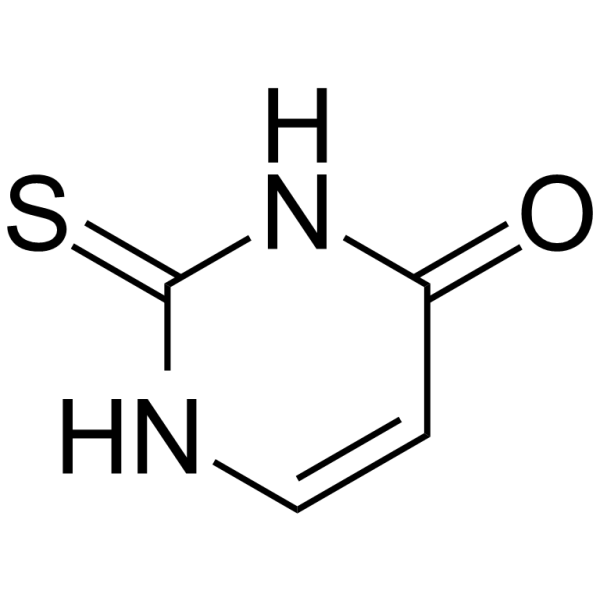
2-Thiouracil (Thiouracil) is a selective neuronal nitric oxide synthase (nNOS) inhibitor with a Ki value of 20 μM. 2-Thiouracil antagonizes BH4-induced nNOS dimerization. 2-Thiouracil is also an antithyroid compound and a highly specific melanoma detector. 2-Thiouracil stimulates the growth of pea and corn root segments.
Nur für Forschungszwecke. Wir verkaufen nicht an Patienten.
- Reinheit : 99.91%
- CAS. Nr.: 141-90-2
- Formel: C4H4N2OS
- Molecular Weight:128.16
-
Speicherung:Powder -20°C, 3 years , 4°C, 2 years ; In solvent -80°C, 2 years , -20°C, 1 year

To place orders, for customer services and technical support, please contact: MedChemExpress USA
Tel: 609-228-6898 E-mail: [email protected] [email protected]


-
 Biologische Aktivität
-
Chemical Information
-
Lösungsmittel & Löslichkeit
- Reinheit & Dokumentation
- Verweise
-
 Help & FAQs


-
HY-B0434
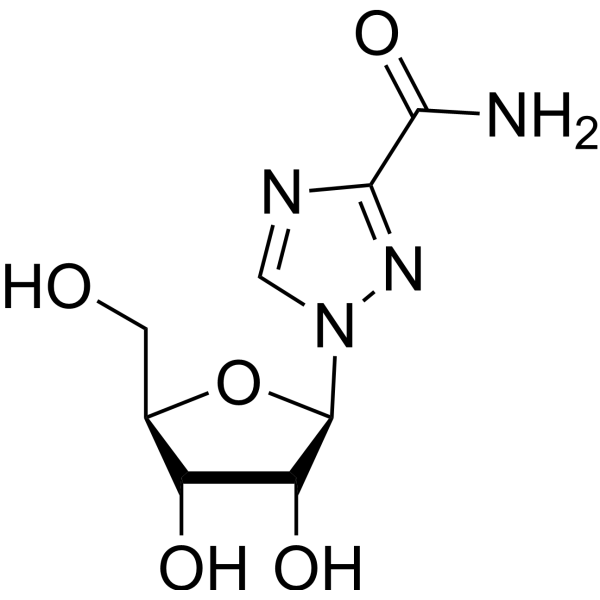
RibavirinAntiviral Agent -
HY-I0626
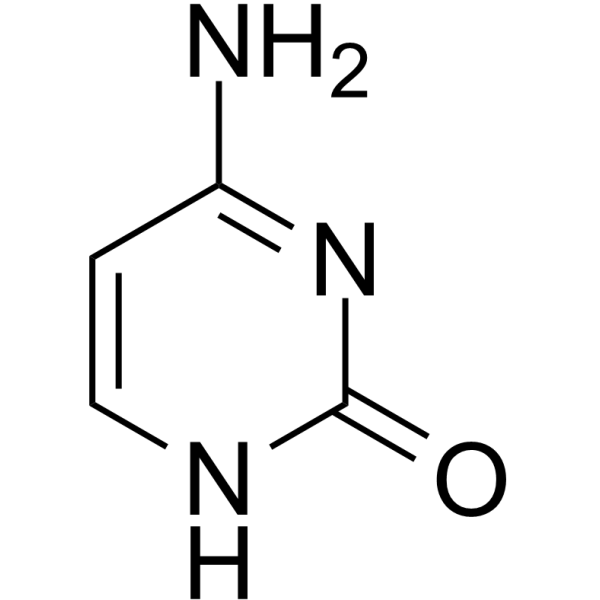
CytosineEndogenous Metabolite -
HY-90006
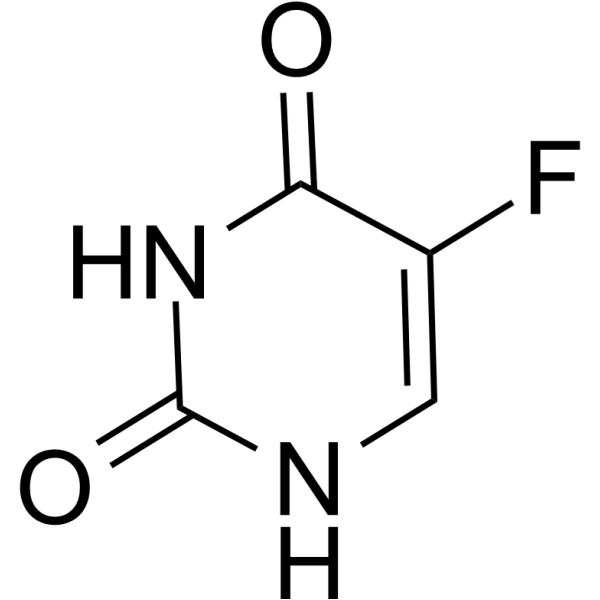
5-FluorouracilThymidylate Synthase Inhibitor -
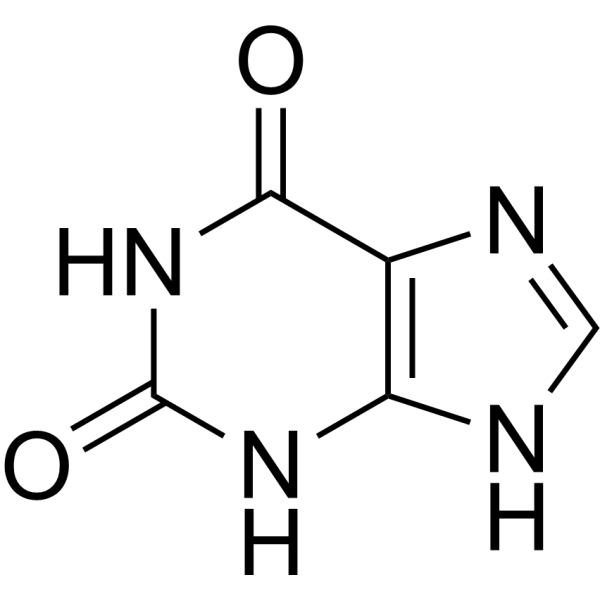
HY-W017389
Xanthine -

HY-I0626R
Cytosine (Standard)Endogenous Metabolite -
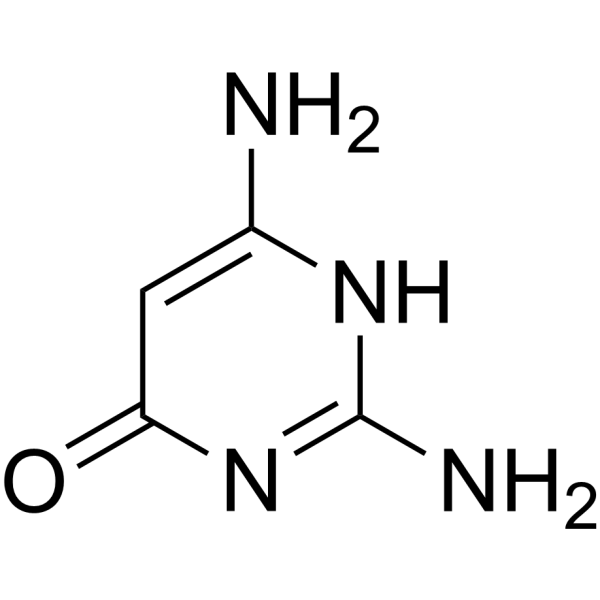
HY-100954
2,4-Diamino-6-hydroxypyrimidineGTP Cyclohydrolase I Inhibitor -
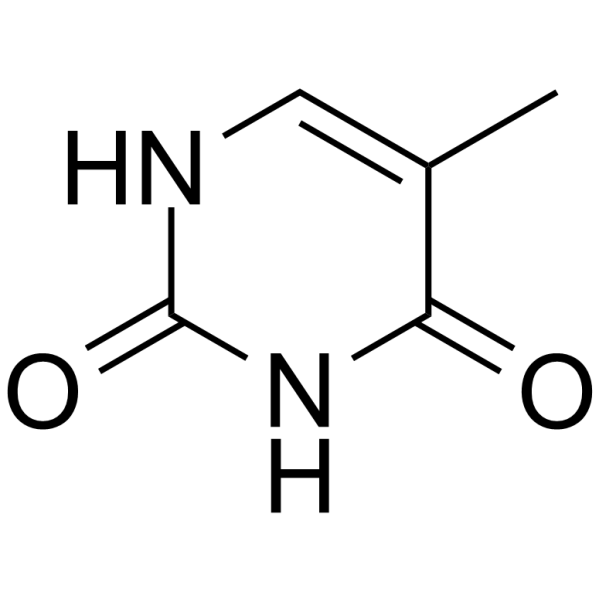
HY-W010450
ThymineDPD Inhibitor -
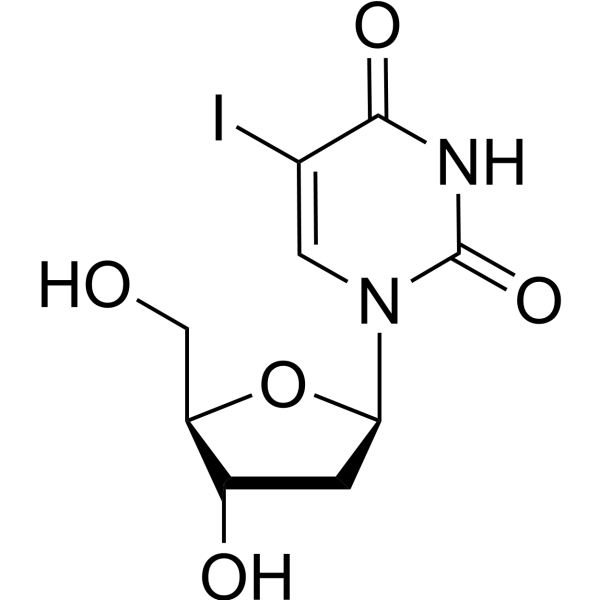
HY-B0307
IdoxuridineAntiviral Agent -
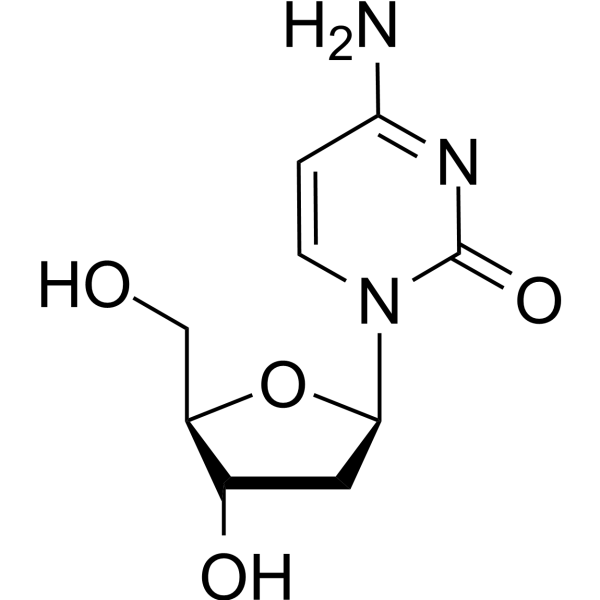
HY-D0184
2'-DeoxycytidineDeoxyribonucleoside -
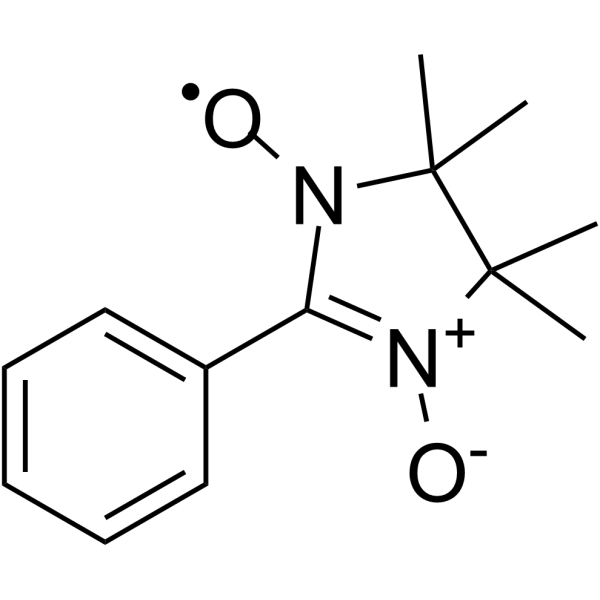
HY-131898
PTIONO Scavenger -
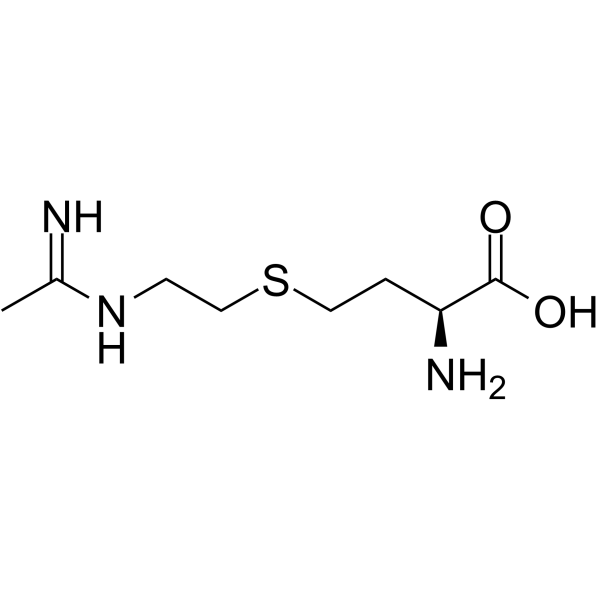
HY-12119
GW274150iNOS Inhibitor
Publications Citing Use of MedChemExpress (MCE) 2-Thiouracil
More

Biologische Aktivität
Beschreibung
IC50 & Target
|
nNOS |
In Vitro
2-Thiouracil (500 μM) significantly reduced the number of nNOS dimers formed in the presence of BH4 (1 μM)[1].
In the synthetic melanin experiment, 2-Thiouracil (molar ratio to substrate not greater than 0.5) reduced the A350 value of the synthetic melanin, and the yield of PTCA and PDCA varied with the pigment precursor, and the melanin yield also varied[2].
In the DHI oxidative polymerization experiment, 2-Thiouracil (2 mol equivalent) inhibited the conventional oligomerization mode of indole and generated new major products, including 1:1 DHI-TU adduct and its dimers and trimers[2].
2-Thiouracil (1-5 mM) stimulates root growth in pea and corn roots, and this stimulatory effect varies among treatments and root regions[3].
MedChemExpress (MCE) has not independently confirmed the accuracy of these methods. They are for reference only.
In Vivo
MedChemExpress (MCE) has not independently confirmed the accuracy of these methods. They are for reference only.


Chemical Information
-
CAS. Nr. 141-90-2
-
Appearance Solid
-
Molecular Weight 128.16
-
Formel C4H4N2OS
-
Color White to off-white
-
SMILES
O=C(C=CN1)NC1=S
-
Synonyms
Thiouracil
-
Versand
Room temperature in continental US; may vary elsewhere.
-
Speicherung
Powder -20°C 3 years 4°C 2 years In solvent -80°C 2 years -20°C 1 year


Publications (3)
-
Journal Impact Factor
-
Most Recent
-
ACS Environ Au
Machine Learning-Assisted Recognition of Environmental Sulfur-Containing Chemicals in Nontargeted Mass Spectrometry Analysis of Inadequate Mass Resolution. [Abstract]2025 Aug 5;5(6):573-582. PMID: 41277996 -
Anal Chem
Exposome-Scale Investigation of Cl-/Br-Containing Chemicals Using High-Resolution Mass Spectrometry, Multistage Machine Learning, and Cloud Computing. [Abstract]2025 Jun 3;97(21):11099-11109. PMID: 40401576 -


Lösungsmittel & Löslichkeit
In Vitro:
DMSO : 50 mg/mL (390.14 mM; Need ultrasonic; Hygroscopic DMSO has a significant impact on the solubility of product, please use newly opened DMSO)
H2O : 0.67 mg/mL (5.23 mM; Need ultrasonic)
Please refer to the solubility information to select the appropriate solvent. Once prepared, please aliquot and store the solution to prevent product inactivation from repeated freeze-thaw cycles.
Storage method and period of stock solution: -80°C, 2 years; -20°C, 1 year. When stored at -80°C, please use it within 2 years. When stored at -20°C, please use it within 1 year.
* Note: If you choose water as the stock solution, please dilute it to the working solution, then filter and sterilize it with a 0.22 μm filter before use.
Please refer to the solubility information to select the appropriate solvent. Once prepared, please aliquot and store the solution to prevent product inactivation from repeated freeze-thaw cycles.
Storage method and period of stock solution: -80°C, 2 years; -20°C, 1 year. When stored at -80°C, please use it within 2 years. When stored at -20°C, please use it within 1 year.
* Note: If you choose water as the stock solution, please dilute it to the working solution, then filter and sterilize it with a 0.22 μm filter before use.
Konzentration (Stammlösung) × Volumen (Stammlösung) = Konzentration (Ziellösung) × Volumen (Ziellösung)
In Vivo:
Select the appropriate dissolution method based on your experimental animal and administration route.
- For the following dissolution methods, please ensure to first prepare a clear stock solution using an In Vitro approach and then sequentially add co-solvents:
- To ensure reliable experimental results, the clarified stock solution can be appropriately stored based on storage conditions. As for the working solution for In Vivo experiments, it is recommended to prepare freshly and use it on the same day.
- The percentages shown for the solvents indicate their volumetric ratio in the final prepared solution. If precipitation or phase separation occurs during preparation, heat and/or sonication can be used to aid dissolution.
Add each solvent one by one: 10% DMSO 40% PEG300 5% Tween-80 45% Saline
Solubility: ≥ 3.75 mg/mL (29.26 mM); Clear solution
This protocol yields a clear solution of ≥ 3.75 mg/mL (saturation unknown).
Taking 1 mL working solution as an example, add 100 μL DMSO stock solution (37.5 mg/mL) to 400 μL PEG300, and mix evenly; then add 50 μL Tween-80 and mix evenly; then add 450 μL Saline to adjust the volume to 1 mL.
Preparation of Saline: Dissolve 0.9 g sodium chloride in ddH₂O and dilute to 100 mL to obtain a clear Saline solution.
In Vivo Dissolution Calculator
Please enter the basic information of animal experiments:
-
-
-
-
Recommended: Prepare an additional quantity of animals to account for potential losses during experiments.
Please enter your animal formula composition:
-
%DMSO +
Recommended: Keep the proportion of DMSO in working solution below 2% if your animal is weak.
-
%+
-
+%Tween-80 + +
-
%Saline +
The co-solvents required include: DMSO, . All of co-solvents are available by MedChemExpress (MCE). , Tween 80. All of co-solvents are available by MedChemExpress (MCE).
Working solution concentration: 0.22 mg/mL
Method for preparing stock solution: mg drug dissolved in μL DMSO. Stock solution concentration: mg/mL.
1. Take μL DMSO stock solution;
2. Add μL .
μL , mix evenly;
3. Then add μL Tween 80, mix evenly;
4. Then add μL
Please ensure that the stock solution in the first step is dissolved to a clear state, and add co-solvents in sequence. You can use ultrasonic heating (ultrasonic cleaner, recommended frequency 20-40 kHz), vortexing, etc. to assist dissolution.


Reinheit & Dokumentation
-
Data Sheet (277 KB)
-
SDS (418 KB)
- English - EN (418 KB)
- Français - FR (418 KB)
- Deutsch - DE (418 KB)
- Norwegian - NO (418 KB)
- Español - ES (418 KB)
- Swedish - SV (418 KB)
- Italian - IT (418 KB)
- Korean - KR (418 KB)
- Portuguese - PT (418 KB)
-
Handling Instructions (2659 KB)
Verweise
[1]. Palumbo, A., et al. 2-thiouracil is a selective inhibitor of neuronal nitric oxide synthase antagonising tetrahydrobiopterin-dependent enzyme activation and dimerisation. FEBS Lett, 2000. 485(2-3): p. 109-12. [Content Brief]
[2]. Napolitano, A., et al., Mechanism of selective incorporation of the melanoma seeker 2-thiouracil into growing melanin. J Med Chem, 1996. 39(26): p. 5192-201. [Content Brief]


Complete Stock Solution Preparation Table
Please refer to the solubility information to select the appropriate solvent. Once prepared, please aliquot and store the solution to prevent product inactivation from repeated freeze-thaw cycles.
Storage method and period of stock solution: -80°C, 2 years; -20°C, 1 year. When stored at -80°C, please use it within 2 years. When stored at -20°C, please use it within 1 year.
| Optional Solvent | Concentration Solvent Mass | 1 mg | 5 mg | 10 mg | 25 mg |
|---|---|---|---|---|---|
| H2O / DMSO | 1 mM | 7.8027 mL | 39.0137 mL | 78.0275 mL | 195.0687 mL |
| 5 mM | 1.5605 mL | 7.8027 mL | 15.6055 mL | 39.0137 mL | |
| DMSO | 10 mM | 0.7803 mL | 3.9014 mL | 7.8027 mL | 19.5069 mL |
| 15 mM | 0.5202 mL | 2.6009 mL | 5.2018 mL | 13.0046 mL | |
| 20 mM | 0.3901 mL | 1.9507 mL | 3.9014 mL | 9.7534 mL | |
| 25 mM | 0.3121 mL | 1.5605 mL | 3.1211 mL | 7.8027 mL | |
| 30 mM | 0.2601 mL | 1.3005 mL | 2.6009 mL | 6.5023 mL | |
| 40 mM | 0.1951 mL | 0.9753 mL | 1.9507 mL | 4.8767 mL | |
| 50 mM | 0.1561 mL | 0.7803 mL | 1.5605 mL | 3.9014 mL | |
| 60 mM | 0.1300 mL | 0.6502 mL | 1.3005 mL | 3.2511 mL | |
| 80 mM | 0.0975 mL | 0.4877 mL | 0.9753 mL | 2.4384 mL | |
| 100 mM | 0.0780 mL | 0.3901 mL | 0.7803 mL | 1.9507 mL |
* Note: If you choose water as the stock solution, please dilute it to the working solution, then filter and sterilize it with a 0.22 μm filter before use.


2-Thiouracil Related Classifications
HY-B0503 Related Classifications
 Powered by Bioz