Search Result
Results for "
Triammonium phosphate
" in MedChemExpress (MCE) Product Catalog:
3
Biochemical Assay Reagents
1
Isotope-Labeled Compounds
| Cat. No. |
Product Name |
Target |
Research Areas |
Chemical Structure |
-
- HY-126370A
-
|
|
Endogenous Metabolite
YAP
Apoptosis
Interleukin Related
STAT
ERK
Ras
|
Cancer
|
|
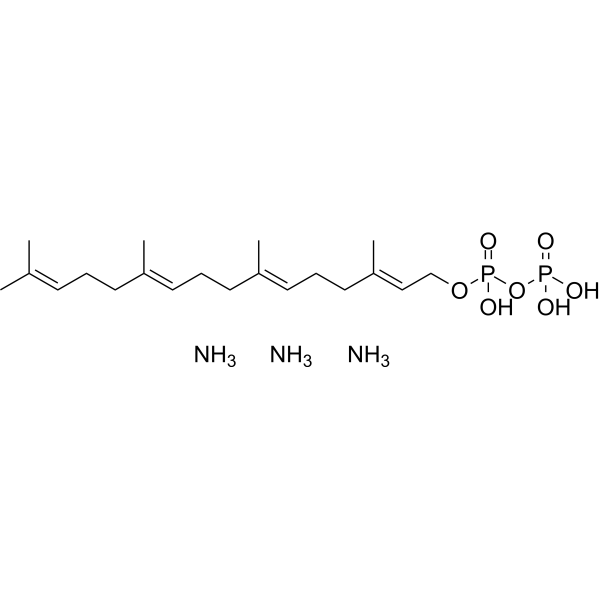
Geranylgeranyl pyrophosphate triammonium is a type of isoprenoid metabolic intermediate, mainly synthesized through the mevalonate pathway. Geranylgeranyl pyrophosphate triammonium is a key precursor in various biological synthesis processes, especially as a necessary substrate for post-translational modification of proteins - geranylgeranyl phosphorylation. Geranylgeranyl pyrophosphate triammonium regulates various cellular processes and disease progression through protein geranylgeranyl phosphorylation, such as activating the YAP signaling pathway, promoting cell proliferation and inhibiting apoptosis; promoting IL-2 production and STAT5 phosphorylation; and influencing metabolic homeostasis and cancer, etc .
|
-
-
- HY-130573A
-
|
Dimethylallyl diphosphate Triammonium
|
TRP Channel
|
Metabolic Disease
|
|
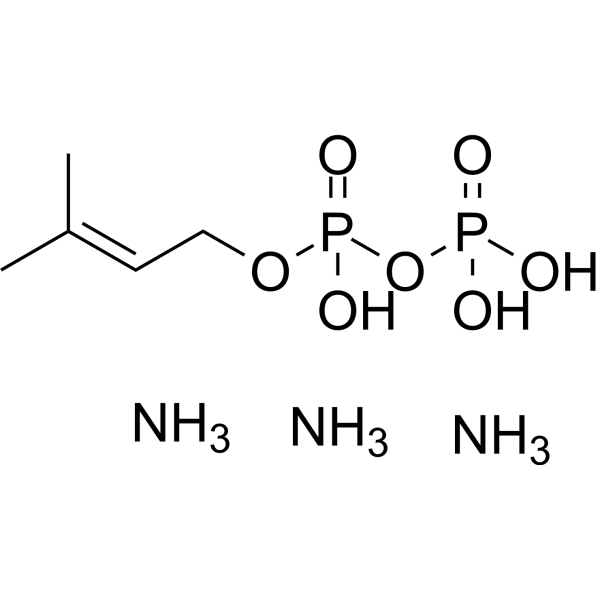
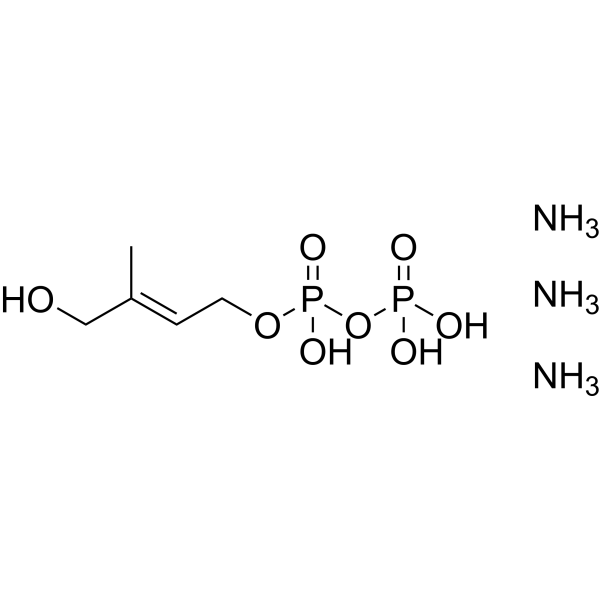
DMAPP (Dimethylallyl diphosphate) triammonium is an isoprenoid precursor. DMAPP triammonium, as an isomer of isopentenyl pyrophosphate (IPP), exists in virtually all life forms .
|
-
-
- HY-114295A
-
|
Geranyl pyrophosphate Triammonium
|
Endogenous Metabolite
|
Metabolic Disease
|
|
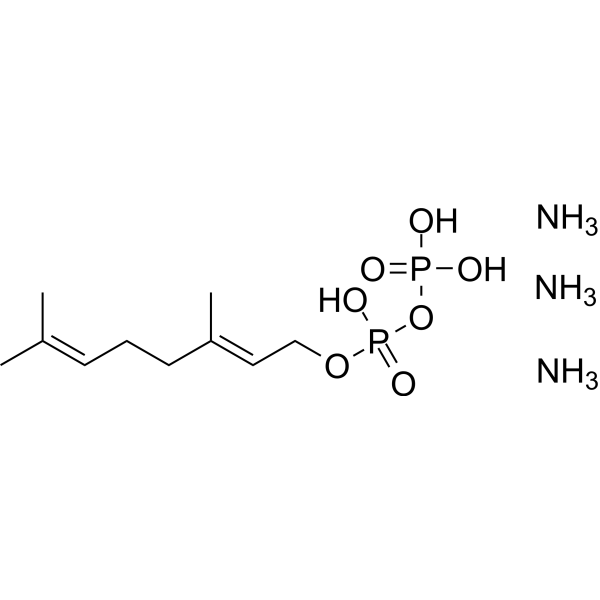
Geranyl diphosphate triammonium is a key intermediate in the isoprenoid biosynthesis pathway (IBP). Geranyl diphosphate triammonium plays key roles in cellular metabolism and is responsible for the production of both sterol and non-sterol isoprenoids .
|
-
-
- HY-B1529A
-
|
Triammonium citrate
|
Apoptosis
Endogenous Metabolite
Bacterial
|
Others
Cancer
|
|
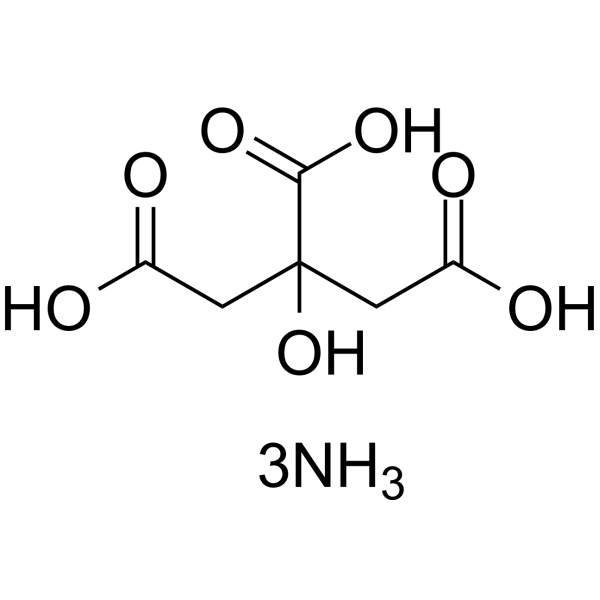
Citric acid triammonium (Triammonium citrate) is formed by Citric acid (HY-N1428) reacting with ammonia in a molar ratio of 1:3. Citric acid triammonium can be used as the carbon source to prepare carbon quantum dots (CDs). Citric acid triammonium with higher nitrogen components might promote the nitrogen-based functional groups in CDs, leading to a more efficient emission-color tunability .
|
-
-
- HY-145969A
-
|
3’-O-Me-m7G(5')ppp(5')G Triammonium
|
DNA/RNA Synthesis
Eukaryotic Initiation Factor (eIF)
|
Cancer
|
|
β-S-ARCA (3'-O-Me-m7G(5')ppp(5')G) triammonium is a mRNA 7-methylguanosine (m7G) cap analog carrying a phosphorothioate (PS) moiety. β-S-ARCA triammonium binds eIF4E via electrostatic interactions between its β-sulfur atom and positively charged Arg and Lys residues in the protein binding site. β-S-ARCA triammonium prevents the decapping by Dcp2, increases the mRNA half-life, enhances cap-dependent translation, and increases protein expression in cells. β-S-ARCA triammonium has been applied in researching experimental mRNA-based anticancer vaccines .
|
-
-
- HY-139101A
-
|
GpppA Triammonium
|
DNA/RNA Synthesis
Endogenous Metabolite
|
Others
|
|
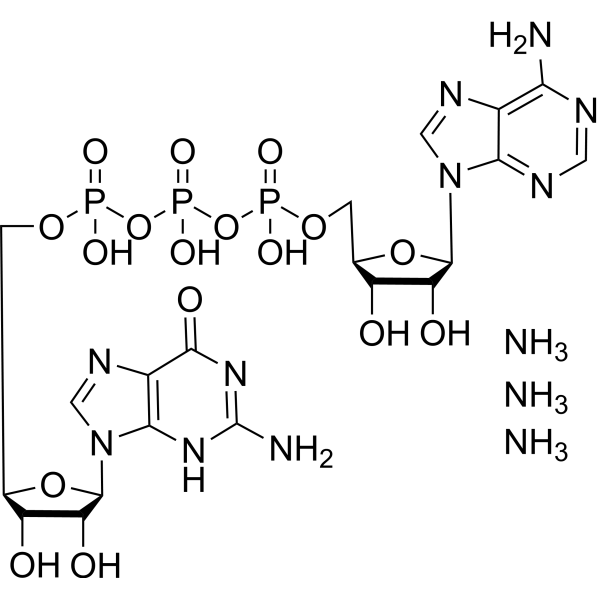
Guanosine 5'-triphosphate-5'-adenosine (GpppA) triammonium, a 5′ cap analog, can be used for RNA synthesis in vitro. Guanosine 5'-triphosphate-5'-adenosine triammonium is a fluorescent substrate analog .
|
-
-
- HY-113037CS
-
|
Farnesyl diphosphate-d2 Triammonium
|
Isotope-Labeled Compounds
TRP Channel
Endogenous Metabolite
Calcium Channel
|
Neurological Disease
Inflammation/Immunology
Cancer
|
|
Farnesyl pyrophosphate-d2 (Farnesyl diphosphate-d2) triammonium is a deuterium labeled Farnesyl pyrophosphate triammonium (HY-113037C). Farnesyl pyrophosphate ammonium is a metabolic intermediate in the mevalonate (MVA) pathway. It is a TRP channel (TRPM2) agonist that triggers Ca2+ influx and cell death. Farnesyl pyrophosphate ammonium is a key branch substrate for cholesterol synthesis, ubiquinone synthesis, protein farnesylation, and geranylgeranyl pyrophosphate (GGPP) synthesis. Farnesyl pyrophosphate ammonium is used in research on cerebral ischemia, neurodegenerative diseases, pancreatic cancer, inflammation, and autoimmune diseases.
|
-
-
- HY-145498
-
|
|
TNF Receptor
|
Inflammation/Immunology
|
|
HDMAPP triammonium is a potent phosphoantigen in the ammonium form and the pyrophosphate form of (E)-HDMAPP. HDMAPP is also a potent activator of γδ T cells and can induce T cell stimulation in vitro (EC50=0.39 nM, TNF-α) .
|
-
-
- HY-D2762
-
|
|
Fluorescent Dye
|
Cancer
|
|
18:1 PE AF 594 triammonium is a fluorescently labeled phospholipid probe. 18:1 PE AF 594 triammonium can be used as a fluorescent tracer for lipid nanoparticles (LNPs). 18:1 PE AF 594 triammonium is promising for research of drug delivery systems .
|
-
-
- HY-112502C
-
|
Adenosine 5'-(α,β-methylene)diphosphate Triammonium
|
CD73
|
Cancer
|
|
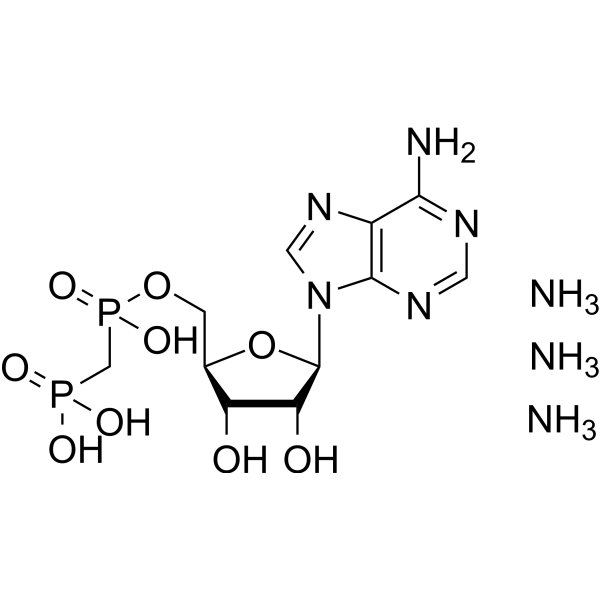
MethADP (Adenosine 5'-(α,β-methylene)diphosphate) triammonium is a CD73 inhibitor. MethADP can be used for the research of ATP-adenosine pathway .
|
-
-
- HY-E70265
-
-
-
- HY-W127781
-
|
|
Fluorescent Dye
|
Others
|
|
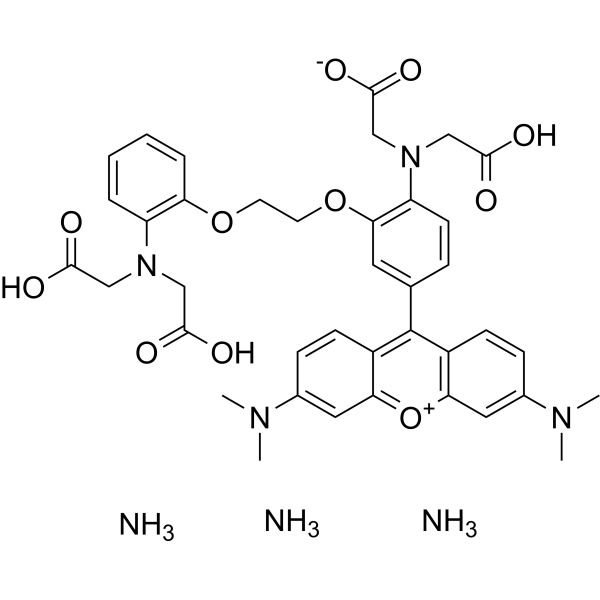
Rhod-2 triammonium is a cell impermeant, red fluorescent calcium indicator. Rhod-2 triammonium exhibits a significant shift in fluorescence intensity upon calcium binding (ex max=549 nm; calcium-free v. ex/em max=552/581 nm; calcium-bound). Unlike the UV-excitable indicators Fura-2 and Indo-1 (HY-D0121), there is no accompanying spectral shift .
|
-
-
- HY-E70264
-
|
|
Endogenous Metabolite
|
Metabolic Disease
|
|
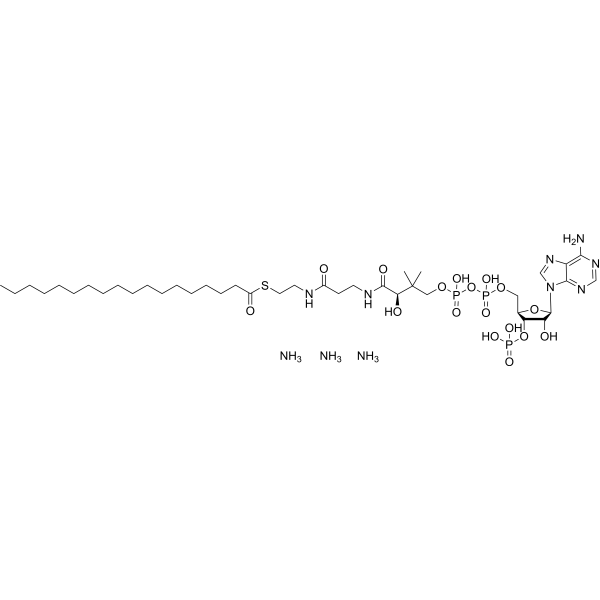
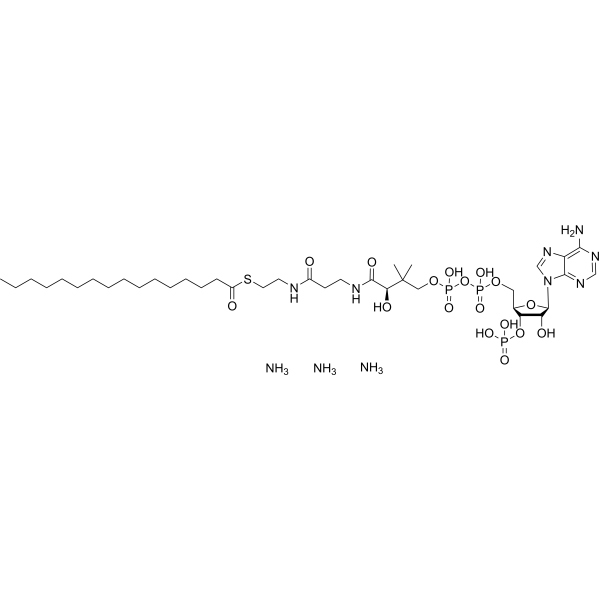
16:0 Coenzyme A triammonium is palmitoyl-CoA, which can serve as a reaction substrate to transfer the palmitoyl group to the free thiol group of the target protein through palmitoylation catalyzed by protein acyl transferases (PATs) .
|
-
-
- HY-126833B
-
|
14:0 Coenzyme A Triammonium; S-Tetradecanoate-CoA Triammonium; S-Tetradecanoate-coenzyme A Triammonium
|
Endogenous Metabolite
|
Infection
Cancer
|
|
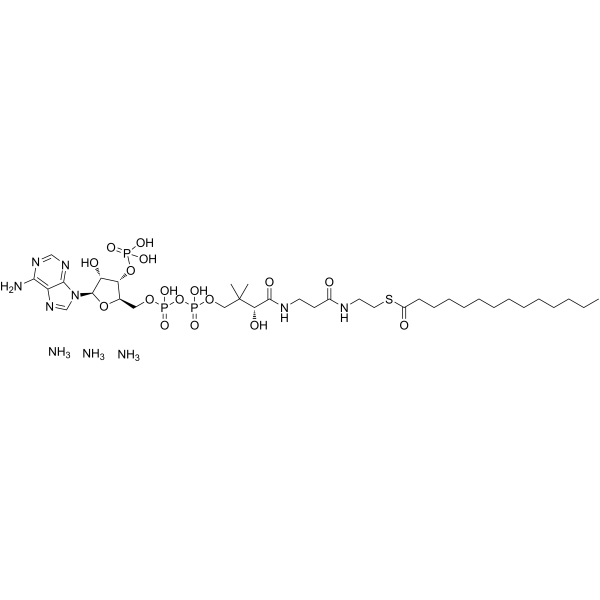
Myristoyl coenzyme A triammonium (14:0 Coenzyme A) is a myristoylated coenzyme A (CoA). Myristoylation is an essential process in viruses and is generally controlled by N-myristoyltransferase (NMT). And NMT is more active in colon epithelial tumors than in normal cells. Reduced Ccoenzyme A (CoA) is known to be a key regulator of NMT activity, whereas oxidized CoA does not allow NMT to promote myristoylation. Myristoyl coenzyme A blocks the demyristoylation process and has potential anticancer and antiviral mechanisms .
|
-
-
- HY-139099B
-
|
Gp3G Triammonium
|
Nucleoside Antimetabolite/Analog
DNA/RNA Synthesis
|
Cancer
|
|
Diguanosine 5′-triphosphate (Gp3G) triammonium is a dinucleoside triphosphates. Diguanosine 5′-triphosphate triammonium also is a virus-specific oligonucleotide. Diguanosine 5′-triphosphate triammonium is needed for the synthesis of RNA during the transcription process .
|
-
-
- HY-148919A
-
-
-
- HY-135867F
-
|
|
CHIKV
Endogenous Metabolite
Enterovirus
HCV
Topoisomerase
SARS-CoV
|
Infection
|
|
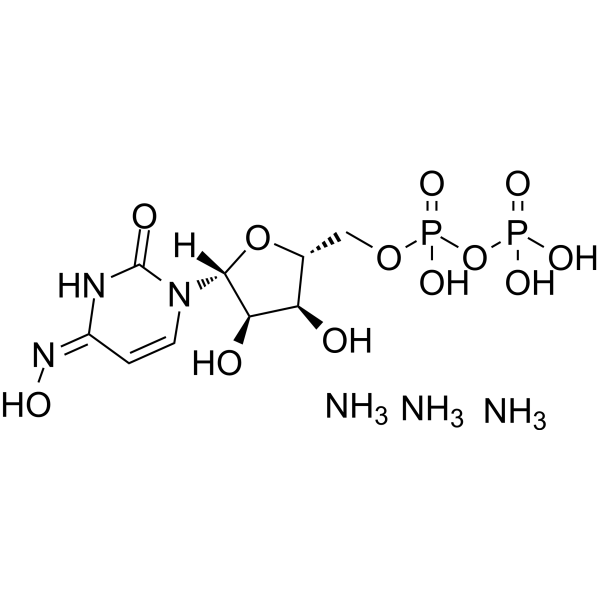
NHC-diphosphate triammonium is an active phosphorylated intracellular metabolite of β-d-N4-Hydroxycytidine (NHC) (HY-125033) as a diphosphate form . NHC-diphosphate triammonium is a weak alternative substrate for the viral polymerase and can be incorporated into HCV replicon RNA .
|
-
-
- HY-E70266
-
-
-
- HY-E70260
-
|
|
Acyltransferase
|
Others
|
|
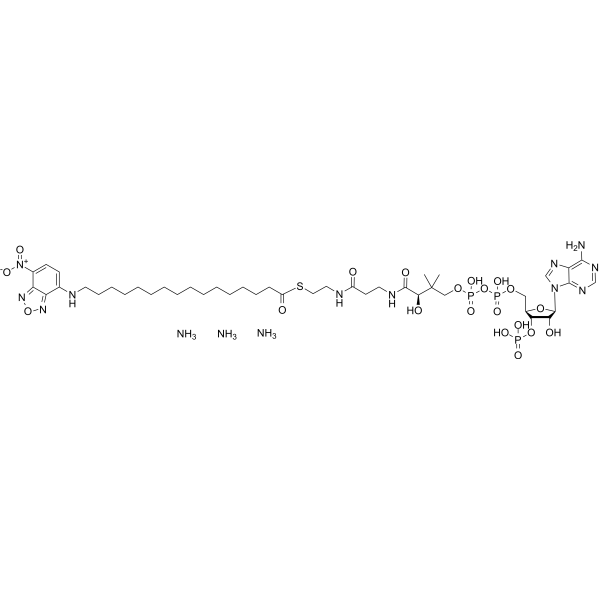
16-NBD-16:0 Coenzyme A triammonium can be used as a substrate to measure the in vitro activity of other Acyltransferase .
|
-
-
- HY-137782A
-
|
|
Biochemical Assay Reagents
|
Others
|
|
Palmitoleoyl-CoA triammonium is the triammonium salt form of Palmitoleoyl-CoA (HY-137782). Palmitoleoyl-CoA triammonium can be activated and transported into the mitochondria for metabolism, specifically for β-oxidation. Palmitoleoyl-CoA triammonium induces the cardiac mitochondrial membrane permeability transition, which causes mitochondrial dysfunction. Palmitoleoyl-CoA triammonium regulates metabolism via allosteric control of AMPK β1-isoforms .
|
-
-
- HY-115748A
-
-
-
- HY-152898A
-
|
|
Biochemical Assay Reagents
|
Others
|
|
Arachidonoyl CoA triammonium is used as a substrate in the synthesis of Arachidonoyl amino acids. Arachidonoyl CoA triammonium directly interacts with FadR to inhibit binding at its DNA targets .
|
-
-
- HY-137868A
-
|
Decanoyl-COA Triammonium
|
Endogenous Metabolite
|
Endocrinology
|
|
Decanoyl coenzyme A (Decanoyl CoA) triammonium is a primer for the fatty acid elongation system in Mycobacterium smegmat .
|
-
-
- HY-134136B
-
|
S-Octanoate-CoA Triammonium; S-Octanoate-coenzyme A Triammonium
|
Biochemical Assay Reagents
|
Others
|
|
Octanoyl coenzyme A triammonium is an enoyl-CoA hydratase binder. Octanoyl coenzyme A triammonium binds to the active site of enoyl-CoA hydratase, occupies the binding pocket for the fatty acid tail of the enzyme's substrate, and induces a conformational shift in a flexible protein loop via its longer octanoyl chain, forming an open channel leading to the inter-trimer gap .
|
-
-
- HY-E70253
-
-
-
- HY-109591B
-
|
|
Biochemical Assay Reagents
|
Others
|
|
Oleoyl coenzyme A triammonium is the salt form of Oleoyl coenzyme A, which exhibits an inhibitory effects for neutral lipase. Oleoyl coenzyme A triammonium mediates ATP-dependent signal transduction pathway in plants .
|
-
-
- HY-E70273
-
-
-
- HY-E70258
-
-
-
- HY-E70267
-
|
|
Biochemical Assay Reagents
|
Metabolic Disease
|
|
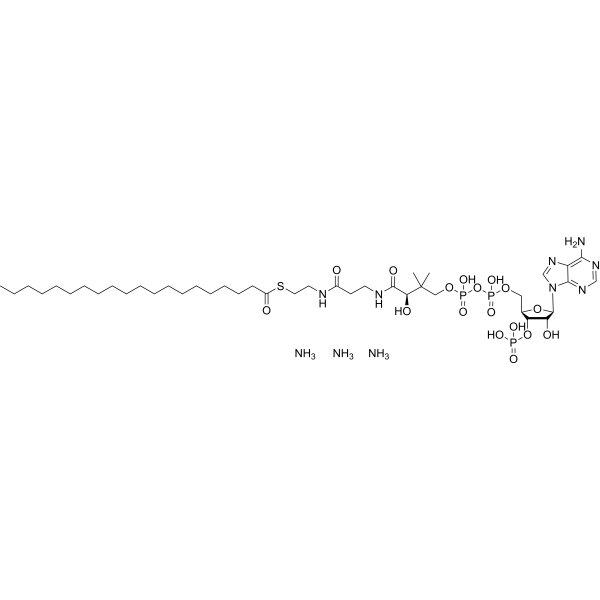
22:0 Coenzyme A triammonium is a derivative of coenzyme A (CoA), where CoA is combined with a 22-carbon saturated fatty acid (behenic acid, also known as docosanoic acid). 22:0 Coenzyme A triammonium can serve as a substrate for AmFAR1 .
|
-
-
- HY-Y1005
-
|
|
Biochemical Assay Reagents
|
Others
|
|
Triammonium phosphate trihydrate interacts with the magnesium ions to form a precipitate, which can be used for magnesium separation from lithium in salt-lake brines .
|
-
-
- HY-E70259
-
|
|
Endogenous Metabolite
|
Metabolic Disease
|
|
18:2 (n6) Coenzyme A triammonium is a Coenzyme A. 18:2 (n6) Coenzyme A triammonium can be used to determine the effects of lysophospholipid acyltransferase activities in adipocyte differentiation .
|
-
-
- HY-148869A
-
|
06:0 Coenzyme A Triammonium
|
Biochemical Assay Reagents
|
Metabolic Disease
|
|
Hexanoyl-Coenzyme A triammonium (06:0 Coenzyme A) is a medium-chain fatty acyl CoA that is an acyl donor substrate for ghrelin O-acyltransferase (GOAT) .
|
-
-
- HY-N15989
-
-
-
- HY-153203
-
|
20:5 Coenzyme A Triammonium
|
Others
|
Others
|
|
Eicosapentaenoyl-CoA triammonium (C20:5-CoA) is an unsaturated fatty acyl-CoA that can assist in the measurement of enzymatic activity of the TrWSD4 enzyme .
|
-
-
- HY-E70261
-
|
16:0 Azido Coenzyme A Triammonium
|
Biochemical Assay Reagents
|
Metabolic Disease
|
|
16-Azidohexadecanoyl-CoA (16:0 Azido Coenzyme A) triammonium is the azide analog of coenzyme A (CoA) that can be used for the study of lipid metabolism .
|
-
-
- HY-E70278
-
|
|
Biochemical Assay Reagents
|
Metabolic Disease
|
|
(9Z-Octadecenyl)-CoA triammonium is a coenzyme. (9Z-Octadecenyl)-CoA triammonium is a long-chain acyl-CoA esters. Long-chain acyl-CoA esters are involved in regulation of fatty acid synthesis, enzyme systems, vesicle trafficking, ion channels and ion pumps .
|
-
-
- HY-E70262
-
|
|
Oxidative Phosphorylation
Endogenous Metabolite
|
Metabolic Disease
|
|
Acetoyl-CoA (triammonium) is a triammonium derivative of Acetoyl-CoA (HY-114293), Acetyl-CoA is a membrane-impermeant central metabolic intermediate, participates in the TCA cycle and oxidative phosphorylation metabolism. Acetyl-coenzyme A, regulates various cellular mechanisms by providing (sole donor) acetyl groups to target amino acid residues for post-translational acetylation reactions of proteins. Acetyl Coenzyme A is also a key precursor of lipid synthesis .
|
-
-
- HY-E70269
-
-
-
- HY-164984A
-
|
|
DNA/RNA Synthesis
|
Others
|
|
m3227G(5)ppp(5')A triammonium is the triammonium salt form of m3227G(5)ppp(5')A (HY-164984). m3227G(5)ppp(5')A triammonium is a specific mRNA molecule structure, which is composed of a 3227-methylguanine (m3227G) cap, a triphosphate group and an adenosine. m3227G(5)ppp(5')A triammonium affects the stability and translation efficiency of mRNA .
|
-
-
- HY-E70256
-
|
Lauroyl coenzyme A Triammonium; S-Dodecanoate-CoA Triammonium; S-Dodecanoate-CoA Triammonium
|
Biochemical Assay Reagents
Endogenous Metabolite
|
Others
|
|
12:0 Coenzyme A (Lauroyl coenzyme A triammonium) is an intermediary in fatty acid synthesis or metabolism, formed by combining long-chain fatty acids (or lauric acid) with coenzyme A. 12:0 Coenzyme A is involved in lipid biosynthesis and fatty acid transport, in which coenzyme A acts as a transport molecule to help move and target specific compounds .
|
-
-
- HY-E70257
-
|
Lignoceroyl coenzyme A Triammonium
|
Drug Intermediate
|
Others
|
|
24:0 Coenzyme A (Lignoceroyl coenzyme A triammonium) is an intermediate in the synthesis of hydroxyceramide .
|
-
-
- HY-145913A
-
|
|
DNA/RNA Synthesis
|
Others
|
|
m7GpppApG triammonium is a trinucleotide mRNA 5' cap analog that can be used for RNA synthesis in vitro .
|
-
-
- HY-E70254
-
|
|
Others
|
Others
|
|
Tricosanoyl-CoA triammonium is a very long-chain fatty acyl-CoA that results from the formal condensation of the thiol group of coenzyme A (HY-128851) with the carboxy group of tricosanoic acid (HY-W009081). Tricosanoyl-CoA is functionally related to a tricosanoic acid. Tricosanoyl-CoA is a conjugate acid of a tricosanoyl-CoA(4-).
|
-
-
- HY-E70255
-
|
Hexacosanoyl coenzyme A Triammonium
|
Endogenous Metabolite
|
Others
|
|
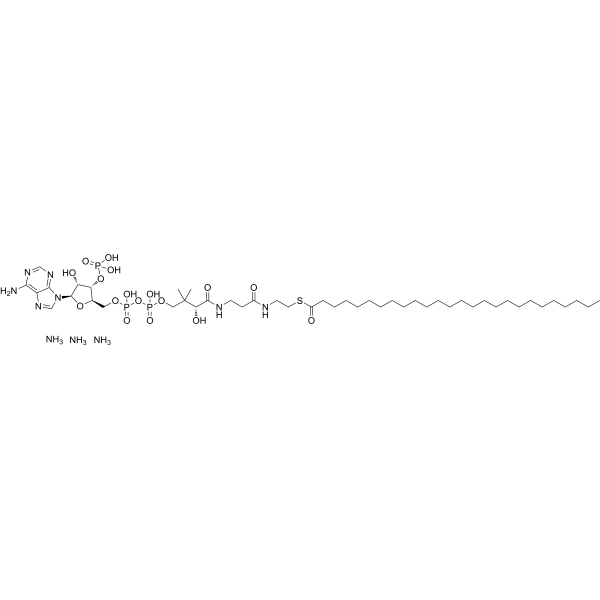
26:0 Coenzyme A (Hexacosanoyl coenzyme A triammonium) is a type of coenzyme A that can serve as a substrate for 1-acylglycerol-3-phosphate-O-acyltransferase isoform 11 (AGPAT11) .
|
-
-
- HY-164986A
-
|
|
DNA/RNA Synthesis
|
Others
|
|
m3227G(5)ppp(5')m6Am triammonium is the triammonium salt form of m3227G(5)ppp(5')m6Am (HY-164986). m3227G(5)ppp(5')m6Am triammonium is a specific mRNA molecule structure, which is composed of a 3227-methylguanine (m3227G) cap, a triphosphate group and a N6,2'-O-dimethyladenosine. m6Am is a reversible modification located on the first coding nucleotide near the 5' cap of mRNA, that can affect the stability of mRNA .
|
-
-
- HY-E70251
-
|
Docosahexaenoyl coenzyme A Triammonium
|
Endogenous Metabolite
|
Others
|
|
22:6 Coenzyme A (Docosahexaenoyl coenzyme A triammonium) is a coenzyme that contains 22 carbon atoms and 6 unsaturated bonds. 22:6 Coenzyme A can serve as an acyl substrate and is used in research on the effects of lysophospholipid acyltransferase activities in adipocyte differentiation .
|
-
-
- HY-164985A
-
|
|
DNA/RNA Synthesis
|
Others
|
|
m3227G(5)ppp(5')Am triammonium is the triammonium salt form of m3227G(5)ppp(5')Am (HY-164985). m3227G(5)ppp(5')Am is a specific mRNA molecule structure, which is composed of a 3227-methylguanine (m3227G) cap, a triphosphate group and a 2'-O-methyladenosine. Am is a reversible modification located on the first coding nucleotide near the 5' cap of mRNA, that can affect the stability of mRNA .
|
-
-
- HY-164188
-
|
|
DNA/RNA Synthesis
|
Others
|
|
m7(3'Ma-Cy5)Gppp(2'OMe)ApG ammonium is a Cy5-labled cap analogue that can be used for mRNA synthesis. The efficiency of mRNA delivery can be determined by the detection of Cy5 by flow cytometry, which can be used to track mRNA in cells and in living animals and to screen delivery lipid ratios.
|
-
-
- HY-N15797
-
-
-
- HY-178672A
-
|
Anti-Reverse cap analog Triammonium solution (100 mM); m2 7,3′O GpppG Triammonium solution (100 mM)
|
DNA/RNA Synthesis
|
Cancer
|
|
ARCA (Anti-Reverse cap analog) triammonium solution (100 mM) is a 5′-cap analogue. ARCA triammonium solution (100 mM) caps mRNA. ARCA triammonium solution (100 mM) can be used in protein expression studies .
|
-
- HY-141479C
-
|
Butyryl CoA Triammonium
|
Drug Intermediate
|
Others
|
|
Butyryl-Coenzyme A (Butyryl CoA) triammonium is a short-chain acyl CoA that can synthesize Butyric acid (HY-B0350) .
|
-
- HY-E70274
-
-
- HY-150135A
-
|
|
Others
|
Metabolic Disease
|
|
D-myo-Inositol-1,4,5-triphosphate (triammonium) is a phosphoinositide. Phosphoinositides (PI) are similar to other phospholipids, but the head group is the cyclic myo-inositol.
|
-
- HY-179818
-
-
- HY-185612
-
-
- HY-N16001
-
-
- HY-185613
-
-
- HY-185615
-
-
- HY-185609
-
-
- HY-185601
-
-
- HY-185602
-
|
|
Drug Intermediate
mRNA
|
Others
|
|
m7G(5')vppp(5')(2'OMeA)pG 100mM Ammonium Solution is a cap analog that can be used for the synthesis of mRNA.
|
-
| Cat. No. |
Product Name |
Type |
-
- HY-D2762
-
|
|
Fluorescent Dyes
|
|
18:1 PE AF 594 triammonium is a fluorescently labeled phospholipid probe. 18:1 PE AF 594 triammonium can be used as a fluorescent tracer for lipid nanoparticles (LNPs). 18:1 PE AF 594 triammonium is promising for research of drug delivery systems .
|
| Cat. No. |
Product Name |
Type |
-
- HY-B1529A
-
|
Triammonium citrate
|
Biochemical Assay Reagents
|
|
Citric acid triammonium (Triammonium citrate) is formed by Citric acid (HY-N1428) reacting with ammonia in a molar ratio of 1:3. Citric acid triammonium can be used as the carbon source to prepare carbon quantum dots (CDs). Citric acid triammonium with higher nitrogen components might promote the nitrogen-based functional groups in CDs, leading to a more efficient emission-color tunability .
|
-
- HY-W127781
-
|
|
Biochemical Assay Reagents
|
|
Rhod-2 triammonium is a cell impermeant, red fluorescent calcium indicator. Rhod-2 triammonium exhibits a significant shift in fluorescence intensity upon calcium binding (ex max=549 nm; calcium-free v. ex/em max=552/581 nm; calcium-bound). Unlike the UV-excitable indicators Fura-2 and Indo-1 (HY-D0121), there is no accompanying spectral shift .
|
-
- HY-Y1005
-
|
|
Biochemical Assay Reagents
|
|
Triammonium phosphate trihydrate interacts with the magnesium ions to form a precipitate, which can be used for magnesium separation from lithium in salt-lake brines .
|
| Cat. No. |
Product Name |
Category |
Target |
Chemical Structure |
| Cat. No. |
Product Name |
Chemical Structure |
-
- HY-113037CS
-
|
|
|
Farnesyl pyrophosphate-d2 (Farnesyl diphosphate-d2) triammonium is a deuterium labeled Farnesyl pyrophosphate triammonium (HY-113037C). Farnesyl pyrophosphate ammonium is a metabolic intermediate in the mevalonate (MVA) pathway. It is a TRP channel (TRPM2) agonist that triggers Ca2+ influx and cell death. Farnesyl pyrophosphate ammonium is a key branch substrate for cholesterol synthesis, ubiquinone synthesis, protein farnesylation, and geranylgeranyl pyrophosphate (GGPP) synthesis. Farnesyl pyrophosphate ammonium is used in research on cerebral ischemia, neurodegenerative diseases, pancreatic cancer, inflammation, and autoimmune diseases.
|
-
| Cat. No. |
Product Name |
|
Classification |
-
- HY-E70261
-
|
16:0 Azido Coenzyme A Triammonium
|
|
Azide
|
|
16-Azidohexadecanoyl-CoA (16:0 Azido Coenzyme A) triammonium is the azide analog of coenzyme A (CoA) that can be used for the study of lipid metabolism .
|
| Cat. No. |
Product Name |
|
Classification |
-
- HY-145969A
-
|
3’-O-Me-m7G(5')ppp(5')G Triammonium
|
|
Cap Analogs
|
|
β-S-ARCA (3'-O-Me-m7G(5')ppp(5')G) triammonium is a mRNA 7-methylguanosine (m7G) cap analog carrying a phosphorothioate (PS) moiety. β-S-ARCA triammonium binds eIF4E via electrostatic interactions between its β-sulfur atom and positively charged Arg and Lys residues in the protein binding site. β-S-ARCA triammonium prevents the decapping by Dcp2, increases the mRNA half-life, enhances cap-dependent translation, and increases protein expression in cells. β-S-ARCA triammonium has been applied in researching experimental mRNA-based anticancer vaccines .
|
-
- HY-139101A
-
|
GpppA Triammonium
|
|
Nucleotide Analogs
Adenine Nucleotide
|
|
Guanosine 5'-triphosphate-5'-adenosine (GpppA) triammonium, a 5′ cap analog, can be used for RNA synthesis in vitro. Guanosine 5'-triphosphate-5'-adenosine triammonium is a fluorescent substrate analog .
|
-
- HY-D2762
-
|
|
|
Fluorescent Lipids
|
|
18:1 PE AF 594 triammonium is a fluorescently labeled phospholipid probe. 18:1 PE AF 594 triammonium can be used as a fluorescent tracer for lipid nanoparticles (LNPs). 18:1 PE AF 594 triammonium is promising for research of drug delivery systems .
|
-
- HY-139099B
-
|
Gp3G Triammonium
|
|
Nucleotide Analogs
|
|
Diguanosine 5′-triphosphate (Gp3G) triammonium is a dinucleoside triphosphates. Diguanosine 5′-triphosphate triammonium also is a virus-specific oligonucleotide. Diguanosine 5′-triphosphate triammonium is needed for the synthesis of RNA during the transcription process .
|
-
- HY-145913A
-
|
|
|
Cap Analogs
|
|
m7GpppApG triammonium is a trinucleotide mRNA 5' cap analog that can be used for RNA synthesis in vitro .
|
-
- HY-164188
-
|
|
|
Cap Analogs
|
|
m7(3'Ma-Cy5)Gppp(2'OMe)ApG ammonium is a Cy5-labled cap analogue that can be used for mRNA synthesis. The efficiency of mRNA delivery can be determined by the detection of Cy5 by flow cytometry, which can be used to track mRNA in cells and in living animals and to screen delivery lipid ratios.
|
-
- HY-157643
-
|
|
|
Phospholipids
|
|
18:0-20:4 PI (4,5) P2 triammonium is a lipid that can be used to prepare lipid nanoparticles (LNPs) for drug delivery.
|
-
- HY-157649
-
|
|
|
Phospholipids
|
|
18:0-20:4 PI (3,5) P2 triammonium is a lipid that can be used to prepare lipid nanoparticles (LNPs) for drug delivery.
|
-
- HY-157705
-
|
PIP2[3',5'](18:1(9Z)/18:1(9Z)) Triammonium
|
|
Phospholipids
|
|
18:1 PI(3,5)P2 (triammonium) is a phosphoinositide. Phosphoinositides (PI) are similar to other phospholipids, but the head group is the cyclic myo-inositol.
|
-
- HY-157713
-
|
08:0 PI(3,5)P2 Triammonium
|
|
Phospholipids
|
|
diC8PI(3,5)P2 (08:0 PI(3,5)P2) triammonium is a lipid that can be used to prepare lipid nanoparticles (LNPs) for drug delivery.
|
Your information is safe with us. * Required Fields.
Inquiry Information
- Product Name:
- Cat. No.:
- Quantity:
- MCE Japan Authorized Agent:

