From 11:00 pm to 12:00 pm EST ( 8:00 pm to 9:00 pm PST ) on January 6th, the website will be under maintenance. We are sorry for the inconvenience. Please arrange your schedule properly.
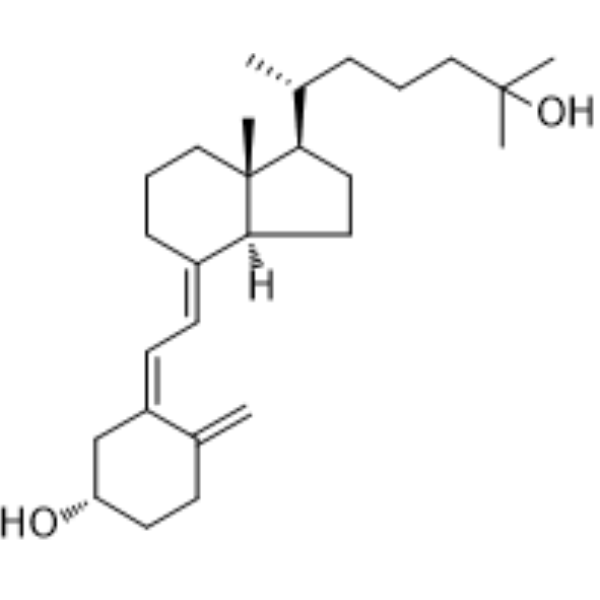
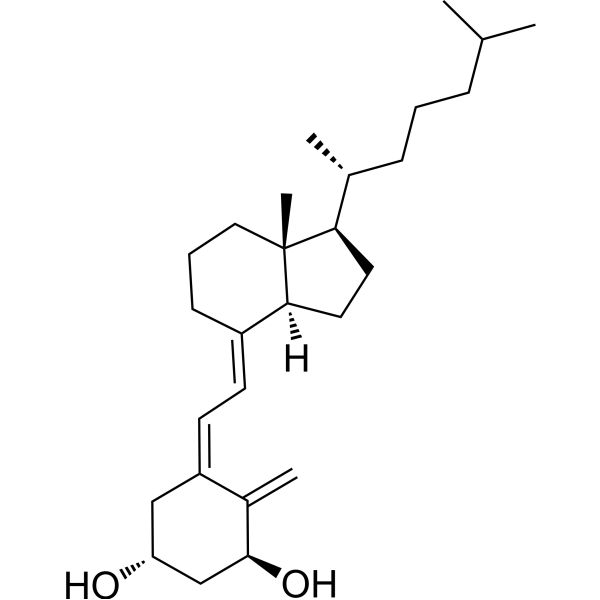
Calcifediol (25-hydroxy Vitamin D3) is an effective VDR ligand and VD supplement. Calcifediol is a prohormone of the vitamin D endocrine system (VDES) and is hydroxylated in the liver to produce the active form, calcitriol. Calcifediol can rapidly increase serum VD levels .
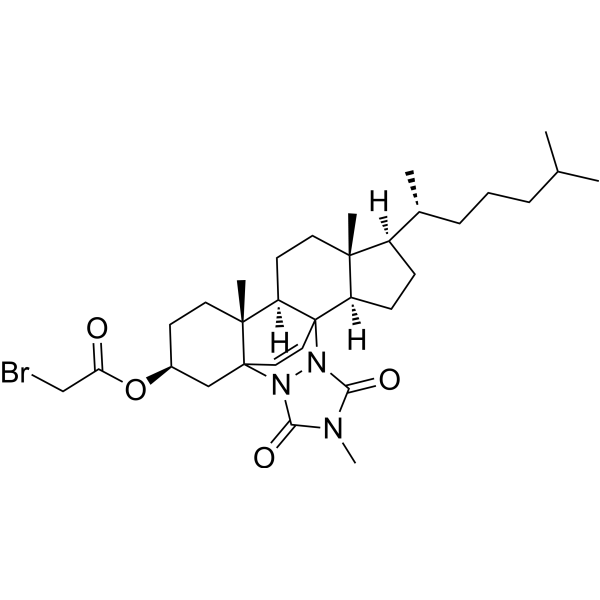
MeTC7 is a Vitamin-D receptor (VDR) antagonist. MeTC7 has potent VDR inhibition activity with an IC50 value of 2.9 μM. MeTC7 shows good antitumor effects .
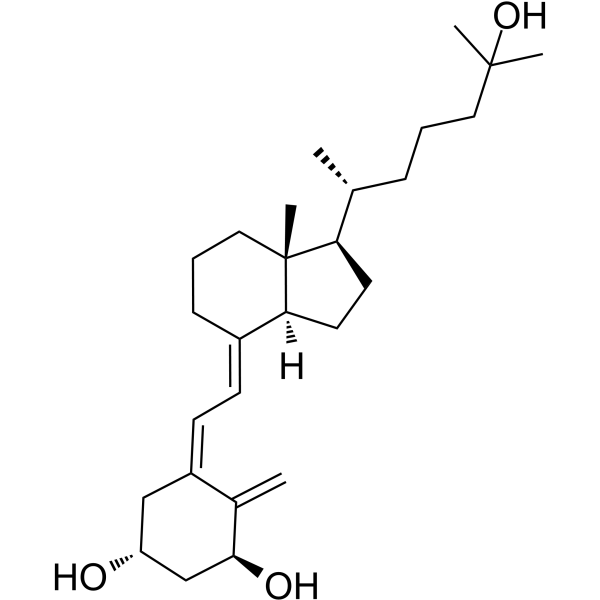
Alfacalcidol (1-hydroxycholecalciferol) is a vitamin D active metabolites, acts as a non-selective VDR activator medication, and widely be used in the management of osteoporosis .
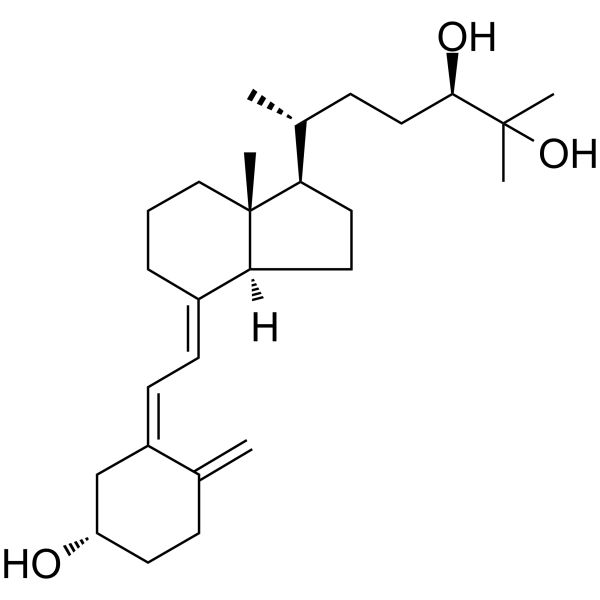
Secalciferol ((24R)-24,25-Dihydroxyvitamin D3) is the major active metabolite of Vitamin D. Secalciferol activates vitamin D receptor (VDR) with an EC50 value of 150 nM. Secalciferol is involved in a wide range of biological functions such as calcium homeostasis, cellular differentiation and proliferation processes, as well as other functions related to the immune system, which is promising for research of rickets, osteomalacia, hypercalcemia and autoimmune disorders .
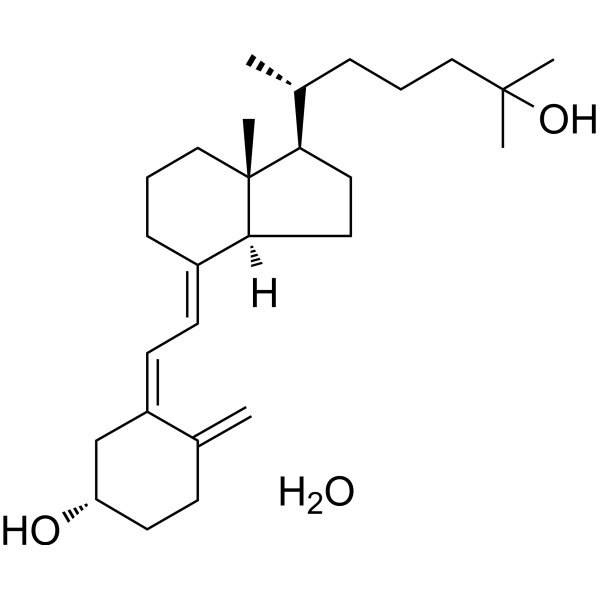
Calcifediol monohydrate (25-hydroxy Vitamin D3 monohydrate), is an effective VDR ligand and VD supplement. Calcifediol is a prohormone of the vitamin D endocrine system (VDES) and is hydroxylated in the liver to produce the active form, calcitriol. Calcifediol can rapidly increase serum VD levels .
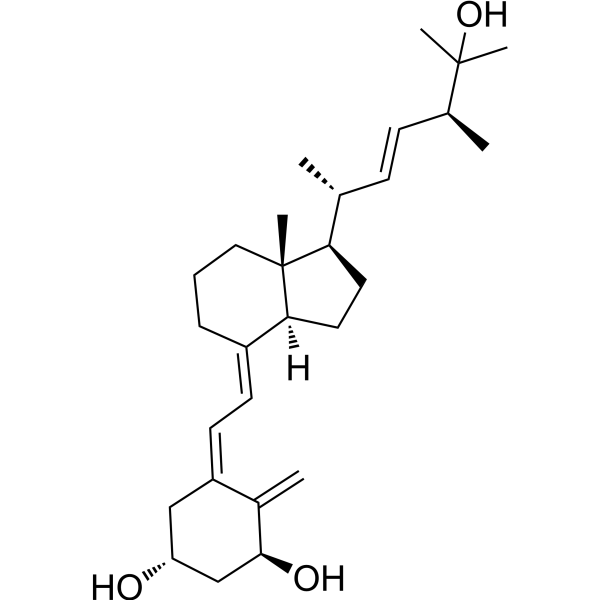
Ercalcitriol (1α,25-Dihydroxy Vitamin D2) is a vitamin D receptor (VDR) agonist with high binding affinity. After binding to VDR, Ercalcitriol forms a complex with retinoid X receptor (RXR) to regulate target gene transcription. For example, Ercalcitriol induces human gingival/oral epithelial cells to produce human cat antimicrobial peptide (hCAP-18/LL-37), which has antimicrobial activity against periodontal pathogens such as Porphyromonas gingivalis. Ercalcitriol enhances the innate immune defense of the oral mucosa by promoting the expression of antimicrobial peptides, and is mainly used in the study of periodontal diseases and immune-related oral diseases .
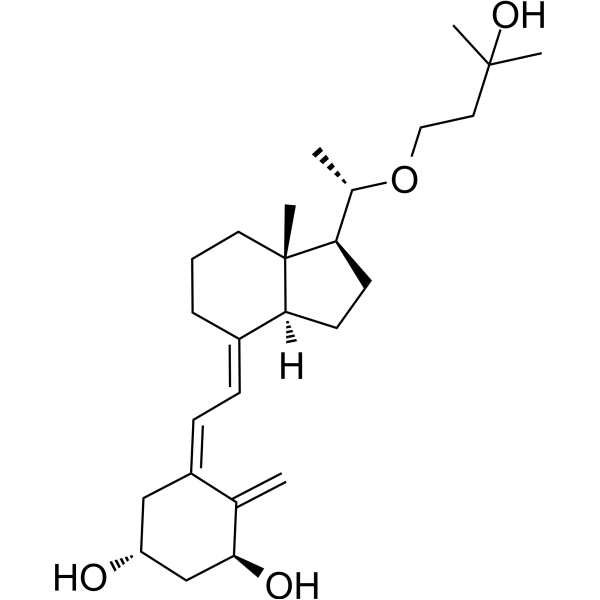
Maxacalcitol (22-Oxacalcitriol), a vitamin D3 (HY-15398) analog, is an orally active VDR agonist. Maxacalcitol has a limited calcemic effect. Maxacalcitol has the potential for psoriasis and hyperparathyroidism research .
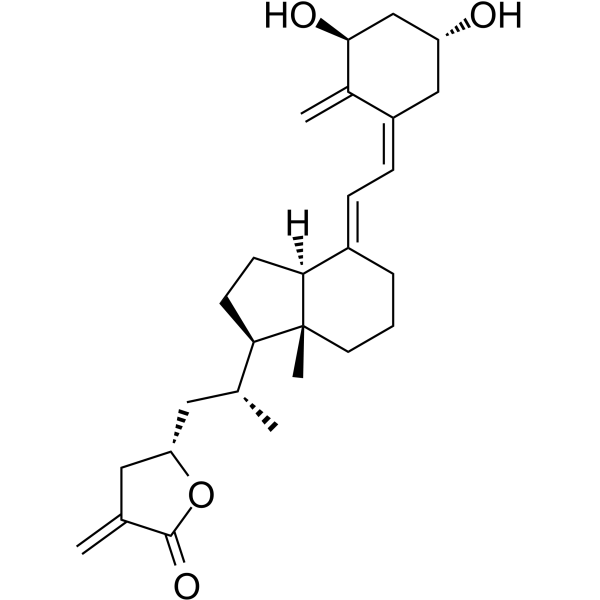
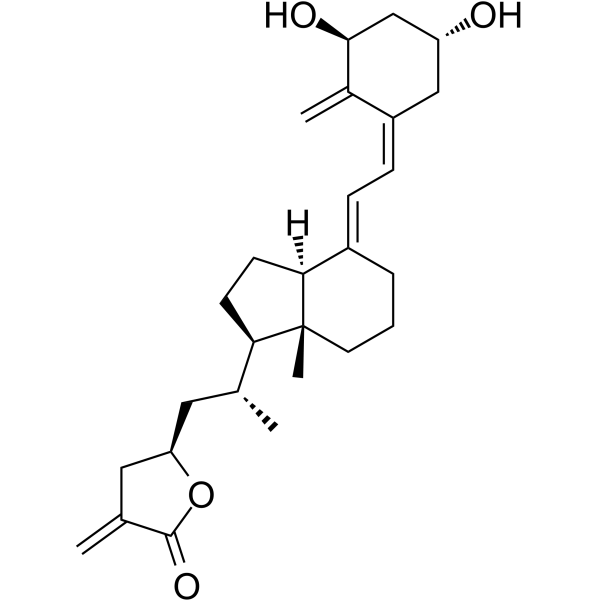
TEI-9647, a Vitamin D3 Lactone analogue, is a potent and specific vitamin D receptor (VDR) antagonist. TEI-9647 inhibits VDR/VDRE-mediated genomic actions of 1α,25(OH)2D3. TEI-9647 inhibits bone resorption and HL-60 cell differentiation induced by of 1α,25(OH)2D3. TEI-9647 has the potential for suppressing the excessive bone resorption and osteoclast formation in Paget's disease .
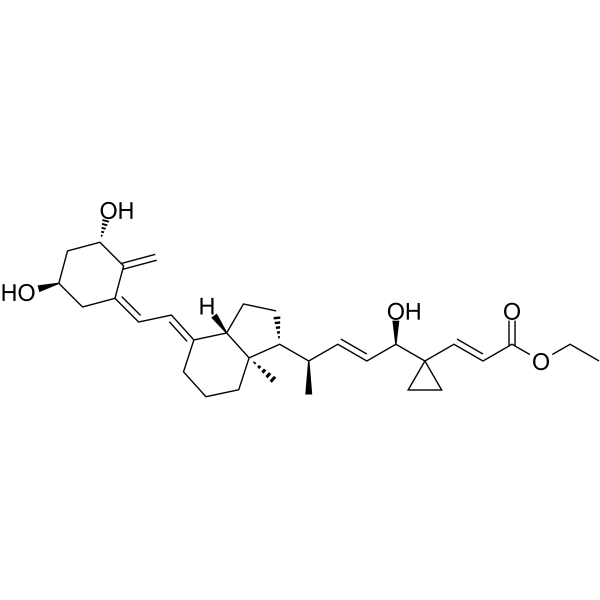
ZK168281 is a 25-carboxylic ester 1α,25(OH)2D3 analog and a pure VDR antagonist with a Kd value of 0.1 nM. ZK168281 is an effective inhibitor of the coactivator (CoA) interaction of its receptor .
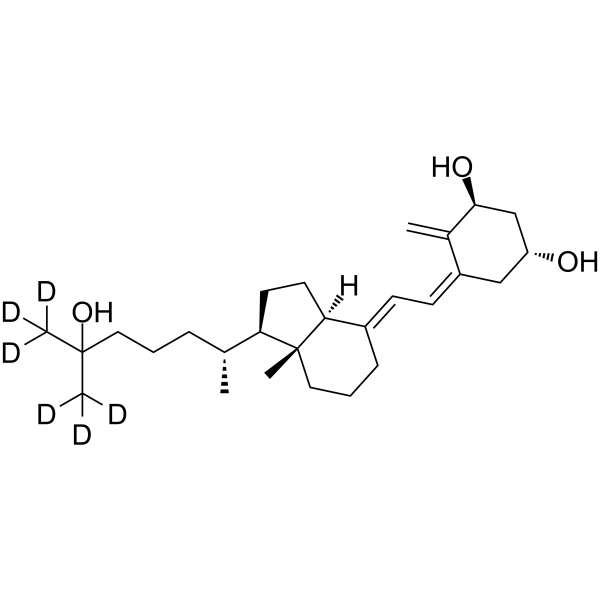
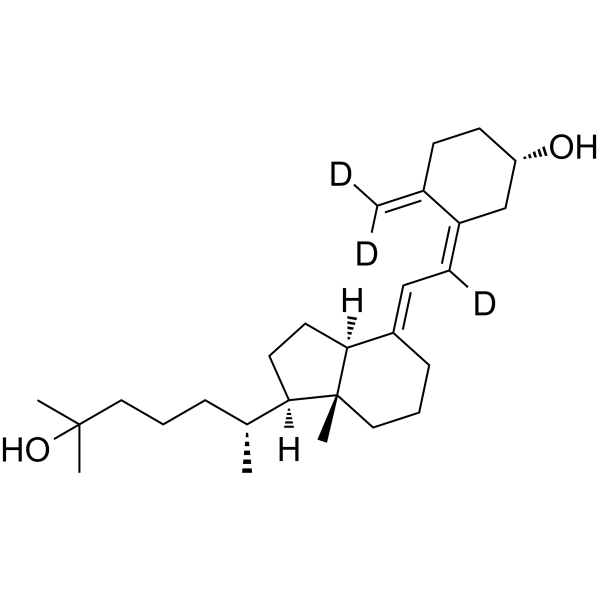
Calcifediol-d3 is a deuterium labeled Calcifediol. Calcifediol, is an effective VDR ligand and VD supplement. Calcifediol is a prohormone of the vitamin D endocrine system (VDES) and is hydroxylated in the liver to produce the active form, calcitriol. Calcifediol can rapidly increase serum VD levels .
Calcitroic acid is a vitamin D receptor (VDR) agonist that can activate VDR-mediated transcription. Calcitroic acid is the main metabolite of 1,25-dihydroxyvitamin D3, with the highest concentrations found in the liver and mucosa of mice, and it has metabolic stability and very low toxicity .
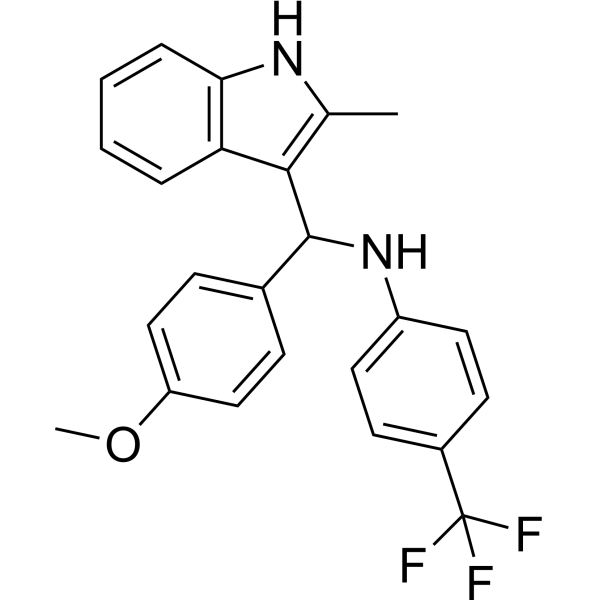
PS121912 is a selective vitamin D receptor (VDR)-coregulator inhibitor. PS121912 has acceptable metabolic stability in vivo. PS121912 can be used for the research of cancer .
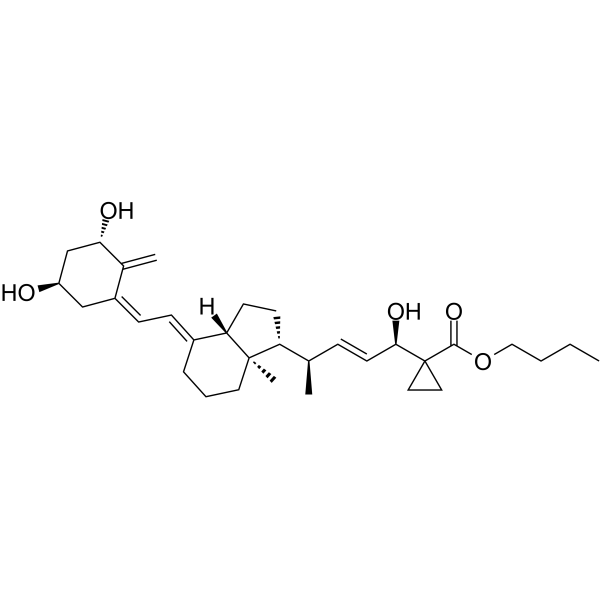
ZK159222, a 25-carboxylic ester analogue of 1α,25-(OH)2D3, is a potent 1α,25-(OH)2D3 receptor (VDR) antagonist. The mechanism of ZK159222 antagonistic action is mediated by a lack of ligand-induced vitamin D receptor interaction with coactivators. ZK159222 has a partial agonistic character .
Calcitriol (Standard) is the analytical standard of Calcitriol. This product is intended for research and analytical applications. Calcitriol is the most active metabolite of vitamin D and also a vitamin D receptor(VDR) agonist.
TEI-9648, a Vitamin D3 Lactone analogue, is a potent and specific vitamin D receptor (VDR) antagonist. TEI-9648 inhibits VDR/VDRE-mediated genomic actions of 1α,25(OH)2D3. TEI-9648 also inhibits HL-60 cell differentiation induced by of 1α,25(OH)2D3. TEI-9648 has the potential for bone metabolism research .
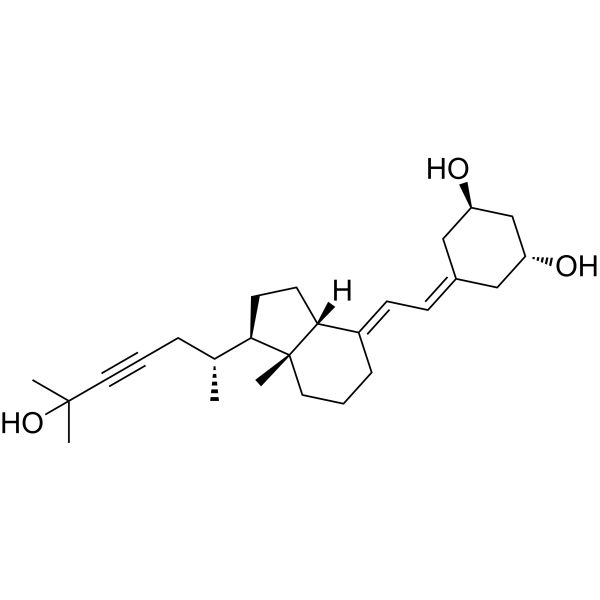
Inecalcitol (TX 522), a unique vitamin D3 analog, is an orally active vitamin D receptor (VDR) agonist with a Kd of 0.53 nM. Inecalcitol can induce cell apoptosis and has potent anticancer activities . Inecalcitol is a click chemistry reagent, it contains an Alkyne group and can undergo copper-catalyzed azide-alkyne cycloaddition (CuAAc) with molecules containing Azide groups.
Δ4‑Dafachronic acid is an endogenous steroid hormone, an agonist of the DAF‑12 nuclear receptor, and a key ligand for the vitamin D receptor (VDR). Δ4‑Dafachronic acid promotes the active escape developmental trajectory in Austrofundulus limnaeus embryos even under diapause‑inducing conditions. Δ4‑Dafachronic acid is suitable for research on the developmental biology .
(1S)-Calcitriol (1α,25-Dihydroxy-3-epi-vitamin-D3) is a natural metabolite of 1α,25-dihydroxyvitamin D3 (1α,25(OH)2D3). (1S)-Calcitriol exhibits potent vitamin D receptor (VDR)-mediated actions such as inhibition of keratinocyte growth or suppression of parathyroid hormone secretion .
25-Hydroxytachysterol3 is the metabolite of Vitamin D3 (HY-15398). 25-Hydroxytachysterol3 inhibits the proliferation of epidermal keratinocytes and dermal fibroblasts, stimulates the expression of differentiation- and antioxidant-related genes in keratinocytes. 25-Hydroxytachysterol3 activates vitamin D receptor (VDR) and aryl hydrocarbon receptor (AhR), liver X receptor α/β (LXR α/β) and peroxisome proliferator-activated receptor γ (PPARγ), stimulates the expression of CYP24A1 .
20-Hydroxyvitamin D3 (20(OH)D3), a product of vitamin D3 hydroxylation, is a noncalcemic immunomodulator. 20-Hydroxyvitamin D3 binds to vitamin D receptor (VDR), activates VDR and aryl hydrocarbon receptor (AhR) signaling, stimulates CYP24A1 expression, and drives VDR nuclear translocation. 20-Hydroxyvitamin D3 inhibits NF-κB activity via IκBα upregulation. 20-Hydroxyvitamin D3 acts as a substrate for CYP27B1 and rat CYP24A1, undergoing hydroxylation to form dihydroxy-derivatives. 20-Hydroxyvitamin D3 inhibits cell proliferation, colony formation, migration, and tumor growth, and induces cell differentiation in cancer cells. 20-Hydroxyvitamin D3 can be used for the research of inflammatory and autoimmune diseases, melanoma, breast carcinomas, and hepatocarcinoma .
Calcifediol (Standard) is the analytical standard of Calcifediol. This product is intended for research and analytical applications. Calcifediol (25-hydroxy Vitamin D3) is an effective VDR ligand and VD supplement. Calcifediol is a prohormone of the vitamin D endocrine system (VDES) and is hydroxylated in the liver to produce the active form, calcitriol. Calcifediol can rapidly increase serum VD levels .
Calcitriol-d3 is the deuterium labeled Calcitriol . Calcitriol is the most active metabolite of vitamin D and also a vitamin D receptor (VDR) agonist .
Elocalcitol (BXL-628), a vitamin D analogue, is a selective, orally active vitamin D receptor (VDR) agonist. Elocalcitol shows anti-inflammatory activity. Elocalcitol inhibits growth of prostate cancer cells .
Impurity B of Calcitriol, Calcitriol(1,25-Dihydroxyvitamin D3; Rocaltrol ) is the hormonally active form of vitamin D, Calcitriol is the active metabolite of vitamin D3 that activates the vitamin D receptor (VDR).
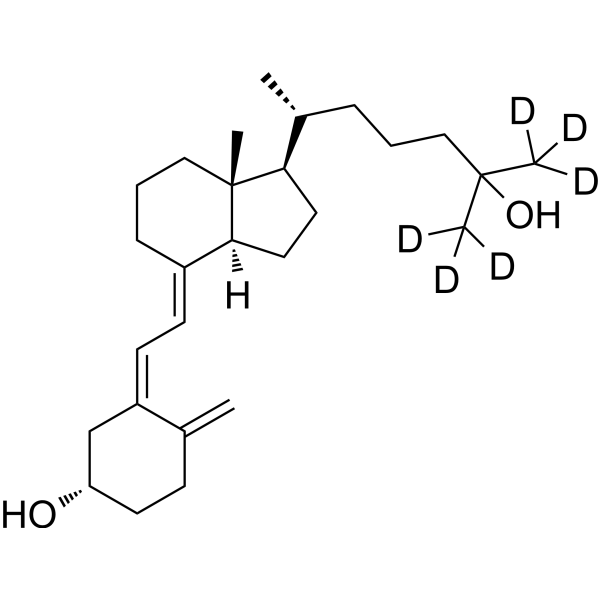
Calcifediol-d6 monohydrate is the deuterium labeled Calcifediol monohydrate. Calcifediol monohydrate (25-hydroxy Vitamin D3 monohydrate), is an effective VDR ligand and VD supplement. Calcifediol is a prohormone of the vitamin D endocrine system (VDES) and is hydroxylated in the liver to produce the active form, calcitriol. Calcifediol can rapidly increase serum VD levels .
VDR Human Pre-designed siRNA Set A contains three designed siRNAs for VDR gene (Human), as well as a negative control, a positive control, and a FAM-labeled negative control.
5β-Cholanic acid-3,6-dione (3,6-Diketo-LCA) is a similar substance to Lithocholic acid (LCA) (HY-B0172). 5β-Cholanic acid-3,6-dione cannot activate the Vitamin D receptor (VDR), and can be used as a negative control for studying the relationship between LCA derivatives and VDR .
AC-340 is a potent hybrid VDR agonist/HDAC inhibitor. AC-340 superinduces VDR target genes (e.g., CYP24A1) and inhibits HDAC6 (IC50 = 0.37 μM) with ~10-fold selectivity over HDAC2. AC-340 induces VDR hyperagonism by causing widespread protein hyperacetylation (e.g., tubulin and H3K9/K27), which leads to elevated H3K27 acetylation on VDR target genes. AC-340 can be used for melanoma cancer research .
Alfacalcidol-d7 is the deuterium labeled Alfacalcidol. Alfacalcidol (1-hydroxycholecalciferol) is a vitamin D active metabolites, acts as a non-selective VDR activator medication, and widely be used in the management of osteoporosis .
VDR agonist 3 (Compound E15) is a potent vitamin D receptor (VDR) agonist. VDR agonist 3 can effectively inhibit HSC activation through VDR. VDR agonist 3 significantly reduces liver fibrosis without causing hypercalcemia in a CCl4-induced mouse liver fibrosis model .
VDR agonist 4 is an orally active potent VDR agonist. VDR agonist 4 exerts VDR-dependent antifibrotic activity by regulating multiple fibrosis-related genes to suppress α-SMA and collagen I production, thereby inhibiting hepatic stellate cell (HSC) activation. VDR agonist 4 improves CCl4 (HY-RS16594)-induced hepatic fibrosis in mice. VDR agonist 4 can be used for liver fibrosis research .
VDR agonist 2 (compound 16i) is a VDR (vitamin D receptor) agonist that can effectively inhibit TGF-β1-induced activation of hepatic stellate cells (HSC). VDR agonist 2 has significant anti-hepatic fibrosis effects both in vitro and in vivo .
VDR agonist 1 (compound 28) is a nonsteroidal Vitamin D receptor (VDR) agonist, with an IC50 of 690 nM in MCF-7 cells. VDR agonist 1 arrests the cell cycle through the up-regulation of p21 and p27, promotes apoptosis by increasing the expression of BAX and decrease the expression of Bcl-2 .
Vdr Mouse Pre-designed siRNA Set A contains three designed siRNAs for Vdr gene (Mouse), as well as a negative control, a positive control, and a FAM-labeled negative control.
Vdr Rat Pre-designed siRNA Set A contains three designed siRNAs for Vdr gene (Rat), as well as a negative control, a positive control, and a FAM-labeled negative control.
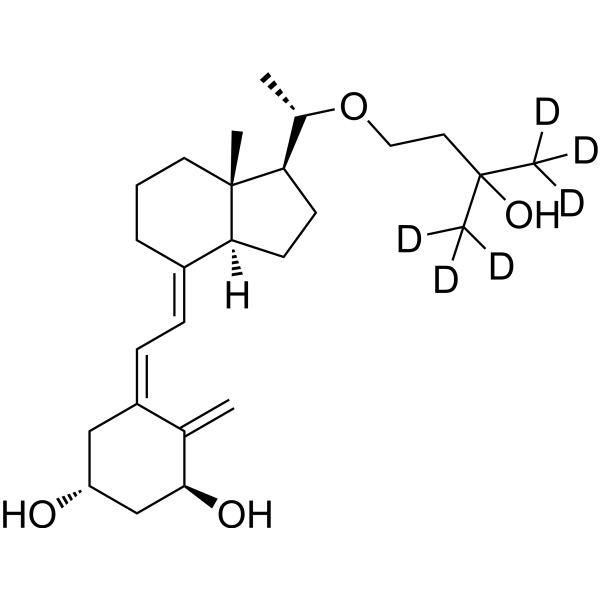
Maxacalcitol-d66 is the deuterated form of Maxacalcitol (22-Oxacalcitriol), which is a non-calcemic vitamin D3 analog and VDR ligand of VDR-like receptors.
LG190178 is a non-steroidal vitamin D receptor (VDR) ligand that can induce the formation of heterodimer complexes between VDR and retinoid X receptor (RXR), stabilizing the agonistic conformation of the VDR ligand-binding domain and promoting its interaction with co-activators. LG190178 has functions in regulating calcium homeostasis, bone mineralization, as well as cell proliferation, differentiation, and apoptosis, making it useful for research in psoriasis, osteoporosis, and cancer .
Triciferol functions as a multiple ligand with combined VDR agonist and HDAC antagonist activities. Triciferol binds directly to the VDR (IC50=87 nM), and functions as an agonist with 1,25D-like potency on several 1,25D target genes. Triciferol induces marked tubulin hyperacetylation, and augments histone acetylation. Antiproliferative and cytotoxic activities .
Calcitriol Impurities D is the impurity of Calcitriol, Calcitriol is the hormonally active form of vitamin D, Calcitriol is the active metabolite of vitamin D3 that activates the vitamin D receptor (VDR).
Lunacalcipol (CTA-018), as a vitamin D analogue, has a dual role in the pathogenesis of Chronic Kidney Disease (CKD), as an agonist of vitamin D receptor and an antagonist of cytochrome P450 enzyme 24-hydroxylase. Lunacalcipol binds to VDR and regulates transcriptional activity of VDR by influencing ligand binding affinity, ligand-dependent coactivator recruitment or inhibitory factor dissociation, efficiency of ligand entry into target cells, tissue specificity and different metabolism of ligand. Lunacalcipol can be used in the study of CKD, especially Secondary Hyperparathyroidism (sHPT) .
Impurity C of Calcitriol is the impurity of Calcitriol (HY-10002). Calcitriol is the hormonally active form of vitamin D. Calcitriol is the active metabolite of vitamin D3 that activates the vitamin D receptor (VDR).
CYP27B1 Human Pre-designed siRNA Set A contains three designed siRNAs for CYP27B1 gene (Human), as well as a negative control, a positive control, and a FAM-labeled negative control.
Alfacalcidol (Standard) is the analytical standard of Alfacalcidol. This product is intended for research and analytical applications. Alfacalcidol (1-hydroxycholecalciferol) is a vitamin D active metabolites, acts as a non-selective VDR activator medication, and widely be used in the management of osteoporosis .
UG-480 is a gemini analog that effectively stabilizes the active VDR conformation. UG-480 has antiproliferative effects in estrogen receptor-positive MCF-7 breast adenocarcinoma cells. UG-480 can be used in cancer research .
(1R,5Z)-Calcitriol ((1R,5Z)-1,25-Dihydroxyvitamin D3) is a Calcitriol (HY-10002) isomer. Calcitriol is the most active metabolite of vitamin D and also a vitamin D receptor (VDR) agonist .
Ro-65-2299 is an orally active retiferol Vitamin D analogue and a potential VDR agonist (ED50 = 180 nM). Ro-65-2299 can induce thickening of the epidermis and exhibits antipsoriatic effect in hairless mice (ED50 = 7.5 mg/kg). Ro-65-2299 can be used for the researches of inflammation and immunology, such as psoriasis .
Calcifediol- 13C5 monohydrate is the 13C-labeled Calcifediol monohydrate. Calcifediol monohydrate (25-hydroxy Vitamin D3 monohydrate), is an effective VDR ligand and VD supplement. Calcifediol is a prohormone of the vitamin D endocrine system (VDES) and is hydroxylated in the liver to produce the active form, calcitriol. Calcifediol can rapidly increase serum VD levels .
Calcifediol monohydrate (Standard) is the analytical standard of Calcifediol (monohydrate). This product is intended for research and analytical applications. Calcifediol monohydrate (25-hydroxy Vitamin D3 monohydrate), is an effective VDR ligand and VD supplement. Calcifediol is a prohormone of the vitamin D endocrine system (VDES) and is hydroxylated in the liver to produce the active form, calcitriol. Calcifediol can rapidly increase serum VD levels .
UG-650 is a non-Gemini analog of UVB1 that combines the structural features of UVB1 and MC 1288. UG-650 can bind to the vitamin D receptor (VDR) and inhibit the proliferation of MCF-7 cells and the migration of MC3T3-E1 cells .
Ercalcitriol-d3 (1α,25-Dihydroxy Vitamin D2-d3) is the deuterium labeled Ercalcitriol (HY-32350). Ercalcitriol (1α,25-Dihydroxy Vitamin D2) is a vitamin D receptor (VDR) agonist with high binding affinity. After binding to VDR, Ercalcitriol forms a complex with retinoid X receptor (RXR) to regulate target gene transcription. For example, Ercalcitriol induces human gingival/oral epithelial cells to produce human cat antimicrobial peptide (hCAP-18/LL-37), which has antimicrobial activity against periodontal pathogens such as Porphyromonas gingivalis. Ercalcitriol enhances the innate immune defense of the oral mucosa by promoting the expression of antimicrobial peptides, and is mainly used in the study of periodontal diseases and immune-related oral diseases .
Flucythrinate is a synthetic pyrethroid with endocrine suppressive properties. Flucythrinate showed good binding affinity to the vitamin D nuclear receptor (VDR) with a score of -11.0 kcal/mol. Flucythrinate has been proposed as a multi-target ligand that may interact with several proteins associated with breast cancer. The screening method for Flucythrinate showed good accuracy in binding site prediction and affinity estimation .
ZG-126 is an agonist for vitamin D receptor(VDR) and an inhibitor for histone deacetylase (HDAC) (IC50=0.63-67.6 μM). ZG-126 exhibits cytotoxicity in cancer cells MDA-MB-231 and 4T1. ZG-126 exhibits antitumor and anti-metastatic efficacy against melanoma and triple-negative breast cancer (TNBC) in mouse models. ZG-126 also exhibits anti-inflammatory activity, through the reduction of macrophage infiltration and immunosuppressive M2-polarization .
VDR agonist 5 is an oral active VDR agonist. VDR agonist 5 activates VDR-mediated signaling to reduce liver fibrosis progression. VDR agonist 5 does not induce hypercalcemia. VDR agonist 5 can be used for the research of hepatic fibrosis .
VDR ligand-1 (compound 13a) is a nonsecosteroidal VDR agonist with an EC50 value of 16 nM. VDR ligand-1 can be used for osteoporosis, psoriasis, and cancer research .
Calcitroic acid- 13C is the 13C-labeled Calcitroic acid (HY-N10508). Calcitroic acid is a vitamin D receptor (VDR) agonist that can activate VDR-mediated transcription. Calcitroic acid is the main metabolite of 1,25-dihydroxyvitamin D3, with the highest concentrations found in the liver and mucosa of mice, and it has metabolic stability and very low toxicity .
LG190155 is a nonsteroidal vitamin D receptor (VDR) agonist. LG190155 activates VDR in mesenchymal stem cells, thereby upregulating the BMP6-IL6 autocrine axis. Pretreatment of mesenchymal stem cells with LG190155 significantly enhances their ability to induce differentiation of acute myeloid leukemia cells, without inducing hypercalcemia. LG190155 is applicable to research related to acute myeloid leukemia (AML) .
19-nor-1α,25-Dihydroxyvitamin D3 is a vitamin D receptor (VDR) agonist with an EC50 of 4.8 nM. 19-nor-1α,25-Dihydroxyvitamin D3 binds to VDR and promotes gene transcription. 19-nor-1α,25-Dihydroxyvitamin D3 can be used in the research of diseases related to the vitamin D signaling pathway .
Cyp27b1 Mouse Pre-designed siRNA Set A contains three designed siRNAs for Cyp27b1 gene (Mouse), as well as a negative control, a positive control, and a FAM-labeled negative control.
Calcitriol-d9 (1,25-Dihydroxyvitamin D3-d9) is the deuterium labeled Calcitriol (HY-10002). Calcitriol is the most active metabolite of vitamin D and also a vitamin D receptor (VDR) agonist.
24R-Calcipotriol-d4 (PRI 2202-d4; Impurity D of Calcipotriol-d4) is the deuterium labeled 24R-Calcipotriol. 24R-Calcipotriol is an impurity of Calcipotriol. Calcipotriol is a ligand of VDR-like receptors.
Calcifediol-d9 (25-hydroxy Vitamin D3-d9) is the deuterium labeled Calcifediol (HY-32351). Calcifediol (25-hydroxy Vitamin D3) is an effective VDR ligand and VD supplement. Calcifediol is a prohormone of the vitamin D endocrine system (VDES) and is hydroxylated in the liver to produce the active form, calcitriol. Calcifediol can rapidly increase serum VD levels .
Δ4-Dafachronic Acid-d3 is deuterium labeled Δ4-Dafachronic acid (HY-131492). Δ4‑Dafachronic acid is an endogenous steroid hormone, an agonist of the DAF‑12 nuclear receptor, and a key ligand for the vitamin D receptor (VDR). Δ4‑Dafachronic acid promotes the active escape developmental trajectory in Austrofundulus limnaeus embryos even under diapause‑inducing conditions. Δ4‑Dafachronic acid is suitable for research on the developmental biology .
(1S)-Calcitriol (Standard) is the analytical standard of (1S)-Calcitriol (HY-10002A). This product is intended for research and analytical applications. (1S)-Calcitriol (1α,25-Dihydroxy-3-epi-vitamin-D3) is a natural metabolite of 1α,25-dihydroxyvitamin D3 (1α,25(OH)2D3). (1S)-Calcitriol exhibits potent vitamin D receptor (VDR)-mediated actions such as inhibition of keratinocyte growth or suppression of parathyroid hormone secretion .
TGF-β1/Smad3-IN-2 is an orally active antifibrotic agent. TGF-β1/Smad3-IN-2 has high affinity for VDR and can inhibit the TGFβ/SMAD3 signaling pathway. TGF-β1/Smad3-IN-2 inhibits hepatic stellate cell activation, reduces extracellular matrix deposition, and alleviates liver fibrosis in a bile duct ligation mouse model. TGF-β1/Smad3-IN-2 can be used for the research of liver fibrosis .
(1S)-Calcitriol-d3 (1α,25-Dihydroxy-3-epi-vitamin D3-d3) is the deuterium labeled (1S)-Calcitriol (HY-10002A). (1S)-Calcitriol (1α,25-Dihydroxy-3-epi-vitamin-D3) is a natural metabolite of 1α,25-dihydroxyvitamin D3 (1α,25(OH)2D3). (1S)-Calcitriol exhibits potent vitamin D receptor (VDR)-mediated actions such as inhibition of keratinocyte growth or suppression of parathyroid hormone secretion .
(1S)-Calcitriol-d6 (1α,25-Dihydroxy-3-epi-vitamin D3-d6) is the deuterium labeled (1S)-Calcitriol (HY-10002A). (1S)-Calcitriol (1α,25-Dihydroxy-3-epi-vitamin-D3) is a natural metabolite of 1α,25-dihydroxyvitamin D3 (1α,25(OH)2D3). (1S)-Calcitriol exhibits potent vitamin D receptor (VDR)-mediated actions such as inhibition of keratinocyte growth or suppression of parathyroid hormone secretion .
19-Nor-22-oxa-1a,25(OH)2-VD3 is a vitamin D₃ analogue. 19-Nor-22-oxa-1a,25(OH)2-VD3 has an extremely low affinity for the vitamin D receptor (VDR) and hardly binds to the vitamin D binding protein (DBP). 19-Nor-22-oxa-1a,25(OH)2-VD3 can effectively induce the differentiation of HL-60 cells and cause G₀-G₁ phase cell cycle arrest. 19-Nor-22-oxa-1a,25(OH)2-VD3 can be used to study diseases such as excessive hyperparathyroidism .
Calcifediol (25-hydroxy Vitamin D3) is an effective VDR ligand and VD supplement. Calcifediol is a prohormone of the vitamin D endocrine system (VDES) and is hydroxylated in the liver to produce the active form, calcitriol. Calcifediol can rapidly increase serum VD levels .
Secalciferol ((24R)-24,25-Dihydroxyvitamin D3) is the major active metabolite of Vitamin D. Secalciferol activates vitamin D receptor (VDR) with an EC50 value of 150 nM. Secalciferol is involved in a wide range of biological functions such as calcium homeostasis, cellular differentiation and proliferation processes, as well as other functions related to the immune system, which is promising for research of rickets, osteomalacia, hypercalcemia and autoimmune disorders .
Calcifediol monohydrate (25-hydroxy Vitamin D3 monohydrate), is an effective VDR ligand and VD supplement. Calcifediol is a prohormone of the vitamin D endocrine system (VDES) and is hydroxylated in the liver to produce the active form, calcitriol. Calcifediol can rapidly increase serum VD levels .
Ercalcitriol (1α,25-Dihydroxy Vitamin D2) is a vitamin D receptor (VDR) agonist with high binding affinity. After binding to VDR, Ercalcitriol forms a complex with retinoid X receptor (RXR) to regulate target gene transcription. For example, Ercalcitriol induces human gingival/oral epithelial cells to produce human cat antimicrobial peptide (hCAP-18/LL-37), which has antimicrobial activity against periodontal pathogens such as Porphyromonas gingivalis. Ercalcitriol enhances the innate immune defense of the oral mucosa by promoting the expression of antimicrobial peptides, and is mainly used in the study of periodontal diseases and immune-related oral diseases .
Calcitroic acid is a vitamin D receptor (VDR) agonist that can activate VDR-mediated transcription. Calcitroic acid is the main metabolite of 1,25-dihydroxyvitamin D3, with the highest concentrations found in the liver and mucosa of mice, and it has metabolic stability and very low toxicity .
Calcitriol (Standard) is the analytical standard of Calcitriol. This product is intended for research and analytical applications. Calcitriol is the most active metabolite of vitamin D and also a vitamin D receptor(VDR) agonist.
Calcifediol (Standard) is the analytical standard of Calcifediol. This product is intended for research and analytical applications. Calcifediol (25-hydroxy Vitamin D3) is an effective VDR ligand and VD supplement. Calcifediol is a prohormone of the vitamin D endocrine system (VDES) and is hydroxylated in the liver to produce the active form, calcitriol. Calcifediol can rapidly increase serum VD levels .
Calcifediol monohydrate (Standard) is the analytical standard of Calcifediol (monohydrate). This product is intended for research and analytical applications. Calcifediol monohydrate (25-hydroxy Vitamin D3 monohydrate), is an effective VDR ligand and VD supplement. Calcifediol is a prohormone of the vitamin D endocrine system (VDES) and is hydroxylated in the liver to produce the active form, calcitriol. Calcifediol can rapidly increase serum VD levels .
Vitamin D receptor (VDR) protein is the nuclear receptor of calcitriol, which translocates to the nucleus after binding vitamin D3, thereby coordinating cellular activities.VDR forms a heterodimer with RXR, binds to DNA response elements, and initiates the transcription of vitamin D3-responsive genes.Vitamin D Receptor/VDR Protein, Mouse (sf9, His) is the recombinant mouse-derived Vitamin D Receptor/VDR protein, expressed by Sf9 insect cells , with C-His labeled tag.
Vitamin D receptor (VDR) acts as a nuclear receptor for calcitriol, the active form of vitamin D3, triggering cellular effects. After vitamin D3 binding, VDR translocates to the nucleus and forms a heterodimer with the retinoid X receptor (RXR). Vitamin D Receptor/VDR Protein, Human (sf9, His) is the recombinant human-derived Vitamin D Receptor/VDR protein, expressed by Sf9 insect cells , with C-10*His labeled tag.
Calcifediol-d3 is a deuterium labeled Calcifediol. Calcifediol, is an effective VDR ligand and VD supplement. Calcifediol is a prohormone of the vitamin D endocrine system (VDES) and is hydroxylated in the liver to produce the active form, calcitriol. Calcifediol can rapidly increase serum VD levels .
Calcitriol-d3 is the deuterium labeled Calcitriol . Calcitriol is the most active metabolite of vitamin D and also a vitamin D receptor (VDR) agonist .
Calcifediol-d6 monohydrate is the deuterium labeled Calcifediol monohydrate. Calcifediol monohydrate (25-hydroxy Vitamin D3 monohydrate), is an effective VDR ligand and VD supplement. Calcifediol is a prohormone of the vitamin D endocrine system (VDES) and is hydroxylated in the liver to produce the active form, calcitriol. Calcifediol can rapidly increase serum VD levels .
Alfacalcidol-d7 is the deuterium labeled Alfacalcidol. Alfacalcidol (1-hydroxycholecalciferol) is a vitamin D active metabolites, acts as a non-selective VDR activator medication, and widely be used in the management of osteoporosis .
Maxacalcitol-d66 is the deuterated form of Maxacalcitol (22-Oxacalcitriol), which is a non-calcemic vitamin D3 analog and VDR ligand of VDR-like receptors.
Calcifediol- 13C5 monohydrate is the 13C-labeled Calcifediol monohydrate. Calcifediol monohydrate (25-hydroxy Vitamin D3 monohydrate), is an effective VDR ligand and VD supplement. Calcifediol is a prohormone of the vitamin D endocrine system (VDES) and is hydroxylated in the liver to produce the active form, calcitriol. Calcifediol can rapidly increase serum VD levels .
Ercalcitriol-d3 (1α,25-Dihydroxy Vitamin D2-d3) is the deuterium labeled Ercalcitriol (HY-32350). Ercalcitriol (1α,25-Dihydroxy Vitamin D2) is a vitamin D receptor (VDR) agonist with high binding affinity. After binding to VDR, Ercalcitriol forms a complex with retinoid X receptor (RXR) to regulate target gene transcription. For example, Ercalcitriol induces human gingival/oral epithelial cells to produce human cat antimicrobial peptide (hCAP-18/LL-37), which has antimicrobial activity against periodontal pathogens such as Porphyromonas gingivalis. Ercalcitriol enhances the innate immune defense of the oral mucosa by promoting the expression of antimicrobial peptides, and is mainly used in the study of periodontal diseases and immune-related oral diseases .
Calcitroic acid- 13C is the 13C-labeled Calcitroic acid (HY-N10508). Calcitroic acid is a vitamin D receptor (VDR) agonist that can activate VDR-mediated transcription. Calcitroic acid is the main metabolite of 1,25-dihydroxyvitamin D3, with the highest concentrations found in the liver and mucosa of mice, and it has metabolic stability and very low toxicity .
Calcitriol-d9 (1,25-Dihydroxyvitamin D3-d9) is the deuterium labeled Calcitriol (HY-10002). Calcitriol is the most active metabolite of vitamin D and also a vitamin D receptor (VDR) agonist.
24R-Calcipotriol-d4 (PRI 2202-d4; Impurity D of Calcipotriol-d4) is the deuterium labeled 24R-Calcipotriol. 24R-Calcipotriol is an impurity of Calcipotriol. Calcipotriol is a ligand of VDR-like receptors.
Calcifediol-d9 (25-hydroxy Vitamin D3-d9) is the deuterium labeled Calcifediol (HY-32351). Calcifediol (25-hydroxy Vitamin D3) is an effective VDR ligand and VD supplement. Calcifediol is a prohormone of the vitamin D endocrine system (VDES) and is hydroxylated in the liver to produce the active form, calcitriol. Calcifediol can rapidly increase serum VD levels .
Δ4-Dafachronic Acid-d3 is deuterium labeled Δ4-Dafachronic acid (HY-131492). Δ4‑Dafachronic acid is an endogenous steroid hormone, an agonist of the DAF‑12 nuclear receptor, and a key ligand for the vitamin D receptor (VDR). Δ4‑Dafachronic acid promotes the active escape developmental trajectory in Austrofundulus limnaeus embryos even under diapause‑inducing conditions. Δ4‑Dafachronic acid is suitable for research on the developmental biology .
(1S)-Calcitriol-d3 (1α,25-Dihydroxy-3-epi-vitamin D3-d3) is the deuterium labeled (1S)-Calcitriol (HY-10002A). (1S)-Calcitriol (1α,25-Dihydroxy-3-epi-vitamin-D3) is a natural metabolite of 1α,25-dihydroxyvitamin D3 (1α,25(OH)2D3). (1S)-Calcitriol exhibits potent vitamin D receptor (VDR)-mediated actions such as inhibition of keratinocyte growth or suppression of parathyroid hormone secretion .
(1S)-Calcitriol-d6 (1α,25-Dihydroxy-3-epi-vitamin D3-d6) is the deuterium labeled (1S)-Calcitriol (HY-10002A). (1S)-Calcitriol (1α,25-Dihydroxy-3-epi-vitamin-D3) is a natural metabolite of 1α,25-dihydroxyvitamin D3 (1α,25(OH)2D3). (1S)-Calcitriol exhibits potent vitamin D receptor (VDR)-mediated actions such as inhibition of keratinocyte growth or suppression of parathyroid hormone secretion .
VDR Human Pre-designed siRNA Set A contains three designed siRNAs for VDR gene (Human), as well as a negative control, a positive control, and a FAM-labeled negative control.
Vdr Mouse Pre-designed siRNA Set A contains three designed siRNAs for Vdr gene (Mouse), as well as a negative control, a positive control, and a FAM-labeled negative control.
Vdr Rat Pre-designed siRNA Set A contains three designed siRNAs for Vdr gene (Rat), as well as a negative control, a positive control, and a FAM-labeled negative control.
CYP27B1 Human Pre-designed siRNA Set A contains three designed siRNAs for CYP27B1 gene (Human), as well as a negative control, a positive control, and a FAM-labeled negative control.
Inquiry Online
Your information is safe with us. * Required Fields.
Western blot analysis of extracts from THP-1(lane 2(20μg), Jurkat (lane 3(20μg) and NIH3T3(lane 4(20μg) using FOXO1A (HY-P80132) Rabbit mAb. Proteins were transferred
to a PVDF membrane and blocked with 5% non-fat milk in TBST for 2 hour at room temperature. The primary antibody (1/1000) and Loading control antibody (Beta Actin, HY-P80438, 1/10000) was
used in 5% non-fat milk in TBST at 4°C overnight. Goat Anti-Mouse/Rabbit IgG-HRP Secondary Antibody (1/10000) was used for 1 hour at room temperature.
Western blot analysis of extracts from THP-1(lane 2(20μg), Jurkat (lane 3(20μg) and NIH3T3(lane 4(20μg) using FOXO1A (HY-P80132) Rabbit mAb. Proteins were transferred
to a PVDF membrane and blocked with 5% non-fat milk in TBST for 2 hour at room temperature. The primary antibody (1/1000) and Loading control antibody (Beta Actin, HY-P80438, 1/10000) was
used in 5% non-fat milk in TBST at 4°C overnight. Goat Anti-Mouse/Rabbit IgG-HRP Secondary Antibody (1/10000) was used for 1 hour at room temperature.
Western blot analysis of extracts from THP-1(lane 2(20μg), Jurkat (lane 3(20μg) and NIH3T3(lane 4(20μg) using FOXO1A (HY-P80132) Rabbit mAb. Proteins were transferred
to a PVDF membrane and blocked with 5% non-fat milk in TBST for 2 hour at room temperature. The primary antibody (1/1000) and Loading control antibody (Beta Actin, HY-P80438, 1/10000) was
used in 5% non-fat milk in TBST at 4°C overnight. Goat Anti-Mouse/Rabbit IgG-HRP Secondary Antibody (1/10000) was used for 1 hour at room temperature.
Western blot analysis of extracts from THP-1(lane 2(20μg), Jurkat (lane 3(20μg) and NIH3T3(lane 4(20μg) using FOXO1A (HY-P80132) Rabbit mAb. Proteins were transferred
to a PVDF membrane and blocked with 5% non-fat milk in TBST for 2 hour at room temperature. The primary antibody (1/1000) and Loading control antibody (Beta Actin, HY-P80438, 1/10000) was
MedchemExpress Validation 03
Western blot analysis of extracts from THP-1(lane 2(20μg), Jurkat (lane 3(20μg) and NIH3T3(lane 4(20μg) using FOXO1A (HY-P80132) Rabbit mAb. Proteins were transferred
MedchemExpress Validation 04
Western blot analysis of extracts from THP-1(lane 2(20μg), Jurkat (lane 3(20μg) and NIH3T3(lane 4(20μg) using FOXO1A (HY-P80132) Rabbit mAb. Proteins were transferred
to a PVDF membrane and blocked with 5% non-fat milk in TBST for 2 hour at room temperature. The primary antibody (1/1000) and Loading control antibody (Beta Actin, HY-P80438, 1/10000) was
used in 5% non-fat milk in TBST at 4°C overnight. Goat Anti-Mouse/Rabbit IgG-HRP Secondary Antibody (1/10000) was used for 1 hour at room temperature.
MedchemExpress Validation
Western blot analysis of extracts from THP-1(lane 2(20μg), Jurkat (lane 3(20μg) and NIH3T3(lane 4(20μg) using FOXO1A (HY-P80132) Rabbit mAb. Proteins were transferred
to a PVDF membrane and blocked with 5% non-fat milk in TBST for 2 hour at room temperature. The primary antibody (1/1000) and Loading control antibody (Beta Actin, HY-P80438, 1/10000) was
used in 5% non-fat milk in TBST at 4°C overnight. Goat Anti-Mouse/Rabbit IgG-HRP Secondary Antibody (1/10000) was used for 1 hour at room temperature.
Western blot analysis of extracts from THP-1(lane 2(20μg), Jurkat (lane 3(20μg) and NIH3T3(lane 4(20μg) using FOXO1A (HY-P80132) Rabbit mAb. Proteins were transferred
to a PVDF membrane and blocked with 5% non-fat milk in TBST for 2 hour at room temperature. The primary antibody (1/1000) and Loading control antibody (Beta Actin, HY-P80438, 1/10000) was
used in 5% non-fat milk in TBST at 4°C overnight. Goat Anti-Mouse/Rabbit IgG-HRP Secondary Antibody (1/10000) was used for 1 hour at room temperature.
MedchemExpress Validation
Western blot analysis of extracts from THP-1(lane 2(20μg), Jurkat (lane 3(20μg) and NIH3T3(lane 4(20μg) using FOXO1A (HY-P80132) Rabbit mAb. Proteins were transferred
to a PVDF membrane and blocked with 5% non-fat milk in TBST for 2 hour at room temperature. The primary antibody (1/1000) and Loading control antibody (Beta Actin, HY-P80438, 1/10000) was
used in 5% non-fat milk in TBST at 4°C overnight. Goat Anti-Mouse/Rabbit IgG-HRP Secondary Antibody (1/10000) was used for 1 hour at room temperature.
MedchemExpress Validation
Western blot analysis of extracts from THP-1(lane 2(20μg), Jurkat (lane 3(20μg) and NIH3T3(lane 4(20μg) using FOXO1A (HY-P80132) Rabbit mAb. Proteins were transferred
to a PVDF membrane and blocked with 5% non-fat milk in TBST for 2 hour at room temperature. The primary antibody (1/1000) and Loading control antibody (Beta Actin, HY-P80438, 1/10000) was
used in 5% non-fat milk in TBST at 4°C overnight. Goat Anti-Mouse/Rabbit IgG-HRP Secondary Antibody (1/10000) was used for 1 hour at room temperature.
MedchemExpress Validation
Western blot analysis of extracts from THP-1(lane 2(20μg), Jurkat (lane 3(20μg) and NIH3T3(lane 4(20μg) using FOXO1A (HY-P80132) Rabbit mAb. Proteins were transferred
to a PVDF membrane and blocked with 5% non-fat milk in TBST for 2 hour at room temperature. The primary antibody (1/1000) and Loading control antibody (Beta Actin, HY-P80438, 1/10000) was
used in 5% non-fat milk in TBST at 4°C overnight. Goat Anti-Mouse/Rabbit IgG-HRP Secondary Antibody (1/10000) was used for 1 hour at room temperature.
MedchemExpress Validation
Western blot analysis of extracts from THP-1(lane 2(20μg), Jurkat (lane 3(20μg) and NIH3T3(lane 4(20μg) using FOXO1A (HY-P80132) Rabbit mAb. Proteins were transferred
to a PVDF membrane and blocked with 5% non-fat milk in TBST for 2 hour at room temperature. The primary antibody (1/1000) and Loading control antibody (Beta Actin, HY-P80438, 1/10000) was
used in 5% non-fat milk in TBST at 4°C overnight. Goat Anti-Mouse/Rabbit IgG-HRP Secondary Antibody (1/10000) was used for 1 hour at room temperature.
MedchemExpress Validation
Western blot analysis of extracts from THP-1(lane 2(20μg), Jurkat (lane 3(20μg) and NIH3T3(lane 4(20μg) using FOXO1A (HY-P80132) Rabbit mAb. Proteins were transferred
to a PVDF membrane and blocked with 5% non-fat milk in TBST for 2 hour at room temperature. The primary antibody (1/1000) and Loading control antibody (Beta Actin, HY-P80438, 1/10000) was
used in 5% non-fat milk in TBST at 4°C overnight. Goat Anti-Mouse/Rabbit IgG-HRP Secondary Antibody (1/10000) was used for 1 hour at room temperature.
MedchemExpress Validation
Western blot analysis of extracts from THP-1(lane 2(20μg), Jurkat (lane 3(20μg) and NIH3T3(lane 4(20μg) using FOXO1A (HY-P80132) Rabbit mAb. Proteins were transferred
to a PVDF membrane and blocked with 5% non-fat milk in TBST for 2 hour at room temperature. The primary antibody (1/1000) and Loading control antibody (Beta Actin, HY-P80438, 1/10000) was
used in 5% non-fat milk in TBST at 4°C overnight. Goat Anti-Mouse/Rabbit IgG-HRP Secondary Antibody (1/10000) was used for 1 hour at room temperature.
MedChemExpress values your privacy and your trust is important to us. We use cookies to enhance your website experience. Some cookies are necessary to run the website.
Privacy and Cookie Policy

