1. Search Result
Search Result
Results for "

abnormal behavior

" in MedChemExpress (MCE) Product Catalog:

19

Inhibitors & Agonists

2

Inhibitory Antibodies

3

Natural
Products

4

Isotope-Labeled Compounds

Cat. No. Product Name Target Research Areas Chemical Structure
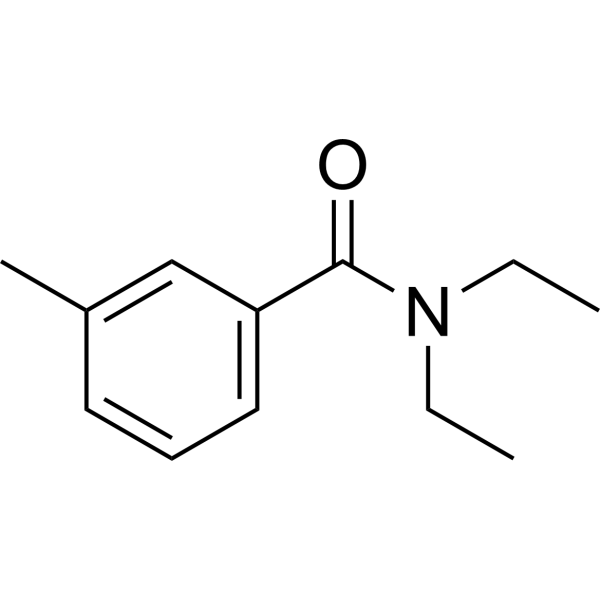
  • HY-B0978

    DEET; N,N-Diethyl-m-toluamide

    Environmental Pollutants Parasite Infection Neurological Disease
    Diethyltoluamide (DEET) is the most common active ingredient in insect repellents. It is intended to provide protection against mosquitoes, ticks, fleas, chiggers, leeches, and many other biting insects. Diethyltoluamide is toxic to hepatocytes and can lead to many physiological, pharmacological, and behavioral abnormalities, particularly motor deficits and learning and memory dysfunction .
    Diethyltoluamide
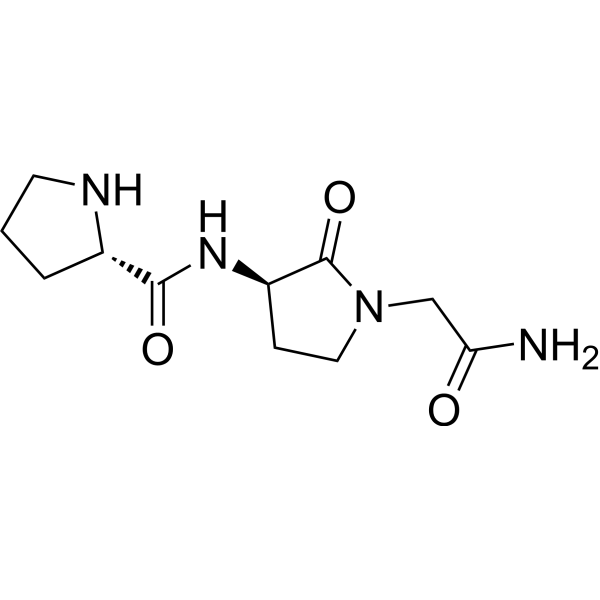
  • HY-103423

    Dopamine Receptor Neurological Disease
    PAOPA, an analog of L-proline-l-leucine-glycine amide (PLG) peptide, is an allosteric modulator of Dopamine D2 Receptor. PAOPA can effectively reduce behavioral abnormalities in rodent models of schizophrenia. PAOPA increases the high affinity dopamine D2 receptor and promotes its binding to agonists .
    PAOPA
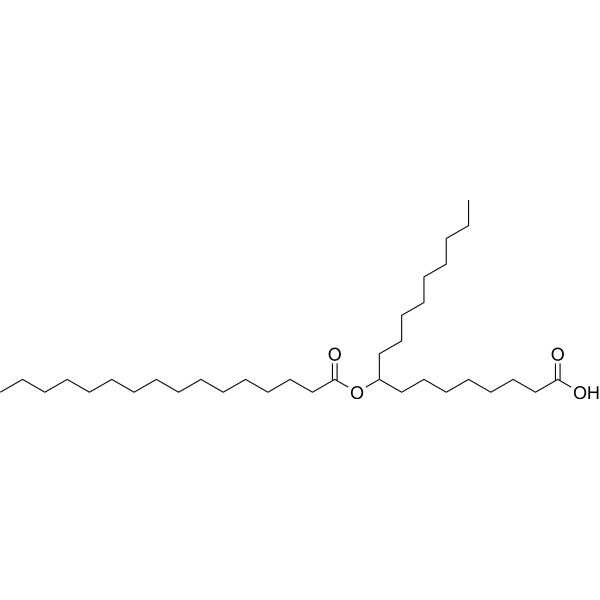
  • HY-120657

    CGRP Receptor NF-κB Neurological Disease Metabolic Disease Inflammation/Immunology
    9-PAHSA is an orally active endogenous GPR120 agonist (EC50=18 μM). 9-PAHSA significantly inhibits LPS-induced inflammatory responses by blocking the NF-κB pathway. 9-PAHSA induces adipocyte browning, enhances glucose uptake and reduces lipid accumulation, while improving mitochondrial function and the survival rate of steatotic hepatocytes. In terms of neuroprotection, 9-PAHSA regulates the expression of REST and BDNF in the prefrontal cortex of diabetic mice, and effectively prevents spatial working memory deficits and abnormal social behaviors. 9-PAHSA does not directly regulate insulin secretion or improve systemic insulin sensitivity, and possesses specific anti-inflammatory, metabolic regulatory and neuroprotective properties. 9-PAHSA can be used in the research of diabetes-related cognitive impairment, obesity and non-alcoholic fatty liver disease .
    9-PAHSA
  • HY-P990552A

    PAI-1 Integrin Cancer
    huATN-658 is an inhibitor that specifically targets the DIII domain of human urokinase plasminogen activator receptor (uPAR). huATN-658 neutralizes uPAR function by blocking the interaction between uPAR and integrins, without interfering with the binding of uPA or vitronectin to uPAR. huATN-658 inhibits the proliferation and invasion of breast cancer cells, slows the growth of primary breast tumors, reduces breast cancer-induced bone lesions and decreases osteoclast activity. huATN-658 also alters the gene expression of the TGF-β receptor complex signaling pathway. huATN-658 exerts synergistic anticancer effects when combined with Zoledronic Acid (HY-13777), and does not cause physiological or behavioral abnormalities in immunodeficient mice. huATN-658 can be used in research related to breast cancer, metastatic breast cancer and breast cancer-induced bone disease .
    huATN-658
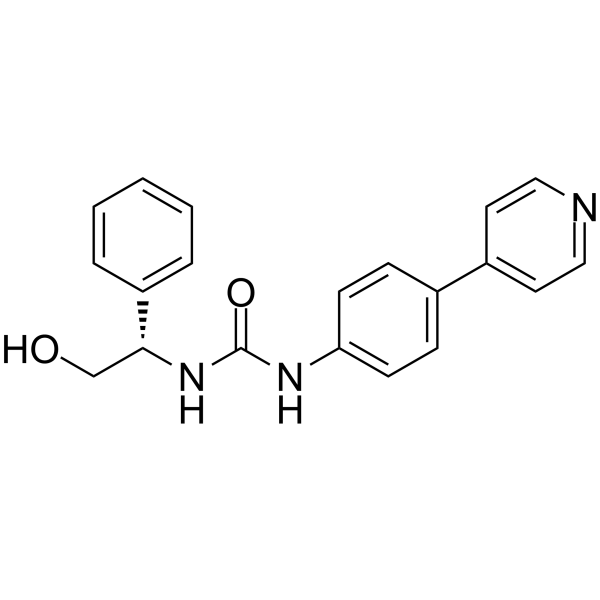
  • HY-108519

    ROCK Neurological Disease
    AS1892802 is a potent, orally active, and highly selective inhibitor of ROCK. The onset of antinociceptive effect of AS1892802 is as fast as those of Tramadol and Diclofenac. AS1892802 did not induce gastric irritation or abnormal behavior. AS1892802 is an attractive analgesic profile for the research of severe osteoarthritis pain .
    AS1892802
  • HY-B0265A

    (R)-BAY-e 9736

    Calcium Channel Cardiovascular Disease Neurological Disease
    (R)-Nimodipine ((R)-BAY-e 9736) is an orally active, blood-brain barrier-permeable L-type calcium channel blocker with an IC50 of 5 nM. (R)-Nimodipine inhibits corticosterone release by blocking calcium channels on the hypothalamic-pituitary-adrenal axis, thereby reversing immobilization stress-induced memory impairment and behavioral abnormalities. (R)-Nimodipine is widely used in studies related to aneurysmal subarachnoid hemorrhage, cerebral ischemia, epilepsy, age-related degenerative neurological diseases, and alcohol intoxication .
    (R)-Nimodipine
  • HY-B0978R

    DEET (Standard); N,N-Diethyl-m-toluamide (Standard)

    Reference Standards Parasite Infection Neurological Disease
    Diethyltoluamide (Standard) is the analytical standard of Diethyltoluamide. This product is intended for research and analytical applications. Diethyltoluamide (DEET) is the most common active ingredient in insect repellents. It is intended to provide protection against mosquitoes, ticks, fleas, chiggers, leeches, and many other biting insects. Diethyltoluamide is toxic to hepatocytes and can lead to many physiological, pharmacological, and behavioral abnormal ities, particularly motor deficits and learning and memory dysfunction .
    Diethyltoluamide (Standard)
  • HY-P991611

    iGluR Inflammation/Immunology
    ART5803 is a humanized IgG1 monoclonal antibody inhibitor targeting NMDAR. ART5803 binds to the N-terminal domain (NTD) of the NMDAR GluN1 subunit (GluN1-NTD) with a high affinity. ART5803 blocks NMDAR internalization induced by pathogenic autoantibodies and restores cell-surface NMDAR expression and functions. ART5803 reverses behavioral abnormalities and NMDAR expression in marmoset disease models. ABT-147 can be used to study anti-NMDAR encephalitis .
    ART5803
  • HY-E70290

    GALNT1

    Endogenous Metabolite β-catenin Wnt Cancer
    N-Acetylgalactosaminyltransferase 1 (GALNT1) is a glycosyltransferase that initiates mucin-type O-glycosylation by transferring α-GalNAc from UDP-GalNAc to serine (Ser) or threonine (Thr) residues in proteins. Overexpression of N-Acetylgalactosaminyltransferase 1 in gastric cancer can promote abnormal O-glycosylation of CD44, thereby activating the Wnt/β-catenin signaling pathway and regulating the malignant behavior of gastric cancer cells. Additionally, N-Acetylgalactosaminyltransferase 1 plays a crucial role in cancer growth and metastasis by modifying the O-glycosylation of various glycoproteins, such as mucin (MUC1), osteopontin (OPN), matrix metalloproteinase-14 (MMP14), and integrin α3 .
    N-Acetylgalactosaminyltransferase 1
  • HY-W770410

    Isotope-Labeled Compounds CGRP Receptor NF-κB Others
    9-PAHSA- 13C4 is 13C-labeled 9-PAHSA. 9-PAHSAis an orally active endogenous GPR120 agonist (EC50=18 μM). 9-PAHSAsignificantly inhibits LPS-induced inflammatory responses by blocking the NF-κB pathway. 9-PAHSAinduces adipocyte browning, enhances glucose uptake and reduces lipid accumulation, while improving mitochondrial function and the survival rate of steatotic hepatocytes. In terms of neuroprotection, 9-PAHSAregulates the expression of REST and BDNF in the prefrontal cortex of diabetic mice, and effectively prevents spatial working memory deficits and abnormal social behaviors. 9-PAHSAdoes not directly regulate insulin secretion or improve systemic insulin sensitivity, and possesses specific anti-inflammatory, metabolic regulatory and neuroprotective properties. 9-PAHSAcan be used in the research of diabetes-related cognitive impairment, obesity and non-alcoholic fatty liver disease .
    9-PAHSA-13C4
  • HY-120657S

    Isotope-Labeled Compounds CGRP Receptor NF-κB Others
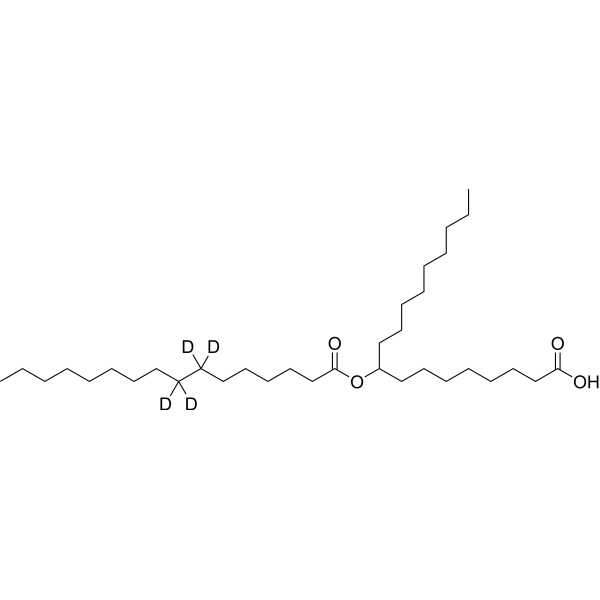
    9-PAHSA-d4 is the deuterium labeled 9-PAHSA. 9-PAHSA is an orally active endogenous GPR120 agonist (EC50=18 μM). 9-PAHSA significantly inhibits LPS-induced inflammatory responses by blocking the NF-κB pathway. 9-PAHSA induces adipocyte browning, enhances glucose uptake and reduces lipid accumulation, while improving mitochondrial function and the survival rate of steatotic hepatocytes. In terms of neuroprotection, 9-PAHSA regulates the expression of REST and BDNF in the prefrontal cortex of diabetic mice, and effectively prevents spatial working memory deficits and abnormal social behaviors. 9-PAHSA does not directly regulate insulin secretion or improve systemic insulin sensitivity, and possesses specific anti-inflammatory, metabolic regulatory and neuroprotective properties. 9-PAHSA can be used in the research of diabetes-related cognitive impairment, obesity and non-alcoholic fatty liver disease .
    9-PAHSA-d4
  • HY-N5159

    iGluR Neurological Disease
    Ampullosporin A is a peptaibol-type polypeptide that can be isolated from the fungus Sepedonium ampullosporum HKI-0053, exhibiting neuroleptic-like activity. Ampullosporin A can inhibit hyperactivity induced by NMDA receptor antagonist MK-801 (HY-15084B) and ameliorate social behavior abnormalities caused by subchronic drug treatment. Ampullosporin A alters the activity of glutamate receptors without affecting dopamine D1 and D2 receptors .
    Ampullosporin A
  • HY-115860

    iGluR Neurological Disease
    TAS-4 is a potent and selective mGluR4 positive allosteric modulator with significant anti-Parkinson's disease activity. TAS-4 is able to show efficacy when used alone or in combination with l-DOPA. TAS-4 is able to reverse haloperidol-induced spasticity when administered alone. TAS-4 enhances the contralateral rotation behavior induced by l-DOPA in a dose-dependent manner. TAS-4 combined with low-dose l-DOPA shows anti-Parkinson's effects similar to full-dose l-DOPA without exacerbating abnormal motor side effects .
    TAS-4
  • HY-120657R

    Reference Standards CGRP Receptor NF-κB Cardiovascular Disease Inflammation/Immunology
    Flumethrin (Standard) is the analytical standard of Flumethrin. This product is intended for research and analytical applications. 9-PAHSA is an orally active endogenous GPR120 agonist (EC50=18 μM). 9-PAHSA significantly inhibits LPS-induced inflammatory responses by blocking the NF-κB pathway. 9-PAHSA induces adipocyte browning, enhances glucose uptake and reduces lipid accumulation, while improving mitochondrial function and the survival rate of steatotic hepatocytes. In terms of neuroprotection, 9-PAHSA regulates the expression of REST and BDNF in the prefrontal cortex of diabetic mice, and effectively prevents spatial working memory deficits and abnormal social behaviors. 9-PAHSA does not directly regulate insulin secretion or improve systemic insulin sensitivity, and possesses specific anti-inflammatory, metabolic regulatory and neuroprotective properties. 9-PAHSA can be used in the research of diabetes-related cognitive impairment, obesity and non-alcoholic fatty liver disease .
    9-PAHSA (Standard)
  • HY-144026S

    CGRP Receptor NF-κB Inflammation/Immunology
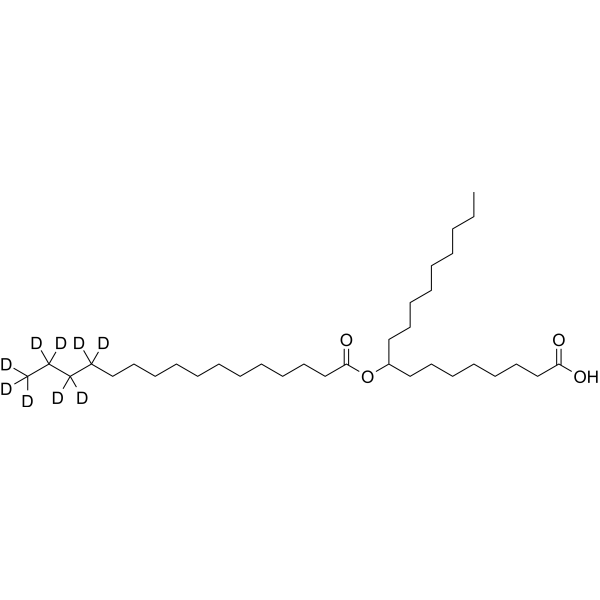
    9-PAHSA-d9 is the deuterium labeled 9-PAHSA (HY-120657). 9-PAHSA is an orally active endogenous GPR120 agonist (EC50=18 μM). 9-PAHSA significantly inhibits LPS-induced inflammatory responses by blocking the NF-κB pathway. 9-PAHSA induces adipocyte browning, enhances glucose uptake and reduces lipid accumulation, while improving mitochondrial function and the survival rate of steatotic hepatocytes. In terms of neuroprotection, 9-PAHSA regulates the expression of REST and BDNF in the prefrontal cortex of diabetic mice, and effectively prevents spatial working memory deficits and abnormal social behaviors. 9-PAHSA does not directly regulate insulin secretion or improve systemic insulin sensitivity, and possesses specific anti-inflammatory, metabolic regulatory and neuroprotective properties. 9-PAHSA can be used in the research of diabetes-related cognitive impairment, obesity and non-alcoholic fatty liver disease .
    9-PAHSA-d9
  • HY-120657S1

    Isotope-Labeled Compounds CGRP Receptor NF-κB Others
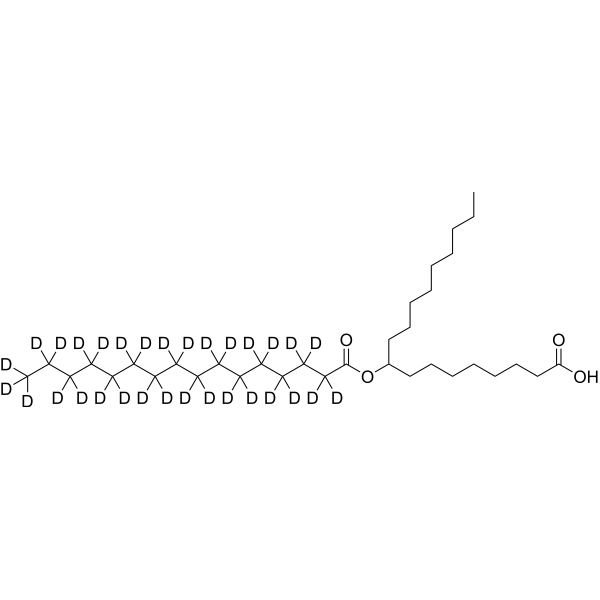
    9-PAHSA-d31 is the deuterium labeled 9-PAHSA. 9-PAHSA is an orally active endogenous GPR120 agonist (EC50=18 μM). 9-PAHSA significantly inhibits LPS-induced inflammatory responses by blocking the NF-κB pathway. 9-PAHSA induces adipocyte browning, enhances glucose uptake and reduces lipid accumulation, while improving mitochondrial function and the survival rate of steatotic hepatocytes. In terms of neuroprotection, 9-PAHSA regulates the expression of REST and BDNF in the prefrontal cortex of diabetic mice, and effectively prevents spatial working memory deficits and abnormal social behaviors. 9-PAHSA does not directly regulate insulin secretion or improve systemic insulin sensitivity, and possesses specific anti-inflammatory, metabolic regulatory and neuroprotective properties. 9-PAHSA can be used in the research of diabetes-related cognitive impairment, obesity and non-alcoholic fatty liver disease .
    9-PAHSA-d31
  • HY-108519R

    Reference Standards ROCK Neurological Disease
    AS1892802 (Standard) is the analytical standard of AS1892802 (HY-108519). This product is intended for research and analytical applications. AS1892802 is a potent, orally active, and highly selective inhibitor of ROCK. The onset of antinociceptive effect of AS1892802 is as fast as those of Tramadol and Diclofenac. AS1892802 did not induce gastric irritation or abnormal behavior. AS1892802 is an attractive analgesic profile for the research of severe osteoarthritis pain .
    AS1892802 (Standard)
  • HY-103423R

    Reference Standards Dopamine Receptor Neurological Disease
    PAOPA (Standard) is the analytical standard of PAOPA (HY-103423). This product is intended for research and analytical applications. PAOPA, an analog of L-proline-l-leucine-glycine amide (PLG) peptide, is an allosteric modulator of Dopamine D2 Receptor. PAOPA can effectively reduce behavioral abnormalities in rodent models of schizophrenia. PAOPA increases the high affinity dopamine D2 receptor and promotes its binding to agonists .
    PAOPA (Standard)
  • HY-182484

    GlyT Neurological Disease
    Org 24461 is a selective and brain-penetrant GlyT-1 inhibitor. Org 24461 blocks glycine uptake, reuptake, reverse operation, [ 3H]glycine efflux and release. Org 24461 enhances NMDA receptor function, modulates striatal monoamine/glutamate levels, and reverses PCP-induced behavioral and electrographic abnormalities. Org 24461 can be used for the research of retinal hypoxia/ischemia, and schizophrenia .
    Org 24461

Inquiry Online

Your information is safe with us. * Required Fields.

Salutation


Country or Region *

Applicant Name *


Organization Name *

Department *


Email Address *


Product Name *

Cat. No.


Requested quantity *

Phone Number *


Remarks

Inquiry Online

Inquiry Information

Product Name:
Cat. No.:
Quantity:
MCE Japan Authorized Agent:

