1. Search Result
Search Result
Results for "

alkaloid derivative

" in MedChemExpress (MCE) Product Catalog:

26

Inhibitors & Agonists

1

Screening Libraries

1

Biochemical Assay Reagents

15

Natural
Products

2

Isotope-Labeled Compounds

Targets Recommended:
Cat. No. Product Name Target Research Areas Chemical Structure
  • HY-13295
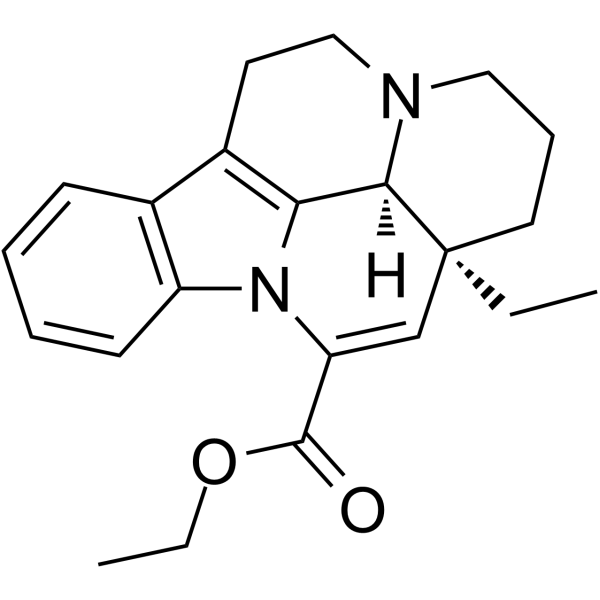
    Vinpocetine
    5+ Cited Publications

    Ethyl apovincaminate

    Sodium Channel IKK Phosphodiesterase (PDE) Cardiovascular Disease Neurological Disease Inflammation/Immunology Cancer
    Vinpocetine (Ethyl apovincaminate) is a derivative of the alkaloid Vincamine that blocks voltage-gated Na + channels. The IC50 value of Vinpocetine on direct IKK inhibition in the cell-free system is 17.17 μM. Vinpocetine is a phosphodiesterase (PDE) inhibitor and inhibits NF-κB-dependent inflammatory responses by directly targeting IκB kinase complex (IKK), and has been widely used for the treatment of cerebrovascular disorders .
    Vinpocetine
  • HY-139570

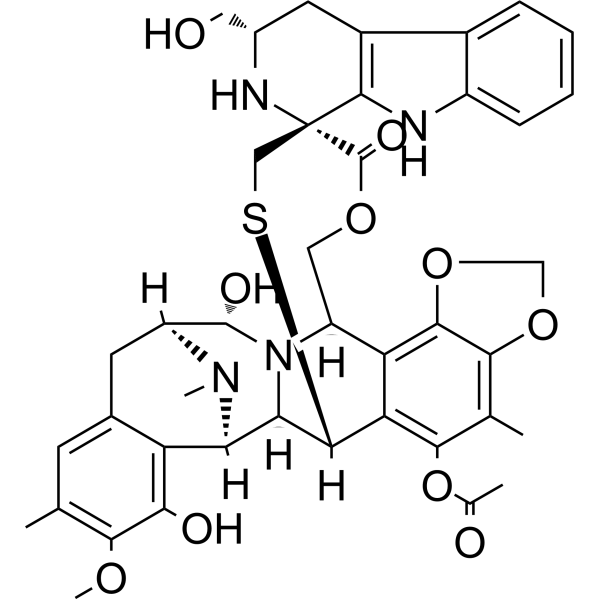
    PM14

    Bacterial Infection Inflammation/Immunology Cancer
    Ecubectedin (PM14) is a derivative. Ecteinascidins is a family of tetrahydroisoquinoline alkaloids with wide range of antitumor and antimicrobial activities .
    Ecubectedin
  • HY-W014971
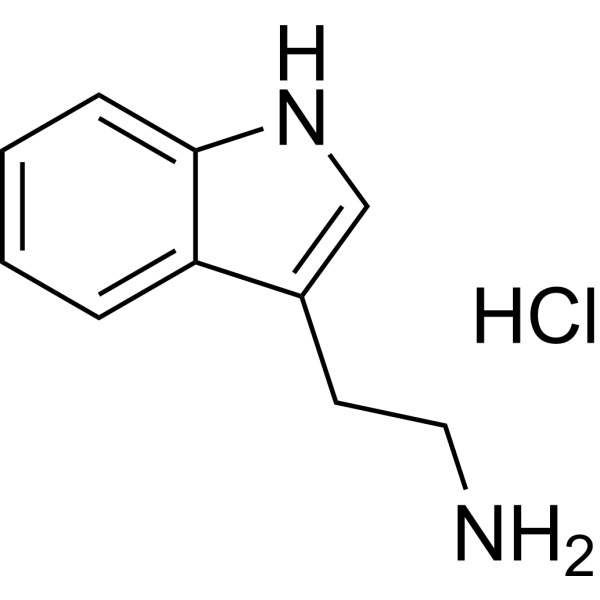
    Tryptamine hydrochloride
    1 Publications Verification

    Biochemical Assay Reagents Others
    Tryptamine hydrochloride belongs to the class of indole alkaloids and is a derivative of the amino acid tryptophan. Tryptamine hydrochloride is psychoactive and acts as a neurotransmitter in the body, affecting mood, perception and cognition. In its hydrochloride form, Tryptamine hydrochloride hydrochloride, it is commonly used as a research chemical and as a starting material for the synthesis of other organic compounds. It can also occur naturally in certain plants and animals, including fungi and mammals. Due to the psychoactive properties of Tryptamine hydrochloride and its derivatives, its use and possession are controlled substances in many countries.
    Tryptamine hydrochloride
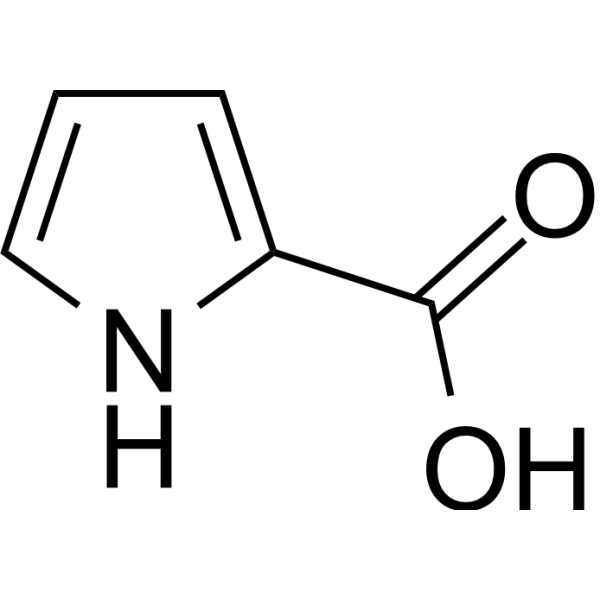
  • HY-W001963

    Endogenous Metabolite Others
    Pyrrole-2-carboxylic acid is a natural alkaloid from the marine bacterium Pelomonas puraquae sp. Nov. Pyrrole-2-carboxylic acid is a biological form of pyrrole that is often encountered in natural compounds. Pyrrole-2-carboxylic acid serves as a precursor for various pyrrole derivatives like clorobiocin, coumermycin A1, pyoluteorin, leupyrrins, and undecylprodigiosin in biosynthetic processes .
    Pyrrole-2-carboxylic acid
  • HY-118581
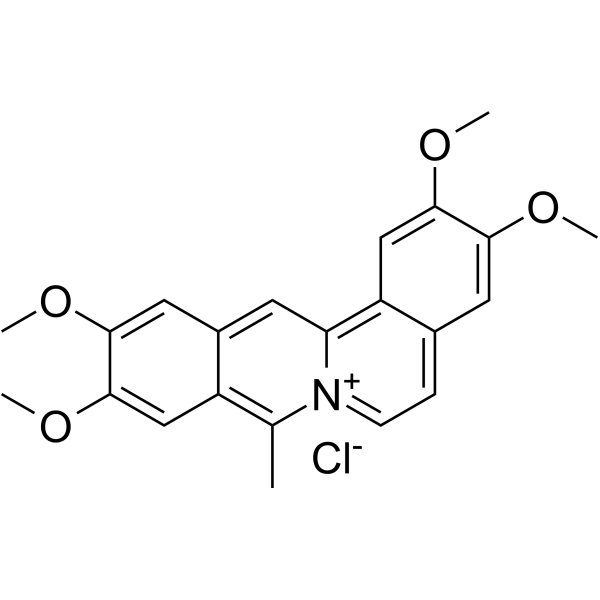
    Coralyne chloride
    1 Publications Verification

    Topoisomerase Cancer
    Coralyne chloride is a protoberberine alkaloid with potent anti-cancer activities. Coralyne chloride acts as a potent topoisomerase I poison and induces Top I mediated DNA cleavage . Coralyne chloride can be used for preparing?coralyne derivatives?as DNA binding fluorescent probes .
    Coralyne chloride
  • HY-W178327

    Adenosine Receptor Cancer
    8-Chloro caffeine binds to adenosine receptors (Ki = 30 µM). 8-Chloro caffeine potentiates UV-induced chromosomal aberrations in Cl-I Chinese hamster embryonic lung cells. 8-Chloro caffeine is a derivative of the methylxanthine alkaloid caffeine .
    8-Chloro caffeine
  • HY-A0220
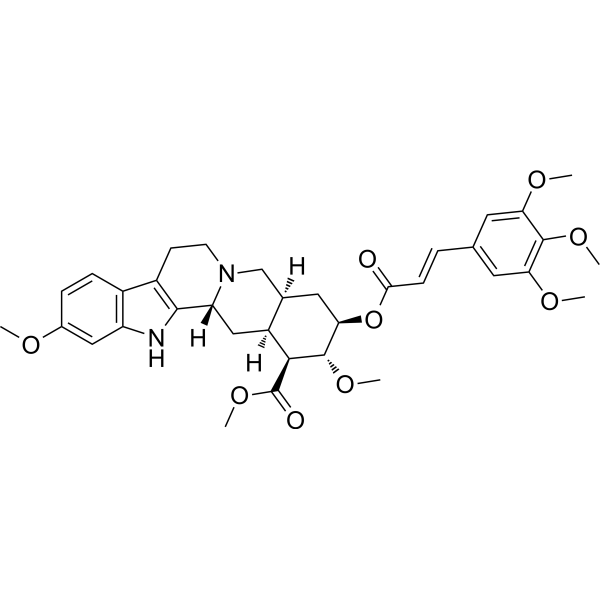
    Rescinnamine
    1 Publications Verification

    Reserpinine

    Drug Derivative Cardiovascular Disease Metabolic Disease
    Rescinnamine is a derivative of the indole alkaloid reserpine. Rescinnamine shows sedative effects. Rescinnamine can be used for hypertension research .
    Rescinnamine
  • HY-N4012

    3-Indoleglyoxamide

    Others Others
    Indole-3-glyoxylamide (Compound 4) is a type of indole alkaloid. Indole-3-glyoxylamide shows no significant cytotoxic activity against Hela, Ishikawa, and MGC-803 cells .
    Indole-3-glyoxylamide
  • HY-13295R

    Ethyl apovincaminate (Standard)

    Reference Standards Sodium Channel IKK Phosphodiesterase (PDE) Cardiovascular Disease Neurological Disease Inflammation/Immunology Cancer
    Vinpocetine (Standard) is the analytical standard of Vinpocetine. This product is intended for research and analytical applications. Vinpocetine (Ethyl apovincaminate) is a derivative of the alkaloid Vincamine that blocks voltage-gated Na + channels. The IC50 value of Vinpocetine on direct IKK inhibition in the cell-free system is 17.17 μM. Vinpocetine is a phosphodiesterase (PDE) inhibitor and inhibits NF-κB-dependent inflammatory responses by directly targeting IκB kinase complex (IKK), and has been widely used for the treatment of cerebrovascular disorders .
    Vinpocetine (Standard)
  • HY-N12726

    p38 MAPK MMP Infection Inflammation/Immunology Cancer
    Halociline, a derivative of alkaloids, that can be isolated from the marine fungus Penicillium griseofulvum. Halociline targets MAPK1, MMP-9, and PIK3CA in gastric cancer cells, potentially mediated by diverse pathways including cancer, lipid metabolism, atherosclerosis, and EGFR tyrosine kinase inhibitor resistance. Halociline possesses antimicrobial, antioxidant and biofilm inhibitory activities .
    Halociline
  • HY-118425

    O-Methylcorledine

    Drug Derivative Others
    (+)-Adlumine (O-Methylcorledine) is an alkaloid derivative found in Corydalis ledebouriana .
    (+)-Adlumine
  • HY-W033010

    β-Tropine

    Drug Derivative Others
    Pseudotropine (β-Tropine), a derivative of Tropane, is a plant alkaloid .
    Pseudotropine
  • HY-W665464

    Drug Derivative Topoisomerase Cancer
    (Rac)-7-Ethyl-10-hydroxycamptothecin is the derivative of (±)-10-Hydroxycamptothecin (HY-N0275). (±)-10-Hydroxycamptothecin is an indole alkaloid that inhibits the activity of topoisomerase I and has a broad spectrum of anticancer activity .
    (Rac)-7-Ethyl-10-hydroxycamptothecin
  • HY-172530

    Biochemical Assay Reagents Neurological Disease
    Heptanoyl-coenzyme A (Heptanoyl-CoA) tetrasodium is a derivative of CoA. Heptanoyl-coenzyme A tetrasodium is an inhibitor of butyryl-CoA acetate-CoA transferase (BUT) and inhibits butyric acid synthesis. Heptanoyl-coenzyme A tetrasodium blocks the improvements in motor function induced by the isoquinoline alkaloid Berberine (HY-N0716) .
    Heptanoyl-coenzyme A tetrasodium
  • HY-106072

    LY 104208

    Microtubule/Tubulin Cancer
    Vinzolidine is a semisynthetic derivative of the catharanthus alkaloid. Vinzolidine exerts its cytotoxic effect on tumor cells by interfering with microtubulin polymerization, thereby inhibiting cell division. Vinzolidine can be utilized in research to investigate synergistic effects when combined with other chemotherapeutic agents or biologic therapies, as well as to study cancer cells' tolerance or resistance to these treatments, and to explore approaches to overcome such obstacles .
    Vinzolidine
  • HY-13295S

    Isotope-Labeled Compounds Sodium Channel IKK Phosphodiesterase (PDE) Cardiovascular Disease Neurological Disease Inflammation/Immunology Cancer
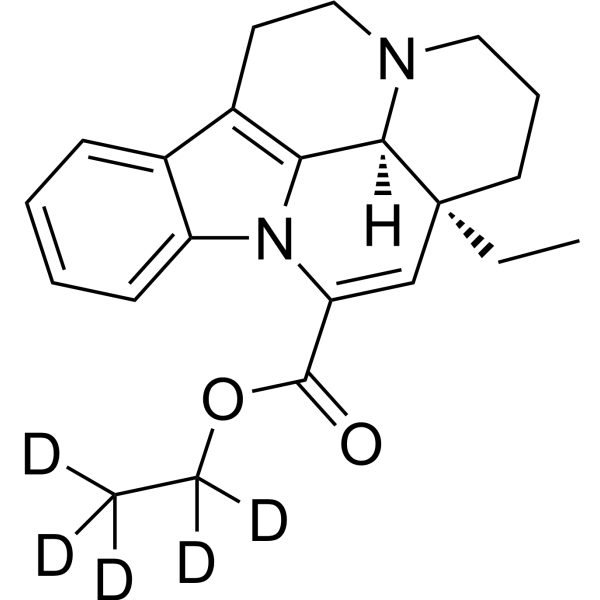
    Vinpocetine-d5 is the deuterium labeled Vinpocetine. Vinpocetine (Ethyl apovincaminate) is a derivative of the alkaloid Vincamine that blocks voltage-gated Na+ channels. The IC50 value of Vinpocetine on direct IKK inhibition in the cell-free system is 17.17 μM. Vinpocetine is a phosphodiesterase (PDE) inhibitor and inhibits NF-κB-dependent inflammatory responses by directly targeting IκB kinase complex (IKK), and has been widely used for the treatment of cerebrovascular disorders .
    Vinpocetine-d5
  • HY-105608

    Narcein

    Others Metabolic Disease
    Narceine (Narcein), a quinolone derivative, is an opium alkaloid with anti-diabetic property .
    Narceine
  • HY-172846

    Drug Derivative Neurological Disease
    6-Methoxy-N,N-diethylpentylone hydrochloride is an alkaloid derivative and can be used for the research of neurological disease.
    6-Methoxy-N,N-diethylpentylone hydrochloride
  • HY-175065

    N,N-Dimethyl hexanophenone hydrochloride; N-Dimethyl hexedrone hydrochloride

    Drug Derivative Neurological Disease
    α-Dimethylaminohexanophenone (N,N-dimethyl Hexanophenone, N-dimethyl Hexedrone) hydrochloride is an alkaloid derivative and can be used for the research of neurological disease.
    α-Dimethylaminohexanophenone hydrochloride
  • HY-160000

    NF-κB Drug Intermediate Infection Inflammation/Immunology Cancer
    Coumaperine is an amide alkaloid. Coumaperine can be extracted from white piper. Coumaperine inhibits NF-κB. Coumaperine derivatives exhibit anticancer activity against non-small cell lung cancer and Hodgkin's lymphoma. Coumaperine derivatives have antibacterial activity .
    Coumaperine
  • HY-W033010R

    β-Tropine (Standard)

    Drug Derivative Reference Standards Others
    Pseudotropine (Standard) is the analytical standard of Pseudotropine (HY-W033010). This product is intended for research and analytical applications. Pseudotropine (β-Tropine), a derivative of Tropane, is a plant alkaloid .
    Pseudotropine (Standard)
  • HY-N18765

    Bacterial Infection Inflammation/Immunology
    Dragons blood extract contains a variety of bioactive compounds, including alkaloids, flavonoids, phenolic acids, and chalcone derivatives, which have antibacterial, anti-inflammatory, antioxidant, and wound-healing effects.
    Dragons blood extract
  • HY-N18059

    6-Hydroxyhetisan-11-one

    Others Neurological Disease Inflammation/Immunology
    Spiradine A (6-Hydroxyhetisan-11-one) is a C20 diterpenoid alkaloid present in the roots of Thalictrum sessile (Ranunculaceae), and is originally isolated from Spiraea japonica (Rosaceae). Spiradine A may possess anti-inflammatory and analgesic activities .
    Spiradine A
  • HY-W014971S

    Isotope-Labeled Compounds Biochemical Assay Reagents Others
    Tryptamine-d2-1 hydrochloride is the deuterium labeled Tryptamine hydrochloride (HY-W014971). Tryptamine hydrochloride belongs to the class of indole alkaloids and is a derivative of the amino acid tryptophan. Tryptamine hydrochloride is psychoactive and acts as a neurotransmitter in the body, affecting mood, perception and cognition. In its hydrochloride form, Tryptamine hydrochloride hydrochloride, it is commonly used as a research chemical and as a starting material for the synthesis of other organic compounds. It can also occur naturally in certain plants and animals, including fungi and mammals. Due to the psychoactive properties of Tryptamine hydrochloride and its derivatives, its use and possession are controlled substances in many countries.
    Tryptamine-d2-1 hydrochloride
  • HY-N18289

    Cholinesterase (ChE) Neurological Disease
    8-Hydroxydihydrochelerythrine is a benzophenanthridine alkaloid-derived, selective and competitive AChE inhibitor (IC50=0.61 μM) isolated from the roots of Zanthoxylum nitidum (Roxb.) DC. 8-Hydroxydihydrochelerythrine increases the content of acetylcholine in the synapses of cholinergic neurons and enhances cholinergic neurotransmission. 8-Hydroxydihydrochelerythrine is applicable to the research of neurodegenerative diseases with dementia such as Alzheimer's disease .
    8-Hydroxydihydrochelerythrine
  • HY-N9913

    Drug Derivative Others
    11-Hydroxycephalotaxine (Compound 1a) is a cephalotaxus alkaloid that can be isolated from Cephalotaxus species .
    11-Hydroxycephalotaxine

Inquiry Online

Your information is safe with us. * Required Fields.

Salutation


Country or Region *

Applicant Name *


Organization Name *

Department *


Email Address *


Product Name *

Cat. No.


Requested quantity *

Phone Number *


Remarks

Inquiry Online

Inquiry Information

Product Name:
Cat. No.:
Quantity:
MCE Japan Authorized Agent:

