37 Results for "

ascorbate acid

" in MedChemExpress (MCE) Product Catalog:
Products (37)

37 Results for "ascorbate acid" in MCE Product Catalog:

87
87 Publications Verification
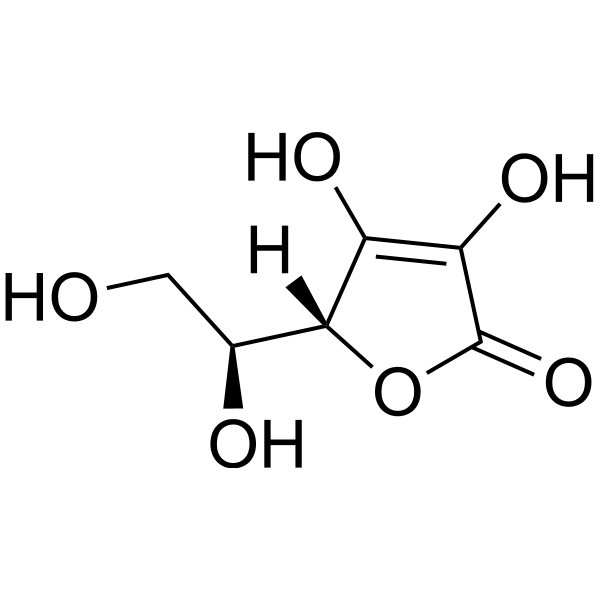
Cat. No.: HY-B0166
CAS No.: 50-81-7
Synonyms: L-ascorbate; Vitamin C
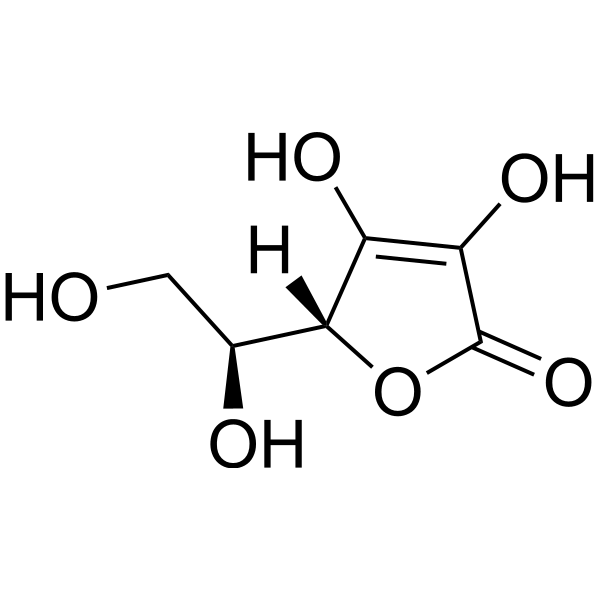
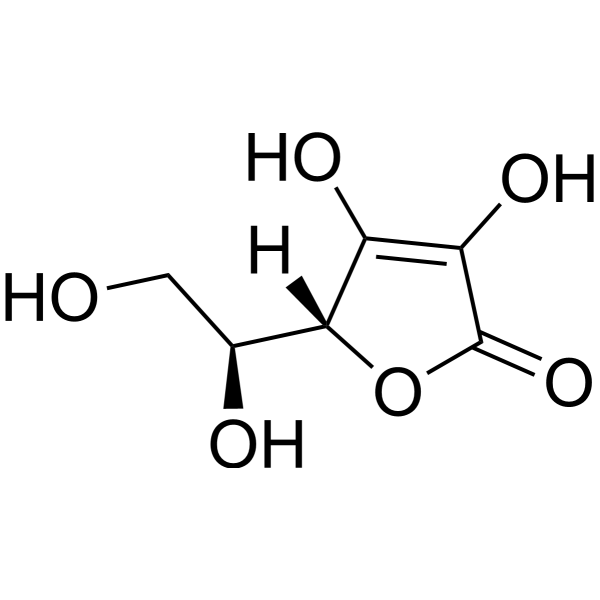
L-Ascorbic acid (L-Ascorbate), an electron donor, is an endogenous antioxidant agent. L-Ascorbic acid inhibits selectively Cav3.2 channels with an IC50 of 6.5 μM. L-Ascorbic acid is also a collagen deposition enhancer and an elastogenesis inhibitor . L-Ascorbic acid exhibits anti-cancer effects through the generation of reactive oxygen species (ROS) and selective damage to cancer cells .
loading...
    loading...
87
87 Publications Verification
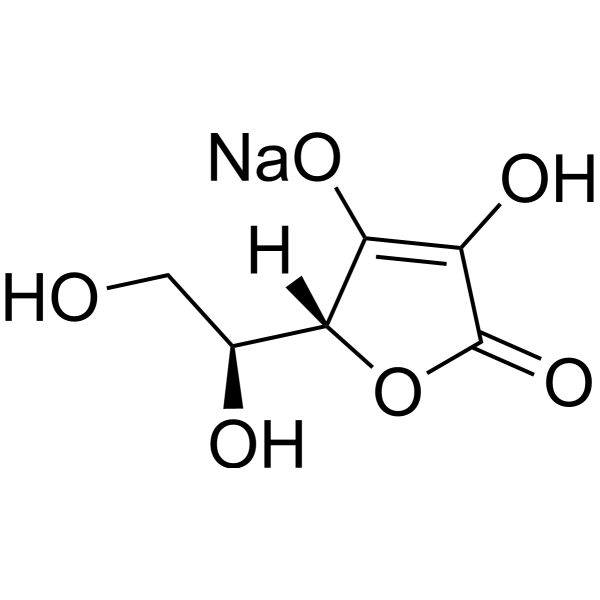
Cat. No.: HY-B0166A
CAS No.: 134-03-2
Synonyms: Sodium ascorbate; Sodium L-ascorbate; Vitamin C sodium salt
L-Ascorbic acid sodium salt (Sodium ascorbate), an electron donor, is an endogenous antioxidant agent. L-Ascorbic acid sodium salt selectively inhibits Cav3.2 channels with an IC50 of 6.5 μM. L-Ascorbic acid sodium salt is also a collagen deposition enhancer and an elastogenesis inhibitor .
loading...
    loading...
80
80 Cited Publications
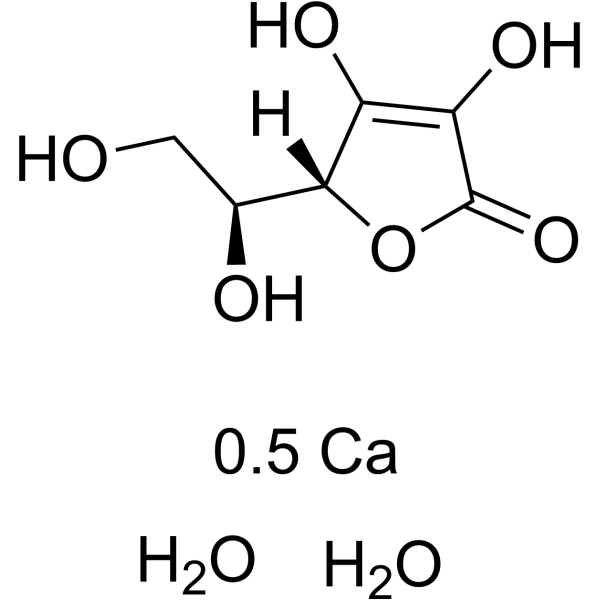
Cat. No.: HY-B0166C
CAS No.: 5743-28-2
Synonyms: L-ascorbate calcium dihydrate; Vitamin C calcium dihydrate
L-Ascorbic acid (calcium dihydrate) (L-Ascorbate (calcium dihydrate); Vitamin C (calcium dihydrate)) is a biochemical reagent that can be used as a biological material or organic compound for life science related research.
loading...
    loading...
4
4 Cited Publications
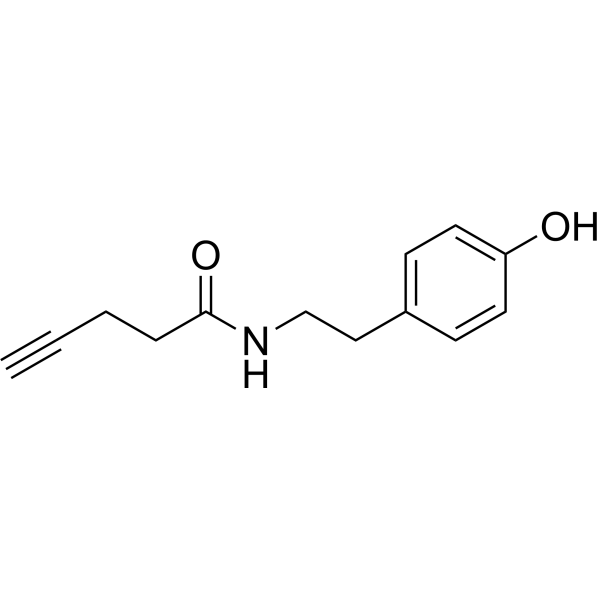
Cat. No.: HY-131442
CAS No.: 1694495-59-4
Purity:  99.72%
Synonyms: Alkyne tyramide; Alk-Ph
Research Areas:  

Others

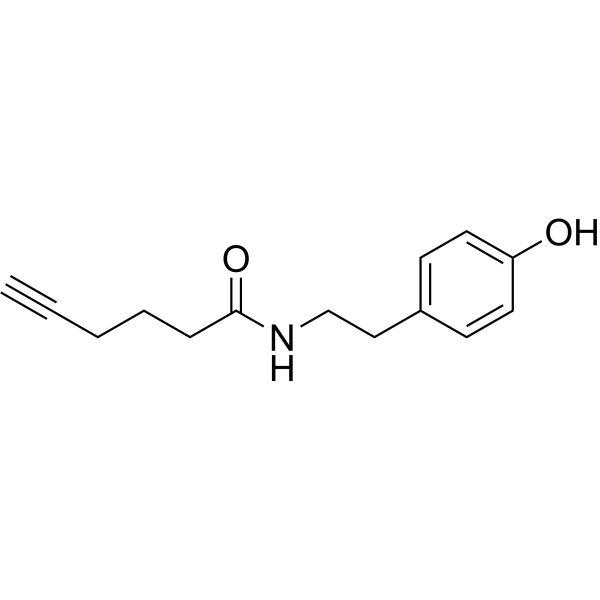
Alkyne-phenol (Alk-Ph) is a clickable ascorbate peroxidase 2 (APEX2) probe. Alkyne-phenol substantially improves APEX-labeling efficiency in intact yeast cells, as it is more cell wall-permeant than APEX2 substrate biotin-phenol (BP). Alkyne-phenol also facilitates the identification of APEX-labeling sites, allowing the unambiguous assignment of membrane topology of mitochondrial proteins . Alkyne-phenol is a click chemistry reagent, it contains an Alkyne group and can undergo copper-catalyzed azide-alkyne cycloaddition (CuAAc) with molecules containing Azide groups.
loading...
    loading...
3
3 Cited Publications
Cat. No.: HY-W021042
CAS No.: 760952-88-3
Synonyms: THPTA
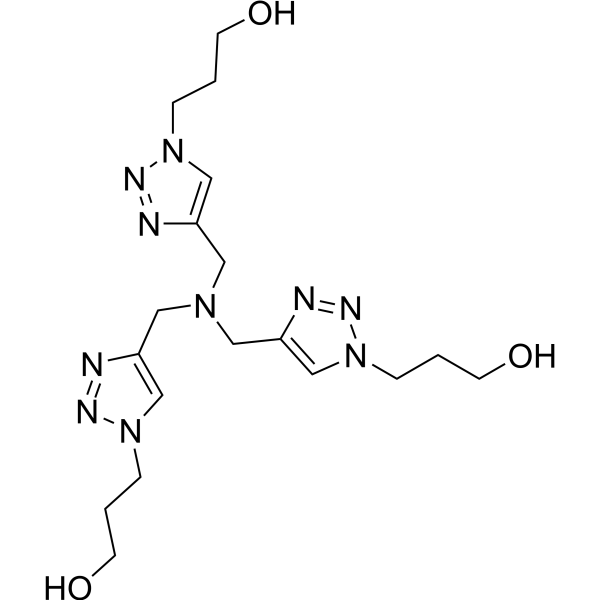
Tris(3-hydroxypropyltriazolylmethyl)amine (THPTA) is an accelerating ligand in the copper-catalyzed azide-alkyne cycloaddition reaction (CuAAC) and protects cells from oxidants generated by copper-catalyzed reduction of oxygen by ascorbate. In addition, Tris(3-hydroxypropyltriazolylmethyl)amine can also protect the histidine moiety of biomolecules in a manner proportional to the ligand concentration .
loading...
    loading...
2
2 Cited Publications
Cat. No.: HY-B0166R
CAS No.: 50-81-7
Synonyms: L-ascorbate (Standard); Vitamin C (Standard)
L-Ascorbic acid (Standard) is the analytical standard of L-Ascorbic acid. This product is intended for research and analytical applications. L-Ascorbic acid (L-Ascorbate), an electron donor, is an endogenous antioxidant agent. L-Ascorbic acid inhibits selectively Cav3.2 channels with an IC50 of 6.5 μM. L-Ascorbic acid is also a collagen deposition enhancer and an elastogenesis inhibitor . L-Ascorbic acid exhibits anti-cancer effects through the generation of reactive oxygen species (ROS) and selective damage to cancer cells .
loading...
    loading...
1
1 Cited Publications
Cat. No.: HY-155639
CAS No.: 2230051-33-7
Purity:  99.55%
Research Areas:  

Others

Tyramide alkyne is an alternative labeling substrate that can be coupled to detection or enrichment moieties via a Copper-catalyzed Azide/Alkyne Cycloaddition (CuAAC) “click” reaction. Tyramide alkyne can be used for ascorbate peroxidase 2 (APEX2) labeling .
loading...
    loading...
Cat. No.: HY-B0166G
CAS No.: 50-81-7
Synonyms: L-ascorbate (GMP); Vitamin C (GMP)
L-Ascorbic acid (L-Ascorbate) (GMP) is Ascorbic acid (HY-B0166) produced by using GMP guidelines. GMP small molecules works appropriately as an auxiliary reagent for cell therapy manufacture. L-Ascorbic acid is an inhibitor of Cav 3.2 channels .
loading...
    loading...
Cat. No.: HY-W094510
CAS No.: 13472-36-1
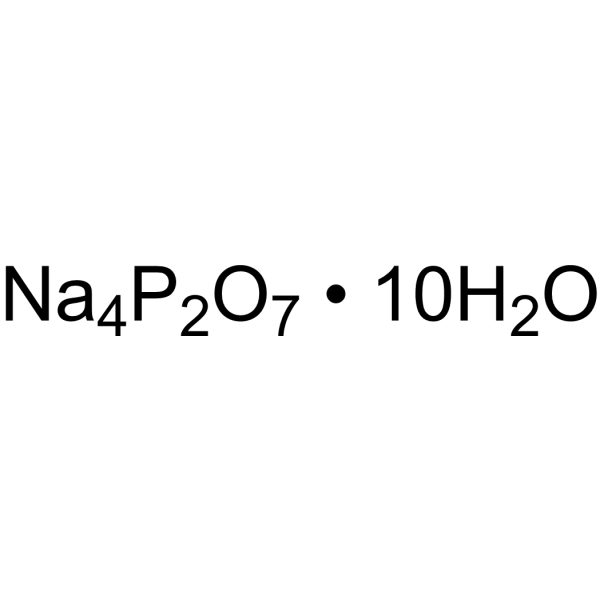
Sodium pyrophosphate decahydrate is a phosphate donor and mild chelating agent. Sodium pyrophosphate decahydrate serves as a phosphate source for Pseudomonas aeruginosa acid phosphatase and its Q6 variant, enabling phosphorylation of L‑ascorbic acid to L‑ascorbate‑2‑phosphate. Sodium pyrophosphate decahydrate facilitates 99mTc labeling of human polyclonal IgG. Sodium pyrophosphate decahydrate can be used in research on musculoskeletal infections .
loading...
    loading...
Cat. No.: HY-B0166S
CAS No.: 1354064-87-1
Synonyms: L-ascorbate-13C6; Vitamin C-13C6
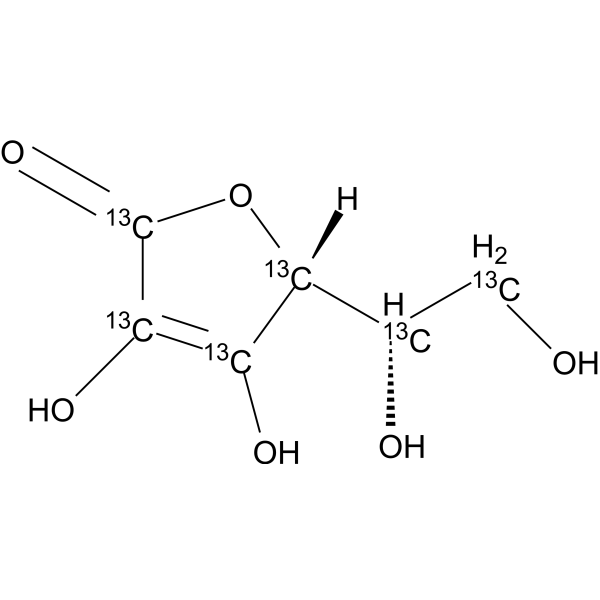
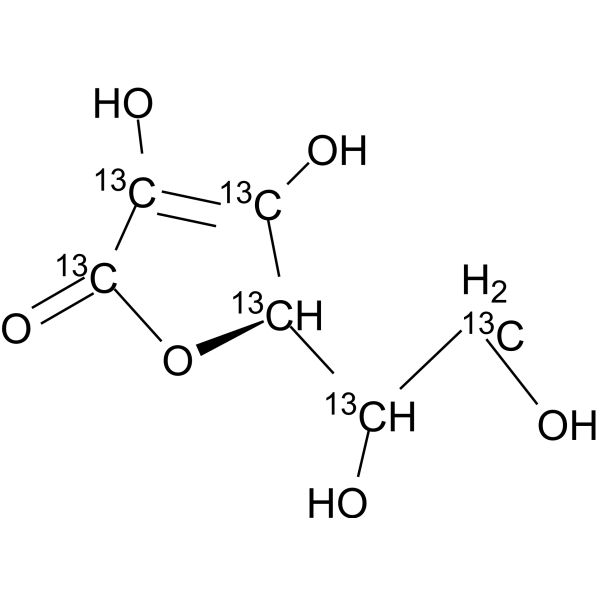
L-Ascorbic acid- 13C6 is the 13C-labeled L-Ascorbic acid. L-Ascorbic acid (L-Ascorbate), an electron donor, is an endogenous antioxidant agent. L-Ascorbic acid inhibits selectively Cav3.2 channels with an IC50 of 6.5 μM. L-Ascorbic acid is also a collagen deposition enhancer and an elastogenesis inhibitor . L-Ascorbic acid exhibits anti-cancer effects through the generation of reactive oxygen species (ROS) and selective damage to cancer cells .
loading...
    loading...
Cat. No.: HY-133079
CAS No.: 183476-82-6
Purity:  ≥98.0%
Synonyms: tetra-isopalmitoyl Ascorbic acid; IPAA; Tetrahexyldecyl ascorbate
Research Areas:  

Endocrinology

Ascorbyl tetra-2-hexyldecanoate (tetra-isopalmitoyl Ascorbic acid; IPAA) is a lipophilic derivative of vitamin C (L-ascorbic acid). Ascorbyl tetra-2-hexyldecanoate (100 μM ) can prevent the decrease in viability of HaCaT keratinocytes induced by UVB, hydrogen peroxide, or tert-butyl hydroperoxide, and reduce the production of IL-1α and prostaglandin E2 (PGE2). Topical application of ascorbyl tetra-2-hexyldecanoate (1%) increases epidermal viability thickness, stratum corneum water content, and skin smoothness, and reduces skin roughness in hairless mice. Ascorbyl tetra-2-hexyldecanoate can be used to develop skin whitening agents in the beauty industry.
loading...
    loading...
Cat. No.: HY-P2742
CAS No.: 9029-44-1
Synonyms: ASO, Cucurbit sp.
Target:  

Endogenous Metabolite

Research Areas:  

Metabolic Disease

Ascorbate oxidase, Cucurbit sp., also known as vitamin C oxidase, is a REDOX enzyme involved in the regulation of extracellular matrix. Ascorbate oxidase catalyzes the reaction of ascorbic acid and oxygen to produce dehydroascorbic acid .
loading...
    loading...
Cat. No.: HY-B0166S8
CAS No.: 1331939-77-5
Synonyms: L-ascorbate-1; Vitamin C-13C6-1
L-Ascorbic acid- 13C6-1 (L-Ascorbate-1; Vitamin C- 13C6-1) is a 13C labeled L-Ascorbic acid (HY-B0166) . L-Ascorbic acid (L-Ascorbate), an electron donor, is an endogenous antioxidant agent. L-Ascorbic acid inhibits selectively Cav3.2 channels with an IC50 of 6.5 μM. L-Ascorbic acid is also a collagen deposition enhancer and an elastogenesis inhibitor . L-Ascorbic acid exhibits anti-cancer effects through the generation of reactive oxygen species (ROS) and selective damage to cancer cells .
loading...
    loading...
Cat. No.: HY-B0166S6
CAS No.: 82977-10-4
Synonyms: L-ascorbate-d2; Vitamin C--d2
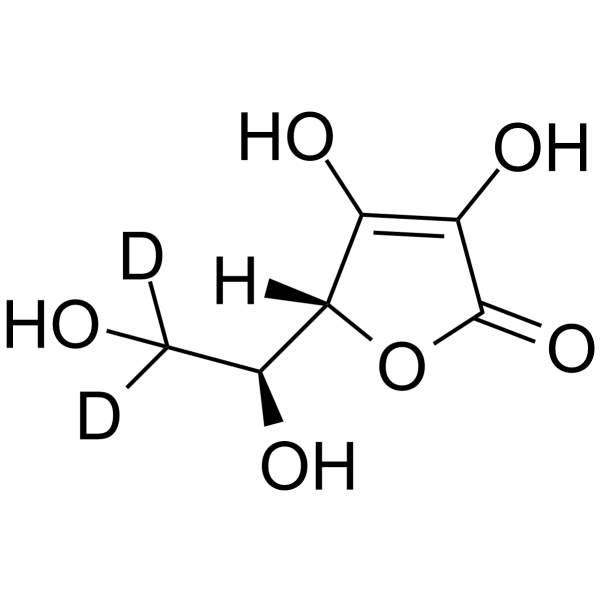
L-Ascorbic acid-d2 is the deuterium labeled L-Ascorbic acid. L-Ascorbic acid (L-Ascorbate), an electron donor, is an endogenous antioxidant agent. L-Ascorbic acid inhibits selectively Cav3.2 channels with an IC50 of 6.5 μM. L-Ascorbic acid is also a colla
loading...
    loading...
Cat. No.: HY-B0166S1
CAS No.: 178101-88-7
Synonyms: L-ascorbate-13C; Vitamin C-13C
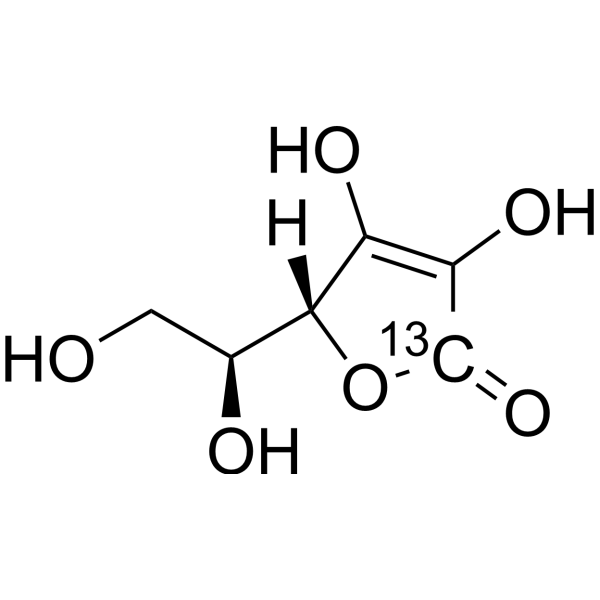
L-Ascorbic acid- 13C is the 13C-labeled L-Ascorbic acid. L-Ascorbic acid (L-Ascorbate), an electron donor, is an endogenous antioxidant agent. L-Ascorbic acid inhibits selectively Cav3.2 channels with an IC50 of 6.5 μM. L-Ascorbic acid is also a collagen deposition enhancer and an elastogenesis inhibitor . L-Ascorbic acid exhibits anti-cancer effects through the generation of reactive oxygen species (ROS) and selective damage to cancer cells .
loading...
    loading...
Cat. No.: HY-W614753
CAS No.: 2375201-60-6
Biotin-naphthylamine is a biotinylated biochemical assay reagent, which is a substrate for ascorbate peroxidase 2 (APEX2). Biotin-naphthylamine is utilized as a novel probe for labeling DNA and RNA .
loading...
    loading...
Cat. No.: HY-B0166GL
CAS No.: 50-81-7
Synonyms: L-ascorbate (GMP Like); Vitamin C (GMP Like)
L-Ascorbic acid (GMP Like) is the GMP Like class L-Ascorbic acid (HY-B0166). L-Ascorbic acid (L-Ascorbate, Vitamin C), an electron donor, is an endogenous antioxidant agent. L-Ascorbic acid inhibits selectively Cav3.2 channels with an IC50 of 6.5 μM. L-Ascorbic acid is also a collagen deposition enhancer and an elastogenesis inhibitor . L-Ascorbic acid exhibits anti-cancer effects through the generation of reactive oxygen species (ROS) and selective damage to cancer cells .
loading...
    loading...
Cat. No.: HY-B0166S3
CAS No.: 1313730-17-4
Synonyms: L-ascorbate-13C-2; Vitamin C-13C-2
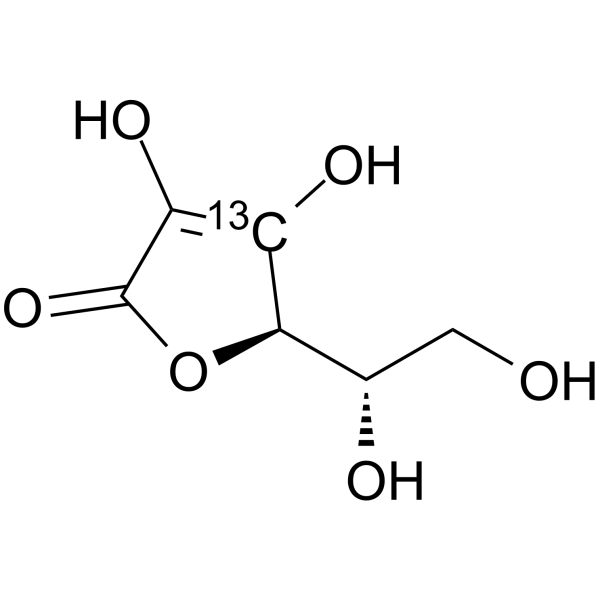
L-Ascorbic acid- 13C-2 is the 13C labeled L-Ascorbic acid. L-Ascorbic acid (L-Ascorbate), an electron donor, is an endogenous antioxidant agent. L-Ascorbic acid inhibits selectively Cav3.2 channels with an IC50 of 6.5 μM. L-Ascorbic acid is also a collagen
loading...
    loading...
Cat. No.: HY-P2742A
CAS No.: 9029-44-1
Target:  

Endogenous Metabolite

Research Areas:  

Metabolic Disease

L-Ascorbate oxidase, Cucumber belongs to the family of oxidoreductases acting on diphenols and related substances as donor with oxygen as acceptor. L-Ascorbate oxidase, Cucumber catalyses the oxidation of L‐Ascorbate (HY-B0166) with oxygen to dehydroascorbate with the generation of water. L-Ascorbate oxidase, Cucumber can be used in baking processes and cereal‐based processes .
loading...
    loading...
Cat. No.: HY-B0166D
CAS No.: 1987-71-9
Target:  

Drug Derivative

Research Areas:  

Others

Niacinamide ascorbate is a micronutrient with radioprotective properties. Niacinamide ascorbate works as an antioxidant along with vitamin C, vitamin E and other compounds to mitigate the risks associated with exposure to ionizing radiation. Niacinamide ascorbate helps reduce the likelihood of radiation-induced diseases such as acute leukemia, breast cancer, thyroid cancer and mutations, thereby protecting the human body from the harmful effects of radiation .
loading...
    loading...

