12 Results for "

bEnd.3 endothelial cell

" in MedChemExpress (MCE) Product Catalog:
Products (12)

12 Results for "bEnd.3 endothelial cell" in MCE Product Catalog:

11
11 Cited Publications
Cat. No.: HY-13535
CAS No.: 262438-43-7
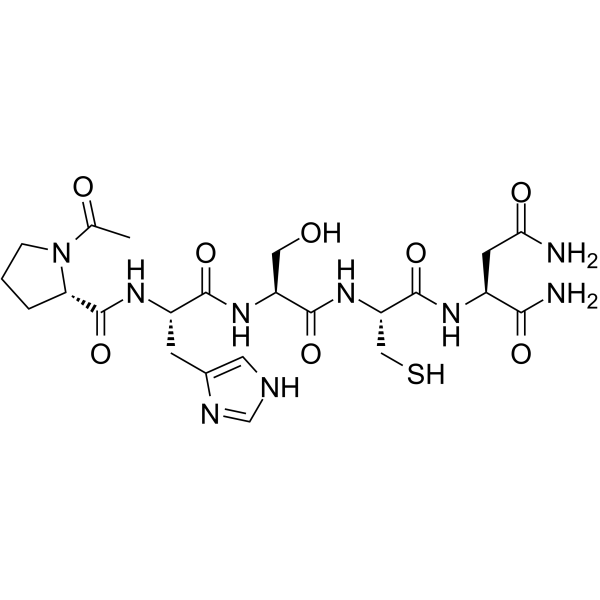
ATN-161 is an antagonist of α5β1 integrin and αvβ3 integrin, as well as an inhibitor of fibrosis, an inhibitor of oxidative stress, a tight junction stabilizer, a mitochondrial integrity protector, an angiogenesis inhibitor and an antiviral agent. ATN-161 inhibits NLRP3, MAPK, and ROS. ATN-161 protects mice from SARS-CoV-2 infection . ATN-161 reduces infarct volume, alleviates edema, decreases immune cell infiltration, reduces the area of choroidal neovascularization lesions, lowers tumor microvessel density and viral load. ATN-161 can be used in research related to ischemic stroke, choroidal neovascularization, breast cancer, coronavirus disease 2019 (COVID-19), and liver metastasis of colorectal cancer .
loading...
    loading...
Cat. No.: HY-171306
Target:  

Liposome

Research Areas:  

Others

MK16 is a lipid material that can be used to construct blood-brain barrier penetrable lipid nanoparticles for mRNA delivery. MK16 facilitates blood-brain barrier crossing via γ-secretase-mediated and caveolae-mediated transcytosis. MK16 can be used for drug delivery research .
loading...
    loading...
Cat. No.: HY-173591
CAS No.: 2785323-68-2
T0080 is a central nervous system-penetrant FPR1 inhibitor. By functionally blocking the FPR1 signaling pathway, T0080 effectively reduces neutrophil infiltration into ischemic brain tissue and maintains the integrity of the blood-brain barrier. T0080 alleviates tPA-associated hemorrhagic transformation, inhibits demyelination responses and the expression of NOX2. T0080 also possesses anti-apoptotic (apoptosis) and anti-inflammatory properties, thereby protecting myelin and reducing neurological deficits. T0080 is widely used in studies related to ischemic stroke complicated by hemorrhagic transformation after tPA thrombolysis, as well as multiple sclerosis .
loading...
    loading...
Cat. No.: HY-W002199
CAS No.: 647-42-7
Synonyms: 6:2 FTOH; 1H,1H,2H,2H-Perfluoro-1-octanol; 2-(Perfluorohexyl)ethanol
6:2 Fluorotelomer alcohol (6:2 FTOH) is an orally active, blood-brain barrier-permeable modulator of cyclin D1 and ETS1. 6:2 Fluorotelomer alcohol downregulates cyclin D1 expression, upregulates ETS1 via the TNF-α/ERK 1/2 pathway, impairs mitochondrial membrane potential and respiratory function, increases reactive oxygen species levels, disrupts calcium homeostasis and activates endoplasmic reticulum stress markers, and induces cell proliferation inhibition and endothelial-mesenchymal transition. Furthermore, 6:2 Fluorotelomer alcohol induces morphological abnormalities in zebrafish embryos and liver developmental damage, while disrupting the brain immune microenvironment in mice, causing systemic toxicity and delayed pup maturation in CD-1 mice. 6:2 Fluorotelomer alcohol also induces cortical neuron apoptosis, glial cell activation, synaptic abnormalities, colonic barrier damage, intestinal dysbiosis and autism spectrum disorder-like symptoms in mice. 6:2 Fluorotelomer alcohol shows no mutagenic, clastogenic, primary skin/eye irritation or skin sensitizing effects, exhibits no selective reproductive toxicity in CD-1 mice, and is classified as GHS Category 4 for acute oral toxicity. 6:2 Fluorotelomer alcohol can be used in studies of neurodevelopmental disorders and autism spectrum disorders .
loading...
    loading...
Cat. No.: HY-124314
CAS No.: 1620582-23-1
Target:  

MAGL DAGL

Research Areas:  

Metabolic Disease

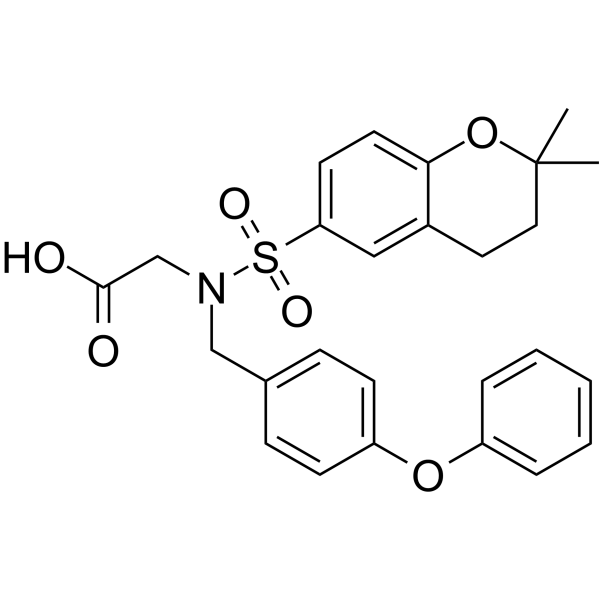
LEI-106 is a dual ABHD6 and DAGL-α inhibitor, with a Ki of 0.8 μM for ABHD6, and an IC50 of 18 nM and a Ki of 0.7 μM for DAGL-α. LEI-106 blocks the synthesis of 2-arachidonoylglycerol, reduces the level of endothelial cell-derived 2-arachidonoylglycerol, without altering the levels of cannabinoids and diacylglycerol. LEI-106 is applicable to research related to diet-induced obesity and metabolic syndrome .
loading...
    loading...
Cat. No.: HY-137273
CAS No.: 74135-10-7
Purity:  ≥98.0%
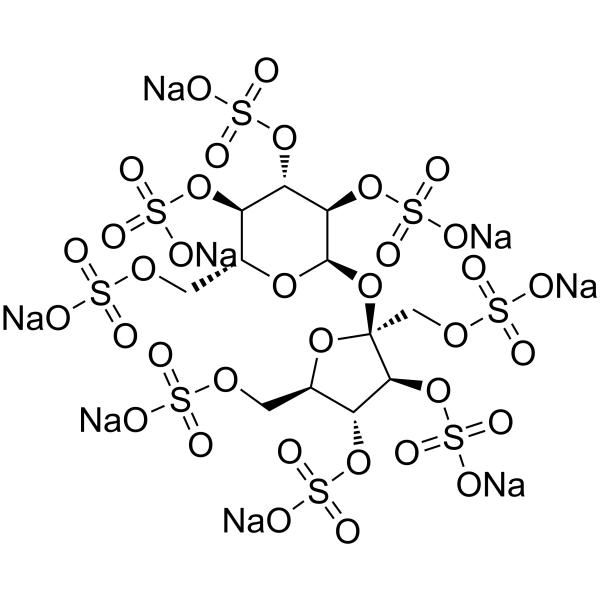
Sucrose octasulfate sodium is a wound healing promoter. Sucrose octasulfate sodium inhibits MMP, promotes angiogenesis and improves microcirculation. Sucrose octasulfate sodium causes mild skin irritation. Sucrose octasulfate sodium can be used to prepare p (MMA-co-AM)/PVA@PSO hydrogels. Sucrose octasulfate sodium is applicable to research related to diabetic wounds .
loading...
    loading...
Cat. No.: HY-141436
CAS No.: 73264-44-5
Purity:  ≥98.0%
Synonyms: Sucrose octasulfate potassium
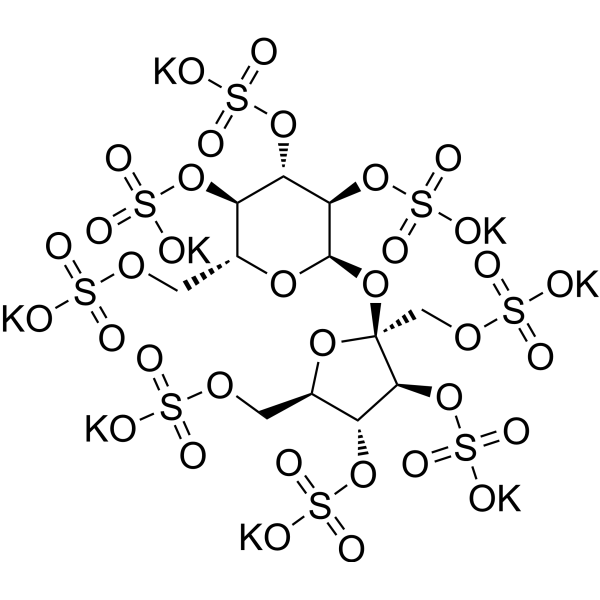
Sucrosofate potassium (Sucrose octasulfate potassium) is a wound healing promoter. Sucrosofate potassium inhibits MMP, promotes angiogenesis and improves microcirculation. Sucrosofate potassium causes mild skin irritation. Sucrosofate potassium can be used to prepare p (MMA-co-AM)/PVA@PSO hydrogels. Sucrosofate potassium is applicable to research related to diabetic wounds .
loading...
    loading...
Cat. No.: HY-141436R
CAS No.: 73264-44-5
Synonyms: Sucrose octasulfate potassium (Standard)
Sucrosofate potassium (Standard) (Sucrose octasulfate potassium) (Standard)) is the analytical standard of Sucrosofate potassium (HY-141436). This product is intended for research and analytical applications. Sucrosofate potassium (Sucrose octasulfate potassium) is a wound healing promoter. Sucrosofate potassium inhibits MMP, promotes angiogenesis and improves microcirculation. Sucrosofate potassium causes mild skin irritation. Sucrosofate potassium can be used to prepare p (MMA-co-AM)/PVA@PSO hydrogels. Sucrosofate potassium is applicable to research related to diabetic wounds .
loading...
    loading...
Cat. No.: HY-P11918
CAS No.: 2350190-98-4
Target:  

Transferrin Receptor

Research Areas:  

Neurological Disease

D-T7 is a transferrin receptor (TfR) binding peptide that mediates brain-targeted delivery. D-T7 acts as a penetration enhancer and uptake promoter for nanoparticles in glioma tissues and target cells. D-T7 can be used in glioma research .
loading...
    loading...
Cat. No.: HY-P11919
CAS No.: 2422045-23-4
D-T7-cys is a D-T7 (HY-P11918) peptide with a C-terminal D-cysteine (HY-W018555). Nanoparticles modified with D-T7-cys serve as effective carriers for the delivery of compounds targeting the transferrin receptor (TfR). D-T7-cys reacts with DOX-SS-Pyr to form the DT7-SS-DOX conjugate. D-T7-cys is applicable to research related to glioma, autism spectrum disorder, glioblastoma, hepatocellular carcinoma, and lung cancer .
loading...
    loading...
Cat. No.: HY-137273A
CAS No.: 57680-56-5
Sucrose octasulfate is a wound healing promoter. Sucrose octasulfate inhibits MMP, promotes angiogenesis and improves microcirculation. Sucrose octasulfate causes mild skin irritation. Sucrose octasulfate can be used to prepare p (MMA-co-AM)/PVA@PSO hydrogels. Sucrose octasulfate is applicable to research related to diabetic wounds .
loading...
    loading...
Cat. No.: HY-P992126
CAS No.: 3059389-31-7
Synonyms: EYE-103; MK-3000

Target:  

Wnt

Research Areas:  

Neurological Disease

Remigromig (EYE-103; MK-3000) is a humanized dual-target monoclonal antibody that targets LRP5 and FZD4. Remigromig activates the Wnt/β-catenin signaling pathway by mimicking the natural ligand Norrin, induces tight junction formation and restores blood-retinal barrier function. Administered via intravitreal injection, Remigromig reduces retinal vascular leakage, and demonstrates improvements in best-corrected visual acuity and reductions in retinal thickness in studies of diabetic macular edema. Remigromig can be used for research related to macular degeneration .
loading...
    loading...
  • 1

