37 Results for "

bacteriostatic agent

" in MedChemExpress (MCE) Product Catalog:
Products (37)

37 Results for "bacteriostatic agent" in MCE Product Catalog:

5
5 Cited Publications
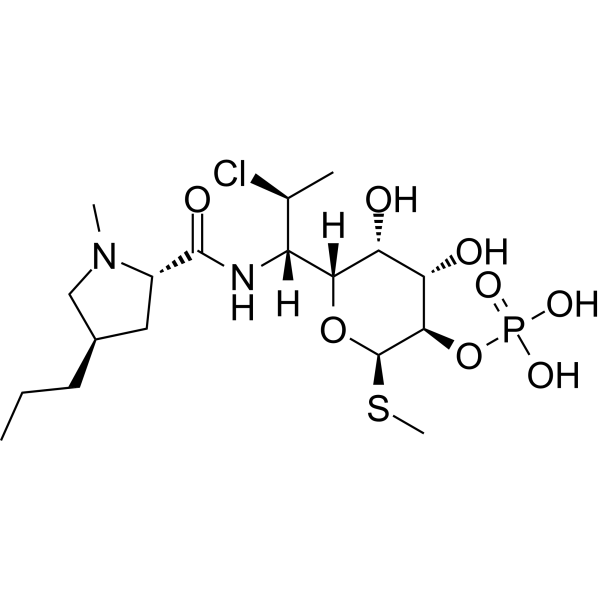
Cat. No.: HY-B1064
CAS No.: 24729-96-2
Synonyms: Clindamycin 2-phosphate; U-28508
Research Areas:  

Infection Cancer

Clindamycin phosphate (Clindamycin 2-phosphate) is a broad-spectrum bacteriostatic lincosamide antibiotic. Clindamycin phosphate is the proagent of Clindamycin (HY-B1455) with no antimicrobial activity in vitro but can be rapidly converted in vivo to the active parent agent, Clindamycin, by phosphatase ester hydrolysis. Clindamycin phosphate can be used for researching acne and bacterial vaginosis . Clindamycin phosphate has no cytotoxicity. Combined with platelet rich fibrin (PRF), PRF-Clindamycin phosphate enhances antimicrobial properties .
loading...
    loading...
2
2 Cited Publications
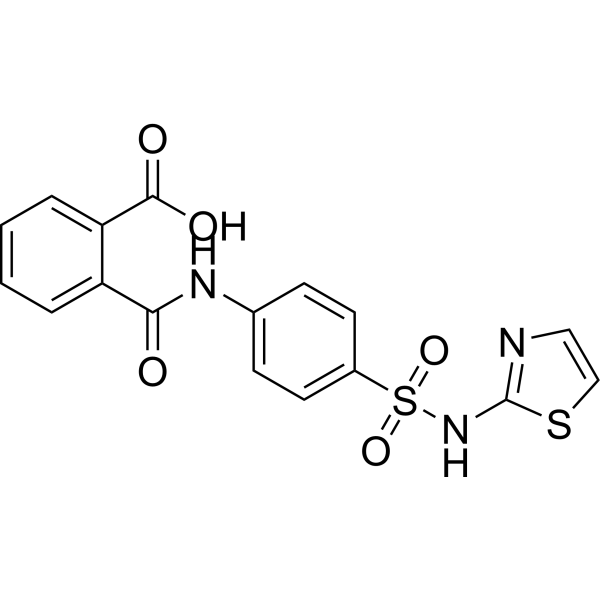
Cat. No.: HY-B1407
CAS No.: 85-73-4
Synonyms: N4-Phthalylsulfathiazole
Target:  

Antibiotic Bacterial

Research Areas:  

Infection

Phthalylsulfathiazole (N4-Phthalylsulfathiazole) is an orally active sulfonamide intestinal antibacterial agent. Phthalylsulfathiazole has low toxicity and excellent bacteriostatic efficacy. Phthalylsulfathiazole inhibits E. coli, streptococci, staphylococci, and total fecal bacteria. Phthalylsulfathiazole can be used in research related to intestinal infections such as colon infection, bacillary dysentery, and ulcerative colitis .
loading...
    loading...
1
1 Cited Publications
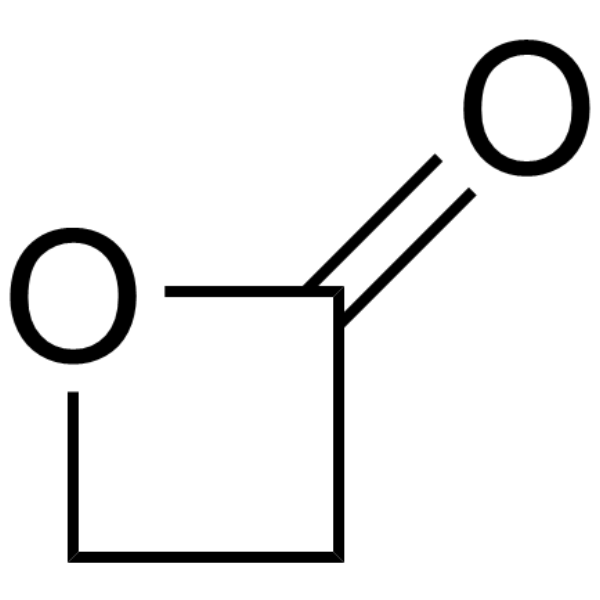
Cat. No.: HY-107931
CAS No.: 57-57-8
Purity:  99.36%
Synonyms: β-propiolactone; 2-Oxetanone; Betaprone
Research Areas:  

Infection

Propiolactone (β-propiolactone; 2-Oxetanone) is a viral chemical inactivator that causes the infectious inactivation of viruses. Propiolactone was co-incubated with SARS-CoV at a ratio of 1:1000 (v:v) and used as a bacteriostatic agent to formulate the BPL-inactivated influenza virus vaccine (Flu-BPL) .
loading...
    loading...
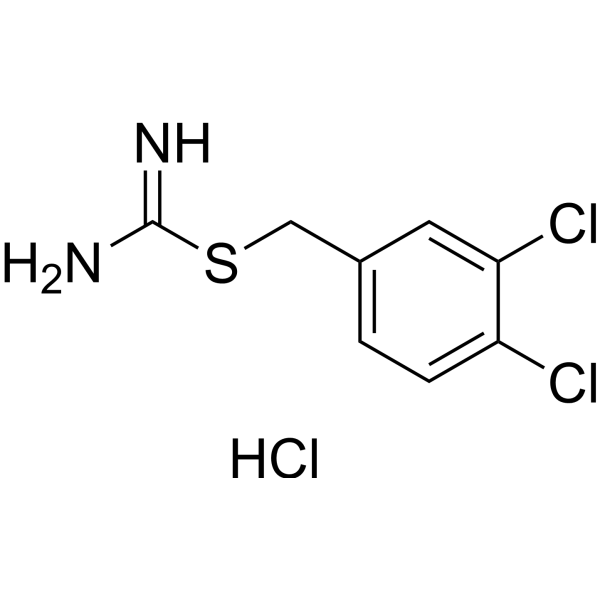
Cat. No.: HY-118773
CAS No.: 22816-60-0
Purity:  99.3%
Synonyms: A22 hydrochloride
Target:  

Bacterial

Research Areas:  

Infection

MreB Perturbing Compound A22 hydrochloride (A22 hydrochloride) is a reversible MreB inhibitor and antimicrobial agent that exhibits bacteriostatic activity against Escherichia coli, with low activity against Gram-positive bacteria. MreB Perturbing Compound A22 hydrochloride rapidly and reversally delocalizes MreB from the helical/circular structures in cells, impairs MreB function, and reduces the binding of MreB to the chromosomal region proximal to the replication origin. MreB Perturbing Compound A22 hydrochloride alters the cell morphology of caulobacters to round/lemon-shaped, slows caulobacter growth, blocks their cell division, and induces the formation of spherical morphology, asymmetric division, and anucleate cells in Escherichia coli. MreB Perturbing Compound A22 hydrochloride is used for studies related to bacterial rod-shaped morphology determination, chromosome segregation, and cell division mechanisms .
loading...
    loading...
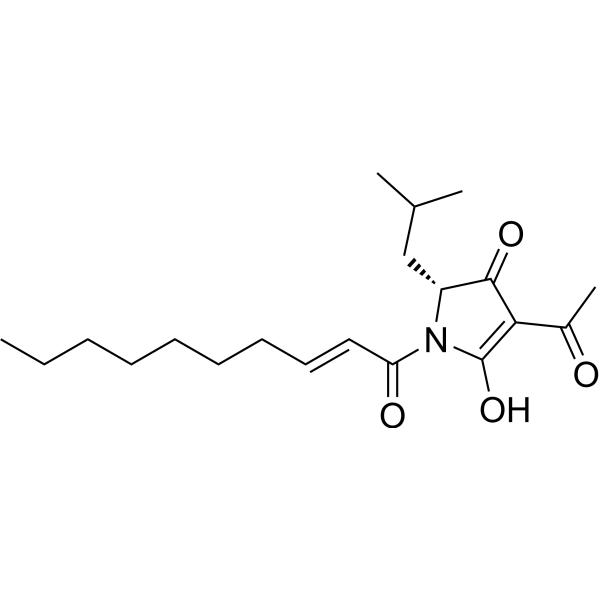
Cat. No.: HY-103249
CAS No.: 303957-69-9
Purity:  98.08%
Synonyms: Reutericycline
Reutericyclin (Reutericycline) is an orally active antibacterial and anti-obesity agent that selectively inhibits Gram-positive bacteria. By selectively dissipating transmembrane potential, Reutericyclin exerts non-lytic bactericidal or bacteriostatic activity against pathogens such as Clostridium difficile and Staphylococcus aureus, and rapidly kills vegetative cells and spores of Clostridium difficile. Reutericyclin possesses favorable properties including resistance to enzymatic hydrolysis, iron-chelating function, and poor absorption by colonic epithelium. Reutericyclin not only eradicates staphylococcal biofilms and inhibits drug-resistant strains, but also counteracts Risperidone (HY-11018)-induced weight gain by inducing changes in gut microbiota composition and restoring energy utilization efficiency. Reutericyclin can be used in research related to Clostridium difficile infection, Risperidone-induced weight gain, and staphylococcal superficial skin infections .
loading...
    loading...
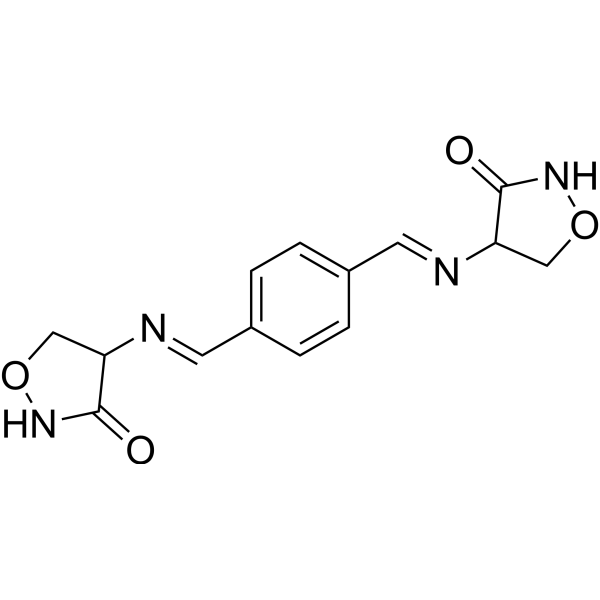
Cat. No.: HY-112324
CAS No.: 25683-71-0
Purity:  99.35%
Target:  

Bacterial

Research Areas:  

Infection

Terizidone is an antibacterial agent, and shows bacteriostatic activity. Terizidone can be used in tuberculosis (TB) research .
loading...
    loading...
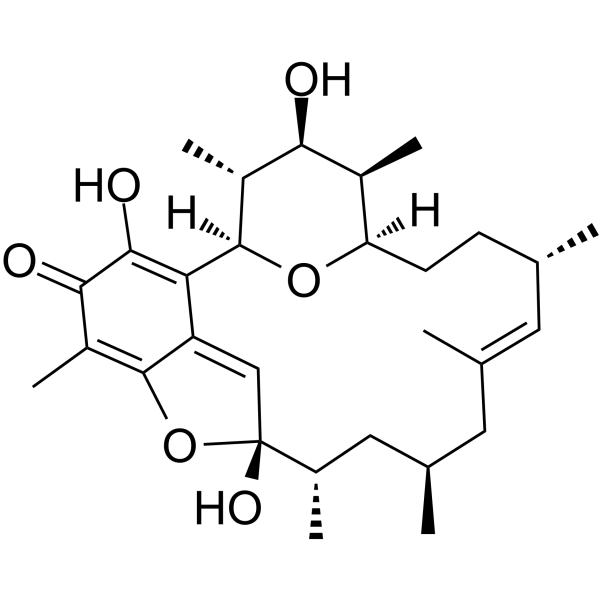
Cat. No.: HY-121300
CAS No.: 183202-73-5
Purity:  98.00%
Synonyms: (-)-TAN2162
Kendomycin ((−)-TAN 2162) is a polyketide antibiotic with remarkable antibacterial and cancer cells cytotoxic activities. Kendomycin tends to be bacteriostatic rather than bactericidal and inhibits the growth of the methicillin-resistant Staphylococcus aureus (MRSA) strain COL at a low concentration (MIC of 5 μg/mL). Kendomycin is a potent antagonist of the endothelin receptor and a calcitonin receptor agonist which plays its role as an anti-osteoporotic agent .
loading...
    loading...
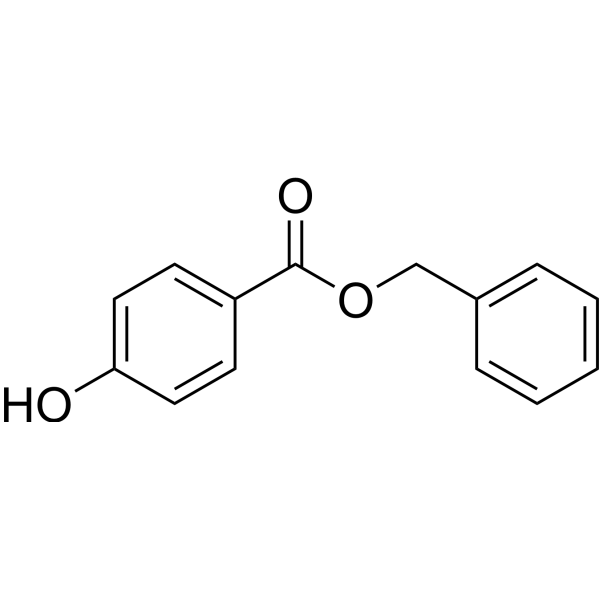
Cat. No.: HY-W013482
CAS No.: 94-18-8
Synonyms: Benzyl Paraben
Research Areas:  

Others

Benzyl 4-hydroxybenzoate is a prominent material. Benzyl 4-hydroxybenzoate can be used as an excipient, such as bacteriostatic agent, preservative. Pharmaceutical excipients, or pharmaceutical auxiliaries, refer to other chemical substances used in the pharmaceutical process other than pharmaceutical ingredients. Pharmaceutical excipients generally refer to inactive ingredients in pharmaceutical preparations, which can improve the stability, solubility and processability of pharmaceutical preparations. Pharmaceutical excipients also affect the absorption, distribution, metabolism, and elimination (ADME) processes of co-administered drugs .
loading...
    loading...
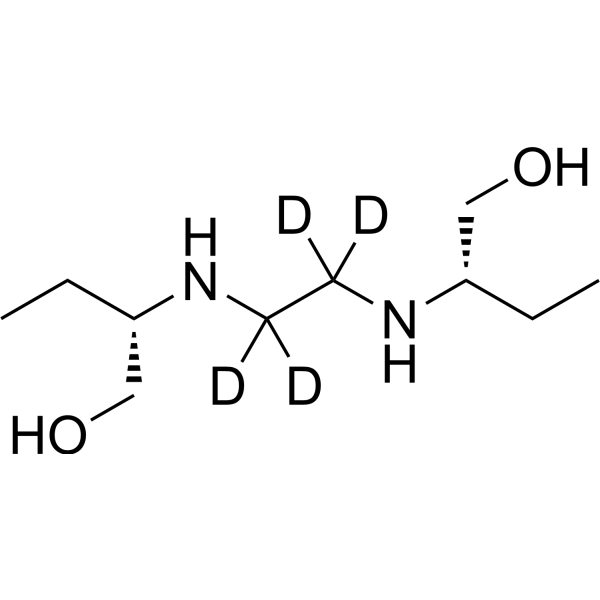
Cat. No.: HY-B0535S
CAS No.: 1129526-19-7
Synonyms: Emb-d4
Ethambutol-d4 is the deuterium labeled Ethambutol. Ethambutol is a bacteriostatic antimycobacterial agent, which obstructs the formation of cell wall by inhibiting arabinosyl transferases.
loading...
    loading...
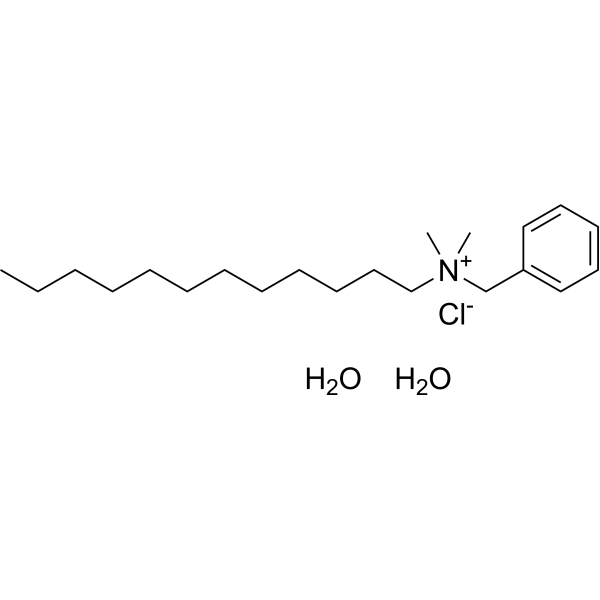
Cat. No.: HY-128384
CAS No.: 147228-80-6
Purity:  ≥98.0%
Target:  

Bacterial

Research Areas:  

Infection

Benzyldodecyldimethylammonium chloride dihydrate is a quaternary ammonium compound (QAC) and can be used as a biocide to target antibiotic-resistant bacteria, such as methicillin-resistant Staphylococcus aureus (MRSA), multidrug-resistant (MDR) P. aeruginosa et. al. Benzyldodecyldimethylammonium chloride dihydrate, an antimicrobial agent, bacteriostatic or bactericidal properties depending on the concentration.
loading...
    loading...
Cat. No.: HY-119686
CAS No.: 37065-29-5
Target:  

Antibiotic Bacterial

Research Areas:  

Infection

Miloxacin is an orally active bacteriostatic agent targeting Gram-negative bacteria, exhibiting antibacterial properties similar to Oxolinic acid (HY-B1002) and Nalidixic acid (HY-B0398) .
loading...
    loading...
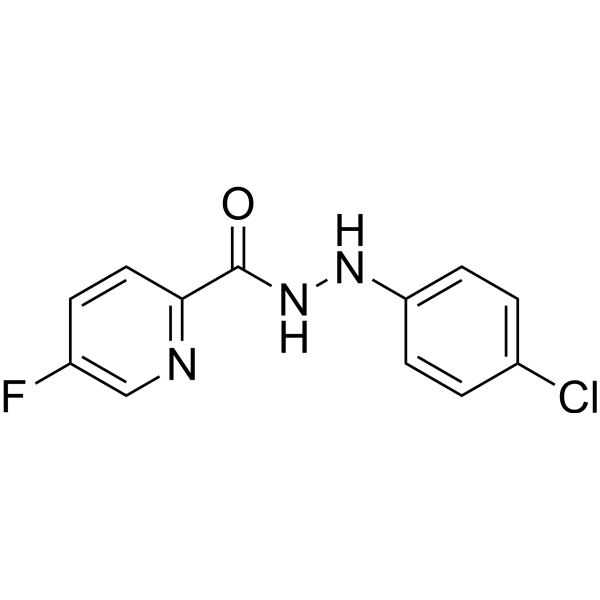
Cat. No.: HY-149286
CAS No.: 3037009-24-5
Target:  

Bacterial

Research Areas:  

Infection

Antibacterial agent 142, an aromatic hydrazidesis, has antibacterial activity. Antibacterial agent 142 has bacteriostatic and inhibits biofilm formation .
loading...
    loading...
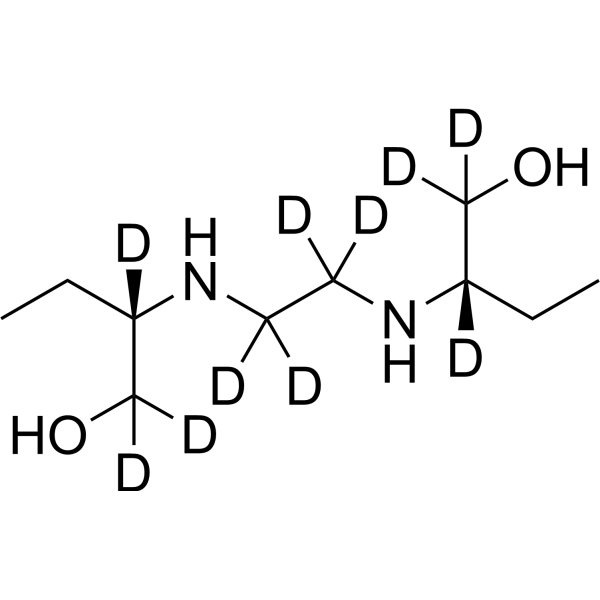
Cat. No.: HY-B0535S1
CAS No.: 1129526-24-4
Synonyms: Emb-d10
Ethambutol-d10 is the deuterium labeled Ethambutol. Ethambutol is a bacteriostatic antimycobacterial agent, which obstructs the formation of cell wall by inhibiting arabinosyl transferases.
loading...
    loading...
Cat. No.: HY-123614
CAS No.: 147208-55-7
Target:  

Bacterial

Research Areas:  

Infection

PD 140248 hydrochloride is a quinolone broad-spectrum antibacterial agent with good in vitro bacteriostatic activity, especially having a significant inhibitory effect on Gram-positive bacteria .
loading...
    loading...
Cat. No.: HY-174407
CAS No.: 585553-10-2
Target:  

Bacterial

Research Areas:  

Infection

Antibacterial agent 281 (Compound 95,186) can bacteriostatically inhibit the growth of GAS. Antibacterial agent 281 binds to the ligand binding pocket of SPs0871 and competes with the ligand. Antibacterial agent 281 shows concentration-dependent growth inhibition against S. pyogenes .
loading...
    loading...
Cat. No.: HY-W702303
Terizidone- 15N2,d6 is the deuterium and 15N-labeled Terizidone (HY-112324). Terizidone is an antibacterial agent, and shows bacteriostatic activity. Terizidone can be used in tuberculosis (TB) research .
loading...
    loading...
Cat. No.: HY-146503
CAS No.: 2807530-12-5
Target:  

Bacterial

Research Areas:  

Infection

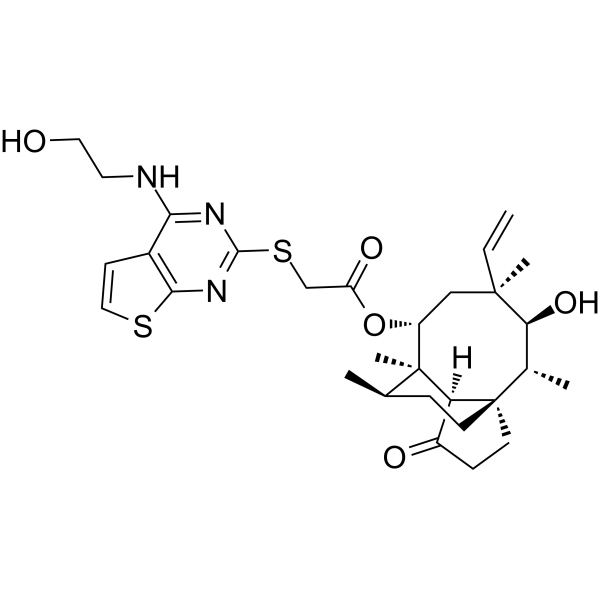
Antibacterial agent 86 (Compound A11) is the most active and displays bacteriostatic activities against methicillin-resistant S. aureus, with MIC values as low as 0.00191 μg/mL, which is 162 and 32 times lower than that of the marketed antibiotics tiamulin and retapamulin, respectively .
loading...
    loading...
Cat. No.: HY-B1064A
CAS No.: 64023-51-4
Synonyms: Clindamycin 2-phosphate hydrochloride; U-28508 hydrochloride
Research Areas:  

Infection Cancer

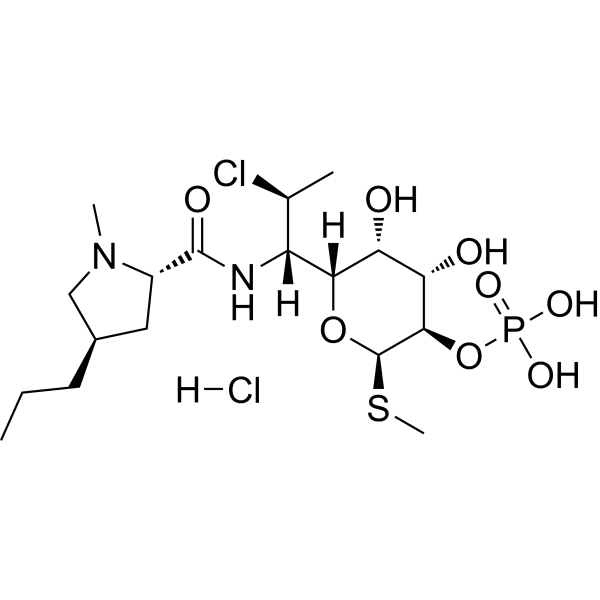
Clindamycin phosphate (Clindamycin 2-phosphate) hydrochloride is a broad-spectrum bacteriostatic lincosamide antibiotic. Clindamycin phosphate hydrochloride is the proagent of Clindamycin (HY-B1455) with no antimicrobial activity in vitro but can be rapidly converted in vivo to the active parent agent, Clindamycin, by phosphatase ester hydrolysis. Clindamycin phosphate hydrochloride can be used for researching acne and bacterial vaginosis .
loading...
    loading...
Cat. No.: HY-173355
CAS No.: 3052630-27-7
Target:  

Bacterial

Research Areas:  

Infection

RCB18350 is an antituberculosis agent that belongs to the class of isoxazole derivatives. RCB18350 has bacteriostatic activity and inhibits the growth of Mycobacterium tuberculosis with an MIC of 1.25 μg/mL. RCB18350 is effective against multidrug-resistant Mycobacterium tuberculosis (MDR-TB) clinical isolates, slow-growing mycobacteria such as Mycobacterium bovis BCG and Mycobacterium avium .
loading...
    loading...
Cat. No.: HY-162818
Research Areas:  

Infection

Antibacterial agent 237 (compound Ru-8) is a bacteriostatic agent for Staphylococcus aureus, with MIC of 0.78-1.56 μg/mL. Antibacterial agent 237 destroys bacterial cell membranes, changes their permeability, and induces bacteria to produce Reactive Oxygen Species, leading to bacterial death without causing drug resistance. Antibacterial agent 237 has low hemolytic toxicity to rabbit red blood cells and Raw 264.7 cells, and has significant antibacterial effects against Staphylococcus aureus in mouse skin wound infection models and Bacillus major larvae infection models .
loading...
    loading...

