

1. Search Result
Search Result
Results for "

biomass

" in MedChemExpress (MCE) Product Catalog:

24

Inhibitors & Agonists

3

Biochemical Assay Reagents

5

Natural
Products

2

Isotope-Labeled Compounds

2

Oligonucleotides

Cat. No. Product Name Target Research Areas Chemical Structure
  • HY-F0003
    NADPH tetrasodium salt
    15+ Cited Publications

    Ferroptosis Endogenous Metabolite Metabolic Disease Cancer
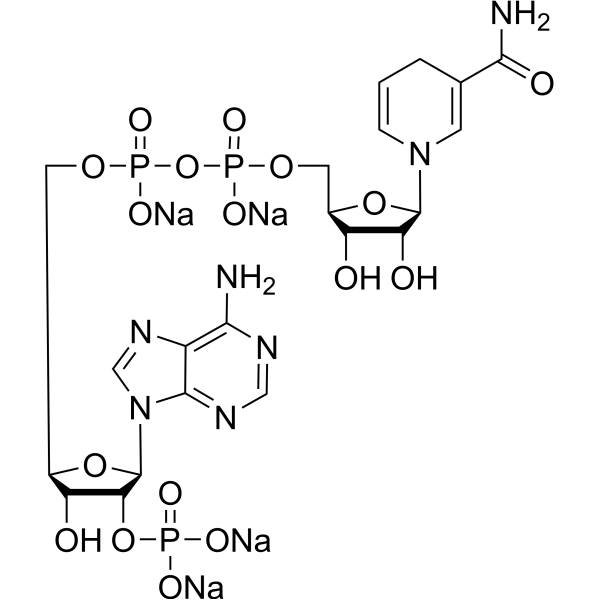
    NADPH tetrasodium salt functions as an important cofactor in a variety of metabolic and biosynthetic pathways. NADPH tetrasodium salt is an endogenous inhibitor of ferroptosis. NADPH tetrasodium salt plays a vital role in the biosynthesis of agents, chiral alcohols, fatty acids and biopolymers, while also being required for lipid biosynthesis, biomass formation, and cell replication .
    NADPH tetrasodium salt
  • HY-W040971

    2-Methoxy-4-methylphenol

    Environmental Pollutants ERK Endogenous Metabolite p38 MAPK Akt Reactive Oxygen Species (ROS) FAK Cardiovascular Disease Neurological Disease Metabolic Disease
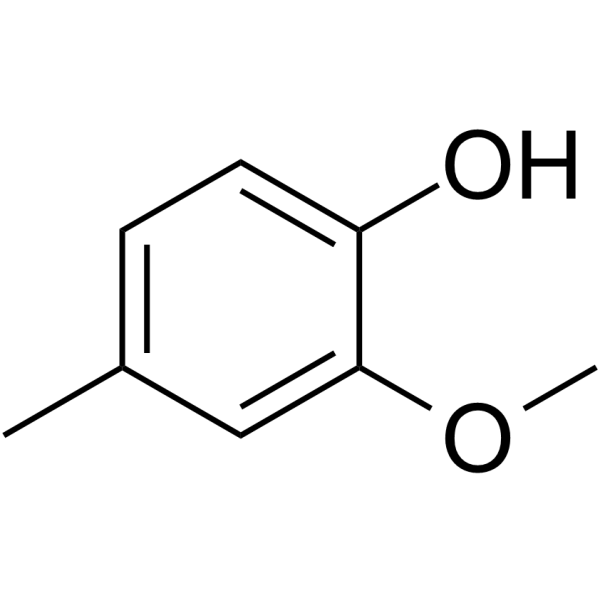
    Creosol (2-Methoxy-4-methylphenol) is an endogenous metabolite that acts as an important chemical intermediate and potential biofuel mainly derived from lignocellulosic biomass. Creosol is blood brain barrier penetrable .
    Creosol
  • HY-W011916

    3-O-Carboxyethyl-D-glucosamine

    Bacterial Endogenous Metabolite Infection
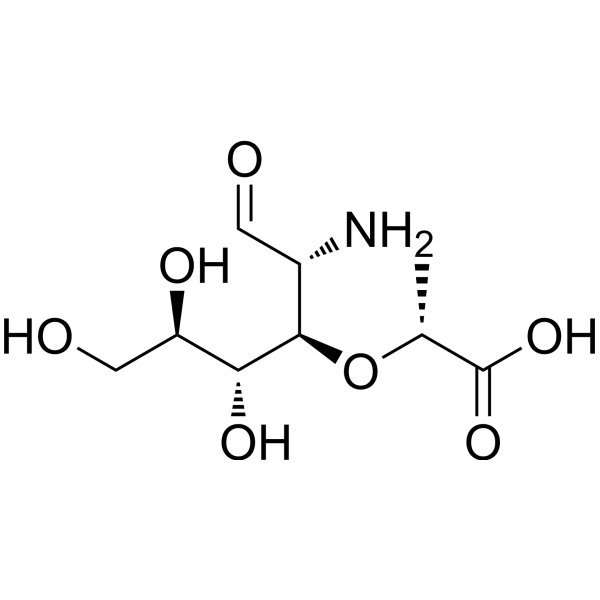
    Muramic acid (3-O-Carboxyethyl-D-glucosamine) is a component found only in the cell walls of bacteria and blue-green algae. Muramic acid can be used to measure the biomass of microorganisms in environments such as estuaries, oceans, and soils .
    Muramic acid
  • HY-F0003A
    NADPH tetracyclohexanamine
    15+ Cited Publications

    Ferroptosis Endogenous Metabolite Metabolic Disease Cancer
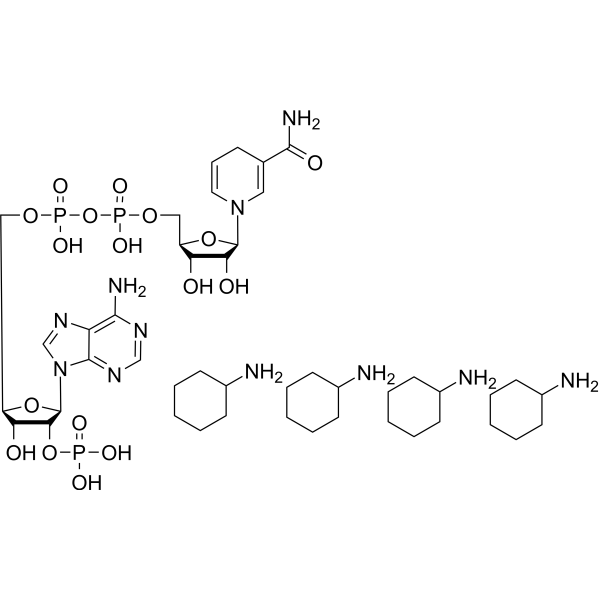
    NADPH tetracyclohexanamine functions as an important cofactor in a variety of metabolic and biosynthetic pathways. NADPH tetracyclohexanamine is an endogenous inhibitor of ferroptosis. NADPH tetracyclohexanamine plays a vital role in the biosynthesis of agents, chiral alcohols, fatty acids and biopolymers, while also being required for lipid biosynthesis, biomass formation, and cell replication .
    NADPH tetracyclohexanamine
  • HY-W250112

    Environmental Pollutants Biochemical Assay Reagents Others
    Lignin alkali acts as a decomposer, depolymerizer and structural modifier. Lignin alkali is recovered from lignocellulosic biomass via alkaline pretreatment. Lignin alkali consists of p-hydroxyphenyl, guaiacyl and syringyl propanoid units. Lignin alkali can be custom-converted into high-value-added chemicals and materials. Lignin alkali exhibits significant application potential in the fields of biomass refining and high-value utilization .
    Lignin alkali
  • HY-E70115

    Others Others
    Feruloyl esterase plays a major role in the degradation of plant biomass. Feruloyl esterase catalyzes the cleavage and formation of ester bonds between plant cell wall polysaccharide and phenolic acid .
    Feruloyl esterase
  • HY-F0003R

    Reference Standards Ferroptosis Endogenous Metabolite Metabolic Disease Cancer
    NADPH tetrasodium salt (Standard) is the analytical standard of NADPH tetrasodium salt (HY-F0003). This product is intended for research and analytical applications. NADPH tetrasodium salt functions as an important cofactor in a variety of metabolic and biosynthetic pathways. NADPH tetrasodium salt is an endogenous inhibitor of ferroptosis. NADPH tetrasodium salt plays a vital role in the biosynthesis of agents, chiral alcohols, fatty acids and biopolymers, while also being required for lipid biosynthesis, biomass formation, and cell replication.
    NADPH tetrasodium salt (Standard)
  • HY-N2018

    α-D-Xylopyranose

    Endogenous Metabolite Metabolic Disease
    α-D-Xylose (α-D-Xylopyranose) is a basic component of the five-carbon fraction of biomass and a precursor of hemicellulose. α-D-Xylose participates in a variety of enzyme-catalyzed reactions, which in turn participate in a variety of metabolic pathways. In addition, α-D-Xylose is also used in tanning, dyeing and as a diabetic food .
    α-D-Xylose
  • HY-N12777

    Endogenous Metabolite Metabolic Disease Inflammation/Immunology Cancer
    Coixenolide can be isolated from coix seeds, and exhibits anti-inflammatory, anti-tumor and pain-reducing activities. Coixenolide stimulates the lung, heart, striated and smooth muscles at low doses, while inhibits at high doses. Coixenolide dilates pulmonary veins and improves pulmonary blood circulation. Coixenolide can also be used as nutraceuticals and functional foods. Coixenolide enhances the prodcutionof mycelia biomass and polysaccharides when added to the media of submerged culture of G. lucidum. Coixenolide affects the synthesis level of phosphoglucose isomerase and α-phosphoglucomutase .
    Coixenolide
  • HY-W127357

    Biochemical Assay Reagents Others
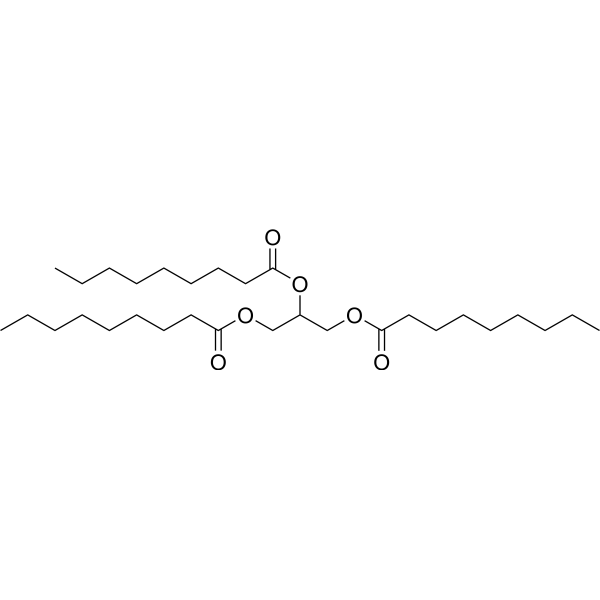
    Glyceryl trinonanoate is a triacylglycerol containing nonanoic acid at the sn-1, sn-2 and sn-3 positions. It has been found in Schizochytrium biomass. 1 1,2,3-Trinonanoyl-rac-glycerol increases blood levels of the ketone body D-(-)-3-hydroxybutyrate in neonatal rhesus monkeys. 2|1. Mioso, R., Toledo Marante, FJ, González, JE, et al. Schizochytrium sp. metabolite analysis. Oleaginous microbial sources of biodiesel by GC-MS. braz. J. Microbiology. 45(2), 403-409 (2014).|2. Tetrick, MA, Greer, FR and Benevenga, NJ Blood D- ( )-3-Hydroxybutyric acid concentration. Compare. medicine. 60(6), 486-490 (2010).
    Tripelargonin
  • HY-W802197

    Others Others
    D-Xylose 2,3,4,5-tetraacetate is a competitive substrate analog targeting acetyl xylan esterases (AXEs). D-Xylose 2,3,4,5-tetraacetate is promising for research of lignocellulosic biomass degradation .
    D-Xylose 2,3,4,5-tetraacetate
  • HY-W001968

    3-TC

    Drug Intermediate Others
    3-Thiophenecarboxaldehyde is a thiophene derivative substrate for biocatalytic reduction to 3-thiophenemethanol, and can be processed by Pseudomonas putida S12 cells. 3-Thiophenecarboxaldehyde functions as an intermediate compound. 3-Thiophenecarboxaldehyde exhibits toxicity toward Pseudomonas putida S12 cells at elevated concentrations, reducing specific growth rate and final biomass yield .
    3-Thiophenecarboxaldehyde
  • HY-165091

    1,2-Octanoin-3-decanoin; TG(8:0/8:0/10:0)

    Endogenous Metabolite Others
    1,2-Dioctanoyl-3-decanoyl-rac-glycerol (1,2-Octanoin-3-decanoin) is a triglyceride identified in microalgae biomass by ion mobility-mass spectrometry. It can be used to characterize microalgae biomass. Different analytical strategies can determine its distribution in different microalgae and its relationship with other compounds, which has application value in biofuel production.
    1,2-Dioctanoyl-3-decanoyl-rac-glycerol
  • HY-W040971R

    2-Methoxy-4-methylphenol (Standard)

    Reference Standards Reactive Oxygen Species (ROS) Endogenous Metabolite FAK p38 MAPK Akt ERK Cardiovascular Disease Neurological Disease Metabolic Disease
    Creosol (Standard) (2-Methoxy-4-methylphenol (Standard)) is the analytical standard of Creosol (HY-W040971). This product is intended for research and analytical applications. Creosol (2-Methoxy-4-methylphenol) is an endogenous metabolite that acts as an important chemical intermediate and potential biofuel mainly derived from lignocellulosic biomass. Creosol is blood brain barrier penetrable .
    Creosol (Standard)
  • HY-W040094

    1,6-Anhydro-β-cellobiose

    Endogenous Metabolite Others
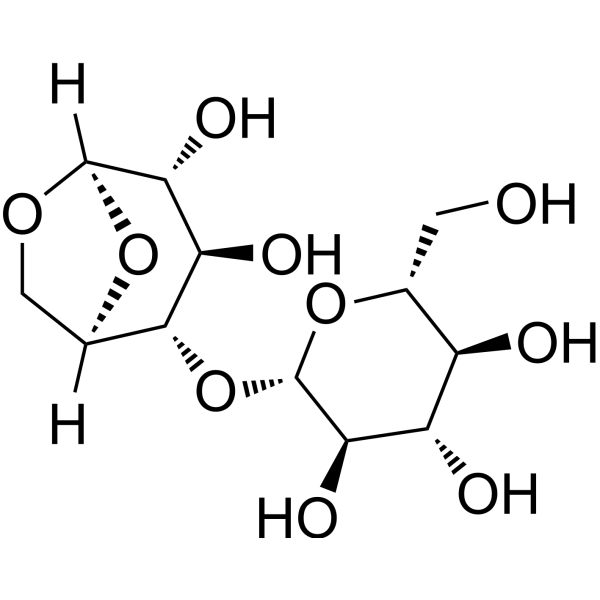
    Cellobiosan is an anhydrosugar, which is produced from burning of biomass .
    Cellobiosan
  • HY-114805

    Insecticide Others
    Formothion is a compound used in agricultural production. Its residues can be detected in the environment after biomass burning, which is of great significance for studying the dynamic changes of pesticides in the environment.
    Formothion
  • HY-W720629

    Isotope-Labeled Compounds Phytohormone Aldehyde Dehydrogenase (ALDH) Others
    Cyanamide- 15N2 is the 15N-labeled Cyanamide (HY-Y0070). Cyanamide is a cell division and plant growth inhibitor, as well as an allelochemical derived from Vicia villosa. Cyanamide inhibits root growth and biomass accumulation in a dose-dependent manner by disrupting the formation of mitotic spindles and phragmoplast complexes, reducing the number of mitotic cells and blocking the cell cycle. The effects of Cyanamide are partially reversible after removal from low-concentration environments. Cyanamide is also a specific inhibitor of aldehyde dehydrogenase (ALDH). Although Cyanamide has no direct effect on tumor growth, it can significantly enhance the anti-tumor efficacy of Cyclophosphamide (HY-17420) at non-toxic doses by inhibiting the inactivation of Cyclophosphamide. Cyanamide enables Cyclophosphamide to exert equivalent therapeutic effects at lower doses, effectively inhibiting the growth of primary and metastatic tumors and prolonging the lifespan of tumor-bearing mice. Cyanamide is commonly used in studies related to ha-1 hepatoma and rls lymphosarcoma .
    Cyanamide-15N2
  • HY-121628

    Fungal Infection
    Flusulfamide is a sulfonanilide Fungicide that effectively inhibits the germination of resting spores of Plasmodiophora brassicae, the pathogen causing clubroot in cruciferous crops. Flusulfamide blocks the developmental process of resting spores from stage 1 to stage 2. By downregulating germination-related genes and upregulating immunophilin genes (such as PbCyp3), it induces abnormal accumulation of the PbCYP3 protein, thereby causing the spores to deplete energy in a state of continuous energy consumption without germination, and reducing their infectivity. Flusulfamide reduces soil ATP content in the early stage of application, but soil microbial biomass gradually recovers 3 days later. Flusulfamide is widely used in research on clubroot control .
    Flusulfamide
  • HY-W052988

    Herbicide Others
    Aminocyclopyrachlor-methyl is a herbicide that acts as an indole-3-acetic acid (IAA) mimic. Aminocyclopyrachlor-methyl targets the IAA signaling pathway and is readily absorbed through both the leaves and roots of susceptible plants. Aminocyclopyrachlor-methyl markedly inhibits the growth and biomass of trumpetcreeper (Campsis radicans) and the growth and regrowth of mugwort (Artemisia vulgaris), thereby effectively controlling both weeds .
    Aminocyclopyrachlor-methyl
  • HY-W703578

    Herbicide Others
    Cinmethylin is a herbicide. Cinmethylin inhibits plant fatty acid biosynthesis. Cinmethylin reduces the emergence rate and above-ground biomass of rigid ryegrass. Cinmethylin kills weeds by inhibiting cell division at root meristems. Cinmethylin exhibits activity against paddy field weeds including Echinochloa crus-galli (L.) var. formosensis and Scirpus juncoides var. ohwianus. Cinmethylin is applicable to agricultural herbicide research .
    Cinmethylin
  • HY-W040971S

    2-Methoxy-4-methylphenol-d4

    Isotope-Labeled Compounds Reactive Oxygen Species (ROS) Endogenous Metabolite FAK p38 MAPK Akt ERK Cardiovascular Disease Neurological Disease Metabolic Disease
    Creosol-d4 (2-Methoxy-4-methylphenol-d4) is the deuterium labeled Creosol (HY-W040971). Creosol (2-Methoxy-4-methylphenol) is an endogenous metabolite that acts as an important chemical intermediate and potential biofuel mainly derived from lignocellulosic biomass. Creosol is blood brain barrier penetrable .
    Creosol-d4
  • HY-167959

    Herbicide Infection
    MCPA-isooctyl is a selective conductive phenoxycarboxylate herbicide and an alternative to 2,4-D Butyl ester (HY-B0867). MCPA-isooctyl effectively controls broadleaf weeds in various crop fields via post-emergence foliar or soil treatment. MCPA-isooctyl is absorbed by the roots, stems and leaves of plants; it is easily metabolized and detoxified in gramineous crops, but difficult to metabolize in dicotyledonous weeds, causing stem and leaf distortion, root deformation, and eventually weed death. When formulated into chitosan nanoparticles, MCPA-isooctyl still significantly inhibits the growth of weeds in wheat fields, and reduces their chlorophyll content and biomass at low doses .
    MCPA-isooctyl
  • HY-W482133

    Herbicide Acetolactate Synthase (ALS) Others
    Primisulfuron-methyl is a herbicide. Primisulfuron-methyl shows inhibitory activity against acetolactate synthase (ALS) enzyme. Primisulfuron-methyl can be used to selectively control annual bluegrass of Kentucky bluegrass turf .
    Primisulfuron-methyl
  • HY-Y0070

    Phytohormone Aldehyde Dehydrogenase (ALDH) Cancer
    Cyanamide is a cell division and plant growth inhibitor, as well as an allelochemical derived from Vicia villosa. Cyanamide inhibits root growth and biomass accumulation in a dose-dependent manner by disrupting the formation of mitotic spindles and phragmoplast complexes, reducing the number of mitotic cells and blocking the cell cycle. The effects of Cyanamide are partially reversible after removal from low-concentration environments. Cyanamide is also a specific inhibitor of aldehyde dehydrogenase (ALDH). Although Cyanamide has no direct effect on tumor growth, it can significantly enhance the anti-tumor efficacy of Cyclophosphamide (HY-17420) at non-toxic doses by inhibiting the inactivation of Cyclophosphamide. Cyanamide enables Cyclophosphamide to exert equivalent therapeutic effects at lower doses, effectively inhibiting the growth of primary and metastatic tumors and prolonging the lifespan of tumor-bearing mice. Cyanamide is commonly used in studies related to ha-1 hepatoma and rls lymphosarcoma .
    Cyanamide

Inquiry Online

Your information is safe with us. * Required Fields.

Salutation


Country or Region *

Applicant Name *


Organization Name *

Department *


Email Address *


Product Name *

Cat. No.


Requested quantity *

Phone Number *


Remarks

Inquiry Online

Inquiry Information

Product Name:
Cat. No.:
Quantity:
MCE Japan Authorized Agent:

