



Ammonium dihydrogen phosphate

Based on 1 Customer Validation
Ammonium dihydrogen phosphate is an ammonium phosphate salt with both hydrogenation and dehydration properties. Ammonium dihydrogen phosphate decomposes to form phosphoric acid and ammonia upon heating, and serves as a main component of fertilizers. Ammonium dihydrogen phosphate promotes glycosidic bond cleavage, formation of dehydrated sugars and furans, biomass carbonization, hydrogen donor reactions, and lignin bond weakening. Ammonium dihydrogen phosphate selectively promotes the production of furfural and levoglucosenone during the pyrolysis of lignocellulosic biomass. Ammonium dihydrogen phosphate can be used as a nitrogen/phosphorus source and activator for the preparation of nitrogen-phosphorus co-doped activated carbon. Ammonium dihydrogen phosphate acts as a sucrose conversion catalyst in sustainable wood adhesive formulations. Ammonium dihydrogen phosphate is applicable to related research in various fields such as agriculture and electronics.
For research use only. We do not sell to patients.
- Purity : 99.2%
- CAS No.: 7722-76-1
- Formula: NH4H2PO4
- Molecular Weight:115.03
-
Storage:
4°C, sealed storage, away from moisture
* In solvent : -80°C, 6 months; -20°C, 1 month (sealed storage, away from moisture)


To place orders, for customer services and technical support, please contact: MedChemExpress USA
Tel: 609-228-6898 E-mail: [email protected] [email protected]


-
 Biological Activity
-
Chemical Information
-
Solvent & Solubility
- Purity & Documentation
- References
-
 Help & FAQs


-
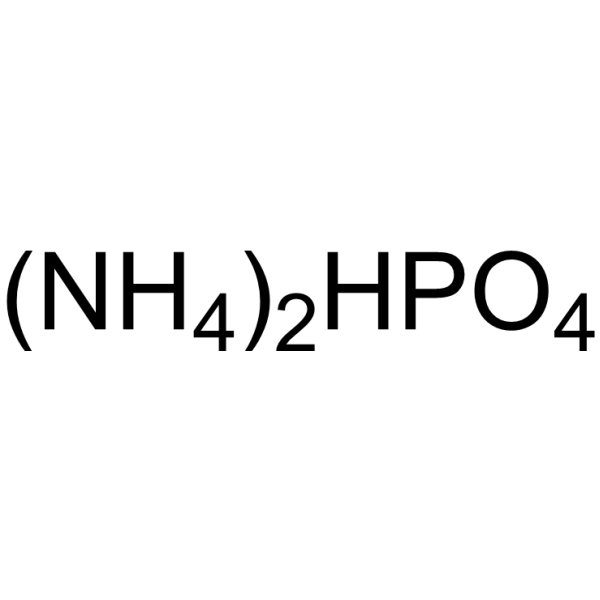
HY-Y0302
Diammonium phosphatePharmaceutical Excipient -
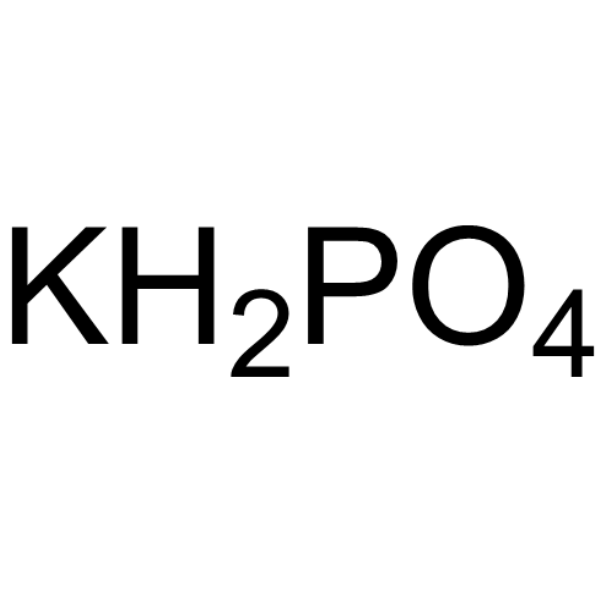
HY-Y0332B
Potassium dihydrogen phosphate, AR,99.5%Cell Culture Reagent -

HY-Y0344D
Sodium chloride, for cell cultureBiochemical Assay Reagent -
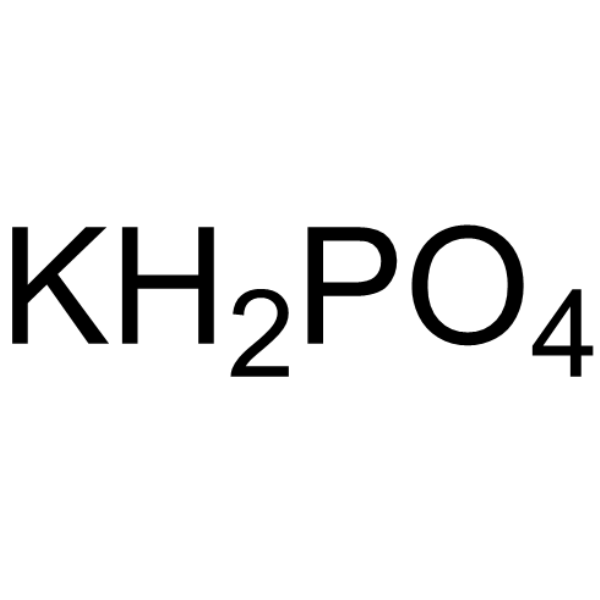
HY-Y0332K
Potassium dihydrogen phosphate, for cell cultureCell Culture Reagent -

HY-Y0344I
Sodium chloride, meets analytical specification of Ph. Eur. BP USP, ≤0.00002% AlBiochemical Reagent -

HY-Y0344J
Sodium chloride, for molecular biologyInorganic Salt -
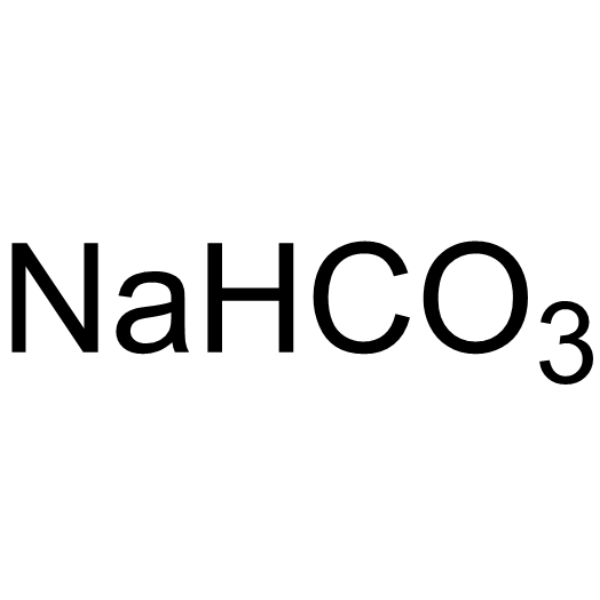
HY-Y0756
Sodium bicarbonateInorganic Salt -
HY-W251598C
Sodium bicarbonate, for cell cultureInorganic Salt -

HY-Y0849C
Ammonium acetate, for molecular biology, 98%Biochemical Reagent


Biological Activity
Description
In Vitro
Ammonium dihydrogen phosphate reduces the decomposition temperature and activation energy during rice husk pyrolysis, promotes glycosidic bond cleavage and dehydration reactions, and alters the release characteristics of gaseous products; it selectively promotes the formation of furfural and levoglucosenone from rice husk during pyrolysis[1].
Ammonium dihydrogen phosphate impregnated poplar wood undergoes pyrolysis to optimize phenol production[2].
Ammonium dihydrogen phosphate can be impregnated into poplar wood solids, and the pyrolysis products of the impregnated biomass can undergo direct high-temperature activation to fabricate N and P co-doped activated carbon with outstanding supercapacitor performance[2].
Ammonium dihydrogen phosphate (ADP) reduces the thermal degradation temperature and endothermic reaction temperature of sucrose, induces its one-step degradation, and improves the high-temperature thermal stability of the adhesive system; it catalyzes the formation of cured adhesives containing furan rings, carbonyl groups, dimethylene ether bridges and nitrogen-containing bonds during heating[3].
Ammonium dihydrogen phosphate can form water-insoluble adhesive lumps upon heating[3].
MedChemExpress (MCE) has not independently confirmed the accuracy of these methods. They are for reference only. .


Chemical Information
-
CAS No. 7722-76-1
-
Appearance Solid
-
Molecular Weight 115.03
-
Formula NH4H2PO4
-
Color Colorless to off-white
-
SMILES
O=P(O)(O)O.N
-
Shipping
Room temperature in continental US; may vary elsewhere.
-
Storage
4°C, sealed storage, away from moisture
* In solvent : -80°C, 6 months; -20°C, 1 month (sealed storage, away from moisture)


Solvent & Solubility
In Vitro:
H2O : 100 mg/mL (869.34 mM; Need ultrasonic)
Please refer to the solubility information to select the appropriate solvent. Once prepared, please aliquot and store the solution to prevent product inactivation from repeated freeze-thaw cycles.
Storage method and period of stock solution: -80°C, 6 months; -20°C, 1 month (sealed storage, away from moisture). When stored at -80°C, please use it within 6 months. When stored at -20°C, please use it within 1 month.
* Note: If you choose water as the stock solution, please dilute it to the working solution, then filter and sterilize it with a 0.22 μm filter before use.
Please refer to the solubility information to select the appropriate solvent. Once prepared, please aliquot and store the solution to prevent product inactivation from repeated freeze-thaw cycles.
Storage method and period of stock solution: -80°C, 6 months; -20°C, 1 month (sealed storage, away from moisture). When stored at -80°C, please use it within 6 months. When stored at -20°C, please use it within 1 month.
* Note: If you choose water as the stock solution, please dilute it to the working solution, then filter and sterilize it with a 0.22 μm filter before use.
Concentration (start) × Volume (start) = Concentration (final) × Volume (final)


Purity & Documentation
-
Data Sheet (269 KB)
-
SDS (393 KB)
- English - EN (393 KB)
- Français - FR (393 KB)
- Deutsch - DE (393 KB)
- Norwegian - NO (393 KB)
- Español - ES (393 KB)
- Swedish - SV (393 KB)
- Italian - IT (393 KB)
- Korean - KR (393 KB)
- Portuguese - PT (393 KB)
-
Handling Instructions (2659 KB)
References
[2]. Li K, et al. Pyrolysis of Biomass Impregnated With Ammonium Dihydrogen Phosphate for Polygeneration of Phenol and Supercapacitor Electrode Material. Frontiers in chemistry. 2020;8:436. [Content Brief]
[3]. Zhao Z, et al. A Novel Eco-Friendly Wood Adhesive Composed by Sucrose and Ammonium Dihydrogen Phosphate. Polymers. 2018 Nov 12;10(11):1251. [Content Brief]


Complete Stock Solution Preparation Table
Please refer to the solubility information to select the appropriate solvent. Once prepared, please aliquot and store the solution to prevent product inactivation from repeated freeze-thaw cycles.
Storage method and period of stock solution: -80°C, 6 months; -20°C, 1 month (sealed storage, away from moisture). When stored at -80°C, please use it within 6 months. When stored at -20°C, please use it within 1 month.
| Optional Solvent | Concentration Solvent Mass | 1 mg | 5 mg | 10 mg | 25 mg |
|---|---|---|---|---|---|
| H2O | 1 mM | 8.6934 mL | 43.4669 mL | 86.9338 mL | 217.3346 mL |
| 5 mM | 1.7387 mL | 8.6934 mL | 17.3868 mL | 43.4669 mL | |
| 10 mM | 0.8693 mL | 4.3467 mL | 8.6934 mL | 21.7335 mL | |
| 15 mM | 0.5796 mL | 2.8978 mL | 5.7956 mL | 14.4890 mL | |
| 20 mM | 0.4347 mL | 2.1733 mL | 4.3467 mL | 10.8667 mL | |
| 25 mM | 0.3477 mL | 1.7387 mL | 3.4774 mL | 8.6934 mL | |
| 30 mM | 0.2898 mL | 1.4489 mL | 2.8978 mL | 7.2445 mL | |
| 40 mM | 0.2173 mL | 1.0867 mL | 2.1733 mL | 5.4334 mL | |
| 50 mM | 0.1739 mL | 0.8693 mL | 1.7387 mL | 4.3467 mL | |
| 60 mM | 0.1449 mL | 0.7244 mL | 1.4489 mL | 3.6222 mL | |
| 80 mM | 0.1087 mL | 0.5433 mL | 1.0867 mL | 2.7167 mL | |
| 100 mM | 0.0869 mL | 0.4347 mL | 0.8693 mL | 2.1733 mL |
* Note: If you choose water as the stock solution, please dilute it to the working solution, then filter and sterilize it with a 0.22 μm filter before use.


Ammonium dihydrogen phosphate Related Classifications
HY-W019872 Related Classifications
 Powered by Bioz