

Search Result
Results for "
calcium indicator
" in MedChemExpress (MCE) Product Catalog:
5
Biochemical Assay Reagents
| Cat. No. |
Product Name |
Target |
Research Areas |
Chemical Structure |
-
- HY-101896
-
Fluo-4 AM
Maximum Cited Publications
56 Publications Verification
|
Fluorescent Dye
|
Others
|
|
Fluo-4 AM is a cell-permeable Ca 2+ (calcium ion) indicator (Ex/Em = 485/526 nm) .
|
-
-
- HY-D0040
-
|
Fluorexon
|
Fluorescent Dye
|
Others
|
|
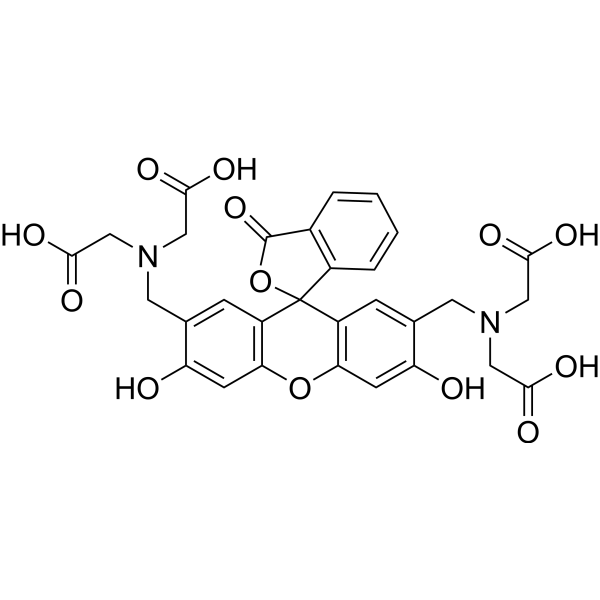
Calcein is a fluorescent dye and self-quenching probe, used as an indicator of lipid vesicle leakage, and also as a complexometric indicator for titration of calcium ions with EDTA, and for fluorometric determination of calcium. Calcein cannot directly cross the intact cell membrane of a living cell, unlike Calcein-AM (HY-D0041) which is cell-permeable. Calcein can also be used as a model drug for evaluating efficiency and bioavailability of drug delivery systems .
|
-
-
- HY-101897
-
|
Fura-2 Acetoxymethyl ester
|
Fluorescent Dye
|
Others
|
|
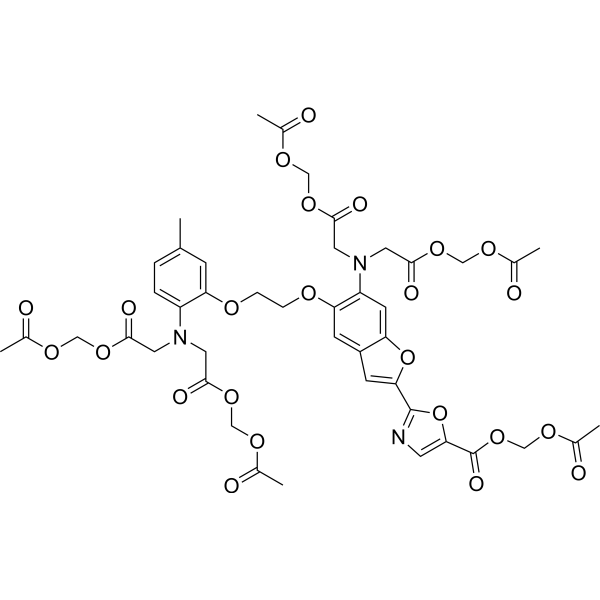
Fura-2 AM is a membrane permeable, intracellular, UV light-excitable and ratiometric fluorescent Ca 2+ (calcium ion) indicator. Fura-2 AM crosses cell membranes and is converted to Fura-2 (HY-D0110A) via cellular esterases. Fura-2 AM can be used to detect calcium in cells.
|
-
-
- HY-W110927
-
|
|
Biochemical Assay Reagents
Fluorescent Dye
|
Others
|
|
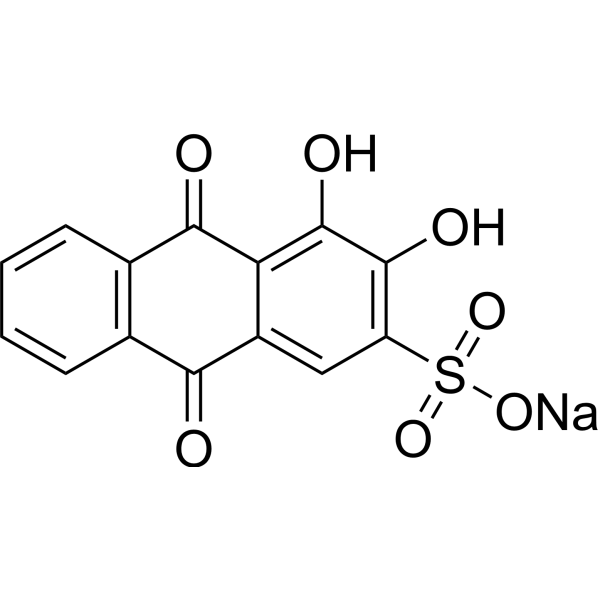
Alizarin red S indicator (C.I. 58005) is a reductively active (quinone-based) anthraquinone dye that forms complexes with metal ions (such as zirconium, calcium) or boric acid to label calcium deposition and perform electrochemical sensing functions. Alizarin Red S undergoes reversible redox reactions (for electrochemical detection) and irreversible chelation (for bone staining). Alizarin Red S is mainly used in bone metabolism research (labeling mineralized tissue), sugar detection (boric acid-sugar competition system) and metal ion sensing (such as zirconium ion detection), and can be used in osteoporosis and metabolic disease research .
|
-
-
- HY-P10638
-
|
|
CaMK
|
Cardiovascular Disease
Neurological Disease
|
|
TAT-CN21 is a potent CaMKII inhibitor with an IC50 of 77.2 nM. TAT-CN21 inhibits both calcium/calmodulin-dependent and autonomously activated CaMKII, blocks glutamate-induced translocation of CaMK IIα, and reverses the enhanced phosphorylation of CaMKII at Thr286 following excitotoxic injury. TAT-CN21 shows application potential in studies related to ischemic stroke by reducing neuronal excitotoxicity and exacerbating pre-existing long-term neuronal death prior to injury. TAT-CN21 improves definitive behaviors in rats with residual nerve injury without altering indicators such as mechanical/thermal hyperalgesia or spatial memory. TAT-CN21 can also be used in studies related to neuropathic pain .
|
-
-
- HY-DY1028
-
|
|
Fluorescent Dye
|
Others
|
Fluo-4 AM (solution) is a cell-permeable Ca 2+ (calcium ion) indicator (Ex/Em = 485/526 nm) . Solvent and concentration: DMSO: 1 mM
|
-
-
- HY-D1176
-
|
|
Fluorescent Dye
|
Others
|
|
Calcium Green 1AM is a cell-permeant fluorescent calcium indicator (Excitation 506 nm; Emission 531 nm). Calcium Green 1AM is converted to the fluorescent calcium indicator by intracellular esterases .
|
-
-
- HY-W151206
-
|
|
Fluorescent Dye
|
Others
|
|
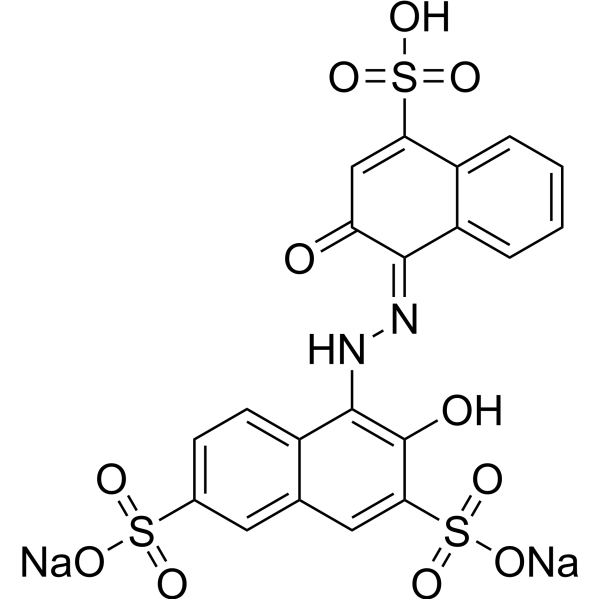
Hydroxy naphthol blue disodium is an azo dye compound commonly used as an acid-base indicator (λmax = 650 nm). Within the pH range of 12 to 13, the indicator solution of Hydroxy naphthol blue disodium appears pale red in the presence of calcium ions and dark blue in the presence of disodium EDTA .
|
-
-
- HY-W351339
-
|
|
Fluorescent Dye
|
Cancer
|
|
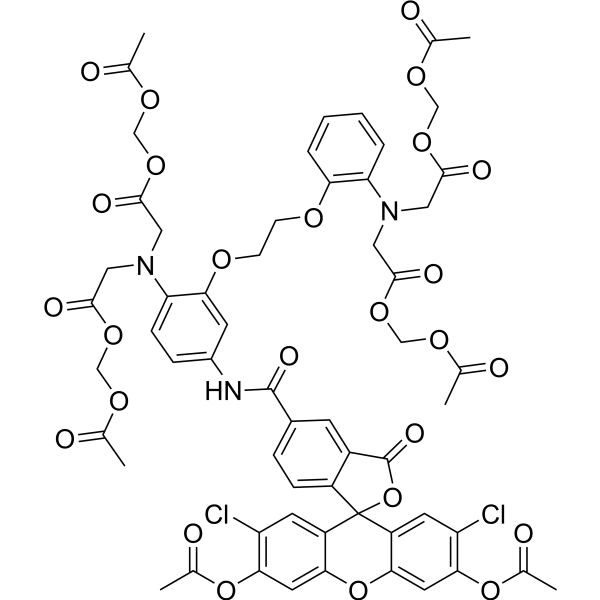
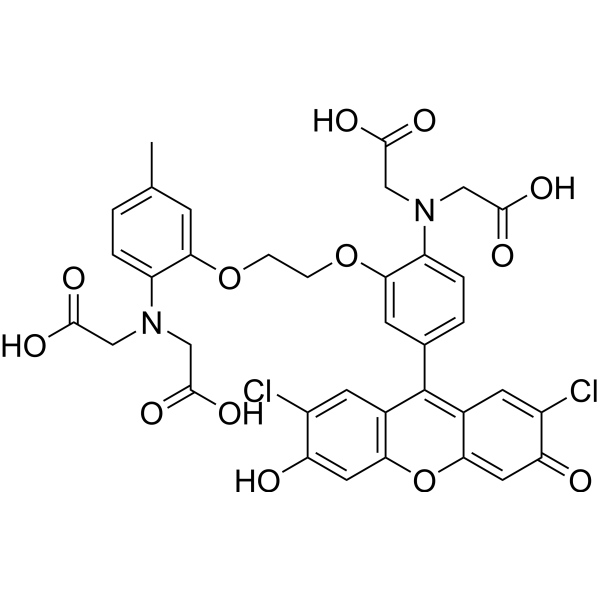
BAPTA-TMFM is a fluorescent chelating indicator used to study the role of cytosolic free calcium.
|
-
-
- HY-W127781
-
|
|
Fluorescent Dye
|
Others
|
|
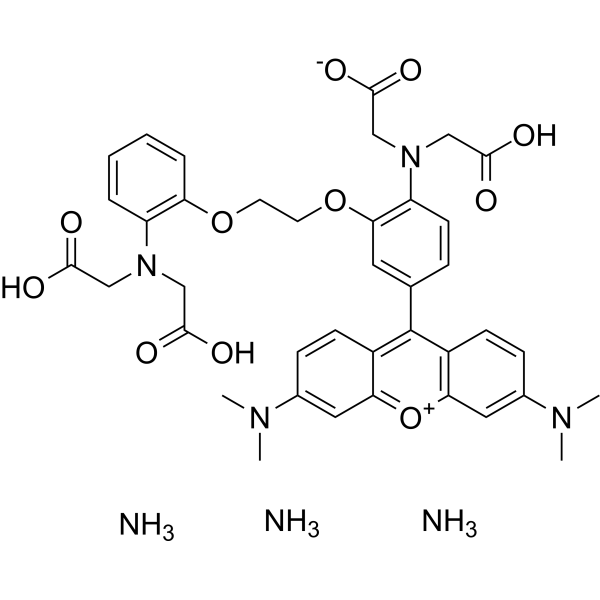
Rhod-2 triammonium is a cell impermeant, red fluorescent calcium indicator. Rhod-2 triammonium exhibits a significant shift in fluorescence intensity upon calcium binding (ex max=549 nm; calcium-free v. ex/em max=552/581 nm; calcium-bound). Unlike the UV-excitable indicators Fura-2 and Indo-1 (HY-D0121), there is no accompanying spectral shift .
|
-
-
- HY-D0121
-
|
|
Fluorescent Dye
|
Others
|
|
INDO 1 is a cell-impermeant fluorescent Ca 2+ indicator, binds specifically to Ca 2+ while emitting fluorescence, the maximum emission wavelength shifts from 485 nm before binding to 410 nm .
|
-
-
- HY-168377
-
|
|
Fluorescent Dye
|
Others
|
|
Fluo-4 potassium is a cell-impermeable Ca 2+ (calcium ion) indicator (λex=494 nm, λem=516 nm). Fluo-4 potassium can be introduced into cells using methods such as patch clamping and microinjection .
|
-
-
- HY-172627
-
|
|
Fluorescent Dye
Calcium Channel
|
Others
|
|
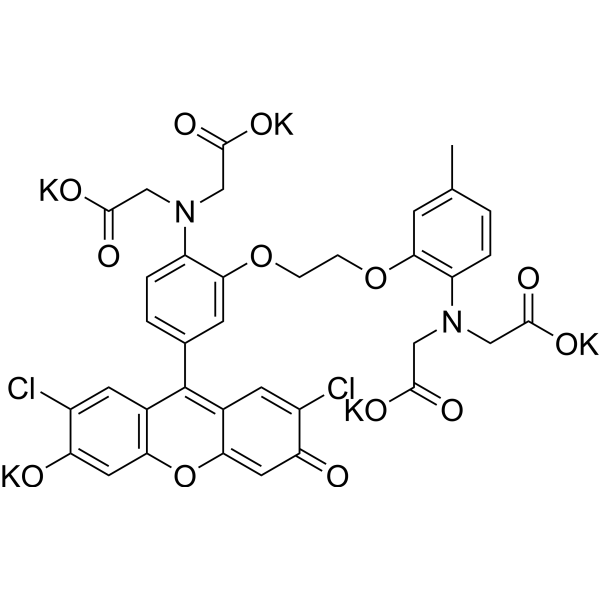
Rhod-FF tripotassium is a Rhod-2 derivative and cell-impermeant calcium indicator (Kd of 320 μM). Rhod-FF tripotassium indicates calcium concentration by fluorescence upon binding to calcium ions, with excitation at 552 nm and emission at 580 nm .
|
-
-
- HY-W110904
-
|
|
Fluorescent Dye
|
Others
|
|
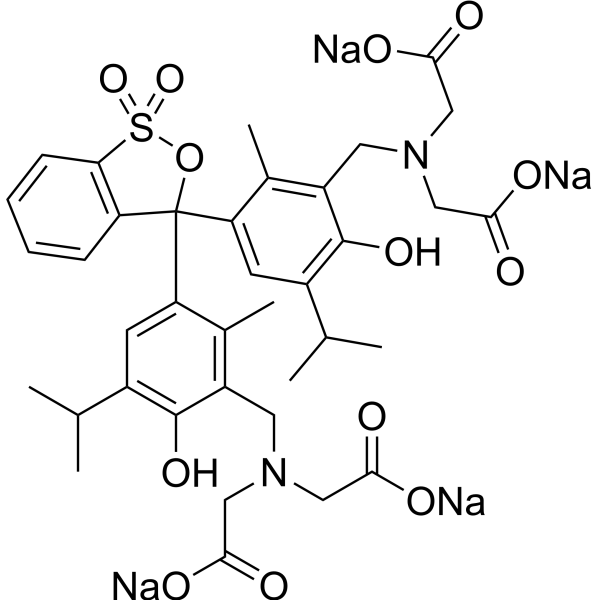
Methylthymol blue tetrasodium is a metallochromic indicator dye and can be used for determination of sulfate and calcium .
|
-
-
- HY-137103
-
|
|
Fluorescent Dye
|
Others
|
|
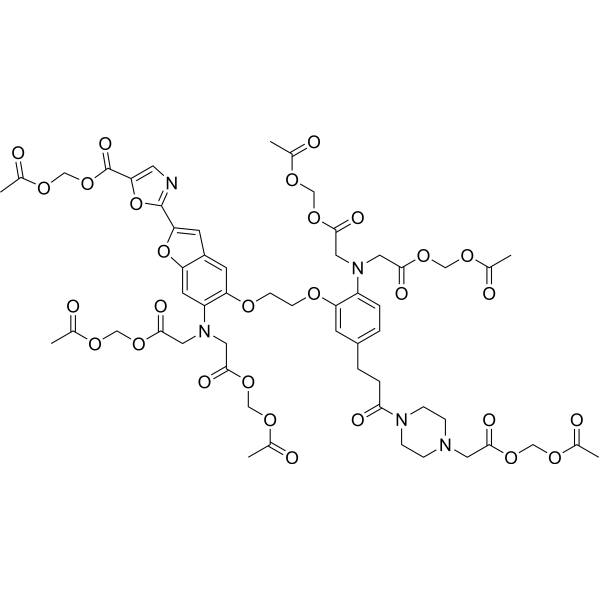
BTC-AM is a low affinity calcium indicator. BTC-AM has substantial calcium-independent fluorescence at all excitation wavelengths. BTC-AM is readily loaded into neurons and is rapidly hydrolysed .
|
-
-
- HY-D1502
-
-
-
- HY-D1768
-
|
|
Fluorescent Dye
|
Others
|
|
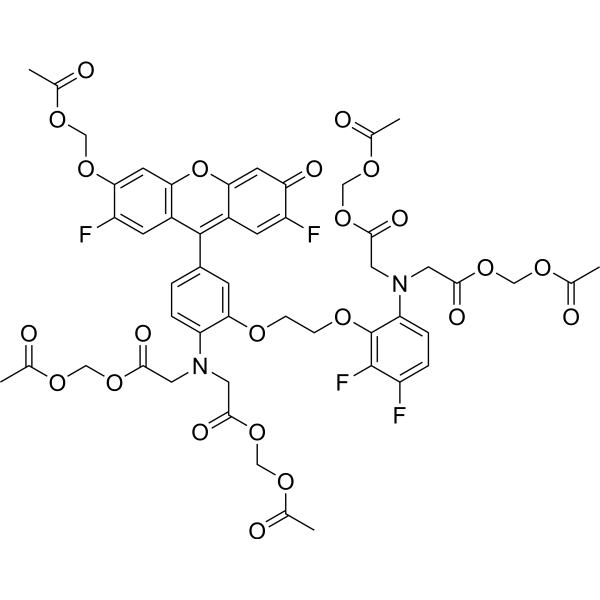
Fluo-4FF AM is a cell-permeant fluorescent calcium indicator. Fluo-4FF is an analog of Fluo-4 with a lower affinity for calcium, which is suitable for investigation of relatively high level of intracellular calcium.
|
-
-
- HY-126821
-
|
|
Fluorescent Dye
|
Others
|
|
Fluo-3 is a cell-impermeable calcium ion (Ca 2+) indicator. Fluo-3 itself is not fluorescent, but it becomes fluorescent after binding to calcium ions (Ex/Em = 488/525 nm) .
|
-
-
- HY-129547
-
|
|
Fluorescent Dye
|
Others
|
|
Fluo-3 pentapotassium is a cell-impermeable calcium ion (Ca 2+) indicator. Fluo-3 pentapotassium itself is not fluorescent, but it becomes fluorescent after binding to calcium ions (Ex/Em = 488/525 nm) .
|
-
-
- HY-D1759
-
|
|
Fluorescent Dye
|
Others
|
|
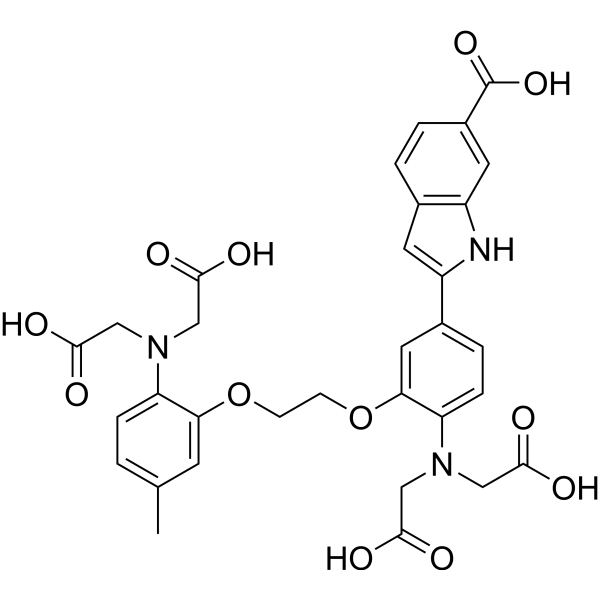
Fura-4F AM is a cell-permeant fluorescent calcium indicator. Upon entering the cell, this probe is hydrolyzed by cytosilic esterases and trapped as the active chelator.
|
-
-
- HY-D1628
-
-
-
- HY-D1636
-
|
|
Fluorescent Dye
|
Others
|
|
5-Nitro BAPTA is a calcium chelator, combinded with 2-Me-substituted TM ( as a fluorescent moiety), can be used to form a red fluorescent probe (CaTM-2 AM), for imaging of cytoplasmic Ca 2+ in cultured living cells. 5-Nitro BAPTA is a building block used in the synthesis of Ca 2+ specific chelators, Ca 2+ buffers, and fluorescent Ca 2+ indicators .
|
-
-
- HY-104057
-
|
|
Fluorescent Dye
|
Others
|
|
Rhod-FF AM is a fluorescent calcium indicator. Rhod-FF AM is cell permeable and is hydrolyzed by intracellular esterases to generate Rhod-FF .
|
-
-
- HY-137128
-
|
|
Fluorescent Dye
|
Others
|
|
BTC tetrapotassium is a cell-impermeant calcium indicator (Kd approximately 7-26 µM) featuring many desirable properties for cellular calcium imaging, including long excitation wavelengths (400/485 nm), low sensitivity to Mg 2+, and accuracy of ratiometric measurement .
|
-
-
- HY-D1616
-
|
|
Fluorescent Dye
|
Others
|
|
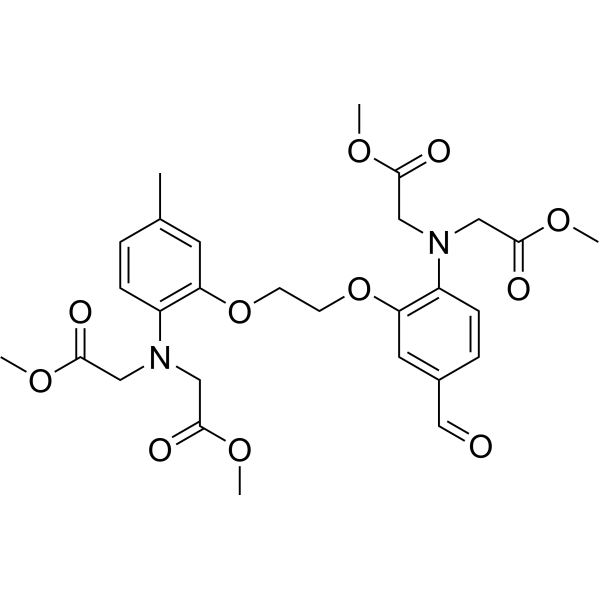
5-Bromo-5'-methyl BAPTA tetramethyl ester is a derivative of BAPTA, which is a calcium indicator suitable for measurement of relatively high level of calcium .
|
-
-
- HY-D1681
-
|
|
Fluorescent Dye
|
Others
|
|
Rhod-590 AM Ester is a fluorescent dye. Rhod-590 AM Ester can be used as a fluorescent indicator for calcium determination .
|
-
-
- HY-D1755
-
|
|
Fluorescent Dye
|
Others
|
|
Fluo-3FF AM is a low affinity (Kd = 42 μM) fluorescent Ca 2+ sensitive indicator (Abs/Em = 462 nm/526 nm). Fluo-3FF AM is Mg 2+ insensitive and relatively photostable. Fluo-3FF AM is an analog of Fluo-3FF AM. Fluo-3FF AM is essentially non-fluorescent, but exhibits a strong fluorescence enhancement upon entry into cells and binding to calcium.
|
-
-
- HY-130575
-
|
|
Fluorescent Dye
|
Others
|
|
Fura-FF AM is a cell-permeable acetoxymethyl ester of fura-FF, a dluorescent calcium indicator. Fura-FF AM is hydrolyzed by intracellular esterases to release fura-FF in cells. Fura-FF is a difluorinated derivative of the calcium indicator fura-2. Compared to fura-2, fura-FF has a low affinity for calcium and is suitable for studying compartments with high concentrations of calcium.
|
-
-
- HY-D1779
-
-
-
- HY-136784A
-
|
|
Fluorescent Dye
|
Others
|
|
Rhod-2 sodium is a cell impermeant, red fluorescent calcium indicator. Rhod-2 sodium exhibits a significant shift in fluorescence intensity upon calcium binding (ex max=549 nm; calcium-free v. ex/em max=552/581 nm; calcium-bound). Unlike the UV-excitable indicators Fura-2 and Indo-1 (HY-D0121), there is no accompanying spectral shift .
|
-
-
- HY-136784
-
|
|
Fluorescent Dye
|
Others
|
|
Rhod-2 potassium is a cell impermeant, red fluorescent calcium indicator. Rhod-2 potassium exhibits a significant shift in fluorescence intensity upon calcium binding (ex max=549 nm; calcium-free v. ex/em max=552/581 nm; calcium-bound). Unlike the UV-excitable indicators Fura-2 and Indo-1 (HY-D0121), there is no accompanying spectral shift .
|
-
-
- HY-D1776
-
|
|
Fluorescent Dye
|
Others
|
|
FFP-18-AM is a cell-permeable fluorescent indicator for measurement of near-membrane calcium.
|
-
-
- HY-176031
-
|
|
Fluorescent Dye
|
Others
|
|
Fluo-2 potassium is a cell-impermeant fluorescent calcium indicator. Fluo-2 potassium binds calcium (Kd: 0.37 μM) with excitation/emission wavelengths of 493/518 nm, respectively .
|
-
-
- HY-D1761
-
|
|
Fluorescent Dye
|
Others
|
|
Fura-4F pentapotassium is a cell-impermeant fluorescent indicator for intracellular calcium ion measurement.
|
-
-
- HY-W419044A
-
|
|
Fluorescent Dye
|
Others
|
|
Calcein calcium potassium is a fluorescent dye and self-quenching probe, used as an indicator of lipid vesicle leakage, and also as a complexometric indicator for titration of calcium ions with EDTA, and for fluorometric determination of calcium. Calcein cannot directly cross the intact cell membrane of a living cell, unlike Calcein-AM (HY-D0041) which is cell-permeable. Calcein can also be used as a model drug for evaluating efficiency and bioavailability of drug delivery systems .
|
-
-
- HY-126821A
-
|
|
Fluorescent Dye
|
Others
|
|
Fluo-3 pentaammonium is a cell-impermeable calcium ion (Ca 2+) indicator. Fluo-3 pentaammonium itself is not fluorescent, but it becomes fluorescent after binding to calcium ions (Ex/Em = 488/525 nm) .
|
-
-
- HY-W127795
-
|
|
Fluorescent Dye
|
Others
|
|
Fluo-3 ammonium is a cell-impermeable calcium ion (Ca 2+) indicator. Fluo-3 ammonium itself is not fluorescent, but it becomes fluorescent after binding to calcium ions (Ex/Em = 488/525 nm) .
|
-
-
- HY-D0121A
-
|
|
Fluorescent Dye
|
Others
|
|
INDO 1 pentapotassium is a cell-impermeant fluorescent Ca 2+ indicator, binds specifically to Ca 2+ while emitting fluorescence, the maximum emission wavelength shifts from 485 nm before binding to 410 nm .
|
-
-
- HY-W329161
-
|
|
Fluorescent Dye
|
Others
|
|
Calcein sodium is a fluorescent dye and self-quenching probe, used as an indicator of lipid vesicle leakage, and also as a complexometric indicator for titration of calcium ions with EDTA, and for fluorometric determination of calcium. Calcein cannot directly cross the intact cell membrane of a living cell, unlike Calcein-AM (HY-D0041) which is cell-permeable. Calcein can also be used as a model drug for evaluating efficiency and bioavailability of drug delivery systems .
|
-
-
- HY-100168R
-
|
|
Reference Standards
Phospholipase
|
Others
|
|
BAPTA (Standard) is the analytical standard of BAPTA. This product is intended for research and analytical applications. BBAPTA is a selective and cell-impermeant chelator for calcium. BAPTA, as calcium indicator, has high selectivity against magnesium and calcium. BAPTA is widely used as an intracellular buffer for investigating the effects of Ca 2+ release from intracellular stores or influx via Ca 2+-permeable channels in the plasma membrane. BAPTA can also inhibit phospholipase C activity independently of their role as Ca 2+ chelators .
|
-
-
- HY-D1447
-
|
|
Fluorescent Dye
|
Others
|
|
Fluo-3FF pentapotassium is a cell-impermeant fluorescent calcium indicator. Fluo-3FF is a di-fluorinated analog of Fluo-3 with a 100-fold lower affinity than Fluo-3 for calcium (Kds=42 and 0.4 μM, respectively). For its low affinity, Fluo-3FF is used for studying compartments with high concentrations of calcium, such as endoplasmic reticulum, where high affinity dyes will be insensitive to luminal fluctuations.
|
-
-
- HY-100168AR
-
|
|
Reference Standards
Phospholipase
|
Others
|
|
BAPTA tetrasodium (Standard) is the analytical standard of BAPTA tetrasodium. This product is intended for research and analytical applications. BAPTA tetrasodium is a selective and cell-impermeant chelator for calcium. BAPTA tetrasodium, as calcium indicator, has high selectivity against magnesium and calcium. BAPTA tetrasodium is widely used as an intracellular buffer for investigating the effects of Ca 2+ release from intracellular stores or influx via Ca 2+-permeable channels in the plasma membrane. BAPTA tetrasodium can also inhibit phospholipase C activity independently of their role as Ca 2+ chelators .
|
-
-
- HY-D0121B
-
|
|
Fluorescent Dye
|
Others
|
|
INDO 1 pentasodium is a cell-impermeant ratiometric, free calcium ion (Ca 2+) fluorescent indicator that can quantitatively monitor dynamic changes in intracellular free Ca 2+ concentrations. When unbound to Ca 2+ (free state), INDO 1 pentasodium exhibits a peak emission wavelength of 485 nm under UV excitation (350 nm). Upon binding to Ca 2+ (bound state), the emission peak shifts to 405 nm. INDO 1 pentasodium is highly photolabile and susceptible to photobleaching, and its emission spectrum may overlap with the autofluorescence of NADH .
|
-
-
- HY-126821B
-
|
|
Fluorescent Dye
|
Others
|
|
Fluo-3 sodium is a cell-impermeable calcium ion (Ca 2+) indicator. Fluo-3 sodium itself is not fluorescent, but it becomes fluorescent after binding to calcium ions (Ex/Em = 488/525 nm) .
|
-
-
- HY-175146
-
|
|
Fluorescent Dye
Calcium Channel
|
Others
|
|
Fura-2 leakage resistant AM (Fura-PE3) is a new ratiometric calcium indicator. Fura-2 leakage resistant AM has calcium-binding characteristics (Kd = 146 nM) and fluorescent properties (emission: 510 nm; alternating excitation: 340 nm and 380 nm). Fura-2 leakage resistant AM monitors calcium concentration in platelet .
|
-
-
- HY-DY1091
-
|
Fluorexon (solution)
|
Fluorescent Dye
|
Others
|
Calcein (solution) (Fluorexon (solution)) is a fluorescent dye and self-quenching probe, used as an indicator of lipid vesicle leakage, and also as a complexometric indicator for titration of calcium ions with EDTA, and for fluorometric determination of calcium. Calcein cannot directly cross the intact cell membrane of a living cell, unlike Calcein-AM (HY-D0041) which is cell-permeable. Calcein can also be used as a model drug for evaluating efficiency and bioavailability of drug delivery systems . Solvent and concentration: DMSO: 2 mM The 1 mL volume is defined as the base specification. All larger sizes correspond to incremental volumes of this base.
|
-
-
- HY-DY1101
-
|
Fura-2 Acetoxymethyl ester (solution)
|
Fluorescent Dye
|
Others
|
Fura-2 AM (solution) (Fura-2 Acetoxymethyl ester (solution)) is a membrane permeable, intracellular, UV light-excitable and ratiometric fluorescent Ca 2+ (calcium ion) indicator. Fura-2 AM crosses cell membranes and is converted to Fura-2 (HY-D0110A) via cellular esterases. Fura-2 AM can be used to detect calcium in cells. Solvent and concentration: DMSO: 1 mM
|
-
-
- HY-100168BR
-
|
|
Reference Standards
Phospholipase
|
Others
|
|
BAPTA tetrapotassium (Standard) is the analytical standard of BAPTA tetrapotassium (HY-100168B). This product is intended for research and analytical applications. BAPTA tetrapotassium is a selective and cell-impermeant chelator for calcium. BAPTA tetrapotassium, as calcium indicator, has high selectivity against magnesium and calcium. BAPTA tetrapotassium is widely used as an intracellular buffer for investigating the effects of Ca 2+ release from intracellular stores or influx via Ca 2+-permeable channels in the plasma membrane. BAPTA tetrapotassium can also inhibit phospholipase C activity independently of their role as Ca 2+ chelators .
|
-
| Cat. No. |
Product Name |
Type |
-
- HY-101896
-
Fluo-4 AM
Maximum Cited Publications
56 Publications Verification
|
Fluorescent Dyes
|
|
Fluo-4 AM is a cell-permeable Ca 2+ (calcium ion) indicator (Ex/Em = 485/526 nm) .
|
-
- HY-D0040
-
|
Fluorexon
|
Fluorescent Dyes
|
|
Calcein is a fluorescent dye and self-quenching probe, used as an indicator of lipid vesicle leakage, and also as a complexometric indicator for titration of calcium ions with EDTA, and for fluorometric determination of calcium. Calcein cannot directly cross the intact cell membrane of a living cell, unlike Calcein-AM (HY-D0041) which is cell-permeable. Calcein can also be used as a model drug for evaluating efficiency and bioavailability of drug delivery systems .
|
-
- HY-101897
-
|
Fura-2 Acetoxymethyl ester
|
Fluorescent Dyes
|
|
Fura-2 AM is a membrane permeable, intracellular, UV light-excitable and ratiometric fluorescent Ca 2+ (calcium ion) indicator. Fura-2 AM crosses cell membranes and is converted to Fura-2 (HY-D0110A) via cellular esterases. Fura-2 AM can be used to detect calcium in cells.
|
-
- HY-DY1028
-
|
|
Fluorescent Dyes
|
Fluo-4 AM (solution) is a cell-permeable Ca 2+ (calcium ion) indicator (Ex/Em = 485/526 nm) . Solvent and concentration: DMSO: 1 mM
|
-
- HY-D1176
-
|
|
Fluorescent Dyes
|
|
Calcium Green 1AM is a cell-permeant fluorescent calcium indicator (Excitation 506 nm; Emission 531 nm). Calcium Green 1AM is converted to the fluorescent calcium indicator by intracellular esterases .
|
-
- HY-W151206
-
|
|
Fluorescent Dyes
|
|
Hydroxy naphthol blue disodium is an azo dye compound commonly used as an acid-base indicator (λmax = 650 nm). Within the pH range of 12 to 13, the indicator solution of Hydroxy naphthol blue disodium appears pale red in the presence of calcium ions and dark blue in the presence of disodium EDTA .
|
-
- HY-W351339
-
|
|
Fluorescent Dyes
|
|
BAPTA-TMFM is a fluorescent chelating indicator used to study the role of cytosolic free calcium.
|
-
- HY-D0121
-
|
|
Fluorescent Dyes
|
|
INDO 1 is a cell-impermeant fluorescent Ca 2+ indicator, binds specifically to Ca 2+ while emitting fluorescence, the maximum emission wavelength shifts from 485 nm before binding to 410 nm .
|
-
- HY-W110904
-
|
|
Fluorescent Dyes
|
|
Methylthymol blue tetrasodium is a metallochromic indicator dye and can be used for determination of sulfate and calcium .
|
-
- HY-137103
-
|
|
Fluorescent Dyes
|
|
BTC-AM is a low affinity calcium indicator. BTC-AM has substantial calcium-independent fluorescence at all excitation wavelengths. BTC-AM is readily loaded into neurons and is rapidly hydrolysed .
|
-
- HY-D1502
-
|
|
Fluorescent Dyes
|
|
FURA-PE3/AM is a leak-resistant fluorescent calcium indicator dye .
|
-
- HY-D1768
-
|
|
Fluorescent Dyes
|
|
Fluo-4FF AM is a cell-permeant fluorescent calcium indicator. Fluo-4FF is an analog of Fluo-4 with a lower affinity for calcium, which is suitable for investigation of relatively high level of intracellular calcium.
|
-
- HY-126821
-
|
|
Fluorescent Dyes
|
|
Fluo-3 is a cell-impermeable calcium ion (Ca 2+) indicator. Fluo-3 itself is not fluorescent, but it becomes fluorescent after binding to calcium ions (Ex/Em = 488/525 nm) .
|
-
- HY-129547
-
|
|
Fluorescent Dyes
|
|
Fluo-3 pentapotassium is a cell-impermeable calcium ion (Ca 2+) indicator. Fluo-3 pentapotassium itself is not fluorescent, but it becomes fluorescent after binding to calcium ions (Ex/Em = 488/525 nm) .
|
-
- HY-D1759
-
|
|
Fluorescent Dyes
|
|
Fura-4F AM is a cell-permeant fluorescent calcium indicator. Upon entering the cell, this probe is hydrolyzed by cytosilic esterases and trapped as the active chelator.
|
-
- HY-D1628
-
-
- HY-104057
-
|
|
Fluorescent Dyes
|
|
Rhod-FF AM is a fluorescent calcium indicator. Rhod-FF AM is cell permeable and is hydrolyzed by intracellular esterases to generate Rhod-FF .
|
-
- HY-D1616
-
|
|
Fluorescent Dyes
|
|
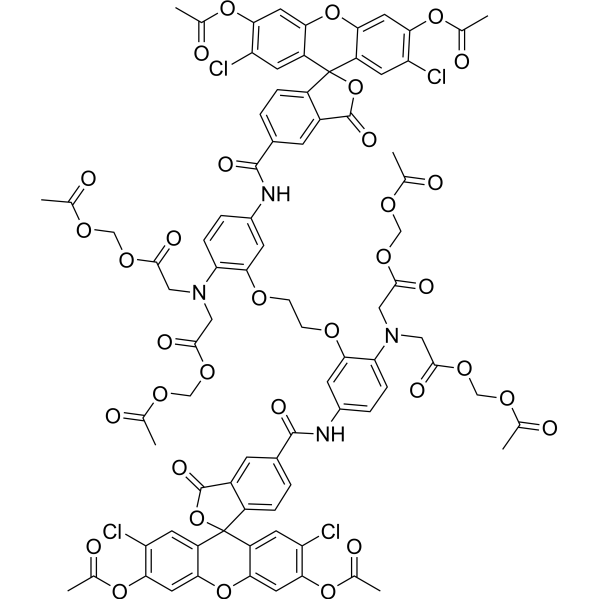
5-Bromo-5'-methyl BAPTA tetramethyl ester is a derivative of BAPTA, which is a calcium indicator suitable for measurement of relatively high level of calcium .
|
-
- HY-D1755
-
|
|
Fluorescent Dyes
|
|
Fluo-3FF AM is a low affinity (Kd = 42 μM) fluorescent Ca 2+ sensitive indicator (Abs/Em = 462 nm/526 nm). Fluo-3FF AM is Mg 2+ insensitive and relatively photostable. Fluo-3FF AM is an analog of Fluo-3FF AM. Fluo-3FF AM is essentially non-fluorescent, but exhibits a strong fluorescence enhancement upon entry into cells and binding to calcium.
|
-
- HY-130575
-
|
|
Fluorescent Dyes
|
|
Fura-FF AM is a cell-permeable acetoxymethyl ester of fura-FF, a dluorescent calcium indicator. Fura-FF AM is hydrolyzed by intracellular esterases to release fura-FF in cells. Fura-FF is a difluorinated derivative of the calcium indicator fura-2. Compared to fura-2, fura-FF has a low affinity for calcium and is suitable for studying compartments with high concentrations of calcium.
|
-
- HY-D1779
-
|
|
Fluorescent Dyes
|
|
Fura-5F pentapotassium is a cell-impermeant fluorescent calcium indicator.
|
-
- HY-136784A
-
|
|
Fluorescent Dyes
|
|
Rhod-2 sodium is a cell impermeant, red fluorescent calcium indicator. Rhod-2 sodium exhibits a significant shift in fluorescence intensity upon calcium binding (ex max=549 nm; calcium-free v. ex/em max=552/581 nm; calcium-bound). Unlike the UV-excitable indicators Fura-2 and Indo-1 (HY-D0121), there is no accompanying spectral shift .
|
-
- HY-136784
-
|
|
Fluorescent Dyes
|
|
Rhod-2 potassium is a cell impermeant, red fluorescent calcium indicator. Rhod-2 potassium exhibits a significant shift in fluorescence intensity upon calcium binding (ex max=549 nm; calcium-free v. ex/em max=552/581 nm; calcium-bound). Unlike the UV-excitable indicators Fura-2 and Indo-1 (HY-D0121), there is no accompanying spectral shift .
|
-
- HY-D1776
-
|
|
Fluorescent Dyes
|
|
FFP-18-AM is a cell-permeable fluorescent indicator for measurement of near-membrane calcium.
|
-
- HY-176031
-
|
|
Fluorescent Dyes
|
|
Fluo-2 potassium is a cell-impermeant fluorescent calcium indicator. Fluo-2 potassium binds calcium (Kd: 0.37 μM) with excitation/emission wavelengths of 493/518 nm, respectively .
|
-
- HY-D1761
-
|
|
Fluorescent Dyes
|
|
Fura-4F pentapotassium is a cell-impermeant fluorescent indicator for intracellular calcium ion measurement.
|
-
- HY-126821A
-
|
|
Fluorescent Dyes
|
|
Fluo-3 pentaammonium is a cell-impermeable calcium ion (Ca 2+) indicator. Fluo-3 pentaammonium itself is not fluorescent, but it becomes fluorescent after binding to calcium ions (Ex/Em = 488/525 nm) .
|
-
- HY-D0121A
-
|
|
Fluorescent Dyes
|
|
INDO 1 pentapotassium is a cell-impermeant fluorescent Ca 2+ indicator, binds specifically to Ca 2+ while emitting fluorescence, the maximum emission wavelength shifts from 485 nm before binding to 410 nm .
|
-
- HY-D1447
-
|
|
Fluorescent Dyes
|
|
Fluo-3FF pentapotassium is a cell-impermeant fluorescent calcium indicator. Fluo-3FF is a di-fluorinated analog of Fluo-3 with a 100-fold lower affinity than Fluo-3 for calcium (Kds=42 and 0.4 μM, respectively). For its low affinity, Fluo-3FF is used for studying compartments with high concentrations of calcium, such as endoplasmic reticulum, where high affinity dyes will be insensitive to luminal fluctuations.
|
-
- HY-D0121B
-
|
|
Fluorescent Dyes
|
|
INDO 1 pentasodium is a cell-impermeant ratiometric, free calcium ion (Ca 2+) fluorescent indicator that can quantitatively monitor dynamic changes in intracellular free Ca 2+ concentrations. When unbound to Ca 2+ (free state), INDO 1 pentasodium exhibits a peak emission wavelength of 485 nm under UV excitation (350 nm). Upon binding to Ca 2+ (bound state), the emission peak shifts to 405 nm. INDO 1 pentasodium is highly photolabile and susceptible to photobleaching, and its emission spectrum may overlap with the autofluorescence of NADH .
|
-
- HY-DY1091
-
|
Fluorexon (solution)
|
Fluorescent Dyes
|
Calcein (solution) (Fluorexon (solution)) is a fluorescent dye and self-quenching probe, used as an indicator of lipid vesicle leakage, and also as a complexometric indicator for titration of calcium ions with EDTA, and for fluorometric determination of calcium. Calcein cannot directly cross the intact cell membrane of a living cell, unlike Calcein-AM (HY-D0041) which is cell-permeable. Calcein can also be used as a model drug for evaluating efficiency and bioavailability of drug delivery systems . Solvent and concentration: DMSO: 2 mM The 1 mL volume is defined as the base specification. All larger sizes correspond to incremental volumes of this base.
|
-
- HY-DY1101
-
|
Fura-2 Acetoxymethyl ester (solution)
|
Fluorescent Dyes
|
Fura-2 AM (solution) (Fura-2 Acetoxymethyl ester (solution)) is a membrane permeable, intracellular, UV light-excitable and ratiometric fluorescent Ca 2+ (calcium ion) indicator. Fura-2 AM crosses cell membranes and is converted to Fura-2 (HY-D0110A) via cellular esterases. Fura-2 AM can be used to detect calcium in cells. Solvent and concentration: DMSO: 1 mM
|
| Cat. No. |
Product Name |
Type |
-
- HY-W110927
-
|
|
Biochemical Assay Reagents
|
|
Alizarin red S indicator (C.I. 58005) is a reductively active (quinone-based) anthraquinone dye that forms complexes with metal ions (such as zirconium, calcium) or boric acid to label calcium deposition and perform electrochemical sensing functions. Alizarin Red S undergoes reversible redox reactions (for electrochemical detection) and irreversible chelation (for bone staining). Alizarin Red S is mainly used in bone metabolism research (labeling mineralized tissue), sugar detection (boric acid-sugar competition system) and metal ion sensing (such as zirconium ion detection), and can be used in osteoporosis and metabolic disease research .
|
-
- HY-W127781
-
|
|
Biochemical Assay Reagents
|
|
Rhod-2 triammonium is a cell impermeant, red fluorescent calcium indicator. Rhod-2 triammonium exhibits a significant shift in fluorescence intensity upon calcium binding (ex max=549 nm; calcium-free v. ex/em max=552/581 nm; calcium-bound). Unlike the UV-excitable indicators Fura-2 and Indo-1 (HY-D0121), there is no accompanying spectral shift .
|
-
- HY-W127795
-
|
|
Biochemical Assay Reagents
|
|
Fluo-3 ammonium is a cell-impermeable calcium ion (Ca 2+) indicator. Fluo-3 ammonium itself is not fluorescent, but it becomes fluorescent after binding to calcium ions (Ex/Em = 488/525 nm) .
|
-
- HY-100168R
-
|
|
Biochemical Assay Reagents
|
|
BAPTA (Standard) is the analytical standard of BAPTA. This product is intended for research and analytical applications. BBAPTA is a selective and cell-impermeant chelator for calcium. BAPTA, as calcium indicator, has high selectivity against magnesium and calcium. BAPTA is widely used as an intracellular buffer for investigating the effects of Ca 2+ release from intracellular stores or influx via Ca 2+-permeable channels in the plasma membrane. BAPTA can also inhibit phospholipase C activity independently of their role as Ca 2+ chelators .
|
-
- HY-100168BR
-
|
|
Biochemical Assay Reagents
|
|
BAPTA tetrapotassium (Standard) is the analytical standard of BAPTA tetrapotassium (HY-100168B). This product is intended for research and analytical applications. BAPTA tetrapotassium is a selective and cell-impermeant chelator for calcium. BAPTA tetrapotassium, as calcium indicator, has high selectivity against magnesium and calcium. BAPTA tetrapotassium is widely used as an intracellular buffer for investigating the effects of Ca 2+ release from intracellular stores or influx via Ca 2+-permeable channels in the plasma membrane. BAPTA tetrapotassium can also inhibit phospholipase C activity independently of their role as Ca 2+ chelators .
|
| Cat. No. |
Product Name |
Target |
Research Area |
-
- HY-P10638
-
|
|
CaMK
|
Cardiovascular Disease
Neurological Disease
|
|
TAT-CN21 is a potent CaMKII inhibitor with an IC50 of 77.2 nM. TAT-CN21 inhibits both calcium/calmodulin-dependent and autonomously activated CaMKII, blocks glutamate-induced translocation of CaMK IIα, and reverses the enhanced phosphorylation of CaMKII at Thr286 following excitotoxic injury. TAT-CN21 shows application potential in studies related to ischemic stroke by reducing neuronal excitotoxicity and exacerbating pre-existing long-term neuronal death prior to injury. TAT-CN21 improves definitive behaviors in rats with residual nerve injury without altering indicators such as mechanical/thermal hyperalgesia or spatial memory. TAT-CN21 can also be used in studies related to neuropathic pain .
|
Your information is safe with us. * Required Fields.
Inquiry Information
- Product Name:
- Cat. No.:
- Quantity:
- MCE Japan Authorized Agent:

