275 Results for "

carboxylic groups

" in MedChemExpress (MCE) Product Catalog:
Products (275)

275 Results for "carboxylic groups" in MCE Product Catalog:

4
4 Cited Publications
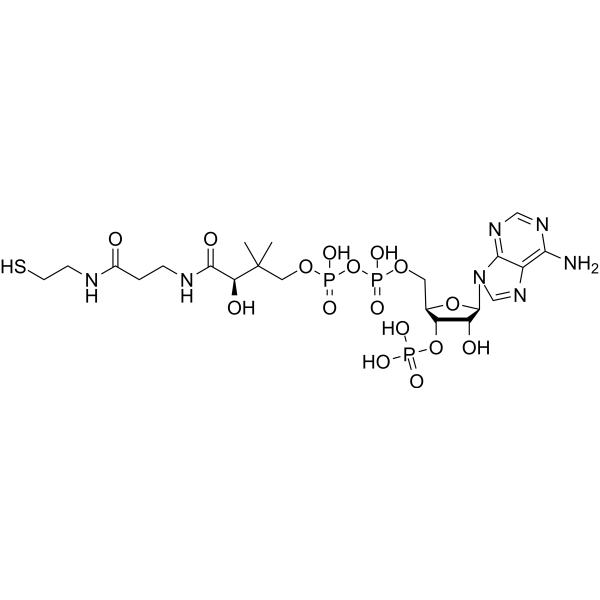
Cat. No.: HY-128851
CAS No.: 85-61-0
Purity:  94.29%
Coenzyme A (CoASH) is a ubiquitous and essential cofactor, which is an acyl group carrier and carbonyl-activating group for the citric acid cycle and fatty acid metabolism. Coenzyme A plays a central role in the oxidation of pyruvate in the citric acid cycle and the metabolism of carboxylic acids, including short- and long-chain fatty acids .
loading...
    loading...
4
4 Cited Publications
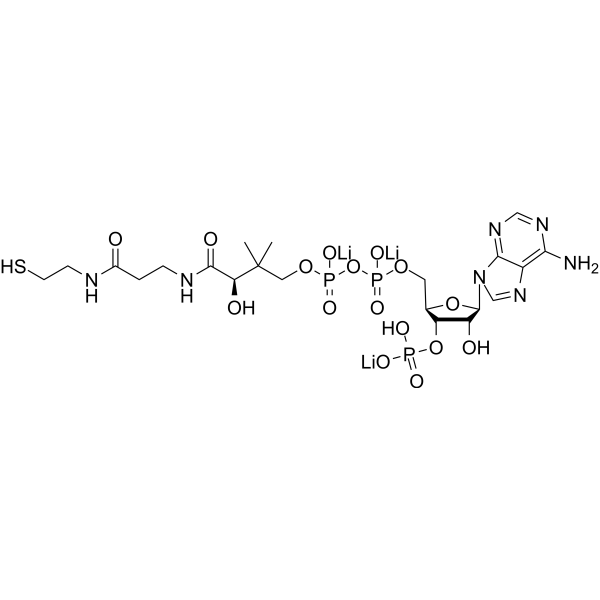
Cat. No.: HY-128851A
CAS No.: 18439-24-2
Purity:  95.40%
Coenzyme A (CoASH) is a ubiquitous and essential cofactor, which is an acyl group carrier and carbonyl-activating group for the citric acid cycle and fatty acid metabolism. Coenzyme A plays a central role in the oxidation of pyruvate in the citric acid cycle and the metabolism of carboxylic acids, including short- and long-chain fatty acids .
loading...
    loading...
4
4 Cited Publications
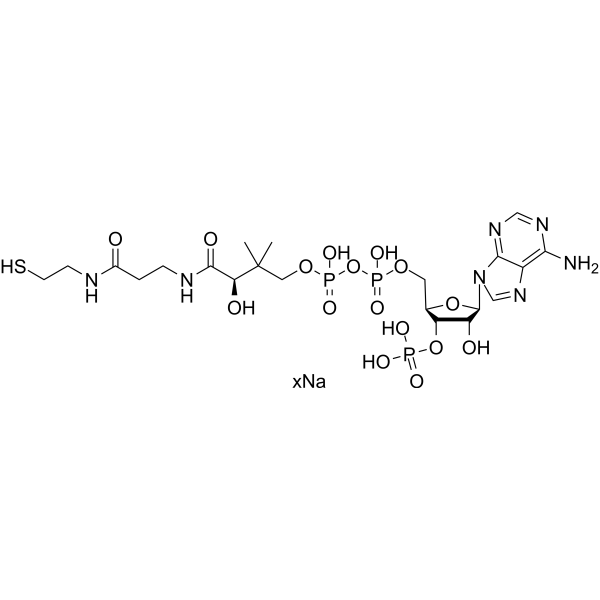
Cat. No.: HY-128851B
CAS No.: 55672-92-9
Purity:  99.46%
Coenzyme A (CoASH) sodium is a ubiquitous and essential cofactor, which is an acyl group carrier and carbonyl-activating group for the citric acid cycle and fatty acid metabolism. Coenzyme A plays a central role in the oxidation of pyruvate in the citric acid cycle and the metabolism of carboxylic acids, including short- and long-chain fatty acids .
loading...
    loading...
1
1 Cited Publications
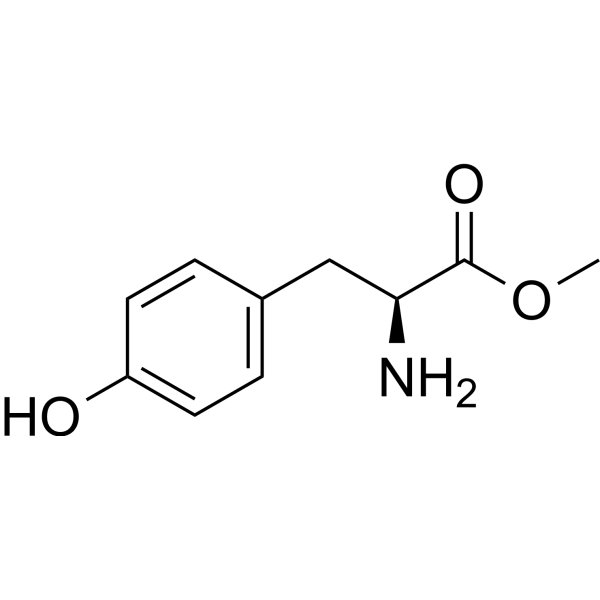
Cat. No.: HY-W007671
CAS No.: 1080-06-4
H-Tyr-OMe is an amino acid derivative and also a coordinating ligand for Cu II ions. H-Tyr-OMe can serve as a surface functionalization reagent for carbon dots, and is used to prepare fluorescent probes for biothiol sensing. H-Tyr-OMe is oxidized to quinone under the catalysis of Tyrosinase via its phenolic hydroxyl group, which quenches the fluorescence of carbon dots. H-Tyr-OMe contains potential coordination sites, including carboxyl, amino and phenolic hydroxyl groups .
loading...
    loading...
1
1 Cited Publications
Cat. No.: HY-W012228
CAS No.: 3417-91-2
Research Areas:  

Others

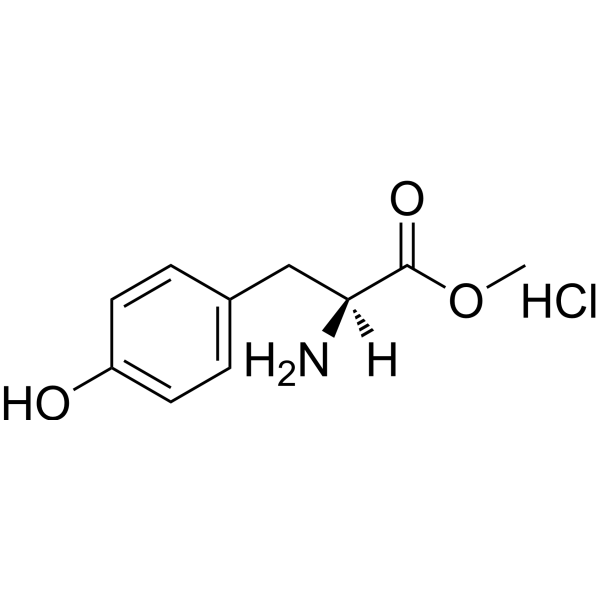
H-Tyr-OMe.HCl is an amino acid derivative and also a coordinating ligand for Cu II ions. H-Tyr-OMe.HCl can serve as a surface functionalization reagent for carbon dots, and is used to prepare fluorescent probes for biothiol sensing. H-Tyr-OMe.HCl is oxidized to quinone under the catalysis of Tyrosinase via its phenolic hydroxyl group, which quenches the fluorescence of carbon dots. H-Tyr-OMe.HCl contains potential coordination sites, including carboxyl, amino and phenolic hydroxyl groups .
loading...
    loading...
1
1 Cited Publications
Cat. No.: HY-W591461
Target:  

Liposome

Research Areas:  

Cancer

DSPE-PEG-COOH, MW 2000 is a phospholipid polyPEG which can be used to prepare liposomes or nanoparticles. The terminal carboxylic acid can react with primary amine groups to form a stable amide bond.
loading...
    loading...
1
1 Cited Publications
Cat. No.: HY-W1048553B
Mal-PEG3400-NH2 TFA is a linear heterobifunctional PEG product with maleimide and NH2 groups. The maleimide can react with thiols, SH, sulfhydryls or sulfhydryls, and the amine can react with carboxylic acids or activated NHS esters .
loading...
    loading...
Cat. No.: HY-W073501A
CAS No.: 1724-02-3
Synonyms: 2-Pentenedioic acid
Target:  

Drug Derivative

Research Areas:  

Others

Glutaconic acid is an organic compound with two carboxylic acid groups .
loading...
    loading...
Cat. No.: HY-W007695
CAS No.: 1072-84-0
Synonyms: 4-Imidazolecarboxylic acid
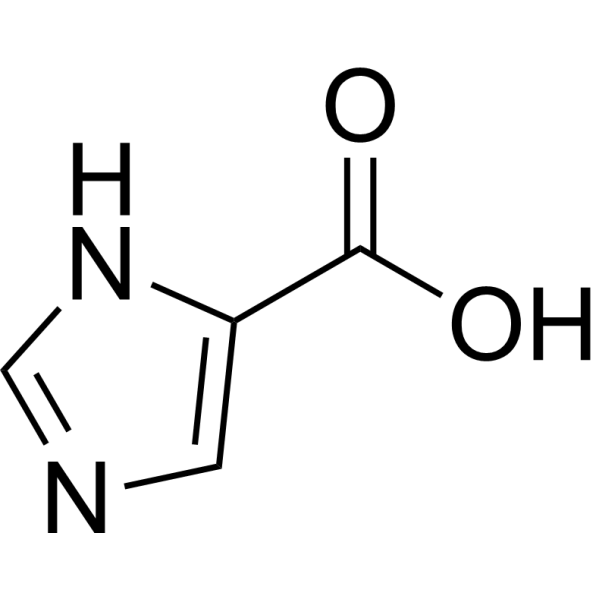
1H-Imidazole-4-carboxylic acid (4-Imidazolecarboxylic acid) is an organic compound containing an imidazole ring and a carboxyl group. 1H-Imidazole-4-carboxylic acid stabilizes specific forms of metal ions through coordination, thus influencing the progress of chemical reactions. 1H-Imidazole-4-carboxylic acid plays an important role in the hydrolysis of phosphate esters catalyzed by lanthanide metals. 1H-Imidazole-4-carboxylic acid can be used to modify dendrimers, changing the surface properties and catalytic performance of materials .
loading...
    loading...
Cat. No.: HY-W588704
CAS No.: 54447-68-6
Research Areas:  

Others

4-Azidobutyric acid is a click chemistry reagent featuring azide and carboxylic acid moieties. The carboxylic acid group can conjugate with alcohols or amides, while the azide group serves as a click chemistry handle to react with terminal alkynes or strained cyclooctynes. 4-Azidobutyric acid also acts as a PROTAC linker for the synthesis of PROTACs .
loading...
    loading...
Cat. No.: HY-D2493
CAS No.: 1144107-78-7
Synonyms: Cy7 COOH
Cyanine7 carboxylic acid (Cy7 COOH) is a derivative of Cy7 (HY-D0825) dye. Cyanine7 carboxylic acid contains carboxyl groups, which can condense ammonia to form covalent bonds .
loading...
    loading...
Cat. No.: HY-W012971
CAS No.: 2508-29-4
Research Areas:  

Others

5-Amino-1-pentanol is a linker containing a hydroxyl group and amine group. The hydroxyl group enables further derivatization or replacement with other reactive functional groups. The amine group is reactive with carboxylic acids, activated NHS esters, carbonyls (ketone, aldehyde) etc.
loading...
    loading...
Cat. No.: HY-D0036
CAS No.: 35231-44-8
Synonyms: 4-Bromomethyl-7-methoxycoumarin
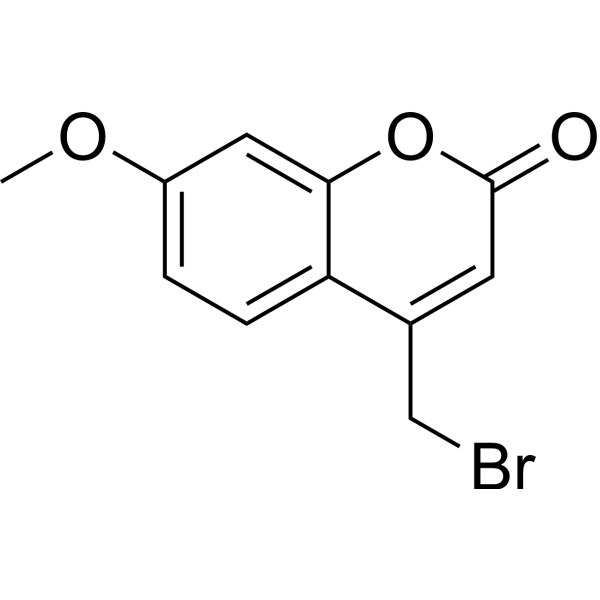
Br-Mmc (4-Bromomethyl-7-methoxycoumarin) is often used as fluorescent label for the determination of compounds possessing a carboxylic group. Br-Mmc is used for the determination fatty acids by TLC or HPLC .
loading...
    loading...
Cat. No.: HY-W717743
CAS No.: 913528-04-8
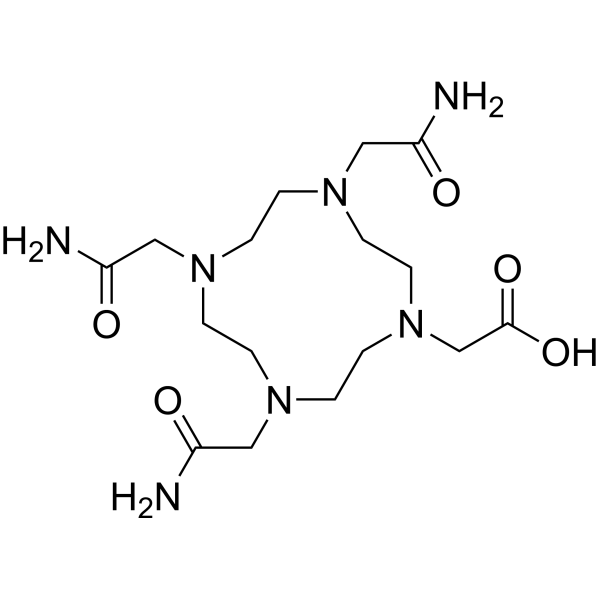
DOTAM-mono-acid is a chelator with DOTAM as its core. DOTAM-mono-acid contains a carboxylic acid group that can be activated to form an amide bond with the N-terminus of a peptide. DOTAM-mono-acid can form peptide conjugates for radiometal labeling .
loading...
    loading...
Cat. No.: HY-W105744
CAS No.: 13108-19-5
Target:  

PROTAC Linkers

Research Areas:  

Cancer

10-Aminodecanoic acid is an alkane chain with terminal carboxlic acid and amine groups. 10-Aminodecanoic acid can be used as a PROTAC linker in the synthesis of PROTACs and other conjugation applications. The amino group (NH2) is reactive with carboxylic acids, activated NHS esters, carbonyls (ketone, aldehyde) etc. The terminal carboxylic acid can react with primary amine groups of activated NHS ester to form a stable amide bond.
loading...
    loading...
Cat. No.: HY-W097128
CAS No.: 128917-74-8
Target:  

PROTAC Linkers

Research Areas:  

Cancer

Fmoc-12-aminododecanoic acid is an alkane chain with terminal Fmoc-protected amine and carboxylic acid groups. The compound can be used as a PROTAC linker in the synthesis of PROTACs. The Fmoc group can be deprotected under basic condition to obtain the free amine which can be used for further conjugations. The terminal carboxylic acid can react with primary amine groups in the presence of activators (e.g. EDC, or HATU) to form a stable amide bond.
loading...
    loading...
Cat. No.: HY-W190915
CAS No.: 869308-34-9
Research Areas:  

Others

4,7,10,13,16–Pentaoxanonadecane-1,19-diamine is a PEG based linker with two terminal amine groups. The amine group is reactive with carboxylic acids, activated NHS esters, carbonyls (ketone, aldehyde) etc.
loading...
    loading...
Cat. No.: HY-W105727
CAS No.: 1120-12-3
Target:  

PROTAC Linkers

Research Areas:  

Cancer

9-Aminononanoic acid can be used as a PROTAC linker and other conjugation in the synthesis of PROTACs. 9-Aminononanoic acid is an alkane chain with terminal carboxlic acid and amine groups. The amino group (NH2) is reactive with carboxylic acids, activated NHS esters, carbonyls (ketone, aldehyde) etc. The terminal carboxylic acid can react with primary amine groups of activated NHS ester to form a stable amide bond.
loading...
    loading...
Cat. No.: HY-W009030
CAS No.: 126631-93-4
Target:  

PROTAC Linkers

Research Areas:  

Cancer

N-Fmoc-8-aminooctanoic acid can be used as a PROTAC linker in the synthesis of PROTACs. N-Fmoc-8-aminooctanoic acid is an alkane chain with terminal Fmoc-protected amine and carboxylic acid groups. The Fmoc group can be deprotected under basic condition to obtain the free amine which can be used for further conjugations. The terminal carboxylic acid can react with primary amine groups in the presence of activators (e.g. EDC, or HATU) to form a stable amide bond.
loading...
    loading...
Cat. No.: HY-W009056
CAS No.: 127582-76-7
Target:  

PROTAC Linkers

Research Areas:  

Cancer

Fmoc-7-amino-heptanoic acid is an alkane chain with terminal Fmoc-protected amine and carboxylic acid groups. Fmoc-7-amino-heptanoic acid can be used as a PROTAC linker in the synthesis of PROTACs. The Fmoc group can be deprotected under basic condition to obtain the free amine which can be used for further conjugations. The terminal carboxylic acid can react with primary amine groups in the presence of activators (e.g. EDC, or HATU) to form a stable amide bond.
loading...
    loading...

