44 Results for "

cell cycle checkpoint

" in MedChemExpress (MCE) Product Catalog:
Products (44)

44 Results for "cell cycle checkpoint" in MCE Product Catalog:

26
26 Publications Verification
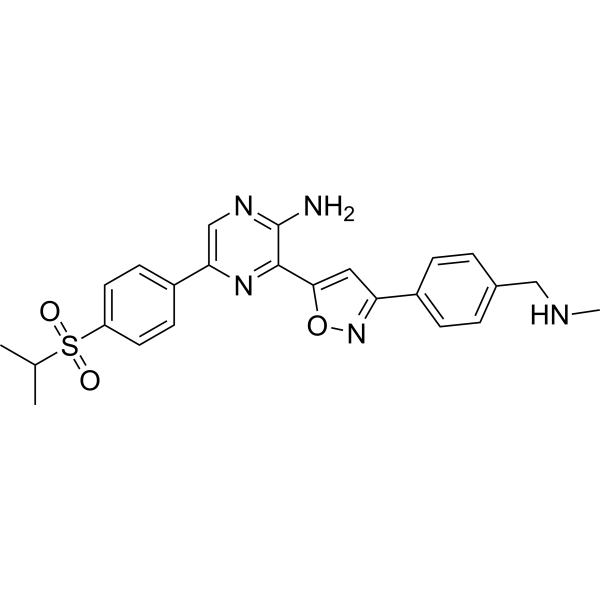
Cat. No.: HY-13902
CAS No.: 1232416-25-9
Purity:  99.70%
Synonyms: VE-822; VX-970; M6620
Research Areas:  

Infection Metabolic Disease Cancer

Berzosertib (VE-822) is an orally active, CNS-penetrant, and selective ATR kinase inhibitor. Berzosertib blocks ATR kinase activity, abrogates G2/M cell cycle checkpoint, impairs DNA damage repair. Berzosertib induces apoptosis, inhibnits conlony migration, inhibits cell proliferation, and activates cGAS-STING axes in cancer cells. Berzosertib can be used for the research of cancers, such as head and neck squamous cell carcinoma, and colorectal cancer .
loading...
    loading...
26
26 Publications Verification
Cat. No.: HY-13902A
CAS No.: 1428935-04-9
Synonyms: VE-822 hydrochloride; VX-970 hydrochloride; M6620 hydrochloride
Research Areas:  

Neurological Disease Cancer

Berzosertib (VE-822) hydrochloride is an orally active, CNS-penetrant, and selective ATR kinase inhibitor. Berzosertib hydrochloride blocks ATR kinase activity, abrogates G2/M cell cycle checkpoint, impairs DNA damage repair. Berzosertib hydrochloride induces apoptosis, inhibnits conlony migration, inhibits cell proliferation, and activates cGAS-STING axes in cancer cells. Berzosertib hydrochloride can be used for the research of cancers, such as head and neck squamous cell carcinoma, and colorectal cancer .
loading...
    loading...
7
7 Cited Publications
Cat. No.: HY-124955
CAS No.: 1362911-19-0
Purity:  99.94%
Target:  

APC

Research Areas:  

Cancer

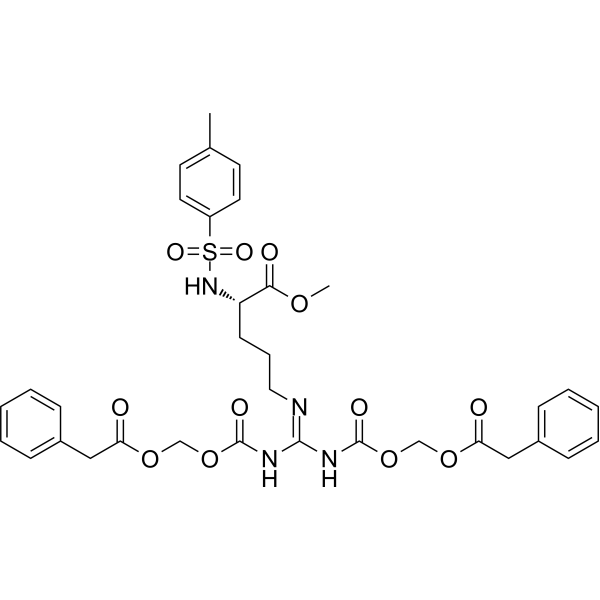
proTAME, a cell-permeable proagent form of TAME, is an anaphase promoting complex/cyclosome (APC/C) inhibitor. proTAME causes cell cycle arrest in metaphase .
loading...
    loading...
6
6 Cited Publications
Cat. No.: HY-17493A
CAS No.: 1303609-37-1
Target:  

MDM-2/p53 Apoptosis

Research Areas:  

Neurological Disease Cancer

MI-773 TFA is an orally active, selective MDM2-p53 interaction inhibitor with a Ki of 0.88 nM for MDM2. MI-773 TFA blocks the MDM2-TP53 interaction. MI-773 TFA potently activates p53. MI-773 TFA induces Apoptosis. MI-773 TFA causes tumor regression in xenograft models of adenoid cystic carcinoma. MI-773 TFA exhibits anticancer effects in neuroblastoma. MI-773 TFA can be used for the research of adenoid cystic carcinoma .
loading...
    loading...
5
5 Cited Publications
Cat. No.: HY-107407
CAS No.: 135897-06-2
Purity:  98.30%
Research Areas:  

Cancer

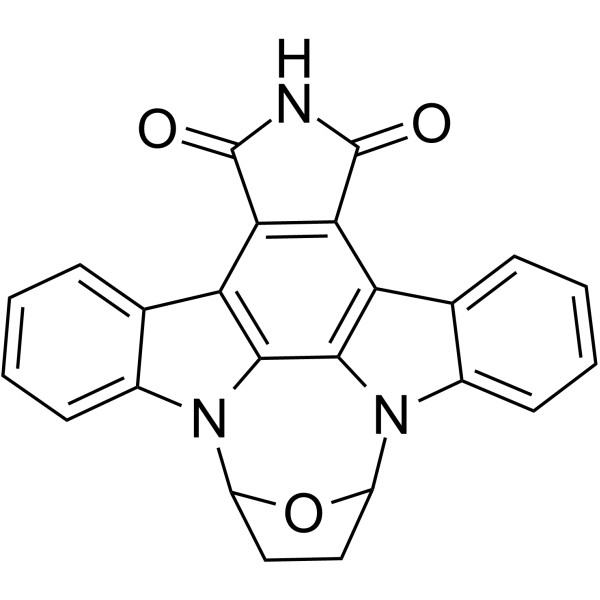
SB-218078 is a potent, selective, ATP-competitive and cell-permeable checkpoint kinase 1 (Chk1) inhibitor that inhibits Chk1 phosphorylation of cdc25C with an IC50 of 15 nM. SB-218078 is less potently inhibits Cdc2 (IC50 of 250 nM) and PKC (IC50 of 1000 nM). SB-218078 causes apoptosis by DNA damage and cell cycle arrest .
loading...
    loading...
2
2 Cited Publications
Cat. No.: HY-P80082
Synonyms: CHK1, CHEK1, Serine/threonine-protein kinase Chk1, CHK1 checkpoint homolog, cell cycle checkpoint kinase, checkpoint kinase-1

Host:  

Rabbit

Application:  

WB, ICC/IF, IHC-P, FC

Reactivity:  

Human, Mouse

loading...
    loading...
1
1 Cited Publications
Cat. No.: HY-P80455
Synonyms: CHK1, CHEK1, Serine/threonine-protein kinase Chk1, CHK1 checkpoint homolog, cell cycle checkpoint kinase, checkpoint kinase-1

Host:  

Rabbit

Application:  

WB, IHC-P

Reactivity:  

Human

loading...
    loading...
Cat. No.: HY-130841
CAS No.: 1683617-62-0
Purity:  ≥98.0%
Research Areas:  

Cancer

Apcin-A is a small molecule inhibitor that selectively targets the cell division cycle protein Cdc20 and is a derivative of Apcin (HY-110287). Apcin-A competitively binds to the D-box binding pocket of Cdc20 and inhibits substrate ubiquitination mediated by the anaphase promoting complex APC/C-Cdc20. Apcin-A also blocks the binding of Cdc20 to substrates (such as securin and cyclin B1), inhibiting anaphase initiation and cell cycle exit. Apcin-A can promote or prolong mitotic slippage in coordination with p31 comet under conditions of high spindle assembly checkpoint (SAC) activity. Apcin-A can be used to develop anti-mitotic drugs and overcome tumor chemotherapy resistance. Apcin-A can be used to synthesize PROTAC CP5V (HY-130257)[1][2][3].
loading...
    loading...
Cat. No.: HY-117102
CAS No.: 931417-26-4
Purity:  98.13%
Research Areas:  

Cancer

ANI-7 is an activator of aryl hydrocarbon receptor (AhR) pathway. ANI-7 inhibits the growth of multiple cancer cells, and potently and selectively inhibits the growth of MCF-7 breast cancer cells with a GI50 of 0.56 μM. ANI-7 induces CYP1-metabolizing mono-oxygenases by activating AhR pathway, and also induces DNA damage, checkpoint Kinase 2 (Chk2) activation, S-phase cell cycle arrest, and cell death in sensitive breast cancer cell lines .
loading...
    loading...
Cat. No.: HY-W011425
CAS No.: 6419-19-8
Synonyms: Nitrilotris(methylenephosphonic acid)
Research Areas:  

Cancer

NTPO (Nitrilotris methylenephosphonic acid) is a DNA damage inducer, causing genomic DNA damage and fragmentation, activating ATR-mediated cell cycle checkpoints. The DNA damaging effects of NTPO are abrogated by base excision repair (BER) but not nucleotide excision repair (NER) .
loading...
    loading...
Cat. No.: HY-19916
CAS No.: 1263384-43-5
Synonyms: BAL-101553
Research Areas:  

Cancer

Lisavanbulin (BAL-101553) is the prodrug of the microtubule targeting agent Avanbulin (BAL 27862) (HY-106008). Lisavanbulin is a BBB-penetrant and orally active antitumor agent, especially in tumors that express high levels of end-binding protein 1. Lisavanbulin has ability to target tumor cell proliferation and affects the tumor microenvironment by reducing tumor microvasculature. Lisavanbulin is also a spindle assembly checkpoint activator. Lisavanbulin induces cell cycle arrest and subsequent death or aberrant chromosome segregation. Lisavanbulin can be studied in research for diffuse large B cell lymphoma (DLBCL) and glioblastoma .
loading...
    loading...
Cat. No.: HY-106958
CAS No.: 163451-80-7
Synonyms: HBY 097
Research Areas:  

Infection

Talviraline is a non-nucleoside reverse transcriptase (NNRT) inhibitor that is primarily used to inhibit the replication of human immunodeficiency virus type 1 (HIV-1). Talviraline inhibits the viral replication process by binding to a specific site of HIV-1 reverse transcriptase (RT). Talviraline can be used to study the potential countermeasures and safety of HIV-1 infection .
loading...
    loading...
Cat. No.: HY-19916A
CAS No.: 1387574-54-0
Synonyms: BAL-101553 dihydrochloride
Research Areas:  

Cancer

Lisavanbulin (BAL-101553) dihydrochloride is the prodrug of the microtubule targeting agent Avanbulin (BAL 27862) (HY-106008). Lisavanbulin dihydrochloride exhibits antitumor activity, especially in tumors that express high levels of end-binding protein 1. Lisavanbulin dihydrochloride has ability to target tumor cell proliferation and affects the tumor microenvironment by reducing tumor microvasculature. Lisavanbulin dihydrochloride is also a spindle assembly checkpoint activator. Lisavanbulin dihydrochloride induces cell cycle arrest and subsequent death or aberrant chromosome segregation. Lisavanbulin dihydrochloride can be studied in research for diffuse large B cell lymphoma (DLBCL) and glioblastoma .
loading...
    loading...
Cat. No.: HY-178150
CAS No.: 2803921-87-9
Target:  

Wee1

Research Areas:  

Cancer

WEE1-IN-14 (Compound 14) is a selective WEE1 inhibitor (IC50: 0.5 nM in L-RB-FEP calculations, 1.0 nM in ADP-Glo kinase assay). Inhibition of Wee1 in cancer cells disrupts the G2-M checkpoint, removes the regulatory controls on the cell cycle, and leads to early onset of mitotic failure followed by apoptosis of tumor cells. Therefore, WEE1-IN-14 is a useful tool for studying cancer biology .
loading...
    loading...
Cat. No.: HY-142931
CAS No.: 2662761-76-2
Target:  

ATM/ATR

Research Areas:  

Neurological Disease Cancer

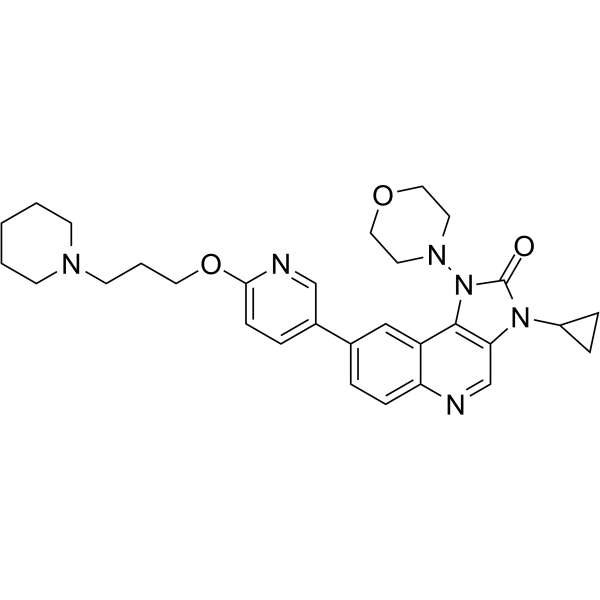
ATM-IN-1 is a potent inhibitor of ATM. ATM is located mainly in the nucleus and microsomes and is involved in cell cycle progression and in the cell cycle checkpoint response to DNA damage. ATM-IN-1 has the potential for the research of cancer and neurology diseases (extracted from patent WO2021139814A1, compound 3) .
loading...
    loading...
Cat. No.: HY-156916
CAS No.: 93326-70-6
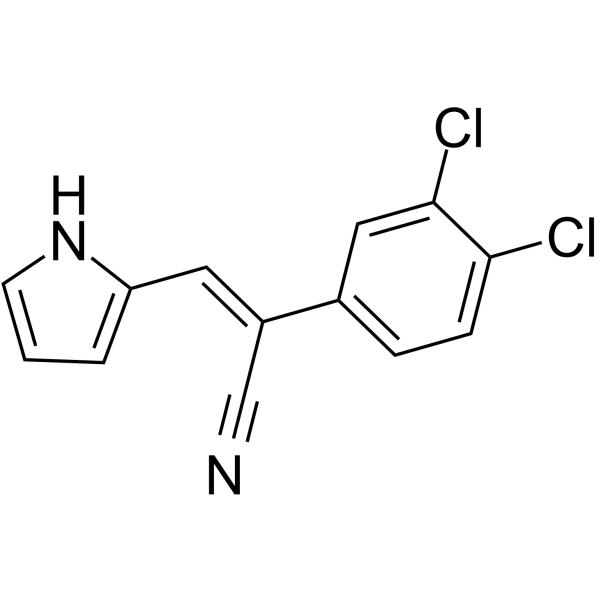
WAY-230563 (ST045945) is a serine/threonine kinase inhibitor that can block CHK1/CHK2-mediated cell cycle checkpoints. WAY-230563 can induce G2/M phase arrest and DNA damage in tumor cells .
loading...
    loading...
Cat. No.: HY-164518
CAS No.: 2772910-13-9
Target:  

Mps1 Apoptosis

Research Areas:  

Cancer

PF-3837 is an Mps1 kinase inhibitor with a Ki value of 0.33 nM and an IC50 value of 5.5 nM. PF-3837 interferes with the cell cycle checkpoint by inhibiting Mps1 catalytic activity, reducing genomic stability, thereby inducing cancer cell apoptosis (Apoptosis). PF-3837 can be used in research on breast cancer .
loading...
    loading...
Cat. No.: HY-125010
CAS No.: 287402-09-9
Research Areas:  

Cancer

Dicycloplatin is a DNA damage inducer. Dicycloplatin induces DNA damage by activating biphosphorylated checkpoint kinase 2 (CHK2), breast cancer 1 (BRCA1) and triphosphorylated p53. Dicycloplatin can induce cell cycle arrest, inhibit proliferation and lead to apoptosis in prostate cancer PC3 cells and lung cancer NCI/H446 cells. Dicycloplatin can be used in cancer researchr .
loading...
    loading...
Cat. No.: HY-E70675
Target:  

CDK

Research Areas:  

Cancer

CDK20 is a major controller of cell cycle checkpoints, which regulate cell growth and proliferation and perform a role in the development of many malignancies. CDK20 is thought to have Cyclin-dependent activating kinase (CAK) activity for CDK2 when it is complexed with Cyclin H. CDK20/CycH Recombinant Human Active Protein Kinase can be used to study the function of CDK20/CycH .
loading...
    loading...
Cat. No.: HY-15882
CAS No.: 1200127-66-7
Target:  

Endogenous Metabolite

Research Areas:  

Cancer

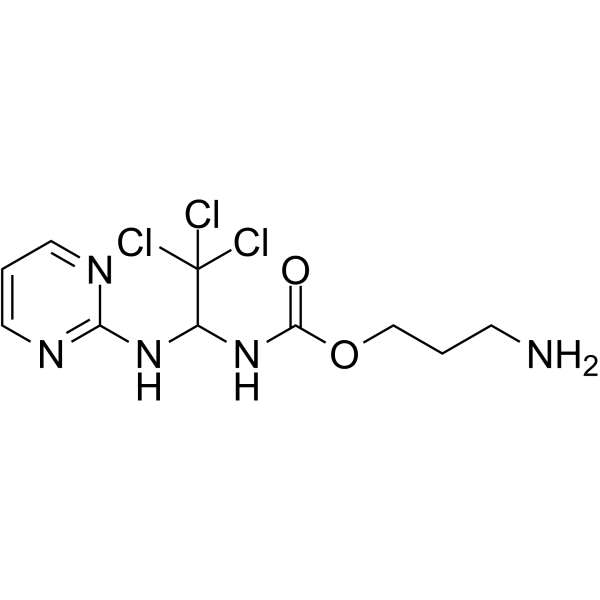
GNE-783 is a selective CHK1 inhibitor that enhances the activity of gemcitabine. GNE-783 improves the efficacy of anti-metabolite DNA damage drugs by inactivating S-phase and G2-phase cell cycle checkpoints following DNA damage. GNE-783 selectively enhances the chemical synergy of certain drugs in different tumor types, for example, enhancing the activity of temozolomide only in melanoma cell lines .
loading...
    loading...

