
1. Search Result
Search Result
Results for "

clinical potential

" in MedChemExpress (MCE) Product Catalog:

41

Inhibitors & Agonists

25

Screening Libraries

1

Biochemical Assay Reagents

2

Inhibitory Antibodies

3

Natural
Products

Targets Recommended:
Cat. No. Product Name Target Research Areas Chemical Structure
  • HY-18767
    Ivosidenib
    Maximum Cited Publications
    19 Publications Verification

    AG-120

    Isocitrate Dehydrogenase (IDH) Metabolic Disease Cancer
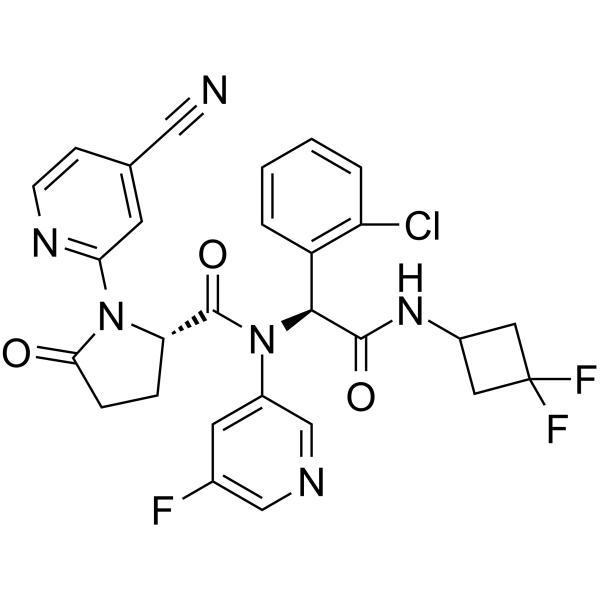
    Ivosidenib (AG-120) is an orally active inhibitor of isocitrate dehydrogenase 1 mutant (mIDH1) enzyme, it exhibits profound d-2-hydroxyglutatrate (2-HG) lowering in vivo. Ivosidenib (AG-120) has the potential for AML therapy due to its acceptable safety profile and clinical activity .
    Ivosidenib
  • HY-P99673
    Itepekimab
    1 Publications Verification

    REGN-3500; SAR-440340

    Interleukin Related NF-κB Inflammation/Immunology
    Itepekimab (REGN-3500) is an IgG4 monoclonal antibody against IL-33. Itepekimab reduced airway inflammation and related tissue damage in preliminary clinical studies. Itepekimab has potential effects in asthma, chronic obstructive pulmonary disease (COPD), and atopic dermatitis (AD) .
    Itepekimab
  • HY-P991127

    DNTH103

    Complement System Inflammation/Immunology
    Claseprubart (DNTH103) is an inhibitor targeting C1s of the complement system and an inhibitor of the C1 component of the complement cascade. Claseprubart is in phase 2 clinical evaluation. Claseprubart has application potential in research related to multifocal motor neuropathy and generalized myasthenia gravis .
    Claseprubart
  • HY-172242

    Cathepsin Dipeptidyl Peptidase Inflammation/Immunology
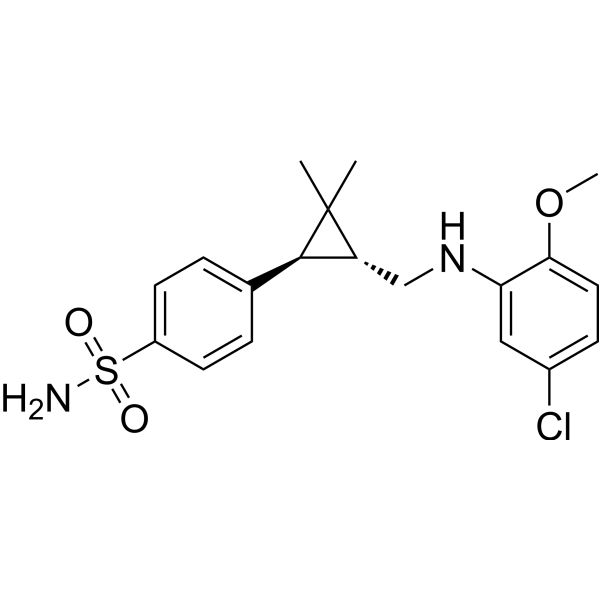
    Verducatib (BI 1291583) is an orally active inhibitor of cathepsin C (also known as DPP1). Verducatib restores the protease-inhibitor balance by inhibiting the activation of neutrophil serine proteases, thereby alleviating pulmonary inflammation and regulating infection responses. Verducatib significantly reduces the risk (including severe exacerbations) and frequency of acute exacerbations in bronchiectasis (BE). Verducatib also improves lung function and quality of life, and shortens the duration of antibiotic use. The overall incidence of adverse events of Verducatib is comparable to that of placebo, with only slightly more mild-to-moderate cutaneous adverse events observed in the high-dose group, demonstrating promising clinical application potential .
    Verducatib
  • HY-128575

    nAChR Neurological Disease
    BNC375 is a potent, selective, and orally available type I positive allosteric modulator of α7 nAChRs with an EC50 of 1.9 μM. BNC375 exhibits good CNS-agent like properties and clinical candidate potential. .
    BNC375
  • HY-16632

    γ-secretase Amyloid-β Metabolic Disease
    ELND 006 (Compound 30) is a metabolically stable γ-secretase inhibitor designed to selectively inhibit amyloid beta (Aβ) generation while sparing Notch signaling. It was developed through a synthetic strategy emphasizing diversity and chirality. ELND 006, along with its analog ELND007 (Compound 34), progressed into human clinical trials. In preclinical studies, both compounds demonstrated effective reduction of Aβ levels in vitro and in vivo. Comparisons with other γ-secretase inhibitors like Semagacestat, Begacestat, and Avagacestat underscored their potency and specificity in lowering Aβ levels in cerebrospinal fluid (CSF) of healthy human volunteers, suggesting potential therapeutic efficacy in Alzheimer's disease .
    ELND 006
  • HY-106983

    Glucocorticoid Receptor Inflammation/Immunology
    GR 250495X is an inhaled glucocorticoid receptor agonist. GR 250495X is designed as a antedrug, which takes effect locally in the lungs but is rapidly metabolized and inactivated in the bloodstream after entering the systemic circulation, thereby minimizing systemic side effects. GR 250495X can be used in asthma research .
    GR 250495X
  • HY-19500

    COX Others
    SC-75416 is a selective cyclooxygenase-2 inhibitor. Its pharmacokinetic/pharmacodynamic (PK/PD) model was used for development and clinical trial simulation to design a study protocol to verify its analgesic effect in a post-oral surgery pain model. The simulation results showed that 360 mg of SC-75416 may provide better pain relief than 400 mg of ibuprofen. The actual clinical trial results confirmed this hypothesis, and 360 mg of SC-75416 was indeed superior to 400 mg of ibuprofen in pain relief. The PK/PD model of SC-75416 showed good predictive performance and successfully predicted its clinical effect. These research results show that SC-75416, as a new selective COX-2 inhibitor, has potential clinical application value in the management of post-oral surgery pain.
    SC-75416
  • HY-W173257

    6-Amino-5-1,3-dimethyl-5-(formamido)uracil

    Others
    Theophylline EP impurity C is an alkaloid with anti-bronchial smooth muscle spasm activity. Theophylline EP impurity C can be used to assess the purity and quality of compounds. Theophylline EP impurity C has potential clinical value in the suppression of asthma and chronic obstructive pulmonary disease.
    Theophylline EP impurity C
  • HY-111224

    HIV CXCR Infection
    GSK812397 is a CXCR4 antagonist with potential for the treatment of HIV infection. To evaluate the clinical potential of GSK812397, kilogram-scale agent candidates are needed. Here, an improved, scalable synthetic route for the CXCR4 antagonist GSK812397 is described. This new route has been scaled up in a 50-liter stationary facility to obtain 1.2 kg of agent substance in 20% overall yield and >99% chemical and enantiomeric purity in five steps. CXC chemokine receptor 4 (CXCR4) is a 7-transmembrane protein that functions in part as a host co-receptor for multiple strains of HIV-1. It is thought that targeting CXCR4 will help inhibit the replication of several late cytopathic viruses; therefore, CXCR4 antagonists are one of the most promising new classes of experimental anti-HIV agents. GSK812397 is a potent CXCR4 antagonist and is therefore a candidate for investigation for the treatment of HIV infection.
    GSK812397
  • HY-12629

    PF-06297470

    mGluR Others
    PF470 (PF-06297470) is a negative allosteric modulator of metabotropic glutamate receptor 5 (mGluR5) with significant efficacy in Parkinson's disease models, but clinical development was halted due to potential issues found in toxicology studies.
    PF470
  • HY-118557A

    S-MPEC hydrochloride

    5-HT Receptor Others
    Iferanserin hydrochloride (S-MPEC hydrochloride) is a selective serotonin receptor antagonist with the potential to inhibit internal hemorrhoids. Iferanserin hydrochloride demonstrated efficacy and tolerability in ongoing Phase IIb clinical trials, with the ability to significantly reduce patient-reported symptoms of bleeding and pruritus .
    Iferanserin hydrochloride
  • HY-117378

    KRP-204

    Adrenergic Receptor Inflammation/Immunology Cancer
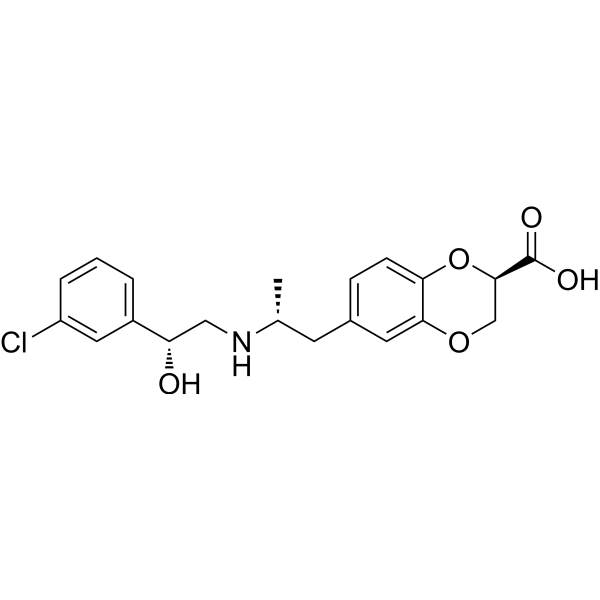
    N-5984 (KRP-204) is a potent and selective agonist of β3-adrenergic receptor. N-5984 has the potential for developing as one of the clinically effective drugs for obesity and diabetes mellitus .
    N-5984
  • HY-120285

    RWJ-351647 hydrochloride; SPD-556 hydrochloride

    Endogenous Metabolite Endocrinology
    M-0002 hydrochloride (RWJ-351647 hydrochloride) is a biologically active compound that acts as an antagonist of the vasopressin V2 receptor. M-0002 hydrochloride is potentially useful for inhibiting ascites. M-0002 hydrochloride shows excellent properties that are favorable for clinical development .
    M-0002 hydrochloride
  • HY-130627

    RSV Influenza Virus Infection
    RSV/IAV-IN-2 (compound 14c) is a potent and dual inhibitor of RSV/IAV. RSV/IAV-IN-2 has lesser cytotoxicity than the clinical agent, Ribavirin. RSV/IAV-IN-2 has the potential for the research of RSV and/or IAV infections .
    RSV/IAV-IN-2
  • HY-130626

    RSV Influenza Virus Infection
    RSV/IAV-IN-1 (compound 14e) is a potent and dual inhibitor of RSV/IAV. RSV/IAV-IN-1 has lesser cytotoxicity than the clinical agent, Ribavirin. RSV/IAV-IN-1 has the potential for the research of RSV and/or IAV infections .
    RSV/IAV-IN-1
  • HY-120046

    HDAC Cancer
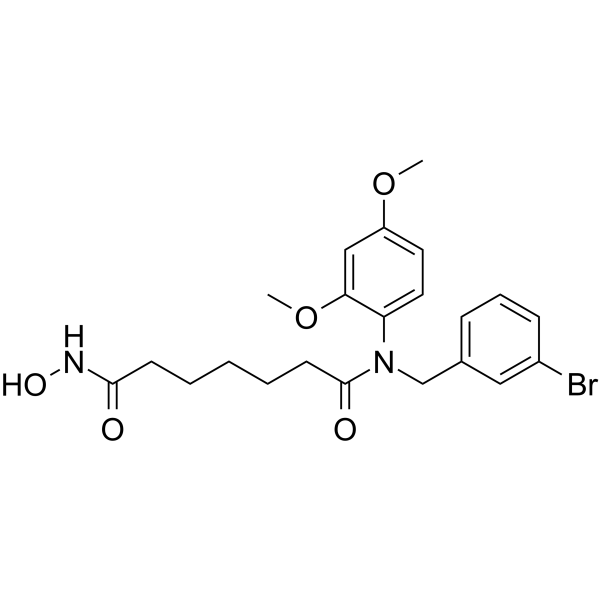
    YF479 is a potent inhibitor of histone deacetylase. YF479 abates cell viability, suppresses colony formation and tumor cell motility. YF479 significantly inhibits breast tumor growth and metastasis. YF479 has the potential for the research of clinical trials for breast cancer .
    YF479
  • HY-162261

    Bacterial Infection
    Antibacterial agent 186 (compound 25) is a potent antibacterial agent. Antibacterial agent 186 shows antibiofilm-forming properties against clinical Staphylococcus epidermidis strains and demonstrates the capacity to eliminate existing biofilm layers. Antibacterial agent 186 has the potential for the research of multidrug-resistant Staphylococcus epidermidis .
    Antibacterial agent 186
  • HY-129662

    Biochemical Assay Reagents Others
    Ro 31-0052 is a basic radiation sensitizer, a 3'-hydroxypiperidine analog of Ro 03-8799, with improved hydrophilicity. This type of designed radiation sensitizer has better pharmacokinetic properties and has the potential to replace clinically used Misonidazole (HY-105061) and Metronidazole (HY-B0318) .
    Ro 31-0052
  • HY-117742

    Bacterial Infection
    DA-7867 is an antibacterial compound with activity against a wide range of bacteria, including drug-resistant bacteria. DA-7867 shows promising antibacterial activity against some clinically important pathogens, including drug-resistant bacteria. It is an amide analog of Tedizolid (HY-14855), reflecting the potential use of tetrazoles in the development of new antibacterial agents .
    DA-7867
  • HY-N1791

    Others Infection
    3, 5-diprenyl-4-hydroxybenzaldehyde is an isoprene phenyl butyl aldehyde. 3, 5-diprenyl-4-hydroxybenzaldehyde had the ability to inhibit biofilm formation in strains. 3, 5-diprenyl-4-hydroxybenzaldehyde can be used to study the potential synergistic effect of clinically relevant antibiotics .
    3,5-Diprenyl-4-hydroxybenzaldehyde
  • HY-N1483A

    Potassium Channel Cardiovascular Disease
    Guanfu base A hydrochloride is an antiarrhythmic alkaloid with the ability to inhibit CYP2D6 enzyme activity. Guanfu base A hydrochloride can be used to inhibit arrhythmia-related diseases. Guanfu base A hydrochloride exhibits inhibitory effects on CYP2D6 in different species of organisms, including humans, monkeys, and dogs. The biological activity of Guanfu base A hydrochloride makes it have potential clinical application value .
    Guanfu base A hydrochloride
  • HY-100740A

    AZD-3293 hydrochloride; LY3314814 hydrochloride

    Beta-secretase Neurological Disease
    Lanabecestat (AZD3293; LY3314814) hydrochloride is a potent BACE1 inhibitor that has been investigated for its potential as a modifying treatment for Alzheimer's disease. Lanabecestat (hydrochloride) demonstrated significant dose- and time-dependent reductions in concentrations of amyloid beta peptides in plasma, cerebrospinal fluid, and brain. Lanabecestat (hydrochloride) was also shown to produce reductions in Aβ neuritic plaque burden without demonstrating clinical benefits or slowing the progression of Alzheimer's disease pathophysiology.
    Lanabecestat hydrochloride
  • HY-119467

    Ser/Thr Protease Cancer
    MDK0734 is a selective inhibitor that inhibits feline hepsin B endopeptidase and exopeptidase activities. MDK0734 demonstrated efficacy in a cell-based in vitro tumor invasion model, significantly attenuating the invasive ability of MCF-10A neoT cells. MDK0734 provides new potential inhibitors for the development of clinically useful compounds targeting the deleterious effects of feline hepsin B in cancer progression .
    MDK0734
  • HY-108204

    THRX 918661

    GABA Receptor Others
    AZD 3043 (THRX 918661) is a positive allosteric modulator of GABA(A) receptors with sedative and hypnotic activity. AZD 3043 can enhance GABA(A) receptor-mediated chloride currents in vitro and produce hypnotic and electroencephalographic inhibitory effects in vivo. Due to its esterase-dependent metabolic pathway, it has a short duration of action and can be quickly cleared even after long-term infusion, which may have clinical application potential.
    AZD 3043
  • HY-118326

    Autophagy Cancer
    MRT 68601 is a potent TBK1 inhibitor with the activity of inhibiting autophagosome formation in lung cancer cells. MRT 68601 may have potential effects against targets associated with host-dependent factors identified in SARS-CoV-2 infection. The drug targets involved in MRT 68601 are related to existing FDA-approved drugs and compounds in clinical trials, which can provide support for the development of broad-spectrum antiviral therapies .
    MRT 68601
  • HY-167950

    PPAR Metabolic Disease
    PPARα/γ agonist 5 is a dual PPARα/γ agonist with significant biological activity exhibited at low concentrations. The EC50 of PPARα/γ agonist 5 are 0.358μM and 1.21μM respectively, showing its potential in inhibiting type 2 diabetes and lipid metabolism disorders. PPARα/γ agonist 5 was selected for clinical development due to its high efficacy .
    PPARα/γ agonist 5
  • HY-125881

    LPL Receptor Inflammation/Immunology
    ASP1126 is a selective and orally active sphingosine-1-phosphate (S1P) agonist, with EC50 values of 7.12 nM, 517 nM for hS1P1 and hS1P3, respectively. ASP1126 decreases the number of peripheral lymphocytes, naive T cells, central memory T cells and effector memory T cells in the peripheral blood. ASP1126 has the potential to be applied in clinical transplantation with improved safety profile .
    ASP1126
  • HY-167706

    GPR35 Inflammation/Immunology
    Diethyl-Lodoxamide is a highly potent GPR35 agonist with potential to inhibit inflammatory bowel disease. Diethyl-Lodoxamide activates GPR35 in humans, mice and rats, showing similar EC50 values. Diethyl-Lodoxamide can alleviate the clinical symptoms of DSS-induced inflammatory bowel disease in mouse models, and the effect is better than the traditional drug 5-ASA. The pharmaceutical properties of Diethyl-Lodoxamide have been optimized to better meet the requirements of drug design .
    Diethyl-Lodoxamide
  • HY-169509

    PARP Necroptosis Topoisomerase RIP kinase Mixed Lineage Kinase Cancer
    Topoisomerase I/II Inhibitor 8 (Compound Ru7) is a dual catalytic inhibitor of Topoisomerase I/II, capable of inducing DNA damage and PARP-1 activation, which subsequently leads to the activation of RIPK1, RIPK3, and MLKL, ultimately triggering necroptosis. Topoisomerase I/II Inhibitor 8 demonstrates remarkable anticancer activity by effectively targeting the nuclei of cancer cells and inducing cell death through necroptosis, showing great clinical potential in circumventing drug resistance in cancer treatment .
    Topoisomerase I/II inhibitor 8
  • HY-103202A

    Adrenergic Receptor Cardiovascular Disease
    SNAP5089 is a selective α1A-adrenoceptor antagonist with over 1700-fold selectivity for the α1A subtype, which may have implications for the treatment of hypertension and benign prostatic hypertrophy. SNAP5089 demonstrates significant receptor affinity compared to other clinical drugs, emphasizing its potential therapeutic advantages. SNAP5089's high affinity aligns with its suitability for conditions where precise α1A modulation is desirable.
    SNAP5089
  • HY-B0311D

    (S)-(-)-Carbidopa hydrochloride

    Aryl Hydrocarbon Receptor Cancer
    Carbidopa hydrochloride ((S)-(-)-Carbidopa hydrochloride) is a drug used to inhibit Parkinson's disease, which has the activity of inhibiting the peripheral metabolism of levodopa. Carbidopa hydrochloride can increase the proportion of peripheral levodopa penetrating the blood-brain barrier, thereby enhancing its effect on the central nervous system. Carbidopa hydrochloride has also been found to be an aryl hydrocarbon receptor (AhR) ligand with anticancer activity, which can inhibit the growth of pancreatic cancer cells and tumors. The selective AhR regulation properties of carbidopa hydrochloride provide potential prospects for its clinical application .
    Carbidopa hydrochloride
  • HY-19904A

    (+/-)-LY2409021

    Endogenous Metabolite Metabolic Disease
    (+/-)-Adomeglivant ((+/-)-LY2409021) is a potent and selective glucagon receptor antagonist with hypoglycemic activity. (+/-)-Adomeglivant is effective in lowering blood sugar levels in both healthy people and people with type 2 diabetes. (+/-)-Adomeglivant is well tolerated by glucagon signaling blockade in patients with type 2 diabetes and significantly reduces fasting and postprandial blood glucose with a concomitant reversible elevation of aminotransferases. Glucagon signaling inhibition by (+/-)-Adomeglivant is a promising potential inhibitory approach for patients with type 2 diabetes and warrants further evaluation of its benefits and risks in longer clinical trials .
    (+/-)-Adomeglivant
  • HY-137390A

    HMG-CoA Reductase (HMGCR) Cardiovascular Disease Metabolic Disease
    (3S,5R)-Fluvastatin (potassium) is a synthetic hypolipidemic drug that inhibits HMG-CoA reductase activity. (3S,5R)-Fluvastatin (potassium) has similar antioxidative effects on copper ion-induced LDL oxidation compared to its 3R,5S enantiomer. (3S,5R)-Fluvastatin (potassium) and its metabolites demonstrate a potential to exhibit anti-atherosclerotic effects through their antioxidative activities. (3S,5R)-Fluvastatin (potassium) is clinically utilized as part of a racemic mixture for reducing plasma cholesterol levels.
    (3S,5R)-Fluvastatin potassium
  • HY-16633

    γ-secretase Amyloid-β Metabolic Disease
    ELND 007 (Compound 34) is a metabolically stable γ-secretase inhibitor designed to selectively inhibit amyloid beta (Aβ) generation while minimizing Notch inhibition. Developed alongside ELND 006 (Compound 30), it underwent human clinical trials following a synthetic strategy emphasizing diversity and chirality. In preclinical studies, ELND 007 showed promising in vitro and in vivo characteristics, effectively reducing Aβ levels. Comparative studies with other γ-secretase inhibitors like Semagacestat, Begacestat, and Avagacestat highlighted its efficacy in lowering Aβ production, particularly demonstrated by reduced Aβ levels in the cerebrospinal fluid (CSF) of healthy human volunteers, suggesting potential therapeutic benefit for Alzheimer's disease .
    ELND 007
  • HY-106860

    Endogenous Metabolite Neurological Disease
    Gedocarnil is a compound used in research to explore central nervous system diseases and has potential anxiety-related activity. The use of gedocarnil provides an effective tool for further experimental research on anxiety. Gedocarnil may induce severe anxiety attacks in clinical trials .
    Gedocarnil
  • HY-116184

    Endogenous Metabolite Inflammation/Immunology
    PF-05387252 is a potent and selective IRAK4 inhibitor with the activity of inhibiting endogenous TLR signaling pathways. PF-05387252 has shown anti-inflammatory activity in experimental models and may have potential clinical application value in inhibiting psoriasis. Although PF-05387252 and its related compounds have shown anti-inflammatory effects in animal models, their efficacy in inhibiting psoriasis has not yet been verified .
    PF-05387252
  • HY-123882

    Endogenous Metabolite Others
    IRAK4-IN-29 is an IRAK4 inhibitor with good selectivity and low nanomolar activity. IRAK4-IN-29 can effectively block the TLR-mediated signal transduction pathway. IRAK4-IN-29 showed significant inhibitory effects in LPS- and R848-induced cytokine experiments. IRAK4-IN-29 can inhibit LPS-induced TNFα in an in vivo model, showing a similar phenotype to IRAK4 gene-deficient mice. IRAK4-IN-29 has good medicinal chemical properties, such as microsomal stability and solubility, showing potential clinical application value .
    IRAK4-IN-29
  • HY-Z11709

    Endogenous Metabolite Cancer
    13-Hydroxy-alpha-tocopherol is a fat-soluble vitamin E derivative and anticancer agent with antioxidant and antiproliferative activities. 13-Hydroxy-alpha-tocopherol scavenges peroxyl free radicals and protects polyunsaturated fatty acids from oxidative damage. 13-Hydroxy-alpha-tocopherol not only inhibits the growth of glioma cancer cells, but its deficiency is also closely associated with recurrent miscarriage, embryonic growth retardation and death. Clinical observations show that the expression of 13-Hydroxy-alpha-tocopherol is downregulated in the follicular fluid of patients with recurrent miscarriage. 13-Hydroxy-alpha-tocopherol has important application potential in the research of recurrent miscarriage and glioma .
    13-Hydroxy-alpha-tocopherol
  • HY-69174

    Bacterial
    1-Amino-2,5-anhydro-1-deoxy-D-mannitol is a potent antibacterial compound with antibacterial activity against a variety of Gram-positive bacteria, including methicillin-resistant Staphylococcus aureus (MRSA) and vancomycin-resistant Enterococci (VRE). The application potential of 1-Amino-2,5-anhydro-1-deoxy-D-mannitol lies in its ability to effectively combat common drug-resistant bacterial infections. 1-Amino-2,5-anhydro-1-deoxy-D-mannitol may become an emerging antibacterial agent in clinical inhibition.
    1-Amino-2,5-anhydro-1-deoxy-D-mannitol
  • HY-168168

    Endogenous Metabolite Metabolic Disease
    (5aS,6R,6aR)-MK-8666 is a selective GPR40 agonist with activity in promoting fatty acid-induced insulin secretion in pancreatic β cells and intestinal enteroendocrine cells. (5aS,6R,6aR)-MK-8666 has been studied for the inhibition of type 2 diabetes and has shown significant blood glucose lowering effects. Although (5aS,6R,6aR)-MK-8666 is considered to have potential inhibitory advantages, its development was stopped in Phase I clinical trials due to liver safety issues .
    (5aS,6R,6aR)-MK-8666

Inquiry Online

Your information is safe with us. * Required Fields.

Salutation


Country or Region *

Applicant Name *


Organization Name *

Department *


Email Address *


Product Name *

Cat. No.


Requested quantity *

Phone Number *


Remarks

Inquiry Online

Inquiry Information

Product Name:
Cat. No.:
Quantity:
MCE Japan Authorized Agent:

