12 Results for "

clonic convulsions

" in MedChemExpress (MCE) Product Catalog:
Products (12)

12 Results for "clonic convulsions" in MCE Product Catalog:

43
43 Publications Verification
Cat. No.: HY-137790
CAS No.: 38641-83-7
Purity:  99.35%
Synonyms: (-)-Bicuculline methochloride
Target:  

GABA Receptor

Research Areas:  

Neurological Disease

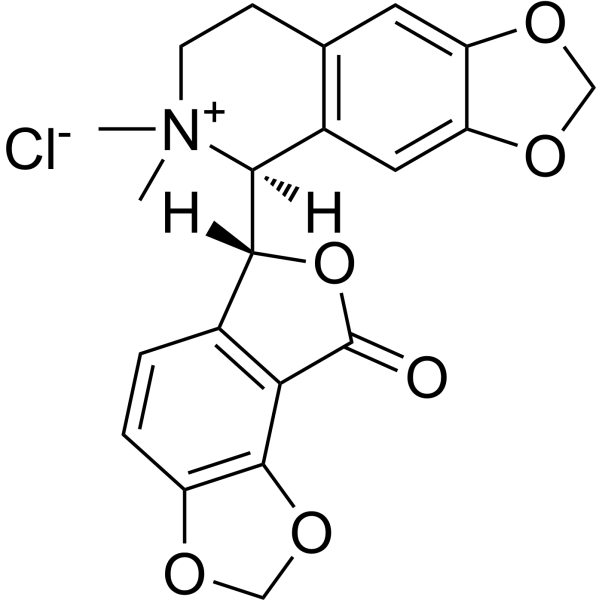
Bicuculline ((+)-Bicuculline; d-Bicuculline) methochloride is a selective GABAA receptor antagonist with an IC50 value of 3 μM. Bicuculline methochloride induces clonic tonic convulsions in mammals and can also be used to block Ca 2+ activated potassium channels. Bicuculline methochloride can be used in studies of epilepsy and other related psychiatric disorders .
loading...
    loading...
Cat. No.: HY-W017500
CAS No.: 17833-53-3
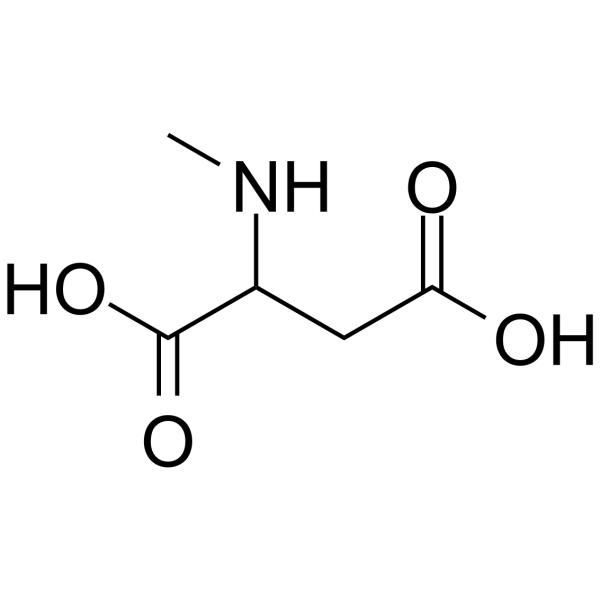
N-Methyl-DL-aspartic acid acts as an agonist for N-methyl-D-aspartic acid receptors and D-isomer-specific aspartate receptors. N-Methyl-DL-aspartic acid activates hypothalamic neurons that regulate gonadotropin-releasing hormone secretion, and stimulates prepubertal male rhesus monkeys to produce sustained intermittent gonadotropin-releasing hormone secretion and pulsatile luteinizing hormone secretion. N-Methyl-DL-aspartic acid activates excitatory effects mediated by N-methyl-D-aspartic acid receptors. N-Methyl-DL-aspartic acid exhibits convulsant effects, inducing clonic convulsions with loss of righting reflex, generalized tonic-clonic seizures or persistent clonic seizures. N-Methyl-DL-aspartic acid causes precocious puberty. N-Methyl-DL-aspartic acid can be used in studies related to convulsions and seizures .
loading...
    loading...
Cat. No.: HY-50723
CAS No.: 1076-22-8
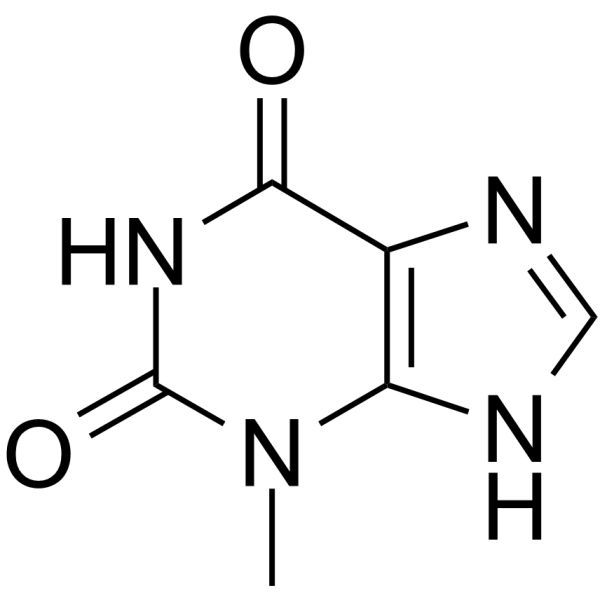
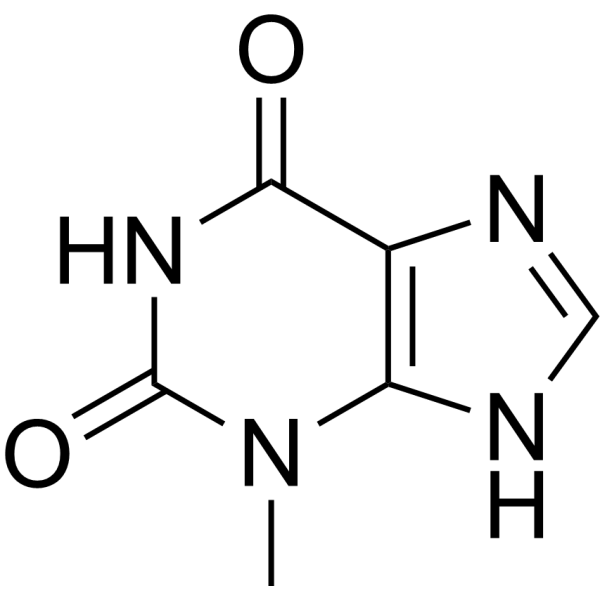
3-Methylxanthine is a blood-brain barrier-permeable cyclic GMP phosphodiesterase inhibitor, with an IC50 of 920 μM against guinea pig cyclic GMP phosphodiesterase. 3-Methylxanthine relaxes the spontaneous tension of isolated guinea pig tracheal smooth muscle preparations. Through a DRD1-dependent pathway, 3-Methylxanthine upregulates the expression of γH2AX and activated caspase-3, downregulates the expression of Bcl-2, and enhances Cisplatin-induced apoptosis (apoptosis) in ovarian cancer cells both in vitro and in vivo. 3-Methylxanthine induces clonic convulsions in the central nervous system. 3-Methylxanthine is the major metabolite of Theophylline (HY-B0809). 3-Methylxanthine can be used in studies related to ovarian cancer and neurotoxic convulsions .
loading...
    loading...
Cat. No.: HY-B1870
CAS No.: 108-62-3
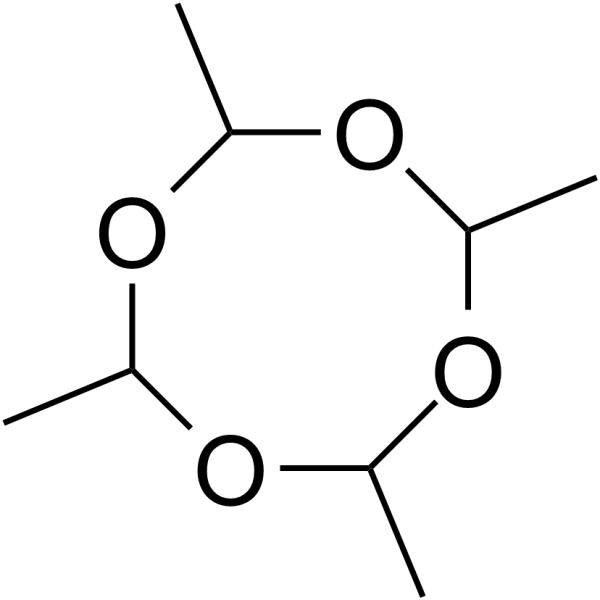
Metaldehyde is an orally active molluscicide. Metaldehyde acts as a feeding inhibitor. Metaldehyde disrupts the feeding cycle, impairs righting ability, delays fecal excretion, induces toxic symptoms in slugs, reduces the concentrations of neurotransmitters (Noradrenaline, 5-HT (HY-B1473A)) in the mouse brain, and induces lethal clonic-tonic convulsions in mice .
loading...
    loading...
Cat. No.: HY-100783B
CAS No.: 66016-70-4
Synonyms: (+)-Bicuculline methobromide
Target:  

GABA Receptor

Research Areas:  

Neurological Disease

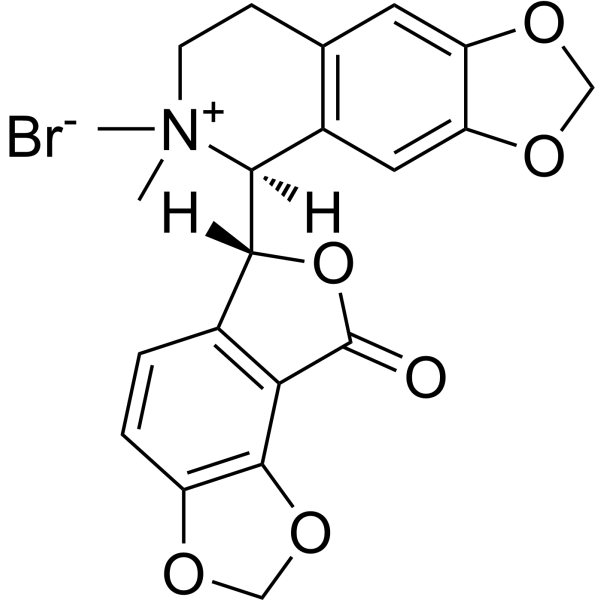
Bicuculline methobromide is a selective GABAA Receptor antagonist with an IC50 value of 3 μM. Bicuculline methobromide induces clonic tonic convulsions in mammals and can also be used to block Ca 2+ activated potassium channels. Bicuculline methobromide can be used in studies of epilepsy and other related psychiatric disorders .
loading...
    loading...
Cat. No.: HY-50723R
CAS No.: 1076-22-8
3-Methylxanthine (Standard) is the analytical standard of 3-Methylxanthine. This product is intended for research and analytical applications. 3-Methylxanthine is a blood-brain barrier-permeable cyclic GMP phosphodiesterase inhibitor, with an IC50 of 920 μM against guinea pig cyclic GMP phosphodiesterase. 3-Methylxanthine relaxes the spontaneous tension of isolated guinea pig tracheal smooth muscle preparations. Through a DRD1-dependent pathway, 3-Methylxanthine upregulates the expression of γH2AX and activated caspase-3, downregulates the expression of Bcl-2, and enhances Cisplatin-induced apoptosis (apoptosis) in ovarian cancer cells both in vitro and in vivo. 3-Methylxanthine induces clonic convulsions in the central nervous system. 3-Methylxanthine is the major metabolite of Theophylline (HY-B0809). 3-Methylxanthine can be used in studies related to ovarian cancer and neurotoxic convulsions .
loading...
    loading...
Cat. No.: HY-136844
CAS No.: 143692-18-6
Synonyms: GYKI 53655
Target:  

iGluR

Research Areas:  

Neurological Disease

LY 300168 (GYKI 53655) is a non-competitive, blood-brain-barrier permeable AMPA receptor antagonist. LY 300168 attenuates hippocampal injury. LY 300168 blocks the sound-induced clonic and tonic convulsions .
loading...
    loading...
Cat. No.: HY-50723S1
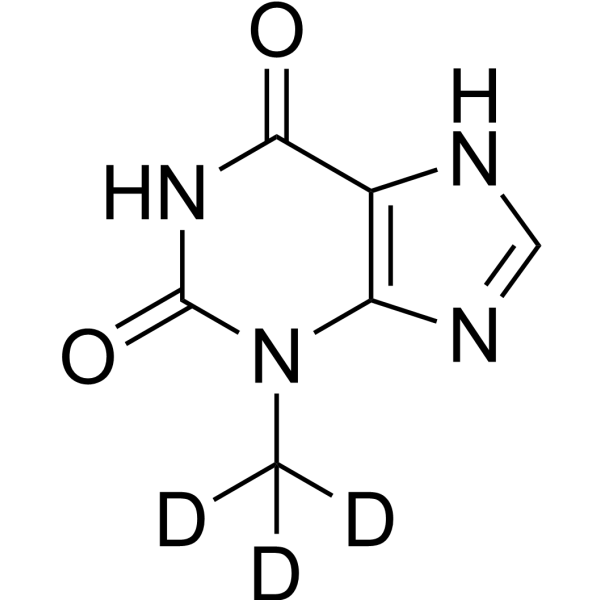
3-Methylxanthine-d3 is deuterated labeled 3-Methylxanthine (HY-50723). 3-Methylxanthine is a blood-brain barrier-permeable cyclic GMP phosphodiesterase inhibitor, with an IC50 of 920 μM against guinea pig cyclic GMP phosphodiesterase. 3-Methylxanthine relaxes the spontaneous tension of isolated guinea pig tracheal smooth muscle preparations. Through a DRD1-dependent pathway, 3-Methylxanthine upregulates the expression of γH2AX and activated caspase-3, downregulates the expression of Bcl-2, and enhances Cisplatin-induced apoptosis (apoptosis) in ovarian cancer cells both in vitro and in vivo. 3-Methylxanthine induces clonic convulsions in the central nervous system. 3-Methylxanthine is the major metabolite of Theophylline (HY-B0809). 3-Methylxanthine can be used in studies related to ovarian cancer and neurotoxic convulsions .
loading...
    loading...
Cat. No.: HY-120146
CAS No.: 184845-43-0
Target:  

GABA Receptor

Research Areas:  

Neurological Disease

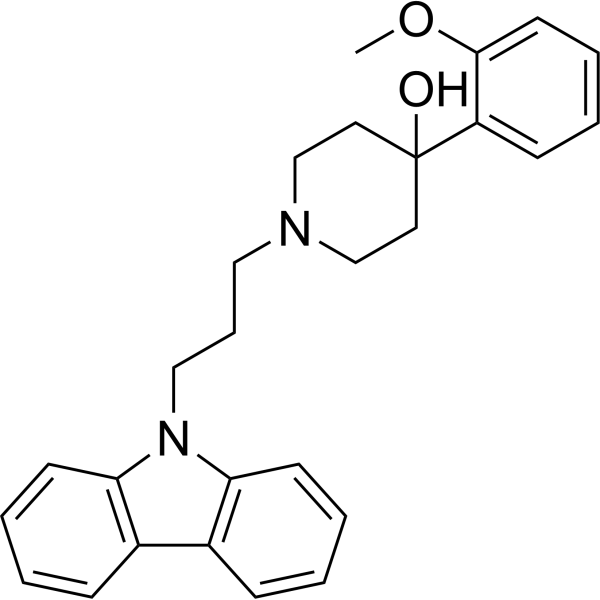
NNC 05-2090 is aGABA uptake inhibitor and inhibitor of the β-GABA transporter (BGT-1) (IC50 sub>: 10.6 μM). NNC 05-2090 also inhibits mGAT2 with a Ki value of 1.4 μM. NNC 05-2090 has anticonvulsant activity and can be used in the study of epilepsy and neurological diseases .
loading...
    loading...
Cat. No.: HY-W194842
CAS No.: 525-41-7
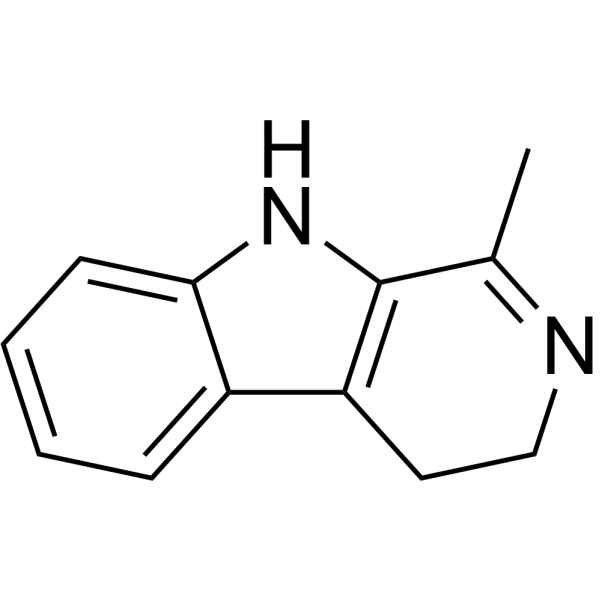
Harmalan is a tryptamine binding site stimulant and an imidazoline binding site ligand. Harmalan can be isolated from the leaves of Flindersia laevicarpa. Harmalan elevates 5-HT (HY-B1473A) levels and reduces 5-HIAA levels in the cerebral cortex. Harmalan increases spontaneous motor activity, induces clonic convulsions, produces anxiogenic effects, and elicits head weaving, hindlimb abduction, trunk curvature, piloerection, resting tremor, ataxia, forelimb abduction with increased muscle tone, and occasional alternating forepaw treading behaviors .
loading...
    loading...
Cat. No.: HY-180554
CAS No.: 300587-89-7
Research Areas:  

Neurological Disease

UCB1244283 is a synaptic vesicle glycoprotein 2A (SV2A) allosteric modulator. UCB1244283 binds to a secondary ligand-binding site in SV2A and enhances orthosteric ligand engagement when the orthosteric site is occupied, by stabilizing the occluded state and slowing ligand dissociation. UCB1244283 shows a clear protective effect against both tonic and clonic convulsions in sound-sensitive mice. UCB1244283 can be used for epilepsy research .
loading...
    loading...
Cat. No.: HY-118018
CAS No.: 202914-21-4
Target:  

GABA Receptor

Research Areas:  

Neurological Disease

CHF-2993 is an orally active anticonvulsant. CHF-2993 antagonizes Bicuculline (HY-N0219)- and Picrotoxin (HY-101391)-induced tonic convulsions in mice, shows no activity against Pentylenetetrazole-induced clonic convulsions in mice, and partially reduces Veratridine (HY-N6691)-induced aspartate efflux in rat cortical synaptosomes. CHF-2993 can be used in the research of epilepsy .
loading...
    loading...
  • 1

