

Search Result
Results for "
coatings
" in MedChemExpress (MCE) Product Catalog:
60
Biochemical Assay Reagents
12
Isotope-Labeled Compounds
| Cat. No. |
Product Name |
Target |
Research Areas |
Chemical Structure |
-
- HY-125865
-
Casein
2 Publications Verification
|
Environmental Pollutants
Endogenous Metabolite
Casein Kinase
|
Endocrinology
Cancer
|
|
Casein is an orally active phosphoprotein that can be separated into various electrophoretic components, such as α2-Casein, κ-Casein, β-casein, and γ-casein. Casein has also been blended and grafted with other polymers, cross-linkers, or monomers to improve its functional properties. Casein enhances calcium absorption and reduces the extent of fissure as well as smooth-surface caries. Casein promotes proliferation of prostate cancer. Casein has various applications in the paper, leather, textile, and food industries, serving as coatings, adhesives, and packaging materials .
|
-
-
- HY-W019711
-
|
|
Environmental Pollutants
Endogenous Metabolite
|
Others
|
|
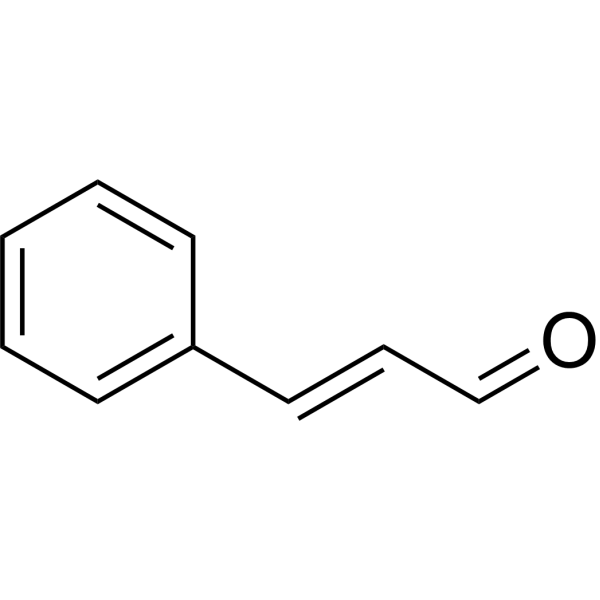
trans-Cinnamaldehyde can be used to prepare highly polyfunctionalized furan ring by reaction of alkyl isocyanides with dialkyl acetylenedicarboxylate . trans-Cinnamaldehyde can be used to synthesize trans-cinnamaldehyde -β-cyclodextrin complex, an antimicrobial edible coating that increases the shelf life of fresh-cut fruits .
|
-
-
- HY-Y0304
-
|
|
Environmental Pollutants
|
Neurological Disease
Cancer
|
|
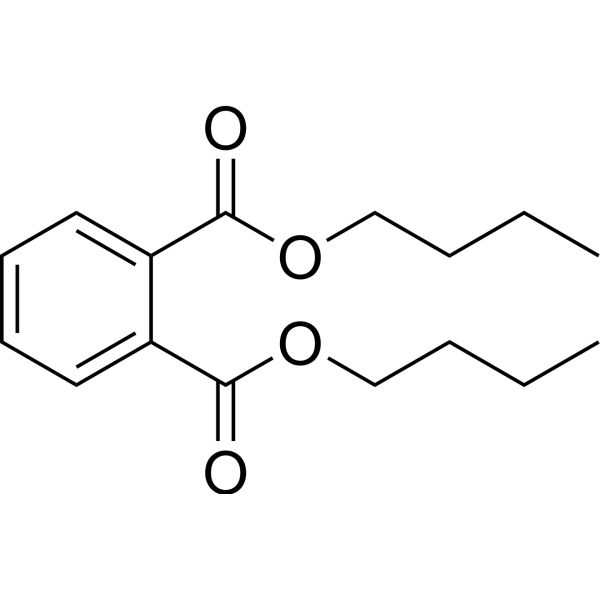
Dibutyl phthalate is a commonly used plasticizer commonly found in some food packaging materials, personal care products, and the coating of oral medications . May cause toxicity and adverse neurobehavioral effects .
|
-
-
- HY-W010629
-
|
|
Bacterial
|
Infection
|
|
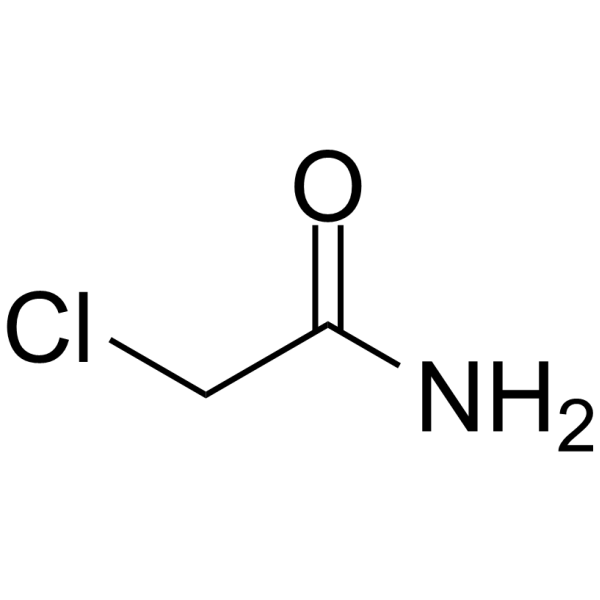
2-Chloroacetamide is a preservative and is a herbicide for both uplands and paddy fields. 2-Chloroacetamide is a biocide in agriculture, glues, paints and coatings. 2-Chloroacetamide inhibits very-long-chain fatty acid elongase .
|
-
-
- HY-126436A
-
|
L-Ornithine homopolymer hydrobromide (MW 30000-70000)
|
Biochemical Assay Reagents
|
Neurological Disease
|
|
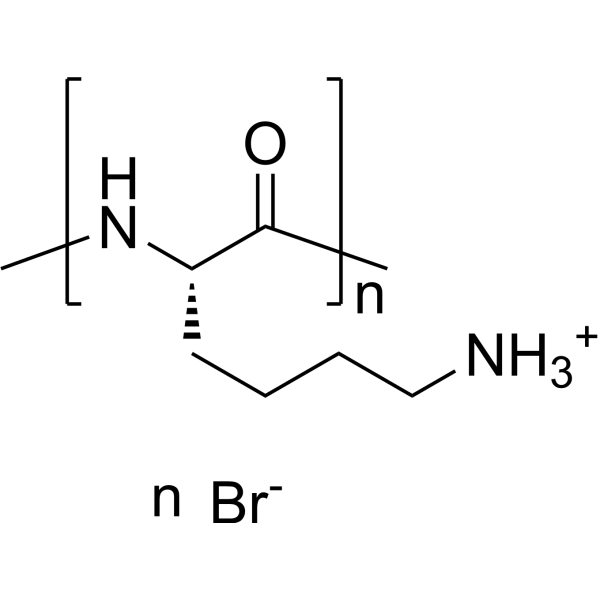
Poly-L-ornithine hydrobromide (MW 30000-70000) is a poly-lysine derivative with a molecular weight of 30000-70000. Poly-L-ornithine hydrobromide (MW 30000-70000) binds to the surface of cell culture vessels through positively charged amino acid residues to form a coating that promotes cell adhesion and provides cells with a matrix environment required for growth. Poly-L-ornithine hydrobromide (MW 30000-70000) is used as a coating agent in cell culture and can be used for the study of primary culture of neurons (such as dopaminergic neurons and oligodendrocytes) .
|
-
-
- HY-Y0850H
-
|
PVA (Mw 89000-98000, 99+% hydrolyzed); Poly(Ethenol) (Mw 89000-98000, 99+% hydrolyzed)
|
Environmental Pollutants
Biochemical Assay Reagents
|
Others
|
|
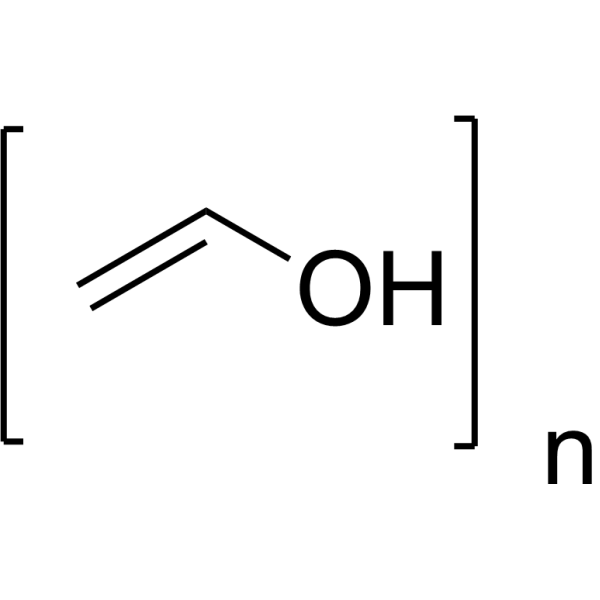
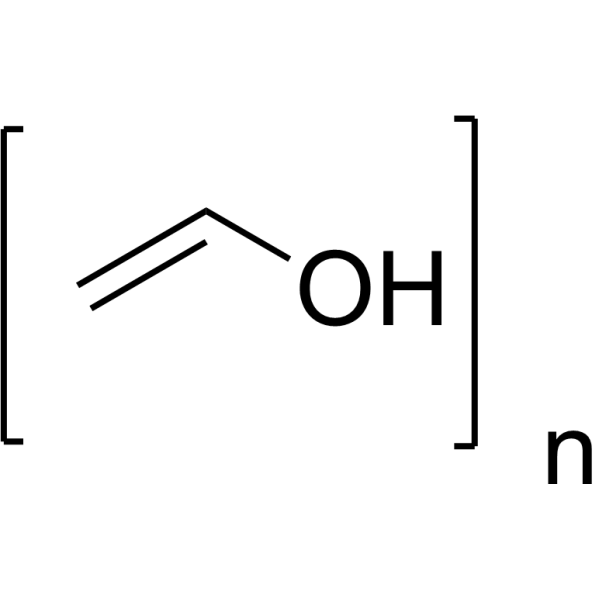
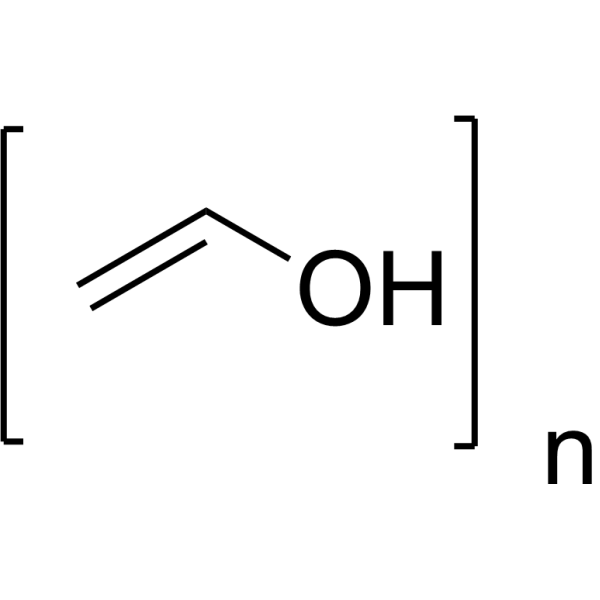
Polyvinyl alcohol (Mw 89000-98000, 99+% hydrolyzed) also known as PVA, is a vinyl water-soluble polymer that can be used as a non-ionic surfactant. It can also be used as a biodegradable polymer and can be used in adhesives, coatings, textiles, ceramics and cosmetics .
|
-
-
- HY-B1620C
-
|
PVP K17; Polyvidone K17; Povidone K17
|
Biochemical Assay Reagents
|
Others
|
|
Polyvinylpyrrolidone K17 is one of the polymers in pharmaceutical preparations. Polyvinylpyrrolidone K17 is a versatile excipient for both conventional formulations and novel controlled or targeted delivery systems, serving as a binder, coating agent, suspending agent, pore-former, solubilizer, stabilizer, etc .
|
-
-
- HY-NP139
-
-
-
- HY-W019831
-
|
Silica; Colloidal anhydrous silica
|
Biochemical Assay Reagents
|
Others
|
|
Silicon dioxide (Silica) is the core of gold-coated silica nanoparticles. Silicon dioxide has the characteristic of a spherical structure, with a layer of gold nanoparticles covering its surface. Silicon dioxide can be used as a coating material for quantum dots, enhancing their stability, reducing toxicity and improving hydrophilicity .
|
-
-
- HY-Y0946
-
|
|
Environmental Pollutants
|
Inflammation/Immunology
Cancer
|
|
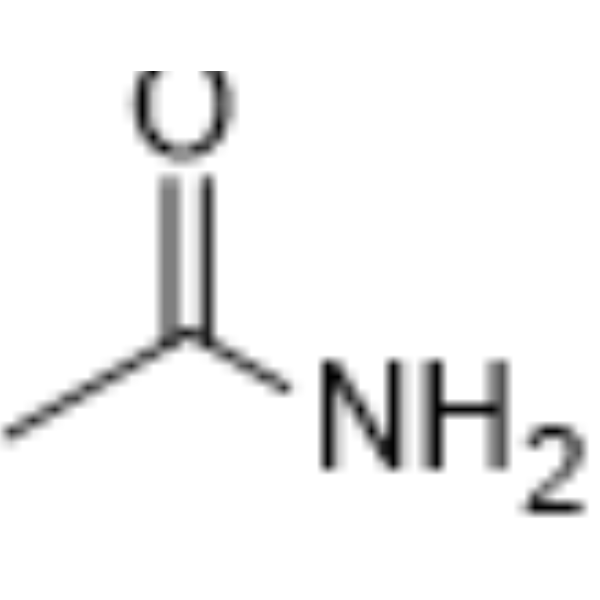
Acetamide is used as an intermediate in the synthesis of methylamine, thioacetamide, and insecticides, and as a plasticizer in leather, cloth and coatings. Acetamide has carcinogenicity. Acetamide derivatives may has antioxidant activity and potential anti-inflammatory activity. Acetamide holds promise for research in the fields of anti-inflammatory and cancer studies .
|
-
-
- HY-B1620J
-
|
PVP, average Mw~10000; Polyvidone, average Mw~10000; Povidone, average Mw~10000
|
Environmental Pollutants
Biochemical Assay Reagents
|
Others
|
|
Polyvinylpyrrolidone, average Mw~10000 is a multifunctional synthetic polymer with an average molecular weight of 10000 Da. Polyvinylpyrrolidone, average Mw~10000 is widely used to synthesize nanoparticlesPolyvinylpyrrolidone, average Mw~10000 is a versatile excipient for both conventional formulations and novel controlled or targeted delivery systems, serving as a binder, coating agent, suspending agent, pore-former, solubilizer, stabilizer, etc .
|
-
-
- HY-B1620N
-
|
PVP, average Mw~360000; Polyvidone, average Mw~360000; Povidone, average Mw~360000
|
Environmental Pollutants
Biochemical Assay Reagents
|
Others
|
|
Polyvinylpyrrolidone, average Mw~360000 is a multifunctional synthetic polymer with an average molecular weight of 360000 Da. Polyvinylpyrrolidone, average Mw~360000 is widely used to synthesize nanoparticlesPolyvinylpyrrolidone, average Mw~360000 is a versatile excipient for both conventional formulations and novel controlled or targeted delivery systems, serving as a binder, coating agent, suspending agent, pore-former, solubilizer, stabilizer, etc .
|
-
-
- HY-W089777
-
|
GPTMS
|
Biochemical Assay Reagents
|
Others
|
|
3-Glycidyloxypropyltrimethoxysilane (GPTMS) is a silicon source for the preparation of inorganic-organic hybrid polymers. 3-Glycidyloxypropyltrimethoxysilane can be used to prepare hard coatings of organic polymers, such as contact lens materials in the optical industry, as well as related materials in the fields of electronics, thin films, sensors, nanoimprinting, waveguides, and biology .
|
-
-
- HY-W014728
-
|
|
Dopamine Receptor
|
Cardiovascular Disease
Neurological Disease
|
|
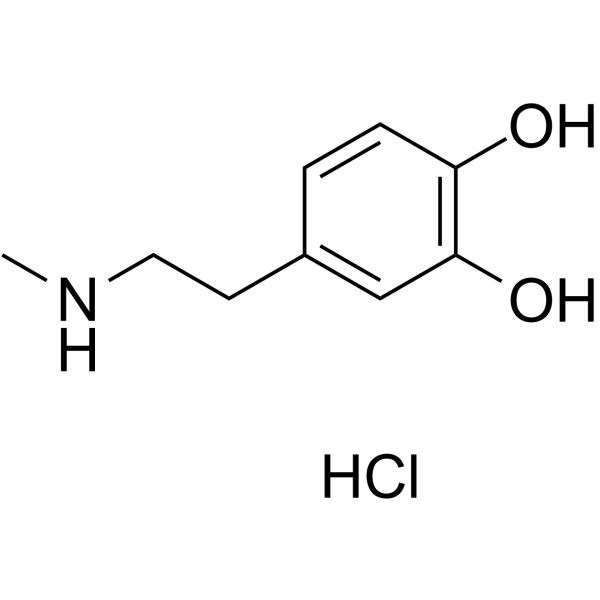
N-Methyldopamine hydrochloride is a precursor of adrenaline in the adrenal medulla. N-Methyldopamine hydrochloride is a modification of the dopamine (DA), and retains agonist activity at the DA1 receptor. N-Methyldopamine hydrochloride remains capable of universal surface coating and secondary reactions using the surface catechols. N-Methyldopamine hydrochloride can be used for heart failure research .
|
-
-
- HY-91054
-
-
-
- HY-W009335
-
|
IPBC
|
Environmental Pollutants
Fungal
|
Infection
|
|
Iodopropynyl butylcarbamate (IPBC) is a potent fungicide and preservative, which has been used in the paints, coatings, wood preservatives, personal care, and cosmetics industries .
|
-
-
- HY-B1620K
-
|
PVP, average Mw~29000; Polyvidone, average Mw~29000; Povidone, average Mw~29000
|
Environmental Pollutants
Biochemical Assay Reagents
|
Others
|
|
Polyvinylpyrrolidone, average Mw~29000 is a multifunctional synthetic polymer with an average molecular weight of 29,000 Da. Polyvinylpyrrolidone, average Mw~29000 is a versatile excipient for both conventional formulations and novel controlled or targeted delivery systems, serving as a binder, coating agent, suspending agent, pore-former, solubilizer, stabilizer, etc .
|
-
-
- HY-NP0196
-
-
-
- HY-D0363
-
|
|
Fluorescent Dye
|
|
|
Pigment Red 166 is a commonly used commercial dye for bulk coloring of plastics and synthetic fibers and for surface coatings such as paints and inks.
|
-
-
- HY-Y0304S1
-
|
|
Isotope-Labeled Compounds
|
Cancer
|
|
Dibutyl phthalate-d22 is the deuterium labeled Dibutyl phthalate . Dibutyl phthalate is a commonly used plasticizer commonly found in some food packaging materials, personal care products, and the coating of oral medications. May cause toxicity and adverse neurobehavioral effects .
|
-
-
- HY-B1620O
-
|
PVP, average Mw~1300000; Polyvidone, average Mw~1300000; Povidone, average Mw~1300000
|
Environmental Pollutants
Biochemical Assay Reagents
|
Others
|
|
Polyvinylpyrrolidone, average Mw~1300000 is a multifunctional synthetic polymer with an average molecular weight of 1300000 Da. Polyvinylpyrrolidone, average Mw~1300000 shows the higher viscosity to form the fine polymer network as the molecular sieve .
|
-
-
- HY-W018156
-
-
-
- HY-139201C
-
|
PDLHB (MW 1000-5000)
|
CaSR
|
Others
|
|
Poly-D-lysine hydrobromide (MW 1000-5000) (PDLHB (MW 1000-5000)) is a synthetic cationic polypeptide polymer commonly used as a cell adhesion promoter and surface coating molecule. Poly-D-lysine hydrobromide is also known as a calcium-sensing receptor (CaSR) agonist peptide .
|
-
-
- HY-B1620M
-
|
PVP, average Mw~55000; Polyvidone, average Mw~55000; Povidone, average Mw~55000
|
Biochemical Assay Reagents
|
Others
|
|
Polyvinylpyrrolidone, average Mw~55000 is a multifunctional synthetic polymer with an average molecular weight of 55000 Da. Polyvinylpyrrolidone, average Mw~55000 is widely used to synthesize nanoparticlesPolyvinylpyrrolidone, average Mw~55000 is a versatile excipient for both conventional formulations and novel controlled or targeted delivery systems, serving as a binder, coating agent, suspending agent, pore-former, solubilizer, stabilizer, etc .
|
-
-
- HY-159067
-
|
DEAE-dextran, MW 500000 hydrochloride, from bacterial (Leuconostoc mesenteroides); Diethylaminoethyl-dextran, MW 500000 hydrochloride
|
Biochemical Assay Reagents
|
Cancer
|
|
DEAE-dextran, MW 500000 hydrochloride (DEAE-dextran, MW 500000 hydrochloride, from bacterial (Leuconostoc mesenteroides)) is a high-molecular-weight positively charged polymer that significantly enhances the uptake of viral RNA by tissue culture cells. When employed in the delivery system for "tumor immunity" RNA-splenocyte transfer, DEAE-dextran can markedly extend the lifespan of tumor-bearing animals, comparable to that of actively immunized animals. Furthermore, DEAE-dextran serves as a complexing agent for nucleic acids, forming composite particles with DNA/RNA for extensive applications in gene delivery. Additionally, DEAE-dextran can be utilized as a coating for liposomes .
|
-
-
- HY-139446A
-
|
ETPTA (MW 912); TMPETA (MW 912)
|
Biochemical Assay Reagents
|
Others
|
|
Trimethylolpropane ethoxylate triacrylate (MW 912) (ETPTA (MW 912); TMPETA (MW 912)) is a trifunctional acrylate monomer with multiple acrylate functional groups, which can be used in polymerization and crosslinking reactions. Trimethylolpropane ethoxylate triacrylate (MW 912) is widely used in the preparation of cured resins for 3D printing, optical coatings for display devices, and dental composite restorative materials .
|
-
-
- HY-D0278
-
-
-
- HY-NP0200
-
|
Dog IgG
|
|
Inflammation/Immunology
|
|
Dog Immunoglobulin G (Dog IgG) is a dog serum immunoglobulin that can be used in immunolabeling and coating protein in a variety of immunoassays including ELISA .
|
-
-
- HY-164071
-
|
CM-Dextran
|
Drug Derivative
|
Others
|
|
Carboxymethyl Dextran (CM-Dextran) is a dextran derivative and a biocompatible coating for superparamagnetic iron oxide nanoparticles. When coated on the surface of superparamagnetic nanoparticles, Carboxymethyl Dextran forms stable particles across all pH values and NaCl concentrations. Carboxymethyl Dextran can be used to prepare materials for magnetic resonance molecular imaging .
|
-
-
- HY-117112
-
|
Hexakis(methoxymethyl)melamine; HMMM
|
Biochemical Assay Reagents
|
Others
|
|
Hexamethoxymethylmelamine (Hexakis(methoxymethyl)melamine; HMMM) is a crosslinking agent, which can be used with polyester resins to produce thermosetting coating .
|
-
-
- HY-100557A
-
|
|
Biochemical Assay Reagents
|
Others
|
|
Low-Substituted Hydroxypropyl Cellulose can be used as an excipient, such as Coating agents, emulsifiers, suspensions, tablets, thickeners, thickeners, etc. Pharmaceutical excipients, or pharmaceutical auxiliaries, refer to other chemical substances used in the pharmaceutical process other than pharmaceutical ingredients. Pharmaceutical excipients generally refer to inactive ingredients in pharmaceutical preparations, which can improve the stability, solubility and processability of pharmaceutical preparations. Pharmaceutical excipients also affect the absorption, distribution, metabolism, and elimination (ADME) processes of co-administered drugs .
|
-
-
- HY-D0280
-
|
|
Fluorescent Dye
|
|
|
Pigment red 57-1 is a commonly used commercial dye for bulk coloring of plastics and synthetic fibers and for surface coatings such as paints and inks.
|
-
-
- HY-NP0195
-
|
Sheep IgG
|
|
Inflammation/Immunology
|
|
Sheep Immunoglobulin G (Sheep IgG) is a sheep serum immunoglobulin that can be used in immunolabeling and coating protein in a variety of immunoassays including ELISA .
|
-
-
- HY-W017761
-
|
m-Dimethylaminobenzoic acid
|
Biochemical Assay Reagents
|
Others
|
|
3-(Dimethylamino)benzoic acid (m-Dimethylaminobenzoic acid) is used in the field of materials science to develop novel polymers and coatings with specific optical and electronic properties.
|
-
-
- HY-NP0198
-
-
-
- HY-W017050
-
|
|
Biochemical Assay Reagents
|
Others
|
|
2-Hydroxypropyl acrylate (HPA) is a severe irritant and corrosive to the skin. 2-Hydroxypropyl acrylate (HPA) is extensively applied in fibre, adhesives, rubber industry, paints and coatings industry .
|
-
-
- HY-W017077
-
|
4-Phenyltoluene
|
Drug Intermediate
|
Inflammation/Immunology
|
|
4-Methylbiphenyl (4-Phenyltoluene) is an organic compound. 4-Methylbiphenyl has excellent chemical stability and antioxidant properties, and is widely used in industry. 4-Methylbiphenyl can serve as a solvent, coating additive, plastic additive and dye intermediate .
|
-
-
- HY-W133969
-
|
Shellac wax-free
|
Environmental Pollutants
|
Others
|
|
Shellac is a biodegradable resin composed of polyhydroxy acids, primarily aleuritic acid, shellolic acid, and jalaric acid. It originates as a resinous secretion of the insect Kerria lacca, found on several species of trees in India, Thailand, and China. shellac is used as a wood coating, a binder and encapsulate for pharmaceuticals and food supplements, and in cosmetics products.
|
-
-
- HY-Y0304S
-
|
|
Isotope-Labeled Compounds
|
Neurological Disease
Cancer
|
|
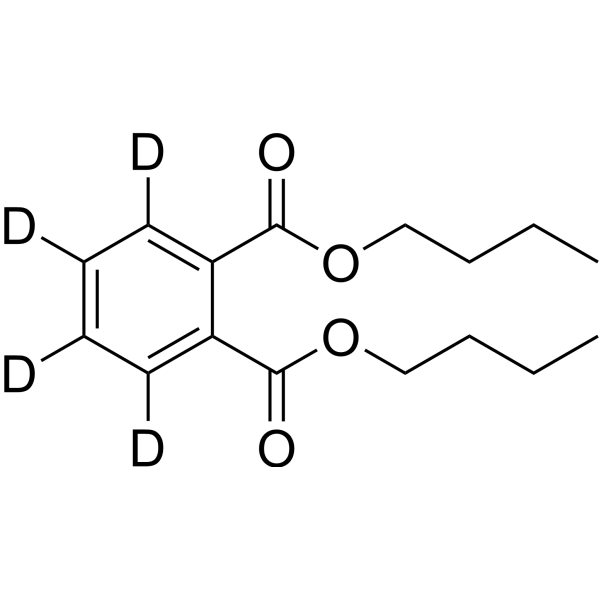
Dibutyl phthalate-3,4,5,6-d4 is the deuterium labeled Dibutyl phthalate. Dibutyl phthalate is a commonly used plasticizer commonly found in some food packaging materials, personal care products, and the coating of oral medications . May cause toxicity and adverse neurobehavioral effects .
|
-
-
- HY-D0632
-
|
|
Fluorescent Dye
|
|
|
Pigment Red 147 is a commonly used commercial dye for bulk coloring of plastics and synthetic fibers and for surface coatings such as paints and inks.
|
-
-
- HY-D0384
-
|
|
Fluorescent Dye
|
|
|
Pigment Red 144 is a commonly used commercial dye for bulk coloring of plastics and synthetic fibers and for surface coatings such as paints and inks.
|
-
-
- HY-D0345
-
|
|
Fluorescent Dye
|
|
|
Pigment Red 178 is a commonly used commercial dye for bulk coloring of plastics and synthetic fibers and for surface coatings such as paints and inks.
|
-
-
- HY-P2975B
-
|
|
Biochemical Assay Reagents
|
Others
|
|
Rat Laminin is a Laminin from rat that can be used as a thin coating on tissue culture surfaces or as a soluble additive to culture media .
|
-
-
- HY-N5105
-
|
Bronze Red; Shanghai Bronze Red
|
Others
|
Others
|
|
carlet 808 (Bronze Red; Shanghai Bronze Red) is a naphthol red pigment. Scarlet 808 can be used for coloring coatings, leather, and latex paints. It has the advantages of high tinting power, good hiding power, alkali resistance, and acid resistance .
|
-
-
- HY-W127565
-
|
|
Biochemical Assay Reagents
|
Others
|
|
HexatetracontaneIt is an organic compound belonging to hydrocarbons. It has a high melting point. HexatetracontaneIt has a variety of applications in the cosmetic and personal care industries, especially as an emollient and humectant in skin and hair care products. In addition, it is used as a lubricant and coating agent in industrial environments.
|
-
-
- HY-W115746B
-
|
|
Biochemical Assay Reagents
|
Others
|
|
Ethyl cellulose (viscosity 300 cP) serves as a non-toxic and biodegradable polymer, with unique properties such as oleogel formation, delivery of active component, and film-forming ability in the food and pharmaceutical sectors. Ethyl cellulose (viscosity 300 cP) can be used as an excipient, such as coating agent, flavoring agent, tablet filler .
|
-
-
- HY-W115746A
-
|
|
Biochemical Assay Reagents
|
Others
|
|
Ethyl cellulose (viscosity 10 cP) serves as a non-toxic and biodegradable polymer, with unique properties such as oleogel formation, delivery of active component, and film-forming ability in the food and pharmaceutical sectors. Ethyl cellulose (viscosity 10 cP) can be used as an excipient, such as coating agent, flavoring agent, tablet filler .
|
-
-
- HY-W099569
-
|
Zinc octadecanoate
|
Biochemical Assay Reagents
Fungal
Bacterial
Parasite
|
Infection
|
|
Zinc stearate is a metal stearate that acts as a preservative, bactericide, fungicide, and larvicide. Zinc stearate inhibits larval reproduction in animal feces. Zinc stearate exhibits extremely low systemic toxicity. Zinc stearate is a common component of pharmaceutical excipients, lubricants, mold release agents, polymer stabilizers, and coating matting agents .
|
-
-
- HY-W009400
-
|
|
Drug Intermediate
|
Others
|
|
(2-Dodecen-1-yl)succinic anhydride is an organic compound commonly used in certain polymerization reactions. It is used in the manufacture of products such as plastics and resins, and is widely used in certain industrial fields, such as coatings, inks and textile manufacturing. In addition, the compound is also used as a raw material for pharmaceutical intermediates and surfactants.
|
-
-
- HY-D1064
-
|
|
Fluorescent Dye
|
|
|
Pigment red 57 is a commonly used commercial dye for bulk coloring of plastics and synthetic fibers and for surface coatings such as paints and inks.
|
-
- HY-D0383
-
|
|
Fluorescent Dye
|
|
|
Pigment Red 146 is a commonly used commercial dye for bulk coloring of plastics and synthetic fibers and for surface coatings such as paints and inks.
|
-
- HY-D0568
-
|
|
Fluorescent Dye
|
|
|
Pigment Red 242 is a commonly used commercial dye for bulk coloring of plastics and synthetic fibers and for surface coatings such as paints and inks.
|
-
- HY-D1139
-
|
|
Fluorescent Dye
|
|
|
Pigment Red 177 is a commonly used commercial dye for bulk coloring of plastics and synthetic fibers and for surface coatings such as paints and inks.
|
-
- HY-D0549
-
|
|
Fluorescent Dye
|
|
|
Pigment Red 266 is a commonly used commercial dye for bulk coloring of plastics and synthetic fibers and for surface coatings such as paints and inks.
|
-
- HY-D0596
-
|
|
Fluorescent Dye
|
|
|
Pigment Red 188 is a commonly used commercial dye for bulk coloring of plastics and synthetic fibers and for surface coatings such as paints and inks.
|
-
- HY-D1233
-
|
Quinaridone magenta 202
|
Fluorescent Dye
|
|
|
Pigment Red 202 is a commonly used commercial dye for bulk coloring of plastics and synthetic fibers and for surface coatings such as paints and inks.
|
-
- HY-D1164
-
|
D&C Red No. 34
|
Fluorescent Dye
|
|
|
Pigment red 63:1 is a commonly used commercial dye for bulk coloring of plastics and synthetic fibers and for surface coatings such as paints and inks.
|
-
- HY-W739372
-
|
|
Biochemical Assay Reagents
|
|
|
Poly (sodium 4-styrenesulfonate) is a cation exchange polyelectrolyte used to prepare highly mechanically stable and highly reproducible coatings. During the reduction of graphene oxide, Poly (sodium 4-styrenesulfonate) is used to synthesize polymer-coated graphite nanosheets. Furthermore, the interactions between Poly (sodium 4-styrenesulfonate) and metal ions have been studied, and it has been combined with Nafion for mixed coatings in bismuth film electrodes, showcasing its broad application potential in functional materials and electrochemical research .
|
-
- HY-Y0946S2
-
|
|
Isotope-Labeled Compounds
|
Cancer
|
|
Acetamide-d5 is the deuterium labeled Acetamide . Acetamide is used as an intermediate in the synthesis of methylamine, thioacetamide, and insecticides, and as a plasticizer in leather, cloth and coatings. Acetamide has carcinogenicity .
|
-
- HY-W099437
-
|
|
Environmental Pollutants
Biochemical Assay Reagents
|
Others
|
|
Diethylene glycol monobutyl ether acetate is an orally available high molecular weight glycol ether solvent that can be used as a coalescing agent for polyvinyl acetate (latex) coatings, the acute oral LD in mice and rats is about 7 g/kg .
|
-
- HY-B0903R
-
|
2-Methyl-2,4-pentanediol (Standard); MPD (Standard)
|
Biochemical Assay Reagents
Reference Standards
|
Others
|
|
Hexylene glycol (Standard) is the analytical standard of Hexylene glycol. This product is intended for research and analytical applications. Hexylene glycol is a low molecular weight surfactant that is widely used as an industrial coating solvent without causing adverse health or environmental effects.
|
-
- HY-117964
-
|
Lake Red C
|
Endogenous Metabolite
|
|
|
Pigment Red 53 (Lake Red C) is an organic pigment with good color stability and spectral properties. Pigment Red 53 is widely used in the coatings and plastics industries to provide a vivid red color. Pigment Red 53 is also used in food and cosmetics as a safe colorant to ensure an attractive product appearance.
|
-
- HY-132916
-
|
|
SARS-CoV
|
Infection
|
|
Antiviral agent 7 is a peptide-based coating that can kill viruses.
|
-
- HY-17525
-
-
- HY-D0337
-
|
|
Fluorescent Dye
|
|
|
Pigment Red 4 is a commonly used commercial dye for bulk coloring of plastics and synthetic fibers and for surface coatings such as paints and inks.
|
-
- HY-NP0212
-
-
- HY-D1201
-
|
|
Fluorescent Dye
|
|
|
Pigment Red 245 is a commonly used commercial dye for bulk coloring of plastics and synthetic fibers and for surface coatings such as paints and inks.
|
-
- HY-D0697
-
|
|
Fluorescent Dye
|
|
|
Pigment red 95 is a commonly used commercial dye for bulk coloring of plastics and synthetic fibers and for surface coatings such as paints and inks.
|
-
- HY-D1215
-
|
|
Fluorescent Dye
|
Others
|
|
Pigment Red 31 is a commonly used commercial dye for bulk coloring of plastics and synthetic fibers and for surface coatings such as paints and inks.
|
-
- HY-D0566
-
|
|
Fluorescent Dye
|
|
|
Pigment Red 185 is a commonly used commercial dye for bulk coloring of plastics and synthetic fibers and for surface coatings such as paints and inks.
|
-
- HY-D1155
-
|
|
Fluorescent Dye
|
|
|
Pigment Red 176 is a commonly used commercial dye for bulk coloring of plastics and synthetic fibers and for surface coatings such as paints and inks.
|
-
- HY-NP0196B
-
-
- HY-161004
-
-
- HY-108026
-
|
|
Biochemical Assay Reagents
|
Others
|
|
Hapten C is a derivative of histamine. Hapten C is utilized for synthesis of immunogens and coating antigens, that can quantitative determine the histamine via ELISA .
|
-
- HY-NP0196C
-
-
- HY-NP193
-
-
- HY-NP0197
-
|
Goat IgG
|
Fc Receptor (FcR)
|
Inflammation/Immunology
|
|
Goat Immunoglobulin G (Goat IgG) is a goat serum immunoglobulin that can be used in immunolabeling and coating protein in a variety of immunoassays including ELISA .
|
-
- HY-157198
-
-
- HY-163024
-
|
|
Others
|
Inflammation/Immunology
|
|
Atrazine-3-mercaptopropanoic acid is a hapten. The IC50 value of polyclonal antibody (PcAb) 1 with coating Atrazine-3-mercaptopropanoic acid is 7.5 ng/mL .
|
-
- HY-155499
-
|
|
Biochemical Assay Reagents
|
Others
|
|
AMOZ-CHPh-4-acid is an immunizing hapten against AMOZ. AMOZ-CHPh-4-acid can couple to BSA for immunogens and couple to OVA for coating antigen .
|
-
- HY-Y0946S
-
|
|
Isotope-Labeled Compounds
|
Cancer
|
|
Acetamide- 15N is the 15N-labeled Acetamide. Acetamide is used as an intermediate in the synthesis of methylamine, thioacetamide, and insecticides, and as a plasticizer in leather, cloth and coatings. Acetamide has carcinogenicity .
|
-
- HY-161001
-
|
|
Biochemical Assay Reagents
|
Others
|
|
AMOZ-CHPh-3-acid is hapten against furaltadone metabolite AMOZ. AMOZ-CHPh-3-acid can couple to BSA for immunogens and couple to OVA for coating antigen .
|
-
- HY-163025
-
|
|
Hapten
|
Inflammation/Immunology
|
|
Cyanazine-3-mercaptopropanoic acid (compound 6), a coating hapten, is a stable carrier-hapten complex. Polyclonal antibody obtained were with a high titer, with the IC50 of 10.2 ng/mL for Cyanazine-3-mercaptopropanoic acid .
|
-
- HY-D2429
-
|
|
Fluorescent Dye
|
Others
|
|
Dextran-PEG-Cy3 is the Cy3 (HY-D0822)-labeled Dextran-PEG conjugate. Dextran-PEG is used as polymer-polymer systems for the high biocompatibility to maintain cell osmolarity. Dextran-PEG coatings can reduce nanoparticle cytotoxicity .
|
-
- HY-W127346
-
|
|
Environmental Pollutants
Biochemical Assay Reagents
|
Others
|
|
Pentaerythrityl tetrastearate is an ester compound commonly used as a lubricant, emollient or thickener in various cosmetic and personal care products. It is also used as a plasticizer or stabilizer in the production of plastics and resins. Pentaerythrityl tetrastearate has unique chemical properties that make it an important ingredient in a variety of industrial processes, including the manufacture of adhesives, coatings and sealants.
|
-
- HY-161002
-
|
|
Biochemical Assay Reagents
|
Others
|
|
AMOZ-CHPh-4-O-acid is a hapten, containing 2 carbon and 1 oxygen spacer. AMOZ-CHPh-4-O-acid can be used for antibody production. AMOZ-CHPh-4-O-acid is coupled to BSA for immunogens and coupled to OVA for coating antigens .
|
-
- HY-W740833
-
|
IPBC-d9
|
Isotope-Labeled Compounds
Fungal
|
Infection
|
|
Iodopropynyl butylcarbamate-d9 (IPBC-d9) is the deuterium labeled Iodopropynyl butylcarbamate (HY-W009335). Iodopropynyl butylcarbamate (IPBC) is a potent fungicide and preservative, which has been used in the paints, coatings, wood preservatives, personal care, and cosmetics industries .
|
-
- HY-Y0304R
-
|
|
Biochemical Assay Reagents
Reference Standards
|
Neurological Disease
Cancer
|
|
Dibutyl phthalate (Standard) is the analytical standard of Dibutyl phthalate. This product is intended for research and analytical applications. Dibutyl phthalate is a commonly used plasticizer commonly found in some food packaging materials, personal care products, and the coating of oral medications . May cause toxicity and adverse neurobehavioral effects .
|
-
- HY-182730
-
|
|
Biochemical Assay Reagents
|
Others
|
|
1% Gelatin solution for cell culture. Used for coating surfaces of cell culture plates, dishes, etc., to promote the adhesion and proliferation of mammalian cells. The gelatin solution may precipitate at lower temperatures; therefore, it can be incubated at 25°C-55°C until completely dissolved before use. Dilute with sterile ultrapure water before coating.
|
-
- HY-182609
-
|
|
Biochemical Assay Reagents
|
Others
|
|
0.5% Gelatin solution for cell culture. Used for coating surfaces of cell culture plates, dishes, etc., to promote the adhesion and proliferation of mammalian cells. The gelatin solution may precipitate at lower temperatures; therefore, it can be incubated at 25°C-55°C until completely dissolved before use. Dilute with sterile ultrapure water before coating.
|
-
- HY-182608
-
|
|
Biochemical Assay Reagents
|
Others
|
|
0.1% Gelatin solution for cell culture. Used for coating surfaces of cell culture plates, dishes, etc., to promote the adhesion and proliferation of mammalian cells. The gelatin solution may precipitate at lower temperatures; therefore, it can be incubated at 25°C-55°C until completely dissolved before use. Dilute with sterile ultrapure water before coating.
|
-
- HY-NP0217
-
-
- HY-NP0196A
-
-
- HY-NP0199
-
|
Porcine IgG
|
|
Inflammation/Immunology
|
|
Porcine Immunoglobulin G (Porcine IgG) is a porcine serum immunoglobulin that can be used in immunolabeling and coating protein in a variety of immunoassays including ELISA .
|
-
- HY-NP0216
-
-
- HY-161003
-
|
|
Biochemical Assay Reagents
|
Cancer
|
|
AMOZ-CHPh-3-O-acid (hapten 4) is an immunizing hapten, coupled to BSA for immunogens and coupled to OVA for coating antigens .
|
-
- HY-W268106
-
|
|
Biochemical Assay Reagents
|
Others
|
|
Decylphosphonic acid is a metal oxide surface modifier and corrosion inhibitor. Decylphosphonic acid is promising for research of metal protection, anti-corrosion coatings, and emulsion polymerization .
|
-
- HY-171713
-
|
|
Drug Intermediate
|
Cancer
|
|
LBA-NHS (Figure 1, Step 2) is a derivative of lactobionic acid (LBA). LBA-NHS can be used to modify lipids and serve as a coating for biological materials, ensuring that LBA can efficiently and specifically bind to the carrier molecules .
|
-
- HY-108026R
-
|
|
Reference Standards
Biochemical Assay Reagents
|
Others
|
|
Hapten C (Standard) is the analytical standard of Hapten C (HY-108026). This product is intended for research and analytical applications. Hapten C is a derivative of histamine. Hapten C is utilized for synthesis of immunogens and coating antigens, that can quantitative determine the histamine via ELISA .
|
-
- HY-W009335R
-
|
IPBC (Standard)
|
Reference Standards
Fungal
|
Infection
|
|
Iodopropynyl butylcarbamate (Standard) is the analytical standard of Iodopropynyl butylcarbamate (HY-W009335). This product is intended for research and analytical applications. odopropynyl butylcarbamate (IPBC) is a potent fungicide and preservative, which has been used in the paints, coatings, wood preservatives, personal care, and cosmetics industries.
|
-
- HY-W127364
-
|
Pentaerythritol distearate [Lubricants]
|
Environmental Pollutants
Biochemical Assay Reagents
|
Others
|
|
Pentaerythritol distearate (mixture) is a mixture of ester compounds commonly used as a thickener, emulsifier or lubricant in various cosmetic and personal care products. It is also used as a plasticizer or stabilizer in the production of plastics and resins. Pentaerythritol distearate (mixture) has unique chemical properties that make it an important ingredient in a variety of industrial processes, including the manufacture of adhesives, coatings and sealants.
|
-
- HY-W127565R
-
|
|
Biochemical Assay Reagents
Reference Standards
|
Others
|
|
Hexatetracontane (Standard) is the analytical standard of Hexatetracontane. This product is intended for research and analytical applications. HexatetracontaneIt is an organic compound belonging to hydrocarbons. It has a high melting point. HexatetracontaneIt has a variety of applications in the cosmetic and personal care industries, especially as an emollient and humectant in skin and hair care products. In addition, it is used as a lubricant and coating agent in industrial environments.
|
-
- HY-W127627
-
|
|
Biochemical Assay Reagents
|
Others
|
|
Tween 85 is a nonionic surfactant belonging to the class of ethoxylated sorbitan esters. It is used as an emulsifier and solubilizer in various industries such as pharmaceutical, cosmetic and food. Because of its ability to blend oily and water-based ingredients, Tween 85 is often used in the formulation of creams, lotions and ointments. In addition, it is used as a dispersant for pigments in the production of paints and coatings.
|
-
- HY-W010119
-
|
|
Biochemical Assay Reagents
|
Others
|
|
4-Methyl-2-phenyl-1,3-dioxolane is an organic compound commonly used as a solvent and intermediate. It can be used in some organic synthesis reactions, such as the synthesis of drugs or other organic compounds. In addition, this compound is also widely used in industrial production fields, such as plastics, coatings and glues.
|
-
- HY-W010629S
-
|
|
Bacterial
|
Infection
|
|
2-Chloroacetamide-d4 is the deuterium labeled 2-Chloroacetamide . 2-Chloroacetamide is a preservative and is a herbicide for both uplands and paddy fields. 2-Chloroacetamide is a biocide in agriculture, glues, paints and coatings. 2-Chloroacetamide inhibits very-long-chain fatty acid elongase .
|
-
- HY-149549
-
|
|
Biochemical Assay Reagents
|
Others
|
|
1-Stearoyl-3-Oleoyl-rac-glycerol (Compound 2) is a diacylglycerol with a stearic acid and an oleic acid at sn-1 and sn-3 position. 1-Stearoyl-3-Oleoyl-rac-glycerol can be used as the food additive, such as the substitute for cocoa butter, the ingredient in shortening, or candy coating .
|
-
- HY-W010629R
-
|
|
Reference Standards
Bacterial
|
Infection
|
|
2-Chloroacetamide (Standard) is the analytical standard of 2-Chloroacetamide. This product is intended for research and analytical applications. 2-Chloroacetamide is a preservative and is a herbicide for both uplands and paddy fields. 2-Chloroacetamide is a biocide in agriculture, glues, paints and coatings. 2-Chloroacetamide inhibits very-long-chain fatty acid elongase .
|
-
- HY-P5486
-
|
|
Bacterial
|
Others
|
|
Tet-20 is a biological active peptide. (Tet-20, is a synthetic cathelicidin-derived peptide. It was tested as infection-resistant coating for medical devices. When tethered on an implant surface Tet-20 exhibited broad antimicrobial activities both in vivo and in vitro. It can stop biofilm formation and appears to be non-toxic to eukaryotic cells)
|
-
- HY-D0352
-
|
Pigment Orange 5
|
Environmental Pollutants
Biochemical Assay Reagents
|
Others
|
|
Permanent Orange is a synthetic pigment commonly used in the manufacture of paints and coatings. It belongs to the class of organic pigments and consists of carbon and other elements. Permanent Orange produces a bright orange color that is fade and weather resistant, making it ideal for outdoor applications. It can be mixed with other pigments to produce a range of colors and is compatible with a wide range of binders and solvents.
|
-
- HY-B1620E
-
|
PVP K60; Polyvidone K60; Povidone K60
|
Biochemical Assay Reagents
|
Others
|
|
Polyvinylpyrrolidone K60 is one of the polymers in pharmaceutical preparations. Polyvinylpyrrolidone K60 promotes amorphous dispersion and inhibits crystallization of the drug .
|
-
- HY-B1620D
-
|
PVP K25; Polyvidone K25; Povidone K25
|
Biochemical Assay Reagents
|
Others
|
|
Polyvinylpyrrolidone K25 is a multifunctional synthetic polymer. Polyvinylpyrrolidone K25 is a versatile excipient for both conventional formulations and novel controlled or targeted delivery systems. Polyvinylpyrrolidone K25 is a preferable binder for granules and tablets .
|
-
- HY-B1620I
-
|
PVP K120; Polyvidone K120; Povidone K120
|
Environmental Pollutants
Biochemical Assay Reagents
|
Others
|
|
Polyvinylpyrrolidone K120 is a multifunctional synthetic polymer with excellent adhesiveness and thickening properties. Polyvinylpyrrolidone K120 is a versatile excipient for both conventional formulations and novel controlled or targeted delivery systems. Polyvinylpyrrolidone K120 can be used to prepare drug-loaded hydrogel patches .
|
-
- HY-Y0946R
-
|
|
Biochemical Assay Reagents
Reference Standards
|
Inflammation/Immunology
Cancer
|
|
Acetamide (Standard) is the analytical standard of Acetamide. This product is intended for research and analytical applications. Acetamide is used as an intermediate in the synthesis of methylamine, thioacetamide, and insecticides, and as a plasticizer in leather, cloth and coatings. Acetamide has carcinogenicity. Acetamide derivatives may has antioxidant activity and potential anti-inflammatory activity. Acetamide holds promise for research in the fields of anti-inflammatory and cancer studies .
|
-
- HY-W583729
-
|
|
Biochemical Assay Reagents
|
Others
|
|
DL-Poly (lactic acid) is a biodegradable poly (α-hydroxy acid) matrix and a coating material for controlled drug release. DL-Poly (lactic acid) is classified as a drug release retardant, which degrades into natural lactic acid monomers, an intermediate product of carbohydrate metabolism, enabling complete drug delivery that lasts for several weeks. Its drug release rate is affected by the pH of the surrounding environment .
|
-
- HY-ER010
-
|
Imidazole hydrochloride
|
Biochemical Assay Reagents
|
Others
|
|
1H-Imidazole hydrochloride can be used as ligand, buffer and catalyst, etc., and also plays an important role in the process of drug synthesis and extraction of natural products. In addition, the compound is widely used in certain industrial fields, such as in the manufacturing process of plastics, coatings, textiles and electronic materials. Although the compound has no direct medical applications, it plays an important role in chemical research and laboratory studies.
|
-
- HY-W115746
-
|
Ethyl cellulose N-200
|
Environmental Pollutants
Biochemical Assay Reagents
|
Infection
Cancer
|
|
Ethyl cellulose is a derivative of cellulose. Ethyl cellulose is a non-toxic, biodegradable polymer. Ethyl cellulose has unique properties such as oil gel formation, active ingredient delivery and film formation. Ethyl cellulose can be used as a pharmaceutical excipient, such as a coating agent, flavoring agent, tablet filler, etc. Ethyl cellulose can be used to prepare nanoparticles for active compound delivery .
|
-
- HY-N7097
-
|
|
Antibiotic
Bacterial
|
Infection
|
|
Sulbenicillin disodium is a semisynthetic α-sulfonylbenzylpenicillin antibiotic. Sulbenicillin disodium exerts antibacterial activity against multiple gram-negative rods. Sulbenicillin disodium inhibits primary and secondary platelet aggregation, serotonin release from platelets, and platelet adherence via platelet surface coating. Sulbenicillin disodium can be used for the research of Pseudomonas aeruginosa, Pseudomonas maltophilia, and Pseudomonas cepacia infections .
|
-
- HY-W017077S
-
|
4-Phenyltoluene-d3
|
Isotope-Labeled Compounds
Drug Intermediate
|
Inflammation/Immunology
|
|
4-Methylbiphenyl (4-Phenyltoluene)-d3 is the deuterium labeled 4-Methylbiphenyl (HY-W017077). 4-Methylbiphenyl is an organic compound. 4-Methylbiphenyl has excellent chemical stability and antioxidant properties, and is widely used in industry. 4-Methylbiphenyl can serve as a solvent, coating additive, plastic additive and dye intermediate .
|
-
- HY-W019711R
-
|
|
Reference Standards
Endogenous Metabolite
|
Others
|
|
trans-Cinnamaldehyde (Standard) is the analytical standard of trans-Cinnamaldehyde. This product is intended for research and analytical applications. trans-Cinnamaldehyde can be used to prepare highly polyfunctionalized furan ring by reaction of alkyl isocyanides with dialkyl acetylenedicarboxylate . trans-Cinnamaldehyde can be used to synthesize trans-cinnamaldehyde -β-cyclodextrin complex, an antimicrobial edible coating that increases the shelf life of fresh-cut fruits .
|
-
- HY-23497
-
|
|
Others
|
Others
|
|
Poly(4-vinylphenol) is a polymer cross-linking agent that can be used to prepare non-toxic films. Poly(4-vinylphenol) is a sensitizer of titania for visible light photocatalysis. Poly(4-vinylphenol) also can be used as a water resistive wood adhesive, as a gate dielectric insulator in organic field effect transistors, and as a responsive surface coating .
|
-
- HY-N15995
-
|
|
Biochemical Assay Reagents
|
Others
|
|
DOPE-PEG(2000) Carboxylic acid sodium is a stabilizer. DOPE-PEG(2000) Carboxylic acid sodium produce a coating around the ferrofluid droplet chains which are dispersed in 5CB. DOPE-PEG(2000) Carboxylic acid sodium tends to fold, effectively shielding the surrounding LC molecules from the homeotropic anchoring at the droplet interface and leading to smaller deformations and thus also creating a more stable interface .
|
-
- HY-B1620L
-
|
PVP, average Mw~40000; Polyvidone, average Mw~40000; Povidone, average Mw~40000
|
Environmental Pollutants
Biochemical Assay Reagents
|
Others
|
|
Polyvinylpyrrolidone, average Mw~40000 is a multifunctional synthetic polymer with an average molecular weight of 40,000 Da. Polyvinylpyrrolidone, average Mw~40000 is widely used to synthesize nanoparticles. Polyvinylpyrrolidone, average Mw~40000 is a versatile excipient for both conventional formulations and novel controlled or targeted delivery systems, serving as a binder, coating agent, suspending agent, pore-former, solubilizer, stabilizer, etc .
|
-
- HY-W017077R
-
|
4-Phenyltoluene (Standard)
|
Reference Standards
Drug Intermediate
|
Inflammation/Immunology
|
|
4-Methylbiphenyl (4-Phenyltoluene) (Standard) is an analytical standard of 4-Methylbiphenyl (HY-W017077). This product is intended for research and analytical applications. 4-Methylbiphenyl is an organic compound. 4-Methylbiphenyl has excellent chemical stability and antioxidant properties, and is widely used in industry. 4-Methylbiphenyl can serve as a solvent, coating additive, plastic additive and dye intermediate .
|
-
- HY-W250312
-
|
|
Environmental Pollutants
Biochemical Assay Reagents
|
Others
|
|
Polycaprolactone is a biodegradable polyester commonly used in various biomedical and industrial applications. It is a white waxy polymer that can be molded into various shapes and forms. Polycaprolactone has various properties suitable for these applications, including low melting point, high flexibility and slow biodegradation rate. It can be used as a raw material for the production of tissue engineering scaffolds, drug delivery systems, and medical implants. In addition, it is used as a binder in the production of adhesives, coatings and paints.
|
-
- HY-W011103
-
|
|
Biochemical Assay Reagents
Environmental Pollutants
|
Others
|
|
Diheptyl phthalate is a class of phthalates consisting of two heptyl (C7) chains attached to a phthalic acid backbone. This compound is commonly used as a plasticizer in various polymer materials such as PVC to increase flexibility and durability. It can also be used as a lubricant, solvent or additive in various industrial applications such as coatings, adhesives and sealants. However, Diheptyl phthalate has been identified as an environmental pollutant and health hazard due to its potential for endocrine disruption and toxicity.
|
-
- HY-W127740
-
|
Isomethyl-α-ionone; α-Isomethylionone
|
Environmental Pollutants
Biochemical Assay Reagents
|
Others
|
|
Isonaline 70 is an industrial solvent that belongs to the family of high flash point aromatic naphtha solvents. It is commonly used in a variety of industries including paints and coatings, adhesives and rubber manufacturing, as a thinner and thinner for resins and polymers. Isonaline 70 has various properties that make it suitable for these applications, including its low viscosity, high solvency and good compatibility with other materials. In addition, it can also be used as a cleaning agent for mechanical equipment.
|
-
- HY-W768057
-
|
|
Isotope-Labeled Compounds
Biochemical Assay Reagents
|
Cancer
|
|
Acetamide- 13C2, 15N is the 13C- and 15N-labeled Acetamide (HY-Y0946). Acetamide is used as an intermediate in the synthesis of methylamine, thioacetamide, and insecticides, and as a plasticizer in leather, cloth and coatings. Acetamide has carcinogenicity. Acetamide derivatives may has antioxidant activity and potential anti-inflammatory activity. Acetamide holds promise for research in the fields of anti-inflammatory and cancer studies .
|
-
- HY-100557
-
|
|
Environmental Pollutants
Biochemical Assay Reagents
Interleukin Related
|
Metabolic Disease
Inflammation/Immunology
|
|
Hydroxypropyl Cellulose is an orally active cellulose ether and surfactant. Hydroxypropyl cellulose is divided into high-substituted HPC (HHPC) and low-substituted HPC (LHPC). Hydroxypropyl Cellulose reduces inflammatory mediators (IL-6, IL-1β). Hydroxypropyl Cellulose improves colitis and obesity. Hydroxypropyl Cellulose can be used as a pharmaceutical excipient, such as coating agent, emulsifier, suspension, tablet, thickener, viscosifier .
|
-
- HY-W018574
-
|
|
Biochemical Assay Reagents
|
Others
|
|
Tetraoctylammonium bromide (TOAB) is a quaternary ammonium salt consisting of a positively charged tetraoctylammonium cation and a negatively charged bromide anion. This compound is commonly used as a phase transfer catalyst in organic chemical reactions, facilitating the transfer of reactants between immiscible phases. It is also used as a surfactant and dispersant in various industrial applications, for example in the production of coatings, adhesives and polymers. Additionally, Tetraoctylammonium bromide has been investigated for potential applications in energy storage devices and as an antimicrobial agent.
|
-
- HY-D0352R
-
|
Pigment Orange 5 (Standard)
|
Biochemical Assay Reagents
Reference Standards
|
Others
|
|
Permanent Orange (Standard) is the analytical standard of Permanent Orange. This product is intended for research and analytical applications. Permanent Orange is a synthetic pigment commonly used in the manufacture of paints and coatings. It belongs to the class of organic pigments and consists of carbon and other elements. Permanent Orange produces a bright orange color that is fade and weather resistant, making it ideal for outdoor applications. It can be mixed with other pigments to produce a range of colors and is compatible with a wide range of binders and solvents.
|
-
- HY-W010790
-
|
|
Bacterial
Fungal
|
Infection
|
|
Dimethyloctadecyl[3-(trimethoxysilyl) propyl]ammonium chloride is a quaternary ammonium silane monomer-based disinfectant/antimicrobial agent. Dimethyloctadecylammonium chloride exhibits bactericidal activity against Gram-positive and Gram-negative bacteria, as well as fungicidal activity against Candida albicans in solution; it can form a hydrophobic glass coating that displays bactericidal activity against Gram-positive and Gram-negative bacteria but has limited fungicidal activity against Candida albicans .
|
-
- HY-W250309
-
|
|
Biochemical Assay Reagents
|
Others
|
|
Pentaerythritol tetra(3-mercaptopropionate)It is a class of organic compounds containing both pentaerythritol and mercaptopropionate groups. It is commonly used as a stabilizer and crosslinking agent in various chemical and industrial applications. Pentaerythritol tetra(3-mercaptopropionate)Has a variety of properties that make it suitable for these applications, including the ability to increase the mechanical strength, thermal stability and weatherability of polymers and coatings. Additionally, it can be used as a feedstock for the production of other specialty chemicals and materials.
|
-
- HY-P991760
-
|
|
Interleukin Related
|
Inflammation/Immunology
|
|
Anti-IL-10 Antibody (JES3-19F1) reacts with human IL-10, and is a capture or coating antibody in ELISA applications. Anti-IL-10 Antibody (JES3-19F1) reduces bacterial load in Mycobacterium avium infected mice. Recommend Isotype Controls: Rat IgG2a kappa, Isotype Control (HY-P990679) .
|
-
- HY-W587519
-
|
|
Biochemical Assay Reagents
Bacterial
|
|
|
Bisphenol A bis(3-chloro-2-hydroxypropyl) ether is an organic compound with potential antimicrobial activity. Bisphenol A bis(3-chloro-2-hydroxypropyl) ether can be widely used in coatings and plastics to improve the strength and durability of materials. Bisphenol A bis(3-chloro-2-hydroxypropyl) ether also plays an important role in textile processing, improving the wrinkle resistance and abrasion resistance of fabrics.
|
-
- HY-D0898
-
|
|
Biochemical Assay Reagents
|
Others
|
|
2,4-Dichlorobenzenediazonium tetrafluoroborate is an organic compound commonly used in organic synthesis and dye preparation reactions. It can be used as an azotating agent to form azo dyes with other organic substances, and can be used in coatings, pigments and paints and other industries. In addition, the compound is widely used in certain chemical analysis and detection methods, such as in scientific instruments such as electron microscopes and mass spectrometers. Although the compound has no direct medical applications, it plays an important role in chemical research and laboratory studies.
|
-
- HY-140696D
-
|
mPEG10000-Hydroxy; Polyethylene glycol monomethyl ether 10000
|
Environmental Pollutants
PROTAC Linkers
|
Infection
|
|
m-PEG10000-OH (mPEG10000-Hydroxy; Polyethylene glycol monomethyl ether 10000) is a hydroxyl-terminated methoxylated polyethylene glycol (PEG-based) compound that serves as a linker for PROTACs. m-PEG10000-OH is applicable to research on healthcare-associated infections .
|
-
- HY-N6070A
-
|
|
Environmental Pollutants
Prostaglandin Receptor
|
Inflammation/Immunology
|
|
Ricinoleic acid (purity≥99%), a hydroxy fatty acid, is an attractive feedstock for the production of high-performance lubricants, cosmetics, polymers, surfactants, and coatings. Ricinoleic acid is the main active ingredient of Castor oil (HY-107799). Ricinoleic acid is the agonist for prostaglandin EP3 receptor (EP3 receptor) (EC50 in MEG-01 is 0.5 μM), that causes laxative effects and uterine contraction. Ricinoleic acid exhibits antianxiety-like, anti-inflammatory and pro-inflammatory properties .
|
-
- HY-27979
-
|
|
Biochemical Assay Reagents
|
Others
|
|
Ethyl acrylate-methyl methacrylate copolymer can be used as an excipient, such as sustained-release coating materials, matrix sustained-release tablet binders and retarders. Pharmaceutical excipients, or pharmaceutical auxiliaries, refer to other chemical substances used in the pharmaceutical process other than pharmaceutical ingredients. Pharmaceutical excipients generally refer to inactive ingredients in pharmaceutical preparations, which can improve the stability, solubility and processability of pharmaceutical preparations. Pharmaceutical excipients also affect the absorption, distribution, metabolism, and elimination (ADME) processes of co-administered drugs .
|
-
- HY-N6070
-
|
|
Environmental Pollutants
Prostaglandin Receptor
|
Inflammation/Immunology
|
|
Ricinoleic acid (purity≥85%), a hydroxy fatty acid, is an attractive feedstock for the production of high-performance lubricants, cosmetics, polymers, surfactants, and coatings. Ricinoleic acid is the main active ingredient of Castor oil (HY-107799). Ricinoleic acid is the agonist for prostaglandin EP3 receptor (EP3 receptor) (EC50 in MEG-01 is 0.5 μM), that causes laxative effects and uterine contraction. Ricinoleic acid exhibits antianxiety-like, anti-inflammatory and pro-inflammatory properties .
|
-
- HY-139201H
-
|
PDLHB (MW ≥300000)
|
CaSR
|
Others
|
|
Poly-D-lysine hydrobromide (MW ≥300000) (PDLHB (MW ≥300000)) is a cationic polymer and cell adhesion promoter. Poly-D-lysine hydrobromide (MW ≥300000) serves as a substrate coating to support the adhesion and proliferation of rat dorsal root ganglion satellite glial cells in vitro. Poly-D-lysine hydrobromide (MW ≥300000) promotes the adhesion and immobilization of cells on plastic culture dishes. Poly-D-lysine hydrobromide is also known as a calcium-sensing receptor (CaSR) agonist peptide .
|
-
- HY-W036120
-
|
2,2′,4,4′-Tetrahydroxybenzophenone
|
Environmental Pollutants
Glycosidase
Estrogen Receptor/ERR
Pregnane X Receptor (PXR)
|
Metabolic Disease
Endocrinology
|
|
Benzophenone-2 (2,2',4,4'-Tetrahydroxybenzophenone) is an organic ultraviolet absorber that is widely used in personal care products and industrial products such as plastics and coatings. Benzophenone-2 is an endocrine disruptor that can interfere with estrogen receptors (ERα receptor) and pregnane X receptor (PXR receptor) activity, leading to reproductive toxicity, immune disorders, and metabolic abnormalities. Benzophenone-2 can inhibit the activity of α-glucosidase (IC50 = 49.72 μM), and can be used for research on diabetes .
|
-
- HY-Y1365C
-
|
|
Biochemical Assay Reagents
|
Others
|
|
Fish Gelatin,suitable for cell culture is an essential natural biopolymer. Fish Gelatin,suitable for cell culture can be isolated from fish processing by-products, such as fish skin, scales, bones and fish maw. Fish Gelatin,suitable for cell culture has been considered as a feasible substitute for mammalian gelatin. Modified Fish gelatin shows significant promise across various industries, including nanomaterials, 3D printing, thin films, coatings, and biopharmaceuticals. Fish Gelatin,suitable for cell culture can be used for cell culture .
|
-
- HY-W011188S
-
|
|
Isotope-Labeled Compounds
Biochemical Assay Reagents
|
Others
|
|
Glycidyl stearate-d5 is a deuterium labeled Glycidyl stearate (HY-W011188). Oxiran-2-ylmethyl stearate is a compound belonging to the class of esters. It contains reactive oxirane or epoxy groups that give the molecule its unique properties. Oxiran-2-ylmethyl stearate is derived from stearic acid and epichlorohydrin, which are naturally occurring substances. Glycidyl stearate is commonly used in various industrial applications such as the production of coatings, adhesives and surfactants. It can also be used as a crosslinking agent in the manufacture of polymers and resins.
|
-
- HY-N6070AR
-
|
|
Reference Standards
Prostaglandin Receptor
|
Inflammation/Immunology
|
|
Ricinoleic acid (Standard) is the analytical standard of Ricinoleic acid. This product is intended for research and analytical applications. Ricinoleic acid, a hydroxy fatty acid, is an attractive feedstock for the production of high-performance lubricants, cosmetics, polymers, surfactants, and coatings. Ricinoleic acid is the main active ingredient of Castor oil (HY-107799). Ricinoleic acid is the agonist for prostaglandin EP3 receptor (EP3 receptor) (EC50 in MEG-01 is 0.5 μM), that causes laxative effects and uterine contraction. Ricinoleic acid exhibits antianxiety-like, anti-inflammatory and pro-inflammatory properties .
|
-
- HY-126437
-
|
|
Apoptosis
Bcl-2 Family
MDM-2/p53
VEGFR
|
Cardiovascular Disease
Cancer
|
|
Poly-L-lysine hydrobromide (MW 30000-70000) is a water-soluble synthetic polypeptide. Poly-L-lysine hydrobromide (MW 30000-70000) downregulates Bcl-2 and upregulates Bax and p53 proteins. Poly-L-lysine hydrobromide (MW 30000-70000) promotes Apoptosis and reduces VEGF expression. Poly-L-lysine hydrobromide (MW 30000-70000) shows anticancer activity against a variety of tumors. Poly-L-lysine hydrobromide (MW 30000-70000) can also be used as a coating material .
|
-
- HY-W747639
-
|
|
Isotope-Labeled Compounds
Biochemical Assay Reagents
|
Others
|
|
Glycidyl Stearate- 13C3 is 13C labeled Glycidyl stearate. Oxiran-2-ylmethyl stearate is a compound belonging to the class of esters. It contains reactive oxirane or epoxy groups that give the molecule its unique properties. Oxiran-2-ylmethyl stearate is derived from stearic acid and epichlorohydrin, which are naturally occurring substances. Glycidyl stearate is commonly used in various industrial applications such as the production of coatings, adhesives and surfactants. It can also be used as a crosslinking agent in the manufacture of polymers and resins .
|
-
- HY-B1924
-
|
N-Demethylvancomycin monohydrochloride; NVCM monohydrochloride
|
Bacterial
|
Infection
|
|
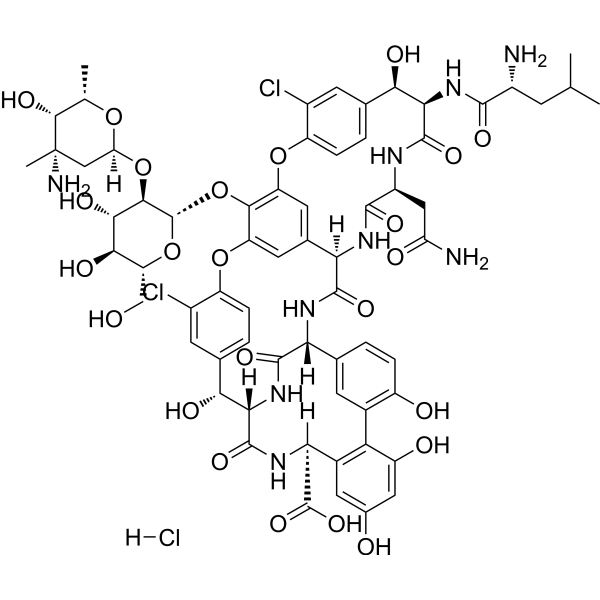
Norvancomycin hydrochloride is a cell wall synthesis inhibitor targeting peptidoglycan precursors of Gram-positive bacteria and cannot pass the blood-brain barrier. Norvancomycin hydrochloride can competitively bind to peptidoglycan precursors, irreversibly inhibit bacterial cell wall synthesis, and exert antibacterial activity. Norvancomycin hydrochloride is mainly used in the study of Gram-positive bacterial infections, especially infections caused by methicillin-resistant Staphylococcus aureus (MRSA) and methicillin-resistant Staphylococcus epidermidis (MRSE). Norvancomycin hydrochloride can also be incorporated into the bionic calcium phosphate coating of titanium implants to enhance antibacterial activity and inhibit postoperative orthopedic infections .
|
-
- HY-W701446
-
|
|
Isotope-Labeled Compounds
Biochemical Assay Reagents
|
Others
|
|
Oxiran-2-ylmethyl octadecanoate-d35 is the deuterium labeled Glycidyl stearate (HY-W011188). Oxiran-2-ylmethyl stearate is a compound belonging to the class of esters. It contains reactive oxirane or epoxy groups that give the molecule its unique properties. Oxiran-2-ylmethyl stearate is derived from stearic acid and epichlorohydrin, which are naturally occurring substances. Glycidyl stearate is commonly used in various industrial applications such as the production of coatings, adhesives and surfactants. It can also be used as a crosslinking agent in the manufacture of polymers and resins.
|
-
- HY-Y0850N
-
|
PVA (Mw 13000-23000, 98% hydrolyzed); Poly(Ethenol) (Mw 13000-23000, 98% hydrolyzed)
|
Environmental Pollutants
Biochemical Assay Reagents
|
Cancer
|
|
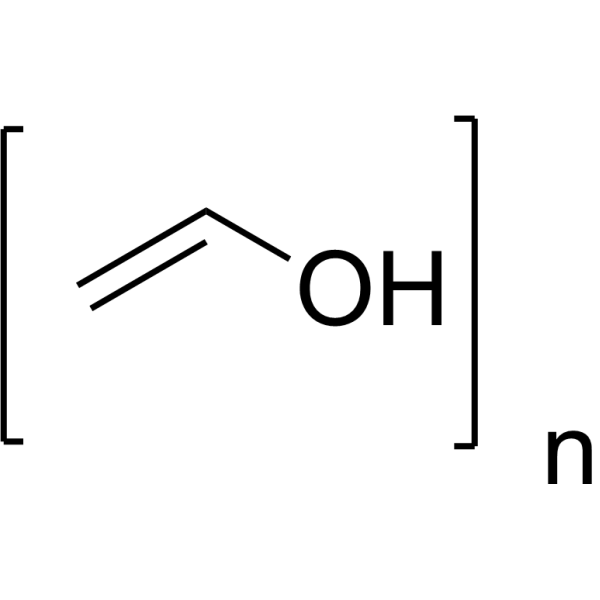
Polyvinyl alcohol (PVA; Poly(Ethenol)) (Mw 13000-23000, 98% hydrolyzed) , also known as PVA, is a vinyl water-soluble polymer that can be used as a non-ionic surfactant. Polyvinyl alcohol (Mw 13000-23000, 98% hydrolyzed) can also be used as a biodegradable polymer and can be used in adhesives, coatings, textiles, ceramics and cosmetics. Polyvinyl alcohol (Mw 13,000–23,000, 98% hydrolyzed) can be used in studies involving breast cancer as well as cisplatin (HY-17394)-induced sensorineural hearing loss .
|
-
- HY-W009400R
-
|
|
Others
Reference Standards
|
Others
|
|
(2-Dodecen-1-yl)succinic anhydride (Standard) is the analytical standard of (2-Dodecen-1-yl)succinic anhydride (HY-W009400). This product is intended for research and analytical applications. (2-Dodecen-1-yl)succinic anhydride is an organic compound commonly used in certain polymerization reactions. It is used in the manufacture of products such as plastics and resins, and is widely used in certain industrial fields, such as coatings, inks and textile manufacturing. In addition, the compound is also used as a raw material for pharmaceutical intermediates and surfactants.
|
-
- HY-182328
-
|
|
Amyloid-β
|
Neurological Disease
|
|
BTA-EG6 is a brain-penetrant aggregated amyloid-β (Aβ) peptide binder with a Kd of 290 nM for Aβ1-42. BTA-EG6 binds to aggregated Aβ and forms protein-resistive coatings that block interactions between Aβ and catalase. BTA-EG6 protects neuroblastoma cells from Aβ-induced toxicity and oxidative stress, and inhibits Aβ-induced increases in cellular hydrogen peroxide (H2O2) levels. BTA-EG6 can be used for the research of alzheimer’s disease (AD) .
|
-
- HY-W109523
-
|
|
Environmental Pollutants
Bacterial
Fungal
|
Infection
|
|
2-Butylbenzo[d]isothiazol-3(2H)-one is a bioactive compound with potent antibacterial and antifungal activity. 2-Butylbenzo[d]isothiazol-3(2H)-one is often used as a pesticide ingredient in agriculture to protect crops from diseases. 2-Butylbenzo[d]isothiazol-3(2H)-one is also used in coatings to prevent the growth of mold and algae. 2-Butylbenzo[d]isothiazol-3(2H)-one is also used as a preservative in personal care products to extend the shelf life of the product .
|
-
- HY-Y0850K
-
|
PVA (Mw 31000-50000, 98-99% hydrolyzed); Poly(Ethenol) (Mw 31000-50000, 98-99% hydrolyzed)
|
Environmental Pollutants
Biochemical Assay Reagents
|
Cancer
|
|
Polyvinyl alcohol (Mw 31000-50000, 98-99% hydrolyzed), also known as PVA, is a vinyl water-soluble polymer that can be used as a non-ionic surfactant. It can also be used as a biodegradable polymer and can be used in adhesives, coatings, textiles, ceramics and cosmetics. Polyvinyl alcohol can be used in tissue engineering by electrospinning. Polyvinyl alcohol can achieve high cellular density, infiltration, and uniform distribution, facilitating functional connections between cells. Polyvinyl alcohol can improve cell vitality through in vitro cultivation. Polyvinyl alcohol demonstrates promising inhibition of ostersarcoma cancer cells with Doxorubicin (HY-15142A) .
|
-
- HY-W103498
-
|
|
Biochemical Assay Reagents
|
Others
|
|
N4,N4'-Diphenyl-N4,N4'-bis(9-phenyl-3-carbazolyl)biphenyl-4,4'-diamine (Compound HT-01) is a biochemical reagent. N4,N4'-Diphenyl-N4,N4'-bis(9-phenyl-3-carbazolyl)biphenyl-4,4'-diamine can be used in the research of layered semiconductor devices with low-refractive-index organic coatings .
|
-
- HY-Y0850I
-
|
PVA (Mw 9000-10000, 80% hydrolyzed); Poly(Ethenol) (Mw 9000-10000, 80% hydrolyzed)
|
Environmental Pollutants
Biochemical Assay Reagents
|
Cancer
|
|
Polyvinyl alcohol (Mw 9000-10000, 80% hydrolyzed) also known as PVA, is a vinyl water-soluble polymer that can be used as a non-ionic surfactant. Polyvinyl alcohol (Mw 9000-10000, 80% hydrolyzed) can be used as a biodegradable polymer and can be used in adhesives, coatings, textiles, ceramics, and cosmetics. Polyvinyl alcohol can be used in tissue engineering by electrospinning. Polyvinyl alcohol can achieve high cellular density, infiltration, and uniform distribution, facilitating functional connections between cells. Polyvinyl alcohol can improve cell vitality through in vitro cultivation. Polyvinyl alcohol demonstrates promising inhibition of ostersarcoma cancer cells with Doxorubicin (HY-15142A) .
|
-
- HY-W250148
-
|
Spirit nigrosine
|
Biochemical Assay Reagents
|
Others
|
|
Solvent black 5 (Spirit nigrosine) is a synthetic dye belonging to the family of azo dyes. Also known as oil black or naphthol black, it is dark blue-black and has excellent solubility in organic solvents. Solvent black 5 is commonly used as a colorant in various industrial applications such as printing inks, coatings and plastics. It can also be used as an indicator dye to detect the presence of metals in solution. Furthermore, due to its high absorption and emission properties in the near-infrared region, it has been used in scientific research as a fluorescent biomarker for tissues and cells. However, Solvent black 5 has been reported to have potentially toxic effects on human health and the environment and its use is therefore regulated in some countries.
|
-
- HY-W587519S
-
|
|
Isotope-Labeled Compounds
Bacterial
|
Others
|
|
Bisphenol A bis(3-chloro-2-hydroxypropyl) ether-d14 is deuterium labeled Bisphenol A bis(3-chloro-2-hydroxypropyl) ether. Bisphenol A bis(3-chloro-2-hydroxypropyl) ether is an organic compound with potential antimicrobial activity. Bisphenol A bis(3-chloro-2-hydroxypropyl) ether can be widely used in coatings and plastics to improve the strength and durability of materials. Bisphenol A bis(3-chloro-2-hydroxypropyl) ether also plays an important role in textile processing, improving the wrinkle resistance and abrasion resistance of fabrics .
|
-
- HY-P11399
-
|
|
Bacterial
Fungal
|
Infection
|
|
Tachyplesin-3 is a broad-spectrum cationic antimicrobial peptide. Tachyplesin-3 has inhibitory activity against Gram-positive bacteria, Gram-negative bacteria, fungi and enveloped viruses. Tachyplesin-3 binds to bacterial membrane lipopolysaccharides through positive charges, disrupting membrane integrity and causing leakage of cellular contents. Tachyplesin-3 interferes with bacterial adhesion and aggregation, prevents biofilm formation, and has a synergistic effect when used in combination with Piperacillin (HY-B1923) - Tazobactam (HY-B1418) (TZP) .
|
-
- HY-151744
-
|
|
ADC Linker
|
Others
|
|
N3-TFBA-O2Oc is a click chemistry reagent containing an azide group and an aryl group. Aryl azides are well-known precursors of nitrenes and have been introduced by Fleet et al. as versatile photoaffinity labeling agents to probe biological receptors. This type of compounds has been used as photo-cross linker (λmax=258 nm) in estrogen receptor studies and for direct surface coating of carbon and organic based polymers . N3-TFBA-O2Oc is a click chemistry reagent, it contains an Azide group and can undergo copper-catalyzed azide-alkyne cycloaddition reaction (CuAAc) with molecules containing Alkyne groups. It can also undergo strain-promoted alkyne-azide cycloaddition (SPAAC) reactions with molecules containing DBCO or BCN groups.
|
-
- HY-A0104K
-
|
Hypromellose (Type II,Viscosity:3mPa.s); (Hydroxypropyl)methyl cellulose (Type II,Viscosity:3mPa.s); Celacol HPM 5000 (Type II,Viscosity:3mPa.s)
|
Environmental Pollutants
Biochemical Assay Reagents
|
Others
|
|
HPMC (Type II, Viscosity: 3 mPa.s) is a nonionic polymer prepared via synthetic modification of cellulose. As a hydrophilic matrix material, HPMC prolongs drug release through non-Fickian diffusion, which includes the diffusion of drugs in the hydrated matrix and the polymer relaxation process .
|
-
- HY-W342467
-
|
D821
|
Bacterial
|
Infection
|
|
Dioctyldimethylammonium chloride (D821), a quaternary ammonium salt, is a bactericide. Dioctyldimethylammonium chloride exerts bactericidal activity via disruption of membrane integrity, and intracellular lysate leakage. Dioctyldimethylammonium chloride also can be used as a petroleum additive, antistatic agent, softening agent, rare metal flotation agent, and corrosion inhibitor .
|
-
- HY-W051271
-
|
Titanium dioxide
|
Environmental Pollutants
Reactive Oxygen Species (ROS)
Photosensitizer
|
Others
|
|
Titanium(IV) oxide is a photosensitizer and photocatalyst. Titanium(IV) oxide can be used as a pharmaceutical excipient such as a flow aid, coating agent, sunscreen, colorant, etc. Pharmaceutical excipients or pharmaceutical excipients refer to other chemical substances used in the pharmaceutical process other than the drug ingredients. Pharmaceutical excipients generally refer to inactive ingredients in pharmaceutical preparations that can improve the stability, solubility and processability of pharmaceutical preparations. Pharmaceutical excipients also affect the absorption, distribution, metabolism and elimination (ADME) process of co-administered drugs. Titanium(IV) oxide can use light energy to generate electron-hole pairs to degrade pollutants. Photons excite electrons in TiO2 to generate active oxygen species (such as ·OH and ·O2 -), thereby oxidizing and mineralizing pollutants such as organic compounds and heavy metals. TiO2 can be used in the research of environmental remediation fields such as water treatment, air purification and self-cleaning materials .
|
-
- HY-144012H
-
|
16:0 PEG5000 PE; 1,2-Dipalmitoyl-sn-glycero-3-phosphoethanolamine-N-[methoxy(polyethylene glycol)-5000] ammonium
|
Liposome
|
Others
|
|
DPPE-PEG5000 (16:0 PEG5000 PE) is a polymer-lipid conjugate and LipoParticle stabilizer with a PEG chain of 5,000 g/mol molecular weight attached to its polar head, and it can be internalized by biological membranes. DPPE-PEG5000 enables LipoParticle to maintain colloidal stability after 20-fold dilution in PBS or cell culture medium, and prevents aggregate formation during lyophilization and rehydration. DPPE-PEG5000 helps enhance the non-cytotoxic property of LipoParticle formulations against human osteoblasts. DPPE-PEG5000 serves as a PEG lipid functional end group for synthesizing liposomes (LPs), is used in the design of conjugated polymer nanoparticles, and applies to research related to bone and joint infections .
|
-
| Cat. No. |
Product Name |
Type |
-
- HY-D0363
-
|
|
Fluorescent Dyes
|
|
Pigment Red 166 is a commonly used commercial dye for bulk coloring of plastics and synthetic fibers and for surface coatings such as paints and inks.
|
-
- HY-D0278
-
|
|
Fluorescent Dyes
|
|
Pigment Red 170 is a commonly used commercial dye for bulk coloring of plastics and synthetic fibers and for surface coatings such as paints and inks.
|
-
- HY-D0280
-
|
|
Fluorescent Dyes
|
|
Pigment red 57-1 is a commonly used commercial dye for bulk coloring of plastics and synthetic fibers and for surface coatings such as paints and inks.
|
-
- HY-W250148
-
|
Spirit nigrosine
|
Fluorescent Dyes
|
|
Solvent black 5 (Spirit nigrosine) is a synthetic dye belonging to the family of azo dyes. Also known as oil black or naphthol black, it is dark blue-black and has excellent solubility in organic solvents. Solvent black 5 is commonly used as a colorant in various industrial applications such as printing inks, coatings and plastics. It can also be used as an indicator dye to detect the presence of metals in solution. Furthermore, due to its high absorption and emission properties in the near-infrared region, it has been used in scientific research as a fluorescent biomarker for tissues and cells. However, Solvent black 5 has been reported to have potentially toxic effects on human health and the environment and its use is therefore regulated in some countries.
|
-
- HY-D0632
-
|
|
Fluorescent Dyes
|
|
Pigment Red 147 is a commonly used commercial dye for bulk coloring of plastics and synthetic fibers and for surface coatings such as paints and inks.
|
-
- HY-D0384
-
|
|
Fluorescent Dyes
|
|
Pigment Red 144 is a commonly used commercial dye for bulk coloring of plastics and synthetic fibers and for surface coatings such as paints and inks.
|
-
- HY-D0345
-
|
|
Fluorescent Dyes
|
|
Pigment Red 178 is a commonly used commercial dye for bulk coloring of plastics and synthetic fibers and for surface coatings such as paints and inks.
|
-
- HY-D1064
-
|
|
Fluorescent Dyes
|
|
Pigment red 57 is a commonly used commercial dye for bulk coloring of plastics and synthetic fibers and for surface coatings such as paints and inks.
|
-
- HY-D0383
-
|
|
Fluorescent Dyes
|
|
Pigment Red 146 is a commonly used commercial dye for bulk coloring of plastics and synthetic fibers and for surface coatings such as paints and inks.
|
-
- HY-D0568
-
|
|
Fluorescent Dyes
|
|
Pigment Red 242 is a commonly used commercial dye for bulk coloring of plastics and synthetic fibers and for surface coatings such as paints and inks.
|
-
- HY-D1139
-
|
|
Fluorescent Dyes
|
|
Pigment Red 177 is a commonly used commercial dye for bulk coloring of plastics and synthetic fibers and for surface coatings such as paints and inks.
|
-
- HY-D0549
-
|
|
Fluorescent Dyes
|
|
Pigment Red 266 is a commonly used commercial dye for bulk coloring of plastics and synthetic fibers and for surface coatings such as paints and inks.
|
-
- HY-D0596
-
|
|
Fluorescent Dyes
|
|
Pigment Red 188 is a commonly used commercial dye for bulk coloring of plastics and synthetic fibers and for surface coatings such as paints and inks.
|
-
- HY-D1233
-
|
Quinaridone magenta 202
|
Fluorescent Dyes
|
|
Pigment Red 202 is a commonly used commercial dye for bulk coloring of plastics and synthetic fibers and for surface coatings such as paints and inks.
|
-
- HY-D1164
-
|
D&C Red No. 34
|
Fluorescent Dyes
|
|
Pigment red 63:1 is a commonly used commercial dye for bulk coloring of plastics and synthetic fibers and for surface coatings such as paints and inks.
|
-
- HY-D0337
-
|
|
Fluorescent Dyes
|
|
Pigment Red 4 is a commonly used commercial dye for bulk coloring of plastics and synthetic fibers and for surface coatings such as paints and inks.
|
-
- HY-D1201
-
|
|
Fluorescent Dyes
|
|
Pigment Red 245 is a commonly used commercial dye for bulk coloring of plastics and synthetic fibers and for surface coatings such as paints and inks.
|
-
- HY-D0697
-
|
|
Fluorescent Dyes
|
|
Pigment red 95 is a commonly used commercial dye for bulk coloring of plastics and synthetic fibers and for surface coatings such as paints and inks.
|
-
- HY-D1215
-
|
|
Fluorescent Dyes
|
|
Pigment Red 31 is a commonly used commercial dye for bulk coloring of plastics and synthetic fibers and for surface coatings such as paints and inks.
|
-
- HY-D0566
-
|
|
Fluorescent Dyes
|
|
Pigment Red 185 is a commonly used commercial dye for bulk coloring of plastics and synthetic fibers and for surface coatings such as paints and inks.
|
-
- HY-D1155
-
|
|
Fluorescent Dyes
|
|
Pigment Red 176 is a commonly used commercial dye for bulk coloring of plastics and synthetic fibers and for surface coatings such as paints and inks.
|
-
- HY-D2429
-
|
|
Fluorescent Dyes
|
|
Dextran-PEG-Cy3 is the Cy3 (HY-D0822)-labeled Dextran-PEG conjugate. Dextran-PEG is used as polymer-polymer systems for the high biocompatibility to maintain cell osmolarity. Dextran-PEG coatings can reduce nanoparticle cytotoxicity .
|
-
- HY-D0352
-
|
Pigment Orange 5
|
Fluorescent Dyes
|
|
Permanent Orange is a synthetic pigment commonly used in the manufacture of paints and coatings. It belongs to the class of organic pigments and consists of carbon and other elements. Permanent Orange produces a bright orange color that is fade and weather resistant, making it ideal for outdoor applications. It can be mixed with other pigments to produce a range of colors and is compatible with a wide range of binders and solvents.
|
-
- HY-D0352R
-
|
Pigment Orange 5 (Standard)
|
Fluorescent Dyes
|
|
Permanent Orange (Standard) is the analytical standard of Permanent Orange. This product is intended for research and analytical applications. Permanent Orange is a synthetic pigment commonly used in the manufacture of paints and coatings. It belongs to the class of organic pigments and consists of carbon and other elements. Permanent Orange produces a bright orange color that is fade and weather resistant, making it ideal for outdoor applications. It can be mixed with other pigments to produce a range of colors and is compatible with a wide range of binders and solvents.
|
| Cat. No. |
Product Name |
Type |
-
- HY-125865
-
Casein
2 Publications Verification
|
Biochemical Assay Reagents
|
|
Casein is an orally active phosphoprotein that can be separated into various electrophoretic components, such as α2-Casein, κ-Casein, β-casein, and γ-casein. Casein has also been blended and grafted with other polymers, cross-linkers, or monomers to improve its functional properties. Casein enhances calcium absorption and reduces the extent of fissure as well as smooth-surface caries. Casein promotes proliferation of prostate cancer. Casein has various applications in the paper, leather, textile, and food industries, serving as coatings, adhesives, and packaging materials .
|
-
- HY-B1620L
-
|
PVP, average Mw~40000; Polyvidone, average Mw~40000; Povidone, average Mw~40000
|
Biochemical Assay Reagents
|
|
Polyvinylpyrrolidone, average Mw~40000 is a multifunctional synthetic polymer with an average molecular weight of 40,000 Da. Polyvinylpyrrolidone, average Mw~40000 is widely used to synthesize nanoparticles. Polyvinylpyrrolidone, average Mw~40000 is a versatile excipient for both conventional formulations and novel controlled or targeted delivery systems, serving as a binder, coating agent, suspending agent, pore-former, solubilizer, stabilizer, etc .
|
-
- HY-B1620E
-
|
PVP K60; Polyvidone K60; Povidone K60
|
Biochemical Assay Reagents
|
|
Polyvinylpyrrolidone K60 is one of the polymers in pharmaceutical preparations. Polyvinylpyrrolidone K60 promotes amorphous dispersion and inhibits crystallization of the drug .
|
-
- HY-126437
-
|
|
Biochemical Assay Reagents
|
|
Poly-L-lysine hydrobromide (MW 30000-70000) is a water-soluble synthetic polypeptide. Poly-L-lysine hydrobromide (MW 30000-70000) downregulates Bcl-2 and upregulates Bax and p53 proteins. Poly-L-lysine hydrobromide (MW 30000-70000) promotes Apoptosis and reduces VEGF expression. Poly-L-lysine hydrobromide (MW 30000-70000) shows anticancer activity against a variety of tumors. Poly-L-lysine hydrobromide (MW 30000-70000) can also be used as a coating material .
|
-
- HY-126436A
-
|
L-Ornithine homopolymer hydrobromide (MW 30000-70000)
|
Biochemical Assay Reagents
|
|
Poly-L-ornithine hydrobromide (MW 30000-70000) is a poly-lysine derivative with a molecular weight of 30000-70000. Poly-L-ornithine hydrobromide (MW 30000-70000) binds to the surface of cell culture vessels through positively charged amino acid residues to form a coating that promotes cell adhesion and provides cells with a matrix environment required for growth. Poly-L-ornithine hydrobromide (MW 30000-70000) is used as a coating agent in cell culture and can be used for the study of primary culture of neurons (such as dopaminergic neurons and oligodendrocytes) .
|
-
- HY-Y0850H
-
|
PVA (Mw 89000-98000, 99+% hydrolyzed); Poly(Ethenol) (Mw 89000-98000, 99+% hydrolyzed)
|
Biochemical Assay Reagents
|
|
Polyvinyl alcohol (Mw 89000-98000, 99+% hydrolyzed) also known as PVA, is a vinyl water-soluble polymer that can be used as a non-ionic surfactant. It can also be used as a biodegradable polymer and can be used in adhesives, coatings, textiles, ceramics and cosmetics .
|
-
- HY-B1620C
-
|
PVP K17; Polyvidone K17; Povidone K17
|
Biochemical Assay Reagents
|
|
Polyvinylpyrrolidone K17 is one of the polymers in pharmaceutical preparations. Polyvinylpyrrolidone K17 is a versatile excipient for both conventional formulations and novel controlled or targeted delivery systems, serving as a binder, coating agent, suspending agent, pore-former, solubilizer, stabilizer, etc .
|
-
- HY-NP139
-
|
|
Biochemical Assay Reagents
|
|
Mouse Laminin is a Laminin from mouse that can be used as a thin coating on tissue culture surfaces or as a soluble additive to culture media .
|
-
- HY-B1620D
-
|
PVP K25; Polyvidone K25; Povidone K25
|
Biochemical Assay Reagents
|
|
Polyvinylpyrrolidone K25 is a multifunctional synthetic polymer. Polyvinylpyrrolidone K25 is a versatile excipient for both conventional formulations and novel controlled or targeted delivery systems. Polyvinylpyrrolidone K25 is a preferable binder for granules and tablets .
|
-
- HY-Y0850I
-
|
PVA (Mw 9000-10000, 80% hydrolyzed); Poly(Ethenol) (Mw 9000-10000, 80% hydrolyzed)
|
Biochemical Assay Reagents
|
|
Polyvinyl alcohol (Mw 9000-10000, 80% hydrolyzed) also known as PVA, is a vinyl water-soluble polymer that can be used as a non-ionic surfactant. Polyvinyl alcohol (Mw 9000-10000, 80% hydrolyzed) can be used as a biodegradable polymer and can be used in adhesives, coatings, textiles, ceramics, and cosmetics. Polyvinyl alcohol can be used in tissue engineering by electrospinning. Polyvinyl alcohol can achieve high cellular density, infiltration, and uniform distribution, facilitating functional connections between cells. Polyvinyl alcohol can improve cell vitality through in vitro cultivation. Polyvinyl alcohol demonstrates promising inhibition of ostersarcoma cancer cells with Doxorubicin (HY-15142A) .
|
-
- HY-Y0850K
-
|
PVA (Mw 31000-50000, 98-99% hydrolyzed); Poly(Ethenol) (Mw 31000-50000, 98-99% hydrolyzed)
|
Biochemical Assay Reagents
|
|
Polyvinyl alcohol (Mw 31000-50000, 98-99% hydrolyzed), also known as PVA, is a vinyl water-soluble polymer that can be used as a non-ionic surfactant. It can also be used as a biodegradable polymer and can be used in adhesives, coatings, textiles, ceramics and cosmetics. Polyvinyl alcohol can be used in tissue engineering by electrospinning. Polyvinyl alcohol can achieve high cellular density, infiltration, and uniform distribution, facilitating functional connections between cells. Polyvinyl alcohol can improve cell vitality through in vitro cultivation. Polyvinyl alcohol demonstrates promising inhibition of ostersarcoma cancer cells with Doxorubicin (HY-15142A) .
|
-
- HY-B1620J
-
|
PVP, average Mw~10000; Polyvidone, average Mw~10000; Povidone, average Mw~10000
|
Biochemical Assay Reagents
|
|
Polyvinylpyrrolidone, average Mw~10000 is a multifunctional synthetic polymer with an average molecular weight of 10000 Da. Polyvinylpyrrolidone, average Mw~10000 is widely used to synthesize nanoparticlesPolyvinylpyrrolidone, average Mw~10000 is a versatile excipient for both conventional formulations and novel controlled or targeted delivery systems, serving as a binder, coating agent, suspending agent, pore-former, solubilizer, stabilizer, etc .
|
-
- HY-B1620N
-
|
PVP, average Mw~360000; Polyvidone, average Mw~360000; Povidone, average Mw~360000
|
Biochemical Assay Reagents
|
|
Polyvinylpyrrolidone, average Mw~360000 is a multifunctional synthetic polymer with an average molecular weight of 360000 Da. Polyvinylpyrrolidone, average Mw~360000 is widely used to synthesize nanoparticlesPolyvinylpyrrolidone, average Mw~360000 is a versatile excipient for both conventional formulations and novel controlled or targeted delivery systems, serving as a binder, coating agent, suspending agent, pore-former, solubilizer, stabilizer, etc .
|
-
- HY-W089777
-
|
GPTMS
|
Biochemical Assay Reagents
|
|
3-Glycidyloxypropyltrimethoxysilane (GPTMS) is a silicon source for the preparation of inorganic-organic hybrid polymers. 3-Glycidyloxypropyltrimethoxysilane can be used to prepare hard coatings of organic polymers, such as contact lens materials in the optical industry, as well as related materials in the fields of electronics, thin films, sensors, nanoimprinting, waveguides, and biology .
|
-
- HY-Y1365C
-
|
|
Biochemical Assay Reagents
|
|
Fish Gelatin,suitable for cell culture is an essential natural biopolymer. Fish Gelatin,suitable for cell culture can be isolated from fish processing by-products, such as fish skin, scales, bones and fish maw. Fish Gelatin,suitable for cell culture has been considered as a feasible substitute for mammalian gelatin. Modified Fish gelatin shows significant promise across various industries, including nanomaterials, 3D printing, thin films, coatings, and biopharmaceuticals. Fish Gelatin,suitable for cell culture can be used for cell culture .
|
-
- HY-Y0850N
-
|
PVA (Mw 13000-23000, 98% hydrolyzed); Poly(Ethenol) (Mw 13000-23000, 98% hydrolyzed)
|
Biochemical Assay Reagents
|
|
Polyvinyl alcohol (PVA; Poly(Ethenol)) (Mw 13000-23000, 98% hydrolyzed) , also known as PVA, is a vinyl water-soluble polymer that can be used as a non-ionic surfactant. Polyvinyl alcohol (Mw 13000-23000, 98% hydrolyzed) can also be used as a biodegradable polymer and can be used in adhesives, coatings, textiles, ceramics and cosmetics. Polyvinyl alcohol (Mw 13,000–23,000, 98% hydrolyzed) can be used in studies involving breast cancer as well as cisplatin (HY-17394)-induced sensorineural hearing loss .
|
-
- HY-B1620K
-
|
PVP, average Mw~29000; Polyvidone, average Mw~29000; Povidone, average Mw~29000
|
Biochemical Assay Reagents
|
|
Polyvinylpyrrolidone, average Mw~29000 is a multifunctional synthetic polymer with an average molecular weight of 29,000 Da. Polyvinylpyrrolidone, average Mw~29000 is a versatile excipient for both conventional formulations and novel controlled or targeted delivery systems, serving as a binder, coating agent, suspending agent, pore-former, solubilizer, stabilizer, etc .
|
-
- HY-NP0196
-
|
Mouse IgG
|
Biochemical Assay Reagents
|
|
Mouse Immunoglobulin G (Mouse IgG) is a mouse serum immunoglobulin that can be used in immunolabeling and coating protein in a variety of immunoassays including ELISA .
|
-
- HY-B1620I
-
|
PVP K120; Polyvidone K120; Povidone K120
|
Biochemical Assay Reagents
|
|
Polyvinylpyrrolidone K120 is a multifunctional synthetic polymer with excellent adhesiveness and thickening properties. Polyvinylpyrrolidone K120 is a versatile excipient for both conventional formulations and novel controlled or targeted delivery systems. Polyvinylpyrrolidone K120 can be used to prepare drug-loaded hydrogel patches .
|
-
- HY-ER010
-
|
Imidazole hydrochloride
|
Biochemical Assay Reagents
|
|
1H-Imidazole hydrochloride can be used as ligand, buffer and catalyst, etc., and also plays an important role in the process of drug synthesis and extraction of natural products. In addition, the compound is widely used in certain industrial fields, such as in the manufacturing process of plastics, coatings, textiles and electronic materials. Although the compound has no direct medical applications, it plays an important role in chemical research and laboratory studies.
|
-
- HY-W018574
-
|
|
Biochemical Assay Reagents
|
|
Tetraoctylammonium bromide (TOAB) is a quaternary ammonium salt consisting of a positively charged tetraoctylammonium cation and a negatively charged bromide anion. This compound is commonly used as a phase transfer catalyst in organic chemical reactions, facilitating the transfer of reactants between immiscible phases. It is also used as a surfactant and dispersant in various industrial applications, for example in the production of coatings, adhesives and polymers. Additionally, Tetraoctylammonium bromide has been investigated for potential applications in energy storage devices and as an antimicrobial agent.
|
-
- HY-W250309
-
|
|
Biochemical Assay Reagents
|
|
Pentaerythritol tetra(3-mercaptopropionate)It is a class of organic compounds containing both pentaerythritol and mercaptopropionate groups. It is commonly used as a stabilizer and crosslinking agent in various chemical and industrial applications. Pentaerythritol tetra(3-mercaptopropionate)Has a variety of properties that make it suitable for these applications, including the ability to increase the mechanical strength, thermal stability and weatherability of polymers and coatings. Additionally, it can be used as a feedstock for the production of other specialty chemicals and materials.
|
-
- HY-144012H
-
|
16:0 PEG5000 PE; 1,2-Dipalmitoyl-sn-glycero-3-phosphoethanolamine-N-[methoxy(polyethylene glycol)-5000] ammonium
|
Biochemical Assay Reagents
|
|
DPPE-PEG5000 (16:0 PEG5000 PE) is a polymer-lipid conjugate and LipoParticle stabilizer with a PEG chain of 5,000 g/mol molecular weight attached to its polar head, and it can be internalized by biological membranes. DPPE-PEG5000 enables LipoParticle to maintain colloidal stability after 20-fold dilution in PBS or cell culture medium, and prevents aggregate formation during lyophilization and rehydration. DPPE-PEG5000 helps enhance the non-cytotoxic property of LipoParticle formulations against human osteoblasts. DPPE-PEG5000 serves as a PEG lipid functional end group for synthesizing liposomes (LPs), is used in the design of conjugated polymer nanoparticles, and applies to research related to bone and joint infections .
|
-
- HY-B1620O
-
|
PVP, average Mw~1300000; Polyvidone, average Mw~1300000; Povidone, average Mw~1300000
|
Biochemical Assay Reagents
|
|
Polyvinylpyrrolidone, average Mw~1300000 is a multifunctional synthetic polymer with an average molecular weight of 1300000 Da. Polyvinylpyrrolidone, average Mw~1300000 shows the higher viscosity to form the fine polymer network as the molecular sieve .
|
-
- HY-139201H
-
|
PDLHB (MW ≥300000)
|
Biochemical Assay Reagents
|
|
Poly-D-lysine hydrobromide (MW ≥300000) (PDLHB (MW ≥300000)) is a cationic polymer and cell adhesion promoter. Poly-D-lysine hydrobromide (MW ≥300000) serves as a substrate coating to support the adhesion and proliferation of rat dorsal root ganglion satellite glial cells in vitro. Poly-D-lysine hydrobromide (MW ≥300000) promotes the adhesion and immobilization of cells on plastic culture dishes. Poly-D-lysine hydrobromide is also known as a calcium-sensing receptor (CaSR) agonist peptide .
|
-
- HY-139201C
-
|
PDLHB (MW 1000-5000)
|
Biochemical Assay Reagents
|
|
Poly-D-lysine hydrobromide (MW 1000-5000) (PDLHB (MW 1000-5000)) is a synthetic cationic polypeptide polymer commonly used as a cell adhesion promoter and surface coating molecule. Poly-D-lysine hydrobromide is also known as a calcium-sensing receptor (CaSR) agonist peptide .
|
-
- HY-B1620M
-
|
PVP, average Mw~55000; Polyvidone, average Mw~55000; Povidone, average Mw~55000
|
Biochemical Assay Reagents
|
|
Polyvinylpyrrolidone, average Mw~55000 is a multifunctional synthetic polymer with an average molecular weight of 55000 Da. Polyvinylpyrrolidone, average Mw~55000 is widely used to synthesize nanoparticlesPolyvinylpyrrolidone, average Mw~55000 is a versatile excipient for both conventional formulations and novel controlled or targeted delivery systems, serving as a binder, coating agent, suspending agent, pore-former, solubilizer, stabilizer, etc .
|
-
- HY-159067
-
|
DEAE-dextran, MW 500000 hydrochloride, from bacterial (Leuconostoc mesenteroides); Diethylaminoethyl-dextran, MW 500000 hydrochloride
|
Biochemical Assay Reagents
|
|
DEAE-dextran, MW 500000 hydrochloride (DEAE-dextran, MW 500000 hydrochloride, from bacterial (Leuconostoc mesenteroides)) is a high-molecular-weight positively charged polymer that significantly enhances the uptake of viral RNA by tissue culture cells. When employed in the delivery system for "tumor immunity" RNA-splenocyte transfer, DEAE-dextran can markedly extend the lifespan of tumor-bearing animals, comparable to that of actively immunized animals. Furthermore, DEAE-dextran serves as a complexing agent for nucleic acids, forming composite particles with DNA/RNA for extensive applications in gene delivery. Additionally, DEAE-dextran can be utilized as a coating for liposomes .
|
-
- HY-139446A
-
|
ETPTA (MW 912); TMPETA (MW 912)
|
Biochemical Assay Reagents
|
|
Trimethylolpropane ethoxylate triacrylate (MW 912) (ETPTA (MW 912); TMPETA (MW 912)) is a trifunctional acrylate monomer with multiple acrylate functional groups, which can be used in polymerization and crosslinking reactions. Trimethylolpropane ethoxylate triacrylate (MW 912) is widely used in the preparation of cured resins for 3D printing, optical coatings for display devices, and dental composite restorative materials .
|
-
- HY-NP0200
-
|
Dog IgG
|
Biochemical Assay Reagents
|
|
Dog Immunoglobulin G (Dog IgG) is a dog serum immunoglobulin that can be used in immunolabeling and coating protein in a variety of immunoassays including ELISA .
|
-
- HY-140696D
-
|
mPEG10000-Hydroxy; Polyethylene glycol monomethyl ether 10000
|
Biochemical Assay Reagents
|
|
m-PEG10000-OH (mPEG10000-Hydroxy; Polyethylene glycol monomethyl ether 10000) is a hydroxyl-terminated methoxylated polyethylene glycol (PEG-based) compound that serves as a linker for PROTACs. m-PEG10000-OH is applicable to research on healthcare-associated infections .
|
-
- HY-NP0195
-
|
Sheep IgG
|
Biochemical Assay Reagents
|
|
Sheep Immunoglobulin G (Sheep IgG) is a sheep serum immunoglobulin that can be used in immunolabeling and coating protein in a variety of immunoassays including ELISA .
|
-
- HY-W017761
-
|
m-Dimethylaminobenzoic acid
|
Biochemical Assay Reagents
|
|
3-(Dimethylamino)benzoic acid (m-Dimethylaminobenzoic acid) is used in the field of materials science to develop novel polymers and coatings with specific optical and electronic properties.
|
-
- HY-NP0198
-
|
Rabbit IgG
|
Biochemical Assay Reagents
|
|
Rabbit Immunoglobulin G (Rabbit IgG) is a rabbit serum immunoglobulin that can be used in immunolabeling and coating protein in a variety of immunoassays including ELISA .
|
-
- HY-W127627
-
|
|
Biochemical Assay Reagents
|
|
Tween 85 is a nonionic surfactant belonging to the class of ethoxylated sorbitan esters. It is used as an emulsifier and solubilizer in various industries such as pharmaceutical, cosmetic and food. Because of its ability to blend oily and water-based ingredients, Tween 85 is often used in the formulation of creams, lotions and ointments. In addition, it is used as a dispersant for pigments in the production of paints and coatings.
|
-
- HY-P2975B
-
|
|
Biochemical Assay Reagents
|
|
Rat Laminin is a Laminin from rat that can be used as a thin coating on tissue culture surfaces or as a soluble additive to culture media .
|
-
- HY-W127565
-
|
|
Biochemical Assay Reagents
|
|
HexatetracontaneIt is an organic compound belonging to hydrocarbons. It has a high melting point. HexatetracontaneIt has a variety of applications in the cosmetic and personal care industries, especially as an emollient and humectant in skin and hair care products. In addition, it is used as a lubricant and coating agent in industrial environments.
|
-
- HY-W115746B
-
|
|
Biochemical Assay Reagents
|
|
Ethyl cellulose (viscosity 300 cP) serves as a non-toxic and biodegradable polymer, with unique properties such as oleogel formation, delivery of active component, and film-forming ability in the food and pharmaceutical sectors. Ethyl cellulose (viscosity 300 cP) can be used as an excipient, such as coating agent, flavoring agent, tablet filler .
|
-
- HY-W115746A
-
|
|
Biochemical Assay Reagents
|
|
Ethyl cellulose (viscosity 10 cP) serves as a non-toxic and biodegradable polymer, with unique properties such as oleogel formation, delivery of active component, and film-forming ability in the food and pharmaceutical sectors. Ethyl cellulose (viscosity 10 cP) can be used as an excipient, such as coating agent, flavoring agent, tablet filler .
|
-
- HY-W009400
-
|
|
Biochemical Assay Reagents
|
|
(2-Dodecen-1-yl)succinic anhydride is an organic compound commonly used in certain polymerization reactions. It is used in the manufacture of products such as plastics and resins, and is widely used in certain industrial fields, such as coatings, inks and textile manufacturing. In addition, the compound is also used as a raw material for pharmaceutical intermediates and surfactants.
|
-
- HY-W127364
-
|
Pentaerythritol distearate [Lubricants]
|
Biochemical Assay Reagents
|
|
Pentaerythritol distearate (mixture) is a mixture of ester compounds commonly used as a thickener, emulsifier or lubricant in various cosmetic and personal care products. It is also used as a plasticizer or stabilizer in the production of plastics and resins. Pentaerythritol distearate (mixture) has unique chemical properties that make it an important ingredient in a variety of industrial processes, including the manufacture of adhesives, coatings and sealants.
|
-
- HY-W010119
-
|
|
Biochemical Assay Reagents
|
|
4-Methyl-2-phenyl-1,3-dioxolane is an organic compound commonly used as a solvent and intermediate. It can be used in some organic synthesis reactions, such as the synthesis of drugs or other organic compounds. In addition, this compound is also widely used in industrial production fields, such as plastics, coatings and glues.
|
-
- HY-W011103
-
|
|
Biochemical Assay Reagents
|
|
Diheptyl phthalate is a class of phthalates consisting of two heptyl (C7) chains attached to a phthalic acid backbone. This compound is commonly used as a plasticizer in various polymer materials such as PVC to increase flexibility and durability. It can also be used as a lubricant, solvent or additive in various industrial applications such as coatings, adhesives and sealants. However, Diheptyl phthalate has been identified as an environmental pollutant and health hazard due to its potential for endocrine disruption and toxicity.
|
-
- HY-W127740
-
|
Isomethyl-α-ionone; α-Isomethylionone
|
Biochemical Assay Reagents
|
|
Isonaline 70 is an industrial solvent that belongs to the family of high flash point aromatic naphtha solvents. It is commonly used in a variety of industries including paints and coatings, adhesives and rubber manufacturing, as a thinner and thinner for resins and polymers. Isonaline 70 has various properties that make it suitable for these applications, including its low viscosity, high solvency and good compatibility with other materials. In addition, it can also be used as a cleaning agent for mechanical equipment.
|
-
- HY-D0898
-
|
|
Biochemical Assay Reagents
|
|
2,4-Dichlorobenzenediazonium tetrafluoroborate is an organic compound commonly used in organic synthesis and dye preparation reactions. It can be used as an azotating agent to form azo dyes with other organic substances, and can be used in coatings, pigments and paints and other industries. In addition, the compound is widely used in certain chemical analysis and detection methods, such as in scientific instruments such as electron microscopes and mass spectrometers. Although the compound has no direct medical applications, it plays an important role in chemical research and laboratory studies.
|
-
- HY-NP0212
-
|
|
Biochemical Assay Reagents
|
|
Bovine Immunoglobulin G is a bovine serum immunoglobulin that can be used in immunolabeling and coating protein in a variety of immunoassays including ELISA .
|
-
- HY-NP0196B
-
|
|
Biochemical Assay Reagents
|
|
Mouse Immunoglobulin G2a is a mouse serum immunoglobulin that can be used in immunolabeling and coating protein in a variety of immunoassays including ELISA .
|
-
- HY-NP0196C
-
|
|
Biochemical Assay Reagents
|
|
Mouse Immunoglobulin G2b is a mouse serum immunoglobulin that can be used in immunolabeling and coating protein in a variety of immunoassays including ELISA .
|
-
- HY-NP193
-
|
Rat IgG
|
Biochemical Assay Reagents
|
|
Rat Immunoglobulin G (Rat IgG) is a rat serum immunoglobulin that can be used in immunolabeling and coating protein in a variety of immunoassays including ELISA .
|
-
- HY-NP0197
-
|
Goat IgG
|
Biochemical Assay Reagents
|
|
Goat Immunoglobulin G (Goat IgG) is a goat serum immunoglobulin that can be used in immunolabeling and coating protein in a variety of immunoassays including ELISA .
|
- HY-W127346
-
|
|
Biochemical Assay Reagents
|
|
Pentaerythrityl tetrastearate is an ester compound commonly used as a lubricant, emollient or thickener in various cosmetic and personal care products. It is also used as a plasticizer or stabilizer in the production of plastics and resins. Pentaerythrityl tetrastearate has unique chemical properties that make it an important ingredient in a variety of industrial processes, including the manufacture of adhesives, coatings and sealants.
|
- HY-182730
-
|
|
Biochemical Assay Reagents
|
|
1% Gelatin solution for cell culture. Used for coating surfaces of cell culture plates, dishes, etc., to promote the adhesion and proliferation of mammalian cells. The gelatin solution may precipitate at lower temperatures; therefore, it can be incubated at 25°C-55°C until completely dissolved before use. Dilute with sterile ultrapure water before coating.
|
- HY-182609
-
|
|
Biochemical Assay Reagents
|
|
0.5% Gelatin solution for cell culture. Used for coating surfaces of cell culture plates, dishes, etc., to promote the adhesion and proliferation of mammalian cells. The gelatin solution may precipitate at lower temperatures; therefore, it can be incubated at 25°C-55°C until completely dissolved before use. Dilute with sterile ultrapure water before coating.
|
- HY-182608
-
|
|
Biochemical Assay Reagents
|
|
0.1% Gelatin solution for cell culture. Used for coating surfaces of cell culture plates, dishes, etc., to promote the adhesion and proliferation of mammalian cells. The gelatin solution may precipitate at lower temperatures; therefore, it can be incubated at 25°C-55°C until completely dissolved before use. Dilute with sterile ultrapure water before coating.
|
- HY-NP0217
-
|
|
Biochemical Assay Reagents
|
|
Horse Immunoglobulin G is a horse serum immunoglobulin that can be used in immunolabeling and coating protein in a variety of immunoassays including ELISA .
|
- HY-NP0196A
-
|
|
Biochemical Assay Reagents
|
|
Mouse Immunoglobulin G1 is a mouse serum immunoglobulin that can be used in immunolabeling and coating protein in a variety of immunoassays including ELISA .
|
- HY-NP0199
-
|
Porcine IgG
|
Biochemical Assay Reagents
|
|
Porcine Immunoglobulin G (Porcine IgG) is a porcine serum immunoglobulin that can be used in immunolabeling and coating protein in a variety of immunoassays including ELISA .
|
- HY-NP0216
-
|
|
Biochemical Assay Reagents
|
|
Guinea pig Immunoglobulin G is a guinea pig serum immunoglobulin that can be used in immunolabeling and coating protein in a variety of immunoassays including ELISA .
|
- HY-W127565R
-
|
|
Biochemical Assay Reagents
|
|
Hexatetracontane (Standard) is the analytical standard of Hexatetracontane. This product is intended for research and analytical applications. HexatetracontaneIt is an organic compound belonging to hydrocarbons. It has a high melting point. HexatetracontaneIt has a variety of applications in the cosmetic and personal care industries, especially as an emollient and humectant in skin and hair care products. In addition, it is used as a lubricant and coating agent in industrial environments.
|
- HY-W009400R
-
|
|
Biochemical Assay Reagents
|
|
(2-Dodecen-1-yl)succinic anhydride (Standard) is the analytical standard of (2-Dodecen-1-yl)succinic anhydride (HY-W009400). This product is intended for research and analytical applications. (2-Dodecen-1-yl)succinic anhydride is an organic compound commonly used in certain polymerization reactions. It is used in the manufacture of products such as plastics and resins, and is widely used in certain industrial fields, such as coatings, inks and textile manufacturing. In addition, the compound is also used as a raw material for pharmaceutical intermediates and surfactants.
|
| Cat. No. |
Product Name |
Target |
Research Area |
-
- HY-P0131A
-
|
Laminin (925-933) TFA
|
Peptides
|
Cancer
|
|
Laminin peptide CDPGYIGSR (Laminin (925-933)) TFA is a 67 kDa laminin receptor ligand and selective cell adhesion inducer. Laminin peptide CDPGYIGSR TFA not only promotes cell adhesion and mediates directed neurite outgrowth via matrix coating or covalent immobilization, but also inhibits neural crest cell migration under specific conditions. Laminin peptide CDPGYIGSR TFA inhibits lung colonization of melanoma cells, and suppresses the growth of Sarcoma 180 solid tumors and Lewis lung carcinoma (3LL) in mice. Laminin peptide CDPGYIGSR TFA also exerts significant anti-angiogenic effects by inhibiting embryonic angiogenesis in the chick chorioallantoic membrane and vascular endothelial cell migration induced by tumor-conditioned medium. Laminin peptide CDPGYIGSR TFA can be widely used in studies related to melanoma, Sarcoma 180, Lewis lung carcinoma (3LL), and other relevant areas .
|
-
- HY-P5486
-
|
|
Bacterial
|
Others
|
|
Tet-20 is a biological active peptide. (Tet-20, is a synthetic cathelicidin-derived peptide. It was tested as infection-resistant coating for medical devices. When tethered on an implant surface Tet-20 exhibited broad antimicrobial activities both in vivo and in vitro. It can stop biofilm formation and appears to be non-toxic to eukaryotic cells)
|
-
- HY-P5423C
-
|
|
Peptides
|
Others
|
|
GALA-Cys is a chemically modified GALA peptide (HY-P5423) that retains GALA functions while acquiring strong covalent conjugation capability. GALA-Cys undergoes pH-driven reversible secondary structure transition, rearranges into an amphipathic α-helix, self-oligomerizes, penetrates lipid membranes to form pores, and disrupts lipid bilayers, thereby enabling endosomal escape and cytosolic cargo delivery. GALA-Cys can be conjugated with lipid DPTE for integration into liposomes, self-assembles into a tilted monolayer on gold surfaces, and serves as a pH-responsive coating for particle surface functionalization. GALA-Cys is applicable to studies related to targeted cargo delivery .
|
-
- HY-P11399
-
|
|
Bacterial
Fungal
|
Infection
|
|
Tachyplesin-3 is a broad-spectrum cationic antimicrobial peptide. Tachyplesin-3 has inhibitory activity against Gram-positive bacteria, Gram-negative bacteria, fungi and enveloped viruses. Tachyplesin-3 binds to bacterial membrane lipopolysaccharides through positive charges, disrupting membrane integrity and causing leakage of cellular contents. Tachyplesin-3 interferes with bacterial adhesion and aggregation, prevents biofilm formation, and has a synergistic effect when used in combination with Piperacillin (HY-B1923) - Tazobactam (HY-B1418) (TZP) .
|
| Cat. No. |
Product Name |
Target |
Research Area |
Image |
-
- HY-P991760
-
|
|
Interleukin Related
|
Inflammation/Immunology
|
|
Anti-IL-10 Antibody (JES3-19F1) reacts with human IL-10, and is a capture or coating antibody in ELISA applications. Anti-IL-10 Antibody (JES3-19F1) reduces bacterial load in Mycobacterium avium infected mice. Recommend Isotype Controls: Rat IgG2a kappa, Isotype Control (HY-P990679) .
|
-
(5)
| Cat. No. |
Product Name |
Category |
Target |
Chemical Structure |
-
- HY-W019711
-
-
-
- HY-Y0304
-
-
-
- HY-N6070
-
|
|
Structural Classification
Classification of Application Fields
Ricinus communis L.
Ketones, Aldehydes, Acids
Other Diseases
Euphorbiaceae
Plants
Disease Research Fields
Source Classification
|
Environmental Pollutants
Prostaglandin Receptor
|
|
Ricinoleic acid (purity≥85%), a hydroxy fatty acid, is an attractive feedstock for the production of high-performance lubricants, cosmetics, polymers, surfactants, and coatings. Ricinoleic acid is the main active ingredient of Castor oil (HY-107799). Ricinoleic acid is the agonist for prostaglandin EP3 receptor (EP3 receptor) (EC50 in MEG-01 is 0.5 μM), that causes laxative effects and uterine contraction. Ricinoleic acid exhibits antianxiety-like, anti-inflammatory and pro-inflammatory properties .
|
-
-
- HY-W019831
-
-
-
- HY-Y0946
-
-
-
- HY-N7097
-
|
|
Infection
Classification of Application Fields
Disease Research Fields
|
Antibiotic
Bacterial
|
|
Sulbenicillin disodium is a semisynthetic α-sulfonylbenzylpenicillin antibiotic. Sulbenicillin disodium exerts antibacterial activity against multiple gram-negative rods. Sulbenicillin disodium inhibits primary and secondary platelet aggregation, serotonin release from platelets, and platelet adherence via platelet surface coating. Sulbenicillin disodium can be used for the research of Pseudomonas aeruginosa, Pseudomonas maltophilia, and Pseudomonas cepacia infections .
|
-
-
- HY-W017077
-
-
-
- HY-W019711R
-
-
-
- HY-N5105
-
-
-
- HY-23497
-
-
-
- HY-W127740
-
|
Isomethyl-α-ionone; α-Isomethylionone
|
Source Classification
|
Environmental Pollutants
Biochemical Assay Reagents
|
|
Isonaline 70 is an industrial solvent that belongs to the family of high flash point aromatic naphtha solvents. It is commonly used in a variety of industries including paints and coatings, adhesives and rubber manufacturing, as a thinner and thinner for resins and polymers. Isonaline 70 has various properties that make it suitable for these applications, including its low viscosity, high solvency and good compatibility with other materials. In addition, it can also be used as a cleaning agent for mechanical equipment.
|
-
-
- HY-Y0304R
-
-
-
- HY-Y0946R
-
-
-
- HY-W017077R
-
-
| Cat. No. |
Product Name |
Chemical Structure |
-
- HY-Y0304S1
-
|
|
|
Dibutyl phthalate-d22 is the deuterium labeled Dibutyl phthalate . Dibutyl phthalate is a commonly used plasticizer commonly found in some food packaging materials, personal care products, and the coating of oral medications. May cause toxicity and adverse neurobehavioral effects .
|
-
-
- HY-Y0304S
-
1 Publications Verification
|
|
Dibutyl phthalate-3,4,5,6-d4 is the deuterium labeled Dibutyl phthalate. Dibutyl phthalate is a commonly used plasticizer commonly found in some food packaging materials, personal care products, and the coating of oral medications . May cause toxicity and adverse neurobehavioral effects .
|
-
-
- HY-Y0946S2
-
|
|
|
Acetamide-d5 is the deuterium labeled Acetamide . Acetamide is used as an intermediate in the synthesis of methylamine, thioacetamide, and insecticides, and as a plasticizer in leather, cloth and coatings. Acetamide has carcinogenicity .
|
-
-
- HY-Y0946S
-
|
|
|
Acetamide- 15N is the 15N-labeled Acetamide. Acetamide is used as an intermediate in the synthesis of methylamine, thioacetamide, and insecticides, and as a plasticizer in leather, cloth and coatings. Acetamide has carcinogenicity .
|
-
-
- HY-W740833
-
|
|
|
Iodopropynyl butylcarbamate-d9 (IPBC-d9) is the deuterium labeled Iodopropynyl butylcarbamate (HY-W009335). Iodopropynyl butylcarbamate (IPBC) is a potent fungicide and preservative, which has been used in the paints, coatings, wood preservatives, personal care, and cosmetics industries .
|
-
-
- HY-W010629S
-
|
|
|
2-Chloroacetamide-d4 is the deuterium labeled 2-Chloroacetamide . 2-Chloroacetamide is a preservative and is a herbicide for both uplands and paddy fields. 2-Chloroacetamide is a biocide in agriculture, glues, paints and coatings. 2-Chloroacetamide inhibits very-long-chain fatty acid elongase .
|
-
-
- HY-W768057
-
|
|
|
Acetamide- 13C2, 15N is the 13C- and 15N-labeled Acetamide (HY-Y0946). Acetamide is used as an intermediate in the synthesis of methylamine, thioacetamide, and insecticides, and as a plasticizer in leather, cloth and coatings. Acetamide has carcinogenicity. Acetamide derivatives may has antioxidant activity and potential anti-inflammatory activity. Acetamide holds promise for research in the fields of anti-inflammatory and cancer studies .
|
-
-
- HY-W011188S
-
|
|
|
Glycidyl stearate-d5 is a deuterium labeled Glycidyl stearate (HY-W011188). Oxiran-2-ylmethyl stearate is a compound belonging to the class of esters. It contains reactive oxirane or epoxy groups that give the molecule its unique properties. Oxiran-2-ylmethyl stearate is derived from stearic acid and epichlorohydrin, which are naturally occurring substances. Glycidyl stearate is commonly used in various industrial applications such as the production of coatings, adhesives and surfactants. It can also be used as a crosslinking agent in the manufacture of polymers and resins.
|
-
-
- HY-W747639
-
|
|
|
Glycidyl Stearate- 13C3 is 13C labeled Glycidyl stearate. Oxiran-2-ylmethyl stearate is a compound belonging to the class of esters. It contains reactive oxirane or epoxy groups that give the molecule its unique properties. Oxiran-2-ylmethyl stearate is derived from stearic acid and epichlorohydrin, which are naturally occurring substances. Glycidyl stearate is commonly used in various industrial applications such as the production of coatings, adhesives and surfactants. It can also be used as a crosslinking agent in the manufacture of polymers and resins .
|
-
-
- HY-W701446
-
|
|
|
Oxiran-2-ylmethyl octadecanoate-d35 is the deuterium labeled Glycidyl stearate (HY-W011188). Oxiran-2-ylmethyl stearate is a compound belonging to the class of esters. It contains reactive oxirane or epoxy groups that give the molecule its unique properties. Oxiran-2-ylmethyl stearate is derived from stearic acid and epichlorohydrin, which are naturally occurring substances. Glycidyl stearate is commonly used in various industrial applications such as the production of coatings, adhesives and surfactants. It can also be used as a crosslinking agent in the manufacture of polymers and resins.
|
-
-
- HY-W587519S
-
|
|
|
Bisphenol A bis(3-chloro-2-hydroxypropyl) ether-d14 is deuterium labeled Bisphenol A bis(3-chloro-2-hydroxypropyl) ether. Bisphenol A bis(3-chloro-2-hydroxypropyl) ether is an organic compound with potential antimicrobial activity. Bisphenol A bis(3-chloro-2-hydroxypropyl) ether can be widely used in coatings and plastics to improve the strength and durability of materials. Bisphenol A bis(3-chloro-2-hydroxypropyl) ether also plays an important role in textile processing, improving the wrinkle resistance and abrasion resistance of fabrics .
|
-
-
- HY-W017077S
-
|
|
|
4-Methylbiphenyl (4-Phenyltoluene)-d3 is the deuterium labeled 4-Methylbiphenyl (HY-W017077). 4-Methylbiphenyl is an organic compound. 4-Methylbiphenyl has excellent chemical stability and antioxidant properties, and is widely used in industry. 4-Methylbiphenyl can serve as a solvent, coating additive, plastic additive and dye intermediate .
|
-
| Cat. No. |
Product Name |
|
Classification |
-
- HY-151744
-
|
|
|
Azide
Labeling and Fluorescence Imaging
|
|
N3-TFBA-O2Oc is a click chemistry reagent containing an azide group and an aryl group. Aryl azides are well-known precursors of nitrenes and have been introduced by Fleet et al. as versatile photoaffinity labeling agents to probe biological receptors. This type of compounds has been used as photo-cross linker (λmax=258 nm) in estrogen receptor studies and for direct surface coating of carbon and organic based polymers . N3-TFBA-O2Oc is a click chemistry reagent, it contains an Azide group and can undergo copper-catalyzed azide-alkyne cycloaddition reaction (CuAAc) with molecules containing Alkyne groups. It can also undergo strain-promoted alkyne-azide cycloaddition (SPAAC) reactions with molecules containing DBCO or BCN groups.
|
| Cat. No. |
Product Name |
|
Classification |
-
- HY-126437
-
|
|
|
Polymers
|
|
Poly-L-lysine hydrobromide (MW 30000-70000) is a water-soluble synthetic polypeptide. Poly-L-lysine hydrobromide (MW 30000-70000) downregulates Bcl-2 and upregulates Bax and p53 proteins. Poly-L-lysine hydrobromide (MW 30000-70000) promotes Apoptosis and reduces VEGF expression. Poly-L-lysine hydrobromide (MW 30000-70000) shows anticancer activity against a variety of tumors. Poly-L-lysine hydrobromide (MW 30000-70000) can also be used as a coating material .
|
-
- HY-Y0850H
-
|
PVA (Mw 89000-98000, 99+% hydrolyzed); Poly(Ethenol) (Mw 89000-98000, 99+% hydrolyzed)
|
|
Polymers
|
|
Polyvinyl alcohol (Mw 89000-98000, 99+% hydrolyzed) also known as PVA, is a vinyl water-soluble polymer that can be used as a non-ionic surfactant. It can also be used as a biodegradable polymer and can be used in adhesives, coatings, textiles, ceramics and cosmetics .
|
-
- HY-100557
-
|
|
|
Emulsifiers
Thickeners
|
|
Hydroxypropyl Cellulose is an orally active cellulose ether and surfactant. Hydroxypropyl cellulose is divided into high-substituted HPC (HHPC) and low-substituted HPC (LHPC). Hydroxypropyl Cellulose reduces inflammatory mediators (IL-6, IL-1β). Hydroxypropyl Cellulose improves colitis and obesity. Hydroxypropyl Cellulose can be used as a pharmaceutical excipient, such as coating agent, emulsifier, suspension, tablet, thickener, viscosifier .
|
-
- HY-W115746
-
|
Ethyl cellulose N-200
|
|
Fillers
|
|
Ethyl cellulose is a derivative of cellulose. Ethyl cellulose is a non-toxic, biodegradable polymer. Ethyl cellulose has unique properties such as oil gel formation, active ingredient delivery and film formation. Ethyl cellulose can be used as a pharmaceutical excipient, such as a coating agent, flavoring agent, tablet filler, etc. Ethyl cellulose can be used to prepare nanoparticles for active compound delivery .
|
-
- HY-Y0850K
-
|
PVA (Mw 31000-50000, 98-99% hydrolyzed); Poly(Ethenol) (Mw 31000-50000, 98-99% hydrolyzed)
|
|
Polymers
|
|
Polyvinyl alcohol (Mw 31000-50000, 98-99% hydrolyzed), also known as PVA, is a vinyl water-soluble polymer that can be used as a non-ionic surfactant. It can also be used as a biodegradable polymer and can be used in adhesives, coatings, textiles, ceramics and cosmetics. Polyvinyl alcohol can be used in tissue engineering by electrospinning. Polyvinyl alcohol can achieve high cellular density, infiltration, and uniform distribution, facilitating functional connections between cells. Polyvinyl alcohol can improve cell vitality through in vitro cultivation. Polyvinyl alcohol demonstrates promising inhibition of ostersarcoma cancer cells with Doxorubicin (HY-15142A) .
|
-
- HY-Y0850N
-
|
PVA (Mw 13000-23000, 98% hydrolyzed); Poly(Ethenol) (Mw 13000-23000, 98% hydrolyzed)
|
|
Polymers
|
|
Polyvinyl alcohol (PVA; Poly(Ethenol)) (Mw 13000-23000, 98% hydrolyzed) , also known as PVA, is a vinyl water-soluble polymer that can be used as a non-ionic surfactant. Polyvinyl alcohol (Mw 13000-23000, 98% hydrolyzed) can also be used as a biodegradable polymer and can be used in adhesives, coatings, textiles, ceramics and cosmetics. Polyvinyl alcohol (Mw 13,000–23,000, 98% hydrolyzed) can be used in studies involving breast cancer as well as cisplatin (HY-17394)-induced sensorineural hearing loss .
|
-
- HY-144012H
-
|
16:0 PEG5000 PE; 1,2-Dipalmitoyl-sn-glycero-3-phosphoethanolamine-N-[methoxy(polyethylene glycol)-5000] ammonium
|
|
Pegylated Lipids
|
|
DPPE-PEG5000 (16:0 PEG5000 PE) is a polymer-lipid conjugate and LipoParticle stabilizer with a PEG chain of 5,000 g/mol molecular weight attached to its polar head, and it can be internalized by biological membranes. DPPE-PEG5000 enables LipoParticle to maintain colloidal stability after 20-fold dilution in PBS or cell culture medium, and prevents aggregate formation during lyophilization and rehydration. DPPE-PEG5000 helps enhance the non-cytotoxic property of LipoParticle formulations against human osteoblasts. DPPE-PEG5000 serves as a PEG lipid functional end group for synthesizing liposomes (LPs), is used in the design of conjugated polymer nanoparticles, and applies to research related to bone and joint infections .
|
-
- HY-100557A
-
|
|
|
Disintegrants
|
|
Low-Substituted Hydroxypropyl Cellulose can be used as an excipient, such as Coating agents, emulsifiers, suspensions, tablets, thickeners, thickeners, etc. Pharmaceutical excipients, or pharmaceutical auxiliaries, refer to other chemical substances used in the pharmaceutical process other than pharmaceutical ingredients. Pharmaceutical excipients generally refer to inactive ingredients in pharmaceutical preparations, which can improve the stability, solubility and processability of pharmaceutical preparations. Pharmaceutical excipients also affect the absorption, distribution, metabolism, and elimination (ADME) processes of co-administered drugs .
|
-
- HY-W099569
-
|
Zinc octadecanoate
|
|
Others
|
|
Zinc stearate is a metal stearate that acts as a preservative, bactericide, fungicide, and larvicide. Zinc stearate inhibits larval reproduction in animal feces. Zinc stearate exhibits extremely low systemic toxicity. Zinc stearate is a common component of pharmaceutical excipients, lubricants, mold release agents, polymer stabilizers, and coating matting agents .
|
-
- HY-N15995
-
|
|
|
Pegylated Lipids
|
|
DOPE-PEG(2000) Carboxylic acid sodium is a stabilizer. DOPE-PEG(2000) Carboxylic acid sodium produce a coating around the ferrofluid droplet chains which are dispersed in 5CB. DOPE-PEG(2000) Carboxylic acid sodium tends to fold, effectively shielding the surrounding LC molecules from the homeotropic anchoring at the droplet interface and leading to smaller deformations and thus also creating a more stable interface .
|
Your information is safe with us. * Required Fields.
Inquiry Information
- Product Name:
- Cat. No.:
- Quantity:
- MCE Japan Authorized Agent:

