



25988-63-0
25988-63-0
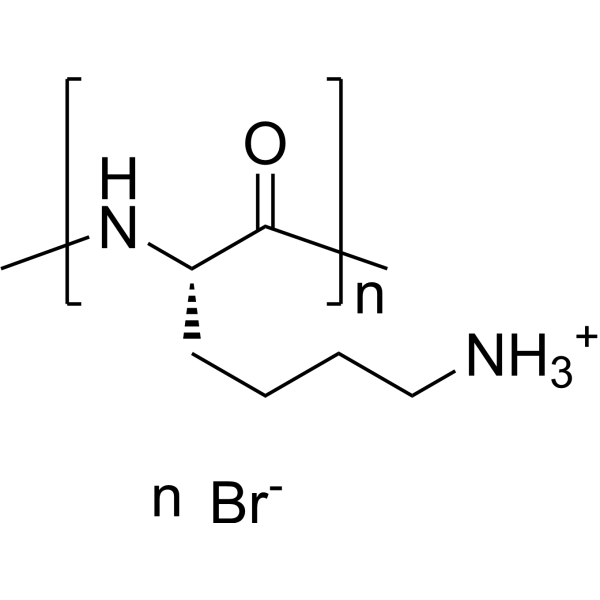
Chemical Structure
Poly-L-lysine hydrobromide (MW 70000-150000)
- CAS No.: 25988-63-0
- Formula:C8H19BrN2O
- Molecular Weight:70000-150000
SMILES: CN[C@@H](CCCC[NH3+])C(C)=O.[n].[Br-].[n]
Biological Activity: Poly-L-lysine (hydrobromide) (MW 70000-150000), a positively charged amino acid polymer, is a nonspecific attachment factor for cells. Poly-L-lysine (hydrobromide) (MW 70000-150000) has good biocompatibility. Poly-L-lysine (hydrobromide) (MW 70000-150000) is used to increase cell adhesion to solid substrates by enhancing electrostatic interaction between negatively charged ions of the cell membrane and the culture surface[1].
| Cat. No. | Product Name | Purity | Description | Pricing | |||||||||||||||||||
|---|---|---|---|---|---|---|---|---|---|---|---|---|---|---|---|---|---|---|---|---|---|---|---|
|
|
Poly-L-lysine hydrobromide (MW 70000-150000) | Poly-L-lysine (hydrobromide) (MW 70000-150000), a positively charged amino acid polymer, is a nonspecific attachment factor for cells. Poly-L-lysine (hydrobromide) (MW 70000-150000) has good biocompatibility. Poly-L-lysine (hydrobromide) (MW 70000-150000) is used to increase cell adhesion to solid substrates by enhancing electrostatic interaction between negatively charged ions of the cell membrane and the culture surface. | |||||||||||||||||||||
|
loading...
/
|
|||||||||||||||||||||||
|
|
Poly-L-lysine solution (0.01%, sterile-filtered, MW 70000-150000) | Poly-L-lysine solution (0.01%, sterile-filtered, MW 70000-150000) (PLL solution (0.01%, sterile-filtered, hydrobromide, MW 70000-150000, for cell culture)) is a polycationic electrolyte polymer solution polymerized from L-lysine monomers and can be used for cell culture. The product specifications provided below indicate the total amount only; they do not represent the actual content of Poly-L-lysine (MW 70000-150000). |
|||||||||||||||||||||
|
loading...
/
|
|||||||||||||||||||||||
|
|
Poly-L-lysine hydrobromide (MW 150000-300000) | Poly-L-lysine (hydrobromide) (MW 150000-300000), a positively charged amino acid polymer, is a nonspecific attachment factor for cells. Poly-L-lysine (hydrobromide) (MW 150000-300000) has good biocompatibility. Poly-L-lysine (hydrobromide) (MW 150000-300000) is used to increase cell adhesion to solid substrates by enhancing electrostatic interaction between negatively charged ions of the cell membrane and the culture surface. | |||||||||||||||||||||
|
loading...
/
|
|||||||||||||||||||||||
|
|
Poly-L-lysine solution (0.01%, sterile-filtered, MW 150000-300000) | Poly-L-lysine solution (0.01%, sterile-filtered, MW 150000-300000), a positively charged amino acid polymer, is a nonspecific attachment factor for cells. Poly-L-lysine solution (0.01%, sterile-filtered, MW 150000-300000) has good biocompatibility. Poly-L-lysine solution (0.01%, sterile-filtered, MW 150000-300000) is used to increase cell adhesion to solid substrates by enhancing electrostatic interaction between negatively charged ions of the cell membrane and the culture surface. The product specifications provided below indicate the total amount only; they do not represent the actual content of Poly-L-lysine (MW 150000-300000). |
|||||||||||||||||||||
|
loading...
/
|
|||||||||||||||||||||||
|
|
Poly-L-lysine hydrobromide (MW >300000) | Poly-L-lysine hydrobromide (MW 150000-300000), a positively charged amino acid polymer, is a nonspecific attachment factor for cells. Poly-L-lysine hydrobromide (MW 150000-300000) has good biocompatibility. Poly-L-lysine hydrobromide (MW 150000-300000) is used to increase cell adhesion to solid substrates by enhancing electrostatic interaction between negatively charged ions of the cell membrane and the culture surface. | |||||||||||||||||||||
|
loading...
/
|
|||||||||||||||||||||||
|
|
Poly-L-lysine hydrobromide (MW 30000-70000) | Poly-L-lysine hydrobromide (MW 30000-70000) is a water-soluble synthetic polypeptide. Poly-L-lysine hydrobromide (MW 30000-70000) downregulates Bcl-2 and upregulates Bax and p53 proteins. Poly-L-lysine hydrobromide (MW 30000-70000) promotes Apoptosis and reduces VEGF expression. Poly-L-lysine hydrobromide (MW 30000-70000) shows anticancer activity against a variety of tumors. Poly-L-lysine hydrobromide (MW 30000-70000) can also be used as a coating material. | |||||||||||||||||||||
|
loading...
/
|
|||||||||||||||||||||||
|
|
Poly-L-lysine hydrobromide (MW 15000-30000) | Poly-L-lysine hydrobromide (with a molecular weight of 15,000 - 30,000) is an amino acid polymer with positive charge, and it serves as a non-specific attachment factor for cells. Poly-L-lysine hydrobromide (with a molecular weight of 15,000 - 30,000) can be used for gene delivery and the construction of nano-delivery systems. | |||||||||||||||||||||
|
loading...
/
|
|||||||||||||||||||||||
|
|
Poly-L-lysine hydrobromide (MW 1000-5000) | Poly-L-lysine hydrobromide (MW 1000-5000) is a homopolymer of L-lysine and a polycationic non-viral gene delivery vector. Poly-L-lysine hydrobromide (MW 1000-5000) forms complexes with plasmid DNA. Poly-L-lysine hydrobromide (MW 1000-5000) is applicable to relevant research on lung cancer. | |||||||||||||||||||||
|
loading...
/
|
|||||||||||||||||||||||
|
|
Poly-L-lysine hydrobromide (MW 4000-15000) | Poly-L-lysine hydrobromide (MW 4000-15000) is a positively charged amino acid polymer that acts as a non-specific attachment factor for cells. Poly-L-lysine hydrobromide (MW 4000-15000) enhances the electrostatic interaction between the negative ions of the cell membrane and the surface of the culture medium, thereby promoting the adhesion of cells to solid substrates. Poly-L-lysine hydrobromide (MW 4000-15000) can be used for gene delivery. | |||||||||||||||||||||
|
loading...
/
|
|||||||||||||||||||||||
References
Keywords
- Poly-L-lysine hydrobromide (MW 70000-150000)
- Poly-L-lysine solution (0.01%, sterile-filtered, MW 70000-150000)
- Poly-L-lysine hydrobromide (MW 150000-300000)
- Poly-L-lysine solution (0.01%, sterile-filtered, MW 150000-300000)
- Poly-L-lysine hydrobromide (MW >300000)
- Poly-L-lysine hydrobromide (MW 30000-70000)
- Poly-L-lysine hydrobromide (MW 15000-30000)
- Poly-L-lysine hydrobromide (MW 1000-5000)
- Poly-L-lysine hydrobromide (MW 4000-15000)



