



Poly-L-lysine hydrobromide (MW 4000-15000)
Based on 1 publication(s) in Google Scholar
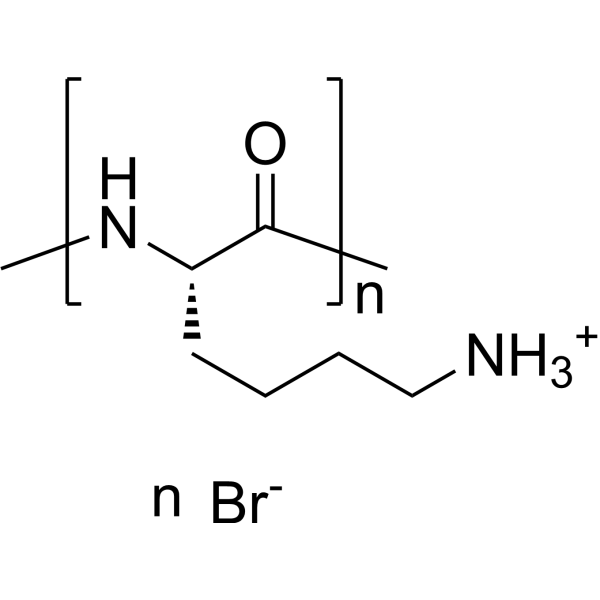
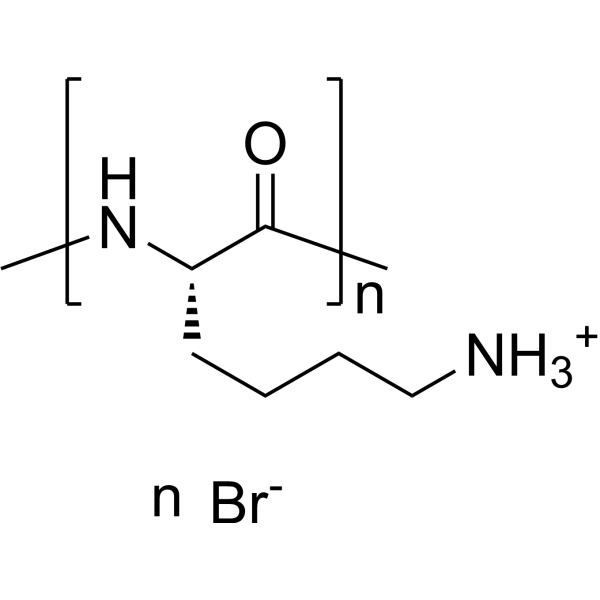
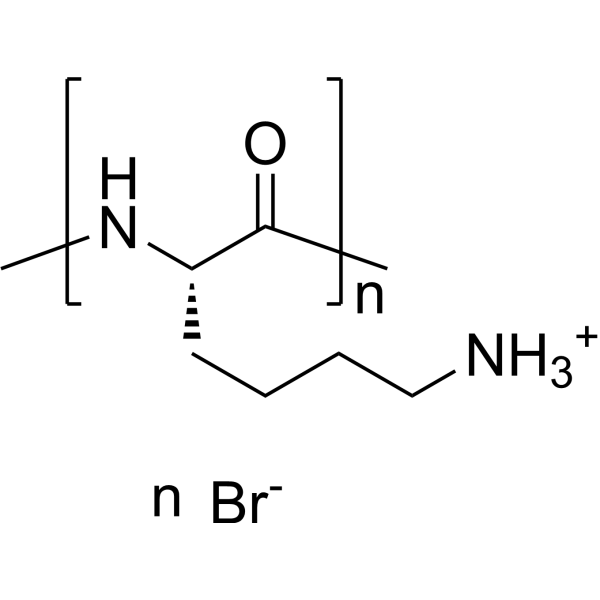
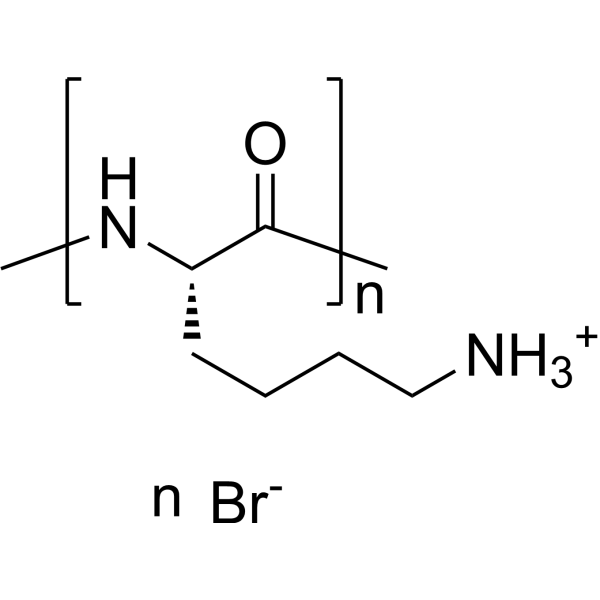
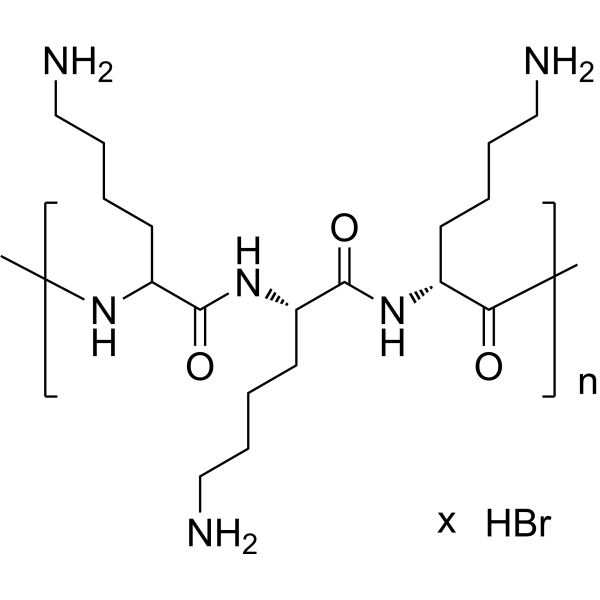
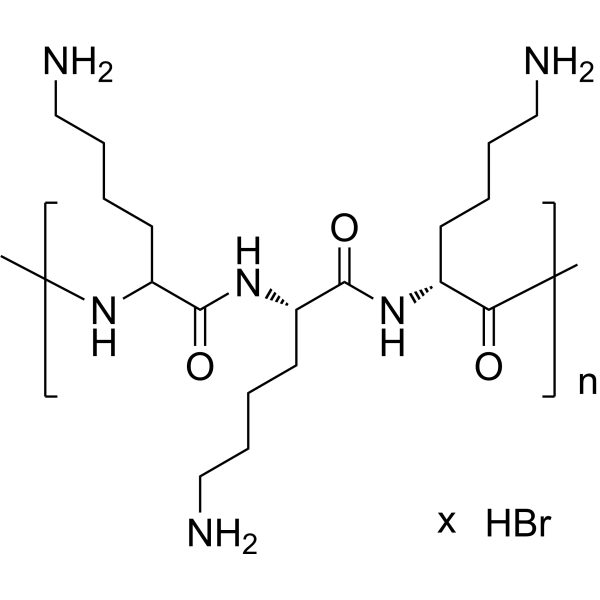
Poly-L-lysine hydrobromide (MW 4000-15000) is a positively charged amino acid polymer that acts as a non-specific attachment factor for cells. Poly-L-lysine hydrobromide (MW 4000-15000) enhances the electrostatic interaction between the negative ions of the cell membrane and the surface of the culture medium, thereby promoting the adhesion of cells to solid substrates. Poly-L-lysine hydrobromide (MW 4000-15000) can be used for gene delivery.
For research use only. We do not sell to patients.
- CAS No.: 25988-63-0
- Formula: C8H19BrN2O
- Molecular Weight:4000-15000
-
Storage:
-20°C, sealed storage, away from moisture
* In solvent : -80°C, 6 months; -20°C, 1 month (sealed storage, away from moisture)


To place orders, for customer services and technical support, please contact: MedChemExpress USA
Tel: 609-228-6898 E-mail: [email protected] [email protected]


-
 Biological Activity
-
Chemical Information
-
Solvent & Solubility
- Purity & Documentation
- References
-
 Help & FAQs


-

HY-126437E
Poly-L-lysine hydrobromide (MW 15000-30000) -
HY-126437
Poly-L-lysine hydrobromide (MW 30000-70000) -

HY-126437I
Poly-L-lysine hydrobromide (MW 1000-5000) -

HY-139201D
Poly-D-lysine hydrobromide (MW 4000-15000) -

HY-126437J
Poly-L-lysine solution (0.01%, sterile-filtered, MW 150000-300000) -

HY-126437K
Poly-L-lysine solution (0.01%, sterile-filtered, MW 70000-150000) -
HY-126437B
Poly-L-lysine hydrobromide (MW 70000-150000) -
HY-126437C
Poly-L-lysine hydrobromide (MW 150000-300000) -
HY-126437D
Poly-L-lysine hydrobromide (MW >300000) -

HY-159181
p-NCS-Bz-DOTA-GA -
HY-139201A
Poly-D-lysine hydrobromide (MW 70000-150000) -
HY-139201
Poly-D-lysine hydrobromide (MW 30000-70000)
Publications Citing Use of MedChemExpress (MCE) Poly-L-lysine hydrobromide (MW 4000-15000)
More

Biological Activity
Description
In Vitro
Poly-L-lysine hydrobromide (MW 4000-15000) is used as a base coating reagent for cell culture in the cell surface labeling experiment. It promotes the adhesion of HEK293T cells on glass slides, ensuring the feasibility and accuracy of the experiment[1].
Poly-L-lysine hydrobromide (MW 4000-15000) forms a complex (polyplex) by electrostatic interaction with negatively charged plasmid DNA (pDNA), thereby introducing genes into cells. In the presence of CaCl₂, the low molecular weight (MW 1000-5000) (HY-126437I) achieves the most efficient gene transfection while maintaining the lowest cytotoxicity, making it an ideal safe and efficient vector[2].
MedChemExpress (MCE) has not independently confirmed the accuracy of these methods. They are for reference only.


Chemical Information
-
CAS No. 25988-63-0
-
Appearance Solid
-
Molecular Weight 4000-15000
-
Formula C8H19BrN2O
-
Color White to off-white
-
SMILES
CN[C@@H](CCCC[NH3+])C(C)=O.[n].[Br-].[n]
-
Shipping
Room temperature in continental US; may vary elsewhere.
-
Storage
-20°C, sealed storage, away from moisture
* In solvent : -80°C, 6 months; -20°C, 1 month (sealed storage, away from moisture)


Publications (1)
-
Journal Impact Factor
-
Most Recent
-
J Neuroinflammation
Soluble CSF1R alleviates microgliopathy in a CSF1R-related leukoencephalopathy (CRL) mouse model. [Abstract]2025 Dec 5. PMID: 41350870


Solvent & Solubility
In Vitro:
DMSO : 4.17 mg/mL (ultrasonic and warming and heat to 60°C; Hygroscopic DMSO has a significant impact on the solubility of product, please use newly opened DMSO)


Purity & Documentation
-
Data Sheet (271 KB)
-
SDS (393 KB)
- English - EN (393 KB)
- Français - FR (393 KB)
- Deutsch - DE (393 KB)
- Norwegian - NO (393 KB)
- Español - ES (393 KB)
- Swedish - SV (393 KB)
- Italian - IT (393 KB)
- Korean - KR (393 KB)
- Portuguese - PT (393 KB)
-
Handling Instructions (2659 KB)
References
[1]. Zhou Y, et al. Soluble CSF1R alleviates microgliopathy in a CSF1R-related leukoencephalopathy (CRL) mouse model. J Neuroinflammation. 2025 Dec 5;23(1):12. [Content Brief]
[2]. Xie SX, et al. Calcium enhances gene expression when using low molecular weight poly-l-lysine delivery vehicles. Int J Pharm. 2018 Aug 25;547(1-2):274-281. [Content Brief]

Calculators
Concentration (start) × Volume (start) = Concentration (final) × Volume (final)


Poly-L-lysine hydrobromide (MW 4000-15000) Related Classifications
HY-126437H Related Classifications
 Powered by Bioz