



Poly-L-lysine hydrobromide (MW 15000-30000)

Based on 1 Customer Validation
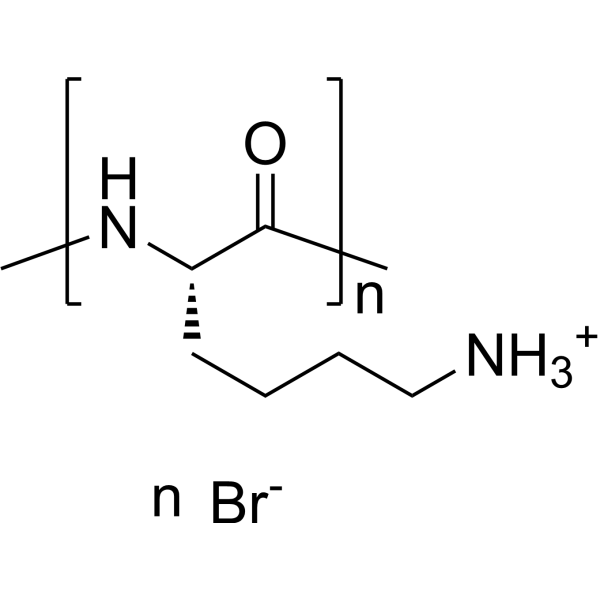
Poly-L-lysine hydrobromide (with a molecular weight of 15,000 - 30,000) is an amino acid polymer with positive charge, and it serves as a non-specific attachment factor for cells. Poly-L-lysine hydrobromide (with a molecular weight of 15,000 - 30,000) can be used for gene delivery and the construction of nano-delivery systems.
For research use only. We do not sell to patients.
- CAS No.: 25988-63-0
- Formula: C8H19BrN2O
- Molecular Weight:15000-30000
-
Storage:
-20°C, sealed storage, away from moisture
* In solvent : -80°C, 6 months; -20°C, 1 month (sealed storage, away from moisture)


To place orders, for customer services and technical support, please contact: MedChemExpress USA
Tel: 609-228-6898 E-mail: [email protected] [email protected]


-
 Biological Activity
-
Chemical Information
-
Solvent & Solubility
- Purity & Documentation
- References
-
 Help & FAQs


-

HY-126437H
Poly-L-lysine hydrobromide (MW 4000-15000)Cell Culture Additive -
HY-126437
Poly-L-lysine hydrobromide (MW 30000-70000)Peptide -

HY-126437I
Poly-L-lysine hydrobromide (MW 1000-5000)Gene Delivery Vector -

HY-126437J
Poly-L-lysine solution (0.01%, sterile-filtered, MW 150000-300000)Biochemical Reagent -

HY-126437K
Poly-L-lysine solution (0.01%, sterile-filtered, MW 70000-150000)Biochemical Reagent -
HY-126437B
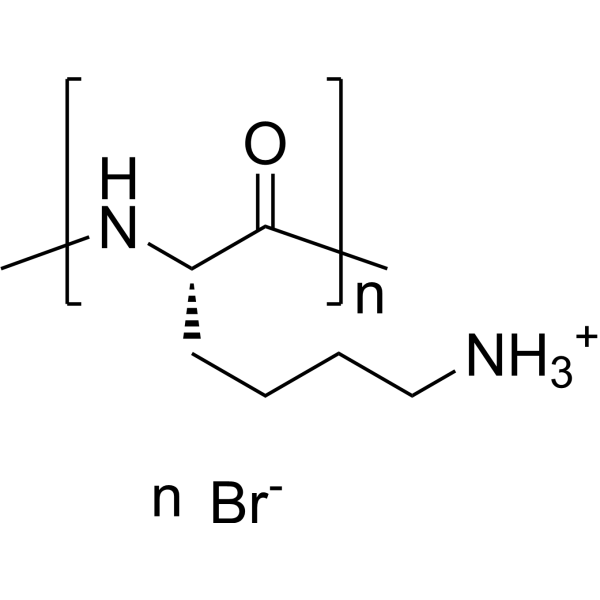
Poly-L-lysine hydrobromide (MW 70000-150000)Cell Attachment Factor -
HY-126437C
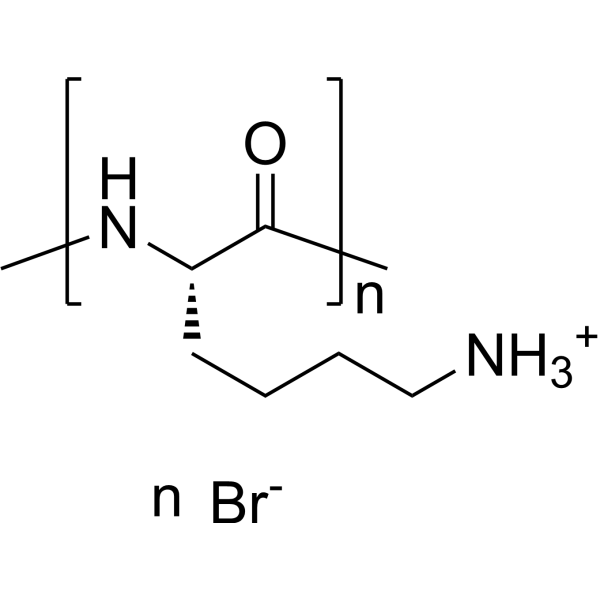
Poly-L-lysine hydrobromide (MW 150000-300000)Lysine Polymer -
HY-126437D
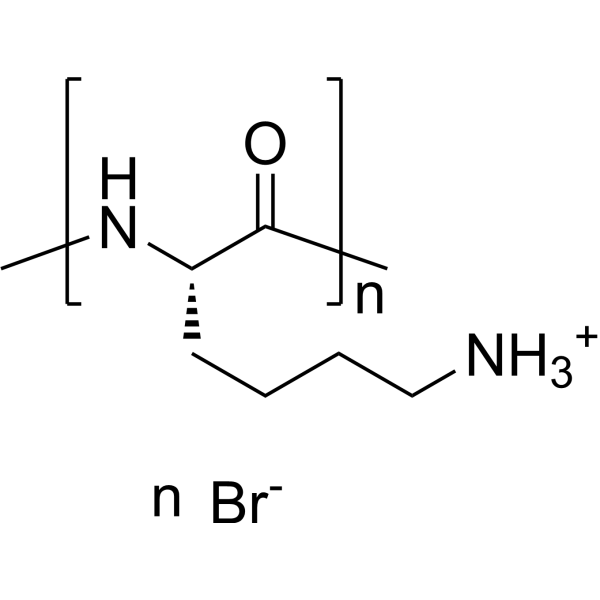
Poly-L-lysine hydrobromide (MW >300000)Cell Attachment Factor -

HY-159181
p-NCS-Bz-DOTA-GAChelating Agent -
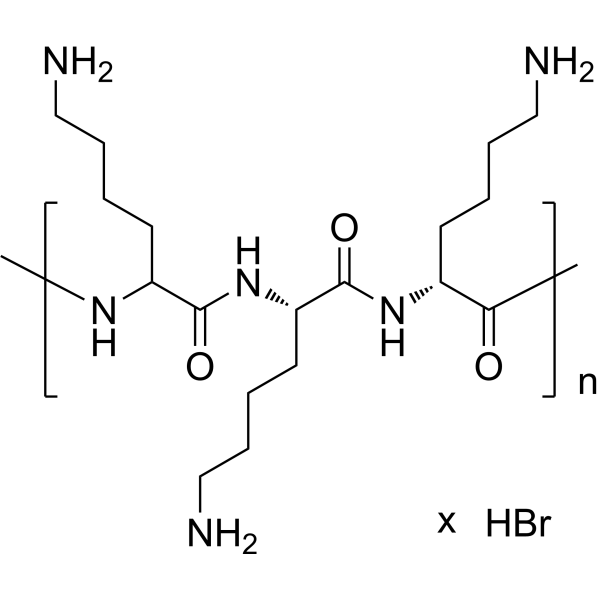
HY-139201A
Poly-D-lysine hydrobromide (MW 70000-150000)CaSR Agonist -
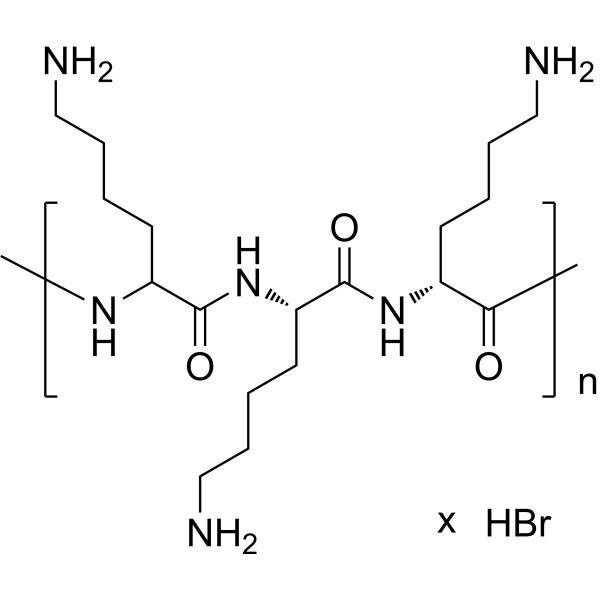
HY-139201
Poly-D-lysine hydrobromide (MW 30000-70000)CaSR Agonist -

HY-139201B
Poly-D-lysine hydrobromide (MW 84000)CaSR Agonist


Biological Activity
Description
In Vitro
Poly-L-lysine hydrobromide (MW 15000-30000) binds to negatively charged plasmid DNA (pDNA) through electrostatic interaction, forming a complex (polyplex), thereby introducing genes into cells. Due to its large molecular weight and abundant positive charge, it can strongly condense pDNA to form small and stable nanoparticles, making it an effective carrier when CaCl₂ is absent [1].
Poly-L-lysine hydrobromide (MW 15000-30000) can be used to construct a nanoscale platform for delivering deoxyribonucleases (DZs). Its core function is to bridge titanium dioxide (TiO₂) nanoparticles and negatively charged Dz² through electrostatic interaction[2].
MedChemExpress (MCE) has not independently confirmed the accuracy of these methods. They are for reference only. .


Chemical Information
-
CAS No. 25988-63-0
-
Appearance Solid
-
Molecular Weight 15000-30000
-
Formula C8H19BrN2O
-
Color White to off-white
-
SMILES
CN[C@@H](CCCC[NH3+])C(C)=O.[n].[Br-].[n]
-
Shipping
Room temperature in continental US; may vary elsewhere.
-
Storage
-20°C, sealed storage, away from moisture
* In solvent : -80°C, 6 months; -20°C, 1 month (sealed storage, away from moisture)


Solvent & Solubility
In Vitro:
H2O : 50 mg/mL (Need ultrasonic and warming)


Purity & Documentation
-
Data Sheet (268 KB)
-
SDS (394 KB)
- English - EN (394 KB)
- Français - FR (394 KB)
- Deutsch - DE (394 KB)
- Norwegian - NO (394 KB)
- Español - ES (394 KB)
- Swedish - SV (394 KB)
- Italian - IT (394 KB)
- Korean - KR (394 KB)
- Portuguese - PT (394 KB)
-
Handling Instructions (2659 KB)
References
[1]. Xie SX, et al. Calcium enhances gene expression when using low molecular weight poly-l-lysine delivery vehicles. Int J Pharm. 2018 Aug 25;547(1-2):274-281. [Content Brief]
[2]. Repkova M, et al. Efficient inhibition of influenza A viral replication in cells by deoxyribozymes delivered by nanocomposites. Int J Antimicrob Agents. 2017 Jun;49(6):703-708. [Content Brief]

Calculators
Concentration (start) × Volume (start) = Concentration (final) × Volume (final)


Poly-L-lysine hydrobromide (MW 15000-30000) Related Classifications
HY-126437E Related Classifications
 Powered by Bioz