22 Results for "

dehydrogenation

" in MedChemExpress (MCE) Product Catalog:
Products (22)

22 Results for "dehydrogenation" in MCE Product Catalog:

188
188 Publications Verification
Cat. No.: HY-D0079
CAS No.: 104821-25-2
Synonyms: Hydroethidine; PD-MY 003
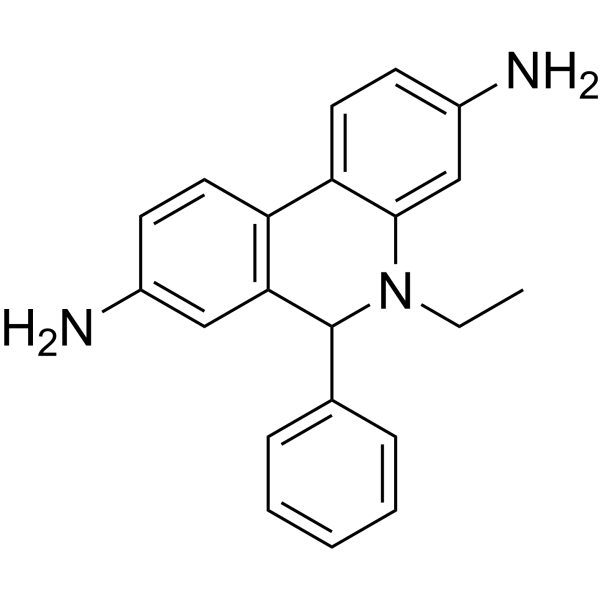
Dihydroethidium, also known as DHE, is a peroxide indicator. Dihydroethidium penetrates cell membranes to form a fluorescent protein complex with blue fluoresces. After entering the cells, Dihydroethidium is mainly localized in the cell membrane, cytoplasm and nucleus, and the staining effect is the strongest in the nucleus. Dihydroethidium produces inherent blue fluorescence with a maximum excitation wavelength of 370 nm and a maximum emission wavelength of 420 nm; after dehydrogenation, Dihydroethidium combines with RNA or DNA to produce red fluorescence with a maximum excitation wavelength of 300 nm and a maximum emission wavelength of 610 nm. 535 nm can also be used as the excitation wavelength for actual observation .
loading...
    loading...
Cat. No.: HY-N4067
CAS No.: 566-24-5
Synonyms: isoCDCA
Category:  

Natural Products

Isochenodeoxycholic acid (isoCDCA) is a FXR agonist. Isochenodeoxycholic acid activates the activity of FXR and induces the mRNA expression of FXR target genes (Ostβ and Kng1). Isochenodeoxycholic acid serves as a substrate for the liver class I ADH γγ isozyme-mediated 3β-dehydrogenation reaction .
loading...
    loading...
Cat. No.: HY-P3186A
CAS No.: 9028-53-9
Synonyms: GDH-NAD
Research Areas:  

Metabolic Disease

NAD-dependent glucose dehydrogenase (GDH-NAD) is an oxidoreductase that uses NAD + as a coenzyme, specifically catalyzes the dehydrogenation of glucose to gluconolactone, and reduces NAD + to NADH. NAD-dependent glucose dehydrogenase exhibits favorable substrate selectivity and stability, and is not affected by oxygen .
loading...
    loading...
Cat. No.: HY-N4031
CAS No.: 82375-29-9
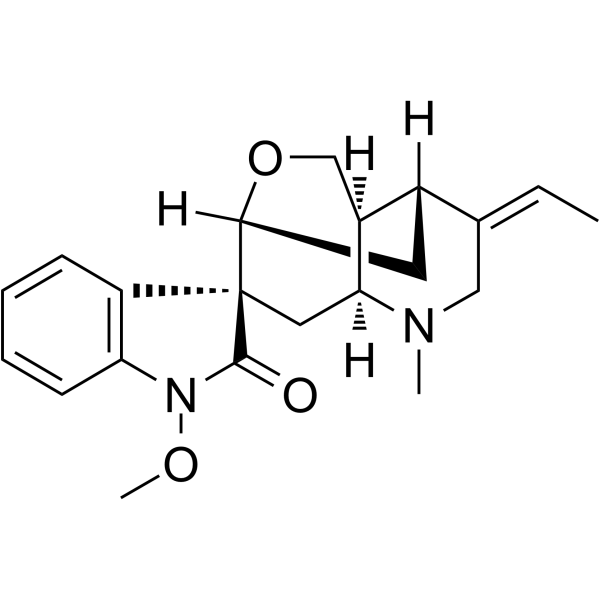
Humantenine is a highly toxic indole alkaloid from Gelsemium elegans (Gardn. & Champ.) Benth. that binds to RNA m6A modification regulatory proteins (ALKBH5, METTL). Humantenine stably binds via hydrogen bonding and hydrophobic interactions and disrupts the m6A methylation level of target genes, thereby impairing the expression of intestinal epithelial cell tight junction and cytoskeleton-related genes, causing intestinal barrier dysfunction and significant intestinal cytotoxicity. The intraperitoneal injection LD50 values of Humantenine are <1 mg/kg in mice, 1.2 mg/kg in male rats and 1.5 mg/kg in female rats, respectively. Species differences exist in the metabolism of Humantenine in human, porcine, goat and rat liver microsomes, and demethylation, dehydrogenation and oxidation occur in liver microsomes .
loading...
    loading...
Cat. No.: HY-118614
CAS No.: 487-19-4
Purity:  99.35%
Target:  

Drug Metabolite

Research Areas:  

Neurological Disease

β-Nicotyrine is a metabolite of Nicotine.β-Nicotyrine, isolated from the leaves of Nicotiana tabacum plants and from cigarette smoke condensate, is a minor tobacco alkaloid .
loading...
    loading...
Cat. No.: HY-DY1015
CAS No.: 104821-25-2
Dihydroethidium (solution) , also known as DHE, is a peroxide indicator. Dihydroethidium penetrates cell membranes to form a fluorescent protein complex with blue fluoresces. After entering the cells, Dihydroethidium is mainly localized in the cell membrane, cytoplasm and nucleus, and the staining effect is the strongest in the nucleus. Dihydroethidium produces inherent blue fluorescence with a maximum excitation wavelength of 370 nm and a maximum emission wavelength of 420 nm; after dehydrogenation, Dihydroethidium combines with RNA or DNA to produce red fluorescence with a maximum excitation wavelength of 300 nm and a maximum emission wavelength of 610 nm. 535 nm can also be used as the excitation wavelength for actual observation .
Solvent and concentration: DMSO: 5 mM
loading...
    loading...
Cat. No.: HY-W015003
CAS No.: 86-28-2
Synonyms: N-Ethylcarbazole
Research Areas:  

Others

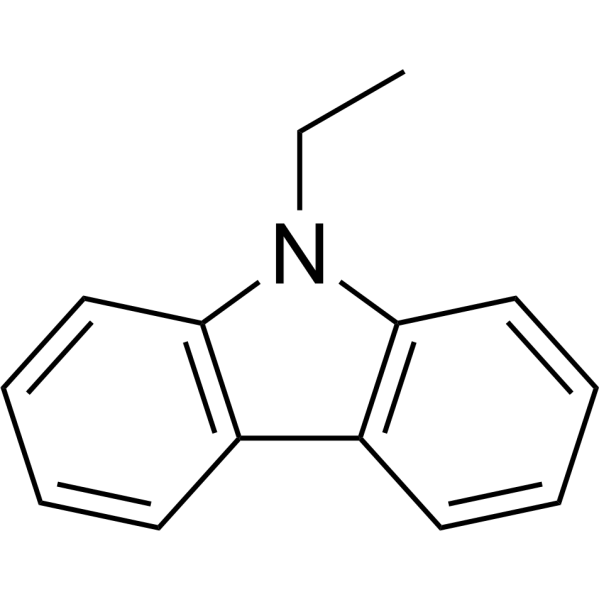
9-Ethylcarbazole (N-Ethylcarbazole) serves as a hydrogen storage material. The introduction of nitrogen (N) into 9-ethylcarbazole can reduce the endothermic nature of the reaction and decrease the dehydrogenation temperature, thereby facilitating the process of hydrogen storage and release .
loading...
    loading...
Cat. No.: HY-W010283
CAS No.: 91-55-4
Research Areas:  

Others

2,3-Dimethylindol is an organic liquid hydrogen carrier (LOHC). 2,3-Dimethylindol enables reversible hydrogen storage and release via catalytic hydrogenation/dehydrogenation reactions. 2,3-Dimethylindol is promising for research of clean energy storage .
loading...
    loading...
Cat. No.: HY-W102516
CAS No.: 1162-56-7
Synonyms: Δ6-Progesterone
6-Dehydroprogesterone (Δ6-Progesterone) is a steroid compound that can be found in Botryodiplodia theobromae. 6-Dehydroprogesterone is a metabolic product of Progesterone (HY-N0437) after a microbial dehydrogenation reaction. 6-Dehydroprogesterone can be used to study steroid metabolism pathways, microbial dehydrogenase activity, and the biotransformation of steroids .
loading...
    loading...
Cat. No.: HY-N7372
CAS No.: 66067-26-3
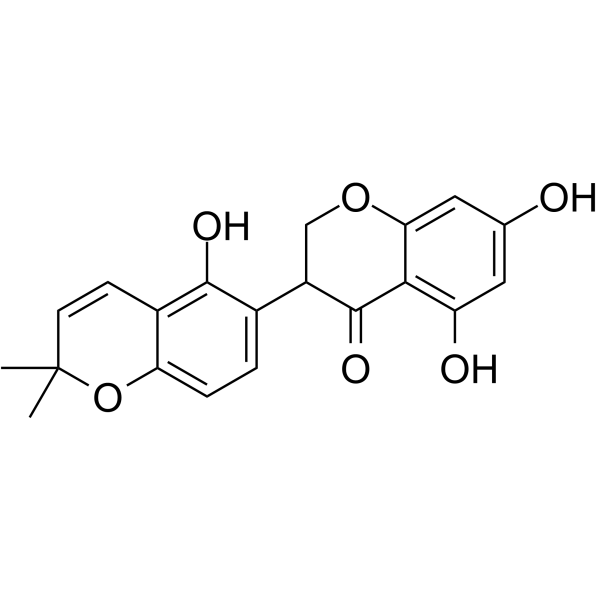
Licoisoflavanone is an orally active isoflavane-based immunomodulator with multiple activities including antiviral, anti-inflammatory, cytoprotective and cancer cell apoptosis-inducing effects. Licoisoflavanone can be isolated from the roots and rhizomes of Glycyrrhiza uralensis Fisch. Licoisoflavanone not only enhances the body's immunity, but also effectively prevents acute respiratory distress syndrome and multiple organ damage by alleviating cytokine storm, thereby reducing the degree of inflammation. In rats, Licoisoflavanone undergoes multiple metabolic transformation processes such as glucuronidation, hydroxylation, sulfation, methylation and dehydrogenation. Licoisoflavanone has become an important candidate molecule for research on COVID-19 and related inflammatory diseases .
loading...
    loading...
Cat. No.: HY-P10563
CAS No.: 2580150-96-3
Synonyms: BHV-1100
Target:  

CD38 IFNAR

Research Areas:  

Cancer

Noraramtide (BHV-1100) is an antibody-recruiting molecule. Noraramtide binds to CD38 and recruits natural killer (NK) cells to mediate antibody-dependent cellular cytotoxicity. Noraramtide enhances the capacity of autologous cytokine-induced memory-like (CIML) NK cells to produce IFNγ and CD107a, thereby improving their cytotoxicity against multiple myeloma cells. Noraramtide can be used in the research of multiple myeloma .
loading...
    loading...
Cat. No.: HY-W587751
CAS No.: 125184-95-4
Synonyms: Amorpha-4,11-diene-12-ol
Target:  

Drug Intermediate

Research Areas:  

Infection

Arteannuic alcohol (Amorpha-4,11-diene-12-ol) is a precursor substance in the biosynthetic pathway of Artemisinin (HY-B0094). Alcohol dehydrogenase catalyzes the dehydrogenation reaction of chlorogenic alcohol to produce artemisinic aldehyde .
loading...
    loading...
Cat. No.: HY-P3820
[Dehydro-Pro4] Substance P (4-11) is a peptide fragment of Substance P. Substance P is a peptide mainly secreted by neurons. Substance P takes part in many biological processes, including nociception, inflammation and immunity .
loading...
    loading...
Cat. No.: HY-N2561
CAS No.: 38710-26-8
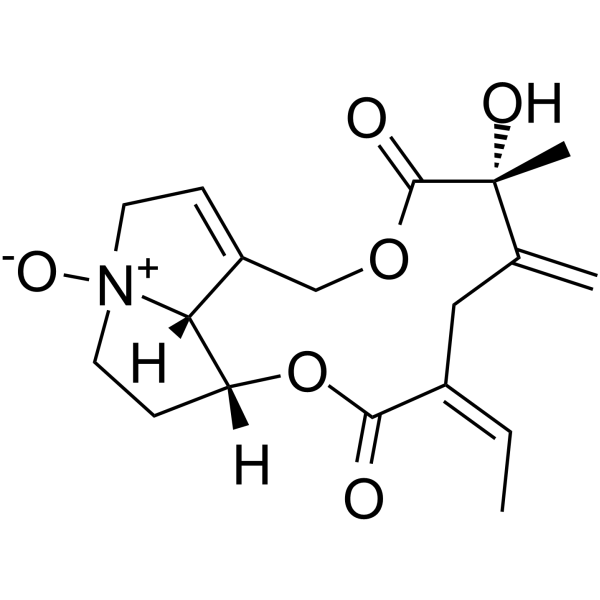
Seneciphylline N-Oxide is a dehydrogenation product of Senecionine N-oxide. Seneciphylline N-Oxide is a natural compound isolated from root cultures of Senecio erucifolius (Asteraceae) .
loading...
    loading...
Cat. No.: HY-W034154
CAS No.: 19529-00-1
Synonyms: Tetrakis(triphenylphosphine)ruthenium dihydride
Dihydridotetrakis(triphenylphosphine)ruthenium(II) (Tetrakis(triphenylphosphine)ruthenium dihydride) is a catalyst with good catalytic activity. Dihydridotetrakis(triphenylphosphine)ruthenium(II) can be used in organic synthesis reactions, especially in hydrogenation and dehydrogenation reactions. Dihydridotetrakis(triphenylphosphine)ruthenium(II) has received extensive attention in the study of metal catalysts, and its high efficiency makes it an ideal research object.
loading...
    loading...
Cat. No.: HY-W653739
CAS No.: 41944-86-9
Synonyms: Abscisic aldehyde
Target:  

Drug Intermediate

Research Areas:  

Others

(+)-Abscisic Aldehyde (ABAld) is an intermediate in the biosynthesis of the plant hormone abscisic acid (ABA). (+)-Abscisic Aldehyde is produced by the dehydrogenation of xanthoxin by xanthoxin dehydrogenases, followed by selective oxidation by abscisic aldehyde oxygenase. (+)-Abscisic Aldehyde has an oxidizing PsAOγ activity and it correlates with ABA accumulation in the old leaves of pea plants with long exposure of salinity, ammonium or nitrogen deficiency. (+)-Abscisic Aldehyde can be used for plant growth and development research .
loading...
    loading...
Cat. No.: HY-E71471
Research Areas:  

Others

2-Amino-4-deoxychorismate dehydrogenase (EC 2.6.1.86) is an oxidoreductase that catalyzes the dehydrogenation of 2-amino-4-deoxychorismate (ADC).
loading...
    loading...
Cat. No.: HY-E71583
Research Areas:  

Others

2-Methyl-1-pyrroline reductase (EC 1.5.1.48) is a spermidine dehydrogenase belonging to the class of oxidoreductases; it catalyzes the oxidative dehydrogenation of spermidine and is involved in polyamine metabolism.
loading...
    loading...
Cat. No.: HY-W042298
CAS No.: 126-71-6
Research Areas:  

Others

Triisobutyl phosphate is an environmental pollutant that undergoes biodegradation. TiBP can be degraded in activated sludge via hydrolysis, dehydrogenation and hydroxylation, a process mediated by an acclimated microbial community with Pseudomonas as the key strain, and enhanced by TiBP-induced enzymatic activity. TiBP exerts toxic effects on zebrafish embryos .
loading...
    loading...
Cat. No.: HY-118614R
CAS No.: 487-19-4
Research Areas:  

Neurological Disease

β-Nicotyrine (Standard) is the analytical standard of β-Nicotyrine. This product is intended for research and analytical applications. β-Nicotyrine is a metabolite of Nicotine.β-Nicotyrine, isolated from the leaves of Nicotiana tabacum plants and from cigarette smoke condensate, is a minor tobacco alkaloid .
loading...
    loading...