



Search Result
Results for "
deliver mRNA
" in MedChemExpress (MCE) Product Catalog:
21
Biochemical Assay Reagents
1
Isotope-Labeled Compounds
| Cat. No. |
Product Name |
Target |
Research Areas |
Chemical Structure |
-
- HY-134541
-
SM-102
Maximum Cited Publications
45 Publications Verification
|
Liposome
|
Infection
|
|
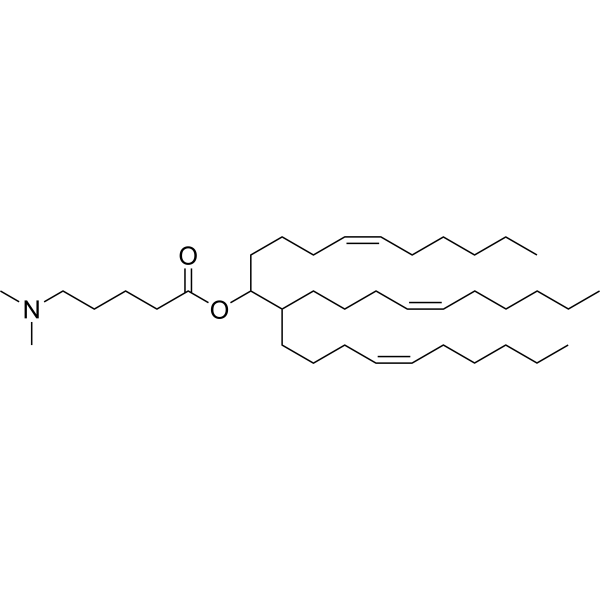
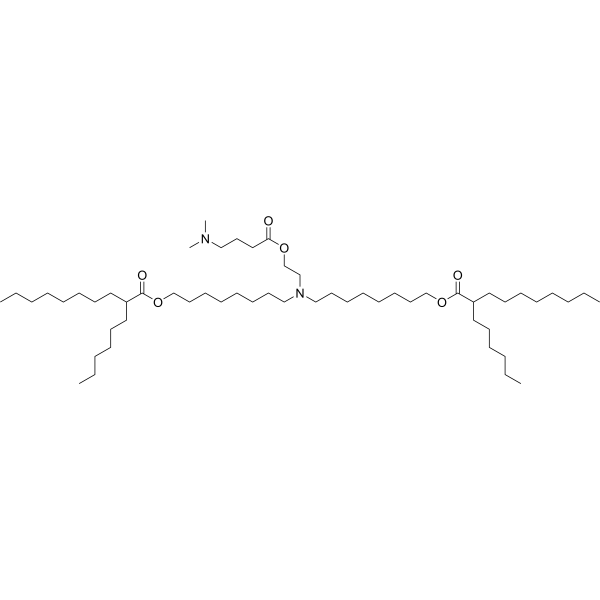
SM-102 is an amino cationic lipid useful in the formation of lipid nanoparticles (LNPs). SM-102 has higher transfection efficiency. SM-102 plays an important role in the effectiveness of lipid nanoparticles (LNPs) in delivering mRNA therapeutics and vaccines .
|
-
-
- HY-145405
-
|
|
Liposome
|
Others
|
|
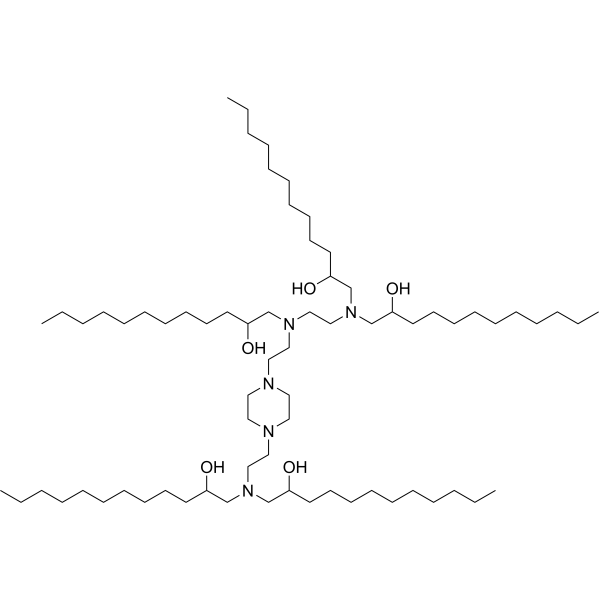
C12-200 is a type of ionizable cationic lipid and helper lipid commonly used for mRNA delivery. In the hemophilia B mouse model, mRNA encoding human erythropoietin (EPO) and coagulation factor IX (FIX) can be successfully delivered and expressed using C12-200. C12-200 is utilized in research related to hemophilia B .
|
-
-
- HY-147081
-
AS 1411
2 Publications Verification
AGRO-100
|
Histone Methyltransferase
Bcl-2 Family
|
Cancer
|
|
AS 1411 (AGRO-100) is an oligonucleotide aptamer targeting nucleoproteins. AS 1411 inhibits tumor cell proliferation by affecting the activity of nucleoprotein-containing complexes and can be used as a carrier to precisely deliver nanoparticles, oligonucleotides and small molecules to cancer cells. AS 1411 reduces PRMT5 expression to inhibit tumor growth in DU145 prostate cancer cells. AS 1411 works by blocking the binding of nucleoproteins to bcl-2 mRNA in MCF-7 breast cancer cells. AS 1411-coupled Jin nanospheres can inhibit breast cancer cell proliferation in vitro and in mouse models, has the ability to cross the blood-brain barrier with low tissue toxicity .
|
-
-
- HY-151507
-
306Oi10
1 Publications Verification
|
Liposome
|
Others
|
|
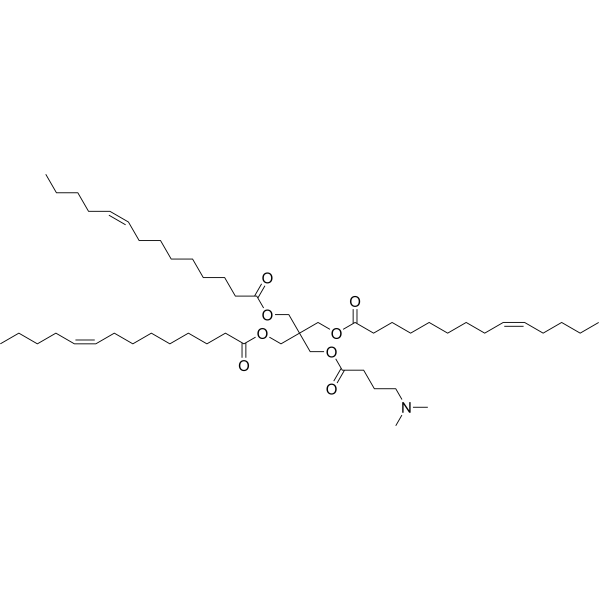
306Oi10 is a branched ionizable lipid that can be used to construct lipid nanoparticles (LNPs) for delivering messenger RNA. The surface ionization of lipid nanoparticles is related to the effectiveness of mRNA delivery. The tail of 306Oi10 has a one-carbon branch, which provides it with stronger surface ionization compared to lipids with linear tails, thereby enhancing its mRNA delivery efficacy. 306Oi10 can be used in research related to mRNA delivery .
|
-
-
- HY-172723
-
|
|
Liposome
Transferrin Receptor
|
Neurological Disease
Cancer
|
|
DSPE-PEG2000-T7 is a PEGylated compound composed of DSPE and peptideT7. T7 (HAIYPRH) specifically binds to TfR. DSPE-PEG2000-T7 can be used to prepare T7-modified liposomes, where liposomes modified with both T7 and DA7R peptides can effectively co-deliver Doxorubicin (HY-15142A) and Vincristine (HY-N0488A) to gliomas. DSPE-PEG2000-T7 can also be used to prepare nanomodulators that mediate the co-delivery of tyrosine hydroxylase mRNA and interferon gene stimulator antagonists for synergistic intervention in Parkinson's disease .
|
-
-
- HY-46759
-
|
|
Liposome
|
Infection
|
|
Genevant CL1 is an ionizable lipid (pKa = 6.3) suitable for the preparation of lipid nanoparticles (LNPs) for delivering nucleic acid payloads and intramuscular vaccines. Genevant CL1 is a component of lipid nanoparticle delivery systems for mRNA vaccines .
|
-
-
- HY-147332
-
|
|
Liposome
|
Neurological Disease
|
|
TCL053 is an ionizable lipid carrier and used to introduce active components, in particular nucleic acids, into cells with excellent efriciency. TCL053, together with DPPC (Dipalmitoylphosphatidylcholine), PEG-DMG (Polyethylene glycoldimyristoyl glycerol), and cholesterol, forms lipid nanoparticle (LNP) which is able to deliver Cas9 mRNA and sgRNA into skeletal muscle .
|
-
-
- HY-150229
-
|
|
Liposome
|
Cancer
|
|
306-N16B is a selective lung-targeted lipid nanoparticle that reversibly targets lung endothelial cells and specific immune cells through selective adsorption of a protein corona mediated by differences in tail structure (such as fibrinogen β/γ chain). 306-N16B binds to specific plasma proteins in the blood to form a protein corona, which guides the particles to be enriched in the lungs, releases mRNA and promotes target cell gene expression, exerts efficient lung cell transfection activity, and can precisely regulate gene delivery of different cell types in the lungs (such as endothelial cells and macrophages). 306-N16B can be used in gene therapy technologies for hereditary lung diseases including pulmonary lymphangioleiomyomatosis (LAM), restoring tumor suppressor function by delivering Tsc2 mRNA, and can also be used for lung-specific mRNA vaccines and gene editing therapies .
|
-
-
- HY-139306
-
|
|
Liposome
|
Inflammation/Immunology
|
|
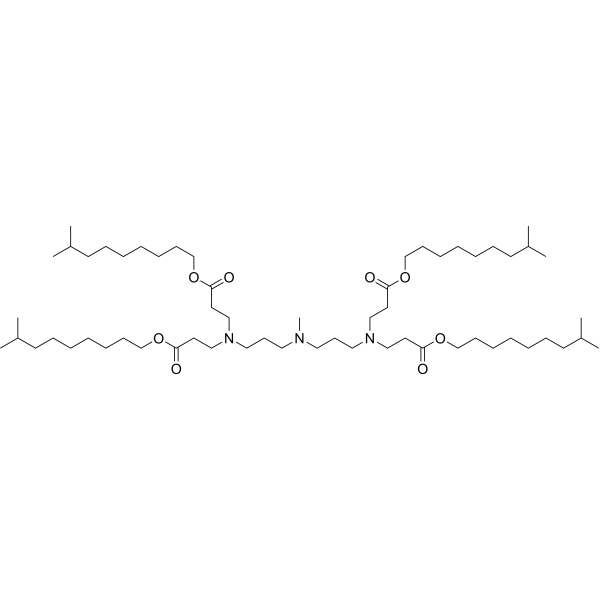
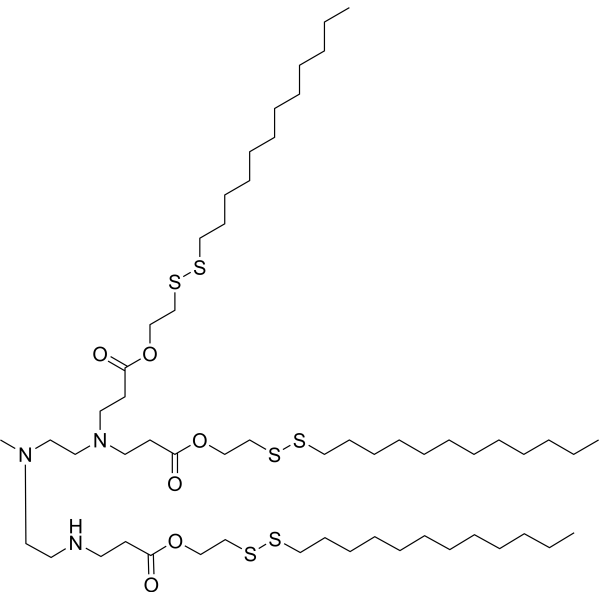
BAMEAO16B is a lipid nanoparticle. BAMEAO16B integrated with disulfide bonds, can efficiently deliver Cas9 mRNA and sgRNA into cells while releasing RNA in response to the reductive intracellular environment for genome editing. BAMEAO16B can be used for the research of gene editing .
|
-
-
- HY-134541GL
-
|
|
Liposome
|
Infection
|
|
SM-102 (GMP Like) is SM-102 (HY-134541) produced by using GMP like guidelines. GMP Like small molecules works appropriately as an auxiliary reagent for cell therapy manufacture. SM-102 is an amino cationic lipid useful in the formation of lipid nanoparticles (LNPs). SM-102 has higher transfection efficiency. SM-102 plays an important role in the effectiveness of lipid nanoparticles (LNPs) in delivering mRNA therapeutics and vaccines .
|
-
-
- HY-156857
-
|
|
Liposome
|
Inflammation/Immunology
Cancer
|
|
PPZ-A10 is an ionizable cationic lipid. PPZ-A10 preferentially delivers mRNA to liver and spleen immune cells. Pi-LNPs containing PPZ-A10 can effectively deliver mRNA/siRNA to solid tumors .
|
-
-
- HY-153377
-
|
|
Liposome
SARS-CoV
Bacterial
|
Infection
Inflammation/Immunology
|
|
Lipid 14 is an ionizable amino lipid. Lipid 14 delivers mRNA into target cells, significantly enhancing the in vivo expression efficiency and immunogenicity of mRNA. Lipid 14 can be used to synthesize lipid nanoparticles (LNPs). Lipid 14 can be used for studies of SARS-CoV-2 and Yersinia pestis .
|
-
-
- HY-W440915
-
|
|
Liposome
|
Inflammation/Immunology
|
|
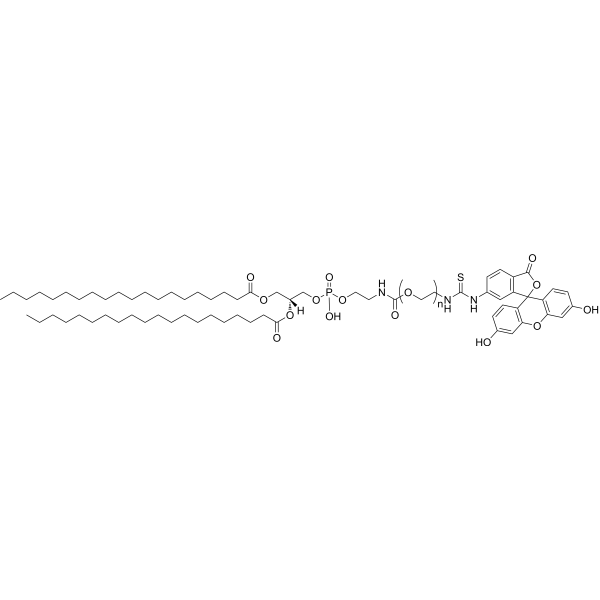
DSPE-PEG2000-FITC is a PEG lipid conjugated with fluorescein. FITC is a green dye with a peak absorption at 494 nm and a maximum emission at 520 nm, which is used for staining biological samples or nanoparticles. DSPE-PEG2000-FITC spontaneously forms lipid bilayers or micelles in water and can be used to prepare liposomes for delivering substances such as mRNA vaccines .
|
-
-
- HY-134541S6
-
|
|
Isotope-Labeled Compounds
Liposome
|
Infection
|
|
SM-102-d4 is the deuterium labeled SM-102 (HY-134541). SM-102 is an amino cationic lipid useful in the formation of lipid nanoparticles (LNPs). SM-102 has higher transfection efficiency. SM-102 plays an important role in the effectiveness of lipid nanoparticles (LNPs) in delivering mRNA therapeutics and vaccines .
|
-
-
- HY-134541G
-
|
|
Liposome
|
Infection
|
|
SM-102 (GMP) is SM-102 (HY-134541) produced by using GMP guidelines. GMP small molecules works appropriately as an auxiliary reagent for cell therapy manufacture. SM-102 is an amino cationic lipid useful in the formation of lipid nanoparticles (LNPs). SM-102 has higher transfection efficiency. SM-102 plays an important role in the effectiveness of lipid nanoparticles (LNPs) in delivering mRNA therapeutics and vaccines .
|
-
-
- HY-147081A
-
|
AGRO-100 sodium
|
Histone Methyltransferase
Bcl-2 Family
|
Cancer
|
|
AS 1411 (AGRO-100) sodium is an oligonucleotide aptamer targeting nucleoproteins. AS 1411 sodium inhibits tumor cell proliferation by affecting the activity of nucleoprotein-containing complexes and can be used as a carrier to precisely deliver nanoparticles, oligonucleotides and small molecules to cancer cells. AS 1411 sodium reduces PRMT5 expression to inhibit tumor growth in DU145 prostate cancer cells. S 1411 sodium works by blocking the binding of nucleoproteins to bcl-2 mRNA in MCF-7 breast cancer cells. S 1411 sodium-coupled Jin nanospheres can inhibit breast cancer cell proliferation in vitro and in mouse models, has the ability to cross the blood-brain barrier with low tissue toxicity
|
-
-
- HY-159854
-
|
|
Liposome
|
Cancer
|
|
C14-O2 is an ionizable cationic lipid that can be used to synthesize lipid nanoparticles (LNP) for delivering mRNA and other payloads .
|
-
-
- HY-159858
-
|
|
Liposome
|
Cancer
|
|
Lipid 16 is an ionizable lipid that can be used to synthesize lipid nanoparticles (LNP) for delivering mRNA and other payloads. Lipid 16 as a potent cell type-specific ionizable lipid for the CD11bhi macrophage population without an additional targeting moiety .
|
-
-
- HY-156936
-
|
|
Liposome
|
Others
|
|
RCB-02-4-8 is an ionizable cationic lipid that is used to form lipid nanoparticles (LNPs) to deliver mRNA. RCB-02-4-8 can improve the efficiency of lung transfection in mice .
|
-
-
- HY-W440834
-
|
|
Liposome
|
Others
|
|
DSPE-PEG5000-azide is a click chemistry reactive phospholipid polyPEG which forms lipid bilayer or micelles in an aqueous solution. The polymer can be used to prepare liposomes or nanoparticles used for delivering nutrients or therapeutic agents, for example mRNA or DNA vaccine.
|
-
-
- HY-159709
-
|
|
Liposome
|
Metabolic Disease
|
|
VL-422 is an ionizable cationic lipid. VL-422 delivers CRISPR complementary single-guide RNA (sgRNA) and Cas9 mRNA to enable in vitro and in vivo gene editing. LNPs containing VL-422 loaded with Cas9 mRNA and sgRNA targeting the ANGPTL3 gene induce the deletion of premature stop codons within the ANGPTL3 gene in the liver of cynomolgus monkeys. Loss-of-function of ANGPTL3 leads to decreased levels of LDL, HDL and cholesterol in plasma. The VL-422 delivery system can be used for the research of gene editing strategies targeting lipid metabolism diseases .
|
-
-
- HY-159865
-
|
|
Liposome
|
Others
|
|
CL15F6 is an ionizable lipid that can be used to synthesize lipid nanoparticles (LNP) for delivering mRNA and other payloads .
|
-
-
- HY-159856
-
|
Diphosphatidylglycerol (16:0)
|
Liposome
|
Others
|
|
16:0 Cardiolipin (Diphosphatidylglycerol (16:0)) is a phospholipid derived from Palmitic acid (16:0) that can be used to synthesize lipid nanoparticles (LNP) for delivering mRNA and other payloads .
|
-
-
- HY-153737
-
|
|
Liposome
|
Others
|
|
113-N16B is an ionizable cationic lipid used for the generation of lipid nanoparticles (LNPs). 113-N16B delivers mRNA preferentially to pulmonary endothelial cells.
|
-
-
- HY-134780
-
|
|
Liposome
|
Others
|
|
L-369 is an ionizable cationic lipid that can be used to synthesize lipid nanoparticles and deliver mRNA .
|
-
-
- HY-159862
-
|
|
Liposome
|
Infection
|
|
IM21.7c is a cationic lipid that can be used to synthesize lipid nanoparticles (LNP) for delivering mRNA and other payloads .
|
-
-
- HY-132289
-
-
-
- HY-159869
-
|
|
Liposome
|
Others
|
|
G0-C14 analog is a G0-C14 derivative. G0-C14 is an ionizable cationic lipid that can be used to synthesize lipid nanoparticles (LNP) .
|
-
-
- HY-P3402
-
|
|
Amino Acid Derivatives
|
Others
|
|
HBpep-K is a peptide that can form co aggregated droplets. HBpep-K can efficiently load and deliver small peptides, proteins, and mRNA. HBpep-K can protect mRNA from RNase degradation. HBpep-K is commonly used for drug delivery .
|
-
-
- HY-P3402A
-
|
|
Amino Acid Derivatives
|
Others
|
|
HBpep-K acetate is a peptide that can form co aggregated droplets. HBpep-K acetate can efficiently load and deliver small peptides, proteins, and mRNA. HBpep-K acetate can protect mRNA from RNase degradation. HBpep-K acetate is commonly used for drug delivery .
|
-
-
- HY-151508
-
|
|
Liposome
|
Cancer
|
|
Diamino lipid DAL4 is diamino lipid for the preparation of lipid nanoparticles (LNPs) encapsulated with mRNAs encoding cytokines including IL-12, IL-27 and GM-CSF. Diamino lipid DAL4 delivers mRNA to tumor cells to exert anti-tumor activity .
|
-
-
- HY-46759A
-
|
|
Liposome
|
Infection
|
|
Genevant CL1 monohydrochloride is an ionizable lipid (pKa = 6.3) suitable for the preparation of lipid nanoparticles (LNPs) for delivering nucleic acid payloads and intramuscular vaccines. Genevant CL1 monohydrochloride is a component of lipid nanoparticle delivery systems for mRNA vaccines .
|
-
-
- HY-151506
-
|
|
Liposome
|
Cancer
|
|
Phospholipid PL1 is a phospholipid-derived nanoparticle, can deliver costimulatory receptor mRNA (CD137 or OX40) to T cells. Phospholipid PL1 could induce the activation of various immune cells, including T cells and dendritic cells (DCs) in order to boost antitumor immunity .
|
-
-
- HY-171954
-
|
|
Liposome
|
Cancer
|
|
9C-SCC-10 is a crown-like biodegradable ionizable lipid. 9C-SCC-10 an be used to prepare lipid nanoparticles for delivering mRNA and targeting lung tissue. 9C-SCC-10 can be used for early detection and diagnosis of lung cancer .
|
-
-
- HY-159853
-
|
|
Liposome
|
Inflammation/Immunology
|
|
C14-A1 is an ionizable cationic lipid that can be used to synthesize lipid nanoparticles (LNP) for delivering mRNA and other payloads .
|
-
-
- HY-159855
-
|
Cholesterol-amino-phosphate 2 hydrochloride
|
Liposome
|
Others
|
|
CAP 2 (Cholesterol-amino-phosphate 2) hydrochloride is Cholesterol-amino-phosphate (CAP) lipid. CAP 2 can be used to synthesize lipid nanoparticles (LNP) for delivering mRNA and other payloads .
|
-
-
- HY-176512
-
|
|
Liposome
|
Cancer
|
|
FO-32 is an ionizable cationic lipid with a pKa of 6.46 and can be used to generate lipid nanoparticles (LNPs) to deliver mRNA in vivo. FO-32 can efficiently deliver mRNA to ferret lungs. FO-32 can be studied in research on optimizing drug delivery .
|
-
-
- HY-160908
-
|
|
Liposome
|
Others
|
Lipid 88 is an ionizable cationic lipid. Lipid 88 can be used to synthesize lipid nanoparticles and deliver mRNA .
|
-
-
- HY-160512
-
|
|
Liposome
|
Others
|
Lipid 9 is an ionizable lipid that can be used to synthesize lipid nanoparticles (LNP) for delivering mRNA and other payloads .
|
-
-
- HY-W440897
-
|
|
Biochemical Assay Reagents
|
Others
|
|
DSPE-PEG3400-SH is a maleimide reactive PEG lipid. The amphiphilic polymer forms lipid bilayer in water and can be used to prepare liposomes for drug nanocarriers to deliver mRNA, DNA or siRNA.
|
-
-
- HY-W440928
-
|
|
Liposome
|
Others
|
|
Stearic acid-PEG3400-NHS is a phospholipid polyPEG which can self-assemble in water to form lipid bilayer. The polymer can be used to prepare liposomes as drug carrier to deliver nutrients/therpeutic agents, such as mRNA or DNA.
|
-
-
- HY-172334
-
|
|
Liposome
|
Metabolic Disease
|
|
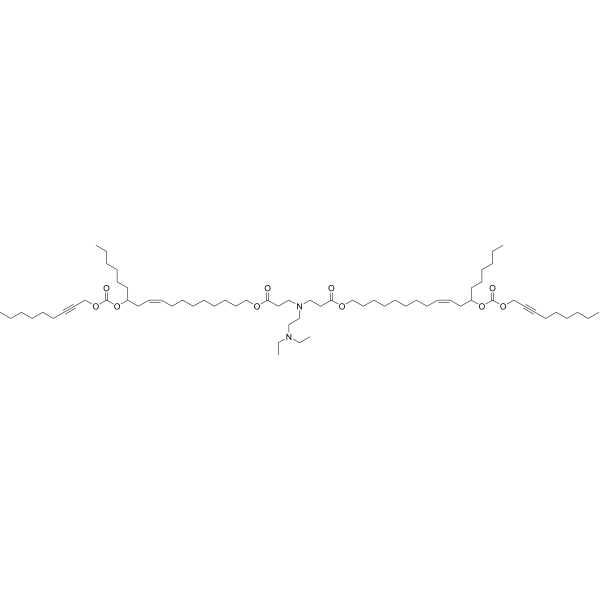
2N12B is a bioreducible ionizable lipid containing disulfide bonds. 2N12B can be used to prepare lipid nanoparticles (LNPs) for the delivery of mRNA in vitro and in vivo. Lipid nanoparticles containing 2N12B can deliver siRNA to inhibit retinal neovascularization .
|
-
-
- HY-171953
-
|
|
Liposome
|
Others
|
|
THP1 Lipid is an ionizable lipidoid. THP1 Lipid can be used to synthesize lipid nanoparticles (LNPs) for delivering mRNA to muscles with minimal toxicity and editing genes in specific liver tissues in tdTomato transgenic mice model. THP1 Lipid can be used for vaccine delivery and CRISPR/Cas9-mediated gene editing research .
|
-
-
- HY-171984
-
|
|
Liposome
|
Infection
Inflammation/Immunology
Cancer
|
|
514O6,10 is an ionizable lipidoid containing a branched-tail. 514O6,10 can be used to synthesize lipid nanoparticles (LNPs) for delivering mRNA to natural killer and dendritic cells within the lung. 514O6,10 can be used for the RNA therapies for lung diseases associated with immune cell dysregulation, including cancer, viral infections, and autoimmune disorders research .
|
-
-
- HY-W1130456
-
|
|
Liposome
|
Inflammation/Immunology
|
|
Lipid TD5 is an ionizable cationic lipid with a pKa of 7.3. Lipid TD5 can be used to generate lipid nanoparticles (LNPs) to deliver mRNA in vitro and in vivo. Lipid TD5 LNPs can undergo endocytosis in a 5-HT receptor subtype 1A-dependent manner in primary mouse astrocytes .
|
-
-
- HY-157415
-
|
1,2-Dierucoyl-sn-3-phosphatidylethanolamine; di22:1-PE; PE(22:1/22:1)
|
Liposome
|
Inflammation/Immunology
|
|
1,2-Dierucoyl-sn-glycero-3-PE (1,2-Dierucoyl-sn-3-phosphatidylethanolamine) is a phospholipid that contains erucic acid. 1,2-Dierucoyl-sn-glycero-3-PE can be used in the generation of lipid nanoparticles (LNPs) to deliver mRNA in vivo. 1,2-Dierucoyl-sn-glycero-3-PE can also be used to synthesize numerous PEG-conjugates for liposomes incorporation .
|
-
| Cat. No. |
Product Name |
Type |
-
- HY-134541GL
-
|
|
Fluorescent Dyes
|
|
SM-102 (GMP Like) is SM-102 (HY-134541) produced by using GMP like guidelines. GMP Like small molecules works appropriately as an auxiliary reagent for cell therapy manufacture. SM-102 is an amino cationic lipid useful in the formation of lipid nanoparticles (LNPs). SM-102 has higher transfection efficiency. SM-102 plays an important role in the effectiveness of lipid nanoparticles (LNPs) in delivering mRNA therapeutics and vaccines .
|
-
- HY-134541G
-
|
|
Fluorescent Dyes
|
|
SM-102 (GMP) is SM-102 (HY-134541) produced by using GMP guidelines. GMP small molecules works appropriately as an auxiliary reagent for cell therapy manufacture. SM-102 is an amino cationic lipid useful in the formation of lipid nanoparticles (LNPs). SM-102 has higher transfection efficiency. SM-102 plays an important role in the effectiveness of lipid nanoparticles (LNPs) in delivering mRNA therapeutics and vaccines .
|
| Cat. No. |
Product Name |
Type |
-
- HY-134541
-
SM-102
Maximum Cited Publications
45 Publications Verification
|
Biochemical Assay Reagents
|
|
SM-102 is an amino cationic lipid useful in the formation of lipid nanoparticles (LNPs). SM-102 has higher transfection efficiency. SM-102 plays an important role in the effectiveness of lipid nanoparticles (LNPs) in delivering mRNA therapeutics and vaccines .
|
-
- HY-145405
-
|
|
Biochemical Assay Reagents
|
|
C12-200 is a type of ionizable cationic lipid and helper lipid commonly used for mRNA delivery. In the hemophilia B mouse model, mRNA encoding human erythropoietin (EPO) and coagulation factor IX (FIX) can be successfully delivered and expressed using C12-200. C12-200 is utilized in research related to hemophilia B .
|
-
- HY-151507
-
306Oi10
1 Publications Verification
|
Biochemical Assay Reagents
|
|
306Oi10 is a branched ionizable lipid that can be used to construct lipid nanoparticles (LNPs) for delivering messenger RNA. The surface ionization of lipid nanoparticles is related to the effectiveness of mRNA delivery. The tail of 306Oi10 has a one-carbon branch, which provides it with stronger surface ionization compared to lipids with linear tails, thereby enhancing its mRNA delivery efficacy. 306Oi10 can be used in research related to mRNA delivery .
|
-
- HY-172723
-
|
|
Biochemical Assay Reagents
|
|
DSPE-PEG2000-T7 is a PEGylated compound composed of DSPE and peptideT7. T7 (HAIYPRH) specifically binds to TfR. DSPE-PEG2000-T7 can be used to prepare T7-modified liposomes, where liposomes modified with both T7 and DA7R peptides can effectively co-deliver Doxorubicin (HY-15142A) and Vincristine (HY-N0488A) to gliomas. DSPE-PEG2000-T7 can also be used to prepare nanomodulators that mediate the co-delivery of tyrosine hydroxylase mRNA and interferon gene stimulator antagonists for synergistic intervention in Parkinson's disease .
|
-
- HY-46759
-
|
|
Biochemical Assay Reagents
|
|
Genevant CL1 is an ionizable lipid (pKa = 6.3) suitable for the preparation of lipid nanoparticles (LNPs) for delivering nucleic acid payloads and intramuscular vaccines. Genevant CL1 is a component of lipid nanoparticle delivery systems for mRNA vaccines .
|
-
- HY-147332
-
|
|
Biochemical Assay Reagents
|
|
TCL053 is an ionizable lipid carrier and used to introduce active components, in particular nucleic acids, into cells with excellent efriciency. TCL053, together with DPPC (Dipalmitoylphosphatidylcholine), PEG-DMG (Polyethylene glycoldimyristoyl glycerol), and cholesterol, forms lipid nanoparticle (LNP) which is able to deliver Cas9 mRNA and sgRNA into skeletal muscle .
|
-
- HY-150229
-
|
|
Biochemical Assay Reagents
|
|
306-N16B is a selective lung-targeted lipid nanoparticle that reversibly targets lung endothelial cells and specific immune cells through selective adsorption of a protein corona mediated by differences in tail structure (such as fibrinogen β/γ chain). 306-N16B binds to specific plasma proteins in the blood to form a protein corona, which guides the particles to be enriched in the lungs, releases mRNA and promotes target cell gene expression, exerts efficient lung cell transfection activity, and can precisely regulate gene delivery of different cell types in the lungs (such as endothelial cells and macrophages). 306-N16B can be used in gene therapy technologies for hereditary lung diseases including pulmonary lymphangioleiomyomatosis (LAM), restoring tumor suppressor function by delivering Tsc2 mRNA, and can also be used for lung-specific mRNA vaccines and gene editing therapies .
|
-
- HY-139306
-
|
|
Biochemical Assay Reagents
|
|
BAMEAO16B is a lipid nanoparticle. BAMEAO16B integrated with disulfide bonds, can efficiently deliver Cas9 mRNA and sgRNA into cells while releasing RNA in response to the reductive intracellular environment for genome editing. BAMEAO16B can be used for the research of gene editing .
|
-
- HY-134541GL
-
|
|
Biochemical Assay Reagents
|
|
SM-102 (GMP Like) is SM-102 (HY-134541) produced by using GMP like guidelines. GMP Like small molecules works appropriately as an auxiliary reagent for cell therapy manufacture. SM-102 is an amino cationic lipid useful in the formation of lipid nanoparticles (LNPs). SM-102 has higher transfection efficiency. SM-102 plays an important role in the effectiveness of lipid nanoparticles (LNPs) in delivering mRNA therapeutics and vaccines .
|
-
- HY-156857
-
|
|
Biochemical Assay Reagents
|
|
PPZ-A10 is an ionizable cationic lipid. PPZ-A10 preferentially delivers mRNA to liver and spleen immune cells. Pi-LNPs containing PPZ-A10 can effectively deliver mRNA/siRNA to solid tumors .
|
-
- HY-153377
-
|
|
Biochemical Assay Reagents
|
|
Lipid 14 is an ionizable amino lipid. Lipid 14 delivers mRNA into target cells, significantly enhancing the in vivo expression efficiency and immunogenicity of mRNA. Lipid 14 can be used to synthesize lipid nanoparticles (LNPs). Lipid 14 can be used for studies of SARS-CoV-2 and Yersinia pestis .
|
-
- HY-W440915
-
|
|
Biochemical Assay Reagents
|
|
DSPE-PEG2000-FITC is a PEG lipid conjugated with fluorescein. FITC is a green dye with a peak absorption at 494 nm and a maximum emission at 520 nm, which is used for staining biological samples or nanoparticles. DSPE-PEG2000-FITC spontaneously forms lipid bilayers or micelles in water and can be used to prepare liposomes for delivering substances such as mRNA vaccines .
|
-
- HY-134541G
-
|
|
Biochemical Assay Reagents
|
|
SM-102 (GMP) is SM-102 (HY-134541) produced by using GMP guidelines. GMP small molecules works appropriately as an auxiliary reagent for cell therapy manufacture. SM-102 is an amino cationic lipid useful in the formation of lipid nanoparticles (LNPs). SM-102 has higher transfection efficiency. SM-102 plays an important role in the effectiveness of lipid nanoparticles (LNPs) in delivering mRNA therapeutics and vaccines .
|
-
- HY-W440834
-
|
|
Biochemical Assay Reagents
|
|
DSPE-PEG5000-azide is a click chemistry reactive phospholipid polyPEG which forms lipid bilayer or micelles in an aqueous solution. The polymer can be used to prepare liposomes or nanoparticles used for delivering nutrients or therapeutic agents, for example mRNA or DNA vaccine.
|
-
- HY-153737
-
|
|
Biochemical Assay Reagents
|
|
113-N16B is an ionizable cationic lipid used for the generation of lipid nanoparticles (LNPs). 113-N16B delivers mRNA preferentially to pulmonary endothelial cells.
|
-
- HY-132289
-
|
|
Biochemical Assay Reagents
|
|
Lipid M (pKa: 6.75) can be used to deliver mRNA vaccine and yield a robust immune response with improved tolerability .
|
-
- HY-151508
-
|
|
Biochemical Assay Reagents
|
|
Diamino lipid DAL4 is diamino lipid for the preparation of lipid nanoparticles (LNPs) encapsulated with mRNAs encoding cytokines including IL-12, IL-27 and GM-CSF. Diamino lipid DAL4 delivers mRNA to tumor cells to exert anti-tumor activity .
|
-
- HY-46759A
-
|
|
Biochemical Assay Reagents
|
|
Genevant CL1 monohydrochloride is an ionizable lipid (pKa = 6.3) suitable for the preparation of lipid nanoparticles (LNPs) for delivering nucleic acid payloads and intramuscular vaccines. Genevant CL1 monohydrochloride is a component of lipid nanoparticle delivery systems for mRNA vaccines .
|
-
- HY-151506
-
|
|
Biochemical Assay Reagents
|
|
Phospholipid PL1 is a phospholipid-derived nanoparticle, can deliver costimulatory receptor mRNA (CD137 or OX40) to T cells. Phospholipid PL1 could induce the activation of various immune cells, including T cells and dendritic cells (DCs) in order to boost antitumor immunity .
|
-
- HY-W440897
-
|
|
Biochemical Assay Reagents
|
|
DSPE-PEG3400-SH is a maleimide reactive PEG lipid. The amphiphilic polymer forms lipid bilayer in water and can be used to prepare liposomes for drug nanocarriers to deliver mRNA, DNA or siRNA.
|
-
- HY-W440928
-
|
|
Biochemical Assay Reagents
|
|
Stearic acid-PEG3400-NHS is a phospholipid polyPEG which can self-assemble in water to form lipid bilayer. The polymer can be used to prepare liposomes as drug carrier to deliver nutrients/therpeutic agents, such as mRNA or DNA.
|
| Cat. No. |
Product Name |
Target |
Research Area |
-
- HY-P3402
-
|
|
Amino Acid Derivatives
|
Others
|
|
HBpep-K is a peptide that can form co aggregated droplets. HBpep-K can efficiently load and deliver small peptides, proteins, and mRNA. HBpep-K can protect mRNA from RNase degradation. HBpep-K is commonly used for drug delivery .
|
-
- HY-P3402A
-
|
|
Amino Acid Derivatives
|
Others
|
|
HBpep-K acetate is a peptide that can form co aggregated droplets. HBpep-K acetate can efficiently load and deliver small peptides, proteins, and mRNA. HBpep-K acetate can protect mRNA from RNase degradation. HBpep-K acetate is commonly used for drug delivery .
|
| Cat. No. |
Product Name |
Chemical Structure |
-
- HY-134541S6
-
|
|
|
SM-102-d4 is the deuterium labeled SM-102 (HY-134541). SM-102 is an amino cationic lipid useful in the formation of lipid nanoparticles (LNPs). SM-102 has higher transfection efficiency. SM-102 plays an important role in the effectiveness of lipid nanoparticles (LNPs) in delivering mRNA therapeutics and vaccines .
|
-
| Cat. No. |
Product Name |
|
Classification |
-
- HY-W440834
-
|
|
|
Azide
|
|
DSPE-PEG5000-azide is a click chemistry reactive phospholipid polyPEG which forms lipid bilayer or micelles in an aqueous solution. The polymer can be used to prepare liposomes or nanoparticles used for delivering nutrients or therapeutic agents, for example mRNA or DNA vaccine.
|
| Cat. No. |
Product Name |
|
Classification |
-
- HY-134541
-
SM-102
Maximum Cited Publications
45 Publications Verification
|
|
Cationic Lipids
|
|
SM-102 is an amino cationic lipid useful in the formation of lipid nanoparticles (LNPs). SM-102 has higher transfection efficiency. SM-102 plays an important role in the effectiveness of lipid nanoparticles (LNPs) in delivering mRNA therapeutics and vaccines .
|
-
- HY-145405
-
|
|
|
Cationic Lipids
|
|
C12-200 is a type of ionizable cationic lipid and helper lipid commonly used for mRNA delivery. In the hemophilia B mouse model, mRNA encoding human erythropoietin (EPO) and coagulation factor IX (FIX) can be successfully delivered and expressed using C12-200. C12-200 is utilized in research related to hemophilia B .
|
-
- HY-147081
-
AS 1411
2 Publications Verification
AGRO-100
|
|
Aptamers
|
|
AS 1411 (AGRO-100) is an oligonucleotide aptamer targeting nucleoproteins. AS 1411 inhibits tumor cell proliferation by affecting the activity of nucleoprotein-containing complexes and can be used as a carrier to precisely deliver nanoparticles, oligonucleotides and small molecules to cancer cells. AS 1411 reduces PRMT5 expression to inhibit tumor growth in DU145 prostate cancer cells. AS 1411 works by blocking the binding of nucleoproteins to bcl-2 mRNA in MCF-7 breast cancer cells. AS 1411-coupled Jin nanospheres can inhibit breast cancer cell proliferation in vitro and in mouse models, has the ability to cross the blood-brain barrier with low tissue toxicity .
|
-
- HY-151507
-
306Oi10
1 Publications Verification
|
|
Cationic Lipids
|
|
306Oi10 is a branched ionizable lipid that can be used to construct lipid nanoparticles (LNPs) for delivering messenger RNA. The surface ionization of lipid nanoparticles is related to the effectiveness of mRNA delivery. The tail of 306Oi10 has a one-carbon branch, which provides it with stronger surface ionization compared to lipids with linear tails, thereby enhancing its mRNA delivery efficacy. 306Oi10 can be used in research related to mRNA delivery .
|
-
- HY-172723
-
|
|
|
Pegylated Lipids
|
|
DSPE-PEG2000-T7 is a PEGylated compound composed of DSPE and peptideT7. T7 (HAIYPRH) specifically binds to TfR. DSPE-PEG2000-T7 can be used to prepare T7-modified liposomes, where liposomes modified with both T7 and DA7R peptides can effectively co-deliver Doxorubicin (HY-15142A) and Vincristine (HY-N0488A) to gliomas. DSPE-PEG2000-T7 can also be used to prepare nanomodulators that mediate the co-delivery of tyrosine hydroxylase mRNA and interferon gene stimulator antagonists for synergistic intervention in Parkinson's disease .
|
-
- HY-46759
-
|
|
|
Cationic Lipids
|
|
Genevant CL1 is an ionizable lipid (pKa = 6.3) suitable for the preparation of lipid nanoparticles (LNPs) for delivering nucleic acid payloads and intramuscular vaccines. Genevant CL1 is a component of lipid nanoparticle delivery systems for mRNA vaccines .
|
-
- HY-147332
-
|
|
|
Cationic Lipids
|
|
TCL053 is an ionizable lipid carrier and used to introduce active components, in particular nucleic acids, into cells with excellent efriciency. TCL053, together with DPPC (Dipalmitoylphosphatidylcholine), PEG-DMG (Polyethylene glycoldimyristoyl glycerol), and cholesterol, forms lipid nanoparticle (LNP) which is able to deliver Cas9 mRNA and sgRNA into skeletal muscle .
|
-
- HY-150229
-
|
|
|
Cationic Lipids
|
|
306-N16B is a selective lung-targeted lipid nanoparticle that reversibly targets lung endothelial cells and specific immune cells through selective adsorption of a protein corona mediated by differences in tail structure (such as fibrinogen β/γ chain). 306-N16B binds to specific plasma proteins in the blood to form a protein corona, which guides the particles to be enriched in the lungs, releases mRNA and promotes target cell gene expression, exerts efficient lung cell transfection activity, and can precisely regulate gene delivery of different cell types in the lungs (such as endothelial cells and macrophages). 306-N16B can be used in gene therapy technologies for hereditary lung diseases including pulmonary lymphangioleiomyomatosis (LAM), restoring tumor suppressor function by delivering Tsc2 mRNA, and can also be used for lung-specific mRNA vaccines and gene editing therapies .
|
-
- HY-139306
-
|
|
|
Cationic Lipids
|
|
BAMEAO16B is a lipid nanoparticle. BAMEAO16B integrated with disulfide bonds, can efficiently deliver Cas9 mRNA and sgRNA into cells while releasing RNA in response to the reductive intracellular environment for genome editing. BAMEAO16B can be used for the research of gene editing .
|
-
- HY-156857
-
|
|
|
Cationic Lipids
|
|
PPZ-A10 is an ionizable cationic lipid. PPZ-A10 preferentially delivers mRNA to liver and spleen immune cells. Pi-LNPs containing PPZ-A10 can effectively deliver mRNA/siRNA to solid tumors .
|
-
- HY-153377
-
|
|
|
Cationic Lipids
|
|
Lipid 14 is an ionizable amino lipid. Lipid 14 delivers mRNA into target cells, significantly enhancing the in vivo expression efficiency and immunogenicity of mRNA. Lipid 14 can be used to synthesize lipid nanoparticles (LNPs). Lipid 14 can be used for studies of SARS-CoV-2 and Yersinia pestis .
|
-
- HY-W440915
-
|
|
|
Pegylated Lipids
Fluorescent Lipids
|
|
DSPE-PEG2000-FITC is a PEG lipid conjugated with fluorescein. FITC is a green dye with a peak absorption at 494 nm and a maximum emission at 520 nm, which is used for staining biological samples or nanoparticles. DSPE-PEG2000-FITC spontaneously forms lipid bilayers or micelles in water and can be used to prepare liposomes for delivering substances such as mRNA vaccines .
|
-
- HY-147081A
-
|
AGRO-100 sodium
|
|
Aptamers
|
|
AS 1411 (AGRO-100) sodium is an oligonucleotide aptamer targeting nucleoproteins. AS 1411 sodium inhibits tumor cell proliferation by affecting the activity of nucleoprotein-containing complexes and can be used as a carrier to precisely deliver nanoparticles, oligonucleotides and small molecules to cancer cells. AS 1411 sodium reduces PRMT5 expression to inhibit tumor growth in DU145 prostate cancer cells. S 1411 sodium works by blocking the binding of nucleoproteins to bcl-2 mRNA in MCF-7 breast cancer cells. S 1411 sodium-coupled Jin nanospheres can inhibit breast cancer cell proliferation in vitro and in mouse models, has the ability to cross the blood-brain barrier with low tissue toxicity
|
-
- HY-159858
-
|
|
|
Cationic Lipids
|
|
Lipid 16 is an ionizable lipid that can be used to synthesize lipid nanoparticles (LNP) for delivering mRNA and other payloads. Lipid 16 as a potent cell type-specific ionizable lipid for the CD11bhi macrophage population without an additional targeting moiety .
|
-
- HY-156936
-
|
|
|
Cationic Lipids
|
|
RCB-02-4-8 is an ionizable cationic lipid that is used to form lipid nanoparticles (LNPs) to deliver mRNA. RCB-02-4-8 can improve the efficiency of lung transfection in mice .
|
-
- HY-W440834
-
|
|
|
Pegylated Lipids
|
|
DSPE-PEG5000-azide is a click chemistry reactive phospholipid polyPEG which forms lipid bilayer or micelles in an aqueous solution. The polymer can be used to prepare liposomes or nanoparticles used for delivering nutrients or therapeutic agents, for example mRNA or DNA vaccine.
|
-
- HY-159709
-
|
|
|
Cationic Lipids
|
|
VL-422 is an ionizable cationic lipid. VL-422 delivers CRISPR complementary single-guide RNA (sgRNA) and Cas9 mRNA to enable in vitro and in vivo gene editing. LNPs containing VL-422 loaded with Cas9 mRNA and sgRNA targeting the ANGPTL3 gene induce the deletion of premature stop codons within the ANGPTL3 gene in the liver of cynomolgus monkeys. Loss-of-function of ANGPTL3 leads to decreased levels of LDL, HDL and cholesterol in plasma. The VL-422 delivery system can be used for the research of gene editing strategies targeting lipid metabolism diseases .
|
-
- HY-159865
-
|
|
|
Cationic Lipids
|
|
CL15F6 is an ionizable lipid that can be used to synthesize lipid nanoparticles (LNP) for delivering mRNA and other payloads .
|
-
- HY-159856
-
|
Diphosphatidylglycerol (16:0)
|
|
Phospholipids
|
|
16:0 Cardiolipin (Diphosphatidylglycerol (16:0)) is a phospholipid derived from Palmitic acid (16:0) that can be used to synthesize lipid nanoparticles (LNP) for delivering mRNA and other payloads .
|
-
- HY-153737
-
|
|
|
Cationic Lipids
|
|
113-N16B is an ionizable cationic lipid used for the generation of lipid nanoparticles (LNPs). 113-N16B delivers mRNA preferentially to pulmonary endothelial cells.
|
-
- HY-134780
-
|
|
|
Cationic Lipids
|
|
L-369 is an ionizable cationic lipid that can be used to synthesize lipid nanoparticles and deliver mRNA .
|
-
- HY-159862
-
|
|
|
Cationic Lipids
|
|
IM21.7c is a cationic lipid that can be used to synthesize lipid nanoparticles (LNP) for delivering mRNA and other payloads .
|
-
- HY-132289
-
|
|
|
Cationic Lipids
|
|
Lipid M (pKa: 6.75) can be used to deliver mRNA vaccine and yield a robust immune response with improved tolerability .
|
-
- HY-151508
-
|
|
|
Cationic Lipids
|
|
Diamino lipid DAL4 is diamino lipid for the preparation of lipid nanoparticles (LNPs) encapsulated with mRNAs encoding cytokines including IL-12, IL-27 and GM-CSF. Diamino lipid DAL4 delivers mRNA to tumor cells to exert anti-tumor activity .
|
-
- HY-46759A
-
|
|
|
Cationic Lipids
|
|
Genevant CL1 monohydrochloride is an ionizable lipid (pKa = 6.3) suitable for the preparation of lipid nanoparticles (LNPs) for delivering nucleic acid payloads and intramuscular vaccines. Genevant CL1 monohydrochloride is a component of lipid nanoparticle delivery systems for mRNA vaccines .
|
-
- HY-151506
-
|
|
|
Phospholipids
|
|
Phospholipid PL1 is a phospholipid-derived nanoparticle, can deliver costimulatory receptor mRNA (CD137 or OX40) to T cells. Phospholipid PL1 could induce the activation of various immune cells, including T cells and dendritic cells (DCs) in order to boost antitumor immunity .
|
-
- HY-171954
-
|
|
|
Cationic Lipids
|
|
9C-SCC-10 is a crown-like biodegradable ionizable lipid. 9C-SCC-10 an be used to prepare lipid nanoparticles for delivering mRNA and targeting lung tissue. 9C-SCC-10 can be used for early detection and diagnosis of lung cancer .
|
-
- HY-159853
-
|
|
|
Cationic Lipids
|
|
C14-A1 is an ionizable cationic lipid that can be used to synthesize lipid nanoparticles (LNP) for delivering mRNA and other payloads .
|
-
- HY-159855
-
|
Cholesterol-amino-phosphate 2 hydrochloride
|
|
Cholesterol
|
|
CAP 2 (Cholesterol-amino-phosphate 2) hydrochloride is Cholesterol-amino-phosphate (CAP) lipid. CAP 2 can be used to synthesize lipid nanoparticles (LNP) for delivering mRNA and other payloads .
|
-
- HY-176512
-
|
|
|
Cationic Lipids
|
|
FO-32 is an ionizable cationic lipid with a pKa of 6.46 and can be used to generate lipid nanoparticles (LNPs) to deliver mRNA in vivo. FO-32 can efficiently deliver mRNA to ferret lungs. FO-32 can be studied in research on optimizing drug delivery .
|
-
- HY-160908
-
|
|
|
Cationic Lipids
|
Lipid 88 is an ionizable cationic lipid. Lipid 88 can be used to synthesize lipid nanoparticles and deliver mRNA .
|
-
- HY-160512
-
|
|
|
Cationic Lipids
|
Lipid 9 is an ionizable lipid that can be used to synthesize lipid nanoparticles (LNP) for delivering mRNA and other payloads .
|
-
- HY-W440897
-
|
|
|
Pegylated Lipids
|
|
DSPE-PEG3400-SH is a maleimide reactive PEG lipid. The amphiphilic polymer forms lipid bilayer in water and can be used to prepare liposomes for drug nanocarriers to deliver mRNA, DNA or siRNA.
|
-
- HY-W440928
-
|
|
|
Pegylated Lipids
|
|
Stearic acid-PEG3400-NHS is a phospholipid polyPEG which can self-assemble in water to form lipid bilayer. The polymer can be used to prepare liposomes as drug carrier to deliver nutrients/therpeutic agents, such as mRNA or DNA.
|
-
- HY-172334
-
|
|
|
Cationic Lipids
|
|
2N12B is a bioreducible ionizable lipid containing disulfide bonds. 2N12B can be used to prepare lipid nanoparticles (LNPs) for the delivery of mRNA in vitro and in vivo. Lipid nanoparticles containing 2N12B can deliver siRNA to inhibit retinal neovascularization .
|
-
- HY-171953
-
|
|
|
Cationic Lipids
|
|
THP1 Lipid is an ionizable lipidoid. THP1 Lipid can be used to synthesize lipid nanoparticles (LNPs) for delivering mRNA to muscles with minimal toxicity and editing genes in specific liver tissues in tdTomato transgenic mice model. THP1 Lipid can be used for vaccine delivery and CRISPR/Cas9-mediated gene editing research .
|
-
- HY-171984
-
|
|
|
Cationic Lipids
|
|
514O6,10 is an ionizable lipidoid containing a branched-tail. 514O6,10 can be used to synthesize lipid nanoparticles (LNPs) for delivering mRNA to natural killer and dendritic cells within the lung. 514O6,10 can be used for the RNA therapies for lung diseases associated with immune cell dysregulation, including cancer, viral infections, and autoimmune disorders research .
|
-
- HY-157415
-
|
1,2-Dierucoyl-sn-3-phosphatidylethanolamine; di22:1-PE; PE(22:1/22:1)
|
|
Phospholipids
|
|
1,2-Dierucoyl-sn-glycero-3-PE (1,2-Dierucoyl-sn-3-phosphatidylethanolamine) is a phospholipid that contains erucic acid. 1,2-Dierucoyl-sn-glycero-3-PE can be used in the generation of lipid nanoparticles (LNPs) to deliver mRNA in vivo. 1,2-Dierucoyl-sn-glycero-3-PE can also be used to synthesize numerous PEG-conjugates for liposomes incorporation .
|
| Cat. No. |
Product Name |
Target |
Research Areas |
Chemical Structure |
-
- HY-134541G
-
|
|
Liposome
|
Infection
|
|
SM-102 (GMP) is SM-102 (HY-134541) produced by using GMP guidelines. GMP small molecules works appropriately as an auxiliary reagent for cell therapy manufacture. SM-102 is an amino cationic lipid useful in the formation of lipid nanoparticles (LNPs). SM-102 has higher transfection efficiency. SM-102 plays an important role in the effectiveness of lipid nanoparticles (LNPs) in delivering mRNA therapeutics and vaccines .
|
-
-
- HY-134541GL
-
|
|
Liposome
|
Infection
|
|
SM-102 (GMP Like) is SM-102 (HY-134541) produced by using GMP like guidelines. GMP Like small molecules works appropriately as an auxiliary reagent for cell therapy manufacture. SM-102 is an amino cationic lipid useful in the formation of lipid nanoparticles (LNPs). SM-102 has higher transfection efficiency. SM-102 plays an important role in the effectiveness of lipid nanoparticles (LNPs) in delivering mRNA therapeutics and vaccines .
|
-
Your information is safe with us. * Required Fields.
Inquiry Information
- Product Name:
- Cat. No.:
- Quantity:
- MCE Japan Authorized Agent:

