13 Results for "

diaryl

" in MedChemExpress (MCE) Product Catalog:
Products (13)

13 Results for "diaryl" in MCE Product Catalog:

1
1 Cited Publications
Cat. No.: HY-103387
CAS No.: 88149-94-4
Purity:  99.67%
Target:  

COX Apoptosis

Research Areas:  

Inflammation/Immunology Cancer

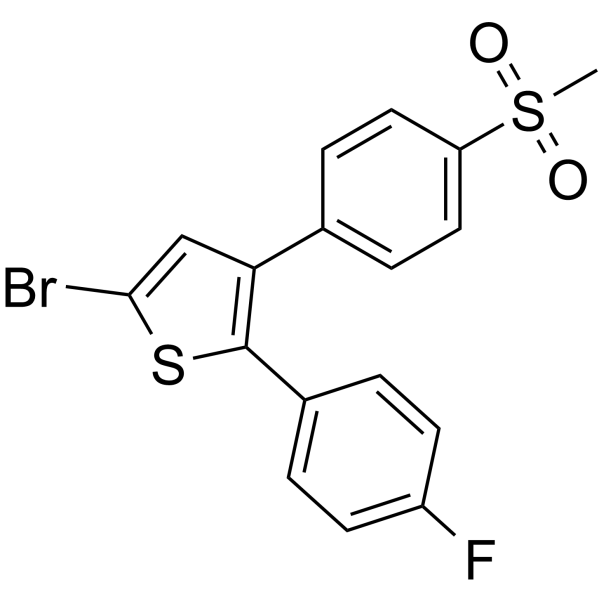
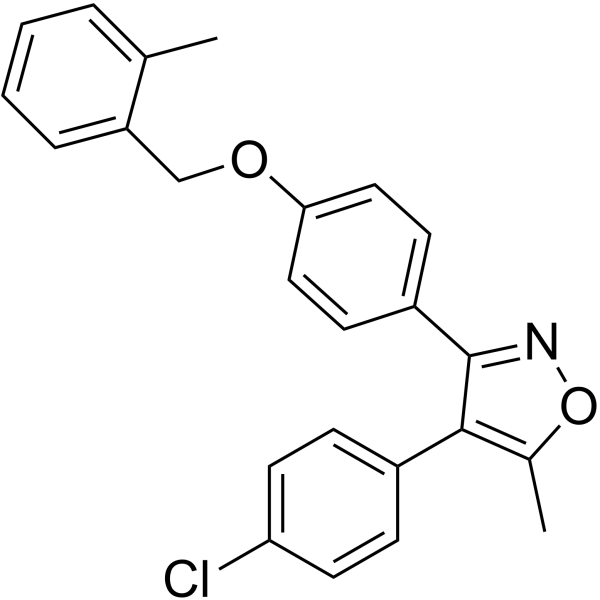
DuP-697 is a member of the vicinal diaryl heterocycles and a potent, irreversible, selective and orally active COX-2 inhibitor (IC50 of 10 nM and 800 nM for human COX-2 and COX-1, respectively). DuP-697 exerts antiproliferative (IC50 of 42.8 nM), antiangiogenic and apoptotic effects on HT29 colorectal cancer cells. DuP-697 inhibits prostaglandin synthesis and has anti-inflammatory, anticancer and antipyretic effects .
loading...
    loading...
Cat. No.: HY-119412
CAS No.: 1801433-90-8
Purity:  99.48%
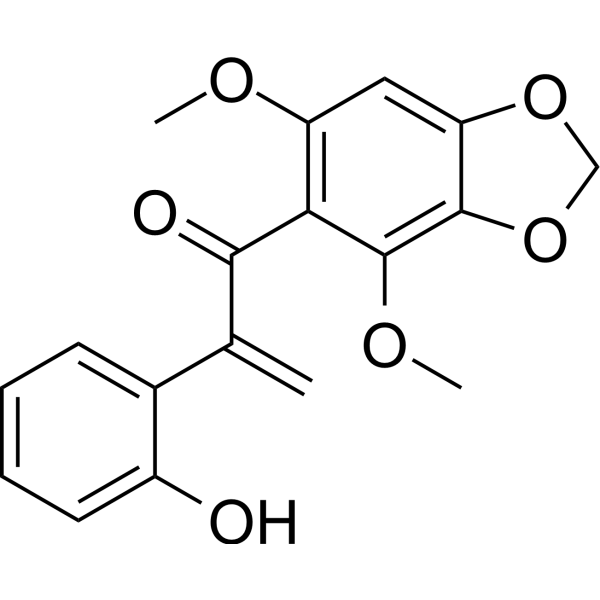
Biliatresone is a natural toxin isolated from Dysphania glomulifera and D. littoralis. Biliatresone, a 1,2-diaryl-2-propenone class of isoflavonoid, produces extrahepatic biliary atresia in a zebrafish model .
loading...
    loading...
Cat. No.: HY-11087
CAS No.: 271576-80-8
Purity:  98.73%
Synonyms: SD-06
Target:  

p38 MAPK Autophagy

Research Areas:  

Inflammation/Immunology

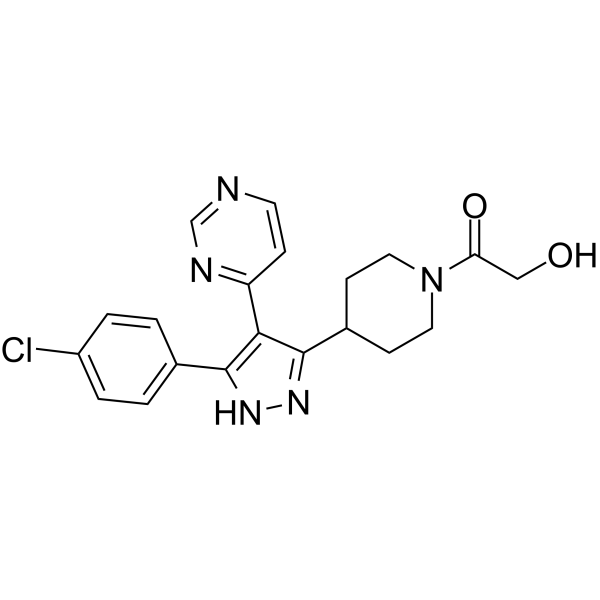
SD 0006 (SD-06) is an orally active, selective, ATP-competitive and potent diaryl pyrazole inhibitor of p38α MAP kinase, with an IC50 of 110 nM for p38α .
loading...
    loading...
Cat. No.: HY-114645
CAS No.: 1643958-89-7
Purity:  98.49%
Target:  

PDK-1

Research Areas:  

Cancer

PDK1-IN-RS2 is a mimic of peptide docking motif (PIFtide) and is a substrate-selective PDK1 inhibitor with a Kd of 9 μM. PDK1-IN-RS2 suppresses the activation of the downstream kinases S6K1 by PDK1 .
loading...
    loading...
Cat. No.: HY-100982
CAS No.: 24587-49-3
Purity:  ≥98.0%
Synonyms: trans-4-Hydroxycrotonic acid; trans-γ-Hydroxycrotonic acid; T‐HCA
Target:  

GABA Receptor

Research Areas:  

Neurological Disease

(E)-4-Hydroxycrotonic acid (T-HCA) is a high-affinity ligand for GHB binding sites, with a ki value of 1.1 μM. The introduction of diaryl substituents into (E)-4-Hydroxycrotonic acid significantly enhances its affinity for GHB binding sites, with ki values ranging from 0.023 to 0.075 μM. (E)-4-Hydroxycrotonic acid holds promise for optimizing GHB ligand structures and assisting in the development of effective three-dimensional pharmacophore models .
loading...
    loading...
Cat. No.: HY-155907
CAS No.: 474922-26-4
Synonyms: DSPE-PEG5000-NH2 ammonium
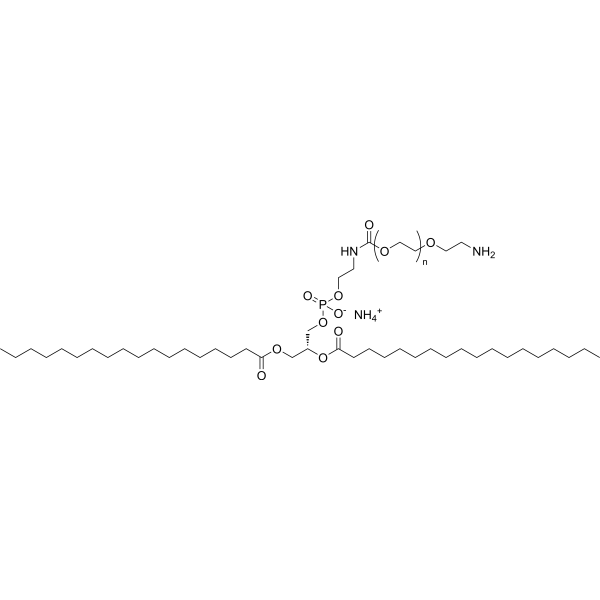
DSPE-PEG5000-Amine ammonium is a phosphoethanolamine involved in the synthesis of liposomes for delivery systems. DSPE-PEG5000-Amine ammonium amino group can be converted to aromatic aldehydes that react with acetone-protected aromatic hydrazides on the surface of the bovine carbonic anhydrase (BCA) molecule. Liposomes produce liposome-Bah-BCA conjugates by forming diaryl hydrazone (BAH) with target enzyme molecules. The conjugate catalyzes the hydration of carbon dioxide to bicarbonate.
loading...
    loading...
Cat. No.: HY-151620
CAS No.: 2758520-84-0
Target:  

Apoptosis

Research Areas:  

Cancer

Antitumor agent-80 (compound 11) is an orally active and potent antitumor agent. Antitumor agent-80 induces apoptosis in tumor cells .
loading...
    loading...
Cat. No.: HY-135843
CAS No.: 313520-94-4
Purity:  ≥99.0%
Target:  

LIM Kinase (LIMK)

Research Areas:  

Cancer

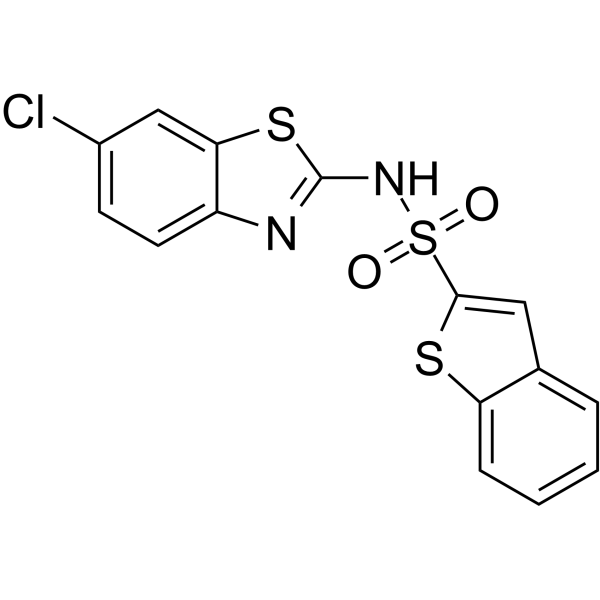
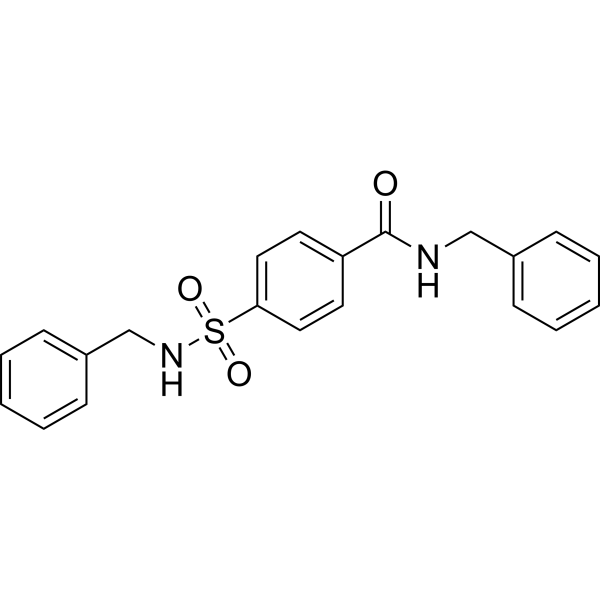
TH-263, a diaryl sulfonamide derivative, is inactive toward both LIMK1 and LIMK2 and thus can be used as negative control for TH-257 .
loading...
    loading...
Cat. No.: HY-121856
CAS No.: 36740-73-5
Target:  

Others

Research Areas:  

Inflammation/Immunology

Flumizole, a derivative of substituted 5,6-diaryl-2,3-dihydroimidazo[2,1-b]thiazoles, was synthesized and evaluated for its immunoregulatory and anti-inflammatory properties in animal models such as rat adjuvant-induced arthritis and mouse oxazolone-induced contact sensitivity assays. This compound class combines structural elements from flumizole and levamisole, aiming to enhance therapeutic efficacy. Symmetrically substituted 5,6-diaryl compounds with specific alkyl heteroatom or halogen substitutions showed optimal potency in the arthritis model. However, variations in activity were less consistent in the contact sensitivity assay. Flumizole and related compounds demonstrate potential as dual-action agents, targeting inflammation and immune modulation, offering promise for therapeutic development in immune-related disorders .
loading...
    loading...
Cat. No.: HY-121451
CAS No.: 523-31-9
Synonyms: DBzP
Research Areas:  

Others

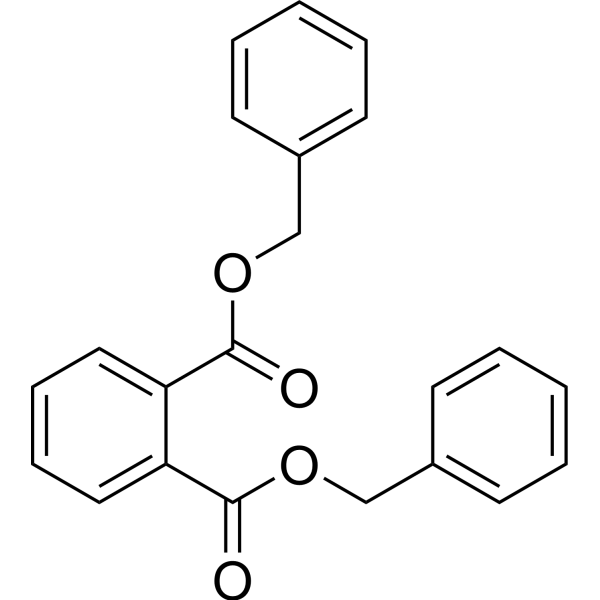
Dibenzyl phthalate, a diaryl phthalate, is extensively used as a plasticizer to modify the properties of the synthetic resin substrates, resulting in the improvement of flexibility and durability of the end products. Dibenzyl phthalate is an endocrine-disrupting compound, and activates estrogen and androgen receptors .
loading...
    loading...
Cat. No.: HY-187525
Research Areas:  

Infection

PfSUB1-IN-2 is an irreversible covalent peptidic diaryl phosphonate inhibitor of Plasmodium falciparum serine protease PfSUB1 with an IC50 of 167 nM and an EC50 of 22.2 μM against Plasmodium falciparum strain growth. PfSUB1-IN-2 can be used for the research of malaria .
loading...
    loading...
Cat. No.: HY-11087R
CAS No.: 271576-80-8
Synonyms: SD-06 (Standard)
SD 0006 (Standard) is the analytical standard of SD 0006 (HY-11087). This product is intended for research and analytical applications. SD 0006 (SD-06) is an orally active, selective, ATP-competitive and potent diaryl pyrazole inhibitor of p38α MAP Kinase, with an IC50 of 110 nM for p38α .
loading...
    loading...
Cat. No.: HY-N19903
CAS No.: 2243140-21-6
Verticilatin is a prenylated diaryl ether derived from phytopathogenic fungi, acting as an antibacterial agent and biofilm inhibitor. Verticilatin exhibits no direct growth inhibitory activity against Gram-negative bacteria. Verticilatin effectively inhibits the growth of Gram-positive strains, including methicillin-sensitive/resistant Staphylococcus aureus and Enterococcus faecalis, and reduces the biofilm-forming ability of Gram-negative Stenotrophomonas maltophilia. Verticilatin can be used for infections caused by the aforementioned Gram-positive bacteria and biofilm infections caused by Stenotrophomonas maltophilia .
loading...
    loading...
  • 1

