26 Results for "

diazepam

" in MedChemExpress (MCE) Product Catalog:
Products (26)

26 Results for "diazepam" in MCE Product Catalog:

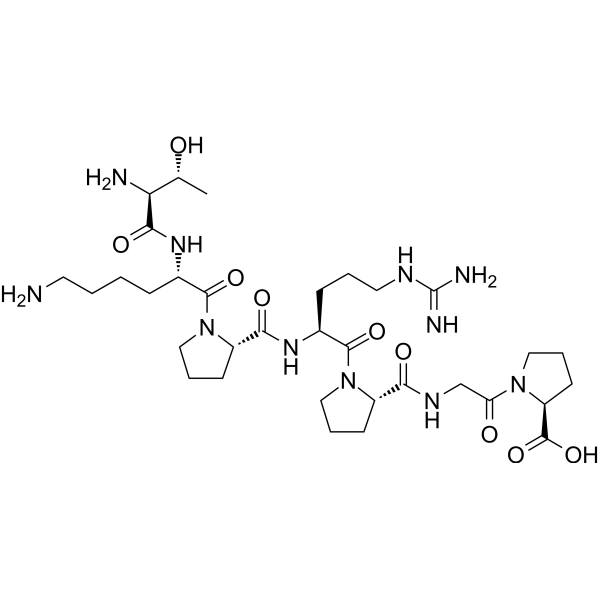
Cat. No.: HY-105042
CAS No.: 129954-34-3
Synonyms: Selanc; TP-7
Target:  

GABA Receptor

Research Areas:  

Neurological Disease

Selank (Selanc; TP-7) is a GABAA receptor modulator with anxiolytic activity. Selank allosterically modulates the specific binding of GABA to GABAA receptors and alters the affinity of endogenous ligands for these receptors. Selank reduces elevated anxiety levels, attenuates stress-induced exacerbation of anxiety, and produces a synergistic anxiolytic effect with diazepam. Selank can be used in the research of anxiety disorders .
loading...
    loading...
Cat. No.: HY-123193
CAS No.: 65617-86-9
Synonyms: Pro-diazepam
Target:  

Drug Intermediate

Research Areas:  

Neurological Disease

Avizafone (Pro-diazepam), a pro-drug of Diazepam, is an anticonvulsant agent. Avizafone can be used as an antidote of nerve agent poisoning. In vivo, Avizafone is rapidly hydrolyzed by aminopeptidase to produce lysine and diazepam. Avizafone has research areas including neurological disease, such as epilepsy .
loading...
    loading...
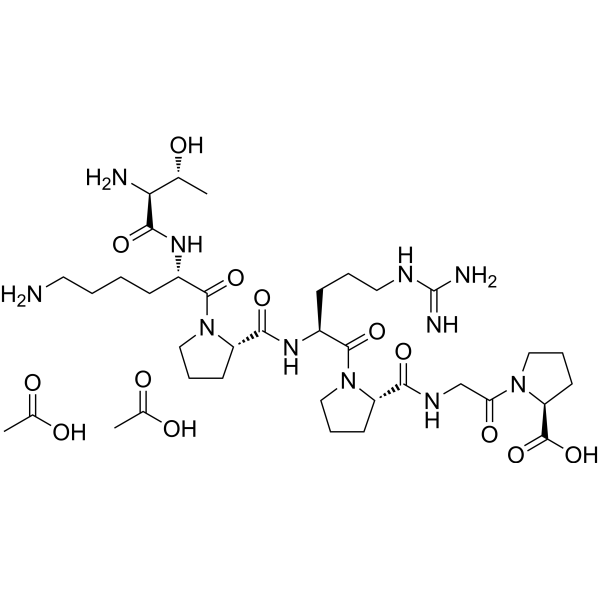
Cat. No.: HY-105042A
Purity:  99.90%
Synonyms: Selanc diacetate; TP-7 diacetate
Target:  

GABA Receptor

Research Areas:  

Neurological Disease

Selank diacetate (Selanc diacetate; TP-7 diacetate) is a GABAA receptor modulator with anxiolytic activity. Selank diacetate allosterically modulates the specific binding of GABA to GABAA receptors and alters the affinity of endogenous ligands for these receptors. Selank diacetate reduces elevated anxiety levels, attenuates stress-induced exacerbation of anxiety, and produces a synergistic anxiolytic effect with diazepam. Selank diacetate can be used in the research of anxiety disorders .
loading...
    loading...
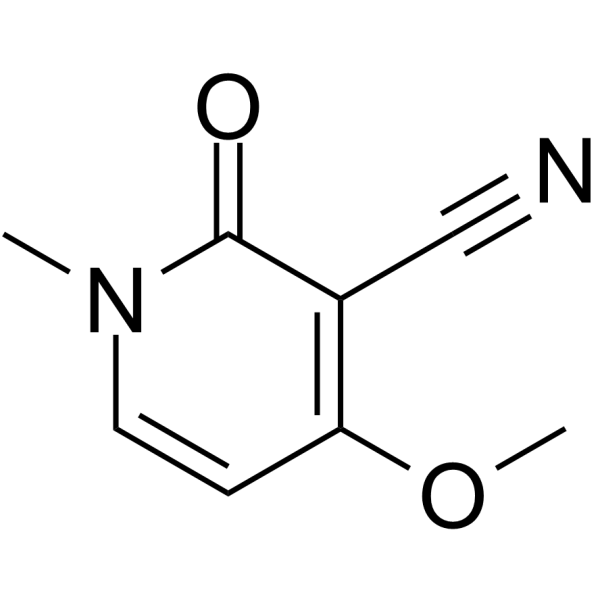
Cat. No.: HY-121944
CAS No.: 524-40-3
Purity:  99.81%
Ricinine is a central nervous system stimulant found in Ricinus communis. Ricinine binds near the benzodiazepine site of the GABAA receptor, reducing benzodiazepine binding affinity through an allosteric effect, and shows no interaction with AMPA, 5-HT1A, muscarinic receptors, or α1 adrenergic receptors. Ricinine improves memory consolidation in mice at low doses, while at high doses it induces seizures, an effect that is selectively inhibited by diazepam. Ricinine shortens the lifespan of Anopheles mosquitoes through sugar feeding and promotes the development of Plasmodium falciparum in mosquitoes . Ricinine is used in research related to epilepsy, amnesia, and malaria .
loading...
    loading...
Cat. No.: HY-137494
CAS No.: 74214-62-3
Purity:  99.75%
Target:  

GABA Receptor

Research Areas:  

Neurological Disease

Ethyl β-carboline-3-carboxylate (fl-CCE) is a ligand and short-acting antagonist of benzodiazepine receptors. Ethyl β-carboline-3-carboxylate did not affect cerebellar cGMP levels when used alone, but when taken together with Diazepam, it significantly inhibited the cGMP levels that were upregulated by Diazepam .
loading...
    loading...
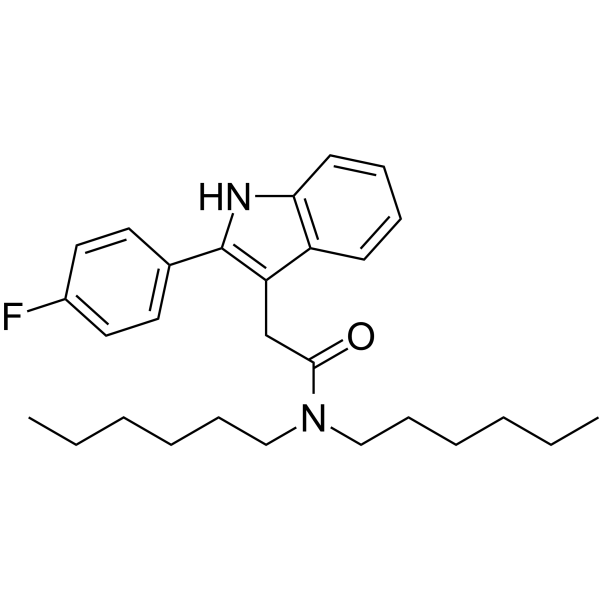
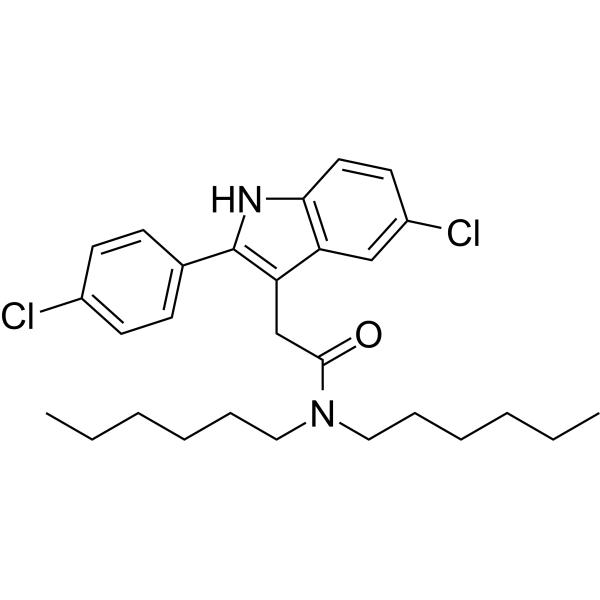
Cat. No.: HY-101059
CAS No.: 142720-24-9
Purity:  99.95%
FGIN-1-27 is a blood-brain barrier-penetrant TSPO ligand with a Ki value of 5 nM. FGIN 1-27 inhibits PKC-β, PKA/CREB, p38/ERK MAPK, MITF, tyrosinase, TRP-1, and TRP-2, thereby inhibiting melanogenesis and pigmentation. FGIN-1-27 alleviates X-ray radiation-induced astrocyte mitochondrial hyperfunction, reduces ROS and superoxide production, inhibits excessive activation of A1-type astrocytes, downregulates GFAP and C3 protein expression, and restores astrocyte proliferative capacity. FGIN-1-27 produces anticonvulsant effects in normal mice; in diazepam-withdrawn mice, the brain MDR pathway becomes subsensitive, and the anticonvulsant activity disappears. FGIN-1-27 attenuates pigmentation in zebrafish embryos and ameliorates UVB-induced skin pigmentation in guinea pigs. FGIN-1-27 directly stimulates testicular Leydig cells while upregulating luteinizing hormone levels, causing an acute increase in serum testosterone in male rats. FGIN 1-27 can be used for research related to hyperpigmentation, epilepsy, brain injury, and other diseases .
loading...
    loading...
Cat. No.: HY-101060
CAS No.: 145040-29-5
Purity:  98.96%
Target:  

GABA Receptor

Research Areas:  

Neurological Disease

FGIN-1-43 is an effective and specific ligand for the mitochondrial diazepam binding inhibitor (DBI) receptor (related to the production of neurosteroids). FGIN 1-43 enhances the transmission of GABA by inducing the production of neurosteroids, which can be used for research on anti-anxiety .
loading...
    loading...
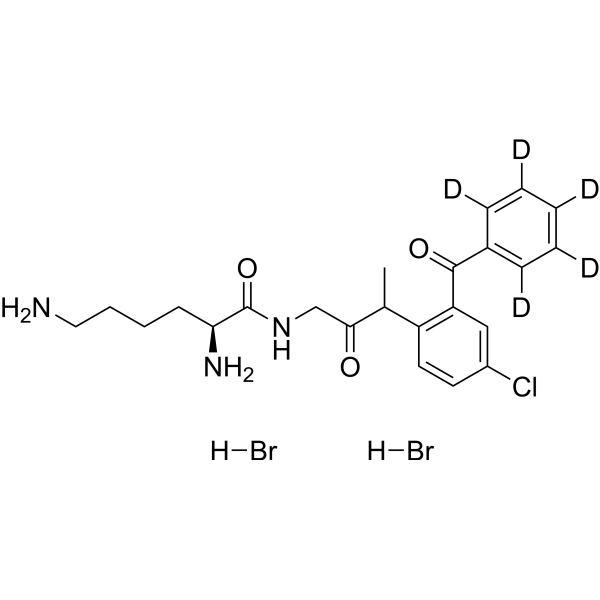
Cat. No.: HY-123193S
Synonyms: Pro-diazepam-d5 dihydrobromide
Avizafone-d5 dihydrobromide is the deuterium labeled Avizafone dihydrobromide . Avizafone (Pro-diazepam) dihydrobromide, a pro-drug of Diazepam, is an anticonvulsant agent. Avizafone dihydrobromide can be used as an antidote of nerve agent poisoning. In vivo, Avizafone is rapidly hydrolyzed by aminopeptidase to produce lysine and diazepam. Avizafone dihydrobromide has research areas including neurological disease, such as epilepsy.
loading...
    loading...
Cat. No.: HY-W702001
CAS No.: 60067-15-4
Synonyms: Pro-diazepam dihydrobromide
Target:  

Drug Intermediate

Research Areas:  

Neurological Disease

Avizafone (Pro-diazepam) dihydrobromide, a pro-drug of Diazepam, is an anticonvulsant agent. Avizafone dihydrobromide can be used as an antidote of nerve agent poisoning. In vivo, Avizafone dihydrobromide is rapidly hydrolyzed by aminopeptidase to produce lysine and diazepam. Avizafone dihydrobromide has research areas including neurological disease, such as epilepsy .
loading...
    loading...
Cat. No.: HY-168358
CAS No.: 52357-79-6
Target:  

Drug Derivative

Research Areas:  

Others

4'-Fluoro diazepam is a 1,4-benzodiazepine compound. 4'-Fluoro diazepam is structurally similar to Diazepam, but its has only minimal biological activity .
loading...
    loading...
Cat. No.: HY-13031
CAS No.: 146135-18-4
GW 841819X is a benzodiazepine inhibitor of bromodomains of the BET family (BRD2, BRD3, BRD4) that inhibits the binding of Diazepam to central GABA receptors. GW 841819X can be used in the research of BET bromodomain-related diseases, such as cancer .
loading...
    loading...
Cat. No.: HY-167825
CAS No.: 24506-68-1
Barakol is an anticancer and anxiolytic agent identified in Cassia siamea. Barakol inhibits MMP-3 activity and enhances the cytotoxicity and antimetastatic effects of Doxorubicin (HY-15142) against cancer cells. Barakol induces apoptosis via reactive oxygen species (ROS) production, upregulation of the Bax/Bcl-2 protein ratio, and activation of caspase-9. Barakol exerts anxiolytic activity with diazepam-like effects, increases spontaneous longitudinal smooth muscle contraction of rat ileum in a concentration-dependent manner (EC50 = 0.3 mM), and inhibits norepinephrine-induced contraction suppression. Barakol can be used in research related to anxiety, intestinal motility, and neuroblastoma .
loading...
    loading...
Cat. No.: HY-121535
CAS No.: 116476-16-5
Research Areas:  

Others

Levosemotiadil, an S-isomer of semotiadil, exhibits stronger binding affinity to human serum albumin (HSA) compared to its R-isomer counterpart. This study utilized high-performance frontal analysis (HPFA) to demonstrate that levosemotiadil binds approximately three times more strongly to HSA than semotiadil. The binding parameters were evaluated using Scatchard analysis, revealing specific interactions with the diazepam binding site on HSA. The presence of diazepam decreased the binding affinity of both enantiomers, while warfarin did not alter their binding characteristics. These findings highlight levosemotiadil's potential as a Ca- and Na-channel blocker with significant binding preferences for HSA, crucial for understanding its pharmacokinetics and therapeutic effects .
loading...
    loading...
Cat. No.: HY-P11382
CAS No.: 95237-86-8
Target:  

GABA Receptor

Research Areas:  

Neurological Disease

Octadecaneuropeptide is an 18-residue peptide. Octadecaneuropeptide can be derived from Diazepam binding inhibitor. Octadecaneuropeptide includes a specific ligand for the gamma-aminobutyric acid receptor regulatory site occupied by beta-carbolines. Octadecaneuropeptide elicits a dose-related facilitation of the punishment- elicited suppression of drinking .
loading...
    loading...
Cat. No.: HY-167702
CAS No.: 81397-67-3
Target:  

GABA Receptor

Research Areas:  

Neurological Disease

(Rac)-Acetoxyvalerenic acid is a derivative of valerenic acid that acts as a GABA (A) receptor modulator, potentially providing sedative and sleep-enhancing effects. (Rac)-Acetoxyvalerenic acid exhibits slower permeability across the blood-brain barrier compared to diazepam, indicating that its transport may rely on an unidentified pathway rather than transcellular passive diffusion.
loading...
    loading...
Cat. No.: HY-121116
CAS No.: 77779-60-3
Purity:  99.85%
Target:  

GABA Receptor

Research Areas:  

Neurological Disease

CGS 8216 is a non-benzodiazepine brain benzodiazepine receptor ligand that binds to rat forebrain membranes with high affinity and specificity. CGS 8216 also inhibits 3H-flunitrazepam (3H-FLU) binding to rat synaptosomal membranes and blocks 3H-FLU labeling of brain benzodiazepine receptors in vivo with potency equivalent to Diazepam .
loading...
    loading...
Cat. No.: HY-W197533
CAS No.: 65474-79-5
3-Hydroxymethyl-β-carboline is a Benzodiazepine antagonist with a Ki value of ~1470 nM. 3-Hydroxymethyl-β-carboline reverses Flurazepam-induced sleep, cerebrovascular and cerebral metabolic inhibition, and also partially reverses Flurazepam-induced decreases in blood pressure and heart rate. 3-Hydroxymethyl-β-carboline disrupts the anticonvulsant and anxiolytic effects of Diazepam in male mice. 3-Hydroxymethyl-β-carboline has no effect on sodium-dependent high-affinity choline uptake in rat cortical or hippocampal synaptosomes .
loading...
    loading...
Cat. No.: HY-121944R
CAS No.: 524-40-3
Ricinine (Standard) is the analytical standard of Ricinine (HY-121944). This product is intended for research and analytical applications. Ricinine is a central nervous system stimulant found in Ricinus communis. Ricinine binds near the benzodiazepine site of the GABAA receptor, reducing benzodiazepine binding affinity through an allosteric effect, and shows no interaction with AMPA, 5-HT1A, muscarinic receptors, or α1 adrenergic receptors. Ricinine improves memory consolidation in mice at low doses, while at high doses it induces seizures, an effect that is selectively inhibited by diazepam. Ricinine shortens the lifespan of Anopheles mosquitoes through sugar feeding and promotes the development of Plasmodium falciparum in mosquitoes . Ricinine is used in research related to epilepsy, amnesia, and malaria .
loading...
    loading...
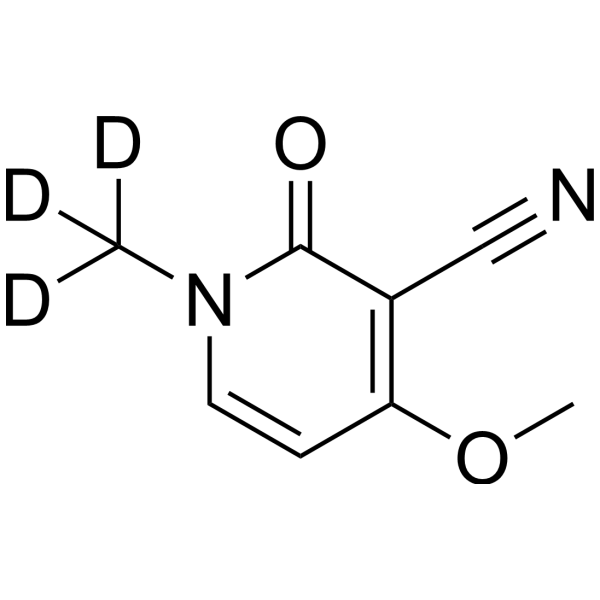
Cat. No.: HY-121944S
CAS No.: 1313734-77-8
Ricinine-d3 is the d3-labeled Ricinine (HY-121944). Ricinine is a central nervous system stimulant found in Ricinus communis. Ricinine binds near the benzodiazepine site of the GABAA receptor, reducing benzodiazepine binding affinity through an allosteric effect, and shows no interaction with AMPA, 5-HT1A, muscarinic receptors, or α1 adrenergic receptors. Ricinine improves memory consolidation in mice at low doses, while at high doses it induces seizures, an effect that is selectively inhibited by diazepam. Ricinine shortens the lifespan of Anopheles mosquitoes through sugar feeding and promotes the development of Plasmodium falciparum in mosquitoes . Ricinine is used in research related to epilepsy, amnesia, and malaria .
loading...
    loading...
Cat. No.: HY-101059R
CAS No.: 142720-24-9
FGIN 1-27 (Standard) is the analytical standard of FGIN 1-27 (HY-101059). This product is intended for research and analytical applications. FGIN-1-27 is a blood-brain barrier-penetrant TSPO ligand with a Ki value of 5 nM. FGIN 1-27 inhibits PKC-β, PKA/CREB, p38/ERK MAPK, MITF, tyrosinase, TRP-1, and TRP-2, thereby inhibiting melanogenesis and pigmentation. FGIN-1-27 alleviates X-ray radiation-induced astrocyte mitochondrial hyperfunction, reduces ROS and superoxide production, inhibits excessive activation of A1-type astrocytes, downregulates GFAP and C3 protein expression, and restores astrocyte proliferative capacity. FGIN-1-27 produces anticonvulsant effects in normal mice; in diazepam-withdrawn mice, the brain MDR pathway becomes subsensitive, and the anticonvulsant activity disappears. FGIN-1-27 attenuates pigmentation in zebrafish embryos and ameliorates UVB-induced skin pigmentation in guinea pigs. FGIN-1-27 directly stimulates testicular Leydig cells while upregulating luteinizing hormone levels, causing an acute increase in serum testosterone in male rats. FGIN 1-27 can be used for research related to hyperpigmentation, epilepsy, brain injury, and other diseases .
loading...
    loading...

