
1. Search Result
Search Result
Results for "

digestive tracts

" in MedChemExpress (MCE) Product Catalog:

9

Inhibitors & Agonists

1

Biochemical Assay Reagents

1

Inhibitory Antibodies

2

Natural
Products

Cat. No. Product Name Target Research Areas Chemical Structure
  • HY-P9978

    JS-001

    PD-1/PD-L1 Cancer
    Toripalimab is a selective, recombinant, humanized monoclonal antibody against PD-1. Toripalimab is able to bind to PD-1 and block the interaction with its ligands. Toripalimab has exhibited primary anti-tumor effects in tumors such as melanoma, lung cancer, digestive tract tumors, hepatobiliary and pancreatic tumors, neuroendocrine neoplasms, nasopharyngeal carcinoma and urothelial carcinoma .
    Toripalimab
  • HY-E70130

    Others Others
    Snailase, Snail gastrointestinal is an enzyme mixture composed of more than 20 enzymes, which is often used for enzymatic hydrolysis of purified flavonoid glycosides. Snailase can be obtained from the digestive tract and includes cellulase, sucrase, hemicellulase, pectinase, polygalacturonase, protease, etc .
    Snailase, Snail gastrointestinal
  • HY-B1113
    Diazinon
    2 Publications Verification

    Dimpylate

    Environmental Pollutants Parasite Infection
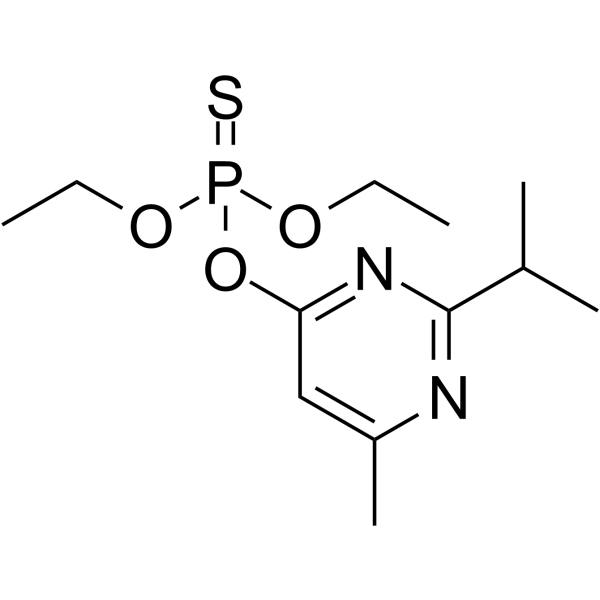
    Diazinon is an orally active, irreversible AChE inhibitor and insecticide that can be absorbed through the digestive system, skin or respiratory tract. Diazinon inhibits AChE, leading to accumulation of acetylcholine, which in turn overstimulates ACh receptors and affects the nervous system. Diazinon also produces reactive oxygen species (ROS), which induce oxidative stress in various tissues. Diazinon is mainly used in the agricultural field as an insecticide and may have potential effects on human and animal health .
    Diazinon
  • HY-N12851

    (E)-4-Oxo-2-hexenal

    Bacterial Apoptosis Infection
    4-OHE ((E)-4-Oxo-2-hexenal) is a mutagen formed by omega-3 lipid peroxidation. 4-OHE reacts with deoxyguanosine, deoxycytidine and 5-methyldeoxycytidine to form covalent adducts. 4-OHE induces apoptosis and exhibits genotoxicity. 4-OHE inhibits the growth of Gram-positive and Gram-negative bacteria, which correlates with its electrophilic reactivity towards nucleophilic biomolecules. 4-OHE is a chemical defense component of Dolycoris baccarum (sloe bug), and acts as a deterrent and toxin against insect predators .
    4-OHE
  • HY-122086

    mAChR Neurological Disease
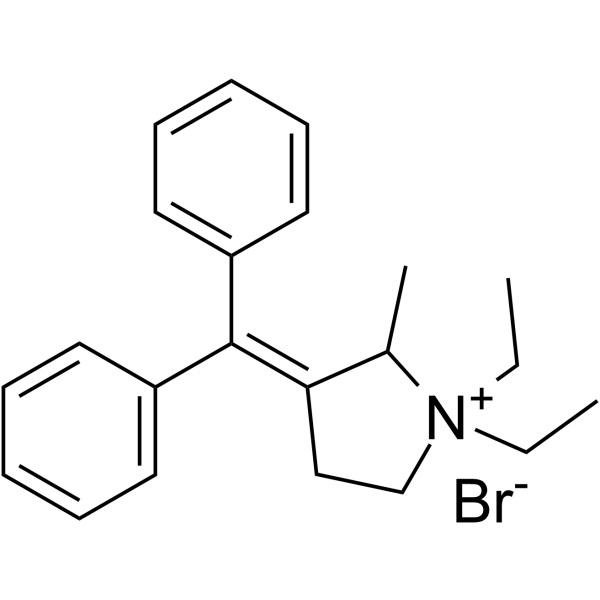
    Prifinium bromide is an anticholinergic drug with anticholinergic and antispasmodic activities, and it exhibits oral activity. Prifinium bromide competitively antagonizes cholinergic receptors and relieves symptoms of spasm or hypermotility in the digestive and urinary tracts, with its anticholinergic activity representing the core mechanism underlying the inhibition of bladder smooth muscle contraction. Prifinium bromide can be used in research related to spasms and diverticular disease .
    Prifinium bromide
  • HY-N7504

    Bacterial Infection Metabolic Disease Cancer
    Isopsoralenoside is a benzofuran glycoside from Psoralea corylifolia. Isopsoralenoside can be quickly metabolized to Psoralen (HY-N0053) in digestive tract contents. Isopsoralenoside show estrogen-like activity, osteoblastic proliferation accelerating activity, antitumor effects and antibacterial activity .
    Isopsoralenoside
  • HY-129516

    Cholecystokinin Receptor Metabolic Disease
    A-70874 is a tyrosine-free tetrapeptide analog of cholecystokinin (30-33) (CCK-4). A-70874 is an agonist that stimulates pancreatic amylase release and a partial agonist that stimulates pancreatic phosphoinositide decomposition. A-70874 has an IC50 of 4.9 nM for the guinea pig pancreatic CCK receptor. Cholecystokinin (CCK) receptors are divided into CCK-A (digestive tract) and CCK-B (brain). A-70874 has an affinity of 1.6 μM for the CCK-B/gastrin receptor .
    A-70874
  • HY-E70982

    Endogenous Metabolite Metabolic Disease
    Amine Oxidase, Bovine Plasma (EC 1.4.3.21) is an enzyme involved in the metabolism, oxidation, and inactivation of histamine within the digestive tract.
    Amine Oxidase, Bovine Plasma
  • HY-NP0221

    Transferrin Receptor Inflammation/Immunology
    Rabbit Transferrin is the major iron-containing protein in plasma, responsible for transporting iron absorbed from the digestive tract and iron released by erythrocyte degradation .
    Rabbit Transferrin

Inquiry Online

Your information is safe with us. * Required Fields.

Salutation


Country or Region *

Applicant Name *


Organization Name *

Department *


Email Address *


Product Name *

Cat. No.


Requested quantity *

Phone Number *


Remarks

Inquiry Online

Inquiry Information

Product Name:
Cat. No.:
Quantity:
MCE Japan Authorized Agent:

